When two massive stars in a binary system collide their supersonic solar winds every eight years, they create expanding shells of cosmic dust that form concentric rings visible as tree-ring-like structures in space, which may eventually become the building blocks for future planets and moons in new solar systems.
Install our extension to search inside any video instantly.
A Monster Star is Breathing Out a Ghostly Clockwork SpiralAdded:
Locked in a celestial dance 3,000 light-years away, a dying star is exhaling its final breaths into a perfect geometric spiral.
WR 140 is a binary system where two massive stars collide their supersonic solar winds every eight years.
This impact creates a shell of soot-like cosmic dust that expands outward, forming a literal ring in the sky.
To our telescopes, it looks like a giant tree ring or a fingerprint floating in the void. Each of the 17 visible shells represents a decade-long heartbeat of the system.
Scientists believe these dust rings will eventually drift into deep space, potentially becoming the building blocks for future planets and moons in a new solar system.
Related Videos

Spiral Galaxy NGC 3370 from Hubble | NASA APOD 2025-11-05 #Shorts
galaxygallery
938 views•2026-05-30

SOMETHING inside the SUN is CHANGING
RaysAstrophotography
1K views•2026-06-03

There May Be A Giant Hole In The Universe... And We Might Be Inside It | The Cosmic Ledger Entry 015
TheCosmicLedger
145 views•2026-05-31

Captured the Blue Moon (with a twist) 🌙✨ #space #bluemoon #telescope
realAstroExplorer
674 views•2026-06-01

The Map We Sent to the Stars in 1977 — Why Scientists Now Regret It
TheAncientRecord7
183 views•2026-06-03

Is this a copy of our galaxy? Discover Galaxy M81!
UniverseDocumentaries-cc4mb
995 views•2026-05-31

10 Planet Where a Black Hole Replaces the Sun
cosmicexplorer-EN
147 views•2026-06-02
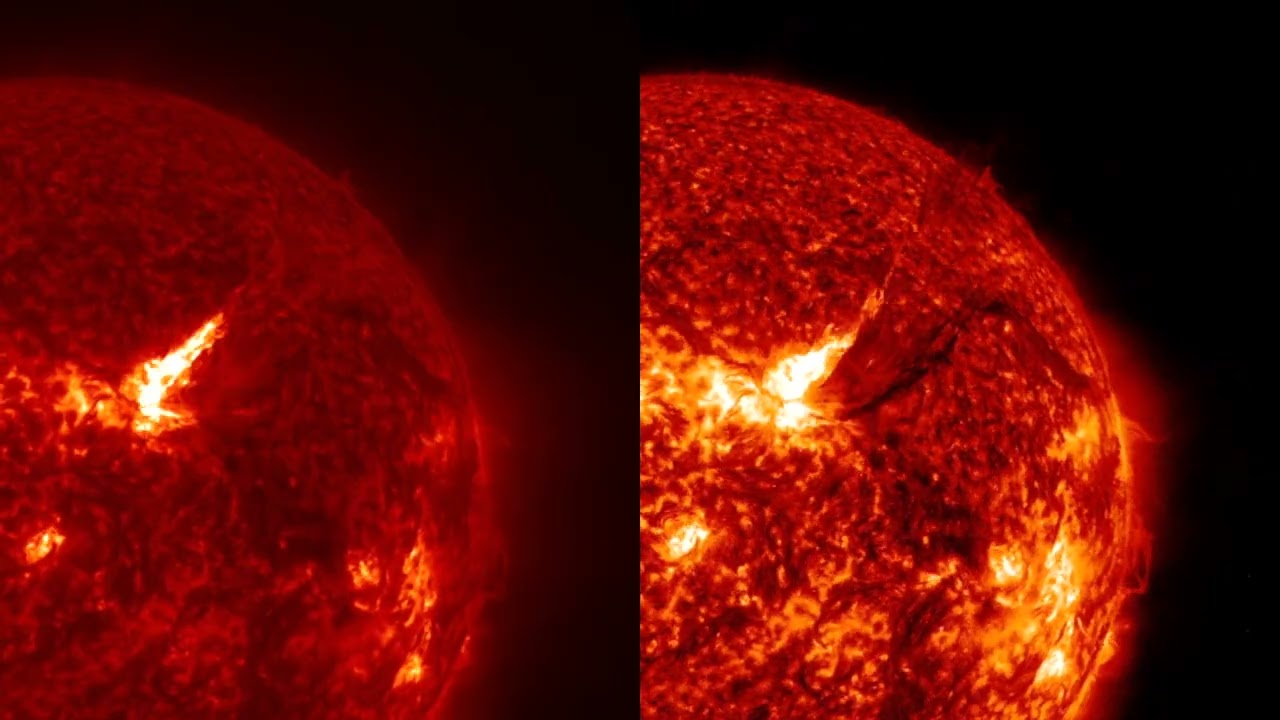
Solar Flares and CMEs at Earth - More Likely | S0 News June.3.2026
SpaceWeatherNewsS0s
2K views•2026-06-03



