Metal-Organic Frameworks (MOFs) are versatile coordination polymers consisting of metal nodes and organic linkers that form two-dimensional or three-dimensional structures with high porosity and surface area. They exhibit tunable structures, high conductivity, and applications in fuel storage (carbon dioxide, hydrogen), bio-catalysis, biosensing, water treatment, and energy storage. The 2025 Nobel Prize in Chemistry was awarded to Omar Yaghi, Susumu Kitagawa, and Richard Robson for their pioneering work in MOF development. MOF synthesis involves careful matching of metal salts, organic linkers, solvents, and reaction conditions, with optimization requiring multiple trials to achieve desired crystal structures and properties.
Install our extension to search inside any video instantly.
"RASAYAN-23" - INTERNATIONAL SYMPOSIUM at SAURASHTRA UNIVERSITY (Auditorium) - Day 3
Added:Hello.
And for the students who are here, what is the metal organic Yeah.
>> Okay.
>> Yeah. Thank you.
The students uh students who are Hello. Hello.
Hello.
>> Hello. Yeah. Okay. Thank you. Sorry for the inconvenience.
Um the metal organic frameworks. So this is something which not a new material or anything which was there already before.
So what do you mean by this metal organic framework? There should be a metal and there is an organic linker which will give you a framework and they are actually a two-dimensional and a three-dimensional structures are possible from this and they are the versatile class of coordination polymers which mainly consist of this metal and this organic linkers. When you look at the applications of this metal organic framework you can have a high porosity.
This is one of the major aspect of this morph material. They have a high surface area and tunable structure while they shows few of them shows a very high conductivity and they have the fuel storage capacity mainly for the carbon dioxide or hydrogen or anything and it is now acting as a bio catalyst for a biological features and there is something called a biosensing properties are also showing. So because of these versatile properties of the metal organic framework, it came into the scientist area. And if you remember the last year Nobel prize winners were from uh given by the metal organic framework in this Omariagi, he was known as the father of metal organic framework and his team from Suzum Kitagi and Richard Robson. They three of them won the Nobel Prize in chemistry in 2025. So that shows the importance of metal organic framework and the traditional design principle when you look at for this metal organic framework how it is coming they are actually around the metal and the organic lingers which I told you. So there are metal nodes and there and the organic lingles are there and then how they are connecting with each other that is what gives you the properties and it will create the framework which specific structures and the properties and the functionalities since we can include the functionalities in this molecule that is why the importance. So what is the application that you are looking accordingly you can include the functionalities in this uh morph structure. So the key principle is primary involving the careful matching of these metal salts and the lians and the solvent and the reaction condition.
The reaction condition will give you whether the morph will form as a crystal or as a powder or whether you are getting or not. Sometimes the students need to keep it for n number of reactions, n number of combinations for the optimization. You can try with the different solvents. You can try with the mixture of solvents which one is giving you the best results. But once you decide that one this is the optimized condition, it is very very easy for you to synthesize this material for that one. These are the two important moes which we our students from our lab that we have synthesized which is a tin based m potassium and tin two metals has been added into that one and another one is a potassium tin uh same material but you can see how the structure is different depending upon the conditions and all.
So this paper this uh work we have patented and we are working on the application of these two particular morph and depending upon which metal that you are starting and which solvent you are using and which is the organic linger you can see the crystal structure itself it is giving you a different types of structures that it is coming for you and the properties and the application when I looked it it is it can be used in a catalytic activities so it is a very good catalyst it has the capacity of an absorption so you will be able to use it for the water treatment ment and it has an increased surface area which will help you for the catalytic activities actually and the physical and the thermal stability is there. It is much much stable even if at a higher temperature when you're going for that and crystallinity and it is a flexible structures are coming and you can have the electrochemical character because it can pass the electrons into that one. So that gives you the application in the energy storage and there is methane storage can happen and you can have the viable organic functionality that you can do it for this one. So that will give you for the biosensing application and people are working mainly on this catalysis the water treatment carbon dioxide capture because carbon dioxide is one of the major u pollutant. Now people are working on how to convert this carbon dioxide into a useful material which can be used for any of the other application and based on this we have worked on one particular morph which are showing actually two different properties which is a nickel PTC morph and this showing a two different properties like it can act as a very good super capacitor and it can be used for a water splitting application. Water splitting is nothing but the normal water. If you split it into the we know the simple school chemistry, it can give rise to the hydrogen and the oxygen. The important of hydrogen generation is nothing but it can be now a green hydrogen because there is no pollutant that is coming. So how can we change our fusel fuel and go into a green chem green way or a green hydrogen or any of the green method that people are working on. So we found that this particular mo can also be used as a water splitting catalyst and we will be getting the hydrogen generation but we did it in a in the way of actually the electrochemical method. So maybe we need to work on how can it be gone into a uh industry level because the amount of hydrogen that is needed is much much higher compared to a lab scale. But these materials more materials are ready to be used as a uh water splitting catalyst also. So maybe we have to work on a little more higher level in order to get this particular application. And the next one the current trend what is challenges and the uh opportunities or what industry people are looking on that one one is the uh scalability and the cost issues that is one of the major challenge because I told you the optimization itself will take time. It is not like a simple one you mix it and you are getting because you need to work on the different solvents and which is the best condition that it is coming. It may take a little time for that one and after that the post synthetic modification also limitations are there.
Whatever the modifications you wanted actually you need to do during the synthesis time itself. After the post synthesis and then you are doing for a functionalization we are not getting the actual uh result what we wanted in that one. So again the optimization again you have to do it here and uh reproducibility and a batchto batch variation it is coming unless uh you hadn't kept the correct timing or correct uh temperature whatever it is required again to synthesize reproducibility if you're not giving the exact one it becomes a difficult you will be getting an another type of move coming so uh the student point of view you need to write each and everything what you are done for the synthesis of one particular material exactly The same thing you need to do it for getting the next batch of material. But there are any number of opportunities are there with respect to the MOF material. Mainly the energy storage and the energy conversion is what people are looking into that one. Another area is the biological area where the sensing applications are also uh going on. So there are n number of opportunities are there and how to commercialize scale up the production and commercialization is another area where the industry people or those who are interested in this m synthesis and you need to find out or how will be the cost effectiveness that is happening and how can we go into the uh industry level or the industrialization or industry people you can connect it with them and then see how this material can be done and now slowly people are doing with the a IML assisted process also so that the number of optimization conditions maybe you can reduce it if an AI can give you some of the uh input so that only those inputs you can do it in the experimental condition so another material which we I would like to introduce is something known as maxims maybe few of the people will know it is a two-dimensional material it has the graphine-like structure so that is why the name of maxine is coming it is similar to the graphine-like structure and generally it is having a formula of metal M represents them M XT where M is a metal generally the transition metals that we are using the first series of transition or the second series of transition metals you can use it and X can be either carbon or a nitrogen while this T represents the terminating group which we call it as oxygen florine O chloride ions that people are using. You can see that it is a layered structure that is coming. There are different ways that you can synthesize it is an etching is the most important process where people are working on and it is giving you a very good results and all all these maxims are synthesized from something known as max phase. The corresponding max phase you should synthesize from the etching process or top down or a bottom up approach. You have to when you look at the properties it also has the electrical and thermal conductivities and the optical properties and as a mechanical strength and mainly energy catalysis and sensing are the areas where now the vaccines were used but there are any number of options are available. When you look at the Maxine's history, it is actually a baby in the uh history of our uh uh 2D materials when it is coming because it started only in the year of 2011.
So compared to graphine, it is a long journey. So maybe we will expect one or the other Nobel prize is coming to the maxine also. So Yuri Gagosri is the father of vaccines. You can tell that he was the one who discovered this importance of maxim and this is one of his book very nice to read all the properties all the synthetic strategies everything has been written in this particular book Yuri Gaggo Street. So maybe we are expecting many many work uh has been expanded in this particular area and uh properties and applications when you look at in this it is a hydrophilicity is one of the important properties and you can tune the surface.
I had shown you the surface to einating groups which can easily form in on the surface. It has a high end modulus and a thermal conductivity. Good in electrical conductivity because of that that properties you can use it for the uh super capacitors application and there are few vaccines where the band gap can be tuned especially titanium based material so that the photoc catalysis it can be useful and it is a metallic in nature and it has a large surface area that it is coming for that. So the important areas where the work is already done some of the areas work is going on energy material catalysis optical properties electronics properties synthesis processes are one area where people are working and since because it has a high modus mechanical properties are also there and environmental applications are also working on but environmental application as I mentioned mainly if you are able to change the band cap of the material and titanium is a material where you know that it is easy to come under the solar light band gap energy. So it is working on that particular area.
One of the important studies which started with the maxine is based on the titanium carbide. This is a TI3C2 structure and uh it has a properties which I mentioned you mentioned uh in the previous slide. Synthesis process if you're looking it is main thing is happening by means of from max phase by HFing or an alkaly etching or a molten salt etching or the acid fluoride etching many property many different ways that we can do we also tried in all the different ways and the best activity or best easy way of coming is actually by the HF etching that is going on but I know that HF is a little castic and the usage of HF in the lab is limited so uh the to take it into the higher level or the next level is becoming a little difficult but we are working on the other areas where maybe an alkaly etching process you are getting the result only thing is that the aluminum is not etching completely. So in the max phase if you look at uh the structure this is what the max phase we call it as this a is like an aluminum layer. So generally a will be an aluminum layer that is coming you need to remove this aluminum layer in order to get your maximum. It is a layered structure. You can see the structure. It is just like the our graphine structure, it is having a layered structure. But what happen depending upon your etching process or an etching agent, this aluminum layer is not completely etched out. If the aluminium layer is there, your properties will change. So conversion of max phase to maximine little importance because you have to remove as much as possible the aluminium layers from that one. So when you look at the structure property correlations when you are looking transition metal compositions is electronic and catalytic properties we are we can do because most of this material contains a transition metal which we know that the DB block elements and you have the electron free electrons are there and that is easy to move around so we can use it for any of the electronic application that is coming and different MLS tune the metallicity and the magnetism and the catalytic behavior. Okay, you can do even a doping process which generally for catalysis people are doing any of the dopen you can add into the material and you can have something called the structure functionalization. The the surface is easy to functionalize. Mainly it can have the fluoride, chloride, O groups can be attached very very easily and those functional functionalized groups will help you for the further reactions to occur that one and the composites are generally now prepared. Maxine with the morph is one of the composite that our students are actually working on because to include the both the properties of these materials and X element is actually a carbon and the nitrogen. So the mechanical and the structural stability of these materials are also very very important coming and the carbon and the nitrogen ratio is also very important. So depending upon this ratio it will improve the rigidity and the thermal stability. So you can add actually how much that you wanted or how it is going on depending upon that you can change the properties also just to give you an input on the current research on the maxims and what are the opportunities for the students who can work on that one. It has a very high electrical conductivity and the mechanical flexibility and the multiunctionalities which you can include in the surface of that and it is rich in surface chemistry. So use these properties and you look at the application or you look at the area where these type of properties can be included. Those areas you can go for these maxines and only thing is that maxim stability is an area where challenging and the surface groups where you should control because it is very easy to functionalize the material. So we need to control how much functional functionalities are required for that one and it is easy to hybridize with the other materials are also and scalability is a one issue which I told you that it is something which we need to have the uh HF etching and if the aluminum is not removed it completely then it becomes a little difficult task. So we need to optimize the conditions and then slowly slowly only we can scale up a large quantity synthesis is becoming a little difficult for that.
>> Okay. So based on this we also done one of the uh we our group was doing many max phase conditions and maxims. So max and max we have synthesized for chromium metal and >> sorry madam uh just uh five minutes left >> last last okay so using this super capacitors and the electrocatalytic water splitting studies were also done using this uh material max phase is also working and maxims are also working for this particular application. So a few of the references which uh is working on this type of morph and the maxim's materials and uh sorry thank you for your any any queries or anything it is not a full work we haven't prepared but I had given you an input on the area where students can work actually Thank you.
contribution to magnetic resonance, quantum information processing and quantum technologies. His innovative research has significantly advanced nuclear magnetic resonance methodologies and their applications in quantum computing and quantum stimulations.
Following doctoral study at the Indian Institute of Science and postdoal at MIT USA and the University of Dortmund, Germany. He has established an internationally recognized research program at IISC Pune. A recipient of Hamburg fellowship, MIT Cambridge fellowship, DST Swarn Jayanti Fellowship and Professor S. Subramanyan lecture award. He has made outstanding contribution to physics research and scientific leadership.
Welcome sir. Stage is inviting you.
Okay. Um, I hope you can hear me at the back. Okay. Very good morning to everyone. Um first of all um my profound thanks to CRS for this award and uh um thank you very much for inviting me for giving this uh talk. Okay. So um let me give you very brief uh uh insight on the type of work that we do at Iser Pune.
uh so we consider spins as quantum workshop okay so in the next 10 minutes or so I'll be explaining how spins can be used as quantum workshop okay all right uh so the systems that we are using uh they are like this so they they are called nuclear magnetic resonance I will explain this in the next slide uh so um they consists of molecules and they are placed in very strong magnetic field that's one system that is nuclear magnetic resonance and we also have another platform. So this is called nitrogen vacancy centers in diamond.
Okay. So uh here uh this is also um similar to uh the spin architecture. The difference is the following that depending on the state of the spin this diamond defect centers they fluesence they do fluesence. So if the spin is in one state say in state one then the fluoresence is less and if spin is in zero state the fluoresence is more. So this allows optical detection of spin states. Okay. So we have these two platforms and using these two platforms we can study variety of things. We are physicists we are mainly interested in the physics of uh quantum systems. So we can study physics of quantum information in quantum computing and we are interested in quantum control. So which means how best we can control these quantum systems and we are interested in quantum simulations. Um so that's the idea of fineman and we can also uh study various quantum uh transport and manybody effects. I'll give some examples and we can study really quantum foundations. uh so the really basics of quantum mechanics and we can also include various types of machine learning into all these works. So these are the various uh uh aspects that we can study using this quantum workshop with the help of spins.
So now that's our lab. Uh so we have many many uh NMR spectrometers. So this is the pan panoromic view. We have about six NMR spectrometers and uh so this is the nitrogen vacancy center lab uh at Pune. Okay. So now okay so using this um so this is just a second it's going out of Okay.
Um so now just one uh slide introduction to uh spin cubits. So we say spins as quantum bits. The reason is as follows. So we take a sample. Sample consists of molecules and inside the molecules we have atoms and we consider molecules which are diamagnetic. So there are no net electronic magnetic moment. So we can look at only nuclear magnetic moment. So we call them nuclear spins.
And these nuclear spins are inside the sample. Right? And then we put the sample in very very strong magnetic field. How strong? These are like 10 to 20 Tesla really really strong magnetic field. And then what happens is these pins interact with the magnetic field via zeon interaction. And if it is spin half like hydrogen then there will be two levels. The ground state corresponds to the parallel the magnetic uh moment parallel to the magnetic field and the exited state corresponds to the magnetic moment aligning antiparallel to the magnetic field. So that's the magnetic field. We have parallel spin and antiparallel spin and they have a energy gap and that is the zemon energy gap.
Now this zemon energy gap happens to be in the range of the energy of the radio waves. Radio waves are also electromagnetic waves and that energy happens to be same as this Zemon energy gap. And so if we can shine the resonant radio waves on this um sample then there will be resonant absorption by the nuclear spins. So they can absorb not only that they can undergo the quantum transformation the unitary dynamics. So we can prepare a very interesting quantum states and the good thing about nuclearagnetic resonance is that such a superposition state lasts for a long time. They can retain that quantum superposition state for a long time and not only that during that time they also emit very very characteristic signal.
Okay, that is called NMR signal and that signal is picked up by this coil here and that is amplified and that is sent to the computer. It is digitized and sent to computer and that is stored as NMR signal. So that's the nuclear magnetic resonance and depending on the state of the spin if the spin is parallel we can call that as zero. So that is zero state and if the spin is antiparallel we can call that as one. So now you see you we have a binary information encoded on the state of the nuclear spin. So zero and one. So that's a binary it's a bit and since it's a quantum system system we call this as a cubit quantum bit. Now using such a system we can do variety of things. For example now instead of one spin we are here considering a molecule.
This is just L histadine histadine and in this there are about 11 spins plus there is one extra. So we call this as a 12 cubit system. So we have now 12 quantum bits and each of these rectangles here. So they are very very specific res resonant uh radio wave applied on that particular spin. Okay.
So we have various uh uh resonant RF pulses here and these introduce very very specific dynamics transformations unitary transformations and each of these are called uh each of these pulse introduces something called quantum gate. Okay. So now we have quantum bit and we are applying a quantum gate. It is similar to what you study in electronics and computer science. So we have bits and gates. So here also logic gates. So here also we have quantum bits and quantum gates and together they form a quantum operation that is called quantum algorithm. Okay. So by doing this quantum algorithm uh we can take the initial state to some specific uh output state. So from input goes to output and that output is finally read out by the NMR signal and that forms quantum computation. Okay. So we have done quantum computing in this in this specific algorithm is called benchmark quantum algorithm and so now um we can do variety we can take variety of systems for example this is a 12 cubit system 18 cubit system 13 38 cubit system and so on and do v variety of computational tasks just to give some example what all we can do uh so this is one interesting example this is called leot inequality leget is the Anthony Leget Nobel laurate. So he proposed that there is a way to determine whether a system is behaving in a quantum mechanical way or in a classical way. And there is also a phenomenon called decoherence. That means if you prepare quantum superposition slowly it loses out superposition quantum superposition. So slowly it loses that quantumness and ultimately it becomes classical. Now the question is when until what time the system is behaving quantum mechanically and then when is the emergence of classicality. So this can be probed by uh studying leget inequality and leg inequality can be studied using such kind of systems. So in this case we just took chloroform and so we have two spins here carbon nuclear spin and hydrogen nuclear spin which is just proton and we can measure experimentally the correlations and after measuring the correlation we can uh determine so-called leg string so that is the k3 string so we can evaluate that k3 string as a function of time so this is milliseconds so as a function of time uh so that is converted into u uh angles.
So now up to so now there is a legged ger bound. So that is this here. So this is one here. So if it exceeds one then we say that it is quantum mechanical. If it is not exceeding one it is classical.
So you can see that up to about 165 milliseconds the superposition is having that quantumness according to this legged girk inequality.
So, so we see that as a function of time due to decoherence the classicality is emerging from the quantum superposition states. So this is uh one example. This is a very nice uh fundamental uh exploration of emergence of classicality in quantum system. So recently we extended this using something called superposition of quantum operations and that made further um improvement in the study of legged inequality. I'll I'll not have time to describe the details but then uh this uh received lot of attention. For example, American physical society um made a viewpoint on this and this is called one of the uh breakthrough research uh in the last year.
Okay. So now uh another example. So we all know that light behaves like sometimes as particles, sometimes as wave. So now can there be in between? So partially wave, partially particle. In fact that is possible. Light can view uh light can behave uh not entirely as wave, not entirely as particle. It can be in between. It is neither completely wave nor completely particle. So that can be demonstrated. So this is called quantum delayed choice experiment and this was proposed by these Australian scientists in the year 2011 and we were the first to demonstrate it experimentally. So we showed that nuclear spins can behave like entirely particle or entirely wave or in between.
Okay. So we can smoothly vary the nature from particle nature to wave nature. So these are the explorations in the um u in the foundational aspects. Back in 2018 we experimentally studied another interesting phenomena that is called time crystal. So it is also very uh very very interesting even from the application point of view. So um we know crystals crystals have spatial order time crystals have temporal order. Okay.
Okay, so that's a time crystal and uh so this was very interesting and it was proposed in 2012 by Frank Wilzek and his collaborators and again he was also a Nobel laurate and uh so this initially created lot of controversy because some people said physics doesn't allow uh such systems having temporal order but we showed that experimentally such systems can exist. So this is the such a phase of the system can exist and this is the experimental demonstration of time crystal in NMR using such a system.
>> Sorry sir interrup interrupting you 5 minutes left.
>> Sure. Yeah. Okay. So now um yeah just to show one uh example of another application or for example recently we demonstrated quantum battery uh using such a system and this quantum battery can last for 2 minutes. Now uh so we have really system which can store energy. So it's a quantum system that stores energy and that can hold the energy for 2 minutes and it can give the energy to the load. Okay. So if you have any u applications uh in fact this can potentially have medical application where uh the drug stores energy and dumps it to uh some target cells. So that's a quantum battery and um so we can also realize large number of cubits using solid state NMR and I'll skip this in the interest of time. So this is one example of nitrogen vacancy centers. So NV centers come in two species NV0 and NV minus. So this is the first time we could image in the diamond NV center which parts are NV minus and which parts are NV0. So, so this is a uh image of the species in the diamond NV centers. Okay. So, our research goals are like uh increasing the quantum memory and we also want to hybridize uh NV center and NMR and we want to uh improve the performance by improving memory uh improving the register size and also improving the sensitivity.
Okay. So that uh let me summarize now.
Uh so as I said we are interested in uh studying the physics of spins. So we want to treat spins as quantum workshop and using that we want to study quantum information, quantum control, quantum simulations, many body effects and quantum transport, quantum foundations and machine learning. Thank you very much.
Yes. Yes. Yes. You're right.
No, I'll be happy to discuss.
Uh you know that he is our we are honoring him.
Oh my lord.
directly onto my presentation. I would like to thank professor Bag and professor CV Alamut sir for and his complete team on uh recognizing me for this uh prestigious CRS bronze medal and giving me the platform to present my work here and also to VC sir registr and his complete team from sashtra university for organizing this event in so managed way thank you so much so currently I'm associated with the TNB college Balpur but before that I was associated with Sharda University Greater Nida and much of this research part has been carried out at Sharda University. So this is an approach to combat hospitalacquired infections and it falls under SDG sustainable development goal three that is good health and well-being.
So what are hospitalacquired infection giving you a brief introduction about it. So hospitalacquired infections are infections that patients acquire while receiving treatment in healthcare facilities that were not present at the time of admission. So globally the accepted rate for hi is up to 8%. And but in India at least 18% patients they are getting uh hi. So this is can be because of the ventilator associated pneumonia or it can be because of septicmia 25% of it is transmitted through surgical site and 40% uriliary tract infection. So these the major transmission route for these infections is can be direct contact from person to person or through formites contaminated surfaces or medical equipment or it can be airborne and major common HI pathogens are bacteria and viruses and u they have the ability sorry they have the ability to survive on the hospital surfaces for months and after COVID 19 this has become a major area a hot area of research to talk about. So this is we have taken it up as the research problem and we tried to find out the solution what we can do with these to prevent these hospitalacquired infections. So we came up with a solution of antimicrobial coatings. So antimicrobial coating is an application of a chemical agent that stops the growth of disease-causing organisms and antimicrobial coatings can offer a continuous solution to reduce surface contamination between regular cleaning cycles. So we came up with the solution for this. We have used metal oxide polymer nano composites specifically zeno PVP nano composites.
Why specifically zedeno and PVP? Because zedeno is well known for its antimicrobial activities and they can be used uh for coatings because they are environmental friendly cost effective and they have multiple antimicrobial mechanisms and long-lasting activity with low toxicity to humans. So the multiple antimicrobial mechanisms available with zeno nanop particle is they have tendency to generate the reactive oxygen species. They can release zn2 positive ions and they can have the direct membrane interaction because that zen zn2 positive is positively charged and the bacterial cell wall is negatively charged. So it has the tendency to eventually kill the cells of microbes.
And why PVP we have chosen because PVP is a bio uh it it is a biompatible polymer. It is non-toxic and approved by for medical and pharmaceutical applications and it forms film easily.
So role of Zeno in nano composites is it is acting as a dispersing agent. It provides the surface modification. It provides it helps in matrix formation so that nanop particles can sit inside it.
It helps in control release of ZN2 positive ion because leeching is the major issue in these antimicrobial coatings.
And why uh we are focusing or what what are the major things we have focused while deciding this solution and while preparing the coatings is this is a major published studies they stopped at the characterization. We have taken it forward for the application uh for this antimicrobial coatings already published work they have emphasized uh optimizing one property either it is antimicrobial or UV ray protection or antifiling fouling uh properties but we have gathered all together and tried to find out the solution to make a coating with all these properties. We synthesize the coating with green synthesis, antibacterial and antifouling properties, superhydrophobic surfaces and with self-cleaning property.
So this is the methodology. Uh yesterday also few of the lectures who discussed about nanomaterials and nano composites they talked about the green synthesis.
So we have utilized here the green synthesis for the synthesis of zenon nanop particle. The green synthesis is done with the help of rose flour extract and a rose flour comparatively is costly but the theme behind it is lot of waste ro a lot of waste is discarded from temples. The rose flowers are discarded from the temple. So this waste can be utilized wisely in preparing these nanomaterials. So that is why rose flour is used for this and they are mixed with PVP in a solvent and then continuous stirring is done and heated at 60° to 80° centigrade. We got the precipitates which are being centrifused at thousand uh RPM and then dried and received the nano composites just to give the glimpse of the methodology. I have prepared that slide and that characterization we have characterized the material different techniques and coming to the XRD pattern. It reflects the uh crystalline structure of Zno and the major peaks these intense peak it shows the ZNO crystalline structure. Coming to the UV absorption uh UV visible spectra. This is um the Zeno bulk zeno. It shows the peak around 3 absorbance peak around 370 to 385 nanometer. But there is a shift in the peak from uh there are to 359 nanometer which is a significant blue shift showing the coordin uh quantum confinement effect because of this shift and showing that these are these nanop particles they are well trapped at the nano scale and this uh when they bulge that you know it appears at 385 around 385 absorbance it shows its normal band gap of 3.37 electron volt here this band gap is calculated through to talk plot it has reduced to three electron volt.
this FDI spectra the lower range of peaks they are showing the ZN o stretching uh uh uh uh ZNO stretching and these three peaks they are confirming the presence of PVP and there's a shift in the peak of PVP the normal peak of PVP the pure PVP it shows peak around 1650 cm inverse but here we are getting a peak around 1609 that means there is a coordination between the oxygen present in PVP with the positively charged ZN2 plus ions. So this well defines the formation of the nano composite with a good coordination between uh ZN2 plus and oxygen. So it uh >> these are five minute left. These are the same microraphs which uh are taken at different magnifications and they show the broad uh plate like and rodlike structure and it shows the rough irregular structure but well dispersed in the matrix. So this uh uniform dispersion in the matrix and uh this rough and layered structure it shows uh means it increases the exposed area which creates a number of active sites for antimicrobial activities and it also this rough surface also add-ons to the hydrophobicity.
So why hydrophobicity? Because the coating they should have two major parameters we are taking care the antimicrobial activity and hydrophobicity. Antimicrobial part is taken care by Zeno and hydrophobicity.
For hydrophobicity we need surface roughness as well as the contact angle.
So if the surface roughness we have shown with the help of SAM and for the contact angle if it is above 90° theta is above 90° then it is hydrophobic and if it goes 150 or more than 150 it becomes super hydrophobic. So we have done the contact angle studies on the hydrophobic surface and this is when we have applied one coating then it is showing an angle of 87.6° two coatings 95.4° three coatings 98.62 means the the coatings the number of coatings they have increased the it from uh hydrophilic to hydrophobic part. So that is why that is making the surface hydrophobic solving our purpose. Main point to be taken care is the ratio between PVP and ZN O. This is the major task we have taken uh here means the major time we have spent in optimizing this concentration. How much is PVP required and how much is zeno required so that we can make the surface hydrophobic.
So coming to the studies antimicrobial and entry fouling studies and I thank my collaborator Dr. Dr. Somia Pandi Department of Biotechnology Shadra University for conducting these research for this uh film for development of biofilm is done with the help of confocal laser scanning microscopic technique. These are the CLSM images where different ratios of Zeno PVP are being tested and when they are being tested the different con you can see as the concentration of Zeno PVP is increased the antifouling uh is eradicated there is no anti- fouling taking place on the surface and this is the XT essay which is showing uh the antibacterial studies in this what happens is we add XT to the equimar concentration of zno PVP nano composite as well as the bacterial solution and they form formason it is a calorimetric technique and if there we have viable bacterial cells they show absorbance so this is the maximum absorbance when we have not used the nanomposites and as we are increasing the concentration of nanomposites it is leading to the death of the cell so this is uh uh uh for the this is in support of the antibacterial studies is so this is the demonstration of the self-cleaning properties of the hyro hydrophobic coating. The coating we applied it was cleaned der der blade sorry deliberately we have added the particulate matter over its surface and uh so that we can create the uh uh means we can make the surface visible for environmental contamination and when water uh is flowed over it we can see that the coating is coating clean. So it is because of the irregular surface, irregular morphology and uh hydrophobicity of this layer which is leading to nonadhesion of the dust particle over this surface and with the fluid of water uh the water is not distributing uniformly. It is coming out in the form of drops because of the hydrophobic nature of this film. So less water is required. it is pro showing self-cleaning property and this self-cleaning is very very important in this hospital environment because to maintain the hygienic conditions. So conclusions and take takeaways are uh the nano composite coatings are prepared with multiple mechanisms and we have integrated PVP with zeno and this is cost effective alternative. We have checked the different alternatives silver ti they have all ecotoxicological effects but this zeno is not having eco toxicological effects because it is a uh important uh nutrient and we have the potential to significantly reduce uh pathogen transmission from hospital wall surfaces. My future directions are we have to increase the contact angle because our moto is to make it super hydrophobic so that it can be uh washed uh we did not require even water it can be flown away with the uh air flow and we want to enhance the photocatalytic activity and we are looking for long-term clinical studies comprehensive evaluation of efficacy in reducing hi rates in real world hospital settings with this I would like to acknowledge my collaborator my research scholars and project students and professor EKGi dean HBNI and professor NB Singhmeritus professor Sharda University the torchbearers and my research guides I take help and uh they help me a lot in getting the directions and principal and colleagues from my college and most importantly the complete team of CRS awards and sash university Rajg good thank you so Namaskar and good morning to one and all present here. It is uh really a matter of pride and privilege for Sarash University to welcome uh Professor Sharam who has been internationally acclaimed uh scientist in the area of polymer chemistry. From the slide you can see the achievements.
did PhD from Ohio University US postoc in Yale University 100 plus patents on his name and over 8,000 citations.
He is an internationally acclaimed polymer chemist whose pioneering contribution to polymer sciences, catalysis and sustainable materials have profoundly influenced both scientists and industries.
He's a pioneer director of uh NCL National Chemical Laboratory earlier and then he ch he was heading the CSI labs as well. One of the most outstanding you can call it is a Padmai Padmma Shri from government of India in 2006 and list goes on. uh really we cherish such kind of uh personality on the campus and uh because of this CRS it is possible that we could able to host them and uh sir uh I welcome you for this talk. Thank you.
Yeah. Okay. Thank you. Why don't I request some of the people who are sitting in the rear to come in the front?
I I always like people to occupy the front seats.
This going back is I don't know why we all want to go back.
>> Okay, please come in the front. There's so much seats vacant.
I can see you better.
And you can see me better. You can hear me better.
>> Come, come. Please come. You know students have this tendency to occupy the last seat thinking that the teacher will ask some questions to only the front row people. But I assure you I'm not going to ask any questions to you.
Okay. On the contrary you can ask questions to me. Okay.
Please come. Thank you. Uh first at the outset let me thank uh the organizers of this event. the honorable vice chancellor of Sorashtra University for sparing his time to be here in this audience to the organizers of this event uh to have invited me to come this morning and speak to all of you. Uh I'm sorry I could not come on the first day for certain other reasons of commitment but uh they insisted that I should come at least one day. So I said I'll come uh on the last day and maybe some of you have stayed back to listen to me so it's good for you otherwise people tend to leave on the last day you know soh >> okay so thank you so much uh for this invitation and thank you also for uh recognizing me you know lifetime achievement awards in this country means that you have done everything >> now you can rest at home and get your awards you know lifetime achievement because in India lifetime achievement means now you rest at home okay uh you know you have done your lifetime of work there's nothing more for you to do but I don't think like that I think I still have many things to do okay uh and uh although I will not tell you how old I am so uh and uh but I think uh life is a perpetual learning I have lived my life uh 60 years is what I am today after I began my independent research. It's been 60 years in this country and what I have learned is science has changed, chemistry has changed in the 60 years that I have lived but one can stay current. One how does one stays current is basically by continuous learning. And I think I want our young people to understand that you know learning can never stop. Learning stops on the day you breathe your last breath. Okay. On that day the learning stops. So I think we must have the discipline that learning is something that we keep doing all the time. Since you asked me that this should be a lifetime achievement award. I would like to acknowledge therefore a little three two three slides of philosophy because that's very important. And you know we can do better things in our science but I think what matters is what is our attitude to life.
Okay. So I want to just share with you three things that are two things actually uh which actually have guided by life and uh so I always say that who are we as people we are characterized by two dimensions.
One is a being. Who we are? Ask yourself who are you?
What are your values?
What are your principles by which you live your life? That's what I call a being.
So that's my being.
The second is so being is largely defined by the institutions that you are associated with. That's what defines your being. Institutions also include to some extent the early years of evolution of yourself in a family. A family is also an institution.
So the second is thinking which is the second dimensions that all of us have.
One is being. Being everyone has we are all somebody who are born to do something in this world. The second is thinking. Thinking is the power of analysis. Learning to ask a question and seeking solutions to problem. And who gives us this thinking? The thinking comes from our teachers and mentors.
They are the people who teach us how to think and how to do things. You know, they are the teachers and mentors. So why I'm trying to say is if anybody who says I'm a I'm so and so you have to ask him ask the question what are the institutions that shape that person and who are the teachers and mentors that gave him that power to think and this is a very simple statement and I think all of us must kind of put ourselves within this uh framework. So in my particular case, you could write your own uh uh story, but in my particular case, every institution that I worked in my life, as I told you, I've been working for close to 60 years in my life. Every institution that I worked in my life has created what is called my be my my being. Okay, that's my being. And I just show you all the institutions that How does it go?
Yes, you can turn it. You can switch there. I don't know. Okay. Every institutions right from you can see here from 1962 I'm very ancient person. uh I'm you know compared to all of you and I'm a very ancient person and from 1962 every institution I have spent my life has shaped my being and similarly a large number of people who have walked into my life whom I have encountered in my life starting from the earliest of my teachers to people who have influenced me throughout my life many names and fame many people's names you may be familiar with but some of them you may not be but they have all shaped my thinking and that's what I am so I am a composite product of an institution and the people which gave me the power of my being and my thinking so the point I'm trying to make is that's essentially what we are all about and that's what you have to discover who are your which are the institutions that have created you And which are the people who have influenced you. And these are the two things that by the way you you will see some people here uh you know whom you professor Senna Rao he was my teacher.
He taught me physical chemistry when I was doing my MSE. Uh professor Hbert Brown a Nobel Prize winner who was my PhD adviser and he taught me chemistry you know uh organic chemistry. Professor Mamm Sharma I don't know how many of you know him. He's one of the most distinguished chemical engineers in this country. I never worked with him but I had an opportunity to interact with him extensively and of course a few other people whom you see here. Some of them are alive some of them are no longer alive. At the end of the day therefore next slide you can move the slide please. Next slide. What have I learned in the process?
I have learned four things.
How to be truthful?
And that's the most important thing for anybody. Okay. How to be truthful. Okay.
Scientists can never be anything but truthful. And I please understand that.
How to be trustworthy?
How can people trust you?
How to be humble?
Nothing should go to your head. Any amount of success. And lastly, as I said, a passion for lifelong learning.
So these are the four lessons that I have learned in all my life from all these institutions and all these people with whom I have the privilege of having been associated. So thank you for the little introduction I gave you this in order to kind of set the stage that this is what life is all about. So if I have the next slide, I'll right away jump into the topic of my talk today. And this topic is on porous materials. Now I don't I I don't want to give a lot of introduction. Many of you will understand what is importance about porocity. Uh porocity is something that is inherently present in all materials and that's important. You know it's an important attribute of a material. In fact, the last year's Nobel Prize, there was a slide that I saw in the beginning of my morning was basically for people who could make what is called reticulous material. The porous reticular materials and that's what three people got the Nobel Prize. Of course, that's a very fundamental uh you know definition of a porous material. But I just show you here all kinds of porous materials that we are actually living with today. uh you know from very very exquisitely structured porous material to something which is very ordinary that you use in your bathroom every day you know and this is a floor mop you know I'm sure you're all using it in your bathroom you know here and this is one of the most exquisite porous material that gives you life it's it's your lung and this is called the alvioli in your lungs which is actually taking the air and filtering out the carbon dioxide and taking the oxygen inside so that you can you can live and that's a porous material and that's in the lungs and that's the structure of an alvoli in the lung which is actually a a a porous material. So the porous materials are there everywhere around us. I don't want to get into all the details here but nature produces some of the most exquisite porous materials. Okay. Now this is a very interesting thing. I don't know how many of you have seen this. This is called the ringtop leaf hopper. This is actually sits on the leaf. It eats the leaf and this is you can find them. If you walk around uh you will all find them you know and little little you know uh species which are sometime difficult to detect. It's very difficult. You have to watch very closely before you can find them. Now who are what are these?
These are insects and what on the surface of the insects are these nano particles which we call brokosomes. And these nanop particles are actually exquisitely structuredly searched I don't I'm not able to h here porous materials you can see here each one is like a ball like a football and each of these football has got this nice pores okay now the physicist will tell you that if you have this structure right away you have no reflectance of light Okay. And this is a classic material. That's why this species is very difficult to see. You have to see it carefully on the species because of this structure on the surface. There is no right light reflection. Okay. And nature has created this to protect the species. Okay. And therefore there there's no reflection of light. Apart from that this structures also ripples water because they can stay on the leaf even on a rain and they will not be affected. Okay. And that is a very great understanding of this material that today a lot of work is going on to replicate this structure in the laboratory. Okay? Because if you can do that you can make waterproofing material, you can make camouflage, stealth materials, self-cleaning surfaces in data encryption and even anti-counterfeeding devices. So that's the basis. So that's what nature a small uglylooking creature has created for us and that is an inspiration for people to create new types of porous materials because there they have got so much of interesting applications today but the question is how do we replicate that structure in a laboratory and that's a question that one can ask well if I have the next slide so we have been engaged in porous polymers. I am basically a person who has been working in polymer science and we have been engaged in looking at porous polymers for the last 15 to 20 years. several PhDs close to seven or eight PhDs who have worked on this topic with me in the last you know 15 to 20 years and we have looked at a variety of methods of making porous polymers and also as large number of applications of porous polymers and I will not be able to talk about all of them today but I'm going to just give you three examples one which is about 10 12 years old one that is about four five years or 6 years old and the fund that is about 3 years old. So I'm trying to give you a kind of a journey that I have undertaken with porous materials in the last 15 to 18 years. Uh so it's a very short summary.
I'm not getting into the detail. Many of these are published. Uh so if you anybody wants to go and you can read them in the papers but if anybody wants to have more information I'll be happy to provide you anytime. So next slide.
So the first thing I'm going to be talking about is a class of material which is called super absorbent polymers. Polymers that can absorb water sub you know in very high quantities you know something like 300 to 400% the weight of the polymer material. These are very wellnown. So I'm not saying that I discovered this. These are very wellnown. If I have the next slide you use them every day. Okay. Your baby diapers. Many of you who have children must have used a diaper. Uh human incontinence pro uh products. Many people old men and women have incontinents and they wear a diaper. Uh you probably have feminine hygiene products that we are all using which is again to absorb liquids. And of course in all your cars you have an oil filter.
And I'm sure you change your oil filter once in a while when you take it for surface service. And that is also a a material which is a super absorbent polymer that separates oil and water.
Okay. In a in a filter. So all these things are very well-known material.
What is that material that we use today?
We use polyacrylic acid in the form of a salt which is a sodium polyacryate.
Why do we use this material? How does it work? One minute introduction to the chemistry of its uh its mechanism of it action. A polymer like this is a polyelerolyte. It has a positive charge and a negative charge. It's a polyelerolyte. It has a positive charge coming from the sodium. The negative charge coming from the caroxilate annion. Now in the solid state because of you need to get electrostatic neutrality. The co the polymer is completely coiled up. In order to get complete charge neutrality the polymer has to be completely coiled up. When you put it in water, of course, you get relaxation of the chain because the water hydrates the ion, right? The water will hydrate the ion. When the water hydrates the ion, this chain unfolds and we call it the coil uncoiling of a coil.
Okay, this is exactly what happens in proteins. Okay, basically the protein unfolding is also a phenomena that is driven by hydrophobic effects.
Hydrophilic hydrophobic effects. It's the same principle but in a synthetic material. So a very compact structure which is in the form of a powder when you add water it gels into a gel.
Okay. Because the water hydrates the sodium ion and then it expands the sodium ion. So the chains start now relaxing and they open up and we call it uncoiling. And in the process they soak water. Typically a material like this will soak about 200 300% water. I mean for one gram can can can absorb about 200 grams of water. Okay. And that's why this is used in all these application.
But what's the problem? The problem is this is driven by electrostatic or ionization phenomena. Therefore just imagine I put some let's say sodium chloride into this water. What will happen? My physical chemistry students should tell you now this process should reverse because it's called the common ion effect. You must have all read the in physical chemistry what is called the common ion effect. So you put in sodium chloride that means you add sodium it'll reverse itself and therefore this kinds of material work in neutral water very well. But you increase the ionicity of water the ionic strength of water they don't absorb water as much. Okay?
Because its capacity will reduce. All right. So this is simple physical chemistry. I'm sure many of you have read in your university physical chemistry. But the point is human fluids whether it's urine or blood or anything is not a neutral pH. Okay? It is all in alkaline pH. And that alkaline pH of a human fluids will differ from people to people. It's not uniform. And therefore these products may not work for everybody with the same level of comfort. Okay. For some it may work, for some it may not work. And the people who feel the wetness of this product are the people who whose ionic strength of the fluid is not necessarily something that is compatible with this mechanism. Now therefore people are looking for solutions where I should have comfort in wearing such products which is independent of the alkalinity of my body fluid. That means irrespective of who I am I should be able to have the same level of absorptive capacity that cannot be accomplished by this kinds of polyelerolytes. So that's why we started looking for an alternative method and that started the journey. I will complete this journey in two slides but it took us eight years. Okay. So the only two slides I'm going to talk about it took us eight years of work to take it from the lab to the commercial market you know and I'm telling you that so uh I next slide and we developed a used a method which is called high internal phase emulsion polymerization and this is a polymerization where we have an oil in water emulsion this is a monomer this is the water the continuous phase We pack these droplets which are spherical droplets which is theoretically if it is spherical I can pack as much as 74% in an oil. This is theory. If I have a round balls of a given diameter 74% by volume I can pack.
This was actually talked to us by Johannes Kepler in 1660. It is called the Kepler's conjecture. It is a he proposed this but actually it was proven mathematically in 1984. Okay. So that was a difficulty in proving it mathematically. But now it is a mathematically proven principle that you can pack 74% of a spherical particle in a liquid. Now if it is not absolutely spherical the the 74% will decrease to maybe 70 68% depending upon the size uh the the changes and the variance in size. So if you can pack an a partic in water in the form of a spherical particle which you can do through micelization today or emulsification today and I polymerize this under these conditions I actually get a network and from this network I evaporate the water.
Therefore what do I get? I get the pores. Okay I get a network which is not swollen with water. I evaporate the water and wherever the water was located that's where the pores are created and that's how this is done. Now again I will not get into the detail. Take me to the next slide please and I'll show you how we do this. We take we create an internal phase emulsion with acrylic monomers and we polymerize it. We call it polyhype. It's called high internal phase emulsion polymerization.
And then we remove this water and you start getting this kind of pictures in an SEM this is a porous polymer now so this polymer has a porocity now okay you can create all kinds of porocity depending upon how you do this chemical reaction so I will again skip that details if I have the next slide so that's what we did these are all acrylic material no no ionic charge okay it is just pocity all right and we can create.
Go to the keep pressing it. Keep pressing the button. Yeah. So what we did was we basically created two types of polymers simply by changing the reaction condition. One has very small pores and one has very large pores. Okay. So this is just by changing the parameters of the reaction. And then what we did we took this layer one and layer two and made a hierarchical structure in which the layer two is basically the this one >> is this one. So what we have done is basically created a sandwich structure.
That's what we did.
Now those of you who understand physics or some amount of capillary forces will understand that if you have this kind of a structure, this works like a blotting paper.
Okay, it sucks the liquid by purely capillary forces. Okay, and that's what it happens. So you put a drop of blood, the blood will simply suck into this liquid into the surface of this material. Okay. And this has been now we spent a lot of time and this is we understand this is a combination of adhesion cohesion and surface tension which leads to a differential pressure which leads to the movement of the liquid. Okay. This is a simple principle that we know from very fundamentals of physics. So if you can maneuver this you can actually do capillary forces.
capillary forces by which is his water is lifted in a variety of uh phenomena in the nature. Okay. Now that's a product we had several US patents I licensed we licensed all these US patents to a company called Proctor and Gamble which is in the US and we worked with Proctor and Gamble for six years to convert this idea into a product. Okay, this was just an idea and this idea was then converted to a product. This product is currently manufactured in Canada at a Belleview plant of Ontario.
And uh apart from they paid for all my patents, they also paid for a lot of research that we did subsequently uh in order to take this product from this conceptual level to a commercial level.
This product is available in the market.
It's not available in Indian market because it's not this at this price point. They don't sell in the Indian market. They sell many other products in Indian market but if you go anywhere in the world you will see this product.
This is the feminine hygiene product called always infinity and this is something that you can buy in the supermarket shelf and that is made of this class of material. It is not made of the polyelerolyte and therefore people who wear this they have enormous amount of dryness and comfort because they their their body fluids is I mean the performance of the super absorbing capacity of this material is independent of the pH of the body fluid. So that's the So we started. Yeah, it's five minutes. Oh my god. Okay, you please give me another five 10 minutes. Okay, I'll I'll complete it. Okay. All right.
Uh so I will skip this. Go to the next one. I I think I spent a lot of time.
One more quick quick thing I'll talk about. Uh you know, we then moved into another de area some years ago. We thought porous materials are also useful in in batteries. And I don't know many of you may not know that every one of your batteries your mobile phone batteries or any battery that you use have to have a porous separator which separates the cathode from the anode and that's required in order to prevent the shorting of the cathode and the anode.
So that's a porous polymer. So if we just go to the next slide I'll quickly and that's a porous material which is located in a battery and this is commonly made of polyethylene and polyropylene today. Okay, the same material in which your shopping bags are made. Okay, is the same material but your shopping bags are not porous. This is porous because it has to allow for lithium ion diffusion. Okay, now to cut the long story short, this polyethylene and polyropene have problems especially in what is called large format batteries. Batteries are basically exothermic devices. There a lot of heat is generated in a battery.
Okay. Now your separator membrane is an organic polymer and that organic polymer has to withstand that heat and if and many of the polyethylene polyropylene or semi-crystalline material which kind of the crystalline melting point is about 160° and therefore around 200° the entire structure collapses and that's one of the reasons why one of the reasons why batteries catch fire. Apart from the fact polyethylene and polyropylene are hydrocarbons, they're extremely flammable and that's one of the reasons why your batteries catch fire. Therefore, there's a need to look for materials that are more resistant to both temperatures and which are intrinsically flame retardant which do not burn. And that was a quest that took us into a a material. The material was known but the application of that material in this in this in this in this area was unknown. So we started looking at that material. Go back to the next slide quickly. I will skip this slide.
Skip the go back to next slide. And this class of material is a is a class of organic polymer which is called polybenzoles.
Okay. Polyenzyazole has been known to us for the last 60 70 years. But the point is that I need porocity in polyenzyole because dense polyenzyol will not work as a separator. I need a pocity for the diffusion of the lithium ion. the lithium ion has to move from the anode to the cathode and that's the only way the batteries will work. So our quest was how do we create porocity in poly benzimeazole and this was a project that took us about six years okay our work three PhDs uh how to generate porocity in polyengeimidole that was a large am lot lot of work which I will not talk about it today how we did it I'll just show you one example if I have the next slide uh and this example is one way to create porocity in polybenzole is to choose structures which are intrinsically contorted which are which have got an sp3 carbon.
An sp3 carbon is completely locked in in a confirmation which is what we all learn in organic chemistry is completely locked in in a confirmation without any mobility. And therefore if you have this carbon here you see here this is an sp3 carbon or that car that there it is a two benzene ring connected you are locked in the confirmation of the benzene ring. The benzene ring cannot have infinite confirmation. And if you do that in a chain in a polymer chain if you introduce a small amount of these co- monomers wherever these co- monomers come the mobility will be impeded the mobility will be inhibited otherwise a polymer an amorphous polymer has at least you know above the tg a substantial amount of segmental mobility and that mobility can be restricted by mechanically introducing certain chemical entities and That's what we did in the lab. We synthesized, we analyze, we characterize all those things and we showed that such things create what is called intrinsic porocity in polymers.
Anyway, that's again a long story. If I have the next slide, I will not bother you with all the chemical structures. If I have the next slide, go back. Next slide. Next slide. Next slide.
See here, you can do a simulation. These are actually simulation on a computer.
This is a dense polybenzimole.
You put in these kinds of monomers, you see it's opening up. You you see the space opening up and the space is opening up because we call it the free volume in a polymer chain. The free volume opens up because the fact that wherever these these kinds of monomers are entering the chain, the chains do not have what is called infinite confirmation ability to assume infinite confirmation. So the restricted confirmational mobility it creates a a kind of a porce and that's and so you can see expansion and this is through a parameter called the radius of generation and this is something that we can measure I mean through computational method this is not done through experimental method but we have also measured it through experimental method independently if I have the next slide all published P made a batteries out of them. Okay, we kind of replaced the existing separators. We made the batteries. We showed them that you can actually make batteries with good performance. And if you have the next slide, we wanted to understand how does this mobility happen in these kinds of thing because you have a very polar polymer here, you know, which has an ability to transportion to transport lithium ion from the cath from the anode uh from the cathode to the anode. So we looked at a lot of parameters to study and we all studied this using lithium 7 NMR you know it's and in basically we use both liquid state and solid state NMR in order to study and we do a lot of what is called diffusion experiments in NMR where we can actually track the movement of the lithium ion across the membrane and this is done in a NMR environment with my with my collaborators who are experts in NMR and we showed that there are certain species that are formed which are ion pairs which have a very important role in the transport of the ions across the membrane. I will if I have the next push the next button. In fact, one of the things that we came out with was all battery people all lithium ion battery people use a 1.2 molar concentration of lithium hexafluo phosphate in ethylene carbonate dimethyl carbonate. It seems to be a magic concentration. everybody uses. And our study has now established why this is such a great concentration to work with in a battery because this gives you the optimum concentration of what is called the contact ion pair and the solvent separated ion pair in the lithium uh you know in the lithium complex with the solvent. So this is a interesting insight into the mechanism of diffusion.
Anyway, if I have the next slide, I don't have time to talk about we have now come up with a from a theory from experiment. We come up with a theory.
How does lithium ion move across a membrane of polyengeole?
Okay, if again for those of you who are really interested next slide who are interested in seeing this uh you can read some of these papers in the journals today. Uh this one has just appeared last week. uh the influence of parocity of polybenzole separator membranes on lithium ion diffusion and local mobility. So this is something that you can now you can go and read the details if you're interested. But this is something that we have now kind of uh uh published many of these papers now in the literature. Okay, if I have the and give me give me a few more minutes and I'll conclude uh the last slide last three four slides that I want to present. Uh if I have the next slide okay these are the people who helped me to do all this work. uh my colleagues in NCL uh the colleagues who did all the NMR work for for us uh people who did the computational uh uh uh measurements and I also did a lot of positron and helenian spectroscopy in BRC on these materials uh done by Karthi Sudarian Karti Sudarian and BRC Mumbai so that's all the people who have kind of helped me to make you know kind of create my understanding of the subject if I have the next slide Okay.
A few years ago and this was just two three years ago I got introduced to a new material which happened to be a natural material. It is not synthetic material. And this natural material if I have the next slide grows in Bengal.
Okay. And those are there Bengali here maybe. Any any Bengali here? Oh okay. So you know this place you know this. Okay.
So all the people who know Ben you know who are in Bengal will know that this is a very interesting material which is called the scholar. Okay. And this is grows wild in Bengal. And I was fascinated by this material during one of my many visits to Bengal. I traveled extensively to Mushidabad uh to to uh Sundarbans to a variety of places looking at how this grows and I was very fascinated by this material. So I went and interested some of the colleagues to let's look at this material. Okay. Uh this material is a very important part of the culture of Bengal. Okay. Very important part of culture not only Bengal, Orisa, Bangladesh that part of the world. Okay.
And uh if I have the next slide, it is something that grows in many parts of Bengal. We have actually done extensive studies in sundurbuns. Uh you know the interesting part of this material is it is a very rapidly growing wild species.
You plant in the month of June, you can harvest in the month of August. Three months it fixes carbon dioxide. To the best of my knowledge, this is one of the fastest fixers of carbon dioxide. Okay. Now, I don't know how many of you are today aware that fixing carbon dioxide is one of our biggest challenges today. And how do you fix carbon dioxide quickly is going to be a very important challenge in the whole quest for global warming.
This is a plant species which fixes carbon dioxide. It fixes biomass. Now, it's a it's one of the fastest biosynthesis. Right now we are actually doing a study on and really determining the photosynthetic kinetics of this material uh with botonists. You know we are working with the people in the school of aronomy in Kolani University and trying to figure out the rate of biosynthesis of that means fixation of carbon dioxide. Okay. And and because we can establish that this is indeed the fastest in the world. Yeah. Yeah. And uh this is the species. I will not get into detail. In Bengal, it is more than just a plant. It is a partner in Bengal's cultural history. And uh and and many of you know why it is so. I think you must have seen these products uh in the in various places. These are all made of scholed by very very you know this is a part of the craft and art of Bengal. And there are very very exquisite craftsmen who kind of you know take this wood and shape them into various forms which you can now buy in the in the uh handiccraft emporium. Okay. What we did was we started looking at the structure of this material and to my s not to my surprise I anticipated it to some extent I can tell you why these are wonderful porous materials. So now you know where I have come from.
Okay, I started with making porous materials in the lab and now I find that nature has made it you know without any chemistry that I have to do in the lab.
Okay, I don't have to do any chemistry.
I did 6 to 8 years of chemistry to make porous materials in the lab and nature has been making it for centuries you know and this is an exquisitely porous material. But what I want you to see here is this is a hierarchically porous material. Do you see here a small pore and a long large pore?
Now you remember how I put together the super absorbent polymer made a small pore and a large pore and I assembled it mechanically. Here nature has assembled it intrinsically and this is the beauty of nature and therefore we looked at many things. We have done a lot of studies on this. These are the first studies ever made on this material in the world. Okay. And uh if and and we have now done all the tomographic imaging. You can see here it is a it is a you know essentially isotropic porous material. It is porous all over the place. Okay. So it's not that the porocity is located in some parts. It is completely porous. 90% is the extent of porocity you know of this material. And we have done a lot of understanding of the characterization looked at its molecular weight because essentially this is cellulose right so we have looked at the cellulosic characterization and variety of other tools it is also a very light material I call it the lightest natural material known to the world the density is so low obviously because 90% porocity mean density is so low and now you know why it looks white right it's all porous so light it does not reflect you know it opaque to light and therefore it is looks white. Okay. And uh so it is essentially 70% cellulose. We done all the characterization and the interesting part of it is can I have the next slide?
It is hydrophobic.
Now that's surprising for you. Okay. It is plant-based material but is hydrophobic. I won't have time to explain to you but is olophilic. It hates water. It loves oil.
Okay. And therefore we started looking at applications you know because now I have something that it hates water but it likes oil. Therefore I can separate oil and water. Okay. And that's what we have done. And we can separate oil and water. You have an imulsion of oil and water. I can separate. Okay. And that we have done. I will skip this. Uh there is a lot of work that we have done to prove that we can using this natural material we can separate oil and water. This we have patented this. This is published recently. This is the first scientific paper on Schola which is an Indian natural product and it is a the first scientific paper. Okay. I mean I always believe that in India we should look at our resources because such wonderful resources exist here and yesterday when I was coming I was talking to one of your faculty member of microbiota and uh in bio you know which you are working on in this university I think that's that's the that's the important thing you have so much of natural resources available in this country and we go and search for nanocience and nanotechnology in America you know and I think this is where nanocience and nanotechnology is aail available. So therefore, please look at you know natural material there are surprises there enough surprises for you to find figure out what you can do with them. All right. Uh so this is the first scientific. So if you now Google Scholola this is the paper you will get first. Of course you will see three four more papers all coming from the same laboratory. Okay. But this is the first science sciencedriven understanding of what this material is. Okay. If I have the next slide. high cellulose content, low lignen, very amorphous, high porocity, lots of applications for this. So it's opened up in my opinion a completely new world of opportunities you know that what we can do for this. I don't have time to talk about it. We have actually made nano cellulose from this which is nano particles of cellulose from this which are spherical nanocellulose. Okay, which are spherical nanocellulose about 300 nanometers in size. This is about the way it looks like. You can see that's that's AFM picture of the nano cellulose and this is all made from scholar and there are lots of applications for this and we have shown that these are submicron size nanocellulose particle and they are great emulsion stabilizers. I don't know how many of you have read in your physical chemistry. I went back and I you know it's amazing that this is not something I wanted to look at but now that I got the idea I went back and read my physical chemistry again and I said pickering emulsions have been known to us for 100 years you know where emulsions are stabilized by nano particles you don't need a surfactant you don't need a surfactant you can do it you can stabilize by nanop particles this has been known to us for 100 years and now we find that we can actually do this I'll show you one picture which will show you next slide next slide Next slide. We show we make this nano particle. Now we made the next slide.
Okay. See here. Excellent pictures. You see here this is an organic liquid which is red which is actually cycllohexane and which is surrounded by the blue particles which is cellulose. And this is a classic image of a pickering emulsion.
And that that means it stabilizes cycllohexane in water in the form of an emulsion. And this and these immersions are stable for months. The water and cycllohexane do not separate because the particles the narrow particles of cellulose which is hydrophobic is decorating the oil which is also hydrophobic but in an in a phase which is water which is continuous phase. So it's essentially is acting as a stabilizer.
And today with the modern tools you can see here, you can see every oil particle is decorated by the cellulose particle and that's how the oil particles don't coales. They don't come back together and they coalesed to make large droplets. If they make large droplets they will separate. Okay. So this is a exquisite way of doing it using a natural material. No surfactant nothing.
And then if I have the next slide. So I said if we can do this we should be able to do emulsion polymerization. Okay, I mean that's a very standard technique in polymer polymerization uh science and that's what we did. We do we we do immersion polymerization. Go back to the next slide. Okay, we can make very nice particles of polymers.
Okay, exactly the same thing. We emulsify metal methacolate in water with a cellulose and we polymerize and we get PMMA particles which is today which is this which is here. Okay. So these are very nice ways of doing chemistry. I'm having a lot of fun in the last few years. Okay, if I have the next slide.
Well, this is published about two months ago. It's called oil in water pickering emulsion and emulsion polymerization stabilize. And you will see in every paper we have written the word schola will appear. Idea is that any indexing anybody who looks for schol will get these papers. So I have made sure that every paper the word scholars. Okay. uh that's the name of that's the name that Bengal gave to this plant. Okay, if I have the next slide, we have made you know thickeners for paints from this.
Okay, this I have worked with Asian paints and we've actually made paints and we have made the paint which is basically a realological thickeners again I don't have time to explain the mechanism but all done with you know cellulose based solola okay based cellulose particles okay if I have the next slide you know some of these things can act detergents okay I'll skip the next you go to the next slide I'll show you okay all you to do is take a soiled cloth, shake it with this nanop particle. Your your cloth is clean. Cleaned. No detergent is required. Next slide. Next slide. You skip this. This is a mechanism. Good.
Okay. Go back to the previous slide. See here I told my students take some turmeric. Okay. Put this is water. You just wash with water.
Turmeric will not go. This you wash with this nano particle turmeric.
This is surf XL. Last is surf XL. Okay.
All right. It's better than surf XL.
All right. This is oil. That is coffee.
All of us spill coffee on our dress.
Right. So what? See this is this is CNS.
This is what's called cellulose nanos nanospheres. And this is surfax.
Okay. So it's a detergent.
I mean amazing application. Once you start understanding the chemistry and physical chemistry of this, you can look at every number of application. Move back to next slide. So here you see here I can remove ketchup.
You know they advertise know in in TV children have ketchup and they say put surf excel. Okay that's what advertisement for surf excel. Right. So here this is water. This is cellulose nanospheres and this is detergent which is surfacel you know this is the performance of you know cleaning efficiency all right and this cellulose nanospheres I can tell you know so if I have the next I think I'm finishing it up Which head is there?
We should be able to commercialize it, right? So, we formed a company. Okay.
Now, everybody says startup companies should be started by young people.
Okay? But please believe me startup companies can be also be started by people in the age of 75 and 80 I and but I will use young people in my company okay to drive the objectives so I have she there's a lady here who starts a company I know so I have also started a company okay but this company is incubating in Kolkata is Kolkata that's why I keep going there very often and We have had we are doing things like oil.
Click on it. You may see a video. Yeah, just click on it. Yeah, just click on this.
Does it work?
Okay. All right. Doesn't matter. It shows you a performance of a product that we are trying to explore. So, a lot of small products we are making now in a in a in a small environment. Go back to the next slide and I think that's the end of end of my talk. And I think everything is being done. You can we we also now trying to market some of these nano cellulose uh to small customers uh and to see whether they have some applications that they can develop from them. Uh so this is something as I said in the very last phases of my life uh I am having this journey of an entrepreneurship at this point of time.
Okay. So if I have the last slide I think I'll stop here. I'm sorry I've taken a lot lot more time than you gave me but it's been a great fun working with so many people in the life across so many a little bit of We can do this.
Thank you so much for YOUR >> Thank you so much uh Professor Civam G for uh excellent talk and it was so lucid uh not being into so many technicalities yet it has penetrated the fundamentals of chemistry. uh really appreciate sir and uh because of the constraint of time uh we uh we had some you know limitation in that and also because being the awardy uh lectures we have prevented all the questions in all the session but uh surely that whatever the literature that's shown I think if you can refer that you will get your answers thank you so much sir thank you >> I think he deserves a standing ovation really truly He inspires everybody you know um who think that we're superanuated that is not the case is the beginning of another era s lifetime achievement award tells you that it should begin again chair please >> no sir CRS is different >> yes sir yes sir can ask question >> no no sir later please No, no. This is a question. No, please. Sorry. We should uh respect that. Okay.
Now, uh ladies and gentlemen, gentlemen, uh yeah, please be seated. Please be seated. Later, you can stand up once again later.
So, uh go back to first slide. First slide, please.
Sir, we honored.
No, ne next slide, please. Next slide.
Next slide. Yeah, we honored professor Wanker Ramak Krishna, Professor Anika Kotkar and you sir and you are about to reach to Nobel Prize. That's what our meaning is. Yes sir. Thank you. So on behalf of all of you CRS we would like to honor him with prestigious lifetime achievement award of CRS 2026. Thank you.
Please look.
PLEASE HELP.
So uh I request you to be here to honor others. Yes sir. Yeah.
>> So uh those who missed the first day I think maybe perhaps lucky because they're going to have their awards with sir that he'll be wasting award on upon you. So next slide please. Next slide.
Okay. Yeah. Next slide please. Next slide. Yeah. Now go back please.
Yeah. May I call upon now Professor from you know professor Rama Ramanam from you know IT Chennai Matra sorry please Please come.
Next may we please have Dr. Shubra Singh ma'am to kindly come forward and take your award.
You want another girl with you?
Thank you ma'am. Now may we please have Dr. Sanj Sunaja Dvi KR to kindly come forward.
Thank you ma'am. And now our final awardee Dr. Richa Tomar. Please kindly come forward ma'am.
Apologies for taking uh much of your time and uh we didn't spare you with the tea break today. So now we will part ways for the tea break and we'll reather here after 10 to 15 minutes. Thank you.
>> 10 minutes.
>> 10 minutes. Yes. 10 minutes. shop.
uh uh contributed his work in analytical chemistry and uh he's doing some uh highly expert work in analytical instrumentation also and apart from that uh he's uh guiding PhD student as well as BOS member in uh various universities and he has also got funds from various national institutes for research. Now I welcome to uh Dr. Yashwan Si Jaraja for his presentation.
Sir hello. Is it stage six?
Hello. Uh I think I'm uh audible. So actually I I have only five minutes. So I try to explain whatever work that we are doing at Marwari University uh within a 5 minutes. It's a very short time but uh as sir said I'm uh associate with the organizing team. So that's why I need to complete it within a 5 minutes. Sorry. Okay. Uh so basically uh we are dealing with a different different type of aspect of the uh application site and uh different different type of molecule synthesizing.
Basically I am from the NMR and single crystal XR XRD but somehow I switched my research work toward the organic synthesis peptide synthesis and and today I am presenting my work with respect to the peptide synthesis that we are doing at the Mar University. So basically uh uh we are working with a few molecules in which we have just conjugated our molecule the peptide molecules with the heterocrayc boy. Then after we cyize the uh peptides then after we conjugate with the fatty acid and then also we synthesize some of the decapaeptide molecules in our laboratory and uh we are getting very interesting uh uh results for the uh molecules. As we know that this peptide molecules are very uh effective uh effectively mimicking the natural uh biological process. So that's why what happen is very important to give the good activity against the different different type of target like for example uh cancer diabetic and all thing this is very interestingly studied by the different different type of research research team.
So generally if you identify the mechanism of the action. So the peptides which are electrocetine they are very interestingly uh tracked by the negative side of the membranes. So it is easy to connect with them and with respect to it will be bind and insert into the uh membrane which will lead to give a specific bore formation and with respect to that what happen it will be easily penetrated inside the uh membrane which will give a different different type of application like inhibition of the replication of DNA synthesis of the RNA inhibition of the enzyme and it will also give you the modulation singling with respect to the cell.
So with respect to that mechanism uh we are identifying very leading molecules which are very effective give the anti-cancer anti-diabetic even the derma dermabase activity and with respect to that we are working with antimicrobial anti-cancer dermabase and the neurological disorder study also which are we already synthesized we studied and few of the things that we are going to propose in our next research. The thing is that we are selected the small molecules. Why small uh sorry small peptides? Why small peptides? Because it is easy to synthesize in the laboratory with liquid phase peptide synthesis which is very very cheaper where the long peptides or you can say that the big uh big chain peptides are very difficult to synthesize even the impurity concerns are there and that's why it is cost effective. So for a researcher in the in uh in the university it is better to work with respect to the small peptides. Even you can also synthesize in your laboratory with effective uh uh yield effective purity and all things will be possible with respect to the small peptides they as we discussed earlier that the mechanisms on that the kionic then hydrophobicity and all thing is required in the molecule. So that's why what happened we have identified some of the amino acids which have a kinic characteristic acidic anionic properties pip interaction hydrophilicity hydrophobicity and by the selection of these amino acids we have designed the peptide molecules which are giving the very good effective results. So if we start with respect to the overwork. So we identify the uh identify the amino acid to synthesize the uh deptides and that dipeptides are effectively conjugated with respect to the hydrocycle because as we know that those who are chemistry people they are know very effectively that hroycles are giving very effective results. So after the combination of the small peptides with respect to the hosycle we enhance the biological activity enhance the metabolic stability also prolong the high halflife and it is also available with respect to the superior uh bioavailability.
So selection of the heteroscycles will be carried out like uh indol we have identified oxopyine also identified thyophene also identified and tetrahydro isopinoline we selected and we synthesize about 50 molecules and a part of 50 molecules each and every molecule shown very effective results the against the antimicrobial activity but if we identify few of the molecules like indole and theophin based the thophin based conjugated peptides it shows a very effective results after the antimicrobal activity ity compared to the standard duck that is available in the market. Now the thing is that that is about the antimicrobial study. We also identified that this peptide are very good in the dermab based product.
So what we did we have identified the uh simple type of amino acid conjugated and prepared a dieptide that deptide clo with respect to the simple fatty acid.
Okay with respect to that what happened this fatty acid give the hydrophobic characteristic which is very required for the dermabased product. And after that what happen the amino acid which will which will give you the flexibility and some of the other amino acid will give you the different different type of hydrogen bonding pip interaction and all thing which will enhance the dermabase activity. With respect to that we have identified cell proliferation uh essay which is showing very good result against the MDMBB 231 that is the breast cancer and the normal uh cell line also and which gives the enhance the uh result with respect to the uh uh standard drug. We also identify the collagenous inhibition essay which is showing that the HC which is very effectively uh very effectively uh inhibit the enzyme. So that's why what happened it is showing very good dermabased product also.
After that first we have club with the heteroscycles. Second we have selected the amino acid club with respect to the fatty acid and now we cycize the molecules. Okay. So cyclic peptides will give you a different different type of application like structural stability, enzyatic degradation, half-life improvement of the half-life, target affinity and the greater potential for the drug discovery like recently those are the drugs are available which are the cycl. So that's why we have identified that cyclic peptide will definitely give you the good activity and with respect to that we have synthesized 10 molecules apart of 10 molecules these four molecules are very very effective results. So and it will give you the good antimicrobial activity. If you are comparing with the standard drug, it is more improved result compared to the standard drug. So it is also showing a very good uh uh antimicrobial activity. After then we we didn't stop over here. We want to compare the anti-cancer antimicrobial activity of a small peptide molecule with respect to the decapa. Decaeptide it means the 10 peptide bonds are available. So we go up to the deca peptide with the similar type of liquid phase solid phase peptide synthesis uh uh technique and we have identified that these are the molecules are also very effective anti-cancer activity. So we have studied with respect to the uh demoxifen uh as a standard drug where the is showing a very good effective IC50 value with respect to the molecules just one minute. Okay. So with respect to so with respect to that what happened we have published uh more than 10 papers its number is mentioned 10 but we have published more than 10 papers and still publications are going on we got the very good project from the government funding also and with this small molecules we are getting the very good activity which is leading for the new uh research and new innovative in the in the field of the peptide molecules. So these are the list of the publication that we have already published with respect to that and some of the publications are very good uh in the journals also. So the thing is that small peptides can be also leading with respect to the antimicrobial activity, anti-cancer activity uh neurological uh disorder and different type of uh the uh this dermab based product also. So not going to the big molecules like for example if you see the simaglutide is very big molecule big genes are available instead of going with respect to the big molecules you can also synthesize the small peptides which will lead for the different different type of activity and it will go also target biological aff. So these are the list of the students uh those who are working under uh my supervision. So he already completed his PhD. So we started our peptide chemistry with the student. Uh then after the he is also working in peptide synthesis. He's also working in peptide synthesis. Others are working in the uh heteroscyclic synthesis and medicinal chemistry.
And uh this is a person who is working with respect to the chromatographic uh analysis. And one more thing I would like to inform you that we have certain type of instrument facility available at our MURC that I am leading this uh laboratory. So we have same powder excite HLC and other analytical tool. So if you have any query you want to do analysis, you can directly come to us.
We are ready to collaborate with you and definitely we will uh analyze your molecules and uh the work that you are doing and definitely it will be uh be a collaborative part. So I would like to sincerely thank Mar University to provide the all type of laboratory facility and they are giving me chance to work in the peptide synthesis because I'm completely new in that. Uh previously I'm working with the NMR and single crystal XRD. which analytical chemistry the organic synthesis and the first task that I'm getting that is the peptide chemistry and you know that peptide chemistry is not a easy task but identify that small molecules can be easily synthesized and developed in your laboratory so I am requesting all of the students those who are sitting over because you are the future of the pharma industry if you are working in the peptide synthesis definitely your future is bright because nowadays the thing is that pharma industries are introduced this particular uh project so I would like to say very thank to so university Department of Chemistry, Sireantan Rasan Sustan and the KCG for providing me the facility. So I think I completed.
>> No, that's fine.
connection.
So big thanks to you also. He's a part of this system. We give a big applause to him. We didn't hesitate. you immediately send the madam number. Thank you.
>> Thank you. Thank you so much. Mar will come.
>> Definitely. You're always >> so next lecture is uh delivered from the Dr. Somia.
Uh Dr. Somia is a distinguished biohysicist and associate associate professor in department of bioscience and biotechnology Indian institute of technology karakpur.
uh and he has completed his doctoral studies from Cro Cronell University and he has also completed his post-doal research in uh Col British Columbia and Canadian Institute of Health research and uh sir has renowned in his pioneer contribution to the biohysics structural biology protein engineering and NMR spect spectroscopy and uh sir has published more than 40 publication and uh also handling many uh research projects in her field. So I request to sir so sir stage is yours now.
Okay. Uh thank you. So uh first of all I'm grateful to CRS for giving me this uh uh honor and uh also a big thanks to Sorashri University and uh all the organizers for putting together such a wonderful symposium. So I I came here on 7th and I'm here for the full time and and I enjoyed my time here. So okay I'll uh quickly go through um what I am uh what I am I have been working for the past few years. So I'm going to talk about something that's a little different and it is called intrinsically disordered protein. Um so when we talk about proteins we think about structure function paradigm right? So we think that for proteins to function you need to have some structure and if you can solve the structure you can actually figure out what the function of that protein is. Now this whole paradigm got into question when these type of proteins were discovered which are called intrinsically disordered proteins. These are proteins which do not have any structures but still they actually have very important biological functions and this is something that we are studying in our lab. So if you look at the current spectrum of protein structures on one end you have structured proteins like this for examples enzymes which have very unique folded structures and based on that structure they can catalyze reactions or if you think of antibodies they can bind to antigens and things like that. On the other end of the spectrum we have disordered proteins like this. And if you look at the abundance of these proteins in ukariots these proteins are quite abundant right? So almost 20% of proteins are intrinsically disordered.
So that's a big number. So these are not that rare proteins.
But if you think about proteins, they are all made up of 20 amino acids. So the amino acids are exactly the same. So what is different between a structured protein and a disordered protein? And it turns out that the composition of amino acids is slightly different. And this was nicely shown by Uetski that if you plot the mean net charge of a protein sequence and its mean hydropathicity you can see a clear distinction between unfolded proteins and folded proteins.
So this is famously called the ovki plot. And now of course there are many bio biionformatics tools where you can just put in your protein sequence and it will tell you whether this protein is going to be folded or it is intrinsically disordered.
And now um in the past uh two decades lot of biological functions have been discovered where intrinsically disordered proteins influence this biological functions. So if you're interested you can go through this excellent review. Um I'm not going to go through all of that. What I will focus on is this particular part and this is the major focus of my lab that we look at uh particular type of proteins which are called transcription factors and they have these huge disorder regions and how these disordered regions influence the function of these transcription factors. So transcription factors are basically proteins which bind to very specific DNA sequences and they can regulate the function of a downstream gene. So they can turn on the gene which means that protein will be produced or they can suppress that gene.
Right? So this control is very important and if this control is um gone then all sorts of diseases come in and one of the major diseases that happens because of misregulation of transcription is different types of cancer right and I will talk about one type of cancer which is leukemia that is blood cancer.
The proteins that we study are hawk transcription factors. So there are 39 hawk transcription factors in our body and these are very important proteins because they determine how the body of vertebrae bilateral vertebrae is designed. So where your head will be where your hands will be where your legs will be that whole body plan is determined by this hawk transcription factors. If you switch the position of this hawk transcription factors then and it has been shown in drosophila that legs come out from its head. Right? So this is a very unique type of transcription factor. But then once the body plan is set then uh what happens to this transcription factor even in adults they actually so these are the proteins that we are working on. So even in adults they are involved in the formation of different lineage of blood cells. So if you think about your blood we think that it is red right? So red is red blood cell but and the other is white blood cell but this white blood cell is actually composed of 50 different types of blood cells right and they come from a particular type of cell which is called the hematopoetic stem cell. So from this cell all these different cell types come up and that is called the different lineages of blood cell and these transcription factors the hawk transcription factors they play very important role in the formation of these different types of blood cells and these blood cells are very important in your immune system. So when you get some sort of viral infection or bacterial infection, these are the cells which will fight for you. Okay. And if these transcription factors don't work properly then of course um all sorts of diseases can happen. So what I will do is I will quickly summarize the results that we have seen that how these disordered proteins can affect the function. So typically hawk factors look like this. They are around 250 to 500 amino acids long. They have this small folded domain which is around 50 to 60 aminos long and the rest of the protein is disordered and it turns out that this disordered part is the one which bestows the specific function in that hawk protein. Okay. So one thing that we have seen is that these disordered regions have small segments which we call hotspots and these hotspots are important for interaction with other proteins. I will show you one example.
So they can interact with other proteins. they can bring these proteins into the transcription machinery and decide whether the downstream gene will be transcribed or it will be repressed.
We have seen something like this where this disorder region can bend back and interact with the folded domain and it can inhibit its function. So this is something called auto inhibition and then this auto inhibition is gone in the presence of these partner proteins. The third one that we have seen is that the disordered region can actually fold upon binding. So when the protein binds to DNA, the disorder region actually folds up. Right? So these are all mechanisms by which the disordered region can influence the function of the transcription factor. Apart from that, this is also something a new phenomenon that was discovered maybe 15 20 years back which is called phase separation of proteins. So um disordered regions in proteins actually drive such phase separations. So we are studying this phase separation in one type of protein and we suspect that it is also present in some of the hawk proteins.
So to study these disordered regions NMR spectroscopy is a very useful technique because if something is disordered then there's no point in solving a structure right but what we can do is we can look at its dynamics and NMR spectroscopy can look at dynamics at this broad range of time scale. So we can look at fast time scale dynamics, we can look at slow time scale dynamics and there are all these different experiments which can report in these different types of dynamics.
Right? So what we are doing is we are looking at this R1 R2 NOE which is the fast time scale dynamics because we are looking at something which is flexible and that can move around very fast.
>> Huh. Okay, I'm going to sum up. So I'm not going to go through the details of NMS spectroscopy but what essentially we have seen is that these disordered regions they have rigid segments. So you can think of my hand. So this is a rigid segment. These are rigid segment and then it is joined by a flexible segment.
Right? So these disordered regions are something like that. You have rigid segments some residues which are very rigid and then there are flexible regions and these rigid regions are the ones which interact with the partner proteins. So they actually show up as hot spots for interaction with partner proteins. For example, when he added this protein and this protein, we saw that the interaction is only happening in the disordered region and we can monitor it by NMR spectroscopy. Right?
So these type of experiments you can do only by NMR spectroscopy, not by any other method.
So um then we also found autoimmission in another hawk transcription factor. So if you just look at this binding affinity is very tight. But if you look at the longer constructs then the binding affinity goes up. And then by MD simulation we figured out that there is this tryptophan in the disorder region which folds back and interacts. So if you mutate that tryptophan you can get back that binding affinity. Right?
So if you take all of this information together and you can actually make models like this that okay this is a transcription factor this is the disordered region. This goes and inhibits its DNA binding. But when the partner protein is there, then the partner protein binds this tryptophan.
So no auto inhibition and together they can bind DNA. So this is how different types of transcription factors can come together and they interact with each other through these disordered regions and they can regulate the uh binding affinity to different promoter sites.
Okay. So um this is just a summary of what I have said so far.
So there are a lot of collaborators uh again I mean this is just one project that I discussed I we also work on protein engineering and um nanoparticles also. So we have lot of collaborators in different institutes and funding we get from these different agencies and of course um most of this work are done by these students. Some of them have graduated some of them are still in the lab. So what I uh presented today was done by Snea and uh Shommenu. So these are the students who actually did most of this work and uh I'm here to present. Thank you. Thank you for your attention.
our associate editor lot of respect we are living late so I without wasting time I invite Dr. Pya Patel and Dr. Kusal Kapo for next session sir So once I welcome you all on the bestes our presentation session for this session for our first presentation we have with us Dr. Puja Bundari. She is an assistant professor in the department of chemistry at Saras University Rajcot.
She completed her PhD in chemistry in 2025 and extensive teaching and research experience spanning academia and industry. Her research focus on metal organic framework chromatographic technique and natural product extraction. Prior to joining at Saras University, she served as an assistant professor at Kadiser Vidya and worked as a junior research fellow under a GSBTM funded project. Dr. Bundary has published several research project in international journal and actively contribute to interdisciplinary chemical research. So now I would like to invite Dr. Puja Bundari for her uh presentation. Ma'am, you have five minutes for your presentation.
Hello.
Good afternoon everyone. So my name is Dr. Puja Banderi. I have worked on the metal organic frameworks. My thesis title is studies of metal organic frameworks and their utility. Next slide please.
So the metal organic frameworks we have already heard two awardies speaking about this topics. So metal organic frameworks are the porous materials.
Next slide please.
And we also heard about the Nobel Prize of 2025. The these three three scientists have received Nobel Prize about uh for the development of metal organic frameworks in 2025. Next please.
So how can we synthesize the metal organic frameworks? These are the different u synthesis methods. For example, if I if I say two three so gel method, microwave assisted method, hydrothermal synthesis, sonochemical synthesis, electrochemical synthesis, etc. Depending on the meth depending on the synthesis method, uh we can uh change the uh morphology of the compounds and increase the porosity as well as their stability. Next please.
So if we talk about the applications metal organic frameworks has have a lot of applications including the green applications for the environmental remediations. If I say something the highest uh recommended application is CO2 absorption. CO2 we all know that we all know that it is responsible for the global warming. If I talk about water or waste water remedies then uh it can uh easily absorb the colored materials or waste in from the waste water for example hazardous dice. Next please.
So research motivations where from where I got the idea to work on the metal organic frameworks. So we have the lot of problems regarding environmental issues. For example industrial waste water contain contains hazardous textile dice. So we we some of the people in the world do not get clean water to drink or the for for the use of in the daily use. Conventional absorb absorbent suffer from low efficiency or or poor reusability. So metal organic frameworks provide high porocity and tunable structures. As I said depending on the synthesis method we can tune their structures. Objective objective to work on this particular topic was develop to develop a green bio inpired MOFS for sustainable wastewater remediation. Next please. Research highlights. We have synthesized metal organic frameworks using sonochemical synthesis based specifically based on amino acid molecules. We have considerable best surface area received from those molecules. uh and we have also studied the xylleenol orange one of the highly intense dye. We have studied the removal of xylenol orange dye using our molecules and our molecules uh removed uh within 2 hours of this within 2 hours the haz within 2 hours this hazardous dice potential for wastewater treatment and environmental remediation.
Next please.
So if I talk about the research scheme uh as I said we have used amino acids for example glutamic acid aspartic acid etc and we uh merged it with the different metal salts using sonochemical synthesis we as you can as you can see the same images and diabsorption applications.
So research journey was developed zinc copper and manganese based MOFS using used amino acids as eco-friendly linkers evaluated structure and functional performances. Next please if I talk about my publications first publication was in journal of molecular structure impact factor 4.7 and second publication is in the va uh applied organometallic chemistry impact factor 4.3. Thank you very much.
Thank you Dr. Puja for completed on time. Now our next presenter do Miss Nupur Nagar.
Miss Nupur Nagar is a research scholar in the department of bioscience and bioengineering at IIT Ruri. She earned her master degree in plant biotechnology from Terry University and is pursuing doctor research focused on structural biology, molecular interaction, inflammation and protein liant interaction. Her research has uh resulted in more than 25 scientific publication including papers in science, science advance and other more reputed international journals. She is also a recipient of uh ser international travel award reflecting her excellence and growing international recognize in biomedical and molecular bioscience research. So I I would like to invite Miss Nupun Nagar for her presentation.
just restarted.
Thank you. Uh hi, good afternoon everyone. Uh first of all uh thank you to all to the CRS team and everybody for inviting me here and awarding me with the best thesis award. So uh the uh like today I'll present I'll give a brief gist about what my thesis was about uh like during my PhD. So my thesis title was molecular insights into binding interactions and confirmational landscapes of chemocine protein. So mostly I have worked on uh computational uh like computational structural biology. So I'll like start with a brief uh introduction like what uh chemocines are and like what is the function can yeah so uh basically chemocines are small molecules small protein molecules which are inflammatory proteins immune proteins which like interact with GPCRs and glyosaminoglycans and the uh interaction has basically two kinds two specific characteristics of characteristic feature that is they implore uh like they imply specific functional role and uh the interaction is because of interaction promiscuity between the chemocine and GPCR gag interaction. So the chemocine like the specific functional role and interaction promiscuity are based on these uh characteristic features which are mentioned here.
So the whole rational of the thesis was uh that like if the uh like if chemocines have promiscuous chem like promiscuous interaction why do they have still specific functional role? So to understand this we tried to answer two things like why chemocine interactions are promiscuous and still specific and the second question that we tried to answer was how dynamic or plasticity confirmational plasticity guides the chemocine dig or chemocine gag interaction. So understanding this actually helps to understand the structural aspect of chemocine interactions which is important to provide a structural insights into targeted development of drug therap drugs and therapeutics and the study was like the study targets three main aspects of chemocine interaction which is it its interaction with GPCR its interaction with glycosomino glyen mimetics and the third uh is a very novel topic accord like in with with perspective to chemocines so we have tried to analyze how xeno like how chemocines can interact with some xenobiotics which are which can be present within the bloodstream. So uh the moving forward the first topic that I I would like to discuss uh is like the role of evolution and interaction promiscuity in defining chemocine and GPCR interactions. So uh the whole uh study was done with like with started was started with evolutionary analysis and then MD analysis. So for this we uh like uh picked a subset of schemocine family which is CC chemocine cc chemocines and we studied the uh interact we studied the molecular evolution of the whole family and uh saw that the inter the changes are happening within the end terminal region of the protein which is actually involved in receptor interactions because of which there can be there is a possibility that the the chemocines can actually interact differently with the with the same receptor. So uh like the um then we performed MD simulations where we saw that the the structural hetrogenity or the confirmational dynamics of all four proteins which are very close to each other are very different and then we performed al like structural modeling using alpha fold 3 and performed the binding energetics binding energetic analysis and interaction analysis which indicated that uh even though the the proteins have a similar binding affinity with the receptor molecule their interaction patterns are very different.
So we wanted to answer how and why is this happening. So for this we ran uh MD simulation. So we ran long range microcond state MD simulation. So we ran around like five uh microcond simulations. And uh the we saw that in the upper state the end terminal actually collapsed in the like in the like during the MDA simulation.
for the complexes in CCR2 and CCL2 structure. Uh there were helical like the the flexibility in the helical metals the transmembrane bundle was was higher compared to CCR2 and CCL3 like complexes. Then we performed markoff state modeling on this to understand what actually is happening within the transmembrane helix due to which the structural dynamic features or sorry the dynamic confirmations are changing. And we saw that uh when CCL2 is interacting with CCR2 what it is what it is doing is it is actually shifting the transmembrane helix confirmation from uh like one position to another. While for CCL2 CL 13 the structure was mostly rigid. So uh like uh and like this is even though the binding energetics were almost similar. So the whole conclusion of the story was that uh the uh the interaction with different kinds of chemocine for CCR2 actually influences the minute structural changes because of which the dynamics helical dynamics of transmembrane changes and the activation process of the whole chemocine receptor interaction can change and influence the uh immunological pathway that is activated by the chemocine mediated system. The next uh topic that I like that I have worked on is like to uh to uh answer how plasticity confirmational plasticity can guide chemocine gmetic interactions. So basically confirmational plasticity means that the protein can actually uh like uh modulate itself so that the lian can go into go and like fit into the binding pocket. So we wanted to understand okay sorry we wanted to understand what can like what will happen if a mimemetic can actually interact. So here we have like we we had a combin like we involved a combination of virtual screening and like experimental like experimental uh setups. So for uh here we identified a molecule called suramin and like we performed ITC inter ITC experiments to understand the binding energetics and affinity of the protein. Then we performed MD simulation in NMR in which NMR like the NMR actually uh like uh like from NMR we got to know that u the the the interaction actually involves intermediate exchange process uh which uh indicates that like the the structure is present because of the uh because of interaction of seramine with uh the chemocine molecule. So uh this paper has been already published and like we understood that like the plasticity because of the confirmation plasticity the confirmation actually changes of the protein because of which the lian goes and sits into the pocket and uh it stabilizes the chemocine lian interaction. The second the last topic is uh like is a very interesting and new topic. Uh so what we wanted to understand is whether PBC nanoplastic can bind to pocines. So nanoplastics have like we have we know that nanoplastics can go into our body and then cause imunological disorders and inflammatory conditions. So we wanted to understand whether chemocines can interact with nanoplastic or not. So first we identified with MD simulation the binding pocket of PVC like poly polyile chloride uh and then we identified whether the structural changes are happening within the protein because of PVC or not. Just one minute.
Yeah. So PVC or not. So we performed the simulation and we saw that structural changes are actually happening. Then we like we modeled the whole PVC nanoplastic structure using simulated analing and cog grain simulation. So uh here are the here are some movies uh like so we actually performed simulation of cog grain simulations where we saw that the protein goes and goes on and binds to the PVC nanoplastic structure and it forms a protein corona. So uh this is the whole conclusion of the part thesis and I would like to acknowledge I to Riy professor Krishna moan Paulri for uh giving me a platform to do uh this work and all my lab members and uh of course CRS team to like to present uh the my thesis work here.
Uh next we have Mr. Karan Savalia young entrepreneur. He is own three uh companies Savvitur Pina and Tiwan life science having WH and GMP facilities.
uh he uh is the first having spectrom authorized dealership with his or his own report. Apart from his biggest orientation, he's also running a free career placement sea to Saudi society. I pleased to welcome Mr. Kasawalia.
Respected professor, researchers and dear students, I'm Kam Savia, director of Savvitu Life Science and Than Life Sciences, both based right here in Rajot. In the next few minutes, I will show you who we are and two things that matter directed to you. Uh, laboratory chemicals delivered in 24 hours and completely free career support initiative for scholars.
Next, our group work is one supply chain. T1 licenses is our manufacturing arm. Uh, WH, GMP and ISO certified APA plant at Padriot with inhouse R&D.
Savvito life science is a trading CDNO and lab chemical arm in the first authorized spectrodu in service region.
So from manufacturing an APA to supplying the bottle on your lab bench everything is under one roof. Next a quick look at our portfolio covers select areas from cardiovascular to central nervous system drugs setting calcium nonadabinate deferox etheran carzing and more. Every batch is released with a full co and technical package. If an institute or company needs an API in intermediate or custom synthesis, we do it here in Sebastry.
Next, I especially want to introduce our scientific advisor and mentor Dr. Rajin Chowaser. He carries more than 24 years of experience in the Indian pharmaceutical industry having played vital roles in leading organization across manufacturing quality and plant operation. His expertise guide guides students APA process and serve with CDM work and most importantly for the students in this whole s personal contacts with the pharma companies all over India remember this point I will come back to it next.
Now something very practical for every lab here license is the first authorized spectrocham dealer in the service region and we maintain a spectro depot right here in Dutch code. The full can index uh range AR LR HPLC solvents reagents indicators and fine chemicals every products with its COA.
What is the difference in one picture?
The old way material dispatch from Verra took four to five days. is the Sabit way from Rajarat data is 24-hour delivery across Saras today start your experiment tomorrow and because we are direct deliver with local stock we offer the most competitive spectrum pricing in the region any quotation we will make the market and beat the waiting time this part is specially for student and research scholars through aend research network if you are interested in the pharma carrier production QC, QA, R&D, analytical development, regulatory affairs, stores or marketing.
We will connect you with real openings and relocate you anywhere in India completely free. No fees, no charges.
This is not a business for us. It's our SA to young scientist and all you have to do is fill one form next.
And everything comes together in this one QR code. It is also on the table card data store. This form has two simple sections. Section one, your spectro and chemical recognize. We reply with our best price in 24D. Section two with your career details. Rajendra S team matches you with company across India. Relocation free. It takes less than 10 minutes to fill it. Please can it before you leave.
Next.
Thank you very much for the time. Please visit our stall and pick up the speckle prize list the key and talk to us whether it's chemical unit tomorrow morning or a career opportunity area in India. Situr and Tan are here in Dutch court for you. Tamilad event to please escort all the dignitaries to the DAS.
Hello. Hallelujah.
I hardly welcome all the dignitaries once again to the validictory function.
We will now proceed to the ceremony.
Before to that we would like to get a few feedbacks from the delegates regarding this international symposium.
Any delegates uh wants to share their views about this conference. So we are requesting you to please share your feedback about the conference.
>> We don't have time for us to leave one person quickly. We give you some uh cash one >> please sir.
Good afternoon respected uh dignitaries on the DAS of the DAS.
Uh dear colleagues and friends uh I'm first of all thankful to Sarasastra University for their hospitality and uh thankful to CRS for recognizing our research work and uh we are not especially I'm not uh uh I will not go with application for any awards or something.
So identifying our work in spite of uh we have not gone with the application is a major award. I thank CRS for its uh uh recognition and the man behind this is Dr. uh professor uh Chenna Basapa Vagad that is actually the name is. So I thank uh very much uh to professor CVagas for this and apart from this uh I I should be thankful to Sarah University because I could see um uh the the persons from the university they are very humble including vice chancellor. So we conducted we had conducted many conferences like this but our vice chancellors are free they will come just po they will just visit and run away but here service is with us in all three days and he is uh uh is a leader a real leader behind the program I must be thankful to him I'm thankful to the coordinator Ranjana madam as well as her uh students mainly the research students as well as MSA students. So they are they are so humble and they know our actual travel uh time period where we are staying what we require. So they used to ask everything.
So I which I I'm very much thankful to all of you. Uh thank you once again Jin.
>> Thank you so much sir for your valuable feedbacks. It means a lot to us. We'll surely try to incorporate all this. Now I request our honorable Rajar sir to please come forward and address this gathering.
Namaskar.
Uh I'm not taking much of time. Respected vice chancellor sir, respected Padmma sir Samra sir I'm first of all thank you to CS for giving opportunity to organize uh this wonderful conference and give us opportunity and to give us opportunity to felicitate so many uh research scholars and senior most scientists uh in the Sabras University and I am also thankful to our honorable vice chancellor for uh every support to organize uh this uh conference.
He is always a backbone of all the activity whether it is a co-curricular activity or research activity or any kind of uh academic activity. So without his support uh the conference uh uh will not uh succeed. So I'm very much thankful to honorable vice chancellor sir and uh all credit goes to CRS as well as the team chemistry department professor Bua professor Zanjan Ben professor Messa all the research scholars for their tireless and painstaking efforts I am very much thankful to the entire chemistry department as well as most energetic professor uh CVI it is very difficult to pronounce his surname So professor CI and professor Braz goal das thank you entire CRS team thank you J thank you so much sir uh now I request our honor honorable vice chancellor sir professor Dr. Utal Jooshi to please come forward and address this gad.
Namaskar.
So finally there is a shy of relief on one hand with a very positive and happy note and uh in the concluding session if the auditorium is full your event is grand success and uh really I feel you know our uh confidence and enthusiasm boosts like anything because this is the seven second event in the less than one year time that uh we are organizing in this university one with the physics uh department and nanoscience department together international conference that was also a series of conference so we bid for it and we won it and it was a grand show so you know what is important for any event to be successful is not the success story of uh one or two persons uh we are here just to help you in some way. The actual work uh is from the team and uh I from bottom of my heart congratulate department of chemistry, Saash University uh Byasar, Ranjanbain and the entire teams and particularly volunteers Puja and you know they everybody they have done a huge job. This is not easy. uh starting from and then initially even in my inaugural uh remarks I mentioned that uh the season that was chosen no July 1st part it is just like a rainy season but God has blessed us with that we were prepared actually for that and I was bit concerned about that how to commute you know the people from here to hotel so everything uh went well uh really feeling uh it's a matter of pride and not only the students our young faculty from all The science departments have gone to airport even head of the department and most senior faculty like uh Romesh Kotari GI they all went to you know airport and picking up the dignitaries and anytime their own car you know so this is something what we say it is it's really a matter of pride for me personally that I have a team of people uh who don't see the time don't see this uh whether it is concerned to that subject or But they are always eager to help, happy to help and that is the reason why you know our confidence level goes up as administrator that okay we will do it. Uh so that's a renai spirit. Uh I also mention Raikaji here Rakaba Jareda who has with a very short notice of time that yesterday's evening you know all our girls from host they put up the show it was magnificent. uh we instructed that it should be limited to 45 minutes but that 45 minutes was so enriching and you know so pleasing that everybody must have enjoyed those who are there. Uh okay so one group of uh Canada 11 people have gone to Somnat today right the Bangaloreans and uh the other group I think also has gone and come back I think Sangeita was talking to me yesterday so there are many places to see around uh Gujarat is blessed with 1,600 kilometer of coastline and beautiful beaches are there uh next time when you make a point just uh stay back here for 2 case you will get to know so many other things.
So uh finally uh CRS we are here to help you out and uh try to you know fix up the dates uh whichever the convenient to you suitable to you at whichever the place all our volunteers energetic you know faculty young faculty they are also will be of great asset to any of the work that you do. uh those who are coming from the institutes uh IIT and ISERS and we have a very nice series of lectures they are so enriching to me and personally I feel that the I should sit I mean I was feeling guilty sitting there and signing the papers but uh somewhere or the other I I I thought that I should attend each and every lectures but it was not possible somehow and this I learned from very small incident I would like to share with professor Sam uh when I was young around you know that time uh I visited the Indian Academy of Science annual meetings uh because I was associate with that. So in one of the meetings in Punjab University Chandig Professor Ken Patak at that time was a very well-known theoretician uh in IIT Bombay then he was a vice chancellor there. So what he instructed to their office staff that uh you can just put the files here in the one of my you know adjust and sit. I will sign it here only but I will not miss a class in that any of the lectures and that is what the spirit and uh really it was so admiring that uh uh yeah of course uh so many things are happening around us uh we have to be punctual in time but at the same time this is also very important to update ourselves.
Thank you so much for uh being here in Rajcot and uh giving us the opportunity.
Uh any of the inconveniences uh I personally apologize for that.
Thank you.
>> Thank you so much sir.
Gearing up we would like to hear it again from our chief guest Dr. Swami Natan. Sir kindly come forward as you know it is always a pleasure to hear from you hear from you and uh also a sheer joy to have you please sir >> you know you should never give me this stage okay because you can't stop me from talking then all right so never do that anyway uh thank you for this opportunity to be here uh I think uh I would like to acknowledge a deepest appreciation to the vice chancellor of the Sarashtra University that he could offer this location as a host for this meeting. Uh I'd like to of course compliment CRS uh professor Elamagard and professor Das for their leadership uh to organize this event uh and to bring people to Rajcot you know normally otherwise many of us wouldn't care to come here but uh they were so persuasive Uh initially I thought I may skip but uh they were so persuasive that I still could manage to come here and at least spend you know less than 24 hours but at least I could spend some time in uh in this campus.
uh uh I I think you are doing a very noble job uh trying to connect the chemistry professionals across the country. I recognize them for their whatever excellent work they are doing and many of them I know that they are doing this work under extremely trying circumstances where the facilities are not necessarily the best but they're all trying they're they're the best to do good science and I see some I saw some glimpses of it uh this morning when I was hearing some of the talk from this region and and this university particularly. So I like to compliment all of you because I believe that doing good science is the art of the possible you know you can you can ask for any number of facilities that's a different matter if you get it you are lucky if you don't get it now it's not that you can sit idle I think if you have the brain if you have couple of hands we can do miracles okay we don't need anything more okay it's a question of the will to do it the desire to do it the passion to do it. That's all you require. The rest of it will follow.
Don't worry about it. Don't wait for something to happen before you start.
You start and everything will happen. So that's my advice. And I like to I'm I'm particularly happy to uh the organizers of CRS that they brought such uh activity to the university because I see these young students here and I have great faith in the future of India because I believe that these young people I go to many many play people I talk to many students uh I talk to you know interact with them. I see spark in their eyes. I see spark in their eyes. I see the desire to do something you know and I hope that we can provide them as uh people who are in this country we can provide them we can't provide them everything as I told you we are a resource staffed country but at least we can provide them the moral encouragement for them to do okay and I think that moral support that we are with you you can do it and we will help you as much as we can is all that I think we need to provide and I Think this young people in this audience and I think there are many people I they come and talk to me they are doing their PhD they are doing their MSC I think these are the greatest resource that this country has so let's nurture them let's support them and I'm glad that your organization is bringing the best of science in India to this audience who otherwise may not necessarily be interacting with them uh in their in their uh period of stay here. So I think you are bringing the the best of scientists in this country and asking them to talk to this audience. I think they will be inspired in the process. So good luck to you. May I wish you the very best as you take this effort to greater and greater heights. Thank you very much.
>> Thank you very much sir. We forever will be grateful for your gracing to our audience. Thank you. So moving ahead, we'll be having the most awaited part of any such uh gatherings that is the best presentation awards.
Yes, best poster presentation awards.
So I request all the names that we take they are the winners to kindly come as quick as possible and uh collect your rewards and I request all the dignitaries to please kindly present this award for the best poster. So we will be having uh 10 best poster presentation awards right.
So the first one to have it is Yashkumar R Suratya.
We are having 10 best posters. So there is nobody the first the second right. 10 best awards. Yes. Yeah. Uh the second one is Anamesh Pal Mir Bajak Kel Parmar Dr. DHS Kataria Qataria sorry Kawosha Bhatt Gohel Pel Ahara Gajera Rohit and Kavita Ba Jala I hope everybody's present here.
I request the audience to please uh give a huge round of applause for all the bodies.
Yes. Dr. DHS Katara, Kawosha, Gohill, Pile. Okay.
Next we have is Hala Lagara.
Oh, no.
Kavita Madala.
Thank you dignitaries.
You please take your seats. I request president uh CRS professor Dr. Barkser to please come forward and address this gathering Good morning everyone.
>> Good afternoon.
>> Okay. Good afternoon.
And I don't know whether I can tell Sub Shahar also now. Can you tell? We can tell. Sub Shahar.
Kamcho, Kamcho, >> Kamcho good guest of honor and also the chief patreon of this symposium honorable vice chancellor of Sorashtra University professor Utpal Soosi guest of honor podmasri Dr. Swami Natan Sram guest of honor register of Surash University Dr. Shin Jadea, honorable vice chancellors, deans, directors and heads of various departments and centers, other administrative officers, head of the department of chemistry and also convenor of the symposium 23, professor Voya, organizing secretary of the symposium, Professor Ranjan Sikund, secretary of Shantan Rashan STA, Professor Shivi Alamag, all the CS award recipients, representatives from industries and most importantly the heartbeat of this conference, scientists, faculty members, postocs, research scholars, students, staff members, media persons and ladies and gentlemen.
It gives me an immense pleasure to say a few words during the validictori sorry 3-day international symposium entitled science beyond boundary invention discovery innovation and society rashan 23 organized jointly by the sarashtra university rajkot gujarat and the julantan rasan sana in association with the prestigious societies of India like society of materials chemistry India, Indian council of chemists and electrochemical society of India.
I am sure all of you will agree with me that what a fantastic international symposium we had in terms of the extremely high standards of the scientific deliberations and extraordinary scientific exchanges, networking and also opening future possibilities.
The blessings and encouragements received from the senior award like Prophet Shar Kakodkar, Dr. Shaminatan Shivaram, Dr. Haris Si Versilia and all others will motivate us not only to carry out more and more creative work but also to organize such events in the future. So to university is celebrating its glorious 60th year anniversary and let us congratulate for this to them.
CS is a much much younger society established in the year 2020 2016 to 16 and uh celebrating its 10th year anniversary. So we congratulate them and the council members also for this for the glorious 10th year.
We are indeed grateful to Sor University its honorable vice chancellor professor Ruth Paul joi and the entire team of SAT University for hosting this memorable event 23.
Everyone will remember your fantastic hospitality, the delicious food and above all the warmness in the interactions throughout.
This is the biggest Russian series of Simuja that we ever had in terms of the number of awardies going as high as 75 + 10 so 85.
Three speakers were from abroad who could not arrive here due to some prior commitments but we could listen to their virtual presentations including the presentation of the novel la Dr. Vheni Ramakrishnan otherwise most of the speakers arrived here and presented their award lectures by which all of us were enriched not only with their inventions but also with their foresightedness.
We are indeed grateful to all the awardies.
One of the most interesting event was the introduction of best PhD thesis awards where the future leaders of science and technology were recognized for the first time. And additionally there are outstanding quality 74 poster presentations out of which 10 posters have just been you know awarded with the best poster awards. We acknowledge all the poster presenters and congratulate the best poster awardees for their excellent poster presentations.
Moreover, what a fantastic cultural program we enjoyed last evening and that also performed by the students of this university. You could train them and then you could provide a platform to perform.
This is how it should be. In fact, now we are under NP 2020. In NP 2020, uh encouragement is made for such activities by forming various clubs within the academic institutions.
We at the Vidyas University also have various clubs including music club, cinema club, drama club, dance club and Bangali joke club etc. I happen to be the chairman of the Bangjali Job Club. All the stakeholders of the university participated in the international yoga day celebration which was held recently on June 21st, 2026 in a massive way.
It is true that CS council members worked very hard to get the worldclass scientist on the same platform but it is the host institute the SAS University Rajcot Gujarat India that brought our dreams into reality. What a fantastic coordination we have seen among the faculty members, research scholars, staff members and the students during the last three days. Let us give a big hand to all the Sorft University organizers.
Moreover, we have seen a fantastic synergy not only within Sor University, not only within CRS but also between Sor University and CS. Whenever we find a scope, we'll try to have some of our programs and activities here too.
Shamiand statue is there at the Vidya Sab University in Napur where I come from. But when I found the image of the statue of Swamiandu inside the Rosan 23 circular that gave me an humor and immense pleasure who spread the message Gre CS and Surf University also are spreading the same message. Loving all is a service to God. Trying to reach all for a better society and mankind. There also we find the fantastic harmony in our goals and activities.
In program has got an end. We are also almost at the end of the 3-day international symposium 23. But the take-home message, the sweet memory, the motivation, the inspirations, the blessings will remain with us forever.
CS will continue organizing such events and we look forward to meeting you again in future events. Keep on performing the best. We will be there to encourage and recognize your talents. Thank you very much again. Namaste.
Thank you so much uh for a brief report about this conference university and CRS.
Now I would like to request the most enthusiastic person behind the international conference that is professor Dr. CV LMG please come forward.
Kamcho honorable chief guest of the event professor Famatan Shivaram uh respected vice chancellor my friend very close friend it's because of him it it has happened Jooshi G respected uh register sir Buoya sir kun madam and most most importantly My dear volunteers and students well as usual anything that begins it should end but end should be takeoff is not a big deal. Landing is very important. We are landing slowly.
West is a very very smooth landing indeed. For that you have to give give a big number to all this you know volunteers. Big round of all it's such a smooth one. Smooth landing, no jerk, nothing. We landed very smoothly. Took off well, landed very smoothly. And most importantly the efforts you have put as I said yesterday I was studying in the you know uh this uh cultural program sir trust me even night 4:00 they tick pick my call including madam that is the commitment that is I didn't see the such commitments I wherever I have seen I think is one of the best conference we ever had sir best conferences that I'm very proud of all of you and uh I First it's my pleasant duty to sincerely thank all my you know fellow scientists my friends colleagues in particular professor Winky Ramakrishnan who was you know wrote a message he corrected wherever we are doing now he corrected he sent keep on sending the mails so that is the kind of commitment that professor wink wink showed to our organization he said he'll come and honor I mean he will participate one of the organiz one of the events he said secondly Uh we had a wonderful talk by Praser you know all of you heard it was very fantastic talk he talked about thorium he started 2047 what could be the thorium to the India you know professor kakar spoke so well and then we had vettiffield sorryfield was from Germany and UK respectively and fantastic talks from various uh you know uh big big organizations popular organizations such as ITRS uh nits many many places including sense center for nano and soft matter sciences and many many places. Uh on behalf of you on behalf of all of you I would like to profoundly thank all the awardies for their wonderful presentations. Thank you very much and it is my pleasant duty to call all the volunteers on the DAS. All the volunteers.
All the please come up. Don't shy.
All the volunteers.
Quickly.
You have been quick.
You have worked on secondh second skill but now it's speak second skill. Please come forward.
Yeah, we have to stand up. G. I I request professor Sam said to bless them all. Bless them all.
>> Half is empty.
>> Half of them sit.
>> You can kneel down. Some of you can kneel down please. Quickly, sir. We have to move. I I'll miss my flight otherwise.
Quickly, quickly.
And the consult faculty members can also join.
Sweet food, sweet people.
Okay. May I request all of you to raise and give a big applause. Please raise.
Please raise. Stand up. Stand up, please.
Thank you. Thank you very much. Yeah.
Yeah. It is my pleasing duty. Uh yeah, please disperse quickly.
Yeah. National anthem is there. Yeah.
National anthem is ready. Huh? Yeah.
Yeah ma'am I will tell. No after me she will tell and then what up next? Sorry.
>> Yeah.
Uh well it is my present duty to announce that there were uh nine proposals to host next symposium. Nine proposals. So we had to uh you know stick to one because Kat said they're going to sponsor two one or two noble laurates physically and they ready to sponsor first class ticket on all the fac all the you know kind of facilities they would like to give two first class tickets are I mean with us now and uh they are ready to host between the January 2022 and I must thank uh on behalf of CRS and please join me in thanking uh give a round of applause to KIT.
Thank you very much. Thank you. Thank you. Bye. All the best to you.
>> Thank you sir. As Dr. Stuti very rightly said that uh the most enthusiastic person but I would like to add that uh the most down to earth and the most jolly person is uh cherry on the top. So yeah thank you so much sir for gracing us with everything.
So now moving towards the very last speech. I would like to request uh Dr. Buoyasa to kindly come and give deliver a vote of thanks.
Uh distinguished dignitaries on the DAS, imminent speakers, esteem delegates, faculty members, CISA scholar and my dear students. A very good afternoon to all. Uh it is my privilege to propose that what of propose the word of thanks the behalf of of the organizing committee of the international symposium ran 23 on science beyond boundary invention discovery innovation and uh so society. As we come to the close of this memorable 3-day scientific gathering, I take this opportunity to express our sincere gratitude to every everyone whose support, guidance and dedication made this symposium a great success. I express my heartfelt gratitude to our extreme chief guest Padmasri Dr. Swami Natan Sram sir for his special presence in this symposium. Among his buji sudules sir has given his full days dedicated to the uh to this hug event that cannot be expressed in words only.
Thank you so much sir. I extend my heart heartfelt gratitude to our guest of honor honorable vice chancellor Dr. Utal Josi sir for his constant leadership and for sharing valuable thought that have inspired all of us. Your presence has truly enhanced the significance of the symposium. Without his continuence guidance we might we might not be able to organize such a hug event. Thank you sir. I also express my sincere thanks Dr. AK Jasur register Savasu University Rajcot for his continuous support throughout the planning and arrangement of this event. Your encouragement and support are a constant source of motivation for us and could make this event successfully. I would like to express my deep gratitude to the Kirantandas Sastra Dr. CVad secretary Shares and Dr. Brag Gopal Bag uh President CRS for trusting us and giving us this opportunity to host their large symposium. Your constant faith in our entire team has made us greatly honored and highly inspired. Thank you so much sir. I would like to thank all the plinary speaker, session chair and co-chairs, delegates, faculty members, scientists, researchers, industrial representative and students who travel from different uh institutes and regions to participate in participate in Russian 23. I sincerely acknowledge the generous support of sponsor and collaboration recognized uh recognization. Your encouragement and contribution play an important role in making this international symposium possible.
I would also like to acknowledge the uh tireless effort of the organizing committee, faculty member, research scholar, student, voluntaries, office staff, technical staff, housekeeping personal. A special thanks to media and publicity team, registration committee, hospitality committee, transportation team, accommodation team, technical support staff, photographers and every who contribute in a countless way to the success of this event. Finally, I thank every participant for making Russian 23 a vibrant platform for scientific learning, collaboration and innovation.
I once again express my sincere gratitude to each and everyone of you for your valuable presence, support and contribution. We wish you we wish you all a safe journey home and look forward to welcoming you again in our future science event. Thank you very much.
So with this uh we came to a beautiful end to a beautiful gathering. I request all of you to kindly stand up for the national anthem.
foreign.ign.
J J A J A J J J J J J J J J J J J J J J J J J J J J
Related Videos
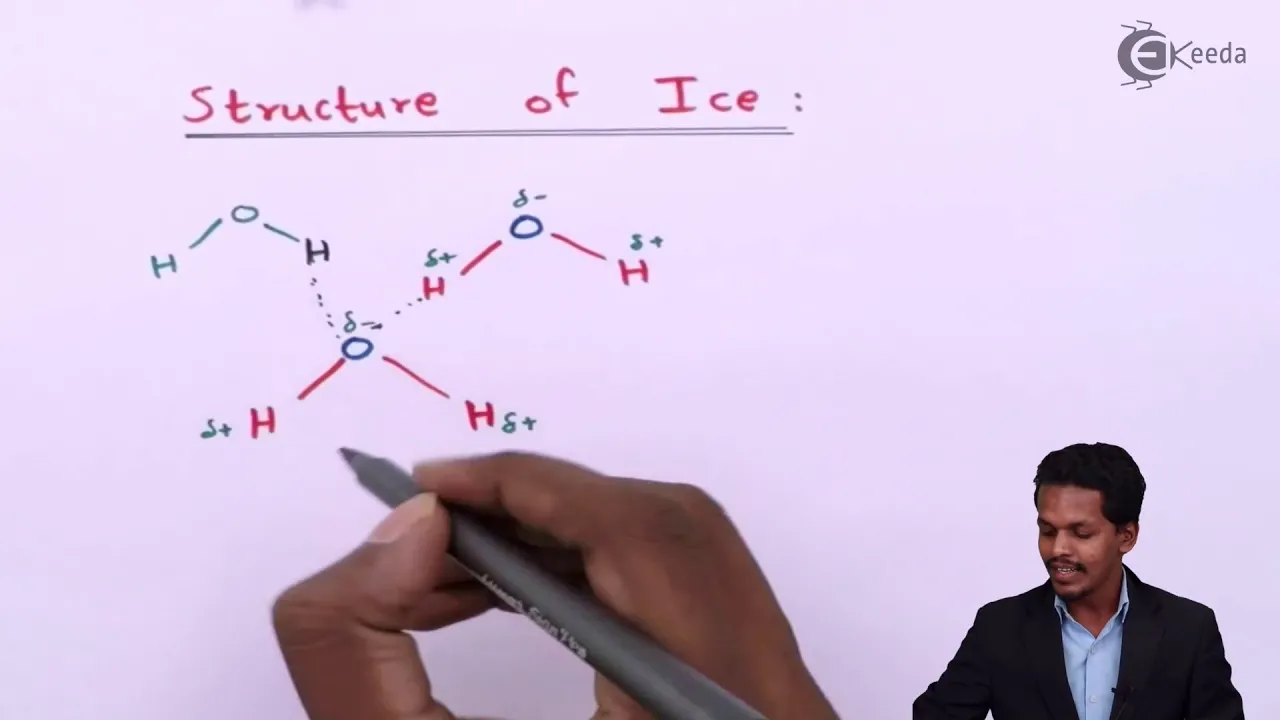
5:56
Chemistry
Structure of Ice - Hydrogen - Chemistry Class 11
Ekeeda
50K views•2019-05-06
45:56
Chemistry
2019 O Levels revision - O Levels Combined Chemistry 2018 revision
acescorers3110
646 views•2019-10-29
6:56
Chemistry
Study Organic Chemistry with Lluís: Total Synthesis of Vilmoraconitine
NROChemistry
2K views•2025-01-09
1:08
Chemistry
How to Write the Formula for Tin (II) sulfate
wbreslyn
11K views•2019-02-26
18:46
Chemistry
Why “Chemical-Free” is a Lie | Exposing Chemophobia
PaleBlueThoughts
978 views•2023-10-13

1:55
Chemistry
OCl2 Lewis Structure (Dichloride monoxide)
geometryofmolecules6271
5K views•2022-03-28

3:31
Chemistry
Lets Talk About Peacock Ore! Are Those Colors Natural?!
YeOldeRockShop-com
14K views•2021-03-09
2:42
Chemistry
Use of strontium in daily life
Viveksirmotivation
599 views•2022-01-18
Trending

13:38
Law
WOW! Judge TURNS THE TABLES on Trump in His OWN $10B LAWSUIT!!!
MeidasTouch
197K views•2026-07-23

13:25
Business
Playstation NO DISC/NO BUY Fight Is Over...
DavidJaffeGames
4K views•2026-07-23

22:40
Business
Steam and Xbox Just Dropped The Hammer On PlayStation
OhNoItsAlexx
9K views•2026-07-23

16:52
Anthropology
Americans Confused in Australia for 17 Minutes Straight
IWrocker
17K views•2026-07-23