The Moon does not produce its own light but reflects sunlight, creating its visible phases which cycle through New Moon, Waxing Crescent, First Quarter, Waxing Gibbous, Full Moon, Waning Gibbous, Third Quarter, and Waning Crescent over a 29.5-day period; the Moon is tidally locked with Earth due to gravitational forces and takes 27.3 days to complete one orbit around Earth.
Install our extension to search inside any video instantly.
🌙 Moon Adventure for Kids | Fun Animated Video #MoonAdventure #SpaceForKidsAdded:
Hello explorers.
I am Tara from Babble Lingua. Look at the sky. Can you see a beautiful round object called moon? [music] Have you seen its different shapes?
And do you know it does not have its own light?
Let's figure out some interesting facts [music] about moon.
Are you ready? Let's start. I traveled 384,400 [music] km to reach moon. Can you see the surface?
It's solid and rocky.
To reach the other end of moon, I traveled 3,474 km.
Sounds interesting.
Right? Do you know moon does not have its own light?
Confused? [music] Right?
Let us figure it out. Moon is revolving around Earth. At the same time, Earth is revolving around Sun.
Earth is also rotating.
Because of this, different part of moon is exposed to sun [music] rays, just like this.
The part which is exposed to sun reflect backs the rays, and this is how moon emits light.
>> [music] >> And we see different shapes of moon. Let us learn about the different shapes [music] of moon. When we cannot see the moon, it's called new moon. Small crescent on the right side is called waxing [music] crescent. First quarter.
When the right half of the moon is visible. When more than half of the moon is glowing, it is called waxing gibbous.
And here [music] comes my favorite full moon.
Shining like a bright source of light, moon starts shrinking from the right [music] side, and this is called waning gibbous. The moon is again half visible, and it is called third [music] or last quarter. And now moon is again very small and shrinking.
This phase is called waning crescent.
This complete [music] cycle takes 29.5 days.
Moon is tidally locked with [music] Earth because of the gravitation force of both Earth and Moon.
This impacts the tides of oceans and sea. And one more interesting fact, Moon takes 27.3 [music] days to complete one round around Earth.
Who are you?
I am your friend, Moon. My name is Luna.
And now, it's quiz time.
Can you tell me how many days does Moon takes to complete [music] one round? 10, 20, or 27.3 days? Yes, you are right. It's 27.3 days.
Next [music] question. Can you tell me the name of the Moon? Luna, Tuna, or Mona?
Right answer.
It's Luna.
It's time for me to go back to Earth.
See you soon, Luna.
Kids, if you enjoyed this video, [music] please like, share, and subscribe.
Bye-bye.
>> [music]
Related Videos

Spiral Galaxy NGC 3370 from Hubble | NASA APOD 2025-11-05 #Shorts
galaxygallery
938 views•2026-05-30

SOMETHING inside the SUN is CHANGING
RaysAstrophotography
1K views•2026-06-03

Captured the Blue Moon (with a twist) 🌙✨ #space #bluemoon #telescope
realAstroExplorer
674 views•2026-06-01

There May Be A Giant Hole In The Universe... And We Might Be Inside It | The Cosmic Ledger Entry 015
TheCosmicLedger
145 views•2026-05-31

The Map We Sent to the Stars in 1977 — Why Scientists Now Regret It
TheAncientRecord7
183 views•2026-06-03

10 Planet Where a Black Hole Replaces the Sun
cosmicexplorer-EN
147 views•2026-06-02

Is this a copy of our galaxy? Discover Galaxy M81!
UniverseDocumentaries-cc4mb
995 views•2026-05-31
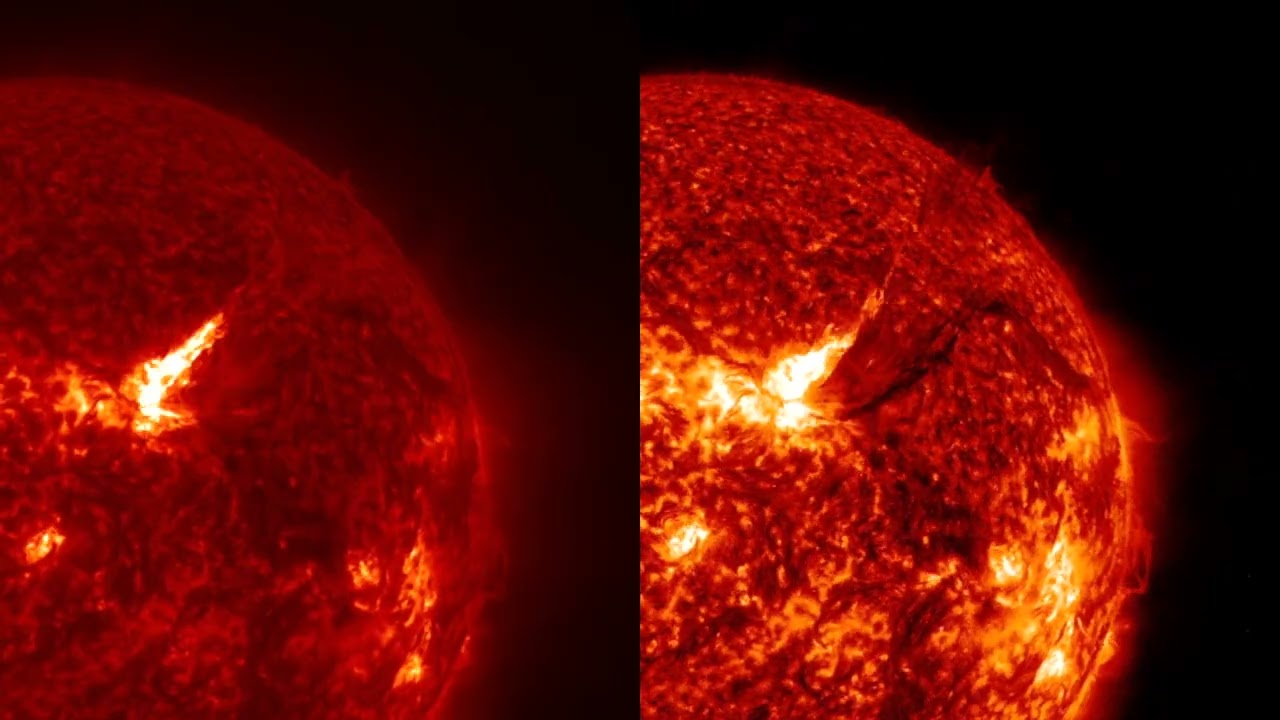
Solar Flares and CMEs at Earth - More Likely | S0 News June.3.2026
SpaceWeatherNewsS0s
2K views•2026-06-03



