This video effectively challenges the "dead rock" stereotype of the outer solar system by making complex planetary science accessible. It is a sharp reminder that our current models are often just one discovery away from being rewritten.
Installieren Sie unsere Erweiterung an, um sofort in jedem Video zu suchen
The ‘Impossible’ Object at the Edge of Our Solar SystemHinzugefügt:
Hello and welcome to 7 Days of Science, your weekly source for the latest science news. In the headlines this week, a world beyond Neptune reveals a strange secret. A new species of prehistoric mammal from Mexico has been named. Scientists have discovered that the best time to catch a cold is after eating. And much more.
If you're not already supporting us on Patreon, now is a good time to become a member. Every week, we release the script for the next episode of 7 Days of Science early to our patrons. And we've started making posts of bonus science papers that we found but didn't have time to write about for the main episodes. You'll also be able to watch our monthly discussions of all our favorite science news. So, if you like what we do here, be sure to support us on Patreon and get access to some fun bonus content. Our title story this week is the news that a distant world beyond even Pluto seems to have an atmosphere.
And it's a bit odd that it does. Other than this, the only atmosphere detected on an object beyond the orbit of the planet Neptune is Pluto itself. Although there is a different dwarf planet that seems to be emitting methane gas. This week, astronomers have published a paper in Nature Astronomy revealing that the object known as 2002 XV93 has a thin atmosphere despite that being seemingly impossible. It's far too small and indeed too cold to actually keep one around. So, this is somewhat of a puzzling discovery. This object was discovered at the end of 2002 by the Palomar Observatory and announced in 2003. It's what's known as a Plutino, meaning it has an orbital resonance with Neptune at a 2:3 ratio. So, it orbits the sun twice every three orbits that Neptune makes. Pluto is the largest Plutino, and there are actually quite a few Plutinos that we know of, and doubtless a few that we are yet to discover. Despite being in our solar system, this object is incredibly difficult to observe. It is incredibly far out and only about 500 km in diameter, which is about seven times smaller than even our moon. So, we can't just take advantage of constant easy observations. Instead, the observations behind this research were made as it passed in front of a distant star, allowing astronomers to gain information about the body as light passes around it. It was these observations that revealed the presence of a thin atmosphere around this plutino. As we said before, an object of this size and low temperature shouldn't really harbor an atmosphere, at least not for long.
There is a chance that it could have formed recently within about a thousand years, perhaps from a colliding asteroid that contained the gas that now forms its atmosphere. In cosmic terms, this is somewhat of a crazy coincidence that we've been able to observe this atmosphere before it dissipates. The other possibility is that the atmosphere is being constantly replenished by something. Perhaps gases that have previously been solid or liquid from inside the plutino. If this is the case, it could suggest that a wider range of distant icy minor planets can exhibit atmospheres. Perhaps this occurrence is more common than we had previously thought. In order to answer some of the questions about this mysterious object, we'll need further observations to confirm whether or not the atmosphere is dissipating at a rate that suggests it was indeed impact generated. Further observations could also help us discern what this atmosphere is composed of, something we have yet been unable to do.
Until then, we'll have to patiently await our answers and indeed other exciting discoveries from the edges of our solar system. In other news, a story from far beyond the edges of our solar system into the depths of the universe and time itself. Researchers have released a paper describing the discovery of a galaxy from about 12 billion years ago from when the galaxy was less than 2 billion years old. Like many distant objects we've been viewing recently, this galaxy has quite an unexpected feature. It is thought that galaxies at their formation spin particularly fast. Almost all galaxies spin and nearly all in the same direction. But over billions of years of existence, this spin can slow down as galaxies collide and merge, merging their spin as well. Given this process takes many billions of years, this new galaxy should be spinning faster. So far, massive, particularly distant galaxies have only been observed rotating rapidly. This one isn't. This isn't an impossible find, however, and the team behind this research think it could have happened because of an early galaxy merger that saw two galaxies of nearly completely opposite rotation merge with one another. It's yet another cosmic coincidence, and it's incredibly exciting to see yet more discoveries about the beginnings of our universe made thanks to the James Webb Space Telescope. In the recent paleontology news, we are pleased to welcome a new species of prehistoric mammal that lived during the late Cretaceous period about 75 million years ago. It was discovered in Baja California, Mexico, and represents the most complete mammal fossil from the Mesazoic to have ever been found in the country. The specimen consists of a largely complete front part of the skull and lower jaw, plus some fragments of limbs and vertebrae.
It's been named as a new species of an already named genus called Kimoladon. So this new animal is known as Kimoladon Dosa. It was named in honor of the field assistant who discovered the fossil, Michael Dosa, who sadly passed away in 2009. Kimoladon Dosa is what's known as a multi-tubercculate mammal. The multituberculates were an extraordinarily abundant and diverse radiation of mammals that proliferated during the messoic and the following paleogene. However, they went completely extinct about 34 million years ago.
Kimodon Dosa would have been rather small, about the size of a hamster, and probably made a living by running about on the ground and consuming fruit and insects, while also trying to avoid becoming prey for the dinosaurs it shared its environment with. It's a fantastic discovery and a wonderful addition to the fossil record of Mexico.
In other news, a remarkable new study published this week suggests the best time to catch a cold is just after eating. Okay, let's break that down a bit. The study examined how tea cells, a key type of white blood cell in the immune system, are affected by the availability of nutrients in the body.
The researchers compared the metabolic profiles of tea cells in blood samples taken from people before their first meal of the day and then again in samples taken after 6 hours when they'd been allowed to eat whatever they wanted.
Amazingly, the tea cells examined after eating had higher metabolic capacity.
Activating the immune system is an incredibly energy demanding process. So, by providing tea cells with the easier access to the nutrients needed for activation, their sugar uptake improved and they even had more efficient mitochondria, enhancing their threat response. Although participants food intake wasn't controlled, so we don't know whether or not certain foods have a greater influence than others, this is quite an interesting result because the effects occurred each time regardless of the food consumed. The paper could also have significant benefits for therapies based on TE-C cell engineering such as CART cell therapies for cancer treatment. It has been shown that these cells had greater anti-cancer activity in people who had eaten compared with CARTT cells from people who had fasted.
What a fascinating new study. Also this week we have some very important dates coming up. Firstly, Thursday the 7th of May is deep day, an opportunity to celebrate and reflect on how vital the deep sea is to our planet. We've covered a couple of stories in the past about the catastrophic consequences deep sea mining has on the environment. Today for Deep Day, we're celebrating seammounts.
These are vast underwater mountains that rise from the seafloor and can reach heights of over a kilometer. Scientists estimate that there are at least 100,000 of them across the global ocean. On their surfaces, slow growing corals and sponge communities form complex three-dimensional habitats that provide shelter and feeding grounds for numerous other species. Their slopes disrupt ocean currents, pushing nutrient-rich deep water upward. This process fuels plankton growth, which in turn supports dense fish populations and attracts a wide range of marine life. Remarkably, around 20% of seamount species are found nowhere else, and a significant portion of their biodiversity is still unknown to science. But seamounts are highly vulnerable. Their ecosystems develop slowly with corals and sponges growing just millimeters per year and living for centuries. This makes them extremely sensitive to disturbance. One such threat to them is bottom trolling. They are also threatened by deep sea mining, climate change, and pollution. To learn more about these amazing ecosystems and help celebrate deep day, look out for one world's video on the topic. Our second important date is Friday the 8th of May as the whole world celebrates Sir David Atenburgh's 100th birthday. David Atenburgh has been a huge inspiration to millions of people as he spent his life exploring the natural world and providing the voice to some of the most or inspiring cinematic wildlife documentaries ever to air. And on a more personal note, without Sir David Atenburgh, this channel might not ever have existed. The very first video that Ben uploaded over on the Benji Thomas channel, where Seven Days of Science originated, was a wildlife documentary he made when he was about 12 on his family's holiday in Florida in 2013.
This video was directly inspired by all the Asenra documentaries he saw when he was younger. So, Sir David really has had an immense impact on Ben's life and my own. There's going to be a live event filmed at the Royal Albert Hall in London on Friday to celebrate Sir David's 100 years on Earth featuring friend of the channel Steve Backshaw as well as Sir Michael Palin, Chris Pacham, Liz Bonin and others. So from the whole 7 days of science crew, happy birthday David Atenburgh. Finally for the recent science news, the first conference on transitioning away from fossil fuels concluded last week with some promising outcomes. The historic meeting which ran from the 24th to 29th of April was hosted in Santa Marta, Colombia.
Attended by representatives from more than 50 nations. The meeting was the result of a proposal made at last year's COP 30 climate summit in Brazil.
Colombia along with the Netherlands announced that it would host the independent conference as a way to put more focus on the advice of climate scientists in creating fair practical solutions as the world transitions away from fossil fuels rather than dealing with oil producing nations that reportedly continue to block attempts to create a roadmap for the transition at the COP summits. At the meeting in Santa Martr, a new panel of researchers was launched. the science panel for the global energy transition which aims to produce a comprehensive series of recommendations to present at COP 31 in Turkey this November. Additionally, another group of researchers presented a report on 12 highlevel actions for governments to consider. It's promising to know that even when attempts to plan for a transition away from fossil fuels are blocked at COP, there are still efforts to cooperate and listen to researchers advice. Next year, the summit is planned to be held in the island nation of Tuvalu and co-hosted by Ireland. Well, that's it for the news this week. I really hope you enjoyed learning about all that's happened in these last seven days of science. You can follow 7 Days of Science on Instagram and also be sure to support us on Patreon if you enjoy what we do here.
As always, a big thank you to our patrons, including Andrew Cowam, Brain, Weevil, Kang Yin, Chippy Chippy, Chappa Chappa, Danna Hernandez, Dvasta, Ethan Wang, Gabriella, Gary Arrington, Guotist, Ireage, Joy, Joy, John French, John Perie, Joseph Ree, Josh Lambert, Joshua, Cory Peterson, Leland Lampkins, Lena Rose, Lewis Fischer, Lou, Mark Nevin, Mendic, Frier, Mike Pace, Monitor Man, Ralph Bolzac, Robert Pepika Jr.
Robert Thomas Salvin Sammy Petrikus Steve Bradshaw Thomas F Conroy III Timothy Nedro Tracy Marfield and Troy Schmidt. Thanks for watching and we'll see you next week.
Ähnliche Videos

Spiral Galaxy NGC 3370 from Hubble | NASA APOD 2025-11-05 #Shorts
galaxygallery
938 views•2026-05-30

SOMETHING inside the SUN is CHANGING
RaysAstrophotography
1K views•2026-06-03

There May Be A Giant Hole In The Universe... And We Might Be Inside It | The Cosmic Ledger Entry 015
TheCosmicLedger
145 views•2026-05-31

Captured the Blue Moon (with a twist) 🌙✨ #space #bluemoon #telescope
realAstroExplorer
674 views•2026-06-01

The Map We Sent to the Stars in 1977 — Why Scientists Now Regret It
TheAncientRecord7
183 views•2026-06-03

Is this a copy of our galaxy? Discover Galaxy M81!
UniverseDocumentaries-cc4mb
995 views•2026-05-31

10 Planet Where a Black Hole Replaces the Sun
cosmicexplorer-EN
147 views•2026-06-02
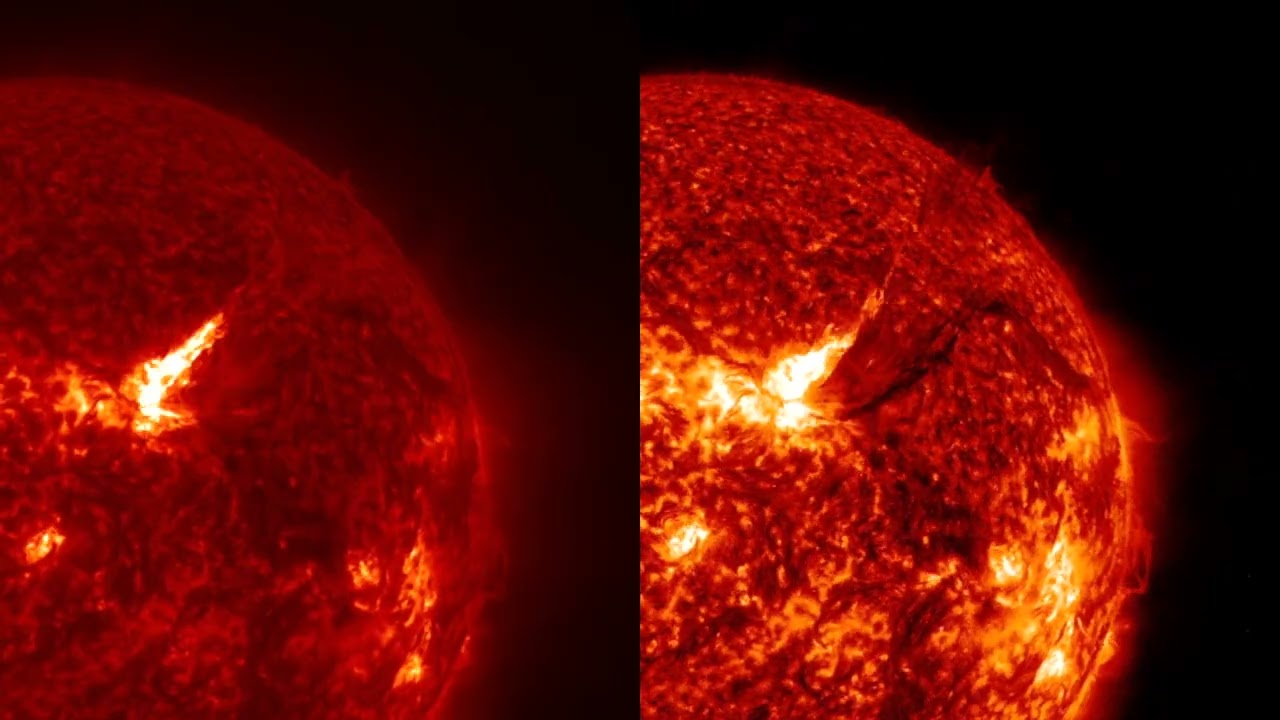
Solar Flares and CMEs at Earth - More Likely | S0 News June.3.2026
SpaceWeatherNewsS0s
2K views•2026-06-03



