A tidal disruption event occurs when a black hole's extreme gravitational forces rip apart a wandering star, causing the stellar debris to spiral inward and create a brilliant, fleeting flare that lights up the galaxy; astronomers observe these rare cosmic events across multiple wavelengths from X-rays to visible light to study extreme gravity, high-velocity winds, and how black holes shape their galactic environments.
Install our extension to search inside any video instantly.
The Tidal Glow A Black Hole’s Star FeastAdded:
Tonight, my universe ventures into a tidal disruption event where a sleepy black hole feasts on a wandering star.
As gravity rips the star apart, stellar debris spirals in, lighting up the galaxy with a brilliant fleeting flare.
Astronomers watch this cosmic carnage across X-rays to visible light, decoding extreme gravity and high velocity winds.
These rare dances reveal black holes, appetite, and the fabric of space-time bending under impossible forces.
Stick around to learn how these luminous beacons map invisible dark matter and hint at black holes shaping their homes.
Related Videos

Spiral Galaxy NGC 3370 from Hubble | NASA APOD 2025-11-05 #Shorts
galaxygallery
938 views•2026-05-30

SOMETHING inside the SUN is CHANGING
RaysAstrophotography
1K views•2026-06-03

Captured the Blue Moon (with a twist) 🌙✨ #space #bluemoon #telescope
realAstroExplorer
674 views•2026-06-01

There May Be A Giant Hole In The Universe... And We Might Be Inside It | The Cosmic Ledger Entry 015
TheCosmicLedger
145 views•2026-05-31

The Map We Sent to the Stars in 1977 — Why Scientists Now Regret It
TheAncientRecord7
183 views•2026-06-03

10 Planet Where a Black Hole Replaces the Sun
cosmicexplorer-EN
147 views•2026-06-02

Is this a copy of our galaxy? Discover Galaxy M81!
UniverseDocumentaries-cc4mb
995 views•2026-05-31
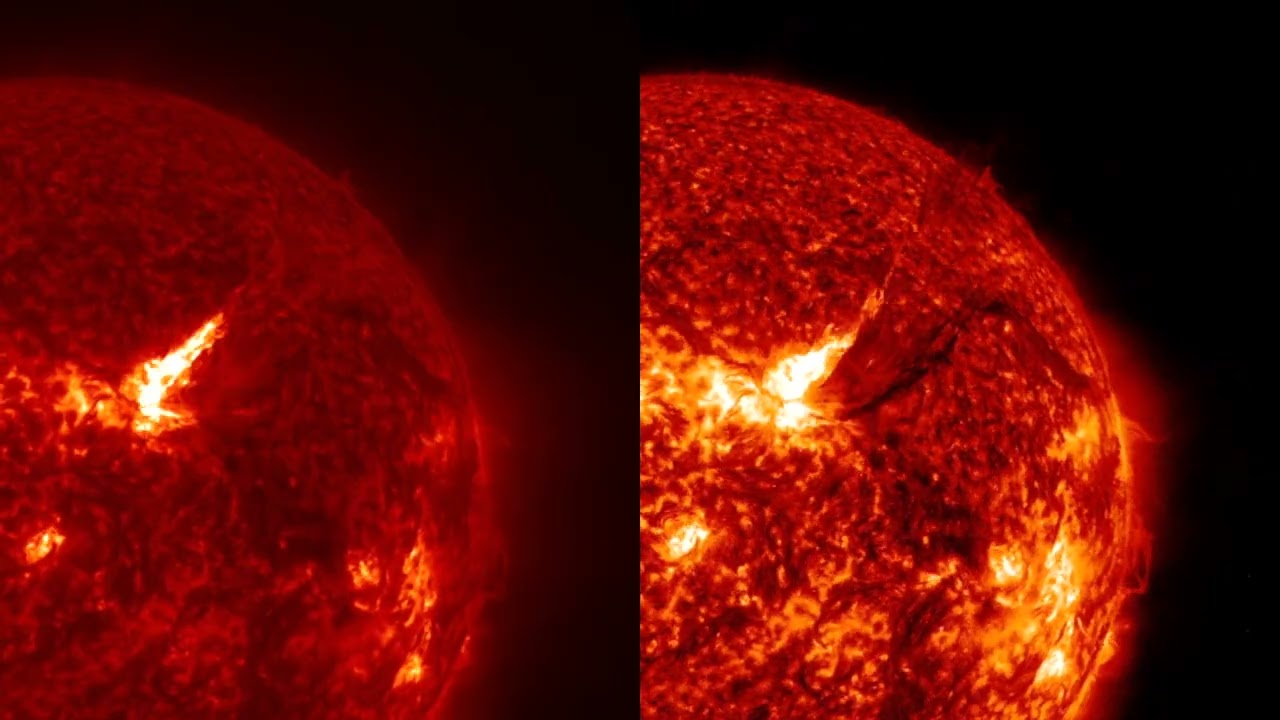
Solar Flares and CMEs at Earth - More Likely | S0 News June.3.2026
SpaceWeatherNewsS0s
2K views•2026-06-03



