Hyseni masterfully bridges the gap between professional research and citizen science, proving that amateur precision can drive genuine planetary discovery. This is a rare example of high-level expertise successfully empowering the public to contribute to the frontiers of astronomy.
Install our extension to search inside any video instantly.
Astronomical League Live Feat. Pranvera HyseniAdded:
doesn't show up in the next few minutes, it will be you.
>> Oh, really?
>> Don't get stage fright.
Well, hello everyone. This is the Astronomical League live program. I think this is number 58, uh, if memory serves me right. And we're featuring Panvera Heisini. Uh this is the group that we have right now, but other people will be joining on as the show goes on. Um and uh I'm broadcasting it. The show looks a little bit different right now because I'm broadcasting from my laptop that I configured down here in Buenesis, Argentina. So I got a nice internet connection for you. Uh we got our group collected. uh we were able to pull it off and um so um so I'm going to turn it over to you Terry.
Okay. Thank you, Scott. I appreciate that. And thank you so much for everything you went through to be able to [laughter] do the podcast. I know it did take you work. I know >> they can make like a sped up movie of what I did. Okay. It was it would be pretty funny.
>> So Well, we appreciate it because I know it took a lot of work to do it. Thank you very much. So, we do have a great line tonight. Um, I think what we are going to start with would be John Goss.
And John is our media. So, John, uh, if you're ready, go ahead and start.
>> Alrighty.
You caught you caught me doing three things.
>> It's like being thrown on stage.
[laughter] >> No, no, no. I I I was >> like the deer in the headlights.
>> No, no, no. This this is fine. This is all all working out fine. Yeah. Um or not. So, should I hold off or you want me to?
>> Now, since Pan is here, how about if do you mind waiting and we will start with Pram? So, we can get with the time difference. We'd like to we're going to start putting our keynote speakers first because we think that just work a lot better. And I see Pan is here. So let me I know everybody knows everything I'm probably going to read. Everyone knows Pran. So let me tell you just a little bit about her. Preverisini is a planetary astronomer and PhD candidate in earth and planetary sciences at UC Santa Cruz. Her research combines NASA telescope observations, laboratory spectroscopy, and geocchemical modeling to investigate organic matter in asteroids with the broader banding of tracing how water and organics formed and moved through early shaping the ingredients for life. In 2020, she discovered the main belt asteroid 2020 SS13.
And in addition to her academic research, she conducts astrometry and time critical observation using her own observing equipment. She is the founder of Astronomy Outreach of Kosovo, the country's first astronomy organization and runs astronomy with pan through which she leads handon astronomy education public engagement programs.
Pan is also an official brand ambassador for Celestron. Welcome Pan.
>> Uh thank you Terry. Thank you so much for having me here. I'm so excited to be with you guys.
>> We're excited to have you here and we're all looking forward to your talk.
>> So, if you'd like to prepared uh some slides, I will share my screen and hopefully everybody can hear me. Okay?
>> Yes, I think so.
>> Uh how much time do I have approximately?
>> Approximately let's say uh 45 to 55 minutes.
>> Oh, that in that case we're good. Just wanted to make sure I check. Uh well, thank you so much for the introduction.
It's so very nice to see a lot of you here. Uh hi Scott and John and everyone.
Um uh yeah I'm very excited about this topic because it's something that I am very enthusiastic about about minor planets but also I it's something that I am hoping uh other astronomers uh can actually learn how to conduct because it's something that you can basically measure and contribute with your own gear from your own backyard. Um so my talk is going to be about asteroids and occultations uh and I will just talk a little bit about the science of it why these are important and how we can actually measure them. I don't know if uh the audience can ask questions if anybody's monitoring but I am also open to questions at the end of this. Uh but just a little bit about me I am a a PhD student at UC Santa Cruz. I am a fourth year uh PhD um candidate and uh I specialize on minor planets more specifically uh the trying to understand the surface composition of hydrated asteroids. So basically trying to understand uh early planetessimals that formed and contained or accreted a lot of water and volatiles and how did that water and uh fluid mobility basically uh reshape the chemistry of these asteroids uh over time and what we can learn about the evolution of our solar system and how everything formed and how did organics uh kind of redistribute across across the solar system and and also within the asteroid itself based on the mobility of water. Uh so that's what I uh basically study. So my studies involve a combination of laboratory studies uh here uh both at UC Santa Cruz and also at Stanford where I use FDIR spectrometers to try to basically understand um the spectra of different uh meteorites that have been uh altered by water over time. And um we want to understand these because they are fragments of these hydrated asteroids.
So it's like the best example to have like in our hands and put it in the lab and see what it looks like. And then I use different forms of salts and organics to mix with different types of meteorites to try to see how the spectra of those meteorites is basically changing. Uh and then I use NASA's telescopes to basically look at the spectra of asteroids in the main belt mostly hydrated asteroids like sea types uh very dark carbonishes asteroids. And uh this is a uh a telescope that operates in the infrared at Mount Aa.
It's really incredible to be up there.
Every time I get time on it, I like to go there and use it in person. Um and also take my time to enjoy the border once there. Uh but yeah, with this telescope I conduct a lot of the spectra and then I try to see how the spectra of these asteroids uh compared to the spectra of the meteorites that I generate in the lab when I mix them with different amounts of organics and somehow trying to make a conclusion like what we're seeing what the surface composition of these asteroids uh is telling us and whether asteroids within the same family that came from the same planetary body back in the day that broke up, whether they look the same, are they different, if if different, why they look different. So, this is basically what I do academically. But today, I will actually be uh talking a little bit about uh something else, something that I actually don't need NASA's telescopes uh to conduct. It's just from my own backyard. This is just a picture that I took at Mount Aaya from uh the dome of um from the yard of the uh IRTF telescope. It's really incredible to be there. The zodiac light that looks in this picture, it's basically almost like light pollution.
Um, it's very dark and every time I go there, I take a lot of pictures. Last time I went there, I even brought my Celestron Origin with me and while the telescope was running inside the 4 meter, the origin was imaging outside and oh my god, it was really cool. Um but today I wanted to uh actually talk a little bit about um Okay, my slides are moving fast. Okay, so what is an asteroid occultation? Cuz my title is like chasing asteroid shadows. So basically occultations are like many eclipses of stars like a solar eclipse when the moon is passing in front of the sun is like the similar thing that when an asteroid that is in the solar system is orbiting the sun and uh relative to the stars in the background asteroids move a lot faster. So it happens often times that asteroids between us and the stars will actually cross in front of stars and block the the star light for a few seconds. Usually a solar eclipse can last up to 2 minutes or more. But these uh occultations are actually really brief. Sometimes can be a fraction of a second. Sometimes can be a few more seconds. It all depends on the size of the asteroid and the relative like distance from us. Uh so I have I was first introduced to this when I was in Australia in 2016. I was like 19 years old. I was still a teenager and I went there to visit some friends. One of my friends, Jonathan Bradshaw, had actually built a backyard observatory and he was conducting real astrometry and measurements from his own telescope in his own backyard and I was extremely fascinated with that. So I really wanted to get into it and try to do this myself. I was provided with some equipment back then. But then back um when I went back to Kosovo because at that time I was still living in Kosovo, I really didn't have very good uh equipment. I didn't have a computer. I didn't have like a nice mount or something to track the stars and it just never really worked for me. But I always kind of had it in the background, a thing that I would eventually want to get started to. And then when I came here to the states and I now have accumulated a lot of telescopes, you can imagine I wanted to actually see whether I can measure an asteroid occultation, whether I can see one. So usually when the asteroid occultations happen, they will project a shadow similar to a solar eclipse in one area of the world. But unlike solar eclipses where the path of the shadow is normally very large and you can see it across different states with asteroid occultations the shadow is very narrow. Normally like a few kilometers um it could be like over a city it could be a little larger sometimes but most of the time it's really narrow. Um so I also wanted to talk a little bit like why is it important? Why do we care if an asteroid is crossing in front of the star? Like for someone it wouldn't make sense why we, you know, need to measure that. It's because just by measuring how long that event is taken when the asteroid is passing in front of the star, we can actually very highly accurate uh the asteroid size. We can reveal the shape. We can tell whether it is regular like more circular or it has like a more potato shape. Whether it has a hidden moon because some of these asteroids can actually have a satellite that we don't know about and an occultation can actually reveal that or whether it has rings because astronomers in the past have also discovered rings around asteroids. And then it also helps to refine asteroid orbits. Like the more observations of a planetary body that is out there and the more reports on those observations, the better the um the certainty of the orbits will become for future predictions. And then if we ever decide to go at one of these asteroids to explore with a spacecraft, having a really nice refined orbit will help, of course.
And then um when it comes to occultations, the most critical thing to know and to keep in mind is that timing uh matters a lot. And this is not something that you can just take a video, look at your iPhone, and look at the time and be like, "Oh, this is the time when it started, and this is the time when it's stopping." No, we need very accurate GPS time to a millisecond.
Because sometimes these can be like half a second or like 1.5 seconds and if multiple people are measuring the same events they are not all going to get the same time. So that's why we need to be very accurate uh when it comes to the time and this is why timing actually helps us to reveal the shape details which I will show next. And for this reason, it's very important to actually have a GPS or absolute timestamped video. And uh there are um GPS um devices that IOTA uh makes um and I will talk about them also next. So this is just an example to show for instance the shadow path of of an eclipse. Um you can see here it's very narrow. Um the telescopes are just showing like some of the observers that are in the path that have signed up for this observation. So it's crossing over a very very narrow area and it's crossing over the Bay Area where I am. And also when the path is very small, you can also imagine that observers are not always going to be in the path. So sometimes if it's not too far away, we will actually just hop in the car, get our gear, and drive to the path. And if it's over the house, then even better. But sometimes if it's a very important asteroid that it's you know we really want to measure it then uh usually astronomers will will make an effort to plan together and go in the path and kind of lay out across the path to get multiple observations.
Um, and of course, if you're not in the path, you're not going to see anything, but sometimes the predictions are not accurate. Sometimes the error margins are kind of large, so you could still see it. So, it's important if you're close to the path, you still want to make an effort to see if you can see the occultation or not.
Um, this is actually quite interesting. So this was um this is a binary asteroid uh that NASA took this picture and they assumed that there is like two asteroids or like binary system but the best way to try to reveal the shape or what exactly this is was based on occultation. So um this uh event uh was taken actually in 2011 is asteroid uh antiope um and antiope actually has is like a binary system. So all the lines that you're seeing here all the different colors are actually different observers that are in the ground. So that's the shape of the asteroids.
That's the shadow that the asteroid is actually projecting on the surface of the earth. So now you can imagine all the um people there all the lines that are uh located in the path they all are either seeing or not seeing the occultation and uh they all report at different timing. For instance like uh the green light here is seeing the asteroid from this point. The star for this person disappears from this point here to the end of here. And then for instance the pink one got a very very short amount of time because it's only catching like uh the corner of one of the asteroids. And this is interesting because this is something that is like collabor collaborative work of many people. So you can imagine all of these astronomers are reporting these observations and then there is a program that you can put together all the observations and actually get the shape of the asteroid which is quite insane.
And uh you can see how beautifully the profile of Antio and its um uh moon actually looks like here. Uh they even assumed that there was a crater in one of these and the crater is actually looking pretty nicely in um in one of the in the moon here. Uh this is actually one of my favorite events and I know my friend Tad Swift who's also here in California mad uh chaser of occultations and I learned a lot from him. He was actually one of the lines. I forget which one.
But uh this is just really incredible and this doesn't take a lot. It just it's a very simple thing to do. You just point your telescope at the star, you wait for it to blink and you go home and you report that. And this is the science that you can actually get out of it.
So someone can ask how do we know when the stars can actually occult? How do we know when the star is going to cross in front of the star? um when the asteroid is going to cross in front of the stars.
So basically um astronomers um kind of have observed asteroids over uh like years and we know a pretty good amount like what the orbit of most of the asteroids are nowadays and then Gaia uh is um uh actually gives very very precise positions of stars and we have many cataloges of stars. We have Tao, we have uh Yukak, someone uses Gaia etc. But no, we know the positions really well and then the international occultation timing association IOTA takes the these [snorts] data sets and then runs the calculations and then they will give predicted shadow paths for all the areas of the world. So if you are living, let's say in New York or in San Jose or Cincinnati, wherever you are, you just put in your coordinates and you will be able to get a list of the occultations that will be basically predicted for your area. You will get where the shadow is going to be, what time, what is going to be the magnitude drop, what star is going to be occulting, which asteroid it's going to be. It's actually pretty awesome. And also how long it's supposed to be. And these predictions are normally really good, but it also depends on the asteroid, how small the asteroid is, how um how good we know the orbit of the asteroid. So sometimes the predictions are very accurate, sometimes they're a little bit off, but the more we submit observations, the better the future predictions will get. Um this is um a program that you can download for free from Google and it's called um Ocul Watcher. Uh so you install this into your computer and then into the configuration you can go and enter the coordinates that I mentioned for your location and then you will have a list that looks like this of all the events that uh are going to uh be visible in your area. It will show for instance uh the name of the asteroid, the date, the local time when it's going to happen, the magnitude of the star. It will also give you an area where you can click to see the map and it will direct you to the Google map uh to show you the air like the path of the asteroid over your area. For instance, for this event, Croatia, I created my map to see where it's going to be in the Bay Area and this is how it looks like. Uh also before um so yeah, this is how it's going to look like. Uh my house is this one right here with a black telescope in San Jose. But you can also see that the path of the shadow is actually pretty pretty large. It goes from all the way to like San Raphael almost all the way to Gilroy and it's crossing a large area and then all these chords the different colors of the chords are different observers that have set uh their observations for their locations except for the green line which is the center point and then the blue line it's actually uh the shadow itself the predicted shadow from blue to blue and then the red uh lines are actually the error margin which actually corresponds to this um bottom line here where you can see uh the the blue shadow and then the pink error margins are very small for this uh predictions. So the smaller the pink color the better because there's not a lot of error. Sometimes the error margins can be very large and if you are between the uh red and the blue line that means that you might or might not see the occultation. So even if you're located there, it's still a good idea to actually point your telescope and make an effort because it still helps because if you get to see the observation in the era margin, you can tell Iota that yes, you need to uh like fix the prediction for future because this is like a new observation like making kind of like an effort to um make the observation or prediction more precise for the future. Um so I happen to be in here uh not very far from the center line but still um also kind of a very interesting location. For instance, this was another one that looks very much narrower than Croatia. This was a smaller asteroid. So the smaller the asteroid sometimes also the smaller the shadow path. Uh this was not coming over my house as you can see. was actually going over Gilroy and this other city, but I actually traveled all the way to the city center for this one because I wanted to check it out how it looks like. So sometimes even if it's not over my house, but if I think it's important and it looks interesting to me and I have free time, I will just hop in my car and drive like and chase the shadows of these asteroids wherever they are.
Um, what I use for my occultations, this is how I started. I might have to upgrade my setup later because I'm also using some of the cameras and stuff that are uh kind of outdated. But for my telescope, I started actually with my explore scientific. Uh this is um a telescope I mostly use for astrophotography. But uh I also kind of wanted to check it out with how it works with occultations and so far it has worked for me. Although like having a telescope with like a longer focal length that gives you like a narrower field of view, it's better because it's giving you more magnitude uh for the star because sometimes I lose magnitude if I have like a huge field of view. Uh but so far it's worked okay. Uh I work I use a celestial AVX mount uh which I also use for astrophotography. So again this is my astrophotography setup. Um, and then I use a Star Sense auto guider, not to guide because you really don't need to guide for an occultation. Uh, it's not like you need the star precisely in the middle of the frame, but as long as the star is in the frame and you're tracking it, you're okay.
Like, it doesn't have to be guiding. So, I only use the Star Sense auto guider because it auto like it polar aligns and it auto aligns my mount without too much effort and I really like to use that.
Um, and then for the camera, I actually use a almost 20 year old camera that my friend gave it to me when I was in Australia back then in 2016. and he had given me the camera and also this uh GPS iota um timestamper that connects uh between the camera. So the video that it's coming from the camera goes through this iota uh timestamper and then goes into my computer. So basically my video as it's being recorded is being stamped with very precise GPS time. So it's it's having every single frame being stamped down to a millisecond. So that's why it's very important to have this device and you can purchase nowadays this at IOTA website I I think. Um and then for software I use the occult watcher obviously to find the predictions and then I use um a star mapping catalog because once you have the star you also want to have a map of the star so that you have the coordinates of the star you have to tell your telescope where to point in the sky. You also have to figure out is it going to be too high in the sky? Is it going to be too low? What direction? Are you going to be able to see it at all? So that's very important to have. And then for capturing the video, I just use Sharp Cap, the one that you use for planetary imaging.
Literally, all I need is to take like um an AVI short clip and then that's what I use to analyze in Tangra. Tangra is another free software that you can just use to analyze every frame and then it will generate your light curve for you.
Um, so this was an event when I first got this set up and I thought, okay, I'm going to try to see whether I can see an occultation. First off, I was very unsure whether this was going to work out. I have had that camera and that GBS for almost a decade and it just uh it had been a while and I had forgotten how to put it all together, but I figured it out. So, I looked in the software. It said that Croatia was actually going to cross over my area here in San Jose. And my location for this event was here. You can actually see the black line in in the shadow of the path in the blue. So, I was not in the center, but I was also in a kind of okay location. Um, the event was going to be 7.2 two seconds, but also keep in mind that the further away you are from the center, uh your event might might not might be shorter.
So, I wanted to see and give it a try.
And all the other dots here, all the green dots here, you can actually see they are different observers that signed up for the event. So, you can actually tell the location where they are of different observers. Most of these observers I'm actually good friends with. They are here in the area. Richard and Kirk and Ted, they're all chasing these events for a long time. They are like experts at this and they have helped me a lot to uh get the star catalog and learn the software and a lot of things. So I work closely with them.
Um this was the star that was going to a culted I forget it was a actually it was a like 10 magnitude star. Um, and also I live in San Jose, very close to downtown. So I am in Bortal 7 and I was like, "Oh my god." And it was a full moon, like just a few degrees off from the star. I had like no hope at all that I was going to see this event, but it was kind of high in the sky. My telescope was out, so I might as well go and check it out. So I decided to actually try whether I can see this one.
Um, locating the star can be a little bit tricky sometimes because when you install the camera into your telescope, sometimes your stars might not look exactly like in the map because the camera might be rotated a different way.
So, your star map is looking upside down or something. So, trying to actually match the actual field of view with what you're seeing in the map that the CO2 catalog gives you, it can take some time. And if the star is too faint and you're in Bordal seven skies, it cannot be fun. But this is just an example like this was a star field like that I was getting for an occultation. The star that was going to be a culted was this one. And then this was what my telescope was seeing. So you can see the exact same stars showing up in the camera. And when I actually find this, I always scream from top of my lungs because it's the most exciting part almost like, "Oh my god, like I got it in the field. Now I am ready. Now I can relax and just wait for the event because sometimes it can be very intimidating and I get very frustrated if it takes a long time." Uh, so my first ever occultation that I captured with my own equipment was actually last year, not that long time ago. It was in October. I did was this asteroid that is 94 kilometers in size.
Pretty decent asteroid and um the event was going to last 7.2 seconds. Uh from the occult watcher you can even tell how many past observations of this asteroid have been uh through occultations. So there were a few but the most uh observers they had was in 2015 and only um two of these observer actually missed. Uh they had two three others that actually saw the occultation. So this is the overall shape that they could generate for this asteroid. So at least we know it's a little bit potato shaped and not circular exactly. So this event um was that's the path that was me there with my telescope and I wanted to see whether I can see it. So this is a video the raw footage that I took of this event and this was my first time ever. Again I was not even expecting to see it. I wasn't even sure what to expect. So I will just play the video for you. I hope you can all see it. It's a very very faint star and it's being taken from Bortal 7 sky. So you can see the star and it went off. It disappeared.
>> Oh.
>> And then it came back again.
And I was like, "No way. Did I just witness that?" I was just I was out of words. I couldn't believe that I got this from my own driveway in San Jose.
That was crazy. So, um, I took this footage and I uploaded it to Tangra. And then Tangra allows you to basically select the occulted star. And then you have to select three other stars for comparison and also for guiding uh for like guiding in the in this video. So that when you're analyzing the frames every single frame in this video, you will be able to uh measure the brightness drop for every single star.
And if there is some atmospheric disturbance or clouds passing through, then all the stars are going to be affected. But if it's only one star being affected, not the surrounding star, then you will definitely see a difference. And also I forgot to mention, but it's very important to have a camera that you can record at very high frame rate. The more frames you can capture within a second, the better. Uh so this is how you do the analyzing.
These are the four stars I um uh basically selected. And then you will end up with a light curve. And then at the end uh this program will ask you what was the timestamp from the first frame of this video and then the and the last frame. So you will insert the time.
So the video every single frame will have its own timestamp very accurately and then in the end you will have light curves that have the time in the x axis.
So these are all the light curves. I removed the other three stars that I don't need. I only want to leave the star that I have measured. And this is how it looks like. So, it's the light curve. It's going normal and then a huge drop because the asteroid just crossed in front of it. It blocked the light and then it's it's like remaining down and then it comes up again and then it appears again. And it's like it's incredible that I can actually measure this and then based on the very precise time that I have I can tell from what like from edge to edge how long it was uh very accurately and then this is my own measurement from my own like observation which I can then report. So to report this there is a very simple form where you just add like information. So basically uh whether the observation was positive or negative and then you add some information about you and your like your gear, what camera, what telescope, focal length, all of that. And you only have to do this once because if you don't change your gear, then you only have to do this one time.
And then the half of the document includes this area where you're basically uh reporting when the star disappeared and reappeared very like precisely with like very high accuracy.
And I was very excited to report my very very first observation. And what was funny is that I always get the emails from everyone who makes the first report whether they saw it or not. And all these astronomers were like positive.
Got it. Saw it. Report to follow. And then my report was like, "Oh my god, I saw it. I saw it." This was my first one. Like going crazy. And you could tell that I'm just like an amateur in the whole thing. It just it was so funny. Um but yeah, this was actually received by um by the team and then uh once all of us submitted the observations, it was like nine of us observing this event. Uh it was actually they were they were able to try to generate the shape of Croatia. Uh and also because it's a large asteroid, astronomers in the past have also generated a light curve um of this asteroid based on the surface brightness, which is another way you can actually tell the shape of the asteroids. They can actually combine the two, the occultation data and the uh surface brightness light curve data. And for instance like this one is my asteroid that someone uh was able to um measure the light curve of it and we got also a period like a period rotation spin timing which was like 18 hours and I was very excited to know that but once you you like put this data together you can even get like a 3D shape and look at that that's how Croatia looks like based on our observations from my observation.
too that I did from my own driveway and that's like insane. So I am here the green line actually I think. Yeah that's Husini. So that's me and every single one of us that saw the event some had a longer observation some didn't. I think the red line here um I think based on the surface brightness data I think they make some corrections that's why this is not aligning very well here. But this is how it looks like. And it's insane that you can just make observations from your own telescopes. Like you don't need anything special really to to be able to do this. And you can report it and you're contributing to the actual research and field. Um, and then one night I was actually outside with my telescope and then I saw in the occultation program that there was going to be a very short duration occultation.
That one was for me 6 seconds. This one was going to be 1 second only. But because I was very very close to the center line and I was already outside with my telescope, I was I might as well give it a try to see whether I can see it or not. So, I looked up this asteroid and it's actually very very small, only 10 kilometers in size. That's why this was very, very quick and the star was like 14 and a half magnitude. Trying to see it from downtown San Jose, that's just insane. But, you know, I went for it and because the event is extremely short, if I play the video, nobody would be able to see it. But if you go to the frames and you play the frames back and forth, you can actually see the star disappearing. So, I'm just gonna play this and look at that thing how it's actually disappearing when I play the frames. See that? It was.9 seconds. Extremely extremely fast.
That's why it's very important to get so many frames within a second so you can actually compare the frames. I was really happy when I saw this. Um, and then another one that actually really got my attention was this one. I I was looking through the list and usually I'm used to seeing an occultation being 2 seconds, 5 seconds, 3 seconds, 0.9 seconds and then I saw this one and look at that. This was going to be 25 seconds long and that's just crazy. This is asteroid Nefel 102 kilometers in size and it was according an 11th magnitude star which is relatively bright and I was like I have to see this thing but when I looked at the map I was actually not in the path. So I am this uh black line over here and I was like oh god I need to travel to get to see this. So I actually looked at the map and uh it was crossing over San Francisco, San Francisco, Berkeley, that area. I am down here in San Jose. So I looked in Google map and I just found a relatively close location to the center line away from the marine layer where I can actually set up and try to see it. It was like 1 in the morning and I was just traveling to a remote unknown location in the middle of the night to set up my telescope. Um, so this is me. Normally I will just find uh somewhere where nobody can bother me. Maybe could be somebody's farmland or like at the side of the road or just somewhere where I don't bother anyone and also away from any lights that I think it's a good location. Uh my um uh the back of my car is kind of like my control room where I keep all my stuff there, batteries and everything is always ready to go. Uh, and then I wanted to see this one. So, I'm going to play the video. This one I really like because the star is very bright and it's also very long. So, let's see.
That's the star that's going to be a culted. And I was just sitting there waiting for it to happen and then it just disappeared. Like, what the hell?
It just went. And I was just sitting there waiting and waiting and it just it's still gone. Like that's just insane. And I actually get to just sit there and watch and wait for it.
And it came back just like that. Like it's just incredible. And it's also kind of crazy because you get to drive like an hour away, set up all your telescope that and like align your telescope takes an hour and all that just to see like a 20 second event like that's just crazy.
Uh, and then I measured the light curve again in Tangra for this one and I got this dip. And when I measured it, for me it was 21 seconds. Uh, because I was not exactly in the center line. I had to uh stop a little earlier because the center line was hit by the clouds. So, I wanted to to still be able to see it. And I think this was actually really nice one, probably my favorite one ever. Um and of course I reported it. Um another one that also caught my eye was asteroid psyche which I am sure all of you know about it because it's a famous metallic asteroid that we're actually sending a spacecraft uh to visit. And this was on December 5. It was a culting uh a star a relatively bright star. I was uh on campus actually taking classes. But usually my telescope is always with me in my car. So when I looked at this, this was not coming over San Jose. It was going over Mterrey. But since I was on campus in Santa Cruz, I was like, "Oh, this is a good drive for me. It's going to be close so I can actually make it." So I was here on campus. So I wanted to pick a spot between um somewhere closer to the center line. But you can see because Psyche is a very large asteroid. So you can see the shadow path. It's going really really it's very large like very wide. It's crossing the entire central California.
So to go all the way to the center it would have been quite the drive for me.
So I tried to go as close as to Mterrey.
Uh and then uh this was psyche. But sometimes what's interesting about these occultations is that if the asteroid is this like very large, you can actually still see the asteroid in the video. So the previous videos that you saw, it's like you're just seeing the star, it's disappearing and then reappearing again.
But with psyche or asteroids that are this large, the star is not going to fully disappear because the asteroid is also reflecting light. So you're still seeing the asteroid. It has a magnitude of its own. So the magnitude is going to drop, but visually you're not going to see it. So you just know when the prediction is going to be and you're going to hit record in your video approximately when it's supposed to start. And this is how it looks like. If you look at it, you don't notice anything. And I was looking at I was like, what the hell am I seeing? Do I have the wrong star? And then it occurred to me, psych is very bright. So I am seeing the asteroid passing in front of the star but uh I am not seeing any changes because psyche is just still shining and uh because of the uh resolution uh I cannot like resolve the asteroid and the stars separately in the video. We cannot do that. But once you take this video and you put it in the software, the software is very precise.
it will be able to tell you whether there is a magnitude drop even if it's like a very small percentage. So when I placed this in the tangra, it looked like this. I was like, what am I looking at? And then you can see this like the overall like you're seeing a dip, but it's a very small magnitude drop, very short. I just approximately made this line because I still haven't reported this observation.
I'm kind of behind with all the things.
Um, but I still was happy because I saw it. It's just that it's a little bit more tricky to measure because you have to have like error bars and all of that and I need a different software to measure this one. But I was very happy that I got to experience this one. Um, and the last one that I actually saw was uh just recently on March uh two months ago. Uh it was another large asteroid uh Eomia uh which is again very bright. So, I was looking at this from my own driveway. It was uh supposed to be 18 seconds for me. And you can actually see my location. I was almost dead center for this event. I was very lucky. It was coming right over my house. It was going to be 18 seconds. I was like, "Holy I have to see this." So, I set up my telescope. And then again, the asteroid is very large. I kind of knew that this is going to be the same case like psyche where we are also seeing the asteroid itself and not just the star but the you can uh basically see the combined magnitude the star magnitude and then the magnitude drop was going to be 04 so again visually you would not be able to see anything in fact I think I have the video if we look at the video visually you you cannot really tell what is happening you're seeing the star They're like the stars are like twinkling of course but just by looking at the video you cannot tell what's happening until you put this in the software to measure the magnitude drop and then this is how it looked like. Um what was interesting is that my friends in the area also looked and measured this occultation and they got a higher time than the prediction. So the prediction was supposed to be 18 seconds. My friend got 21 seconds and he was further away from the center. I was almost at the center and I got 28 seconds. So this was very interesting.
Uh which means that I still have to talk to my friends and figure out like what we're doing. Uh but I was very happy that I also got to see this one. Uh in fact there is an occultation supposed to be another really good one tomorrow uh or like early like early morning today.
I have to see that. Um but yeah, I'm planning to see another one um soon here. Uh but yeah, these are just events that are really really fun to chase because uh you're not just um looking up and enjoying like observing and playing with your gear, but at the same time you're basically measuring something.
you're reporting data, real data, and you're contributing to this field. We get better precisions for these or for their orbits. Uh we get like to generate different shapes for these asteroids.
And it's something that every single one of us that has telescopes and is enthusiastic about this can actually do.
And it's not that difficult at all. All the software that I use is for free. You can download it. uh you know you can get the star cataloges once you figure it out like if I got to figure out then anybody can because I'm not so good with these things but hey it's very simple very easy so I just wanted to share this with you all because I think it's really really incredible that we can still do science and you don't have to have the largest telescope in the world or the biggest observatory to be able to conduct science. So thank you very much.
I hope uh this was something that everybody u got to learn in a little bit and hopefully I will hear in the future from a lot of you who are uh going to start doing this. Um so yeah if you have any questions I am open for questions.
>> Thank you Cran Vera that is amazing. you you've given everybody something that they can do for minimal cost and that was a great program. Thank you so much.
Scott, um on your end, are you able to see if there's any questions or can you see that >> I was was being a whirling derbish back here trying to >> I have all the new tools that I have.
Uh uh let's see bear with me >> if anybody here >> I do have um Pan I have a question for you. I mean, for somebody wanting to get started, you know, uh what kind of budget do you think they need to set aside to get into a very very basic, you know, uh system? yours is a, you know, you got a 5 inch, you got nice mount, um, >> uh, camera donated to to you, but, um, as someone starting out fresh, >> uh, would you recommend the path of maybe finding like pre-owned gear or h how do you how would you approach it?
>> Uh, yeah. So, basically, this is something that you don't need to spend a lot of money. This is not like astrophotography where you have to buy very like cool cameras and very precise autoguiding systems and all of this. All you need is like a telescope that tracks. Basically, you don't even need to guide or any of it. So, it can be the simplest telescope that has a tracking mount. And it doesn't have to be like my tools that I'm using and that I presented here or actually the gear that I was donated. I didn't buy it and I use it for astrophotography.
So, I could even use like a much smaller telescope that still tracks. So, you could use like a Nextstar 4 in that still tracks uh like like the most basic mount that you can find. And a lot a lot of who's watching this video is probably already in this field. So you might have telescopes that track, but if you don't, if you like don't have any telescopes at all, you can really easy find a telescope that is in the amount of $500 to $1,000 with a tracking mount, like less than $1,000. And then for the camera with the Iota GPS tracker, you can actually purchase it from Iota directly. They come together and I think it's in the amount of $700 altogether.
I'm using donated stuff that is very outdated, very old, but you can buy this from IOTA for like $700. Last I looked was this much. So, we're talking probably roughly like $1,500 or something for someone brand new starting in this.
>> But if you have already a telescope, then all you need to get is like the camera with the iota. And in fact, if you have like a video camera, you still don't need to buy the camera at all. You just need like a GPS tracker if you have a high frame rate camera. I'm talking >> right uh there's some comments here actually quite a few uh people watching from other countries. Uh well WMS967 watching on YouTube is watching from the Philippines. Uh Matt OT is watching from Phoenix, Arizona. Uh that Viking guy KH watching from Maryland. Um and then the question's gonna start here. Uh Matt's asking, "Does occultation measurements allow for rough estimation of the asteroid's mass?
I realize that it's a two-dimensional measurement and cannot measure depth."
>> Uh could you repeat the question? Sorry.
The question was is uh can you um can you measure the mass of an asteroid?
>> Uh you could I'm assuming if you but also like keep in mind these are not information that we don't know to measure the mass we would need to at least have another object next to the asteroid to like measure it. But >> these are things that we already know for most asteroids, what like the mass is and what the size is. Like these are bright asteroids that we're looking at.
So if you go into the JBL database and type the name of the asteroid, usually you will get a list of all the information. And first thing I do when I look what at the prediction which asteroid is going to occult, I usually like to go to the JPL database for minor planets, type in the number of the asteroid and then figure out what uh you know the type of the asteroid is, how far from the sun, what the diameter of the asteroid is. But again, measuring the mass, we usually if it's a spacecraft orbiting it, it's easier to get the mass. or like if we have a satellite or a moon next to it, then that's how you measure the mass. It's usually if you have just one single object, it's kind of hard to get the mass, but maybe someone in the comments could answer that better than me.
>> Uh Brow 45243 watching on YouTube says, "Wow, great effort. So, how many asteroid occultations have you successfully observed where the star blinked?
>> Um, a few. I just recently started in October. So, since then I have observed these what I showed here. I have some others that I haven't still uh actually generated light curves and so so I will I'm like I said a little bit behind with all of this because I am also trying to write a thesis and do all these other things. Uh this is all like something that I do on my own time separate from my research and studies. Uh but yeah I don't have a a huge list of things because I'm very new to this. I'm also myself still learning a lot of these things. I want to probably switch to some other software in the future um just to make my calculations a little more accurate and precise and make things easier for myself. But I um I have very good friends that I collaborate with and they always really teach me a lot and support me and help me. And if anyone ever wants to get started, uh, feel free to reach out to me via email or Facebook and I'm happy to point you out to the softwares and, um, the cataloges and whatever you need help with.
>> See, that's what you're telling people right now is the um really amazing and important part of amateur astronomy uh, in general. I mean, you're you're doing professional level research, but you know, I know that you love to look at the stars. I know that you love stargazing and and all aspects of astronomy. Uh, and that quality of sharing really important information, you know, where it's not it's not an elitist thing, it's like an inclusive thing. I think that's that's noble and you're doing a great job with that, Para. So, >> thank you, Scott.
Yeah. Um, Brow 45452 says, "We tried this six or seven times many years ago at the Cincinnati Observatory using an old school photo multiplier tube and a strip chart recorder, but we never got lucky.
Maybe the equipment wasn't sensitive enough." I don't know.
Um Mikey Astro watching on YouTube says, "This is so cool. Might have to go give this a go." So um huh. And then Brow is uh saying, "For your information, this was before CCDs.
He's talking about the Cincinnati attempt." Uh Paul Noir, I don't I I'm not sure if I've met Paul, but Paul built a device that put tick marks on the strip chart in sync with WWV.
Very cutting edge, old school.
[laughter] [gasps] Yep. Okay. So, Mikey's wanting to know, "What would you recommend for a GPS receiver?"
I do have the VTI uh from the Iota. Um and I'm not really aware what other GPS receivers are out there for this type of work, but uh I wish I knew more about it. Like the one that I have, I know you can find it in the IOTA website. They have the list and they actually recommend a few different ones, I think.
Uh so please feel free to like uh go check out at IOTA and the recommendations. They actually lay out the a manual of instructions like how to get started, what like devices do you need for this. Uh, but my IOTA VTI was given to me from my friend in Australia in 2016. Again, it's like the cables and everything is very outdated. So, my computer here, it's like a Microsoft very new computer. So trying to match the ports with the old cables and trying to find the adapters, it took me a little bit to figure that out. But nowadays, I think they make all of these with like USBC ports and everything is more new technology and much simpler.
>> Uh someone's uh commenting Panu from Facebook.
uh I believe I I can't see the image but uh in this chat but she said a sea star shot interval time could be shorter time than a cult period. Um I do know of people using smart scopes to do um occultation timings and also variable star astronomy you know. So >> yeah. So for that actually I was interested myself because I also own an origin uh which is a very good telescope. Uh but what I noticed about the smart telescopes is that they do not have an option to record a video like you can take images and it will like you can take frames but you cannot like record a video. I don't know what the other options are for other smart scopes but I cannot record a video with origin.
Uh so you can still do variable stars because they're like over a course of an hour. So you can take frames and then analyze the brightness over an hour and you can measure that data. But for an occultation, you cannot just get like an actual like MP4 video like I do with the like with my other gear. And um >> also let's say if you were to take the video or like I screen record my screen, right? like timing like it's not gonna be like there is no time stamp. So um hopefully in the future the smart telescopes are like evolving and they're doing really well. Hopefully in the future we will have an option to record a video of the field of view and they will have like a GPS time insertter. So that would make things a lot easier to be able to use them. But it has crossed my mind definitely.
Okay, just um you know some thank yous and you know it was a fascinating talk Fran. You great great presentation, great images. It was fun seeing our telescope up there but [laughter] thank you so much.
>> Yeah, it's my pleasure. Thank you for having me. Thank you Terry and John and Scott, everybody. Uh it's my pleasure.
And yeah, I'm on Facebook. Feel free to uh follow me there and reach out if you have any questions about this. I'm happy to help.
>> Thank you, Pan. We really appreciate you being here. That was a great talk. Thank you so much. And we will sure will p cross paths somewhere again. So, you take care and thank you.
>> Bye.
>> We'll see you in Cincinnati, come to think of it.
>> Definitely.
>> Yep. See you in August at Alcon.
All right, thank you.
>> All right, next up, >> let's see. Uh, let's go back to John Gooff. John, what have you been going on?
>> I'm still here. Still here.
>> I'm glad.
>> Uh, yeah, I I have a little presentation to give it.
It could be a 40minute presentation, but I chopped it down and I left a bunch out, but you'll see what I'm talking about in just a moment. Okay. Um, let me see if I can share maybe that should do it. I hope.
Good. There you go.
>> Great. Um, yeah, thank thank you for for joining me today on this uh topic which I think is uh pretty interesting. Uh, it's something I I I started thinking about last October and November.
Um, it's an observing challenge and astronomical league is pretty well known for all its observing programs, its observing clubs. You know, we have close to a hundred of these things, different things. But an observing challenge is a little bit different. It's not really meaty enough to uh justify it being an observing program. It's something that is kind of topical that's doesn't last all the time. Um it enhances your appreciation. It it doesn't last very long. And I think what's what's really cool about this is that these scenes can be done as a club presentation. So, it'll help your astronomy club in the long run. And I'll explain what some of these are right now. Uh we have a current challenge and t corona borealis which I'm not going to go into because you know that it is supposed to have gone nova two years ago now and we're still waiting. So this is one challenge which has kind of been put on hold but as of right now it hasn't done so. So that's that's the the the current one.
But the next one, next challenge coming up is called uh the M102 mystery. It all has to do with the discovery of M102 by Charles Messier back in 1781.
Um and what preceded from that, a lot of mistakes were made. So there really isn't a positive identification of what galaxy M102 really is.
Charles Messier and Pierre Michon both used instruments of about 4 in in aperture. Now, what I like about this challenge is that I think to get the most out of it, you should use a small telescope.
You normally don't want to use a small telescope for uh observing galaxies, but in this case, you would because you want to try to duplicate what um Messier and Michon saw in 1781.
Their instruments were around 4 inch size. It just so happens that our famous library telescope which a lot of you people know about and a lot of libraries have across the country for for loan uh is 4 1/2 in. So this type of telescope is really great for doing this observing challenge. The drawing you see is something that I made back in early November uh of M101 obviously um and it's a drawing that that I I made when I I looked through the through the library telescope that I happen to have. So you can see this galaxy through a telescope this small.
So back 1781, okay, William Herschel was busy discovering Uranus, but uh Charles Messier and Pierre Michon were enlarging their catalog of nebula that they were u looking for in the sky and they Michon came up with one called which he was going to call M102 and in Messier's book you can see what he wrote there. It's a nebula between the stars Omocron Buhutis and Iota Draonus and it is very near uh it's very faint and it's very it's near a star of the sixth magnitude. Okay, this is a problem right here. This is a problem because Omron botes is nowhere near Iota Draonus in the heavens. you would not use omeron to as a reference star to help you find uh any galaxies located near Iota uh draonus.
Just to show you what I'm talking about, up at the upper part of the image, you can see Iota draonus with a bunch of galaxies around it. And down towards the bottom is um uh Omacron Buhoutis some 42 degrees south. So, there's no way that you would use that star to find something up near um um the handle of the Big Dipper or or or Draco.
So, what's going on here? Well, you can imagine in um Messier's haste in writing all this stuff down, he's scribbling some stuff and he doesn't write it very clearly. He doesn't write the letter theta very clearly and it kind of sloppy. It may look like the letter Omacron. Uh they kind of resemble each other. Uh of course omocrron doesn't have the crossbar but that could have what that's probably what what what really happened here. Now just to show you what I'm talking about. These are some of his notes. Uh we're not going to look at all this but we're going to zoom in down here at the bottom looking at M102. And you can see the little symbol there. And the Bouvier is for booties.
And then of course iota of the dragon of of Draco.
But is that an omeron or is that a theta?
>> Are you intending to be on a different slide than what we're seeing here? Or >> I I Well, >> I just see M101 on one.
>> Okay.
>> 5866.
I don't see any writings or anything.
>> Huh?
Am I sharing?
I'm sorry then. Let's see.
First of all, I can't find my cursor.
I'm gonna get out of it.
>> Uh, can you see that screen?
>> Oh, I see that. Yes.
>> Okay. Well, let me see if I can uh share this again.
or maybe not.
Okay. How about that?
>> Yes.
>> Yeah, we see it.
>> Yeah. Okay. Well, there there you go.
Okay. So, >> you got a popup says continue to share.
There you go.
>> Okay. Thank you.
>> Oh, yeah.
>> The little symbol. Is that an omacron?
Is that a little zero or is this have a slash across it?
>> I think it has a slash across it. I >> I think it does too from where I can see. So it looks like a theta to me, >> but so many people way back then interpreted that as being an omccron.
[clears throat] >> Uh so that's one difficulty of this whole uh investigation of of finding what's going on with let me see.
Okay, there we go. Oops. Sorry. Let's go back.
Um so then we went on to uh what M1 really is. It's a a brief uh translation of what Messier wrote. It's a star star starless nebula. Okay, which we kind of know that fairly large and it's located between the left hand of Bhutes and the tail of Ursa Major.
Uh for those of you who know where it is in the sky, that's that's kind kind of true. But M102 his notes a nebula between the stars Omron which we know isn't really true. It's rather theta in Buis and Iota and Draco. It's uh plus it's near a star of about the six magnitude which I'll show you right here. Here are the the stars on the far right are the >> John I don't think your slides are moving again.
>> Oh no. Well, here's what we're going to do then.
We just won't go to full screen.
>> There you go.
>> Okay. So, you got the the Ursa Major and the Draco map right there.
>> Yes. I hope I see Terry nodding.
>> Yes.
>> Okay.
Okay. Well, um Okay. So, you have Iota uh Draonus and Theta Buhis. Uh someplace in between there according to the last slide uh should be the galaxy and M101 is of course in the opposite direction or to the upper right of that. Uh so, what's going on here with all of that?
Here we go.
Now, let's go. Let's go back one more.
Okay. Uh, so is it in these galaxies in this region of the sky? Is that one of those going to be M102?
Well, we don't know. We'll see.
A lot of people were thinking it should be uh NGC 5866.
Now, again, this is through my little library telescope. I drew a picture of it and you can see how small NGC 5866 really is in the sky. It's not not not large at all.
So, is 5866 really M102?
Well, again, we're going to go to Messier's um notebook and okay, uh M102 is a nebula between the stars Omacron or rather Theta and Buis and Iota [snorts] and and Draco. It is very faint and it's near a star of this sixth magnitude. Well, as you can see, 5866 is faint and it happens to lie about one degrees north of a 5.2 magnitude star.
So you could be off a little bit and it does lie between Theta Buhis and Iota Draonus.
Okay. So maybe that's the galaxy that uh Meon saw.
But uh M60 M5866 looks nothing like M101.
And why do I bring that up? because uh 2 years after they made this discovery, Pierre Mishon retracted saying that he mistakenly reobserved M101 and he called that M102.
So now you have a confusion. It is M101 doesn't look anything like uh of course the 5866. They aren't really they're kind of in the same part of the sky but not really exactly.
And you you'd wonder how how can any experienced observer uh mistaken mistakenly look at M101 thinking it's a different galaxy and and calling it M102 when that same person that same observer looked at this thing earlier probably earlier in the same week that and he should know that that the descriptions that he is giving uh um just don't match uh M101, the true M1.
You can see this again. This is what I drew. And M101 is fairly large. It's nice and round and it's pretty faint through a 4-in telescope, 4 and a half inch telescope. The starfield is pretty unique. So, if you observe it again, you're going to see the same stars.
So, it has a rather distinctive shape.
Now that the reason why we're doing this observing challenge because there were so many missteps by people along the way including Messier and Mishon misplotting M102 uh the whole bit with Omron and Theta bit something real confusing there.
Other observers when they're trying to figure this out um said hey maybe it was Omron Buhus was correct and it was Iota draconus that was wrong. Well, I'm not going to go into it, but that's that can't really have been. Uh, and then there were other uh observers that came along mistakenly thinking other galaxies were fitting in here, and they were all wrong. So, this this is a challenge for you to get through to so you could see the missteps along the way and form your own opinion. Remember our observing challenges I was talking about at the beginning was that uh you want to do an outreach activity such as give a club presentation about what you saw and what you find. Um for this challenge you want to observe M1 and the NGC 5866 galaxy group. Notice its differences. Sketch it, image it, whatever. Identify certain stars. Um, and then at the very end, indicate the pros and cons of if M102 is really M, excuse me, if 101, if M101 is really M102 or is NGC 5866 M102. So, you have to state your conclusion. Give give your reasons. Is it something else? I don't know. People ask me this what my opinion is.
I don't have an opinion because I hate to say it, but sometimes I'm pretty easily swayed. I was reading the arguments for pros and cons of of both these positions. And each time I'm reading it, I'm thinking, "Yeah, yeah, this guy's right. Yeah, this is what it's got to be." So then I turn the page and I start reading pros for the other object and I go, "Yeah, yeah, that sounds right to me. That's that's got to be it." So don't ask me. But uh so which is really kind of the purpose of this isn't of this whole challenge is for you to get out under the stars. Look at this stuff for yourself. Make your own conclusions. Try to live or relive a little bit of history. Uh as I said, you don't need a large telescope. It could be pretty small. I was using a 4 and a half inch.
back in April, April 3rd, about a month ago on on the U Astronomical League Facebook page, we ran uh a little uh notice on this and how to go about doing it. And from what I I gather after reading all this stuff and knowing what's going on and what what people did, I think the real lesson between all this stuff that I was just talking about is that please if you do some observing, take good notes. you know that from the very beginning if if messing around was omacron versus theta and we all think it's theta now but if it was really clearly written um there wouldn't have been a problem and there would be less much less uh uh confusion about what is really M102 is it M101 or is it NGC 5866 we'll see we'll see okay that's what I got for you Terry I hope I I was didn't cause too many problems with I mix up with the slides at the beginning. But I hope go out and try it. Go out and try it.
>> I think I've read about this challenge and the the difference of opinion on this before, >> right?
>> I think it's something that quite a few people have actually brought because it interests them and especially I think that's a great challenge. Oh yeah, that's something especially with the information have.
>> Got got M101 there and 5866 there.
They're different.
>> Yeah.
>> Yeah. Definitely makes you wonder, doesn't it?
>> Yeah.
>> All right. All right. Well, thank you, John. Appreciate you here.
>> All right. From John, how about if we go to Don Nab, tell us what's going on in the sky?
>> All right, Terry. Let me share my screen. Hopefully I get this to work slideshow.
Go beginning. I want to hide this floating panel which gets in the way always. Okay. You seeing my screen?
Okay.
>> Yes.
>> Yes.
>> Okay. So, highlights are the May 2026 night sky. Um [clears throat] I like to always show this. We'll probably ask some new listeners. I've shown it before, but it's important to look this over. So, every month John Goss who just spoke puts out night sky guides um puts out either sometimes three, sometimes two. Usually the map on the right here is also in Spanish. Uh we'll talk a bit more about this later in my presentation. I'll have a slide on this, but this is a he always puts one if you can only see one event this month, see this. and we'll talk about this event a little further in presentation. We spend a minute on the the night sky map. So the club I'm in, we just finished teaching a series of six beginner astronomy classes. I teach one of the classes. Other people in our club, we teach the other five, but I teach the one about observing techniques and sky maps. And if I mentioned sky maps to our class once, I probably did it 10 times.
This is more than a sky map. This is a way to learn the sky. And that's what I tell all these beginner astronomers. If you want to really enjoy the night sky, you need to learn it. And this map every month is a way to do it. It's not just a map. If you go over to number one, start from the stars of the Big Dipper.
Now, a beginning astronomer now knows how to find the North Star. If you take the cross diagonal stars, you can find Katherine Pollock. And near Catherine Pollock on the map is Jupiter. Thirdly, you can go below the Big Dipper and find Leo. So now you've not found not only the North Star, Caster and Pollock, the twins in Gemini, Leo the lion. And then if you follow the ark from the Big Dipper, you can find Arcturus, which helps you find Bodies. And then you speed on to Spya. Um, Octurus and Denmola in the back of Leo and Spya make the spring triangle. Then if you draw a line from um Arcturus to Vega in the middle there, you can go through the northern crown, Corona Borgalis, and Hercules.
Uh so secondly, then he lists some binocular highlights. M44, which I'll show a little bit later, you can find u M44 beneath Pollock and between uh Leo.
It's a great binocular object. And if you go up now that you know from previously how to find Hercules, you can look for M13, the Globular Cluster. So these are more than a sky map. These are a way to learn the night sky. And when you learn the night sky, you have a whole another series of friends. All the constellations now become your friends when you see them.
So, how do you find these? Astronomical League website. Scroll down to the very bottom of the page. Go to navigating the night sky. And here are the night sky tools. The May ones aren't posted yet, but they'll be posted soon.
So, tonight is the full moon. Uh, tonight is the birds laying eggs full moon. That's a bluebird from our house here. So, the full moon is is out here tonight. I think it actually was full around 1:30 this afternoon. So, last night and night about the same. They're both full moons.
New moon will be on May 16th. There's a little smiley face moon that I took some years ago. Uh first quarter is May 23rd.
And a really fun thing to show if you have a uh an outreach event, telescopes at the moon, show people the lunar straight wall recta. It really does stand out and uh it's something people have never seen before. Uh it's a real fun event. Uh real fun object to show on the moon.
The moon and Antaris meet up not only once but twice. So here's on let's see today's the 1st. So here's Sunday night the moon and uh in Scorpius. This is Antares the uh the heart of the scorpion. That's May 3rd. Then again on May 30th the moon is meeting Antares again in Scorpius.
uh the second full moon, we have a blue moon this month. There's two ways to describe a blue moon. One is the second full moon of a month, which is what in this case we are. The other way is the fourth full moon in uh the three-month period that goes from equinox to solstice or solless equinox. Uh that's the other way to call a blue moon, but in this case, it's the second blue second full moon of the month. And on May 31st, this is the frog's cropping full moon. And yes, I took that picture of our backyard pond. Yes, I took that picture, too.
So, here's the uh slide that uh is based upon the map that John put out this month on the You can only see one event this month. See this one? So, this is on May 19th. Uh it does not need to be fully dark uh because you're going to see Venus and the moon and Jupiter. These are the three other than the uh the sun. Three brightest things in the sky. So Venus is around magnitude minus4. Jupiter is around minus2 and the moon I lose track.
It gets so so bright I lose track of uh what magnitude it is. But uh this would be a great site to see to share with uh friends, neighbors. Go out in the street, you're taking your trash out, say, "Hey, look at this. It's a really beautiful scene in the night sky."
So, the planets, uh, Mercury will be visible way late in the month, but you need to have a very, very flat western horizon. It's going to be very close, but wait for the last couple days of the month. Venus, the evening star, is stunning right now, shining on minus 4 in the west, and you can see it before the sun sets, just after the sun sets.
If you had binoculars, you could probably find it while the sun is still up. Uh, but it is this is really a beautiful site in the western sky.
Mars will rise about an hour before sunrise. So you have to be an early riser to see that. Jupiter is an excellent viewing position as you saw on the uh the maps. It's in right near Castro and Pollock and the constellation Gemini. And uh but look for Jupiter early if you're using a telescope because uh it's going to be sinking into the u the west and then you'll be looking through more atmosphere. So look at it as soon as it is heading toward dark and doesn't need to be fully dark.
You can find it while there's still some light in the sky.
Saturn, another early morning planet. Uh Uranus, we can't see right now. It's going behind the sun. And Neptune will rise about two hours before sunrise.
Another early morning planet.
So a couple deep sky objects. I like to show binocular object. And this is one cancer. The crab has uh the beehive cluster M44 and we saw earlier you can find it up here in the the left would be Leo and down here is Caster and Pock and Jupiter. And this would be about what it will look like in your uh your binoculars or maybe a a telescope with a very wide angle IV in it.
The Leo triplet is always a lot of fun.
I love to point out the Leo triplet and uh it's at that at the back end of Leo.
Leo is my favorite constellation. Why?
Because same name as Leo my cat who has left us now but he was a great friend of mine.
So this is what it Leo uh the Leo triplet would look like. Say you had a an 8 in refractor and a fairly dark sky would look about like this shot from my sea scar. And if you took a long exposure uh photograph of it, the colors will come out and you'll see much more detail and many more of the the star starry backgrounds actually the starry forms because the the galaxies of course are in the background of the stars in our Milky Way.
M81, M82. These are fun. And you find them by taking the Big Dipper going across Big Dipper. Draw a straight line through. Get to two two more galaxies.
Of course, springtime is galaxy season.
So, here's two more galaxies. And that would be M81. And that will be M82. M82 is called the cigar galaxy. You can see the shape.
And being we're in the late spring now, this is globular cluster time. So this would be M3 and Kynis Venetasity.
Uh you can look for M5 and serpents and the uh probably the best of them all the M13 and Hercules which we now know how to find with the sky map we looked at at the start of my presentation. And then we also have M92 also in Hercules.
You know, these are these are fun things to see and to share, especially at an outreach event where someone may not have ever seen these before. They're all a little different. They all have different shapes and density. So, it's worth showing people a couple of these.
And uh we all know the we go to Arcturus, we look for bodies and balis, Hercules. I'd like to point out another constellation which can make up our own of course if we want. And I call this martini glass in the sky. I just removed the lines. I'm drawing my own lines here. So, there is the martini glass in the sky. Again, a great a great thing to show to to people at an outreach event.
And this is another naked eye. I like to show not only binocular and telescopic, but naked eye objects. So, this is the three leaps of the gazelle. So, if you look beneath the uh the Big Dipper, there are three pairs of storms. stars cause an asterism called the three leaps of the gazelle.
So Leo's down here and when the gazelle leaped away from Leo, it left it left marks in the sky. So these three marks in the mud or from the deer hooves and uh all these are in the constellation of uh Ursa Major, but it's a fun one to go out for and to uh it's easy to find.
It's between Leo and Ursa Major. three pairs of stars.
So, other free um free maps you can get from skymaps.com or from what's out tonight. These are both great resources.
Not quite as good the one John Gospel puts out, but these are much more detailed. This [clears throat] is a two-sided one that has on the back list of naked eye binocular and telescopic objects. what's out tonight actually is a three-pager and again that's a list of many many objects.
So all I can say then is keep looking up and uh I will stop my share if I can get my Zoom opened up here again.
Okay.
>> Well, thank you Don. I always like to hear what's coming up in the night sky.
You kind of make it easier. You kind of spoil us a little bit. you give us that preview and we already have an idea of what we want to go out and look at. So, thank you very much. Appreciate you being here and we will move on then. We're going to talk to Brian Simpson about Alcon that will be in Cincinnati in August. So, Brian, uh, what have you got for us?
>> Well, it's coming up. I mean, it's getting closer and closer all the time.
In fact, yesterday is was the uh 60-day mark until the registrations for Alcon 2026 actually close for uh for this year. Um so that that date is going to get here before you know it. Um I do have the slideshow uh for our viewers to uh present. Let me pull that up and I will get into this here in just a moment. you all let me know when you can see that.
>> Yep.
>> Good. Yeah. Okay.
>> Well, um, Alcon 2026, Cincinnati, of course, uh, being co-hosted, uh, by the Astronomical League and the Cincinnati Astronomical Society. The Cincinnati Astronomical Society being one of the oldest, um, astronomical Societies and now one of the largest in the country.
Um, we're very excited to be doing this.
Uh Chuck and Terry approached us originally in early 2020. Um of course we know what happened also in early 2020 and yada yada yada here we are in 2026 and we are finally hosting and we're very excited to do so. Um it's being hosted at the Marriott River Center across the river from downtown Cincinnati in Covington, Kentucky from August 12th to 15th. Um this is our uh our our logo for the um for the conference. We are selling t-shirts and I think we're also going to add some um pint glass beer pint glass uh merchandise as well. This is the Marriott River Center in uh Coington, Kentucky. It's a really nice venue.
We're really excited to be able to have it here in the uh in the ballroom and the conference room there. Um there's there are multiple um social areas there where we'll be holding events. U various places around the area where we'll be holding events. There's the view right out of the hotel across the river to downtown Cincinnati. There's the beautiful Robing suspension bridge that I mean, you can literally walk from the hotel to downtown Cincinnati if you'd like. Um, we're going to have a lot of the typical things. We're going to have speakers. We're going to have happy hours. We're going to have the annual starbecue. We're going to have a banquet and keynote um on Saturday night. And we've got some special events that we've got. And I'll be going over all of this in just a moment. This is the basic framework of the conference will get kicked off on Wednesday night and will end on Saturday. Although uh there is a bonus on Sunday that our um viewers will be will definitely want to be interested and our potential guests will be interested in. Of course, one of our featured speakers is our speaker from earlier Praeni. She will be speaking on Friday night in the early featured slot.
Of course, she is the PhD candidate from UC Santa Cruz and the founder of Astronomy Outreach Kosovo and Celestrian Ambassador. She will be talking about water and organics on asteroids, insights from planetary astronomy.
Really, I'm sure that'll be an an interesting presentation just like her one earlier. And in the later slot on Friday night, we'll have Dr. Shane Larson from uh Clarkson University. Uh he's a director of integrated engineering and applied science projects, fellow of the American Biscical Society. He will be speaking about the women of the Harvard computers and the birth of modern astronomy.
That'll be a really interesting topic to hear him discuss. And then our featured speaker, our keynote speaker is Dr. Rebecca Williams. She'll be speaking on Saturday night um after the banquet.
She's the deputy principal investigator for Perseverance Mastam and Marty Cams and is also a senior scientist of the Planetary Science Institute. She will be speaking on snapshots of Mars watery past from NASA's rovers. And it has been said of her presentation that once you hear her talk about Mars, you will feel like you have visited Mars. So, we're very excited to have her as our keynote speaker. We have a whole other variety of speakers for our general sessions, including Scott Harrington from Sky and Telescope speaking about much to do about nebula. We've got a wonderful young man named Jar Kule um who is going to be there speaking about citizen science. We have Dr. Wes Riyle from the Cincinnati Observatory right here in our own backyard. He'll be speaking about citizen science photometry, how amateurs support modern astronomy. And I will say we do have a little bit of a citizen science theme to this alcon that has sort of emerged as we put this program together.
Uh we also have uh John Ventry, a lo our local uh astronomy historian, author. He is a CAS honorary lifetime member. He's going to be speaking about his 20y year quest to retrieve the CAS uh objective lens from our 1880 Alvin Clark refractor that was stolen in 1980 and was retrieved after his 20 years of sleuththing. It's an amazing story and he will be kicking off uh for our soft start on uh Thursday morning. We also have Dusty Cigreta who is an expert in micrometeorites. He will be talking about how to how to find micromedorites and photograph micromedorites. We've got Dr. Jeremy Huber, Emmy Bersk, Ame Donbar, Katherine Hy, and Terry Endrris.
And they will be forming our roundt on how to engage young scientists. And that'll be really interesting for um for our viewers. And we've got some other folks from uh CAS in citizen science.
We've got Jeff Rodriguez, Matthew Garrett, and John Blazing who are going to be talking about um exoplanet observations and radio astronomy. These guys are really leading the charge at CAS in regards to citizen science in these different areas and they are going to be talking about that. Um Jeff and Matthew were featured recently in a photograph that I took at the Mhler Observatory here in Ohio doing some citizen science. It is currently on their citizen science page as April was citizen science month with NASA. uh deer Mhler, the founder of the Mhler Observatory, and myself, we we will be talking about the Mhler Observatory and CAS partnership and all of the things that we're going to be doing out there in terms of citizen science and um inspiring the next generation of scientists and astronomers. Um the special events include Wednesday night before uh the before the conference kicks off, we'll be having a welcome dinner and social at Molly Malone's in Covington. It's just a couple of blocks from the hotel. We will also have Thursday morning a a soft start brunch that will go um will coincide with John Ventry's stolen lens presentation. Um and then Thursday afternoon at 1 p.m. is the official start of Alcon 2026 with opening remarks at 100 p.m. Thursday evening we will have the annual starbecue at the Cincinnati Museum Center. This is a really wonderful venue. We will also feature an Omnimax film for um up to 220 of guests uh who choose to take the the tickets for the Omnimax. This is at the Cincinnati Museum Center. Is absolutely stunning.
It's one of the best examples of art deco architecture in the United States.
It's got a magnificent rotunda. We will be having the walking reception and dinner in the Armstrong um Armstrong Gallery and the Natural History Museum Gallery at the Cincinnati Museum Center.
It's a fantastic venue. We're really excited to be having the starbecue there. You can go walk through the tunnels and see all of the exhibits there while you mingle with other folks from Alcon and have your walking dinner.
Um Friday afternoon, we're going to do something a little different. We're going to do a breakout. We're going to get out of the conference, get out of the hotel, and we're going to explore Cincinnati with some various uh tours.
And we've got two tours that we have planned um as planned tours. Um one one will be at the Cincinnati Observatory and one will have um guests go to the Cincinnati Underground Brewery Tour in the Brewery Caves. Here is the Cincinnati Observatory for those of you who have never been there. And then the Cincinnati Brewery Cave Tour. These are two um paid tours that we have on the on the agenda there that people can buy tickets for. We have a number of ad hoc events that we are also going to be planning as well. Saturday afternoon, we'll have a pre-banquet social hour in the Marriott River Center atrium which will feature complimentary wine and beer. And then of course we'll have the keynote uh banquet and awards Saturday evening um which features Dr. Williams Mars presentation. Um, we're also encouraging people to come early or stay later and visit Cincinnati. We have a lot of wonderful um, attractions and culture that you can experience by coming here to Cincinnati that we will be happy to help you plan if you want to come and do those sort of things. And we're also going to be doing something uh, different and we're going to have an afterparty on Sunday, August 16th. So, you might want to actually plan on staying um, an extra day and it's going to be on Sunday, August 16th from 2:00 p.m. to midnight. Now, this is technically not part of Alcon 2026 officially. This is being hosted at um a dark sky observing location with food beverage, probably a band. And this location is the Mhler Observatory. As I mentioned previously, this is a research grade facility that is partnered with CAS. It's about 90 minutes from downtown Cincinnati. Um it's going to be a wonderful party. We've had a really big party there once before and it was a great time. We are offering um paid uh paid um vehicle tour bus to get people there who fly in and don't have their own vehicle. Um of course other members who are local can drive themselves out there. Um and then you can spend the night overnight if you are driving in your own vehicle and you can camp on the grounds of the Muller Observatory. Of course, the Muller Observatory and CAS have entered into a partnership um which is going to be an amazing thing for amateur astronomy in this entire region for years to come. Um the Muller Observatory was founded by Derer Mhler who will be speaking at the conference uh with me about this partnership. He is a wonderful um a wonderful guy who has developed this observatory. This is a lifelong um adventure for him as an amateur astronomer. And that's Deer and his wife Susan at the um installation of the dome at the Muller Observatory. This is the Muller Observatory. Uh nice drone shot. It is a magnificent facility. It has a beautiful view looking out over the Ohio River. Um this alone is worth the price of admission for coming to Alcon. And this will be for Alcon attendees only. As you can see, this venue is pretty, I think, unrivaled um in many aspects in the amateur astronomy world. So, this is where the afterparty is going to be. There's a nice um indoor place with indoor indoor plumbing. Uh some wonderful telescopes including a tech 250 refractor. We've got a plane wave um delta 350 astrograph. And he recently installed on the third pier a lunt 152 millimeter hydrogen alpha solar scope. So, we'll be doing um observing in the daytime as well with that. And of course the the big attraction is the plane wave 1 meter reflector which is in the main dome there. Um our members are doing some amazing things with this for uh citizen science exoplanet transit measurements and so forth. So um here's a few more photos of the Muller Observatory. It's a wonderful place to be. It's got a beautiful observing deck.
So, I highly encourage people to come there, spend the night, um, and experience the Muller Observatory as we have been for the last few years. Um, a few more photos to show you of the observatory. It's a magnificent location, a magnificent place, and we can't wait for other people to see it.
Um, um, after coming to Alcon. Um, so, of course, here's another drone shot of that. Um, and a nice Milky Way shot.
This is looking south. It's a wonderful venue. So, this will be a really great way to cap off Alcon 2026. So, uh, reserve your ticket for Alcon 2026. Like I said, we've only got about 60 days until, uh, tickets are, uh, before the registration ends going into July. So, um, this is going to be a great way to cap it off. As I mentioned, that's Sunday, August 16th from 2 p.m. to midnight. Um, and if you want to learn more about our organization, the Cincinnati Astronomical Society, visit sinastro.org. org. And I want to thank our co-chairs for Alcon 2026, Laura Ajac and Eric Shermany. They are absolutely killing it with how organized and planned this event is. So, please uh come to Cincinnati and spend the week uh the weekend with us. Um again, it's August 12th to 15th. You can register now and find out more at alcon2026.org.
And I will plan on seeing you all in Cincinnati this August. And if anybody uh has any questions uh right now, um we'd be happy to answer those about Alcon.
>> All right, Brian, thank you. Uh I think we're all looking forward to Alcon.
Everybody's been getting ready for that, especially the afterparty, too. But boy, Alcon itself, amazing speakers, and the hotel is beautiful right on the Ohio River. There will be so much to do. you won't have a spare time unless you take time out. I mean, it's there is so much to see in Cincinnati and so many great speakers. So, thank you very much. Uh Scott, is there any questions for Brian while he is here? Do you see anything?
just right now looking um Basil's uh excited about the possibility of looking through that one meter plane wave you know so [snorts] >> yeah it delivers it's really obvious you know it is a research grade telescope so you know it is designed for for photography for research um but the nice thing about that plane wave is that it has the naymith ports which allows us to switch back and forth um between imaging and observing in just a few seconds. And in fact, there is a >> there is a permanently mounted andor icon camera on one of the ports now that the team is using. So I would assume that we also be doing some imaging uh some live imaging while we have guests there. But we will also um have people do observing. And I will say, you know, we were talking about um 10 M101 earlier. This scope is the first time I was actually able to see M101, you know, with it being such a dim object. And it it brings it out pretty pretty well with that aperture. So, um but I will also say that the Tech 250 is a telescope that is unparalleled in its sharpness.
And I've never seen I've never seen objects sharper through any telescope ever in my life. And so it that is also a treat, especially for planetary. And hopefully we'll have some uh some great targets in August to show people.
>> Right. Well, >> thank you. I'm going to share my screen just briefly here.
>> There it is. Um, AL live, Astronomical League Live, will be back next month and we will have Scott as our speaker. Uh, he will be speaking on international star parties. Scott has a lot of traveling and, uh, he'll probably bring a lot of different thoughts and ideas into this [laughter] uh, next month.
Well, on June 26th at 700 PM, we'll be right here and he's gonna gonna be on the other side of the broadcast for a change. So, you're going to be doing full roles that night, I believe.
>> Oh, no. Well, great. Be my pleasure.
>> Right. Well, and so I would like to thank our speakers and and Scott, too.
And Pan, thank you very much. You did an amazing job on the talk and so has everybody else. Really appreciate everything that everybody's doing. And Scott, again, you went above and beyond considering you're in Argentina.
So, uh, good luck on your flight home tomorrow. Have a safe flight.
>> It'll be an early flight. So, >> yeah, I bet. And Scott, I'm gonna turn it back over to you to go ahead and close it.
>> Sure.
Okay. So um well I again I would like to you know it's it's our distinct honor to uh broadcast these programs and uh for any of you that don't already belong to the astronomical league uh we certainly encourage you to join somehow. um many clubs across the United States when you join them uh they're already astronomical league clubs and uh you know you would be a member like through through that membership um but otherwise if you're in another country watching this like some of my friends are you're in Argentina um you can join as a member at large and u you know be part of this wonderful um tradition of uh teaching other people astronomy uh and encouraging other people to look up uh and you know through their awards and through their observing programs and all the rest of it. Is is it right, Terry? The the league is now 80 years old. Is that right?
>> Yes. We got our 80th anniversary coming up and we're over 26,000 members. Yeah.
>> Dang.
>> Yeah.
>> So, what what's the exact date of the birthday?
Oh, you know what? I think it and John Goss will shoot me if I'm wrong. I think it's November 11th. Can't swear, >> but it is. I'm pretty sure it is November. Yeah. Yeah. 80 years. Can't hardly believe it.
>> Yeah. Amazing.
>> A lot of history.
>> Well, very good. Um I won't have my normal uh ending u segments here.
>> Yeah. because I I don't have all that put together. But, uh, thanks for tuning in and watching us. And, um, you know, to learn more about the league, go to astroleague.org.
It's pretty easy. And, uh, you know, look at the resources there and join up if you haven't joined already.
>> Take care.
Related Videos

Spiral Galaxy NGC 3370 from Hubble | NASA APOD 2025-11-05 #Shorts
galaxygallery
938 views•2026-05-30

SOMETHING inside the SUN is CHANGING
RaysAstrophotography
1K views•2026-06-03

There May Be A Giant Hole In The Universe... And We Might Be Inside It | The Cosmic Ledger Entry 015
TheCosmicLedger
145 views•2026-05-31

Captured the Blue Moon (with a twist) 🌙✨ #space #bluemoon #telescope
realAstroExplorer
674 views•2026-06-01

The Map We Sent to the Stars in 1977 — Why Scientists Now Regret It
TheAncientRecord7
183 views•2026-06-03

Is this a copy of our galaxy? Discover Galaxy M81!
UniverseDocumentaries-cc4mb
995 views•2026-05-31

10 Planet Where a Black Hole Replaces the Sun
cosmicexplorer-EN
147 views•2026-06-02
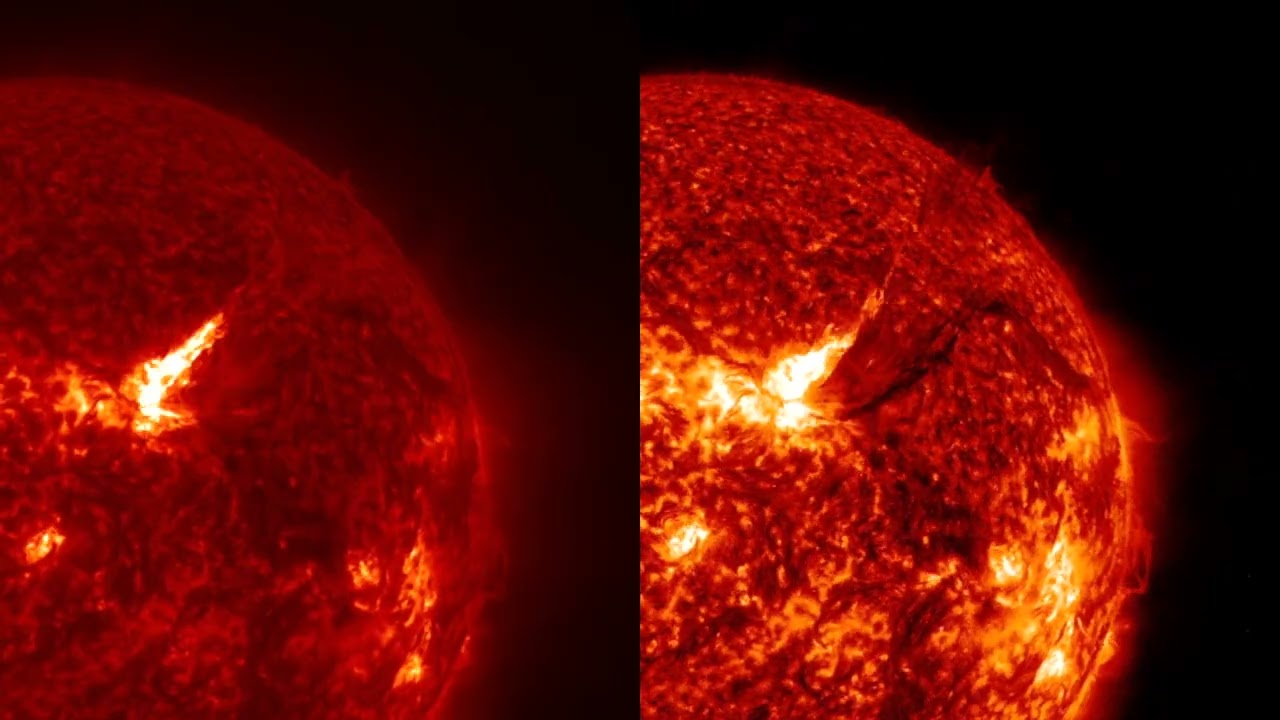
Solar Flares and CMEs at Earth - More Likely | S0 News June.3.2026
SpaceWeatherNewsS0s
2K views•2026-06-03



