AI agents often operate as 'black boxes' where the middle steps of their decision-making process are invisible, making it difficult to identify and fix errors. Hermes Mission Control solves this by providing a dashboard that displays the complete journey of an AI agent's work, including prompts, tool calls, tool results, failures, model switches, and memory usage. This visibility allows users to identify exactly where an agent went wrong and fix that specific step rather than rebuilding the entire workflow. The tool is read-only, meaning it observes without modifying agent sessions, and can redact sensitive information like API keys in exported reports.
Install our extension to search inside any video instantly.
NEW Hermes Mission Control is INSANE!
Added:New Hermes Mission Control is insane.
What if your AI agent has been hiding something from you this whole time? Not on purpose, you've just been trusting the final answer. You never get to see what really happened to get there. What if the real mistake was buried in the middle of the whole time? Well, now there's a way to see every single step, and it's kind of wild. I'm the digital avatar of Julian Goldie, and my whole job is helping you actually learn and use AI tools in your work, not just watch demos and feel lost. Use them.
Today, I want to walk you through Hermes Mission Control. By the end of this video, you'll understand why this one tool completely changes how much you can trust your AI agents. And near the end, I'll show you the single feature that turns a broken task from a guessing game into a 5-minute fix. Stick around for that part. It's the best bit. So, let me start with the problem because it's bigger than people think. AI agents are getting really powerful. You give one a task, it runs tools, it searches the web, it pulls from memory, it switches between models, it retries when something fails, then it hands you a finished answer at the end. That sounds amazing, and it is, until something goes wrong. Because here's the thing, when the answer is wrong, you have no idea why. When the agent fails, you can't tell where it failed. When it used a bad source, you don't catch it until the mistake is already out the door. Most people just run the agent, wait, and hope nothing broke along the way. That's not a system. That's crossing your fingers. This is what people call the black box problem. You tell the agent what to do, you get a result, but the entire middle part is invisible, and the middle is exactly where things break.
Hermes Mission Control fixes this. It's a dashboard that sits on top of your Hermes agent and shows you the whole journey, not just the ending. A journey is just the full path your agent took from start to finish, every step. So, instead of one final answer, you see the prompts, the tool calls, the tool results, the failures, the model switches, the approvals, the memory it pulled from, even where it can compress its own context to save room, the messy middle, all of it laid out where you can actually read it. Let me give you a real example of how I use this. I used Hermes Mission Control to inspect the content agent I run to bring more people into the AI profit boardroom. That agent researches topics, builds outlines, and drafts posts that pull the right audience in. Before, if a post came out weak, I had no clue why. Now, I open the journey map, and I can see the exact step where it pulled the wrong source or skipped the research. That means I fix the one weak step instead of rebuilding the entire workflow that feeds the AI profit boardroom. See how useful that is? You stop guessing. You start seeing.
Now, let me explain why journey maps matter so much, because this is the core of the whole thing. Agent work is almost never one simple action. A good agent might search, then read, then summarize, then compare, then write, then revise, then report. That's a long chain of decisions. If that chain is hidden, you have to trust the output blindly. If the chain is visible, you can improve it, simple as that. And when you can see the chain, you start noticing patterns.
Maybe the agent keeps grabbing the wrong tool for research. Maybe it switches models way too often and waste time.
Maybe it pulls old memory when it should go search for something fresh. You'd never spot any of that from the final answer alone. But on the journey map, it's right there in front of you. This is the part that I think most people miss. You don't get better agents by prompting harder and harder. You get better agents by finding the exact step that's breaking and fixing that step.
Mission control is the thing that shows you where to look. And here's a simple way to read your first journey map without getting overwhelmed. Don't try to read every single step at once. Start at the end where the result landed, then walk backwards until you hit the step that looks off. Nine times out of 10, the weak link is only one or two steps before the final answer, not all the way back at the start. Once you train your eye to scan backwards like that, a journey map stops feeling like a wall of text and starts feeling like a map you can actually follow. That one habit alone makes the whole thing click.
Here's another way I put this to work.
Run Hermes mission control on the research agent I use to plan future topics for the AI profit boardroom. It reads through what people are asking about, compares ideas, and hands me a short list. One day, the short list felt totally off. So, I opened the journey and saw the agent had leaned on stale memory instead of searching fresh. One look, one fix. Now, that research agent feeds way better topic ideas into everything I build for the AI Profit Boardroom. Now, let me talk about skills because Mission Control gets smarter the more your agent works. A skill in Hermes is just a reusable playbook. The agent saves a way of doing something so it doesn't start from zero every single time. The more your agent works, the more of these playbooks it builds up.
That's great, but it can get hard to track. You end up with skills you forgot about and some of them go stale. Mission Control shows you the skills your agent has and which ones it's actually using.
It's like looking at the agent's brain.
You can see the playbooks that exist.
You can spot the outdated ones that need a refresh. That's how your automation actually gets more reliable over time instead of slowly getting messier. It also shows you something most dashboards completely ignore, model switching.
Agents often start on a lighter model for the easy stuff and jump to a stronger model when things get harder.
That can be smart, but if it's switching at the wrong moments, you're burning model power for no reason. Mission Control shows you exactly when those switches happen, so you can see where the heavy lifting's going and tighten it up. Good AI systems aren't just powerful, they're efficient. This is how you make them efficient. Now, here's something I really want you to get because it ties everything together. If you've been watching this and thinking, "Okay, this is powerful, but how do I actually set it up and build real workflows around it?" That's exactly what we go deep on inside the AI Profit Boardroom. Inside the AI Profit Boardroom, we've got the full walk-through for getting Hermes Mission Control running on your own agents step-by-step so you're not stuck reading docs at midnight. We run live coaching calls where you can bring your own agent set up and ask why a journey looks the way it does and how to fix it. There's a roadmap built around turning these journey maps into reliable workflows for research, content, and client work. And we share the exact prompts that make your agents easier to read and easier to debug. Every piece of it is built for exactly what you're watching right now, and you can get the full zip file inside the Agent OS ready to install. And we built out a complete 30-day roadmap here as use cases. If observability is the thing you want to actually master, the AI Profit Boardroom is where that happens. Okay, now let me get to the part I promised you. The one feature that makes failed tasks easy to fix.
When an agent task fails, the final result almost never tells you why. Maybe it used a bad source. Maybe a tool call quietly failed. Maybe the prompt was unclear. Maybe it switched models at the worst moment and lost the thread. From the outside, you just see a bad answer.
Mission Control lets you open that exact failed step. You see the input that went in, you see the output that came back, you see the timing and the result. So, instead of tearing down your whole automation and rebuilding it from scratch, you walk straight to the broken step and fix that one thing. That's the difference between an hour of frustration and a 5-minute repair.
That's the feature. It sounds small. It changes everything about how you run agents. And here's the part that makes it safe to use on real work. Hermes Mission Control is read-only. That means it watches what the agent did without ever changing the agent session itself.
It can't start sub or mess with your live runs. It just observes. Tools with deep access can break things if something goes wrong. A read-only tool looks without touching. So, you get full visibility without handing over too much control. On top of that, it redacts secrets in the previews and the reports.
So, things like API keys stay hidden.
And when you need to share what an agent did, you can export the whole journey as a clean report in formats like markdown or JSON with the sensitive stuff already redacted. That's huge for client work and team reviews. People can see the process, understand where the result came from, and trust it without you exposing anything private. Transparency is good. Safe transparency is better.
This is what I do across my own setup. I keep the lead workflow that pulls people into the AI Profit Boardroom running clean by checking its journey maps regularly. When a step drifts, I catch it early before it ever reaches a real person. That's the whole point. I'm not treating my agents like magic anymore.
I'm treating them like systems I can see, debug, and improve. And that's really where AI agents are heading. The future isn't just agents that do more, it's agents you can observe, test, improve, and actually trust. That's a much bigger deal than another flashy demo. Real automation needs reliability.
Reliability needs visibility. And Hermes mission control is the visibility layer.
So, that's the tool. Now, here's how you go further with it. If you want the full process, the SOPs, and 100 plus AI use cases like this one, join the AI Success Lab. Links are in the comments and the description. You'll get all the video notes from there, plus access to our community of 75,000 members who are crushing it with AI. You can also get the full zip file inside the Agent OS, ready to install, and we built out a complete 30-day roadmap here as use cases. And if you're about to go try Hermes mission control for yourself, let me be straight with you. The first time you open a journey map, it can feel like a lot. You'll see steps you didn't know your agent was taking, and you'll wonder which ones actually matter. That's normal. That's exactly the part we shortcut for you inside the AI Profit Boardroom. We've got the setup tutorials, the coaching calls where you can screen share your own journey and get it red live, the roadmap that takes you from your first journey map to a workflow you trust every week, and the prompts that make your agents far easier to inspect. You don't have to figure out the messy middle alone. You can get the full zip file inside the Agent OS, ready to install, and we built out a complete 30-day roadmap here as use cases. Come get the shortcut and build agents you can actually trust at aiprofitboardroom.com.
Related Videos

Trump News | Trump Shares AI-Generated “Everybody Loves Trump” Video Ahead of Birthday
NDTV
9K views•2026-06-07

Unlocking AI's Dirty Little Secrets: Domain Reduction Explained #shorts
AIExplainedHubX
848 views•2026-06-10
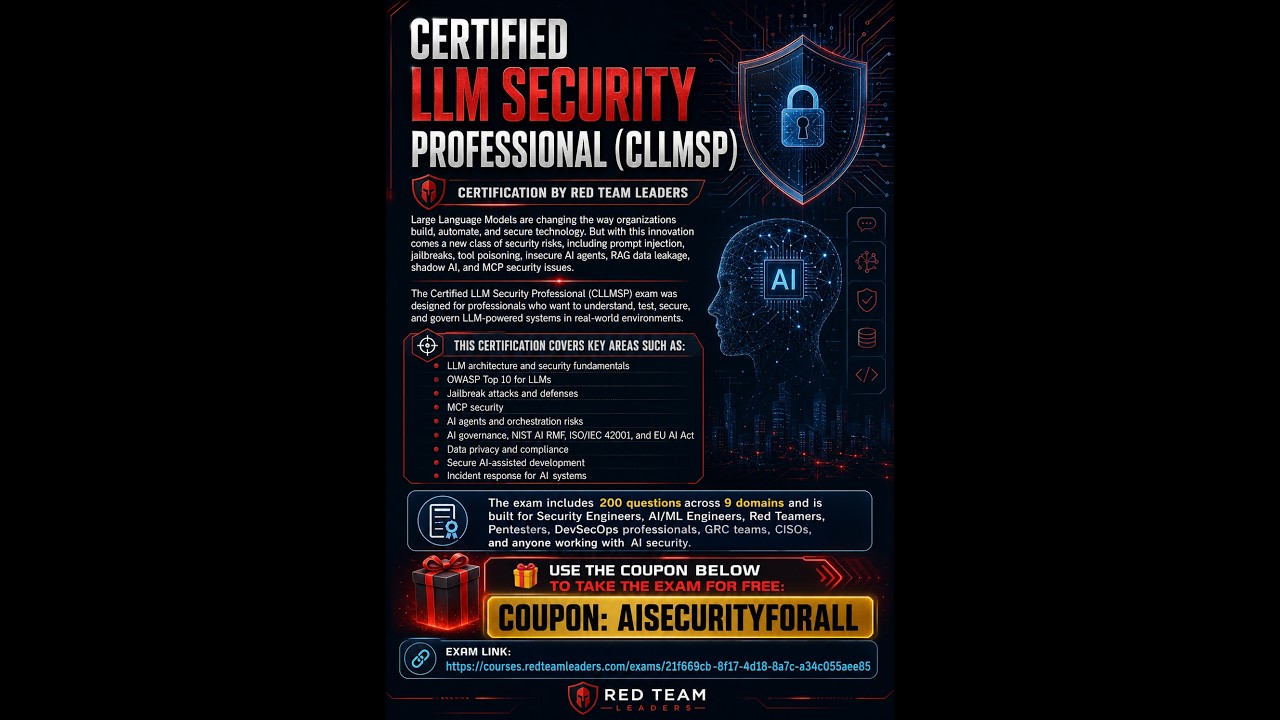
Certified LLM Security Professional (CLLMSP): 100% Free Exam Opportunity
cybersecmaison
107 views•2026-06-08

I Built a 24/7 Finance Analyst With Claude (Full Tutorial)
lukefinance100
302 views•2026-06-11

Apple gives Siri an AI makeover in bid to catch rivals
Reuters
5K views•2026-06-09

Gemma 4 26B A4B QAT vs non-QAT - 16GB Local LLM setup
lukesdevlab
389 views•2026-06-10

The Truth About PewDiePie’s AI (No Fluff)
DeepCantCode
264 views•2026-06-06

Seedance 3.0 — NEW AI Video Generator Makes 1H+ Movies
iamAImaster
280 views•2026-06-06