Boston Dynamics' upgraded Atlas robot represents a transformative advancement in humanoid robotics, featuring 56 degrees of freedom (twice human mobility), 360° joint rotation, 50 kg payload capacity, and autonomous battery replacement for continuous 24/7 operation. Unlike competitors like Tesla Optimus (28 degrees of freedom, 20 kg payload), Atlas demonstrates superhuman maneuverability, instant balance recovery, and rapid task learning through Google Deep Mind integration, enabling it to learn new industrial tasks in under one day. This breakthrough has forced major robotics companies to reconsider their strategies and is expected to transform industrial automation, with projections suggesting global production could reach hundreds of thousands of units annually by the 2030s, fundamentally changing manufacturing, logistics, and labor markets.
Boston Dynamics' New Upgraded ATLAS SHOCKED Tesla Engineers
Added:The global robotics market is experiencing a tectonic shift the scale of which humanity has not yet fully realized. The world's leading laboratories, which have spent years competing to create anthropomorphic machines, acknowledge that the humanoid robot race has officially entered a new phase and the rules of the game are now being set by one undisputed leader.
According to confidential reports from Silicon Valley insiders and publications in respected outlets such as Bloomberg and MIT Technology Review, Boston Dynamics has achieved a technological breakthrough that experts are already calling the iPhone moment for the artificial intelligence and mechatronics industry. Their main and most ambitious project, the updated fully electric humanoid Atlas, has received a package of critical upgrades that has stunned leading engineers around the world and forced giants such as Tesla, Figure, and Unitry to urgently reconsider their strategies. Until recently, it seemed that Boston Dynamics was losing the commercial market to ambitious startups, and many analysts mistakenly viewed the retirement of the old hydraulic version of Atlas as a surrender in the face of Tesla Optimus' rapidly growing project.
[music] However, the reality turned out to be completely different because the company had simply entered a period of extreme secrecy in order to completely rebuild the robot's architecture from the ground up. The new commercial electric atlas presented at closed industrial exhibitions did not simply return to the competition. It effectively destroyed the very concept of competition by demonstrating capabilities that were previously considered theoretically impossible for a bipedal machine. [music] What made engineers from NASA, Boston Dynamics, and robotics specialists from the University of Tokyo literally question everything was Atlas's new kinematics and physical parameters. The robot received an incredible 56° of freedom, [music] making its mobility almost twice as advanced as that of a human. Instead of imitating the clumsy humanlike walking used by competitors, Atlas uses a concept of superhuman maneuverability.
Its joints and articulated mechanisms created around custom electric actuators in close partnership with Hyundai Mobis are capable of rotating 360°.
The robot can turn its hips, neck, or shoulder structure in any direction without wasting time rotating its entire body, completely changing the traditional understanding of movement ergonomics. According to the specialized publication E spectrum, industry insiders were amazed by demonstrations of the so-called proprioception effect and the overcoming of the gap between simulation and reality. In recent tests, Atlas demonstrated the ability to perform precise maneuvers on slippery, dynamically changing surfaces, execute highly complex professional football style moves, including a raona kick, and instantly restore balance after a powerful external impact. At the same time, its industrial payload capacity reached an impressive 50 kg of continuous load. The robot can independently lift a large refrigerator or a heavy automotive body component, [music] rotate 180° on one leg, and carefully place the load onto a conveyor without the slightest indication of mechanical instability or loss of balance. For heavy industry, [music] the platform's durability has become critically important as the robot is protected according to the IP67 standard, allowing it to operate in heavy rain, highly dusty environments, and extreme temperatures. ranging from minus20 to plus40 degrees. But the main engineering triumph, according to technical insiders, is the autonomous power replacement system. Unlike Optimus, which requires a long stationary charging process at a wall-mounted station, Atlas, controlled by the proprietary orbit software, automatically moves to a station when the battery level drops, removes the depleted battery, replaces it with a fully charged one, and immediately returns to operation, enabling a continuous 24/7 working cycle. The explosive growth in Atlas's capabilities has not gone unnoticed by the leading figures in the high-tech industry.
According to sources in Silicon Valley, Tesla CEO Elon Musk was deeply shocked by the latest closed demonstrations from Boston Dynamics. Publicly, Musk has always stated that Tesla Optimus would become the most valuable product in human history, capable of raising the company's market capitalization to tens of trillions of dollars. However, according to insiders, after Boston Dynamics engineers demonstrated the integration of Atlas's physical body with the latest neural network models, Musk called an emergency meeting of the Tesla AI team. The comparison between the two flagship robots today appears to be clearly unfavorable for Tesla. While the second generation Optimus still demonstrates relatively slow, strictly anthropomorphic movements and has only around 28 degrees of freedom with a payload capacity of up to 20 kg. Atlas surpasses it in strength, limb reach, extending up to 2.5 m, and speed of adaptation. Optimus requires months of training in a virtual environment for each specific task. While Atlas, thanks [music] to Boston Dynamics revolutionary strategic partnership with Google Deep Mind, is connected [music] to advanced multimodal vision language models. The new cognitive module based on a customized Google Gemini robotics architecture allows Atlas to learn a completely new industrial task in less than one day. The robot only needs to watch a demonstration video or observe the actions of a human operator for its neural network to [music] instantly break down the task, adapt it to its 56° of freedom, and begin performing the operation accurately in a real factory environment. What shocked Musk most was precisely this speed of intelligence evolution. Because Atlas was no longer just a machine executing strictly programmed algorithms. It had acquired a full physical AI capable of making decisions on the fly in a chaotic and unpredictable human environment. The main question now facing the global economy is how the arrival of commercial atlas will transform industry and the labor market. Experts at the Wall Street Journal agree that humanity is approaching the greatest wave of automation in history. The first sectors affected will be logistics centers, automotive factories, [music] and warehouses. The parent company, Hyundai Motor Group, has already officially approved a global robotics strategy under which tens of thousands of Atlas units will be deployed at factories in the United States [music] and South Korea by 2028. The robots will completely replace humans in the most dangerous, exhausting, and repetitive areas such as automotive component sequencing, pressing operations, heavy lifting, and work [music] in toxic painting environments. The key factor in this technological revolution remains the cost. During the initial production phase, which is expected to begin around the transition between 2026 and [music] 2027, the production cost and final commercial price of Atlas will be high, reaching approximately $150,000 per unit. [music] This is significantly more expensive than Chinese alternatives such as Unitry G1 or the planned retail price of Optimus. [music] However, the economic value of Atlas is calculated differently because [music] thanks to its exceptional reliability, zero downtime due to automatic battery [music] replacement, and a zero level of workplace injuries, large companies could recover the cost of purchasing such a robot in less than 1.5 years of operation.
>> [music] >> At the same time, insiders claim that Boston Dynamics is deliberately avoiding the consumer market at this stage.
Unlike Figure or 1X Neo, which are positioned as home assistants, Atlas is being created exclusively as an industrial titan certified under strict corporate safety standards. Ordinary consumers will not be able to order it for household cleaning or grocery shopping in the coming years.
>> [music] >> The company is focusing on the B2B segment, aiming to reach mass production volumes of up to 30,000 units per year by 2028, distributing deliveries through pre-arranged contracts with the world's largest automakers and logistics giants.
A world in which millions of anthropomorphic machines possess physical strength beyond human capabilities and intelligence capable of self-arning carries enormous existential risks. Leading analytical centers are already raising alarms about mass unemployment among low-skilled workers.
If Atlas can replace three loaders or assembly workers while operating three shifts a day without lunch breaks, sick leave or labor unions, this could lead to a massive social imbalance and force governments to consider introducing the concept of universal basic income. The second and equally alarming aspect is the autonomy of intelligence.
Integration with Google deep mind models gives Atlas an extremely high level of situational awareness. The robot is equipped with a 360° machine vision system, lidars, [music] and tactile sensors in its fingers capable of detecting pressure down to fractions of a gram. If such a system were to experience a failure in its central neural network or become the target of a large-scale cyber attack, the consequences could be catastrophic. That is why Boston Dynamics is implementing multi-layered hardware safety mechanisms independent of the primary AI system, which physically disable the robot's actuators when a person is detected within a critical proximity zone.
Nevertheless, the momentum of progress has already begun. In the coming years, Atlas and its successors will transform the appearance of global cities, ports, and [music] factories. Industry will permanently move beyond the concept of the human factor in heavy labor.
Humanity, meanwhile, will have to adapt to a new reality where a being walking beside us on the factory floor possesses a cold silicon-based intelligence, perfect balance, and the ability to learn faster [music] than any living organism on the planet. The arms race in the field of physical AI is over and a new era of its widespread dominance has begun, transforming global industry right before our eyes. However, it is precisely at this moment when many believe that the winner has already been determined that new data begins to emerge, capable of making the situation even more unpredictable. According to information from several industry sources, the world's largest technology corporations are closely studying the Atlas architecture, not only as an industrial tool, but also as a foundation for creating the next generation of physical artificial intelligence. If today's version of the robot is primarily focused on factories and logistics, the industry is already actively discussing the possibility of specialized platform modifications for energy construction, rescue operations, and even the maintenance of critical infrastructure. Experts have paid particular attention to Atlas tests [music] at high-risk facilities.
According to leaks from the engineering community, the robot demonstrated the ability to operate in environments where humans require expensive protective equipment [music] or face a constant risk of injury. These include metallurgical plants, chemical production facilities, radiation controlled zones, and areas affected by natural disasters. Due to the absence of biological limitations, the robot can remain in such conditions significantly longer than a human without experiencing fatigue, dehydration, or loss of concentration. Some analysts compare what is happening to the emergence of the first industrial machines during the era of the industrial revolution. Back then, machines replaced the physical labor of millions of people. Today, humanity is facing automation not only of muscle power but also of a significant part of cognitive functions.
For the first time, Atlas is capable of more than simply moving loads or performing mechanical actions. Its intelligent system analyzes the environment, predicts the consequences of its actions, and [music] selects the optimal behavioral scenario. It is this combination of physical power and [music] adaptive intelligence that makes the platform so unique. An equally important factor is the speed at which such technologies can spread. In the past, the implementation of new industrial solutions took decades. But today, global corporations can deploy thousands of identical systems [music] within just a few months. If successful pilot programs are launched by Hyundai, Amazon, DHL, and other logistics giants, the impact could become exponential. A single major contract could instantly trigger the production of additional batches of robots and then create a chain reaction among competitors who will be forced to accelerate their own automation efforts in order to remain competitive. At the same time, the requirements for future workers are beginning to change. More and more economists agree that human value is gradually shifting away from physical labor toward management, supervision, creativity, and strategic decision-making. A new class of professions is emerging, connected with the operation and coordination of robotic systems. Universities in South Korea, the United States, and Europe are already expanding programs focused on human AI interaction. Understanding that demand for these skills could increase dramatically in just a few years. The most forward-looking investors are focusing on another important aspect.
Each Atlas robot is essentially not just a machine, but a mobile platform for bringing artificial intelligence into the physical world. While modern language models exist inside servers and applications, humanoid robots allow AI for the first time to directly interact with reality. They can see, hear, move, analyze objects, and manipulate them with their own hands. For many researchers, this transition represents the true beginning of the era of physical artificial intelligence. At the same time, alongside the excitement, concerns are growing. Regulators are increasingly discussing the need for international safety standards for humanoid systems. The more autonomous robots become, the more important the question of controlling their behavior becomes. Some experts propose creating special digital licenses for operating highly intelligent platforms, similar to how the aviation or nuclear industries are regulated today. Others warned that excessive regulation could slow down innovation and allow individual states to gain a strategic advantage in the new technological race. China is paying particularly close attention to what is happening. In recent years, Chinese companies such as Unitry, Forier Intelligence, [music] and a number of state research centers have significantly accelerated the development of their own humanoid platforms. The emergence of such a powerful atlas will inevitably become a catalyst for a new wave of investment.
According to analysts, global investments in humanoid robotics could reach hundreds of billions of dollars in the coming years alone. Every country understands that falling behind in this field could lead to the loss of industrial leadership for decades. Many specialists believe that the current Atlas is only the first step as component costs begin to [music] decrease and software becomes even more universal, more compact, faster, and more affordable versions of such machines will emerge. What today looks like an expensive industrial tool [music] for the largest corporations could in 10 years become as common an element of infrastructure as modern cars, computers or smartphones. That is why an increasing number of experts are calling the current period a historic tipping point. We are witnessing a moment when humanoid robots are ceasing to be laboratory experiments and are becoming a real economic factor of global scale. Millions of people still perceive these technologies as a curious demonstration of engineering capabilities. However, the largest corporations already see them as the foundation of future production systems capable of radically transforming the structure of the global economy. If these forecasts prove even partially correct, the next several years will become a period of unprecedented transformation. Future factories will be populated not only by humans, but also by thousands of intelligent machines working side by side with engineers and operators. Productivity will reach levels that were recently considered unattainable and the very concept of labor will gradually be redefined. When future historians search for the moment when the era of mass physical AI began, it is quite possible that the commercial emergence of Atlas will be regarded as one of the key reference points of a new technological civilization. But the most interesting developments, according to analysts, may begin not in factories or logistics centers, but at the moment when humanoid platforms reach a certain level of mass adoption. History shows that almost every revolutionary technology goes through several stages of development. At first, it appears too expensive and too complex for widespread use. Then it begins to be adopted by large corporations. After that comes a sharp reduction in component costs, scaling of production and eventual entry into the mass market. This is exactly the path followed by personal computers, the internet, smartphones, and modern artificial intelligence systems. Many economists believe that humanoid robots today are roughly at the same stage mobile phones were in the late 1990s.
According to forecasts from international research agencies, by the beginning of the next decade, global production of humanoid robots could reach not thousands but hundreds of thousands of units annually. Each new production line will reduce the cost of servo motors, batteries, sensor systems, and computing modules. This means that within a few years, the price of even the most advanced platforms could begin to fall rapidly. Some specialists suggest that by the mid 2030s, the cost of an industrial-grade humanoid robot could become comparable to that of a mid-range modern car. If this scenario is realized, the consequences for the global economy will be enormous. For the first time in human history, companies will be able to scale physical labor almost as easily as they scale computing power in data centers. [music] Instead of spending years recruiting employees, training staff, and solving labor shortages, enterprises will simply be able to increase the number of robots in production. Meanwhile, Boston Dynamics itself continues to actively develop the Atlas platform. According to industry sources, the company is already working on next generation software that will enable the robot to perform even more complex tasks. This involves collective interaction between multiple machines operating simultaneously.
Imagine a group of 10 or 20 robots capable of exchanging data in real time, jointly analyzing their environment and coordinating their actions without human intervention. Such a system could function like a single distributed organism where each machine is a part of a shared intelligence. This scenario is of particular interest to artificial intelligence researchers. Today, most AI models exist in the digital domain. But when tens of thousands of robots begin continuously collecting data from the physical world, interacting with objects, and sharing experience with one another, a fundamentally new level of collective machine learning emerges.
Every completed task, every error, and every successful action can instantly become part of the shared knowledge base of the entire robotic network. Some futurists believe that this approach could form the foundation for a completely new generation of intelligent systems. If modern models are trained on text, images, and video recordings, future systems will gain knowledge directly through physical interaction with their environment. Robots will effectively learn about the world through their own eyes, hands, and sensors, forming a much deeper understanding of reality. Against this backdrop, Boston Dynamics competitors are also accelerating their development programs. Tesla continues to improve Optimus. Figure AI is expanding cooperation with leading AI developers.
Chinese manufacturers are ramping up production and striving to dramatically reduce platform costs. All of this is creating conditions for one of the most intense technological races in human history. In effect, the world is entering a new era where competition is no longer limited to language models or [music] computational systems. Instead, fully physical embodiment of artificial intelligence are now competing. Each new generation of robots becomes faster, smarter, stronger, and more autonomous than the previous one. The pace of progress is so rapid that many experts admit it is becoming increasingly difficult to forecast the industry even 5 years ahead. But regardless of which company ultimately becomes the leader, one thing is already clear. The era in which robots existed only in science fiction is coming to an end. We are witnessing the emergence of an entirely new class of machines. Not merely automated devices, but intelligent physical systems capable of independently perceiving the world, making decisions, and performing complex tasks in real environments. And as this technology continues to evolve, its impact on the economy, industry, [music] and everyday life may prove comparable to the advent of electricity, the internet, or modern artificial intelligence. Humanity is only beginning to grasp the scale of these changes and the most significant developments may still lie ahead.
Related Videos
Setting up a curved screen with Immersive Calibration Pro 4 and multiple cameras (P3D v4)
FlyerOneZero
23K views•2019-07-21

Robot Learning with Sparsity and Scarcity
allenai
379 views•2025-10-14

Jorge Mendez-Mendez: Unlocking Lifelong Robot Learning With Modularity (2023-10-05)
umassmlfl
237 views•2024-01-06

Northwestern’s MS in Robotics: Student Robotics Projects, 2023
NorthwesternEngineering
1K views•2024-05-31

"Perfect" Turns: Turning by the Gyro - FIRST LEGO League (FLL) SPIKE Prime + EV3 RePlay Programming
ZacharyTrautwein
94K views•2020-10-02
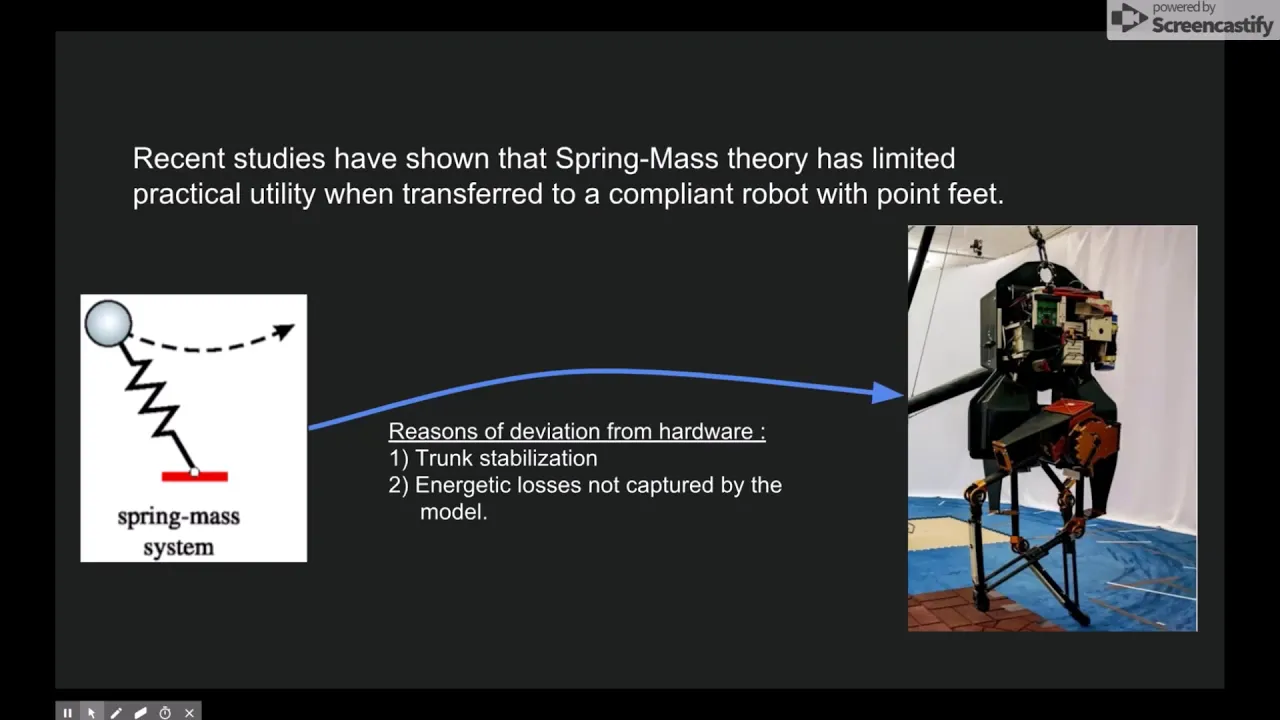
Gorkem Secer: TSLIP-based Deadbeat Running Control of Bipedal Robot ATRIAS
DynamicWalking-wv6qm
298 views•2018-06-22
Self-Driving Cars Need Lessons On Human Drivers | Maddie About Science
skunkbear
26K views•2018-08-21

Milrem Robotics’ THeMIS UGVs used in a live-fire manned-unmanned teaming exercise
MilremRobotics
99K views•2021-05-20
Trending

we're almost finished the house (ep.125)
JennaPhipps
347K views•2026-07-22

We Finally Know Where Saturn’s Rings Came From
astrumspace
79K views•2026-07-22

BIG BET: Cathie Wood goes ALL IN on Elon Musk
FoxBusiness
89K views•2026-07-22

MIC DROP: Smithsonian Director Called Out For Woke Propaganda
TheAmalaEkpunobi
37K views•2026-07-23