This session serves as a vital intellectual filter, stripping away the sensationalist layers of pop-science to reveal the rigorous reality of modern physics. It is a masterclass in scientific literacy that prioritizes empirical evidence over the alluring but baseless myths of the digital age.
Install our extension to search inside any video instantly.
Debunking Terrible Physics: Full Session - Mid July 2026
Added:Who would you who would you like to see?
Maybe uh Hosenfelder Hoserfelder the movie. You paid to see that.
[music] Welcome back everyone to Debunking Terrible Physics, the show where we take the worst or sometimes just quirkiest tweets, posts, and videos uh in the world of physics and try to extract some sensible physics and talking points from them. We have our usual August panel with us. Do we want to uh introduce ourselves? Christian, who are you?
>> Hi everyone. I'm Christian FCKO. I'm a posttock at Nor Eastern and II. And as always, I'm excited to come back and try to unravel the uh intricacies of online nonsense and uh try to extract some teachable moments for everyone.
>> Absolutely. Ivano, who are you?
>> Hi. So I'm Ivano Basil and I recently started my tenure position in Torino, Italy, INF. So that's pretty cool [laughter] and I'm excited to be back and uh I would not have phrased this as my much more eloquent colleague Christian here, but uh I'm down to, you know, debunk some [ __ ] >> Down for whatever. You're under the sc under the stairs like Harry Potter and you you're bringing the magic. Uh Hassan. My name is Hassan and I'm a PhD student at Sunni Albany. Um, and I I have the same role as the other two guests on this panel.
>> Excellent. And my name is Dr. Sam Gregson. I'm a high energy particle physicist formerly of the LHCB collaboration at CERN uh in Geneva, part of the LHC.
So I wanted to start today with some fun ones because as we can imagine this will rapidly descend into the usual horror show that that uh Christian has signposted there of online physics spaces. You know the second law of online physics content is that everything tends towards disorder and slop. Um there was some good news. Uh I'm sure we saw this today. Um a decade ago a couple of Max Planks's old papers were removed. This was probably due to a digitization efforts by uh Spring of Nature uh and subsidiaries. Um we believe this happened because of kind of um auto automated an automated bot removed these papers maybe because they sounded similar. Maybe there was some um kind of issues that the AI picked up maybe about plagiarization, self- plagiarization by modern standards which didn't exist back then. Um but they've now been restored. So this is uh good news. And the only reason I really wanted to flag this up is cuz I wanted to show how happy he is uh about it.
Hassan, what do you what do you make of this uh restoration? He looks as happy as I do. You know, this is the baseline for how we feel when we when we get into one of these sessions.
>> Well, I mean, I don't have a lot to say about this, but I will say good for him.
Probably can include his agent test [laughter] or something like that.
>> I don't think he knows much about it, but he he certainly he certainly looks pleased. Right. So, first thing I want to talk about, so the World Cup is here.
Um, Ivano, you should probably sit this one out as an Italian. Um, yeah, no good. Um, have we been enjoying the World Cup, Christian, as an American?
>> Um, personally, I'm not a huge sports fan, but I've get I've gotten sort of from osmosis, people discussing it around the office, and uh it's it seems kind of uh very tribalistic and interesting to watch. But the only thing that I remember seeing was I guess it was uh Mexico at some point. They were playing in Mexico and the Mexican fans determined where I guess it was England was staying. They booked like 10 different hotels to try to avoid this.
But the Mexican fans discovered the precise hotel where the English were staying and were shooting fireworks at them and things like that, but evidently that was not enough to win them the match because they were still unsuccessful. So I applaud them for uh their determination, but uh [laughter] apparently it wasn't good enough. We tried the high entropy solution. Lots of uh you know configurations but they uh they found a way through it unfortunately. But yeah, still managed to still managed to beat them. So that was good. I'm sure we've all seen um these standard kind of World Cup brackets right where you see the teams coming in who beats who and who is working their way to the final. Now the only reason I mention this in our fun section here um is because these these are as old as time. These have been around since I was a kid. Um, but our friend Orwellian brought us a better way to do this by Emilio Sanselini. Now, I've been working on my tensors, my non-cartesian curve geometry. Um, and he came up with uh with this idea. So, Ivano, what are your what's your take on this? Is this a better way to visualize?
>> Yeah, it's pretty cool, right? Also, it kind of looks like like a MEA tensor network.
>> Yeah, this [laughter] is what I was trying to get at, right? What do we what do we see here as a theoretical physicist?
>> You know, I I channel my the quantum information person inside of me and I see uh um an entanglement randomization through a tensor network, a multiscale entanglementization tensor network. It's one of these uh you know ways that people approximate quantum states in in complicated systems and you know they draw some nift nifty pictures and this one kind of looks like that in I mean with less uh less texture perhaps a little less detail but more or less >> yeah this is very much a sort of you know graphic design is my passion uh play here what would the uh what would the string theory version of this look like >> um I don't know I mean uh I mean tensor networks are used to study some topics in well which are related to string theory as well so it's not detached from string theory I would say but I mean uh you know this thing is this version is actually better because you know it's very compact and you can generalize it to easily generalize it to you know more number of teams because the circle will just become bigger but you know one thing that gives me a bit of a ick is that you know if you look at it naively it gives you you know a taste of like something like spiritual and I don't like that. I mean something that you may find in a spiritual story and I just don't like that for that reason.
>> I need to see more dimensions though. I need to see you know three four well four probably couldn't see but I need to see I need to see three dimensions on this. We're going to have to we're going to have to go up right like like string theory more with more dimensions better right? Well, I mean you you can I mean the spacetime dimensions, yes, but you can say that okay, I'm just talking about CFD which is 2D. So you don't need to talk about higher dimensions here.
>> And if we were talking string theory, you know, Eric told us where's China and India on here? You know, there should be flying flying through. No problem.
>> Screw him. [laughter] >> Christian, what would the what would the geometric unity bracket visualization look like? Yeah, I guess there would be uh some of the teams would be undefined probably. It would be in 14 [laughter] dimensions. There would be teams fibered over other teams in a way that doesn't necessarily make any sense. And it would also be a work of entertainment, which maybe this already is to be honest.
>> So So we're we're halfway. It probably be hidden behind a play wall and maybe uh Eric would be all of the teams at the same time. Probably.
>> You know what else? Uh GU would just have a losers bracket, no winners bracket. like Italy.
>> Well, [laughter] >> they have won a World Cup >> and it wouldn't it wouldn't be ready on time for the World Cup, right? It'd come out in like 15 years or something.
>> Yeah, [cough] >> you could also play this game with like type 2A versus Heterotic and do like a bunch of brackets like that and see who wins. That that would be cool.
>> Absolutely. They've won There was a comment there. They've won a lot more World Cups than uh than England. So uh you know we can we can we can have uh we can have fun with it. Good.
>> I mean one thing one thing that is relevant here is that you know if it is like GU then GU as we know that you know anomalies don't cancel which means that it's an it's not a consistent theory and something like that happened in this world where a player got a red card but also didn't get a red [laughter] card.
It's a bit like that.
>> So we can we can work these things into the into the framework. There's uh continuing our our world cup geometry.
If I know, I've been, like I said, I've been looking at these these non-carteesian geometries. I've been playing around with my Christopher symbols. Like, it's just pissing me off that these uh these things won't behave normally when I want to try and do a derivative or anything. I saw this one uh all the countries that have won the World Cup fall into a triangle. Any comments on this one? Because it kind of hurt my soul while I was working in uh curve. Well, you know, like if you if you add some warp factor on the on this map, on the geometry of this map, somehow maybe you can turn those uh into geodysics, but you have to be really careful.
>> They've taken the kind of the local flatness of the triangle and expanded it out a bit more globally. Christian, it's uh I'm going to need to see some curves here, right? Yeah, I guess it's a bit deformed, which is to be expected because any flat projection of a curved surface is going to break some properties. Uh, in this case, it's breaking both the curvature properties and also the dignity of the other countries that are not involved. Uh, perhaps more severely.
>> I don't know, Hassan, when did Egypt is it Egypt there or like Egypt when did Egypt win the World Cup?
>> Um, I'm not that big of a football fan so I don't know.
>> Did they Are they one of the teams that got cheated by Argentina? Yeah, I think so.
>> That was a very good game. I saw that. I mean, it was a very good game. Yeah. I mean, they are pissed off. Of course, Egyptians are pissed off and they're making a lot of shorts where they're saying, "Oh, Argentina, you know, cheated in the previous World Cups." For example, they're showing, you know, videos from 2014 where Messi actually, you know, tackled the ball with his hand. I mean, I was like, "What the hell?" But that doesn't prevent.
[laughter] >> Well, this is the kind of this is the kind of thinking we have in these sessions. So, that's uh that's right.
Coming on to to that. Hassan, there's one there's one for you. You posted this, >> by the way. Is this like the the real Bermuda triangle? [laughter] >> They kind of stop the triangle as well when they get to I don't know what the hell they were trying to draw here, but they they fail badly. You posted this in the in the the group, Hassat um with just like imagine being the review of this. What the hell is this and what's going on?
>> I have no idea. Um I mean I found this on Matt's Twitter uh and so someone was talking about you know the possibility of reviewing this and I was like just imagine that >> this is a real paper though.
>> Yes.
Yes.
I mean I hope that it's not AI generated.
It may be. I mean I don't know.
>> We're going to we will we will look up this paper and report back. That gave me an idea though for a question. Uh Christian, what is the hardest paper that you've ever had to review?
And did you do it seriously or did you just give up?
>> I think the hardest one was a paper that I think would be borderline crackpot. So it was um it was it submitted to an actual journal but there were so many wrong statements in it where it said things like oh the aeronov bomb effect is completely unrelated to gauge theory and topology and I read through it and constructed a set of notes where it's like this statement is wrong this statement is wrong this statement is wrong. So it was not difficult for this reason because of the complexity of the statements, but it was difficult just because of how much my brain wanted to explode attempting to write the paper.
So when I submitted my very detailed review of everything that was wrong with it, um the paper was rejected and then my review was actually deleted from the Cypost website, which normally makes these reviews public presumably to save face for the authors because it was such a brutal takedown. So that was in some sense more fun than reviewing this because here it seems like it would have been um more challenging and less of just a debunk.
>> Does there not become a point though where you just say this is so broken like it's almost a waste of my time.
Just you know submit something better surely.
>> Yeah that probably would have been my response. Like I would read this and say I can't parse anything that you're saying. Please break theorem 4.6 six into a bunch of lemmas and use inline math and make this parsible for me because uh I don't know. I mean, maybe the standards of review and math are different than in physics. In fact, I'm sure they are because they go through and actually prove things line by line.
But this sort of thing um I I don't know, even knowing what some of these words mean. I'm looking at this and kind of having a bit of an acid trip just trying to tell what's going on. My eyes started to glaze over after I got to about line two and yeah >> some papers are hard to review because they're really long. For example, there was this paper that came out last year I think. No, Dish of Dupta is well known for writing very long papers. But even this was long even by his standards.
This was it was like a 500 page paper.
So they were they were constructing the sitter vacuum out of something which is called excited.
uh and they have a lot of sections where they were checking you know the you know the the fact that the equations of motion are you know consistent so that's why that paper is very very long because they have to check each component of the equations and so that paper I don't know who will review that paper I mean I don't think that that paper has been published yet also there is this very famous example from uh you know mathematics about something called the ABC conjecture now ABC conjecture is a conjecture in maths and there's a Japanese mathematician his name is Moshisuki I think he has this multiple 100 pages proof 500 page proof where he came up with his own theory and I mean it's it's very hard to review because he constructed his own theory and he thinks that APC conjecture has been proven but uh you know a lot of people don't think so I think in in Japan it's considered solved I don't know probably that's true but outside Japan because that paper was never reviewed properly >> I that I want to move on to the next on.
So, our friend Arishia asked a question. So, is there going to be an Oenheimer 2? So, first question for Christian is should there be?
>> Yeah, I don't know about an Oppenheimer too because it seems like the story was pretty self-contained, but um as you're maybe alluding to, maybe you can expand by having similar movies about other physicists and I think that might be potentially more interesting. But then there's the natural question of if you have other movies that are kind of biopics about different physicists, is there going to be a sort of Thanos or a recurring uh villain throughout all of the different uh physics things? And I don't know if the villain should be the funding committee or if it should be a particular villain like Eric Weinstein or something like this who I don't know, maybe he's the modern villain, but certainly not uh the historical villain for people like Oppenheimer.
>> This uh this is a really good idea. So that because it got me wondering as well whether we should whether there would be any scope whether it's probably too niche to us it would probably be exciting like when I watched the Oppenheimer film the most exciting part was the start where I was like I know who that is I know who that is I know who that is like and nobody else kind of in the cinema knew so I I biasedly think there would be a market for a kind of scientistbased Marvel style film franchise Um but I don't know what do we what do we think Hassan do you think that would be uh would that work and who would you who would you want to see >> I mean I think there are so uh in the second line you say that I'd watch Einstein beat and the fine men so I think there are you know shows and movies about Einstein >> some documentaries and things on the >> well there's a show called genes on national geographic there's a whole show >> uh about fine men there are at least two movies >> yeah So there is one movie in which so that movie mostly focuses on his role in the challenger disaster uh you know investigation. There is another movie I mean which is not very well known but there is a movie I remember twice about it it's name that's also about Fineman and I think there's a third one but I'm not sure about that Hans I think that yeah that person does deserve but I don't think that there was a movie about him but Einstein and Fineman are famous enough to have >> so who would so who would you want to see who hasn't been covered at all there's a a couple of suggestions here we got Gaus we got Kepler >> I would yeah I mean so I mean it depends on how far do you want to go how far you want to go. But if you stick to the 20th century, I would love to see a movie on Weinberg.
>> We wineberg.
>> Yeah, I would love to see a small because he has >> What would we see in there? What would be why?
>> I mean because I so recently his biography came out the autobiography I mean memoirs actually and I learned things about him that I never knew and I was quite surprised that a person like Weinberg can go through the same problems that a lot of people go through. So that's why I would love to see a biopic made on his life.
>> Ivano, who would you who would you like to see? Maybe uh Hosenfelder [laughter] Hosfelder the movie. You paid to see that?
I was gonna say I I would be super down for like an MCU of of actual scientists, but yeah, like >> uh you know what I what I was thinking about >> I would call it the Lord of the Rings.
How about that?
>> There we go.
>> What about Hassan? What about What about Fitzald?
>> Cut that out. [laughter] This was just how uh this was just how Hassan pronounced Fitz Fitzgerald, but I mean I'm just I'm just being mildly xenophobic. That's that's >> Oh, it's fine. I mean, I actually forgot how he used to pronounce it because I haven't pronounced that name in a long time. That's why. So by the way so you know Ivana's suggestion about Rothandic is quite interesting because Rothandik's life has is very interesting because he just left everything and you know I don't know if I would call him a monk or something like that but he just left you know the usual life that we live so his you know biopic would be very interesting for the people I agree with.
>> Excellent. So maybe maybe there's some room to run on that. Ivana I want to go back to uh triggering you for a moment.
We're nearly through the fun ones here.
um YouTuber Shots in the Quark. Very very nice. Like like that name. We have no problem with this person by the way.
But they produced a video entitled three reasons that pilot wave theory is the best interpretation of quantum mechanics. So I wanted to get your thoughts on this Avano because your your initial response when asked what the three points might be was I like it. La shut up. I know it doesn't work with relativity or gravity, but I don't like those either. So, it's a win-win. And uh the third point you thought you might make is I said shut up. So, tell us a little bit what is pilot wave theory and and why do you not like it? So, I will admit I have a pretty strong opinion on these matters. Okay. So let's get that out of the way for um so in a nutshell at least the way I see it pilot wave theory is a way to make quantum mechanics classical again you [laughter] know um and you know the idea is to avoid various nogo theorems and experimental results by essentially saying that the the classical degrees of freedom them are at least partially non-local. they are spread out everywhere kind of like like a this this wave that pilots particles right that's the idea like the this this approach wants to I'm not calling it an interpretation because it differs empirically by the way uh from standard quantum mechanics uh but some people call it an interpretation and and the idea is that you know they want to keep particles as as a fundamental entity like classical particles and their motion is um sort of effectively partially uncertain because we don't know how this pilot wave uh is configured in in its possible space of state. Right?
>> So the particles are kind of fundamental and they're they're riding riding around on this wave that sits underneath >> and and so there's an additional non-local degree of freedom which is this pilot wave. Now all of this is born out of uh you know this uh love of classical physics and how intuitive it is and nice and everything. Uh because they you know they want to keep things like position and and other properties of physical particles um ontologically not only real but classical, right? Um and uh you know there are many many many objections that I got here [laughter] but like there are several levels right like the first level is already that even if you forget the relativity exists right you can you can think about just systems of finitely many particles non-relativistic particles uh just doing their thing in in in this framework and already here even though that this framework in this in this restricted context was built to reproduce some aspects of quantum mechanics namely equal time correlations between you know quantum states.
Um turns out that it's not so easy to reproduce unequal time uh uh correlations, right? Like there are some experiments you can do quantum mechanics that involve doing something, preparing a state, waiting for a little bit and then measuring something at the end, right?
And there was a recent paper by Robert Heling which shows that there are at the very least there are several philosophical problems with interpreting how pilot wave theory uh would make that work, right? because like it has to be the case that the measurement process in in this framework it does like a lot of you know acrobatics let's say to make things work out. Um either that or it's simply inconsistent with quantum mechanics period. Um and this is already at the non-relativistic level. Once you put relativity in the picture, things get a thousand times worse because like like this this approach is very far from like reproducing relativistic quantum field theory as we know it. uh except maybe for like free fields. And even then uh because of these um like this attachment to like certain ontological categories like particles or fields, a relativistic the pilot wave analog bombian version of of relativistic QFT needs to commit either to fields or particles. Right?
Now in QFT we sort of commit to fields, right? That's what the F stands for. But particles come out anyway and they behave as particles through and through.
Um, in Bombian QFT, either you commit to particles, but then you don't have fields and you're kind of screwed, or you only have fields and then you're forced to try to make particles out of lumps of energy in classical fields, but these don't really behave as particles, right? So, like I strongly suspect that there is no way that any interacting bomb field theory will ever reproduce what we know from actual QFT, right?
And that's the second level. The third level is the worst of all because once you include gravity like in quantum gravity what you need to do is sort of sum over all possible space times with some fixed boundary conditions in some sense. And you know pilot wave theory wants to have a sensible notion of of uh you know space at a given time. And this notion completely goes away in quantum gravity. Right? And now, you know, because I like to play devil's advocate with these things, I ask myself, what what would what would go wrong if we instead just restricted ourselves to these kinds of structures? Well, I think the answer is that we get black hole entropy wrong because the the you know, if we don't sum over everything, we lose holography and if we lose holography, we lose black hole entropy. So if we go near a black hole with a thermometer and we record radiation and whatnot and we you know we do some uh some math there and we infer you know the entropy of the black hole we should probably get a mismatch with what bombian bombian gravity predicts even though again this is like super duper far from anything that has been actually done by the people who work on it. So this is kind of the serious version of the of the thing that I said in the beginning. By the way, I have not watched the video. So I, you know, I'm not going to argue against the video.
>> I understand. They they seem very sensible. By the way, uh Christian, what do we think of pilot wave in a nutshell?
Quick, what do we think?
>> I think I agree with everything Io said.
I mean, my my impression as someone who has not thought very much about pilot wave theory is that it's guided by this sort of classical/deterministic fetishism. And I don't really see any reason to make quantum mechanics classical again. There's there's no advantage to this. I mean the standard approach works correctly. And it seems like if you are going to propose a radical reformulation of quantum mechanics where you have classical particles guided by waves that are moving them around, then there needs to be some either empirical or theoretical reason for doing this besides I like it and it feels good to me and I like to think about little balls moving around like we discussed last time. So yeah, all of the sort of fatal flaws that Avono just described like difficulty in reconciling it with relativity, with gravity and things like that from my perspective are reasons to essentially immediately dismiss it. But um that's fine. People can work on whatever they think is interesting, but if you make a big claim, then there's a big invoice that you have to pay back at some point in terms of payoff, right, >> Hassan? This does sound like uh you know what someone like the people our our friends at Demystify Sai might like right little balls bumping around on some you know ether in the background. I think it would make them happy right?
>> Yeah probably [clears throat] uh I mean there's one more thing that needs to be addressed here. So mostly when people talk about pilot web theory they when they talk about particles they're not assuming that those particles have any spin right? But if you introduce spin into the theory, there's another problem pilot wave theory and that is less certain as compared to the other problems that they want to mention. And the problem is that there is something called arrival time right arrival time is the time taken by a particle to start from its source and reach the detector.
And it seems to be the case that if you have spin half particles in your pilot web theory, then you can have arrival times which are high you know which is which is very relevant to what we're going to discuss later that arrival times are faster than the speed of light. And that's a problem, right? So that's another problem.
>> Not according to Sabine, it's not.
>> I mean, she doesn't believe in pilot wave, so don't worry about her.
>> Well, we we'll we'll come back to that later. Right. So, Pilot Wave, not a massive uh not massive fans. Hassan, we're going to stay with you because you'll remember a couple of sessions ago, maybe we did most of it offline. We definitely talked about some of it online. We talked about some of the worst science thumbnails that have ever existed. Now you shared this with us for a little bit of discussion. Um this is from uh Tom Billure which is a he's another one of these you know tenner penney sort of tech bro clueless wanders into science and says lots of ridiculous things kind of person. Uh and he posted this nice uh thumbnail the Nobel Prize.
This is the Nobel Prize in 2022, I guess, for uh for Aspect, Clauser, and Zylinger.
Just uh proved that the universe isn't real. He was so proud of this that he uh that he re-uploaded it this month. The odds that you're living in a simulation border on 100%.
Meaning this, all of this is almost certainly not real. In October of 2022, the Nobel Prize in Physics was awarded for proving that the universe renders like a video game.
>> What?
Bro, what are you talking about, man?
>> What's going on here? And uh what's your problem with it?
>> So, uh when it comes to this particular video, I think the title is much worse than the thumbnail. The thumbnail is bad, but the title is much worse because the title is just a lie, right? Um so, it doesn't prove that the universe is not real. I mean I don't know who any serious physicist who has said that and if you want to talk about the simulation hypothesis I mean that has problems of course but uh the title just lies so I mean you can't argue against a lie because it's not any argument >> so when we're when we're talking about realism right so the the 2022 Nobel Prize in physics when we talk about realism we're talking about particles having definite properties when we're not looking at them right and this quantum mechanics seems to say they don't, right? With this this kind of fuzzy ball that's moving around and until we make a measurement, we don't we don't know if they're spin up or spin down or whatever. That's that's uh a lack of realism, but that's a physicist way of using the word real. And then you have the kind of colloquial version of the world is not real. So the universe is not doesn't uh you know local realism doesn't apply in quantum mechanics. But that's different to colloquially saying the world isn't real and everything's being simulated. It's it's a mismatch between the the physics use of realism and the colloquial use of the word real and then smashed in with this sim. It's just it's just total nonsense from someone who doesn't know what they're talking about. Right.
Also, I mean, one problem. I mean, it's not a physics problem, but I don't know what this person who is shown in the thumbnail, he is. I mean, this person seems to be from the Matrix, but this is not a character from the Matrix. I mean, it seems to be like a mashup between Neo and you know, whatever that uh, you know, guy who, you know, who was an antagonist in the So, it's Neo. It's a mashup between Neo and Agent Smith. I don't know who the person is to be honest.
>> It's a quantum superp position of Neo and Agent Smith, Hassan. That's what it is. So this this upset you a bit, didn't it?
>> Oh, a lot. I mean, because the title is just a lie. Although also, you know, if he's talking about 2022 Nobel Prize, you can see that this video was uploaded one month ago and he said just given. So what does that mean? Like [laughter] four years ago, >> it's all time invariant is this uh this video. It doesn't doesn't change doesn't change at all. Christian, any thoughts on uh on this?
Yeah, I think it's it's kind of doing the real science a disservice because I mean we know that we know what the bell tests did. So just at a very high level like the bell tests did not prove that reality is fake in the colloquial sense that you're describing under very particular assumptions. They proved that certain quantum correlations violate inequalities that would need to hold if there were local hidden variables. And you can respond to this in many ways.
you can say okay fine we don't have local hidden variables and states can exist in superp positions if you want to be a little bit more um I don't know exotic then you can argue for non-locality and say okay there's non-local explanations that circumvent these assumptions but the result is the result under these assumptions these experiments show that there's a particular no-go theorem and I think that's astonishing enough without attempting to wrap it in this sort of sci-fi simulation language, right? I mean, the paper stands on its own without trying to sneak Keanu Reeves into the conclusion section and try to sell it and make it sound more exciting.
I mean, the science is already very cool.
>> Well, entanglement is already a crazy thing to uh to discuss and something we don't fully understand at the moment, right? So, you don't need to add all these bells and whistles on the on top to make it exciting. I I don't know why.
That's one thing just to protest. This this person is not Keo Reeves.
[laughter] This is some This person looks a bit like Kan Ree, but he's not.
>> He's getting really upset. He really upset that he doesn't look enough like Nia. Do you Are you a big fan of Keanu Hazan?
>> Uh yeah, I like him. Yeah, [laughter] I mean I like Matrix movies, but this person is not re >> Ivana, anything to anything to add here?
Because I've got one thing to add afterwards.
>> Well, first of all, who's not a fan of K Reeves?
>> Yeah, he's he's a good guy. He's a good guy.
>> And second, >> Bill and Ted, man. Bill and Ted is amazing, >> right? I I don't think I can add much to what um the others have said. They said it perfectly. I think this is like really disrespectful. Like like you cannot you you can't just say that like the title, the the thumbnail text, like it's it's not okay. Like >> five chapters, he goes into he goes into some details. What the the only thing that I was going to add to this is that I'll come back to you Christian that the simulation hypothesis I've got to say does seem to be like the ultimate sort of midwit catcher hypothesis, right? I'm not saying like people can't do serious work on it or you know you can't you can't think about these ideas, but it seems to be in sort of tech bro no nothing circles. It's like, oh well, like if you just simulate the universe, you can kind of you can do what you want, right? And you can make up any rules you want in the computer. So, uh, you know, when I see something that's confusing, uh, we're in a simulation.
>> Yes. I mean, we should distinguish between, as you say, two different things. I mean, there is interesting work in complexity and arguing that if the universe operates in a sort of computational way, then there are limits to what can be done because certain problems are very hard to solve computationally. So you can argue against certain things by saying that this thing would take an exponential amount of compute time and the universe is in some sense doing some sort of computation. So this rules out particular scenarios that can be legitimate science. But this is very different from people who kind of squint and say, well, if we were living in a computer game, wouldn't you expect there to be a minimum length because that's as small as the bits can get or a maximum speed because that's, you know, the cap at which the thing can process how fast you're moving? These are just very suggestive, bizarre analogies that have nothing to do with the legitimate science that has to do with simulation, hypothesis, or complexity. So, let's uh set that uh set that to rest once and for all that there, as far as I can tell, is no correlation between the tech bro arguments that we're living in a simulation and honest science that has to do with computability and complexity theory.
>> So, talking this this your segue there leads us brilliantly into the next couple of topics. So, so those are kind of the fun ones. These get into a a little bit meteier. Uh they're still kind of they're still kind of fun. Still terrible physics, of course. Um our good friend Elon Musk, um he's still trying to understand the double slit experiment. So, speaking of catching midwits, uh regular terrible physics contributor Elon Musk, he's out and about again. Uh, and as I say, he's still trying to get his head around >> the uh the double slit experiment. So, I like to think that he wakes up kind of, you know, in a cold sweat and starts throwing like bunches of socks around uh trying to work this out. But he retweeted uh a child's video about the double slit, well, uh, what's the word I'm looking for? An animated video about the double slit experiment from online psycho Ashton Forbes, who was retweeting Dr. Quantum. We have no problem with Dr. Quantum, but Ashton Forbes is um a psycho who lives off the kind of blood of uh MH370 uh the MH370 tragedy. Uh and Elon seems to think that the double slit experiment, that's what this video was explaining in a simple fashion, uh means that we live in a simulation. So the double slit experiment and the and the results of the double slit are consistent with the simulation hypothesis. Like a video game, objects are randomly generated with positional certainty only when observed.
Any thoughts on this? Because I have a few. Uh Ivado, come to you first.
>> It it is almost impossible to parse.
Like what you mean objects are randomly generated in a video game nonetheless?
Like you know like stuff is generated when you go like in and out of like >> you go into a level or something like >> stuff. Yeah. Like like what do you mean randomly [laughter] generate also like when observed like what does this have to do with a video game or a simulation? Like what?
>> It doesn't really make sense from a video game, right? So a video game doesn't usually randomly generate things when you're observing it, when you're playing it, right? So as you just said, like if I am playing a game, it generates a level, you know, I walk through a particular door, I pick up a key or whatever, some enemies come out, some obstacles come up, you know, stuff is generated based on the coding, the rules, the story of the game. Sometimes there are, you know, random elements within that. maybe, you know, the the level is procedurally generated and it's slightly different each time, but there's there's a set of codes and rules underneath that and a, you know, kind of usually a maximum number of possibilities that can come out. Um, so I don't see how that correlates with video games, Christian.
>> Yeah, neither do I. I think I agree that I played games which have random elements like Minecraft or Terraria where you you know you start the game it generates something maybe enemies randomly spawn but in that case it's because you are playing a game there is a conscious observer you choose to move around and when you enter a new area maybe some enemies spawn. So let's immediately uh demolish a [snorts] potential misconception about quantum mechanics. When you observe something say in the double slit experiment by putting a camera somewhere it is not because there is a conscious observer who is looking at the output of the camera the result is that when a particle goes through one of the slits it becomes entangled with a macroscopic object. So it becomes physically correlated with a detector or the environment and that causes decoherence and the thing collapses into a particular state. This has nothing to do with consciousness. This has nothing to do with a player moving an avatar around in a video game where the code decides, ah, the character has entered this room, so now I need to generate some random enemies. They're just completely conceptually different things. And I think we should uh avoid falling into the trap of thinking that observations in quantum mechanics, despite the word, do not actually have to do with conscious observers.
>> Yeah, absolutely. He seems to be falling into this trap. As you said, the word observation literally means like somebody watching. So, you know, we have the the wavelike properties when you're when there is no um you know, there no camera, there's no measuring device at one of the slits to see which way the particles went. Um you have the wavelike properties. He seems to be laboring under the idea that's in this meme that if somebody is watching, they kind of stop doing this behavior, which is just total nonsense, right? have to have this this measuring device, something that causes decoherence to happen at one of the slits. So, he's he's fallen he seems to have fallen into this meme where, as you said, a conscious observer has to be looking at it and then it won't do the thing. He's kind of doing the, you know, if a tree falls in the woods and nobody's there to hear it, does it, you know, still make a sound kind of thing.
Um, I think this one, Christian, might work better for for Elon. Interested in your thoughts. Yeah, this one is uh certainly more entertaining, but uh [laughter] I guess in this case, if you're Yeah. If if no one is looking at it, then nothing happens. This is more of a tree falls in the forest sort of thing.
>> Exactly. But if there's no measuring device, even though Stevie Wonder is looking or not looking, blind or not blind, this thing is still going to do it. You have to have the measuring device there. This is nothing, as you said, to do with uh with conscious observers. The other thing as well is that it doesn't have to be, as we said, it doesn't have to be a conscious observer. It doesn't even have to be a human, right? The the universe is constantly being rendered quote unquote by, you know, measuring devices, stray photons, particles, fields, things that are totally not human. So, this idea that you're playing a video game and a conscious observer has to be kind of piloting the process, um, it makes no sense. Hassan, any thoughts? before we move on from this.
>> Yeah. I mean, so the one of the memes that you showed me that beer or whatever or was watching at the you know screen.
Yeah. That so this meme is very misleading because it it seems to give the picture that just because the beer has moved his or its eyes towards the screen that's why the pattern is emerging and that's not what's happening. You know if you have to have a you know a position detecting you know detector near one of the slits in order to get that pattern.
>> Yeah. just moving your eyes is not good.
So if people who don't know physics, if they look at this meme, they're going to get the wrong impression that just because you move your eyes, the battery changed. And that's not what's that's not what what's going to happen because you won't know, you know, what the what a particular particle went through uh if you don't put a position detecting, you know, uh detector near one of the slates. So this is not a complete. It's interesting actually that the last two things we've looked at with quantum mechanics. The problem seems to have come from the use of a more colloquial word observation but used in a specific way in physics.
Right? So an observation a measurement in physics as as Christian says is sort of going to deco here is going to make force that that wave function to collapse. Whereas colloially when we say observe, we mean watch something. So there's that that mismatch between the use of the physics word and the and the colloquial use of the word, right? And if you're not trained in something, as Elon Musk is clearly not and clearly doesn't still doesn't understand the double slit experiment, he keeps demonstrating it all the time. Um he probably shouldn't be making definitive statements about about things like this, right?
>> One thing that I would say is that suppose that this meme gives you the right picture, right? How do we know that the your picture at the top is correct if we [laughter] never saw that pattern? I mean we know that that pattern happens because we have seen it.
So of course if you just see that pattern and it doesn't go away. We know that this happens because we have seen it. So of course this meme is nonsense.
>> There's more bears behind Hassan.
There's like an infinite regress of bears. But yes, it's a it's a it's a good point. And continuing on this on this kind of um Christian uh Christian mentioned it with this kind of simulation. So there's lots of people they all want to talk about they're all tech bro types. They all want to talk about simulation hypothesis. Elon wants to talk about it. Bill Yu wants to talk about it. We had another one which was uh Tim Urban wait but why on Twitter um and he put out a tweet about the the plank length. So he said the shortest distance ever discussed in science is the plank length. It's the shortest distance that can be measured. Our universe's pixel size. So we're back on the uh the simulation hypothesis uh bandwagon or you know code. Uh so how small is it? A sphere with a plank length diameter is to a human egg cell what a human egg cell is to the observable universe. Now I believe uh I haven't fully checked but I think the length scale part is is correct.
Christian are universes pixel size.
Thoughts about this?
>> I think this is a common misconception because I mean for the benefit of the audience who might not know the plank length is just a length that you get by combining the fundamental constants which are h bar that controls quantum mechanics, the Newton constant that controls gravity and the speed of light.
And you combine these in some way to get a length scale. But nothing guarantees you that that length scale is somehow a fundamental discrete like cell or pixel of the universe. It is just the length scale at which all of these effects, the ones coming from quantum mechanics, from gravity, and special relativity become important. So you might argue that well at at that length scale spaceime becomes fundamentally discreet. And maybe that's true. We don't know. But there's no argument for that actually being the case. It's really just a length scale at which all of these effects become important. And it's perhaps better to view it as a breakdown of our description of reality as we currently have it because we understand gravity through Einstein's theory of general relativity. We understand quantum field theory and there is a length scale at which those two disjoint descriptions of nature kind of break down and have to merge somehow. So maybe that's resolved by a theory of quantum gravity like string theory. But without an actual argumentation or without some sort of theoretical framework for telling you what happens at that length scale, it's completely unjustified to argue that spacetime is fundamentally discrete with pixels of size the plank length. That's kind of a wild speculation.
>> Yeah. So in in kind of standard physics, space is kind of smooth and continuous, right? So you could theoretically, you know, move a distance of half a plank length around, right? There's just no way we can kind of observe or describe that movement at the moment. As you say, this is kind of more like the limit of our of our theories at the moment. So our theories break down. We know that quantum mechanics, um, gravity are going to be important at these scales. So our theories kind of break down because we don't have a quantum theory of gravity just the way that kind of, you know, fluid dynamics breaks down if the fluid freezes or it vaporizes, right? So um beyond that kind of scale we need a new theory that unifies quantum mechanics and gravity to be able to do calculations um and get any kind of sensible results. Um Ivano any any thoughts? Yeah, I mean first of all I I definitely agree that you know it well first of all it it it doesn't give you a pixel size but it does give you an important length scale which is sort of a a lower bound smallest possible uh you know length um for the scale at which you know gravitational effective filter theory breaks down the the the frame the standard framework where we put quantum fields and gravity together at low energies and you know at some point you stop being at low energies. If you probe microscopic enough regimes you stop uh you know you exit this low energy regime where gravitational EFT makes sense and where presumably uh you know spacetime uh at least the time the type of spacetime described by fields uh makes sense. Now this breakdown can happen well before you reach long length right in in weekly couple string theory it happens way before like in this >> this is something that Cliff Burgess pointed out right so the the string the string scale can come before the plank scale and this kind of thing. In fact, it cannot come after. It must come either before or at. Roughly speaking, of course, you know, like these are length scales that do not come with precise numerical factors in front or anything like but parametrically speaking, this is the case, right? It can never come after. It can only come before and it comes and and the weaker the interaction between fundamental strings the earlier it comes the more microscopic uh relative to the plank scale the string length is but but but you know you can saturate this bound. You can have scenarios in string theory where you know strongly coupled string theory where the these length scales coincide and the plank scale is in fact the threshold uh where above or below depending on whether you're talking about lengths or energy scales uh which you you cannot use field theory anymore.
Now in weekly couple string theory when you go when you push past the field theory barrier you can still talk about spacetime but you cannot talk about fields right you you have to talk about strings in in spacetime uh and it may still make sense because if strings are weakly interacting they don't really disturb the background spaceime as much even though they do of course I mean ultimately we expect everything to be part of the same category of of dynamical degrees of freedom but in this regime there is still a meaningful separation between spacetime and and strings that propagate on top of it. Um but eventually even in this regime eventually you hit some energy scale or distance scales that you probe uh after which you you just cannot use anything of this sort like no notion of space time makes sense. Does this mean that we find pixels? Um probably not. Um so you know Christian said it very politely he said we don't know it could be which I guess technically it's true but if I had to put it in the words of Nema in his one of his interviews um I think it's in this compendium called conversations on quantum I suggest you know you guys read it if you're interested he says atoms of spacetime is a dumb idea some people have that's what he says Yes. So, so this this is kind of more a boundary of current human knowledge, right? Rather than a kind of hard limit on reality itself, >> right? And and in fact, I think the point Nema was trying to make there is more that, you know, no attempt at pixelated spacetime actually worked >> at all. And perhaps one reason is that if you try to if you go back to if you zoom out in you know in a more microscopic regime the these effects should somehow be amplified like you cannot hide them easily right it's not like in a solid you know my table is a crystal lattice but if I zoom out I don't see it I see a continuum of of m matter but as again Nema eloquently put the universe is not a crappy metal like you cannot it's not like a zoom in zoom out situation like with a microscope like even this spaceime is lensian it doesn't just work that way with with pixels or or or atoms of spacetime like that so it's it's extremely difficult to think that that would work on the other hand the examples that do work meaning that we can make sense of them even though they are beyond this regime of smooth space time and filtering Okay, all the examples we have of emergent kind of spacetime have no pixel size whatsoever, right?
They are holographic. They are not discrete. They are things like ADS CFT, right? or or some types of matrix models in in M theory and and things like that where spacetime does emerge um and eventually as to a smooth uh nice and classical description but there is never any pixel size right in fact we can in a sense ask questions about smaller length scales and higher energy scales because the the physically meaningful scales that enter physics are sort of again holographic. They live sort of at infinity. You ask about say a scattering experiment where the center of mass energy is super duper extremely high much higher than the the plank scale for example and the theory must give you a meaningful answer. Right? So it is true that if you scatter stuff at energies much higher than a certain threshold you start at least it's very likely that you start creating black holes. Right? and the blank.
>> This was another thing I saw. So, >> they were saying, "If we're going to be kind about this, >> the plank length is the shortest distance you can kind of possibly measure because if you want to go shorter than that, you have to hit something with a photon that's so energetic. You're getting so much energy concentrated into a small area that it would kind of instantly collapse into a black hole." So it's kind of almost like uh the idea of looking for these pictures kind of hidden away from us by by the law of physics maybe.
>> But exactly that's sort of you know something that one could say there. But but my point is that there is another way of probing higher energy scales which is scattering stuff from very far away but with a very very high uh center of mass energy.
So even if the result is a gigantic black hole, there's still a sense in which you're probing very high energies, right? I mean this this is what's called UV mixing in quantum grad. It's sort of the fact that there is no meaningful distinction after a certain threshold.
There is no meaningful distinction between what's low energy and what's high energy. But this doesn't mean that we're not probing high energies. I mean, there still is a meaningful notion of whether a theory is UV complete or not, right?
>> There was another argument that came up that somebody seemed to think was interesting. Uh, this was M on Twitter, MH01212.
Does anyone else find it metaphysically concerning that our length scale, so I assume that's the the length scale of humans, uh, you know, a meter or just below a meter, is somehow pretty much the dead center between the smallest possible thing and the biggest possible thing on a logarithmic scale. So I think Hassan you said this was an argument even sort of fineman had pointed to this idea that on a logarithmic scale humans are kind of in the middle between you know the smallest measurable scale that we can have that down at the plank scale and then the the the largest possible scale the observable universe um up at the top end here we we seem to sit kind of nicely in the middle. What are your what are your thoughts on on that idea?
Is that is that something that that is interesting, serious, relevant?
>> Um no. So what I would say is that so this is something that uh this is very simple calculation and even a high school student can do it and you can you know understand that this is not true and I'll tell you why they have to talk about logarithmic right there's a reason why they would do that. So you know you can you can do this calculation in words. So what is the biggest scale in the universe? the length of the you know the size of the universe itself which is like 10 to the^ 26 meters. Okay, what is the smallest scale? Well, let's talk about quarks, right? So, quarks are the smallest particle. You can go to plant length. We'll go there, but let's see.
So, let's talk about quarks. Now, if you take the geometric mean of these two things, right? You get something like uh 10 ^ 4, right? 10 ^ 4 is like 10,000 mters. Do you think that human beings are 10,000 m big? They're not, right?
But if you take the logarithm, right, you would say that well, it's four, right? But the logarithm of you know the length of human beings is zero because they're like one or two meters high at most 2 meters not higher than 2 meters and four is not that far from zero but but you see you know how how disingenuous it is because logarithmic on logarithmic scale four and zero are very different. It's like a difference between zero meters and or 1 meters and like 10,000 m.
>> Yeah, that's wrong. But if you say that well well slow down you know the smallest land scale is actually the PL scale even that's not going to be a you know thing that can get you out of this because PL scale is almost 10 the^ 34 m and if you take the logarithm sorry I take the geometric mean you will get 10 to the^ minus 4.
>> Yeah.
>> And do you think that human beings are like 10,000 of a meter? So now, so now they play another kind of disingenuous >> which which well no but which is like no a human isn't that size but a human cell is that but you can play this game with like over a huge range of length scales right you can go all the way from a protein up to you know the tallest human like it doesn't you know >> but actually even that's not the case because human cell is like a micrometer big not 10,000th of a meter big even that's not true I don't know who is saying I think they said it's exactly the scale of a large human cell, a thin strand of hair.
>> Oh yeah, they have to make it large or a speck of dust. So maybe it's like a nerve cell. So I don't know. I don't know. Big cell. Some sort of big big cell. Um and they were saying humans sit perfectly in the middle. Now >> apparently there are some people who find this kind of interesting that you're sort of in the middle, right?
There's you're not directly in the middle as you said but a lot of people get excited philosophers some physicists that human beings essentially there's a kind of anthropic principle going on right that we're they're kind of forced to be in the middle here because if you want to be a complex thinking being right thinking asking this question why are we in the middle of these scales requires neurons neurons require proteins proteins are made up of millions of atoms if you want to be able to kind of think, have consciousness, the idea is that you, you know, you need a brain. So you have to have this kind of you can't be too small. You can't be on the atomic scale. You can't be on the quantum scale if you want to be able to think, reason, store memories, right? So that keeps you kind of above the plank scale. And then from the top if you start getting too big if you you have the brain you know a brain the size of a planet gravity starts to you know collapse these structures which are going to kind of allow you to think which is going to hold memory. Um if you have electrical signals that have to go across a planetized brain that's going to take a long time. So the idea is you kind of have this anthropic principle in the middle that to be a smart thinking human and obviously we're being very you know human centric anthropic here to to even ask this question to be a smart thinking human you can't be too big and you can't be too small it's like Goldilocks you have to be kind of just right in the middle >> the coastline the coastline of the US is about 10,000 like kilometers so well it's kilometers so it's not the same thing but like if you look at look at a particular state length uh the width of a state that's almost like thousand something like well thousand meters 10,000 m means 10 km yes okay that's small that means god god thinks the United States are the greatest country in the world that's what that means >> I just want to say one thing >> God bless America >> no actually even even that's wrong because uh uh you know it's 1,000 km not th000 m so I mean 10,000 m means 10 km which is not special >> just change the scale it's fine Just just so you don't think there's much there's much that should we should be too interested in here?
>> No. Ivano, any thoughts?
>> I I I do want to put forth this conspiracy theory that I I was thinking about there.
>> Of course you do.
>> Which is like what happens if we impose that this relationship be correct by changing the plank scale to some other scale, right? which which we just talked about. So >> So if God exists, we can work out what the string scale is. Is this what because we know we know humans are in the middle, right? Okay. I I like where we're going here. Go on, Ivano. Tell us how tell us how God is is going to let us get >> as a super hardcore atheist. I like where you're going with this.
You know if if you if you impose that this be correct and you ask what what replaces the plank scale you get something like uh 10 orders of magnitude more microscopic than the plank length right like 10 billion times more microscopic which is still like in terms of energy scales to probe with colliders is still very far from what we can actually probe. Uh and it's it's funny to me it's just very awfully convenient that this is right more or less what has been proposed in some recent papers in uh in the swampon program >> uh in in this so-called dark dimension scenario. This is the scale that shows up. And this is also the scale that shows up if you play with some uh bounds that are derived by by let's say heristics partial heristics in holography. Like if you if you try to play with these bounds and you look for the the coarsest one that you can find.
This is the the scale that saturates it.
Interesting, huh? Just saying. So, if we only assume that God exists, then maybe you all the papers that we've just come out with are on the are on the right track. We we should say we're just we're just joking. Don't get too excited. But it's a interesting one.
>> Big what should we say? Big big if true.
Big if true.
>> Big if true.
>> Big if true.
>> Big if true. I mean one thing that you have to consider here is that the len the size of the observable universe is going to grow in the future. So that's also going to go up in the future. So if someday probably we'll be in the middle but [snorts] not right now. [laughter] >> Christian any closing thoughts on this?
>> No, I think I agree with everything that is said. I mean it's essentially just numerology. It's cute arithmetic because okay you can take a geometric mean and then just nominate a body part and be like aha it's a cell. But the science is not coming from this numerology. I mean we understand from biology why cells are roughly the size that they are. I mean, there's competing effects when the surface area and the volume of the cell grow where you need a certain amount of surface area so that things can go in and out of the cell and you need a certain amount of volume so that the cell can hold everything that it needs to and those dynamics that determine an optimal size of the cell have nothing to do with the largest and smallest length scales in the universe. So yeah, you can play these games with whichever length scales that you want. Pick the size of a quark, pick the plank length, pick the size of the observable universe at your favorite particular time or value of red shift, and you can cook up whatever argument you want for a preferred length scale. And yeah, at the end of the day, it's it's maybe cute, but there's no deeper meaning.
>> So So m you can uh you can rest easy.
It's it's it's all good. We're okay. So talking about we mentioned a little bit about >> Can I say one more thing, >> please? Hassan, please. You know, the scale that we ended up on was 10,000 of a meter, and that's the scale at which tardigrades live. So, tardigrades are special, not human beings.
>> I love those things, those little water bear things. They're great. So, uh yeah, they will they will inherit the universe. Fantastic. I want to do one more topic. Um recently there was a largecale survey um which asked amongst other questions, what is the best candidate for a theory of quantum gravity? So they actually asked a bunch of questions. What is the big bang? What is the best theory for quantum gravity? U what happens to information when you go into a black hole? These kind of things. Um very interesting survey trying to work out what what what the consensus is if there is any consensus on these issues, what the uh distribution is of of thought on these issues. This uh upset our good friend, friend of the show, uh Professor Brian Keiting. Um, he was almost certain he got upset on Eric Weinstein's behalf.
>> You know, you're gaslighting. You You call anyone friend of the show.
>> Friend of the show. Not a friend of the show. Definitely not a friend of the show. Definitely not a friend of the show. Definitely not after this. Anyway, so uh he was not happy with the uh the results of this. He's written numerous tweets and a medium piece about some of the results entitled The Creed Hiding in Your Favorite Physics Theory. Um, so I thought we'd take a look at what he says about these results and understand why he's uh why he's got very mad. By the way, this guy, I don't think I've any ever seen anyone who loves like AI more in his like thumbnails, right? He he loves he loves these like AI generated like little uh little pictures and stuff. I and I'm pretty sure a lot of the writing is AI as well, but I can't prove it. So, uh we'll we'll park that.
But I wanted to read this uh this medium piece. It's a it's very short and then I thought we'd uh we'd discuss it. So, a survey just asked 1,675 physicists a very simple question. Which theory best unites quantum mechanics and gravity?
String theory one. Sort of. It came in first with 18.9% which means it lost to no opinion at 28.7. 40 years of work, no experiment, and the field's favorite idea got beaten by a shrug. I find this hilarious. Mostly because I've spent my career insisting that physics is one discipline where we don't get to just believe things. You measure them. Show me the experiments or get me or get out of my teles or get out of my telescope.
And then I read survey. I read surveys like this one and remember that physicists are people and people believe in bundles. Here's the part that stopped me cold. The authors found that physicists who prefer string theory also tend to believe black hole information escapes through Hawking radiation. And the correlation was at seven sigma. For non-physicists, that's a statistical equivalent of winning a typical lottery jackpot twice. Now, there's an innocent explanation for that. The math that says information gets out mostly lives inside the string theory toolkit. So, picking one nudges you towards the other. Fair enough. But notice what is happening.
Here comes the nefarious stuff. Your opinion on one untested idea predicts your opinion on a second untested idea.
Not because the universe linked them, because you did. The authors at Zeus blessed them called it patterns of coherence in respondent worldviews which is the most polite way I've ever seen someone write the word creed. This shows up everywhere once you look. For example, the physicists who explain dark matter with the multiverse also tend to pick the many worlds version of quantum mechanics where reality splits into copies every time you measure something.
I think you would have a a little bit of a problem with that Ivano, but we'll come back to that. two flavors of there is infinite observable universes. Same people every time.
Or take the fine-tuning question. Ask why the constants of the of nature seem suspiciously perfect for life. 8.9% of professional physicists answered an intelligent designer. In a physics survey, I'm not mad. I'm taking notes.
And it dovetales perfectly to this week's conversation with the Discovery Institutees Dr. Steven C. admire. Now, I can't be sanctimonious. I have aesthetic preferences in physics that I dress up as rigorous judgments. I find certain theories beautiful and certain ones ugly. I've absolutely caught myself believing the beautiful ones a little harder than the evidence allows. Beauty is a fantastic muse and a terrible witness. The honest move isn't pretending you have no creed. You do. We all do. The honest move is knowing which beliefs you've earned with data and which ones you've grown fond of. Super symmetry was a beautiful idea. The large hadron collider tested it and lost and support quietly drained away. That's the system working. A wager placed, a wager lost. String theory never placed the bet, so it can't lose. It just sits at the top of the poll, undefeated. Well, it's not at the top of the poll anyway.
Undefeated and unconfirmed like a champion who never entered the ring. If we can't tell the difference between our best theories and our favorite ones, what exactly have we been measuring all this time? Until next time, have a magic week, Brian. So, who wants to uh start off on this one? Because I have >> a hell of a lot of problems with this.
Hassan, you're chomping at the bit. So >> first of all, this is a person who accuses other people of believing in untested ideas and then he goes on Prager you and says that atheists are stupid because their religion is the multiverse. Right.
>> I just want to make it clear Hassan while you're while you're saying that I'm going to I'm going to let you continue. I'm going to let you finish.
Right. This this was a this was a premise for a discussion with the discovery institute about intelligent design for [ __ ] sake.
>> Yeah. Another untested idea of course untestable actually.
>> So so we're talking So this guy is [ __ ] on physicists for liking quote unquote an idea that is currently untestable. All the others in the same survey are untestable by the way at the same time. And then he's going on about intelligent design going on Prageru saying you know um atheists are stupid writing things like physicists have a faith problem about this topic. It it it is the whiplash is nuts. Please Hassan continue.
>> So I'll I'll just say a couple of things and then you know or can jump in. So that that's my biggest problem that you are I mean you're accusing people of doing something that you are clearly doing yourself. Clearly I mean the accusations are wrong of course but he's clearly doing those things and he's say he's saying that you know he's talking about greed I mean what is prager you prager you isn't that a creed what man and discovery institute come on you shouldn't you know throw stones when you are associated with these kind of people also uh you know he made a comment about beauty or different theories right so first of all I would say that how do you judge that a theory is beautiful you judge that a theory is beautiful after working on theory for a long time. You can't just, you know, have that sense without working on any any theory, right? Brian Ging is not a theorist.
Just to put it put it out there. He's an experimentalist who has spent a very little time with theory and his understanding of theories is you know very demonstrable from what he says. So I don't think that I will take his word not because I disagree with him. I will ever take I will never take his word on beauty of a theory. What's your fault?
>> I I think I think there Hassan just to just to just to jump in. I listen Keiting has a long and lamentable track record of of covering carrying water for people like Eric Weinstein and his theory, right, which is untested.
Similar thing here.
>> So, I think this is probably what's going on here, right? It's this science populist um anti-establishment.
Oh, string theory is strangling everything in its crib. It just looks nice, but it's a a load of nonsense.
>> The stuff that basically plays well on YouTube, right? It's just it's very easy to play this game >> um to get clicks and likes, right? And I think I think that's what we're seeing here.
>> So, he also says that string theory, you know, never made the bet as if string theory doesn't make any predictions as if it's a string theory problem and not a quantum gravity problem. That's you one of the oldest talking points that these people have. That's also not true because it's a quantum gravity problem that you have to come up with a very big accelerator in order to test quantum gravity directly. So it's not a string theory problem. So that's also not true.
Also he's kind of giving the picture that LSC has ruled out Suzie. That's also not true. LSC can't rule out Suzie until it checks for you know higher and higher energies. So it tested you know for some signatures of Suzie at very low energies the at the energies where it can test Suzie and it didn't find any overwhelming evidence for it. That's it.
It doesn't mean that you know for example uh you know that um I forgot the name of that accelerator that you know in whose tuttle LFC was built what was the name of LEP right >> leap leap didn't find it tried to find it doesn't mean that higs didn't exist >> right it existed but a slightly higher energy so if LSC doesn't find Suzie doesn't mean that doesn't exist right it's simply not true >> string theory leads at 18.9% and correlates with adjacent beliefs about black hole information loss at seven sigma. So I think his idea is that all the people who believe that string theory is the best solution for quantum gravity currently or the best um you know the the most worthwhile hypothesis whatever that means at the moment. um also tend to believe at the same time that when you know the solution for the black hole information paradox is that it comes out >> you can make you you can do another statistical test and do this test people who are string theorists how many of them are theoretical physicists you will find the same results because theoretical physicist believe that hockey radiation is true it doesn't mean that you know it's a conspiracy that if you believe in string theory then you also believe ination >> well so so so he kind He kind of mentions this, right? He says, you know what what I find interesting here is and and this is what some of our some of our friends on Twitter pointed out is that there's this correlation at seven sigma between people who prefer string theory and those who believe black hole information escapes through Hawking radiation, right? But then he presents that as if these two things are completely uncorrelated. you know, you've done two different experiments and oh my god, like isn't it crazy that they all just seem to like believe the same thing, but then the explanation is because these things are correlated, right? Because the the math that you use in string theory, you also use for this for this for this other this this black hole information paradox. So these things are not uncorrelated. You can't you can't present it like this as two uncorrelated things.
I'm going to make one last point to show how bad he's at maths. So, you know what seven sigma means? Seven sigma means 300 one in 300 billion. Right now, the odds of winning a jackpot in a lottery are like one in a 100 million. If you win that lottery twice, jackpot, it means 100 million square and that's not. So, what the hell does he mean? Winning the jackpot twice. That's the same as seven sigma. It's not >> I think I think Hassan's lost his head.
Christian, we're gonna we're gonna we're going to go to you. So the the first thing that sort of Hassan mentioned there is that you know he's saying here that you know string theory has no experiments after 40 years but but that's sort of irrelevant in a survey which is asking about what's the the best hypothesis for quantum gravity because none of them have any experimental uh backing right >> yeah I think that's correct and I'm also curious I don't know if it says but who were the people who were actually asked the questions in these surveys because if it was a self- selected group of people who identify as physicists across all different subd discciplines, then you would naturally expect that the people who focus on theory and think more deeply about quantum gravity are going to have more aligned opinions because they're more informed on this subject. So I think there's no sinister cause here. I mean if indeed it's seven sigma which does sound quite bizarre. If there's a seven sigma result that maybe rejects an independence model but it does not imply a sinister cause. I mean the most parsimonious explanation is that the people who are thinking about quantum gravity have converged to string theory being the most promising candidate and that Hawking radiation resolves the black hole information paradox is probably the most likely explanation for that problem as well which is really not that controversial because as Hassan said I think every reasonable physicist who has studied uh general relativity and gravitational radiation understands that Hawking radiation is a thing. The question is whether Hawking radiation resolves the black hole information paradox. And if it doesn't, there's not that many other alternatives. Maybe you have remnants when a black hole evaporates and something is le left that carries the information. But I don't really think that this correlation is indicative of anything besides just the fact that people who work on this subject have thought more about it and have more informed opinions. So I I don't know.
It's it seems extremely bizarre from my perspective. So, so we had for example Jeff Jeff Pennington jumped in here, right? So, and uh our friend um I don't know his actual name but big big brain boy as well jumped in. So, he said that the statistical correlation between string string theory and the black hole information loss is strong because one idea logically follows from the other.
Right. And Jeff Pennington followed up.
Given the existence of uh unitary holographic jewels of string theory, isn't it natural that belief in string theory and in unitary black hole evaporation correlates? So do we what do we what do we make of that? That's kind of exactly what I wanted to say. Like I was going to say exactly that like you know if we interpret the the uh information escapes the black hole through walking radiation as in the information problem is solved by unitity then you know because string theory is unitary then it follows you know that uh that's how you solve the information problem like and so even in this interpretation of what that um means there [clears throat] like That's utterly trivial and surprising that there would be some high correlation and uh like what do you mean like ah the the two beliefs uh like were not influenced by data you you did like whatever it is that the the piece said like like it would be completely you know incoherent for someone to say oh yeah I totally believe in string theory. But I don't believe that the information problem is solved by unity like like you you would be irrational otherwise right like what does this guy want us to do like want us to like treat every single proposition completely independently unless empirical data comes in. Well, that's well that's what this kind of the statistical presentation suggests, right? Is that this is amazing because you would kind of expect them to be completely uncorrelated, which is just a ridiculous presentation. It's it's like saying, >> isn't it amazing that um to find that this person that we know is wearing a tie turns out to also be wearing a shirt? Like, like, what the [ __ ] >> Isn't it crazy that >> Isn't it crazy that people who believe in the tooth fairy believe in fairies?
like >> people who go to Prager, you also go to Discovery Institute.
>> Well, but this is the point, right? He's trying to imply this kind of massive um sort of creed that's going underneath this kind of distortion that's happening. String theory is strangling all these ideas sort of in their in their crib. Nobody can can kind of think outside the box because string theory is taking all the the kind of oxygen in the room. But he just stumbles immediately at like you know two things that are correlated like it doesn't you know he's trying to say that there's nefarious forces at work but there's no proof of that here right >> big string is behind this >> big string well >> I mean if you believe that 1 plus 2 is three then you also believe that 3+ 1 is four how ridiculous is that >> I think in these you can kind of you can kind of see what you want right so what I See when I look at this is first of all gravity is not quantum as bloody 18% right behind string theory and no opinion wins. So, I take a couple of things out of this. One, Jonathan Oppenheim is is smiling somewhere, right? Because he's happy with uh with this. And another thing that I take is that there's a lot of dissent, a lot of different opinions on the table, people looking at different kind of things. And also, if your north star is experimental verification, and there has been no experimental verification, then surely you'd expect no opinion to be the winner, right? So, in the in his uh in his uh piece, he kind of shits on string theory, right, for being one of the most popular options, but also being beaten by no opinion. But if your north star is experimental verification and none of them have experimental verification, then isn't it fantastic for you to see that no opinion is like the main answer that isn't that exactly what you'd expect? And it speaks completely against this idea that there's some like top-down crushing of people um forcing them to to believe in string theory, right? If I it just the data itself doesn't make sense. He's he's torturing the data. He's making it scream to say something he obviously wants to say because we know about his biases. I >> mean according to Eric >> it doesn't work.
>> According to Eric only 19% of people can put papers on archives. That that's what's happening here. Right.
>> Like something else I wanted to say there is like experimental corabboration notwithstanding.
They wrote that sweet did not place a bet. But yes it did. Like what do you mean? It's like black black hole entropy calculations and >> or even just smash things really really hard this comes out. How how is that not a bet? Like I I I never >> we have certain behaviors like regular behavior of you know different particles and things >> for example. Yeah. Like there are plenty of characteristics of of string scattering that you know you could say are signatures and so like what do you mean did that place a bet? Yes, it did.
Also, there is there is a video of Brian Kading whose thumbnail is that Eric Winstein's theory was correct. So, [snorts] >> are you serious?
>> Yeah. Yeah. Proven correct.
>> I mean, talk about, you know, theories without experiment. I think it's I think it's proven correct by data or something where it's uh >> I think it's that the desi data says that maybe uh dark energy is like uh you know weakening and apparently somewhere Eric said that that might happen or something and that means data has proven Eric correct. Any closing remarks on this or do we just think this is absolutely ridiculous?
>> Absolutely ridiculous. I mean to be honest I would say that other things that we discussed today I had seen them before but the article that you just read I hadn't read that article before that's why I was really agitated after reading that article because that was my immediate reaction.
>> Well infuriated >> well here's what we're going to do. Uh here's what we're going to do right we're going to do uh where are you? I'm just going to going to tag you in in here so you can [laughter] >> No, I'll leave it. All right. So, this makes no sense for for many many many reasons. Uh, gentlemen, that's all I have for today. Um, little bit of a little bit of a shorter one today. Some shorter articles. I am uh getting married this weekend, so uh you know, hopefully we'll have a nice uh physicsbased cake. Thank you very much.
And then I'm running off to to Fermy Lab. Um, tell me how hot it's going to be this week. Christian >> should be brutal. So, pack lots of water and stay hydrated. Don't get a heat stroke.
>> Oh dear. Anyone else got anything exciting going off this week?
>> Yeah, I'm going to go to, you know, BMER for a summer school. I hope it's a bit colder there. Let's see.
>> Are you learning or teaching?
>> Oh, learning. I mean, it's a summer school on qual theory and physical mathematics. That's the main thing about >> Very nice. Ivano, what are you up to presumably? This week I'm mostly like working on making this new apartment more livable, but next week I'm going to go to the UK actually for kind of not quite a conference. They call it a retreat. It's about a review project that I am part of like writing a review on quantum gravity like conceptual aspects of quantum gravity and it's been commissioned by a foundation like a um in the UK and they invited all the people who have been commissioned with some review work uh to do this retreat. Yeah, I'm going to be five days there.
>> Very nice. to mostly I think philosophers or like maybe physicists in other fields like it's not really a string theory thing. It's more of a philosophy physics thing or foundations of physics thing. So, we'll see how that goes.
>> Nice. Christian, what have you got in store this week?
>> This weekend, not much. I have visiting collaborators, so I have to give them a sort of tour of Boston and do the Freedom Trail and all of the standard tourist things. But uh the following weekend is my birthday. So I'll go visit some family which is nice but nothing as exciting as what you have planned. So congratulations in advance on the wedding and I hope you enjoy Firmy Labison.
>> Very good. Yeah. Yeah. Okay gentlemen.
Thank you very much for taking the time.
We really appreciate it and uh we'll catch you in the next one. Take care.
>> Cheers. Great.
>> I want to know what you think because you're the scholars of enlightenment that I do this for. So, please take a moment if you wish to let me know down in the comment section. And if you like this video, please consider leaving a like, subscribing, setting up notifications, and sharing this video more widely. I can't tell you how much these simple actions help me out, and how much I'd appreciate it. Thanks for watching. Thanks for being scientific.
Thanks for being bad. Heat. Heat.
Related Videos

23:38
Physics
Why the Arctic Warms Faster: new science—Interview w/Dr. Malte Stuecker—Radio Ecoshock 2019-01-31
StopFossilFuels
269 views•2019-02-16
1:13
Physics
What's in a watt?
AlliantEnergyVideo
13K views•2019-01-24

4:21
Physics
The Newest Form of Water Is Hot and Black, Wait What?
Seeker
266K views•2019-06-03
14:54
Physics
Demystifying Electromagnetic Braking: How It Slows Things Down
iitutorcom
6K views•2019-03-23

10:26
Physics
How to Make a Free Energy Water Wheel - Science Project Without Electricity
LXDESIGN
2019K views•2025-07-19

23:13
Physics
Physics behind a Tuned Mass System
StructuralMadness
21K views•2019-01-11
4:11
Physics
Bubbles: A rainy day science experiment
WDIONews
2K views•2025-03-16

2:56
Physics
Earth's Magnetic Field Suddenly SHIFTS - What's REALLY Going On?
ForumIASOfficial
729 views•2025-08-26
Trending

13:25
Business
Playstation NO DISC/NO BUY Fight Is Over...
DavidJaffeGames
4K views•2026-07-23

16:52
Anthropology
Americans Confused in Australia for 17 Minutes Straight
IWrocker
17K views•2026-07-23
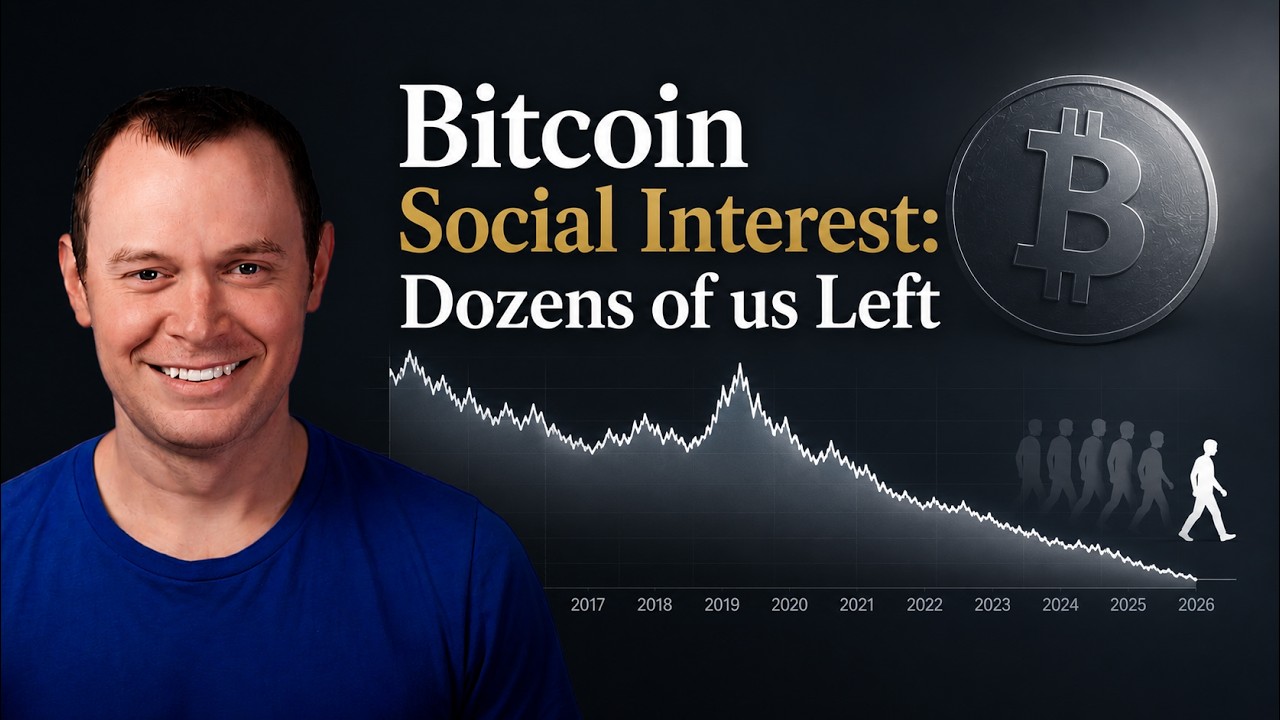
7:38
Blockchain & Crypto
Bitcoin Social Interest: Dozens of us Left
benjaminjcowen
12K views•2026-07-23

11:32
Business
Tesla Profits Plunge & SpaceX Stock Continues Fall
TheJohnJohnstonLounge
6K views•2026-07-23