A lucid breakdown of convergent evolution that replaces superficial resemblance with scientific clarity. It’s essential viewing for anyone who mistakes a toxic defense mechanism for a harmless desert icon.
Install our extension to search inside any video instantly.
Beware! These Cacti Have Toxic DoppelgängersAdded:
Would you believe that these two plants aren't even vaguely related to each other? They look almost identical. Today on Araine, we're going to be exploring the mysterious and certainly very weird world of plant doppelgangers, cacti, and succulents that somehow look almost exactly the same despite coming from opposite sides of the planet. So, stick around. I'm going to share with you a few pairs of plants that mirror each other and we're going to think about what that means more broadly and how best we can care for them. So, let's get stuck right in.
But first, we're going to start with a bit of a quiz. I've got four pairs of plants. And in each of those pairs, there's going to be a cactus and there's going to be a euphoria. Euphorias of course are a genus of plants that share some serious visual similarities with cacti but they're not cacti. So your job is to pick out the cactus and the euphoria in each pair. Let's start with these two. What do you reckon? Big round gloose bodies. One's a cactus, one's a euphoria. Which is which? All right.
Pair number two. Size notwithstanding.
And I reckon you'll agree these two look pretty similar. They've almost got kind of fish scales all over their body. One of them's a cactus, one's a euphoria.
Make your choice. I can see one of these two is just a seedling, but you can already see the similarities starting to emerge between them. So, which one is which? And then getting away from the little squat things, we've got two taller columnar plants. This one heavily branched, a little bit worse for wear, and this a single rigid pole.
Make your choice. What do you think the answers are? All right, you're no doubt itching to know which of those plants were cacti and which were euphoria. So, let's start here. This guy is the cactus and this is the euphoria. What we've got here, Astrophidum Asterius, a plant that comes from the southern USA and northern Mexico. defined by that wonderful circular shape and these little felted arols all over the plant. Hang on to that word ariel because it's going to be a key a little bit later in the episode.
And this one here is euphoria symmetrica comes from South Africa. That part of the world as you can see complete opposite sides of the planet. Totally bizarre that two different plant species could emerge that look so similar in their shape. I wonder why that is. Stick around. I'll tell you exactly why. But let's have a look at those other pairs. Now, out of these two, if you said this guy was the cactus, you bang on. This is plesfora aceliformis, which is a Mexican cactus species. Doesn't get too much bigger than this guy here. And as I noted, interestingly, they're covered in these almost fish scale like spines all over the body. Really, really remarkable form. For the most part in habitat, they appear almost buried. You can only see the very tops of the plants emerging out of the soil.
That of course means that this is a euphoria. Euphoria pyermis comes from Somalia. Again, opposite sides of the earth. And that name Pyermis means fish skin. Again, reflecting that almost scaly appearance.
Now, they're not the same size. This guy probably will never get quite as big as this one, but they're remarkably similar in how they've grown. Fascinating.
Now, of the pairs, this one is probably my favorite, and it's all to do with the naming. This one here is a cactus. This is a gymnocium species. I'm not exactly sure what species it is. If you can identify it for me, magic, that'd be super helpful. They're beautiful plants, little spines all over them, and they've kind of got these little cliffs that look a little bit like chins, hence the common name, the chin cactus. Really bizarre and quite beautiful. Very easy to grow, too, if you're looking for a beginner plant to get into cacti and succulents. Now this guy therefore is the euphoria and his name is Euphobia.
Gymnocalissioides gymnocalissium calicioides. What's to do with the name? Calissioides is essentially a Latin term that means looks like a gymnocalissium because just like these guys as it gets bigger and I'll zoom right in on the screen so you can see it. This plant too has those little chin-like clefts, little tubicles all over its body. And so this is a remarkable pairing of plants. These guys come from South America. These guys, Somalia, Ethiopia, Horn of Africa, same sort of space as Euphoria, Piscermis.
Remarkable. And then we've got our columns. Tall straight boy, branching spiky boy. Which is which? Well, this one here is your cactus. This is younger so serious inquisiences which comes from South America. I think it's Bolivia or somewhere thereabouts. And then this I don't even know what this is but I do know it's a euphoria. And very shortly I'll tell you how I can just look at it and know precisely that this is a euphoria and not a cactus because there are a few really telling signs that are going to help us. And you are going to want to know the difference. Why?
Because euphorias are incredibly toxic and cacti, not nearly so. So, how do you tell them apart? If you're enjoying aridine or maybe you're just a massive cactus and succulent obsessive like me, well, check out the website arzene.com.au where you can get yourself some really rad merch. Whether you're into these sorts of grotesquaries or something a little bit more tasteful, I have no doubt there is a t-shirt or a hoodie or a jumper that suits your best tastes.
Show off your obsession. arigene.com.au.
Anyway, let's get back to identifying some cacti euphobias. Now, if you want to tell a euphobia from a cactus, the first and most obvious sign is by looking at the sap. Now I've got a far more manky weatherbeaten Euphobia Oessa here which is going to be our little guinea pig. What I'm going to do is I'm going to take these scissors. I'm just going to prick the surface of the plant and we'll closely observe what happens.
Shall we? Here we go.
Do that. And what you're going to see straight away, there's this milky white sap that emerges out of the hole. That's called latex. Now, what it is essentially is a fantastic means of protecting the plant. It'll block up that little wound, heal it away, keep the germs out, all the rest of it. But it's also ridiculously toxic in some species of euphoria, far more so than others. And it's a real health hazard.
It's something that you need to keep well aware of. You certainly don't want to ingest it. And absolutely, you don't want to get it into your eyes or your face because it will cause absolute chaos. You'll be in complete misery. And I'm sure you won't feel too well.
Euphoria, broadly speaking, go by the common name spurges. And that's a pretty revolting sounding name. And it comes from that derivative of to purge because if you eat the sap, you're going to vomit up everywhere. Ridiculously potent stuff. You want to avoid it at all cost.
When you cut open a cactus, as we're going to see, you don't have the same sort of sap inside with a couple of notable exceptions. All right, another fairly weatherbeaten plant which is going to make perfect for stabbing holes into. Take this little younger ceerious cutting.
Scissors straight into the body. No white milky sap as you can see. Now, where we do need to be careful about this though, I suppose something that a lot of cactus collectors aren't really all that aware of is that there are actually some species of mammalaras which do also contain a milky white latex sap. Does exactly the same thing as it does in euphorias, but not nearly as virulent and potent and, you know, horrific as the euphoria alternative, but something to be aware of. It means that sap isn't always a foolproof method of deciding euphoria or cactus. So let's look at a couple of other defining traits. So let's come back to our original pairing and do a little bit of a visual analysis. It's going to tell us a whole lot about what's actually going on.
What's the most striking difference in terms of their appearance? It's these little tufted puffs which as I mentioned earlier are called arielles.
Euphoria here doesn't have them. Every single cactus species on earth no matter how strange, obscure or uncact looking it is has these little organs called areolles on them. And they're always almost like little felt pads. And that's where the spines emerge from if the plant has spines. This guy, of course, doesn't have any. But if you look very, very closely at the plants, you see little tufted pads with spines coming out of them, you're pretty much dead on going to find that that's a cactus.
No Ariel's, no cactus. Let's have a look at those two big columnar guys and see if that holds true. I know it does, but let's just check it out. Close examination of this guy. Oh, wow.
top column is about to fall off. I guess I got another cutting. Anyway, close examination of the spines and we can see that they're emerging from what looks more like a corky barkl like substance.
And that's our tell right there. This guy is not a cactus. I reckon if we spike it, we're going to find milky white sap. Hey, you know what? Let's just try it and see.
All right, moment of truth.
Look at that little dot of milky sap right there. Now, in the warmer months when the sap is flowing freely, these things can like really ooze completely get going. But, um, cooler months, metabolisms have slowed down. So, you're only going to get a little pin prick like that. If I stab my youngest, as we've already seen, not going to have the same impact.
And now close-up view of the youngest oerius. And you're gonna see tiny little spines. They're not big at all. Only a few millimeters in size. Still big enough to cause a bit of pain, but they're all emerging from a little felted pad. Just like those bigger, rounder ones that you can see on the astrophem. And that's the relationship between these plants pretty much summed up. Arol equals cactus. It's amazing.
Now, there's one final tell that'll help you distinguish between them. If Ariel's and Milky Sap haven't yet sold the deal for you, and that's by looking at their flowers, it's the wrong time of year to have an abundance of flowering plants, unfortunately, but I will dig some footage out of the archives for you.
Cacti have got big, showy, fantastic flowers. Some of them people grow solely for the beauty of the floral display.
You can get flowers like this big.
They're amazing. Euphorias, on the other hand, always have these tiny essentially insignificant little things that nobody ever grows a euphoria for its flowers in particular.
If you have a real close look at them, no matter what euphoria it is, they're all kind of shaped a little bit like a cup. And for the most part, they're only topping out at a few millimeters in diameter. There is no way in the world you're ever going to get confused between a big showy cactus flower or a tiny cupshaped euphoria flower. And so between latex flowers and arols, that's a pretty firm guide to identifying is it a cactus or is it a euphoria? which leaves us with two questions and they sort of tie together. First of all, why does this happen? How is it that we have the same looking plants appearing on opposite sides of the earth? And what therefore does that mean for how we care for them? Well, it's pretty simple. Evolution is lazy as. Basically what you find when you've got two plants. Let me find my little exemplars here. When you got two plants like your astropha mysterious and your euphoria symmetrica that are growing in essentially the same sort of conditions regardless of if that's in Mexico or South America. Evolution has just rewarded the same sort of processes.
basically said, "Oh, yeah, that worked in Mexico. That worked in South Africa.
You're going to end up looking pretty much the same." The same evolutionary pressures have gently nudged these plants over the span of millennia to adopt the same growth form. And it's a repeating pattern. You can see it all over the place. And it's not even just cacti and euphorias. Hang on a sec.
Let's just go and pick a random plant here that I know isn't even related to either of them. Have a look at this.
Quaqua mammalaris. Now, quacqua are an aleppiad, but I reckon if you had a close look at this, you'd think, "Oh, yeah, that's a cactus." Or maybe that's a euphoria.
Not even remotely related to either of them. Here's the thing. I can look at this and tell that it's neither of those plants because number one, it's got no ariel. That rules it out of the cacti family. If I give this a little poke with my scissors, I'm not going to because this plant's a little bit too precious for me. But were I to give this a poke with my scissors, there'd be no latex inside it. And that means it obviously has to sit in some third space.
But it sure as hell looks like a cactus or a euphobia. I'm sure you'll agree. So what then does all of this mean for how we care for these plants? Well, unsurprisingly, it means that they pretty much have identical demands. Pleshora aseliformis is what we call a very zeric or dryloving plant.
So too is this guy, your little euphoria pyermis. If I'm potting both of these guys up at the same time, they're both getting a really gritty mineralrich soil. probably in the scope of about 80% inorganic, rocky, gritty stuff with only about 20% organics. 20% organics at most because any more than that is going to hold more water in the soil than either of these plants are particularly comfortable with. Watering frequency too, I reckon is going to be almost identical. Neither of these plants is craving a huge amount of water. So put them on the shelf right next to each other and care for them in much the same way. And the same is true of many of those other species. Although interestingly enough with the euphoria gymnocalissioides can take a whole lot more sun than the gymnocalium. They kind of grow under shrubs and stuff. But the pattern is quite clear. Same evolutionary pressures result in similar looking plants which results in similar care within our green houses or on our shelves or in our broader collection. It's pulling on evolutionary science to think about how best to care for our plants. And now hopefully you're really well positioned to not only identify your own plants, but when you go out shopping and you see those plants, they're always unlabeled.
You're like, "What on earth is that thing? I don't know. I'll just figure it out. It looks kind of cactusy. Hopefully now you've got the knowledge to help you to identify precisely what you're working with. If not on a species level, at least in terms of the broader family and what that means in terms of certainly what you need to be careful of. So, I'm going to leave you with this a little quiz. Here's a plant. I'll give you a closeup. Have a close inspection.
Think about all the different things that I've mentioned today in terms of identifying. I'm not going to give it a little stab, but visually, if you look at it, there's one little feature here that's going to help you determine cactus or euphoria.
Chuck your best guess into the comments and uh I'll let you know how you done.
Anyway, it's Aarine for another week. I hope you've enjoyed the show and of course, I will be back next Monday with more cactus and succulent mayhem. See you then.
Related Videos

Secrets of the Sea: The Ocean’s Most Powerful Creatures & Their Amazing Abilities! 🌊🦈
SwampyTales
3K views•2026-05-29

POV: You're a Shark. The Octopus Already Knows You're There.
tentacleeeee
297 views•2026-05-28

How Do You Know If You're Getting Enough Vitamin D?
DrPeterKan
765 views•2026-05-29

800+ New Species Discovered in the Pacific!
raizen05-j6k
295 views•2026-05-30

Why Running Is Killing Your Strength Gains
GarageStrengthClips
928 views•2026-06-01

@CreatureCases - 🌊☀️ 🌈🦊 Kit & Sam’s Sunny Adventures! 💖🐝 | Best Friends in Action 🌴✨| Compilation
CreatureCases
1K views•2026-05-28

Bird Nest Monitoring | Hidden In Plain Sight!!
thegeordierambler4373
251 views•2026-05-30
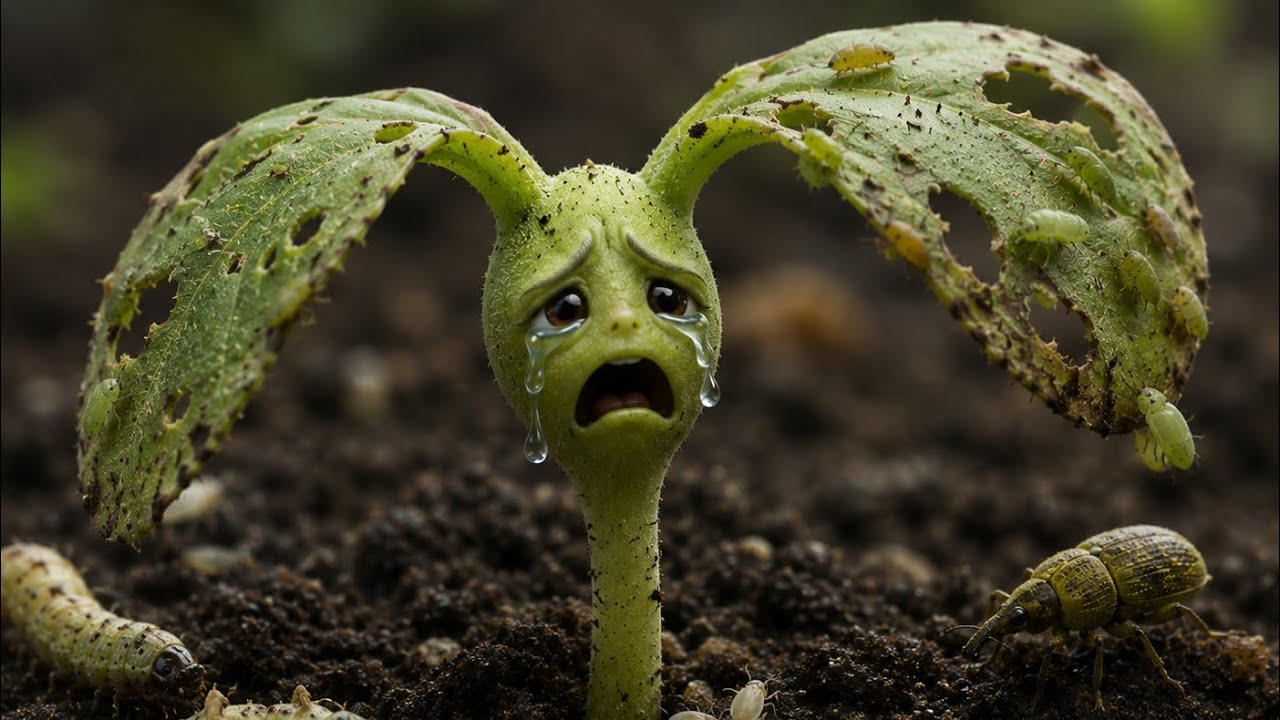
Seedling under seize #pest #plant_predators
Makeitsimple99
181 views•2026-06-01



