This is a masterclass in exam-oriented pragmatism, stripping complex chemical theories down to high-yield shortcuts for the competitive grind. It perfectly illustrates how modern education prioritizes scoring efficiency over genuine scientific inquiry.
Install our extension to search inside any video instantly.
RE-NEET 2026 ️ 20 Marks in 6 Minutes | Chemistry Most Expected Questions
Added:NEET warriors, watch this video till the end. Just give me few minutes of your valuable time and on 21st of June you will be cracking and ensuring around four to five questions from just the probable concepts that I'm going to discuss with questions.
So, the first question says, out of the following molecules, first you have to give the hybridization. The options are the hybridization, but of that molecule A, which is having non-zero dipole moment. B, it should have highest number of lone pairs. Now, let us work on those molecules. First is SO2, which is definitely non which is definitely polar because it has a net dipole moment because it is not a symmetrical structure with trigonal planar geometry and sp2 hybridization, but it is having how many lone pair? Only one. Then comes ammonia and NF3. Both have geometry tetrahedral because steric number is four, one lone pair and three bond pairs. But yes, because this ammonia, the dipole moment vector is getting added up, so it is highly polar as compared to NF3, but both of them are definitely polar, but having one lone pair. Next one is sir XeF2. Although this is having three lone pair, but because it's a linear structured molecule, that's why it's mu net is zero. While this is your beautiful right answer that which is ClF3 having a T-shaped geometry. Technically, it is also having steric number five, but lone pair are always allowed to stay at the equatorial position because they give minimum repulsion over there.
This guy is definitely also polar, a seesaw shaped steric number five SF4 molecule with with shape as seesaw shape or pi shape. Definitely, it is also nonpolar, but this guy is only having one lone pair. A beautiful question from VSEPR theory, moving to molecular orbital theory.
Among the following molecules, you have to give the the specie where if O2 is getting to O2 plus, then its bond order must increase and its magnetic nature must change from paramagnetic to diamagnetic. Now, as we all remember, after sigma astic 2s antibonding molecular orbital for oxygen and heavier molecules, but yes, uh MO2 MOT is only applicable for homonuclear diatomic molecules. So, practically, after sigma astic 2s, what is filled? So, sigma 2pz. That means for oxygen, bond order is definitely increasing from O2 to O2 2 plus O2 plus one, but it uh O2 is also paramagnetic uh sir, and O2 plus is also paramagnetic. Coming to O2 changing to oxygen 2 minus, sir, this is also paramagnetic to diamagnetic, and moreover, here bond order is also decreasing. If we come to nitrogen, then because of intermixing, after sigma astic 2s, please remember, pi astic 2px and pi astic 2py is filled because of intermixing. It will happen in nitrogen, also. And all the species which are having less number of electrons, which are having very lighter nucleus, those are having less number of electrons.
What amount? What number? Sir, less than 14.
So, definitely for nitrogen, also, uh because uh N2 is diamagnetic. If it is turning to N2 with a positive cation plus one charge, it it's it is definitely turning from diamagnetic to paramagnetic, but here also bond order is decreasing. So, our beautiful answer will be this heteratomic molecule NO. But sir, MO2 is valid for homonuclear diatomic molecule.
You can approximate that using the number of electrons. If the number of electrons is 15 or rather more, which is there for NO because NO has 15 electrons, so what molecular orbital energy diagram you will follow? Sir, of the heavy molecules, that is of oxygen, and then you can definitely see here bond order is also increasing from 2.5 to 3, and definitely it is turning diamagnetic from paramagnetic. Moving to the last important concept from GOC.
Sir, if you just have to give the stability order among carbocations, then definitely the most stabilizing effect is resonance, but extreme case of resonance is aromatic nature. So, if because of that aromatic nature, that C carbocation was most stable, and why?
What is the definition of a compound to be aromatic? It should satisfy three conditions. First, the compound has to be planar, a sp2 hybridized system always allow the the molecule to be in a planar geometry. Second, you should have complete current loop of the of the non-sigma electron cloud. They may be pi electron cloud, they may be lone they may be lone pair, but they have to play they they have to be present at alternate positions. And how many non-sigma electron cloud should create that current loop? Sir, it should follow Huckel's rule. That is their number should be 4n + 2 pi electrons.
Because of that, obviously, we know that aromatic nature makes the compound extremely stable. This is the highest case of stabilization. Post that, you have resonance stabilization. After that, you have sigma pi conjugation, which is hyperconjugation, and because inductive effect is just partial transfer of charge, not complete transfer. That's why it is the weakest stabilizing effect. Moreover, if you have carbocation species or any species which is electron deficient, it will be stabilized by electron donating groups applying these effect. And if you have electron rich species like a carbanion, then rather electron withdrawing group would stabilize those intermediates.
Please revise these content very properly and all the very best. You will be doing great in your examination.
Related Videos
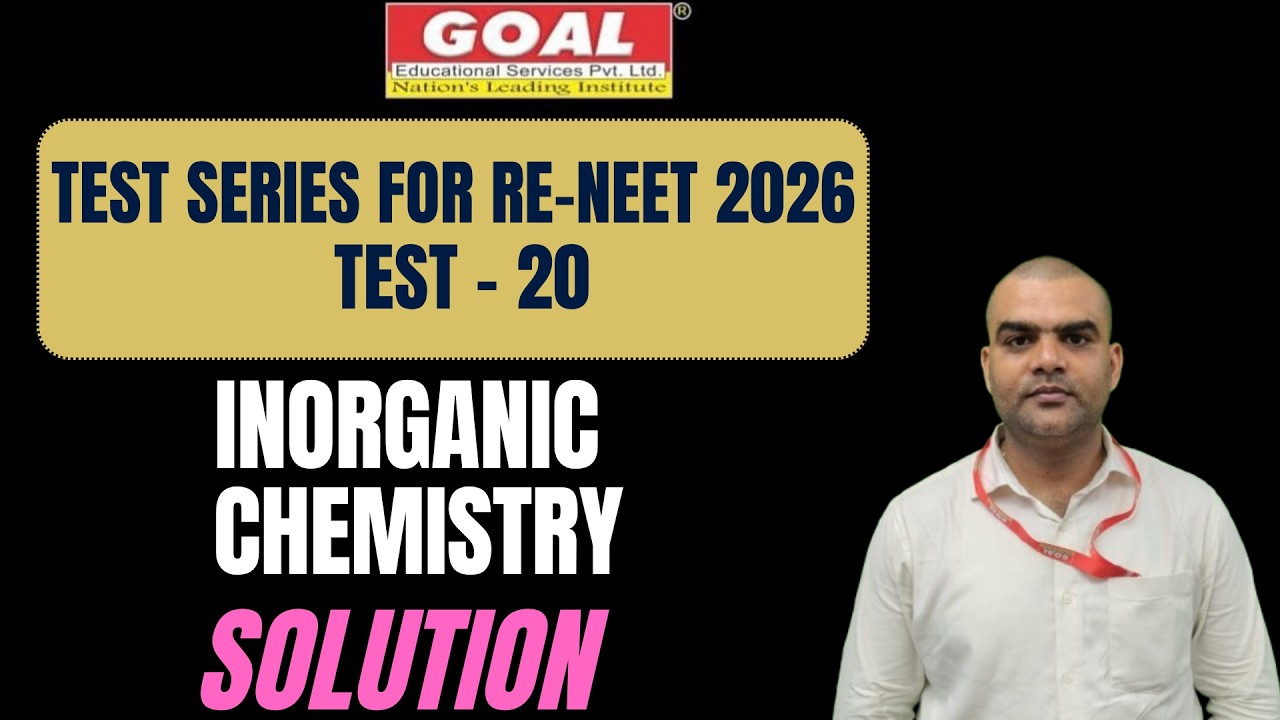
INORGANIC CHEM TEST-20 VIDEO SOLUTION FOR RE NEET-2026
GOALINSTITUTEOFFICIAL
232 views•2026-06-18

PHYSICAL SCIENCES PAPER 2 GRADE 12 JUNE EXAM MEMO 2026 PHYSICAL SCIENCES PAPER 2 MEMO THUNDEREDUC
thundereduc
444 views•2026-06-18

PLASTIC PYROLYSIS (under 400C) CAN'T BE DONE - Unless You Try
loweredexpectations4927
1K views•2026-06-19

Baking Soda & Vinegar Rockets for Kids with Silly Miss Lily and Paisley! Fun Science Videos for Kids
PaisleysCorner
162 views•2026-06-22

I Made a Glowing Rock From Scratch
ElectronImpressions
581 views•2026-06-19
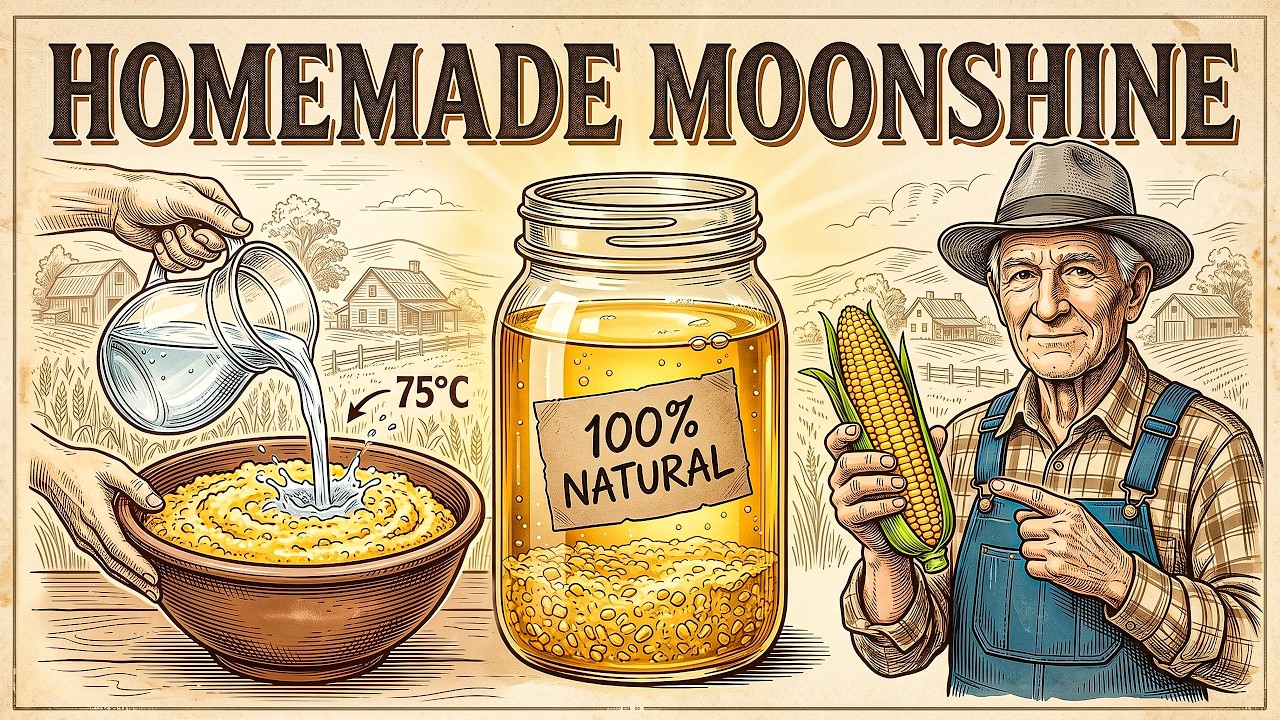
One Cup of Corn. Unlimited Moonshine. The Appalachian Secret They Made Illegal
thet0
347 views•2026-06-24

SCIENCE 7: TERM 1- WEEK 1_Lesson 3: PARTICLE OF MODEL OF MATTER
educatorjulie
203 views•2026-06-18

Special Report | NH3 உடலில் நுழைந்தால் என்ன நடக்கும்? நடுங்கவிடும்பகீர் தகவல்கள்
thanthitv
30K views•2026-06-21