Anthropic is effectively codifying their internal engineering culture, transforming prompt engineering from a trial-and-error "black box" into a standardized professional workflow. This library proves that the future of AI-assisted coding depends as much on the precision of human intent as it does on the model's intelligence.
Install our extension to search inside any video instantly.
Claude Code: Prompts That Anthropic Teams Use
Added:Hello guys. Did you know that Anthropic in the Claude code documentation released prompt library typical prompts for you to copy paste or get inspiration from to formulate how exactly to prompt Claude code for various stuff. In this video I will try a few of those prompts and show you those in action. So this is the page and I will link that in the description below and in total there are 52 prompts by category. So start here starts with five like prompts to try first and let's try one of them. So you click start here, you copy and for example you start working with new unfamiliar code base and just prompt like this. So I have this project with Laravel and Python for my another YouTube channel Laravel daily and this is exactly what I will prompt to Opus 4.8 high and let's see what will be the result. And there we go, the result is in 42 seconds so we didn't have to wait long and probably the most useful part to me personally is actually this one.
So kind of a diagram in the terminal which part calls which another part and then what is the script for analysis and then where's JSON, where's filament table and stuff like that. And then more details that you can read key directories like app for Laravel filament admin panel and then Python for Python scripts to perform the image OCR in this case with two different methods to do that with or without fast API.
This was my demo project on other YouTube channel and also details worth knowing stuff like where configure things, what are the cache driver and many more useful details. If you want to have an overview of a project in roughly one minute, you can do that with this prompt and just out of curiosity how much it costs for me. So yeah, totally not a lot, 56 cents in API pricing which is like very low amount in the current session percentage. I don't even remember what was the starting point.
So, yeah, it's a cheap prompt to run, but of course, it depends on the size of the project. For bigger projects, it may be more expensive. And now, let's get back to prompt library and let's browse through what else we can test. Specific questions depend, of course, on specific projects. Well, we'll not run that. So, where do we validate this? Then, some test specific is failing. This is pretty trivial or write test for something, run and fix, and review changes, and flag anything that look risky. So, probably the point of these five starting prompts is just talk to your agent. So, I noticed a lot of people are trying to find like perfect skill or perfect workflow or something like that, but actually, LLMs are good enough these days. Not only Claude Code, you can do the same with GPT 56. Just tell the agent what you want and give enough detail. For example, for evaluation, like run test and fix any failures. And actually, in the same prompt library, Claude Code creators explain why they formulate the prompts in that way because those prompts are based on Here's the list, common workflows, best practices, and Anthropic teams use cases from their own company. But let's see what other prompts may be useful. So, for example, plan, or actually, for planning phase, I would probably use a skill something like Grill Me from Matt Pocock or Superpowers. And I talked about that separately on my AI coding daily. I have a course, My Planning System, where I compared general planning, Claude Code, Codex, and Grill Me. But you can also use just regular prompts. What's interesting, for example, refactor. So, for example, migrate something to something. If we click here, what is the actual structure of the prompt? Migrate everything from this to that, identify every place, and make the changes. And this is interesting, how you formulate the prompt affects the result of what you see in the process. So, identify every place means that all those places are listed in the response, so it's more convenient for you to review later.
Then, another example, port this Python to Rust, and this is important, keeping the same API and test behavior. So, these are important constraints to not break. Another important example, for example, the metrics for verification.
So, what is considered a success?
Optimize to 500 milliseconds. So, basically, in the prompt, be as specific as possible what you want to achieve.
Also, what I noticed about latest models, and even some of the earlier models, is they are good at analyzing images. So, for example, if something goes wrong, you can place a screenshot of dashboard or website or whatever, and then again, just talk to the agent in a human language explaining the situation, explaining what went wrong, and explaining what do you want for the fix.
Do you want just the information, or do you want Opus or Fable to just fix it?
And probably final prompt category I want to mention here is automation. When you found some repeating prompts that you want to use in other projects, then it's time to create a skill or hook or something like that. And you don't need to go to the docs of how skills should be created. Again, you can prompt the agent for that. So, this is an example, create a ship skill that runs this and that, and it will probably ask you whether that skill should be local for that project or global for your user.
But yeah, again, it's enough to prompt the agent, or for example, add a hook.
So, for example, recently I added a hook to run npm run build if any of the files were changed related to Tailwind, for example. So, yeah, that hook in the settings.json of Claude was built by Claude. Of course, it wasn't a one-shot result, so I had to tweak quite a few things here when that hook should be fired and stuff like that. But, yeah, if you just ask Claude code to create a hook or a skill, it will query the docs of Anthropic itself and will probably create something usable or at least the first version. So, yeah, Claude code prompt library, probably more like as inspiration for those of you who have trouble to formulate in words what exactly you want from your agent, especially if English is not your native language, so that may be helpful. I will link that in the description below. What other similar prompt libraries you know for maybe other agents or third-party?
Let's discuss in the comments below.
That's it for this time and see you guys in other videos.
Related Videos
6:13
Computer Science
TOP 15 Data compression Interview Questions and Answers 2019 Part-2 | Data compression | Wisdom jobs
wisdomjobs
281 views•2019-06-28

27:51
Computer Science
CTS 158: 802.11w Management Frame Protection
ClearToSend
4K views•2019-02-04
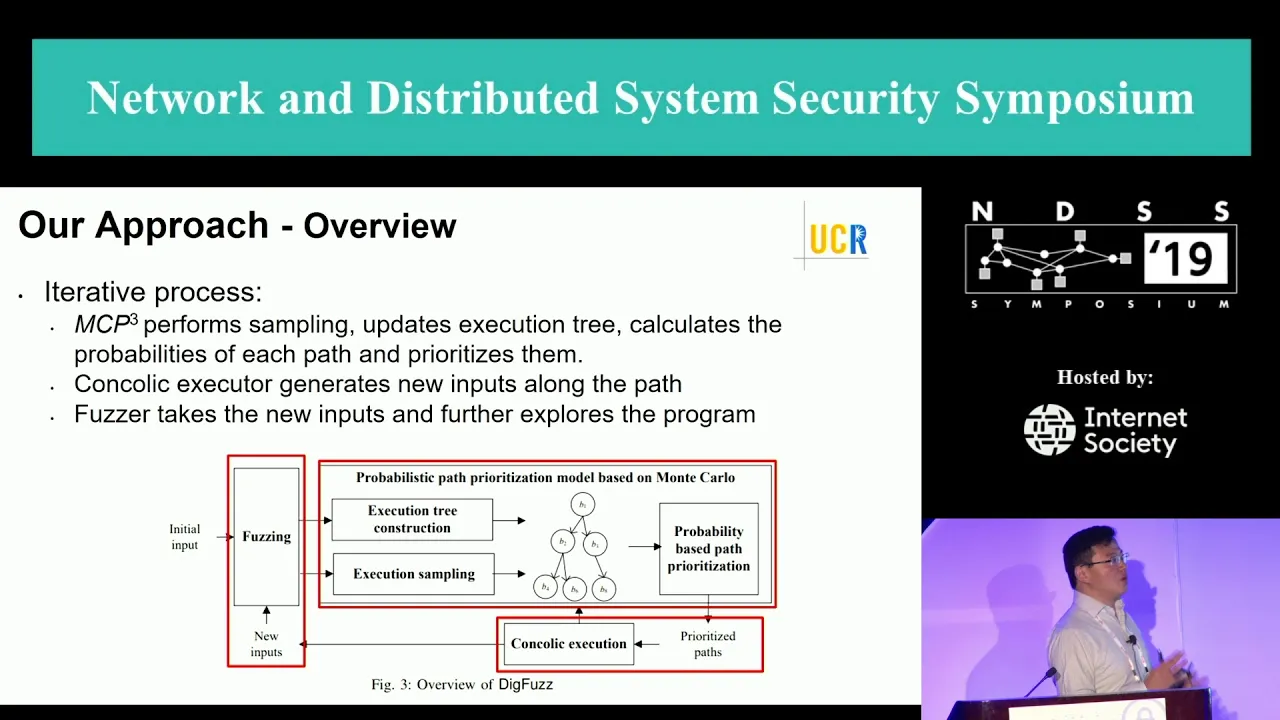
23:21
Computer Science
NDSS 2019 Send Hardest Problems My Way: Probabilistic Path Prioritization for Hybrid Fuzzing
NDSSSymposium
496 views•2019-04-02
12:48
Computer Science
How realistic is Cities: Skylines?
CityBeautiful
159K views•2019-02-14
46:39
Computer Science
GUIs & TUIs: Choosing a User Interface for Your Python Project | Real Python Podcast
realpython
2K views•2025-04-04

25:15
Computer Science
The OSI Model - Explained by Example
hnasr
225K views•2019-05-12
1:10:47
Computer Science
Cloud Computing - Introduction
elithecomputerguy
98K views•2019-10-07
2:24
Computer Science
From Traveler's Dilemma to Dynamic Routing | Demystifying Networking
IITBombayJuly
5K views•2019-08-04
Trending

5:41
Business
YouTube Disabled Our Comments Again (Are Any Humans Left at YouTube?)
SpecialBooksbySpecialKids
39K views•2026-07-21
5:07
Philosophy
One Must Imagine Sisyphus Happy
vlogbrothers
61K views•2026-07-21

12:30
Business
The Downfall of OnePlus!
techwiser
65K views•2026-07-21

30:21
History
The REAL History Behind The Odyssey Will BLOW Your Mind! It's NOT a Myth!
metatronyt
20K views•2026-07-21