Intermediate mass black holes, which are rare celestial objects between stellar and supermassive black holes, may serve as crucial building blocks in the formation and growth of supermassive black holes at galaxy centers. NASA's Chandra X-ray Observatory and Hubble Space Telescope have detected evidence of these mysterious objects, including NGC 6099 HLX-1 in the Hercules constellation, which appears to be consuming a star in a tidal disruption event, producing X-rays at temperatures around 3 million degrees.
Install our extension to search inside any video instantly.
NASA Chandra Discovers Possible Newborn Black Hole in the Infinity Galaxy | Space Facts That Soun...Added:
What if I told you the universe has dropped a new episode of cosmic drama and [music] NASA's Chandra X-ray Observatory brought the receipts? In 2025, astronomers studying the so-called Infinity Galaxy found something wild.
Two galaxies appear to have collided, leaving behind two glowing rings of stars and gas. NASA's James Webb Space Telescope [music] saw the infrared details, while Chandra detected powerful X-rays. Together, they revealed evidence for a growing supermassive black hole [music] that may not be sitting politely in the center like black holes usually do. Apparently, [music] even black holes are now ignoring the assigned seating. And it gets better. Chandra and Hubble also helped identify NGC 6099 [music] HLX1, a possible intermediate mass black hole about 450 million light-years away in the constellation Hercules.
Intermediate mass black holes are rare because they sit between small stellar black holes and giant supermassive ones.
Think of them as the awkward teenage phase of black holes. Too big [music] for the kids table, not quite ready to run a galaxy. This one may have been caught eating a star in what [music] scientists call a tidal disruption event. Translation, a star got too close and the black hole turned it into cosmic spaghetti. [music] The X-ray glow was around 3 million degrees, which is hotter than your phone after opening one app, two tabs, and one social media argument. These discoveries matter because black holes are clues to how galaxies grow. If intermediate black holes are cosmic [music] building blocks, they could help explain how the monsters at the centers of galaxies became so enormous. So, next time someone says space is empty, remind them it has galaxy collisions, star-eating black holes, and telescopes doing detective work from millions of light-years away. If you enjoyed this trip through the universe's weirdest news desk, hit like, comment which space mystery you want next, and subscribe because the cosmos is clearly not done being dramatic.
Related Videos

Spiral Galaxy NGC 3370 from Hubble | NASA APOD 2025-11-05 #Shorts
galaxygallery
938 views•2026-05-30

SOMETHING inside the SUN is CHANGING
RaysAstrophotography
1K views•2026-06-03

There May Be A Giant Hole In The Universe... And We Might Be Inside It | The Cosmic Ledger Entry 015
TheCosmicLedger
145 views•2026-05-31

Captured the Blue Moon (with a twist) 🌙✨ #space #bluemoon #telescope
realAstroExplorer
674 views•2026-06-01

The Map We Sent to the Stars in 1977 — Why Scientists Now Regret It
TheAncientRecord7
183 views•2026-06-03

Is this a copy of our galaxy? Discover Galaxy M81!
UniverseDocumentaries-cc4mb
995 views•2026-05-31

10 Planet Where a Black Hole Replaces the Sun
cosmicexplorer-EN
147 views•2026-06-02
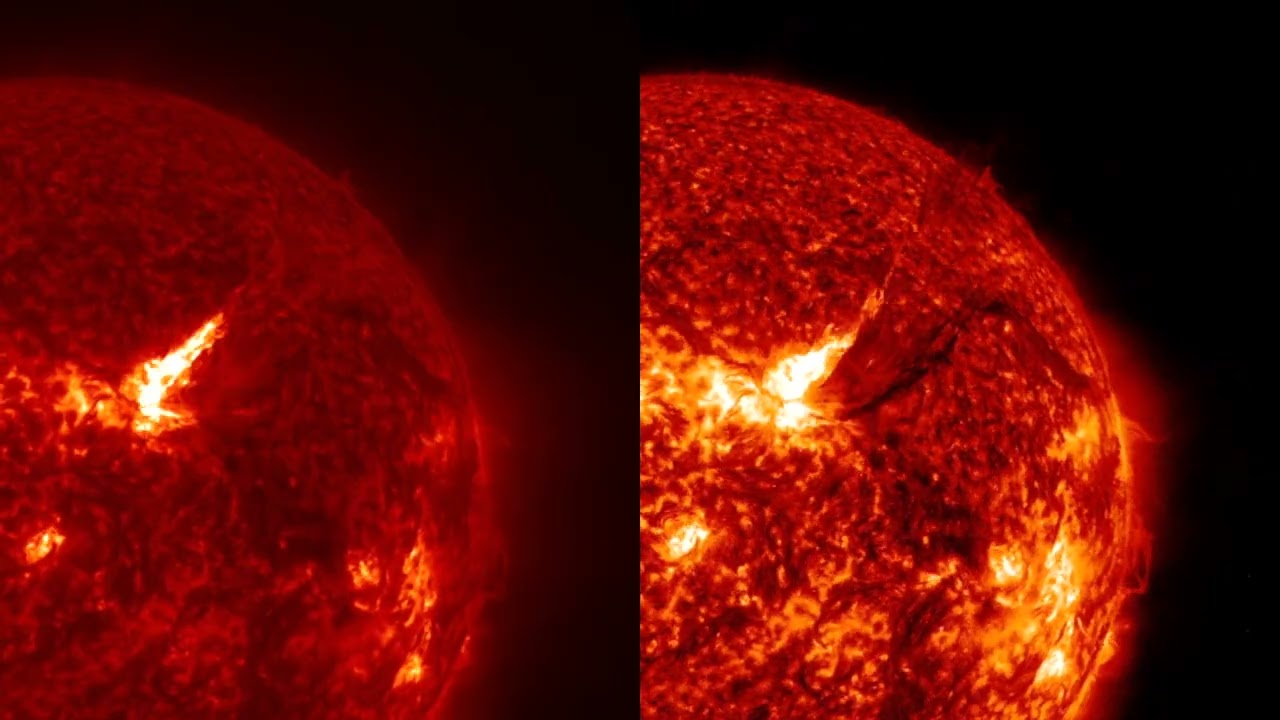
Solar Flares and CMEs at Earth - More Likely | S0 News June.3.2026
SpaceWeatherNewsS0s
2K views•2026-06-03



