This video brilliantly simplifies the complex game theory behind why rational actors still choose the tragedy of war. It is a sharp reminder that conflict is often a structural failure of information rather than just a moral one.
Install our extension to search inside any video instantly.
Every Textbook Crisis Bargaining Model
Added:Today, let's pull back the curtain on crisis bargaining theory. In fact, I want to cover every single textbook crisis bargaining model that there is.
Yes, we are about to have a lines on maps extravaganza.
To do this, I am literally going section by section of a textbook called formal models of crisis bargaining. Now, if we can trust the author, four factors made a particular model worthy of the textbook treatment. impact on the study of war, whether it makes a teachable point, the model's tractability, and whether the idiot who wrote it thought it was cool. For the sake of everyone's sanity, I will not be covering any of the technique used to solve these models. Rather, each section of today's video will introduce each model's modification from the standard model and any interesting conclusions that are drawn from them. So, let's get to it.
Model one, the baseline. War is costly because people die and stuff gets destroyed. If two parties structure negotiated settlements around the expected outcome of war, both would be better off accepting than fighting. That is because fighting produces a similar outcome as war, but comes with the corresponding costs. Thus, a bargaining range always exists, even if we as abstract mathematicians prefer representing the situation with these one-dimensional figures rather than with lines on maps. Nonetheless, understanding why wars occur requires explaining why the parties chose an inefficient conflict resolution system when a more efficient deal always exists in principle. Model number two, leader benefits. What if leaders get some private benefit for fighting a war, such as a distraction from a poorlyrun domestic economy or the possibility of having a general/political rival die during the deployment? There are three key consequences. One, this can cause war if the total private benefits exceed the total cost of war. Two, a single leader having greater private benefits than costs of war is not sufficient for war. And note that also means that if a leader internalizes zero cost of war, it still does not explain a war. And three, if the leader benefits are small enough to avoid war, they perversely benefit a representative citizen from that country. This is because the leader benefits push the bargaining range in a favorable direction as the leader can now credibly reject proposals that he previously could not. Model number three, preemptive war. What if the party that starts a war matters? Namely, because the initiator would benefit from a first strike advantage. If so, then reaching an agreement first requires both parties to prefer to sit down at the bargaining table rather than preemptively attack. If the sum first strike advantages exceed the total cost of war, then no anticipated negotiated resolution can simultaneously satisfy both parties given the first strikes.
War results. Model number four, fampli.
What if the proposal shifts the balance of power? Perhaps because the proposal takes the form of a fympli where one party occupies a disputed territory, making it more difficult for the opponent to unstick them. Then it is possible that demanding everything at stake and fighting a war under the most favorable distribution of power is better than demanding the most that the country could possibly extract in a peaceful settlement. Model number five, bargaining over objects that influence future bargaining power. What if a deal accepted today alters the balance of power tomorrow? Perhaps because the corresponding concession covers defensively valuable territory like high ground. This would seem to cause a domino problem where the disadvantaged state must fight a war to ensure that it does not get entirely consumed. In fact, this mechanism requires an extra kink for war to occur. If a domino problem exists, then it just alters the shape of the concessions for right now and then the next right now and the next right now and so forth. The dashed line here represents what would normally be split if settlements did not influence future bargaining power. The dark line covers the case where settlements do influence future bargaining power and it represents a sequence of settlements featuring an impatient state where initially it receives more before the shift in the balance of power causes the settlement to eventually turn worse. The light line represents a case with a patient state where the settlement hardly moves at all. War can only occur here if one, there is a discontinuity in the function that maps a status quo to a balance of power. Or two, the extracting state is much less patient than the opponent and the concessions necessary to appease it today mean that the more patient opponent gets soaked in the future. Model number six, stalling. What if war takes a long time and the act of fighting upholds a status quo division that does not match what the expected outcome of war is? Then if the side with the more favorable long-run outcome is also more patient than the opponent war lasts for a middling duration and the costs of war are sufficiently small then war occurs. The reason why a middling length of war is necessary for conflict is because it maximizes the differences in how states view holding on to the status quo versus the long run outcome given that they have non-equal levels of patience. Model number seven, preventive war. What if power exogenously shifts over time so that a declining state is more likely to win today than in the future? Note that exogenous means that the state does not have real control over its future power. Perhaps because demographics are changing between them.
Then it is possible that the declining state prefers a costly war today to an efficient but disadvantageous peace tomorrow. The rising state cannot credibly commit to uphold peaceful settlements in the long run. The declining state realizes this and fights while circumstances are more favorable.
Model number eight, indogenous power shifts. What if power indogenously shifts over time, meaning that the rising state can choose exactly how powerful it would like to be in the future? This time, war does not occur.
If the rising state barely alters the balance of power today, as in the right section of the figure, then the declining state can cleverly demand more in the present, ultimately making the rising state no better off than if it did not shift power at all. If the rising state tries to alter the balance of power significantly, then the declining state observes the decision and responds with preventive war. Again, bad for the rising state. Only in the middle case does power change enough that the declining state is forced to pay out concessions. But the threat of the power shift is not so great that it would result in a preventive war. The rising state therefore chooses a future power that the declining state is just barely willing to accept. Model number nine, costly power shifts. What if initiating a power shift costs the builder money? For example, it turns out that nuclear weapons and the like do not grow on trees. Now, there are two different sources of inefficiency to bargain over. The cost of war and the cost of weapons. If the threat to initiate preventive war is credible, then the potential builder chooses not to build, internalizing the threat of war and not wishing to further lose the cost of the failed weapons program. If the cost of the weapons is too expensive relative to the coercive power they grant, the potential builder again chooses not to build. In both of these cases, the settlement is commensurate with the status quo balance of power.
Lastly, if building is both financially credible and will not result in preventive war, the opponent offers concessions upfront commensurate with what the balance of power would look like postweapons production. This gives the potential builder no additional incentive to construct weapons, leading to a fully efficient outcome with no war and no weapons ultimately produced.
Model number 10. unobservable weapons programs. What if initiating a power shift costs the builder money, but the opponent cannot observe whether a weapons program is underway? Say because the footprint of a nuclear program is small enough to evade detection. It is possible now that the deal necessary to appease the potential builder leaves the opponent with less than what the opponent expects to obtain through preventive war. In this case, the two states must play a guessing game where one side chooses whether to build and the other side chooses whether to prevent. If either behaves predictably, then the other side can exploit it.
Thus, both choose to mix between their options. In turn, sometimes the status quo holds, sometimes there is a successful power shift, sometimes preventive war occurs, and most bizarrely, sometimes a preventive war occurs even though no weapons were being built.
Model number 11, compliance problems.
What if one party can secretly cheat on the deal and steal everything that is in dispute between the two? Deals are still possible under some circumstances because the opponent will respond to cheating today by fighting a war tomorrow. In such cases, the potential cheater receives a premium in the peaceful division, essentially to buy out the cheating option. However, deals fail when the potential cheater is impatient and the opponent is relatively strong. The cheater's impatience means that it must receive a large share of the deal to be satisfied. But the opponent's strength means that the opponent must also receive a large share of the deal to be satisfied, leaving an insufficient amount of the good to go around. Model number 12, hold up problems. What if one party must decide whether to make a productive investment in the shadow of coercive negotiations?
The investing party must pay an upfront capital cost, but any productive gains expand the pool of goods that the other side can try to extort. As a result, the investing state has a dilemma. Option one is to invest now, knowing that it will have to pay an implicit tax to its opponent later to avoid war. The optimal investment under the strategy is smaller due to the implicit tax. Option two is to fight now, hope to win, and make a larger investment afterward. This scenario therefore has two possible sources of inefficiency. A sub-optimal investment and the cost of war. When the costs of war are smaller than the investment in efficiency, war occurs.
Model number 13. Issue indivisibility.
What if the parties are not allowed to divide the good in dispute in any manner that they see fit? If the bargaining space is rigid and no deal lies within the bargaining range, as in the case in the bottom half of the figure, then war results.
Note that in practice, seemingly indivisible objects can in fact be divided. For example, the church of the holy supplr, the site of Jesus's crucifixion, is primarily split among three different denominations.
Moreover, most disputes involve a variety of goods, and a divisible good can provide liquidity in resolving bargaining problems with the indivisible good. Money is about as liquid as it gets, and that is why many peels often come with cash transfers.
Model number 14, risk acceptance. What if the parties do not have riskneutral preferences, but instead are risk acceptant. When the parties had riskneutral utilities, meaning that their payoffs for acquiring any portion of the bargaining good or simply the percentage of the good, the cost of fighting made war inefficient. When the parties are risk acceptant, the marginal value of the next portion of the good increases as their share increases. as though they are compulsive gamblers. The randomness of war deacto creates additional utility for the parties. War therefore occurs when risk acceptance is higher and power falls in a middling range as two balanced opponents fighting leads to the most variance in war outcomes. Model number 15, financing war. What if states can borrow money to fund their war effort and can default on the debt payments if they lose, presumably because they no longer exist?
War can become efficient now because of the debt discharge, thereby rendering a settlement impossible. This outcome arises when the cost to borrow and the power shift caused by the financing both fall in a middle range as the loan is a profitable investment in this range and the borrower still loses often enough to make the debt discharge a bigger factor than the cost of war. Model number 16, uncertainty over cost. What if one state does not know how costly the other state views war? Now, the former faces what is called a risk return trade-off where it can try to demand more out of weaker opponents with a drawback that tougher opponents will reject and fight a war.
When the uncertain state has an intelligence assessment that places sufficiently high weight on the weaker opponents, then the risky demand is better and war occurs with some probability. Model number 17, intelligence gathering. What if in the presence of uncertainty over costs, a state could pay an intelligence agency to try to obtain better information, but that itself comes at the cost of diverting resources to winning the war.
Reassuringly, the intelligence agency can catch mistakes that would have otherwise led to overly optimistic offers and therefore war. Unreingly, if the party was originally pessimistic about its chances to extract large concessions out of its opponent, the intelligence may falsely generate an optimistic signal. As a result, unless intelligence gathering provides a perfectly accurate signal, it can increase the probability of war. Model number 18, uncertainty over power. What if one state does not know what the expected outcome of war is? Now it faces what is called a risk return trade-off where it can try to demand more out of weaker opponents with a drawback that tougher opponents will reject and fight a war. When the uncertain state has an intelligence assessment that places sufficiently high weight on the weaker opponents, then the risky demand is better. And if you think that I just copied and pasted my script from the uncertainty over cost model, I did. But these are in fact very different. Model number 19, procedural mediation. What if a procedural mediator had control over the negotiations, meaning that it chooses the offer on the table rather than one of the parties in the conflict?
With uncertainty over costs, a procedural mediator can guarantee a settlement by simply proposing something equivalent to the publicly known balance of power. That is not true when the balance of power is the source of the private information. Here, the two possible bargaining ranges may not overlap. Convincing a stronger type to settle requires giving that type at least its war value. But if the other side is optimistic about its chances, it would prefer its expected war payoff across the two types to settling at the requisite amount.
Model number 20, peace subsidies. What if a mediator could provide selective rewards to the parties if and only if they reach an agreement? Well, that flips what I just said in the previous case. As peace subsidies act as a deacto extra opportunity cost of war, we can now get peace. Hooray.
Model number 21, strategic uncertainty.
What if a party can privately build weapons and have them ready for a war today? Unlike before, it is now an active decision that leads to an information problem. It is not optimal for that party to predictably arm. If it did, then its opponent would assuredly offer concessions commensurate with the additional strength. But then the arming party could not arm, still bluff to get the concessions and not pay the cost associated with the weapons. Instead, sometimes it arms and sometimes it does not. The opponent sometimes offers large concessions and sometimes does not. The latter case results in a war with positive probability. In fact, the probability of war increases in the cost of the weapons. It becomes more tempting to bluff when weapons are expensive, and so small concessions become the primary method to check against bluffing. Note that the problem resolves itself when weapons become too expensive, as it then becomes publicly understood that they are not worth the cost of investment.
Model number 22, cheap talk communication. What if prior to negotiations, the party with private information could send a cheap talk message to its opponent? Cheap talk messages by definition are not verifiable, do not change future actions available to the parties, and do not directly change anyone's payoff. In some social situations, it is possible for cheap talk to indirectly affect payoffs by credibly communicating information, say by helping us coordinate where to meet for lunch. Here though, payoffs cannot change. Weaker types always want to bluff strength and have no disincentive to do so. Expectations with cheap talk are therefore identical to the cases without for the standard two-party model with uncertainty over costs or power. Model number 23, shuttle diplomacy. What if a diplomat could act as a go-between for the two parties engaged in crisis bargaining, purely relaying cheap talk messages and perhaps manipulating them in some fashion?
Unfortunately, such shuttle diplomats cannot help resolve information problems. Whatever incentive to misrepresent that exists in bilateral bargaining carries over to the setting, no matter the preferences of the shuttle diplomat model number 24, information provision mediation. What if a mediator has independent signals about one party's private information? Under a limited set of circumstances, they can credibly reveal that information via cheap talk to the uncertain party. However, the mediator must be biased in the uninformed party's favor and weigh the cost of war versus the value of a peace deal at a relatively similar rate as the uninformed party. A mediator biased against the uninformed party is no good.
And sadly, a peacebias mediator is also worthless as that type of mediator has incentive to say whatever is most likely to get a deal done. Model number 25, costly signals and resolve. What if prior to bargaining, a party with private information about its valuation of the prize at stake can pay to mobilize more military power? Unlike the cheap talk scenario, this case can result in credible information transmission. A type that does not care much about the issues still has to pay the same cost to mobilize troops, but it does not value the benefit to the same degree as a type with a higher valuation. In turn, even if the opponent would automatically infer from a larger mobilization that the party has a high valuation, the low valuation type might not wish to mobilize to that degree. The key empirical implication is that the signal can relieve the information problem and lead to a peaceful outcome.
Model number 26, costly signals and war costs. What if the parties encountered the same costly signaling problem as before, except now the uncertainty is over the physical cost of fighting? This time, credible signaling never works.
The key with uncertainty over resolve is that the various types internalize differential cost to mobilize based on their valuations of the stakes. Here, however, if it is profitable for the lowcost type to mobilize, then it is profitable for the high cost to mobilize and vice versa. Therefore, the signal conveys no useful information. Model number 27, costly signals and marshall effectiveness. What if the parties encountered the same costly signaling problem as before, except now the uncertainty is over how effectively the state converts military resources into victory on the battlefield. Once again, credible signals fail to materialize.
Here though, additional mobilization may be a signal of strength or weakness.
Sometimes the more effective type has a greater incentive to mobilize so as to take advantage of its capacity.
Sometimes the less effective type has greater incentive to mobilize to make up for its inadequacies.
Either way, there is no direct differential cost to the decision. So the weaker type would want to adopt the stronger type's preferred strength if the opponent would automatically believe the signal. Therefore, the signal conveys no useful information. Model number 28. Higher costs, greater war.
What happens when a party is uncertain over its opponent's resolve and we increase the physical costs of war?
Counterintuitively, this raises the probability of war. Resolve determines how the opponent internalizes its costs.
The greater the costs are, the greater the difference in how two types interpret the disutility. In turn, as costs increase, the uncertain party must pay a greater premium to less resolved types to induce the more resolved types to accept. This ultimately leads to riskier offers. Model number 29. Greater resolve, less war. What happens when a party is uncertain over its opponent's physical cost of war and we increase the resolve of that actor despite making that actor more hawkish? This reduces the probability of war. Greater resolve implies that the actor internalizes a given unit of costs at a lower rate.
Similar to last time, but now in reverse. This reduces how two given types interpret the disutility of war.
In turn, the uncertain party can pay a smaller premium to high-cost types to also induce lowcost types to accept.
This ultimately leads to safer offers.
Model number 30, uncertain spoils. What happens if a party is uncertain how much wealth its opponent has available to it?
Like a rebel group trying to extract mineral wealth from a central government? It will not surprise you to find out that this type of uncertainty also leads to a risk return trade-off which can result in a positive probability of war. At least in this case, the chances of war are smaller when the uncertain actor is weaker and rebel groups tend to be weaker than governments.
Model number 31, fighting and learning with uncertainty over power. What happens if one party does not know how many battles the other side can last before falling apart? This is a variant of uncertainty over power with the twist that the parties now can negotiate between battles. And we have some good news here. The act of fighting can resolve the information problem that caused the war leading to a settlement thereafter. For example, if it is unclear whether the opponent can survive only one battle or two battles, then survival after the first reveals all private information. The cost of the remaining battle give all the incentive for the parties to settle.
Model number 32, fighting and learning with uncertainty over costs. What happens if one party does not know how costly war is to its opponent? And those costs could accumulate over multiple battles. More good news. War acts as a credible costly signal. Every battle incurs a cost that the parties cannot recover, which discourages high cost types from bluffing as though they have low costs. Like before, war can resolve itself by revealing the information that caused it in the first place. And model number 33, building reputation. What if one party has to negotiate with two opponents sequentially? This would seem to encourage that party to fight the first battle to establish a reputation for toughness, thereby allowing it to extract greater concessions from the second opponent. However, there is a difference between having greater incentive to fight and more fighting actually occurring. Indeed, the first opponent can recognize that incentive and make a more generous offer to buy out the option to build a stronger reputation. This effect sometimes dominates, creating situations when peace is more common when there are sequential negotiations.
And that's every textbook crisis bargaining model. There are a hundred other models that I could have included, but I did not. I think I should note that I did the bulk of the writing for this textbook in 2018 and 2019. And given how much the world has changed since then, if I were to write a second edition, I would add a chapter dedicated to alliances and coalitions. I should also note that this was just the highlevel overview of everything in the textbook. There is about 100,000 words of nuance that I skipped over to make this video tractable. If you think this stuff is interesting and you have taken a semester's worth of game theory, then this book is for you, especially if you are still here after almost a half an hour. Also, why are you still here?
There are some parts that are intended for advanced graduate students, but they are clearly marked and not a big deal to skip. You can check the video description for more information about the book. But that is it for me for now.
If you enjoyed today's video, then please like, share, and subscribe. and I will see you next time. Take care.
Related Videos

Solving a 'Harvard' University entrance exam question
AsadInternationalAcademy
125 views•2026-06-14
Algorithms for Generalized Signed Distance and Winding Numbers (PhD thesis)
NicoleZFeng
269 views•2026-06-15

Notes 6.3 Rectangle, Rhombus, Square
matthewmills6952
1K views•2026-06-18

Does the math actually hold up? Let's break down the logic.
rawXopinion
1K views•2026-06-15

NYT Hard Sudoku Walkthrough | June 17, 2026
Rangsk
2K views•2026-06-17
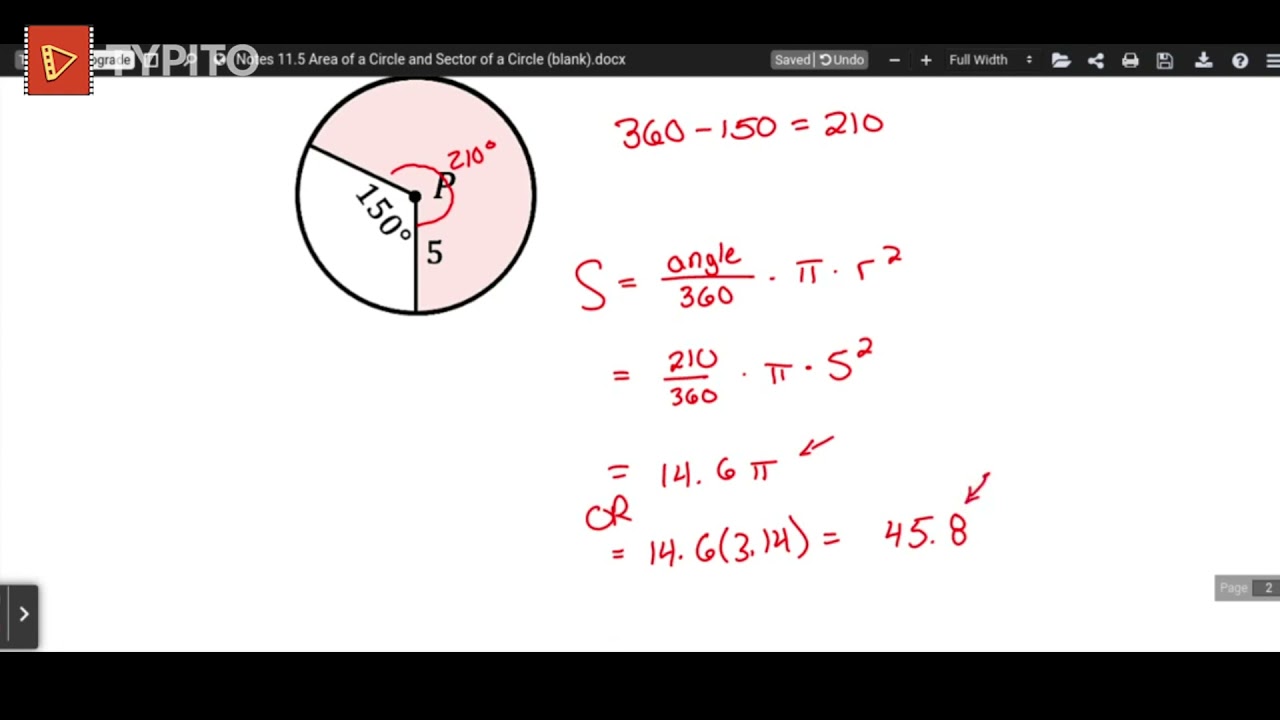
Notes 11.5 Area of a Circle and Sector of a Circle
matthewmills6952
251 views•2026-06-18

Notes 4.2 Isosceles and Equilateral Triangles
matthewmills6952
444 views•2026-06-18
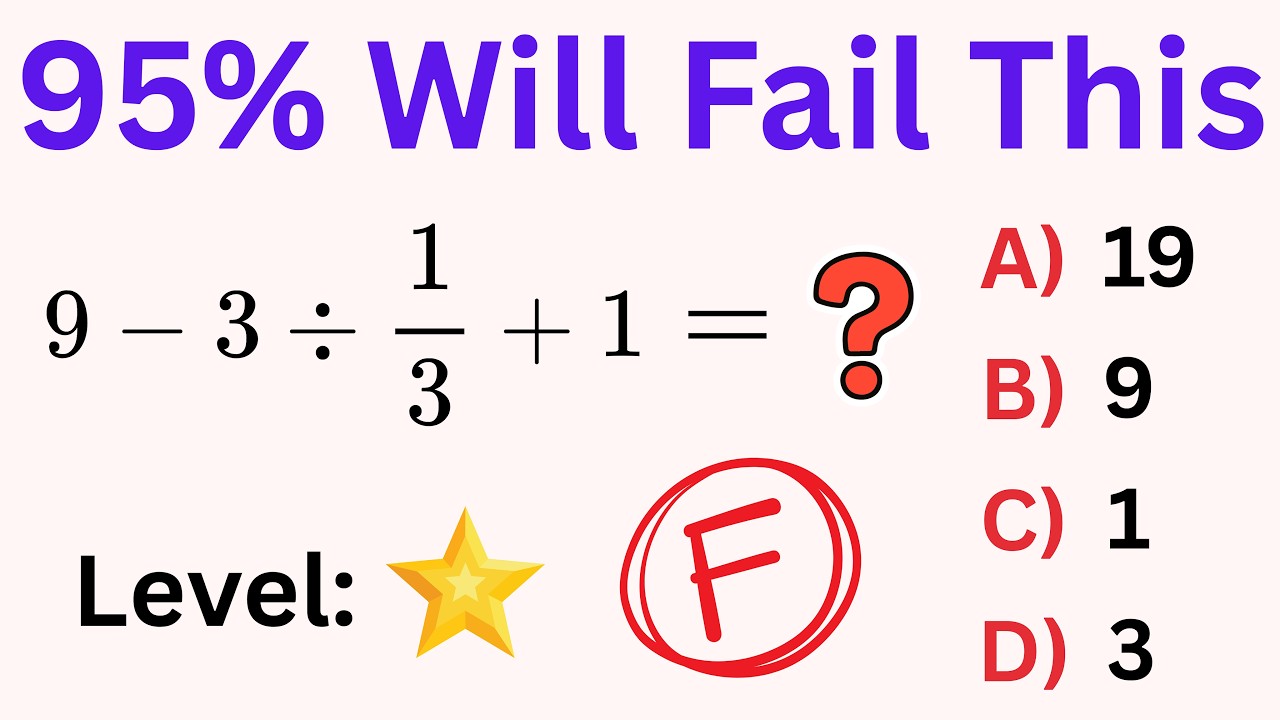
Can You Solve This?
brain_station_videos
1K views•2026-06-15



