Messier 64 (NGC 4826), known as the Black Eye Galaxy, is a spiral galaxy located 17 million light-years away in the constellation Coma Berenices, characterized by a distinctive dark dust band that partially obscures its bright core; this galaxy exhibits a unique internal motion where gas in the outer regions rotates in the opposite direction from gas and stars in the inner regions, a phenomenon believed to result from a merger with a satellite galaxy over a billion years ago, and where new stars form in the collision zone where oppositely rotating gases compress and contract, creating hot blue stars and glowing pink hydrogen clouds visible in Hubble's stunning image.
Install our extension to search inside any video instantly.
Messier 64 or NGC 4826 (The Black Eye Galaxy) by Hubble Space TelescopeAdded:
[music] [music] [music] [music] [music] [music] [music] >> Mhm.
Related Videos

Spiral Galaxy NGC 3370 from Hubble | NASA APOD 2025-11-05 #Shorts
galaxygallery
938 views•2026-05-30

SOMETHING inside the SUN is CHANGING
RaysAstrophotography
1K views•2026-06-03

There May Be A Giant Hole In The Universe... And We Might Be Inside It | The Cosmic Ledger Entry 015
TheCosmicLedger
145 views•2026-05-31

Captured the Blue Moon (with a twist) 🌙✨ #space #bluemoon #telescope
realAstroExplorer
674 views•2026-06-01

The Map We Sent to the Stars in 1977 — Why Scientists Now Regret It
TheAncientRecord7
183 views•2026-06-03

Is this a copy of our galaxy? Discover Galaxy M81!
UniverseDocumentaries-cc4mb
995 views•2026-05-31

10 Planet Where a Black Hole Replaces the Sun
cosmicexplorer-EN
147 views•2026-06-02
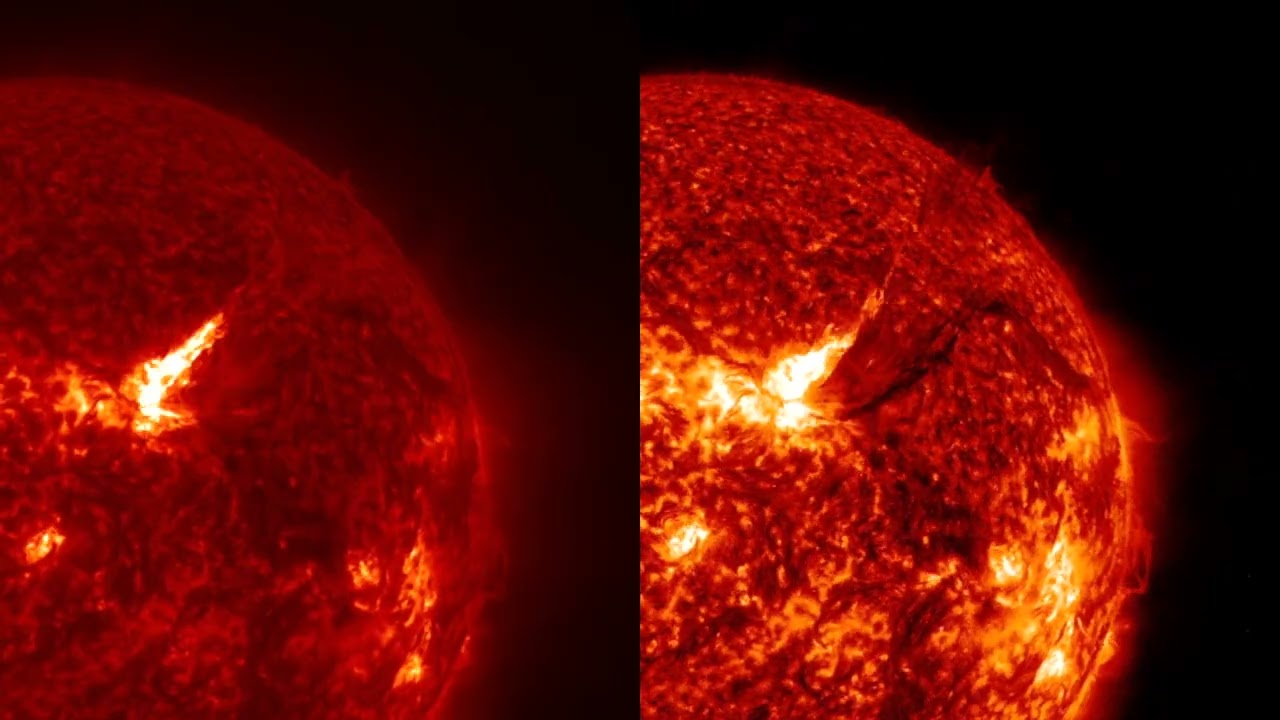
Solar Flares and CMEs at Earth - More Likely | S0 News June.3.2026
SpaceWeatherNewsS0s
2K views•2026-06-03



