Streem’s pivot from Hollywood to defense highlights how computer vision is replacing GPS as the essential backbone of modern autonomous warfare. It is a sharp wake-up call for a military establishment still dangerously reliant on vulnerable satellite signals.
Install our extension to search inside any video instantly.
Military Tech INSIDER: The U.S. Is WAY Behind the Drone Warfare Race
Added:I certainly don't want to be stalked by a swarm of, you know, $500 computer vision enabled FPV drones that are carrying grenades on them. Um, [music] that have computer vision and, you know, ability to, you know, have evasive maneuvers to, you know, literally maneuver out of the way of when people are trying to shoot at them. Like that is that is, you know, that is coming.
Welcome to Change Agents, an Ironclad original presented by Firecracker Farm.
Today we're going to be talking about the modern-day reality of AI drone warfare. Our guest today is Brian Stream, the founder and CEO of Vermeier, a defense tech company with Ford operations in Ukraine. He went from using drone technology in Hollywood projects ranging from Steven Spielberg movies, Fast and Furious films, and Beyonce music videos to the front lines of war. His technology lets drones navigate when GPS is jammed, spoofed, or gone entirely. Brian pivoted his company into Vermeier in 2018 after the Department of Defense showed strong interest in his team's XR technology building AR command controlled and visualization tools for unmanned swarms in GPS denied environments. He now leads a company with Ford operations in Kev where they are developing systems that are combat tested against Russian jamming and deployed by the armed forces of Ukraine. Let's dive into the episode.
I'm I'm infinitely fascinated about what you have going on right now with drone technology. But before we get into that, I am also very curious about I know you started off, you know, you went to film school at NYU and you started working in the entertainment industry in the drone cinematography space. What did that look like when you first got into that space?
And I and I ask from the perspective of I love the aerial shots, but before that was it all helicopter or airplanebased for that type of thing. When did it switch over to being a drone technology?
>> Yeah. So, I mean the rea the reality is is like uh it didn't really exist like like there was if you watch you know if you watch every 60 minutes or every uh true crime story now there's always a slowmoving shot >> of a local town and there the local town's water tower where some woman was murdered. So like those shot just like did not exist in you know uh true detective true crime documentaries. So now they're all over the place. So it just didn't exist. I mean before that in order to get aerial shots for Hollywood movies yeah there would be helicopters and I think it would be I think it would be 30 40 50 $60,000 a day and it required a lot of planning a lot of kind of safety concerns uh you know big helic and there and there was really a monopoly in Hollywood of like one or two like you know uh you know postvietnam helicopter crazy lunatic guys that did all of the you know like Hollywood movies. They want uh faster, closer, faster, faster, closer, closer. I mean, if you wa I mean, there's some famous stuff like if you watch like Terminator 2 at the end where they're doing the car chase, there's a shot where like >> Well, this is a helicopter shot, but the helicopter that I think the bad like flies underneath >> under the bridge >> under the bridge and like that's dangerous risky [ __ ] and like >> you need a crazy post Vietnam helicopter pilot to kind of do stuff like that. So, it didn't really exist. And then, um, it did in helicopter form. And then, uh, yeah, in 2013, 2014, um, I saw a little video of a little drone flying through the woods on YouTube. And I thought, it was a little DJI, this was before DJI Phantoms, I think, had cameras on them. And I thought, "Oh [ __ ] if I got a really big one of those, I could put a really big camera on it and get really cool shots."
Um, so I was one of the first legal drone operators. There was something called a 333 exemption. Um, and I think I was number five or six in the country to get this 3 I3 exemption.
And then I found myself in uh in northern Sweden buying a really big expensive unproven drone uh that crashed almost immediately upon me bringing it back. Yeah. As as one does. Um I just remember like well the first thing I the first thing I did with the drone was you know the drone had all sorts of problems and I was just young and naive and I'm like ah we could solve all that we could have solved all this stuff and um I brought the drone to Ukraine of all places because I I thought it'd be really cool to film Chernobyl with it because I wanted some marketing fodder and I'm like oh be you know what's something cool that would look cool and I thought Chernobyl would look cool. So, I filmed uh filmed Chernobyl uh dur in 20 winter 2014. I suppose it was January or so. And then I brought this drone back to Brooklyn. And I remember getting out of the cab with my new 55lb multi-rotor. It's snowing in Brooklyn.
I'm getting this drone out of a taxi cab thinking to myself, "What the [ __ ] did I just do?" Uh I just like what am I like what am I [ __ ] crazy? I just bought this drone. And then about a week later, I was at a farm in uh Pennsylvania and the drone just kind of like had a little bit of a seizure and just fell out of the ground. My partner at the time ran went, "Oh my god." and ran towards it. I >> pulled out a pack of cigarettes. I smoked the cigarette and I was just like, >> "It's over." Like it's over. Like why even run toward like it's it's total like it's we're screwed. Um, thank God I had enough insight to uh get insurance on it and uh bought a got an insurance check, bought a second drone and then started to the phone started to ring and I started to get phone calls from Hollywood movie movie producers.
>> Yeah, I know some of the uh of some of the helicopter pilots and I know some of them. It was the A star with Cinniflex ball like you said 30 to 50 grand per day minimum, the pilots, all that stuff.
How quickly once they saw what drones were able to do, did it start going away from that?
And what would you say it is now in the entertainment industry when it come? I mean, there's all sorts. There's FPV drones that are, you know, weaving through you see them kind of everywhere.
I mean, what do they how did it how did it evolve and where would you say it's at today for the drone tech and the entertainment space? So, I'm not, you know, I'm not uh I'm not super like in that world anymore, but like what I what I recall and what I could kind of tell you was that um uh I think pretty quick I mean pretty quickly like we started to get phone calls all over the place and we were doing you know Spielberg movies and Fast and Furious movies like but like you know helicopters still exist like helicopters could do different things than drones can do. Sometimes they can't. Sometimes there's overlap.
And like if you really want if you really want like a professional drone cinematography thing with like a high-end digital cinema camera, like it's still going to be expensive. It's probably going to be like, you know, 15 to 20,000 plus dollars a day because you need a backup drone. And you know, a a backup drone is only really a backup if the backup works. uh you know uh like if you bring a backup drone that's just there for show and then you need it like and it don't work, you're kind of screwed. Um >> so uh I mean it was really complicated because you needed uh dr a really talented drone pilot, a really talented drone camera operator. you needed a guy who was lugging equipment and charging batteries and looking at uh telemetry and like you know I I I was just in my office uh hoping to God that I wasn't going to get a phone call in the middle of the night that the drone crash. I mean you know I remember waking up 3:00 in the morning the drone pilots's calling me and I'm like this is probably not a great [ __ ] phone call. Um, so, uh, you know, there were a lot of problems like like comms, like communicating with the drone, like you'd have to do like kind of checks to make sure there's no interference. If you lost comms with the drone, now you just had $300,000 of drone equipment flying some flying somewhere that you can't really like, you know, you and praying to God that you could get signal. I mean, it was a those are really scary moments. And we, you know, we had a bunch of those things. And, you know, so some of this, uh, you know, this kind of camera equipment, like it wasn't even just the camera. Some of the lenses on the on the high-end movie, I mean, some of the lenses are hundred, $200,000 lenses.
>> Um, and and it's just out there just like thousands of thousands of feet away in the sky somewhere on, you know, Chinese-made flight controllers. uh uh you know being flown by being flown by people that like you know you know used to be doing wedding videos with drones and now they're like you know uh so it was hard to find talented people as well because this is so like you know even military drone people they're not being asked to like fly close to Samuel O Jackson's head in a circle and you know it's like it's like proper it's like it's crazy it's you know chasing a car from a moving car. It's like, okay, we want like the drone shot in a car. So, it's like, okay, well, now I need to fly the drone from another car that's following the car and you we're gonna be going through. I mean, it starts to get a little uh starts to get crazy.
>> Okay. So, you went from the entertainment industry to what I'm going to describe now as the non-entertainment industry as if not uh >> still kind of entertaining.
>> Well, for sure. And you can find a lot of it on the internet, that's for sure.
But it's uh more kinetic in nature for sure. It sounds like you guys are focusing specifically not just on Ukraine, but in Ukraine at the moment right now because it seems to be the front leading edge of actual drone warfare. So, how did you make that jump?
You know, you said you're sitting in your office hoping you didn't get the $300,000 phone call that the uh lens was flying out over the Pacific Ocean until the batteries died to what it is that you're doing now. And in this in the answer, if you can unpack, if you will, what it is your company actually is doing now.
>> Sure. So um uh so I'll I'll get to what my company does in a second. So we we essentially were doing drone cinematography for as a service business. So people were paying us in Hollywood to to provide talented drone operators and drone cinematography equipment to kind of fly drones for Hollywood movies and TV shows and whatnot. And then um it was a really terrible business model because like uh you know sometimes we'd be charging $20,000 a day but it wasn't enough money because like by the time you pay people travel blah blah blah blah >> and it was a small it was a small market and uh at so I started to build software to help drone cinematographers get more precise drone footage. Um, so I kind of um in about 2018 2019 I essentially fired everyone at my company that did the service part and I left one or two software engineers and I was I mean people kind of thought I went crazy and I was just like unhappy doing the service and it I I was like we're going to build software. Um we're going to build drone software and I also knew nothing about software. I still don't know anything about you know I I still have never written a line of code of software in my life. the the the thought that I could do this now I look back was actually insane. But um I started to build software to help drone cinematographers get better drone footage. And I was uh I was sad and desperate uh in Buffalo, New York uh at some sort of investor CEO speed dating seminar. And uh I sat down at a table with a guy for 4 minutes who I you know it's kind of like you know you pitch your thing for 4 minutes to a bunch of people. If you're looking for money in Buffalo, New York like you are royally [ __ ] And I was like as royally [ __ ] as you could possibly be. And uh and I showed my software to this guy and this guy goes to me you know I think the US Air Force would be very interested in this. And I was like, "What do you like, what? Was this a joke?" Like, you know, keep in mind, I went to a liberal arts school in Manhattan at NYU. I probably never met anyone in the armed services before. Like, you know what? It was just some faraway thing to me that I knew nothing about. And my reaction was like, >> "Don't you guys have all of this stuff already?" Um, and the guy the guy says to me, you would be surprised. And so the what had happened in 2019. So this was the end of this was uh November December 2019. He says to me so he's the m so the air force had hired this uh technology accelerator called um tech stars. Um the air force was looking for innovative technology companies to inject into the bloodstream of the DoD.
And they hired this firm to essentially go out and scout and look for innovative uh uh technology to help inject into the bloodstream of the DoD. So, this guy explains this to me and he's like, "And I'm the managing director of the program and you should apply for this program and the application closes in uh in 20 minutes." So, I got up from the table in Buffalo, New York and I filled out this application in 10 minutes. And then uh I got into this this US Air Force funded tech stars program that was run in Boston. Um so a month later, you know, I'm from New York. A month later I uh moved to Boston in you know first week of January to be part of this uh air force program and you know the program was very good. It was run by the air force. So every day I was meeting people from Booze Allen BAE North Grumman the Intel community SOCOM you I even know I didn't know what SOCOM was. I didn't know what any of this stuff was, but I'm kind of like learning and I'm immediately realizing um okay, these people have uh way more money than Hollywood. And uh you know, January 2020, this is very early in AI. And I don't know anything about AI, but as I'm listening to people from the CIA talk about it, I'm starting to realize, you know what, I don't think they know anything about it either. Um, and uh, I I have a simple rule of sales, which is you can't sell [ __ ] to people if they don't know you exist. And at the time, I'm like a twoerson company. No one knows I exist. I'm like, "Okay, these guys at the Pentagon, they spend a trillion dollars a year. I need how do I get them to give me a little bit of like just a fraction of a fraction of a percent of this trillion dollars?" And I make this stunning revelation that um every DoD email ends in mill. And I think to myself, okay, that's really that's really interesting. So I build a tool that scrapes every mill email address off of Google. And during COVID, I moved to a log cabin next to Lake Winnipegasi, New Hampshire. And I sent 50,000 cold emails to the Department of Defense. And then for the next year and a half or so, I probably spoke to 2,000 people cold at the DoD. And the beautiful the beautiful thing about me is that, you know, I'm tenacious, but I also I because I don't know anything because I'm literally have no idea about this world. I'm like starting at first, you know, I just got people. Hey, Andy.
Andy, thanks for Andy, tell me about yourself. Andy, what do you do with the Air Force? Andy, what does that mean?
Andy, tell me more about Andy. Is it Oh, so you're so is it like a normal helicopter or is it like a qu is it like this or is it like that? Andy. And then I'll be Andy, what's like your biggest problem? And uh every I pretty much I did this is this is business stuff like 10. And I also never took a business class in my life. I have a Bachelor of Fine Arts in film production. Uh you know, and I simply asked a lot of people with a lot of money what their biggest problem was. And everyone said GPS deny navigation. And I thought to myself, huh, that's kind of interesting. And I kind of realized if I took my software that I was using to build this drone cinematography thing, if I changed it a little bit, talked about it a little bit differently, um I think I knew how to solve this GPS jamming spoofing problem using cameras. And um I managed to in my first year and a half maybe win about $10 million of non-dilutive capital from the Air Force. Um built a product. So we build a product. We built a couple products now, but our first product was essentially a, you know, little box that has uh two to four simultaneously running daytime or nighttime cameras.
They go into a NVIDIA computer with our software on it and attach the Nvidia computer is essentially like a little hard drive that has a previously loaded 3D terrain map database on it that we get from third-party satellite imagery.
So we download the satellite imagery, put onto the hard drive, put it into the box, stick the box below a drone, >> and as the drone flies, the cameras see the terrain or we also have a celestial system now. And essentially, it it there's a deep neural network. It's like facial recognition. It matches what the camera sees to this locally stored terrain database that's stored locally on the device. So you cannot jam it. You cannot spoof it. It's impervious to GPS jamming and spoofing. It works daytime, nighttime, over the land, over the water. You know, I've been living in Ukraine now for, you know, two and a half years almost. And um, you know, the name of the game here is people want to fly very low to avoid radars and air defense systems. So, it works at low altitudes. It works at high altitudes.
And, um, yeah, I mean, and then so I I built this product with government money. And then, uh, you know, two three years later, a big war broke out in Europe and the one of the first things to disappear was GPS. Was GPS. And once again, because I'm just naive and I don't know what the hell I'm doing, uh I I just and I assume people who build military tech, they should just go to the war and try it out. It seems like a novel concept and uh I just got on a I was in Regal Latvia doing an integration with the customer. was in uh the the end of 2023.
And then um I they somebody said to from the somebody from the company, this drone other drone company goes, "Oh, you we're going into Ukraine. You should you should go into Ukraine and we'll meet up with you there." And I go, "Okay, yeah."
I'm like, "Yeah, what am I what am I?"
"Yeah, I'm going to go into Ukraine." Uh and then I just kind of boarded a train in Warsaw, got into Kev.
And then uh I didn't know anyone in Ukraine. So what did I start to do?
go on LinkedIn and started to me cold message people uh who were you know looked like they were based in Ukraine who were commenting and talking about drones in Ukraine. This was the first week of January 2024. And then I just started to meet people. And then uh um I get pulled into a get pulled into a meeting maybe my second or so week there with an important military political person who kind of works at like the Pentagon of Ukraine. And um you know the building is all boarded up. It's all dark. There's there's wood panels all all over the doors. There's no you know mo for the most part people don't speak English. They all have guns. They're looking at me like, "Why is this guy here?" I get pulled into a little kitchenet area in this Pentagon type building. Um, there's three people in there. They're all eating birthday cake.
Uh, they offer me a slice of birthday cake. I say no, which I immediately like res I'm like, "You [ __ ] idiot Brian, have some goddamn birthday cake. What's wrong with you? You're breaking uh you're breaking uh, you know, rules here." Um, and then there's this guy, this Ukrainian gentleman, uh, like this important military political guy who's, you know, in this big office. It's, and there's no power in the building, so it's dark, but there's some light kind of coming out from under the windows and he's just sitting across the table from me and he's stirring tea, drinking tea.
He's vaping and he's listening to me tell talk about my product. And then um he gets up uh behind him. There's a big map of Russia Ukraine behind him and um he starts to tell me about targets inside of Russia that we're going to start to hit. And uh I'm hoping to God that as he's doing this, the expression on my face is yeah, this is just this is just normal.
Um and uh and then I essentially, you know, got inter interwoven into uh you know, Ukrainian uh drone programs and uh you know, I've been here for two and a half years or so. So I have maybe eight full-time people here. You know, my company's over 50 people and uh you know, uh it's been a very, you know, you know, selling uh vision- based navigation systems to uh drone and missile manufacturers in Eastern Europe during a missile war has been a very interesting life experience, >> I bet. So, you touched on it briefly, the GPS denied navigation. For most people listening or watching to this, their experience with GPS is probably going to be in their vehicle or on their phone.
>> Sure.
>> Can you break down the issue with that GPS or what would it look like if it were to be, you know what I mean? Just to give them a context of >> the impact that it could have if there was an ability to jam or spoof that.
What would that look like for them? And then then maybe they can understand what that looks like in the drone tech.
>> Yeah, sure. So, I mean, it's pretty simple to understand. And so like every every robot like operating outside especially so every missile drone uh car vehicle ground vehicle unmanned boat boat uh plane helicopter everything uses GPS to navigate and um you know the the GPS receivers are essentially receiving a low power signal from multiple satellites orbiting the earth and essentially what uh what anyone could do the Russians are do very good at it the the Ukrainians are good at that if you want to kind of stop people from navigating their drones and hitting targets successfully, you essentially uh have devices on the ground, you know, their trucks with antennas and essentially you just broadcast fake GPS signals. So, you either jam it, so you just like kind of like uh overpower the signal so there's no GPS signal, or you spoof it, which is essentially like you make the you make the drones think they're somewhere else. So, I have I've actually seen drones like take off and then they im you know armed drones >> cool take off and then just like turn around and start heading back towards you because they're they're getting spoofed and they're heading back towards you an occupied city. So, um and like you know if there's uh air raids on Ukra on Kev uh which is where I am you know you'll open your phone and like you look at the blue dot on your map and like the blue dot will be like uh in Peru or somewhere. Um, so it just like conf changes like the reality of GPS and then you know nothing, you know, nothing really works. I mean I've been in I've been in Ubers where the GPS was being actively jammed as a measure. It's like a countermeasure to incoming missiles and uh the driver like the driver doesn't know where to go. He gets lost because you know the G. So that's on a simple level that's what happens and on a kind of >> bigger level you know the missiles don't know how to navigate. Ladies and gentlemen, hot salt from Firecracker Farm is the real deal. It's not just heat. It's flavor that elevates everything that you cook. The best thing to happen to food since fire. That's [music] a bold statement, but I'm going to go ahead and agree with that. It's delightful. One of the best things about this brand is there's a real person behind it. His [music] name is Alex, and he makes these in small batches, so it's not always easy to get. You don't want to miss out. All of the flavors are great. I have tried all of them. You really can't go wrong. Seriously, try it on everything. steaks, vegetables, everything in between. I love cooking. I like cooking at home. I don't like putting sauces and overbearing things on the things that I cook. So, I tried a little bit of the salt. And if I'm being honest, I tried a little bit too much the first time. It was a little spicy.
So, I had to back it off a little bit.
And it made everything that I cook at home taste better. So, it's an easy addition to the things that I already make. It tasted amazing. And I was using the product for well over 6 [music] months before Alex reached out to present as the sponsor for change agents. Easy peasy. I was already doing it. No additional [music] time. A touch point with it in my personal life. I can talk about it from personal experience.
[music] Love what the brand stands for. Love what the brand was founded around. Enjoy the person who founded the brand. I mean, this is a match made in heaven.
Get out of the comfort zone of what you can get in the grocery store. Go online to Firecracker Fly and use the code ironclad for 15% off of your first order. you're going to be shocked at how much more of a flavor [music] it brings out in what you cook.
>> So, I think people are familiar with some type of the drone fighting that is going on in Ukraine. Um, I've seen command flown, you know, with the the massive like kilometers worth of the cable and the images are amazing actually looking at all that cable that's left behind, >> which I assume that that's more difficult to jam because it's a direct connection. A lot of people are probably familiar with DJI where it's a radio connection between the two. I'm assuming that that's can be pretty easily >> jammed as well.
>> What is is there an additional benefit beyond the command wire other than you could probably fly it a farther distance for to switch over to optical or is it just even more reliable because it's essentially autonomous navigating on its own?
>> Yeah. So, I mean there's a couple things here. The the the the c the fiber optic stuff. Yeah. can't, as far as I can tell, you can't jam it because it's like literally like a hardline fiber optic connection where you're transferring information and video data.
>> So, that's really cool. But like that that does have it like you can't I don't >> it would be incredibly hard to probably like fly those things a thousand kilometers away. I think the five rock >> I'm sorry.
>> It's finite. The distance at some Y. So, so that that's for short range stuff and you know the mid-range there mid there short range like kind of FP FPV style stuff. Then there's mid-range. So those mid-range drones might go 100 200 kilometers away. The mid-range stuff for the most part, how they're getting around the jamming and spoofing is there is there are literally like um there's a powerful uh radio transmitter on the drone. And what one of the problems we had in the film industry is the film industry has to comply with uh government regulation like we don't have access to the most powerful you know those are reserved for the military. So here you get >> FCC regulations.
>> FCC regulations, right? So here if you're a military, you have like very powerful radios. They're also very they're also expensive. Or you have Starlink. So like literally the drone, if you have a mid, you know, midsize drone might be like uh I don't know uh you know 3 4 feet sort of wingspan.
Those drones can have a Starlink dish on it. So now the signal is going up to Starlink and then it's bouncing then it's bouncing to a guy and but it's a guy in goggles. So that guy in goggles is watching a ca there's a camera on the front of this drone. So that video feed is going to space coming into the guy's goggles and now he or she is, you know, manually flying this drone like an RC helicopter. So you don't need GPS. So you don't care if the GPS is being jammed or spoof because you're manually flying it. But there's also thing there's also problems like there's delays in the signal lat and people also have like relay drones. So your drone goes, you know, 1,000, you know, 500 km out, and then you have a a drone at 250 km that has a relay. So it's picking up the signal, boosting the signal, and getting it back home. This stuff all gets pretty complicated. And also, you know, you could jam the comm. So it's not perfect, but that's for the most part what they're doing. The thing where you really need it to be autonomous, where you can't command and control it, is the things that are going a thousand kilometers away or so. Um and that's because you know um Starlink doesn't work behind enemy lines. Uh uh radio transmitters are not not nearly as powerful to do that. So in that case those drones need to be fully autonomous. And to be fully autonomous you need to replace the GPS signal which is where I come in. Now at a certain point you know even short range drones or mid-range drones like if you want to swarm them. So if you want to have So now it's one pilot to one drone. But if you want to have one pilot doing 10 drones, a thousand drones at once, that's autonomous and you can't manually fly all those thousands at once. So then you're going to need an alternative like my system that replaces the GPS to man, you know, if the drones can't do autonomous things if they don't know where they are.
>> Yeah. Would it even be possible for you to be innovating and evolving at the pace that I'm sure your company is if you were based in the US versus Kev?
>> People People hire I mean we probably have like 50 customers now. We have those customers. We have like expertise.
The thing works really well, but we also have expertise on like how this like really like really really really works.
Uh and um like sure things are slower here than you might think and like like I think there's like kind of two layers to things. Ukraine is very very good at kind of like mass- prodducing stuff, getting a lot of stuff out there, but a lot of the drones for the most part are not are not autonomous. I think a lot of people think that a lot of this stuff has AI and all those other kind of fancy stuff on it actually doesn't. A lot of it's being manually flown. They could pump out these drones that are actually rather unsophisticated from kind of like an AI computer vision kind of autonomy.
Like most of them are not autonomous.
Um, getting the autonomy thing to work is actually really is a really complicated and uh, it takes a lot of cycles. I mean, there's no, listen, there's nowhere else in the world, quite frankly, where you could actually test this [ __ ] at nighttime in a real jammed and spoofed environment, get data back.
Sometimes you can't get data back, Tuby.
Sometimes you're going one way or sometimes [ __ ] goes wrong and you get intercepted by, you know, a counter drone system. So like but it's what has to be done to get this to actually work.
So it's like it it depends how you define innovation. Um you know manufacturing lots of stuff at the same time is very hard to do but it's not really like technological innovation. Um so if anything being here I've it helped really fully understand the problems. I see a lot of people who like aren't here, they have like a very soft understanding of the problem. And so if you have a soft understanding of the problem, like you'll go build the wrong thing. And if you build the wrong thing, then no one wants the thing. And then no one will buy the thing and then you'll go out of business. So if if you the first the first step to kind of solving hard problems is really really really really understanding the problem and then you can build solutions for it. So, it's not even like like I would I would argue that it's possible to build something faster elsewhere because you're not dealing with air raid alarms and curfew. You're not dealing with like just the logistical complexity of being here, which is challenging, but you miss out on really understanding like h like what the problem is.
>> Yeah. Or near instantaneous uh market feedback.
>> Feedback. Yeah. That's right. That's right. Yeah. Yeah.
>> Do you think that uh coming from the outsider perspective that you did, coming from the you know the entertainment industry, I'll use that broadly and not negatively at all. Do you think that that helped you or hindered you? Did it give you a cleaner optic on military tech or do you think if you had come from a military background and worked your way through it? Do you see a difference in those two people looking at this from an outside versus inside? Yeah, I I think my biggest one of my biggest assets is um I don't know anything about I didn't know anything about this space. No, like so it it but I'm curious, you know, listen, I'm I'm I'm, you know, relatively smart.
I'm willing to put in the effort. Um but I was willing to be curious and like ask questions. Like when I first when I when I was asking a lot of people and everyone was like GPS deny navigation, that's a problem. And then I went to people. I had this idea. I'm like, "Okay, I'm going to use cameras and a computer and a and a local database."
And I started to like, you know, talk to people who were older, wiser, richer, 30 years in the defense technology industry, colonels in the And like PE, you know, a lot of people were like, "Oh, we have that already. We have that already." And I was and I was like, "Well, okay, where like where is it? Can you show it to me? Like who do you have it? like somebody somebody show me a photo of it. Somebody show me a video of it. If you have it, why are all of these people telling me that it's still a pro?
If it works, why is it people still telling me it's a problem? So, I was really uh um uh I I stuck to real first principles. What is your problem? Tell me what your problem is. And everyone said the same thing. And I just was kind listen if people if people told me that their big problem was a time machine. I don't know how or or their big problem is they needed to travel through time. I don't know how to build a time machine like you know but it just so happens that the thing the problem I kind of had a strange background movie making. I knew a lot about cameras. I was fascinated with cameras and optical systems.
And I kind of, you know, by happen stance was like I think I could use what I know about cameras to solve this problem. And um uh I was if if I had a I think if I had a normal military background I would have like you know it's possible I would have gone down different ra you know different you know uh oh okay well we need more SERPA antennas and we need more like this you know tried to you know Serpa which is like you know military grade GPS you know like okay like I I took a non unconventional approach with with the wisdom that I had from a different field and I brought it into an old market. Um, so yeah, it totally helped me and like listen, it also helped me like, you know, I think most people who have sold military technology, they do things like they hire lobbyists who go to the hill who like talk to senators and you know, and they do all that stuff and they try to get into these programs. I didn't know how to do any of that stuff and uh I was skeptical of all that stuff. So I did one thing. I go, "Okay, well, let me just go to the war and let me like go knock on some doors and let me like ask uh missile manufacturers if I could like put my thing on their missiles." And uh I took that approach, which was apparently incredibly unconventional. Um and um but now I'm like, you know, the only guy, you know, if not one of the only guys in the world, definitely in America, who actually has like that experience of like knowing what it takes to like do this stuff and it's uh, you know, is now valuable and sought after.
So, yes, my outsider thing totally worked and totally was helpful to me.
Um, be kind of like a little bit of a, oh, I'm going to do I'm going to do things what I think are appropriate and not listen to the rulebooks and uh, and it worked out for me.
>> Based off that experience you just described where you're actually there at the front leading edge, you're knocking on doors, you're getting market feedback, what's your personal guess as to where drone warfare is headed? I think we still have a long like I am still kind of stunned and shocked and amazed with how primitive most of this stuff is re in the reality like I like even our product I think is like pretty early in the market like like I like 90 something% of the drones used today are not autonomous they're flying them manually through FPV goggles and you know sticks and controls so this stuff is like very very early and um but there's a lot of money flowing into the case people a lot of people are trying to do like uh what's called the um what's it called? Uh um the orchestration layer which is kind of like okay like you know we're going to have a thousand drones or it's kind of like the swarm. How do you orchestrate a swarm of drones to do military badass [ __ ] It's like, okay, we have all these drones and like some of them are going to see the bad guy and then they're going to whisper to the other bad guys uh to go whisper to the drones to go around and then destroy some of the bad guys and create a diversion and then if you know and it's like okay like how is how is all this [ __ ] actually going to happen? Like first you need to like see the bad guy. It's at night so you need to see the bad guy at night. How what cas what sensor are you going to use? Is it cheap? Oh, it's not cheap. Can we afford a thou? Like, you know, it it starts to get like re people have this uh vision of like this like all knowing and all powerful swarm of drones that's going to like just go on the battlefield just like rampant through enemies and stuff like that. And the reality is it's like it it it will get there someday, but I I'm skeptical it'll get there the next couple years. Um, but um, I certainly don't want to be I certainly don't want to be stalked by a swarm of, you know, $500 computer vision enabled FPV drones that are carrying grenades on them. Um, that have computer vision and, you know, ability to, you know, have evasive maneuvers to, you know, literally maneuver out of the way of when people are trying to shoot at them. Like that is that is, you know, that is coming.
But I think that is, you know, years and years away from happening. Um, but that is where it's going. I mean, you know, you there are episodes of Black Mirror that like literally show like >> Yeah.
>> relentless, you know, there's one with like a relentless dog that is like a robotic dog that is just like trying to kill one person. And this dog is just like hellbent on killing someone. And it will get there, but it's, you know, look at Roomba vacuum cleaners. I mean, those things could barely, you know, get over a sock. How are they going to like navigate all the complexities of like the, you know, the battlefield, the incoming counter UAS systems, uh, you know, snow, sleet, hail, nighttime, lots of complexity.
>> Do you think that we should ever develop a truly man out of the loop autonomous system that has authority to kill humans? What are your personal thoughts on that? Um, so I think there's there's a lot of there's a lot of different things going on in that question. I mean, um, we I mean, we have weapons today like it it depend like there's there's you there's always like a man or a person who's going to be like supervising the system >> on the Yep.
>> Like it's not going to be like, well, let's just like kind of like spray it out and just like see there's always going to be someone who's like kind of super. It's just like a question of like how far away from the supervision are we like willing to let the human being go from it at a certain listen at a certain point of time our comms are going to be jammed and our uh we're not going to be able to communicate with the drone but we have confidence because we train these models and you know like I I think that like we could build a system that is relatively with certain constraints and to give you an example of constraints like I think It's important to understand there are things like deterministic systems and uh uh undeterministic systems. So deterministic systems in like AI is like if you tr like for if you if you train our thing if you have our thing do the same thing a thousand times you'll always get the same result. Okay. But then there are like other systems kind of like the orchestration thing I was talking about where it's like if you run a orchest like a orchestration of drone swarm a thousand times you might always get a different result. So that's a little bit I I think I think we need to think a lot about like undeterministic systems where they're kind of making up their own rules as they go along. But there's certainly AI used in like my thing which is like it's following a path when it gets to an end zone. It sees an ice cream truck and it's been trained on a deep neural network to identify an ice cream truck and then you can hit it. And it's also geoence. So, it's only going to it's only going to identify ice cream trucks in a, you know, 500 square box. I think that is kind of safe and I think you can make it safe and I think you'd show it's safe and I think you show it's probably safer than a human being. But things where the drones are like unpredictable and we don't know what they're going to do because we can't model it and we and every time we run it it's different. I think that's like pretty scary and I think we really need to think about that.
What I imagine in my mind that scenario the undeterministic is like the Chinese uh drone displays where there's dragons flying through the air except that's weaponized and then it actually breathes fire and kills everybody. Now maybe that's a little bit too much active imagination but I can see nearpeer adversaries or people who want to have you know to shorten the udaloop or get rid of the udaloop going fully autonomous because perhaps then they think that that would be the advantage and then I worry that our response would be well we have to create the same thing and it's just this escalating Jacob's ladder to autonomous killing of human beings which I don't know if we should ever really cross that threshold. Uh, no. I mean, it's uh I mean it's it's pretty scary. And yes, I mean it's a good oldfashioned arms race of like, well, if they're going to do it, if we don't do it, if they do it, if we're not doing it, they're going to do it. And if they do it, they're going to win and all this other kind of stuff. But, um, um, you know, the the exam, you know, the the thing about, and just to be very clear, the the the Chinese light display stuff, I mean, we have that stuff in America, too. That is not even close to being possible in a battlefield. like that is those guys. They have stations on the ground all over the place. They have like a localized GPS network like that. You couldn't do that >> even close in a battlefield environment today. Um >> Oh, for clarity. I'm just saying that's my imagination running away from me.
That's what I figure it would look like >> for for sure. I mean, you know, the those are also small FPV drones. those are those will be contained to also like things that are 10 km or so away from wherever they get launched from. I mean we also have to be you know concerned about uh $75,000 shahed drones if it actually fly you know 2,000 a,000 2,000 kilometers away that have uh you know ability to slam into buildings and evade counter UAS and target you know infrastructure. I mean, um, that's also that's al th those things will be autonomous.
They'll be deterministic, but they'll be autonomous. Um, as a first step, like that's also pretty scary as well. Um, >> yeah.
>> So, it sounds like the uh the Pentagon just ran a drone dominance program.
>> Yes. Yes.
>> At Fort Benning. $150 million on the line here. Was that a prize for the winner or is that the amount of money that they were willing to allocate?
>> And also, >> sorry, go ahead. I got a follow-up question after that. What exactly was that 150 million?
>> Yeah, so the drone dominance program um my my like they're trying to buy very very cheap very very like lowcost drones very very cheap. Um when I say very cheap, I mean like a few thousand dollars. So like those drones are not going to have like the autonomy because they simply can't I mean you know the the you know the the computers that are required for autonomy are like $1,000 Nvidia computers. you know, uh, so like you're not going to be able to. And then the cameras are, you know, hundred bucks depending on what cameras anywhere from, uh, 200 bucks to $4,000 if you want nighttime cameras. So like the I mean, and I I have knowledge of the drone dominance programs. I I've spoken to lots of folks who are involved in it, but like it's really for like very very lowcost manually flown type drones. Um my impression of the program is essentially designed to um grease the wheels of the industrial base. So to essentially get people to start being able to massroduce these drones. I think that there's [clears throat] criticisms criticisms that can be made of it which are like listen like you know America America doesn't fight wars.
We're not fighting a war with Canada with like little FPD drones. I mean, you know, it's we're not going to be fighting a war with like a a a n like a bordering nation state. Like the things that we're going to be built, we build things that go very far away that, you know, you know, America's a rich and powerful country like we could actually afford more cheaper but more but still more exquisite systems that are that have more capability. So there are some arguments to be made that like yeah you're going to be building you're going to be greasing the wheels of the mil the industrial base but like what to buy little little motors that like no one's going to actually use um on like in like a real conflict. But I think that's where they're starting. I think they probably want to start simple and then they want to migrate up to kind of bigger platforms and more advanced platforms. Um, and I think, yeah, I mean, I think they've selected kind of a bunch of drone makers. I think like there's 19 or 20 drone makers that are getting, you know, money to build the and I think a lot of I think a lot of those drone makers are complaining that essentially like they're not making we're not making any money from these drones. We're losing money. It's really a it's really like a marketing flex for the drone makers. Um, so but but listen like there are, you know, hundreds of different drone programs in the United States federal government. There's hundreds in European government. Um, and now obviously Europe is kind of ramping up uh and you know building lots of drones themselves.
Obviously Ukraine is um so uh drone dominance gets a lot of marketing.
There's something called like the Lucas drone program which also which the Lucas program has a lot of money and they're building also um you know uh one-way attack long range shahed style drones and so shahed drones are Iranian they're dwing they kind of look like a triangle you probably see photos of them so you know originated in Iran given to Russia then you know copied by Ukraine and now copied by the good old US of A. So, um, you know, there's, so that's a that's a big program as well. Um, and, uh, there's something called the dog, D AWG.
I can't remember what it stands for, but you know, there there seems to be movements inside of the Pentagon to essentially house all of like the drone autonomous stuff into like one kind of architecture and kind of figure this figure this stuff out because, you know, we're we're uh you know, we are we are pretty far behind. It's it's pretty uh it's pretty interesting to see. I think when I when I get back and I tell my friends in the government here in America, uh they're all they're all pretty like, "Oh, yeah. We know we know we're behind." Um >> what are you seeing from Russia? What kind of drone tech and evolutions are you seeing from them?
>> Um so they uh the things that are happening especially on like long long range side is uh the drones are starting to get like turbo turbo jets. So they're starting to go faster. Going faster is like the easiest way to like defeat air defense systems. Um because you know when you historically the shahed drones were going maybe 150 to 200 kilometers an hour and then you know it's not that fast. So if you have a interceptor you could have a a little bit faster interceptor intercept it. Now if you uh are going 600 km an hour um now this drone the interceptor now that's got to go 1,000 k now now I mean I don't know that you know now you're starting to go okay now we're going mock mach one and now you're now you're starting to get into like catching up to these things is going to be really challenging um very complicated to do so going faster is definitely a thing we've seen the Russians do that we've seen the Ukrainians do that um we also kind of uh you know there have been reports and I've I've seen this stuff of the uh the longrange shahads from Russia. They have things like camera modules on them. Um, we can't really tell exactly what they're doing, but uh, from what I have seen from photos, I would bet that they're kind of doing probably some sort of, uh, ATR, automatic target recognition, which is essentially like kind of what I described before is like, you know, when you get to an area when you get to an area of the world and you see a finger, you know, photons hit the camera sensor, go into a computer, there's a an AI model that goes, "Oh, I've That's a finger. I've seen a finger and then it goes boom and crashes into the finger.
Um I think that I mean you know that's doing that stuff is actually like non-trivial. Doing it during the daytime is somewhat non-trivial. Doing it during the night is complicated for a whole host of like you know uh you know you need nighttime you need longwave inf you you need longwave infrared cameras which don't have a lot of resolution. You don't have a lot of resolution. You can't it's hard to do an ATR recognition.
uh you could look at other types of sensors. I mean it starts it starts to get complicated. Um but um I think that's where I mean we're so we are starting to kind of see these things operating you know listen you know you're quite like is a man in the loop on that well you know well what [clears throat] is the loop is the loop is the loop the guy pressing a button before it goes like this or is the loop you know the guy who built the AI that built the AI system that tested the AI system and then deployed it onto that terminal guidance system. I don't know anymore.
>> Yeah. Are you able to uh do you interface at all with the Ukrainian pilots that are flying these drones?
>> Uh yeah, we we Yes.
>> Are you seeing any residual impact from them killing at a distance like we have seen in the US with uh Predator and Reaper pilots and there's been an increase in post-traumatic stress. A lot of them are flown, you know, from Las Vegas or near the Las Vegas area and conx boxes and stuff like that.
So very interesting question. Um more of what I see is that uh they are thrilled uh exuberant thrilled uh they do kills and they're you know uh they're ecstatic and I've seen uh >> uh seen uh Ukrainian drone pilots in kind of like a movie theater type environment watching some of like the best hits thrilled and excited. I mean, I don't really blame them necessarily.
Uh, you get there be they're being like now will there be long-term mental psychological repercussions? I'm not a mental health expert. I could imagine the answer to that is yes once kind of like, you know, things start to quiet down. But like uh um from what I've seen, people are more than thrilled to to be uh uh you know uh uh engag you know doing this sort of stuff.
How do [snorts] you personally feel about your technology being utilized to kill the humans?
>> Um well for the for the most part my technology is actually not uh doing that. We're going we're going after different targets um more infrastructure sort of a thing. So uh I don't >> there's people in infrastructure.
>> Uh yes I I think the risk I think the risk is is lower. I don't uh I don't really I I believe in the Ukrainian effort and I uh I don't like bad guys and I don't I you know I think Ukraine has a right to be sovereign and um I don't really have a problem with it.
>> Fair enough. Yeah, I don't think there's a right or wrong answer to that at all.
Uh last one for you to be respectful of your time. You know, I'm sitting in northwestern Montana right now and the only information that I can that I have read readily available access to is traditional media sources when it comes to being what's reported about what's going on in Ukraine. From somebody who has been there and who is living there, what what is your sense of how it is going? What would be your estimate as to maybe even the duration or how this is going to end? And and perhaps what do you feel is being misreported or not even reported at all? I know that's a lot there. So, unpack it if you want to.
>> You know, I it's um it's it's it's even very hard on the ground to kind of get a sense of, you know, uh uh true north, you know, uh you know, I also I listen I read med you I read media, listen to media, you know, uh but you know, the media I listen to is like, you know, Ukrainianbased media oftentimes. Um I think that uh so it's you know there has there has been a a movement in the last month or two about you know Ukraine gaining you know gaining ground might not be but you know Ukraine pulling ahead. I would be cautious against getting overly excited about about that.
I mean things could swing in the other direction just as quick depending on any certain number of things. Um, you know, you also have to understand like, you know, there's this is a, you know, there there's information warfare, propaganda warfare where people want to kind of pump pump narratives of kind of success or success or others failures into the environment. So that's also very it's just very hard to really understand uh like the success but uh on our side and for what the stuff we're doing we have learned quite a bit uh of how to be better at it and be more successful at it um just from like a tactics sort of perspective. Our technology has improved but when you think that you also have to think to yourself so was their stuff.
Um, you know, so you can't ever uh you can't ever kind of rest and take it easy. Um, you always got to be a little bit like let's not let's not start celebrating quite yet. Um, there's there might be there might be bad. Now, it's not like I know anything specific, just, >> you know, >> I've seen enough things to know like, let's not get fully excited yet until uh maybe we should never get excited. Who knows?
>> Yeah. Last question for you today. How will you know when it's time to leave Kev?
So I I um I did I actually I did did leave Kef for a few months uh about a month ago and then um I was living in Manhattan. Um you know so my company you know and I I had you know my company's growing and um you know a lot most of my customers are American agencies and you know government agencies as well as kind of American uh you know tier one tier 2 drone manufacturers. So, I left to just kind of like take care of business at home and have people, you know, show my face to people. And then I was kind of like live, you know, living in my apartment in Manhattan. And I'm just thinking to myself, Jesus Christ, this is really like this is real boring. Uh my life in Kev was like my life in Ke was like way more way more interesting, way more exciting. So, I'll probably be here for a for a bit. Um it's a good I don't have a perfect answer like when do I know it's time to leave? Um, I never know. I when I do leave Kev to travel, uh, usually I know like two days I'm like, "Okay, I got to get out of here. I got to go somewhere for some reason."
Um, but um I don't I don't know. And I think that, huh? Like, and I'm also kind of like >> answer people would answer that way to a variety of questions in the modern world.
>> Yeah. I just have no I mean I'm also just kind of like wondering like my you know my experience out here has been uh very interesting uh very interesting very unique life experience that I don't think a lot of people get to kind of live and I'm also just like wondering like what could I possibly ever do after this that's even remotely as interesting as this. So I you know I don't I don't know.
>> That's okay. Like I said, I wish more people would have the the honesty and the reflective ability to answer with I don't know. It's so much of a better answer than answering answering with definity about something you actually don't know very much about. So, I think it's I think it's a complete and totally satisfactory answer.
>> Appreciate that. Thank you.
>> Yeah. What do you want to leave the audience with? Anything? I'll give you the uh the final words uh words as we close out our time today.
Um, what do I want to leave the audience with? Uh, yeah. I mean, you know, I think, um, you know, I I think I'm like a a slightly unlikely person to be doing what I'm doing. Oops.
Sorry.
>> Oh, no worries.
>> Uh, so I'll I'll start again. I'm kind of an unlikely person to be doing what I'm doing. And I've had a lot of people tell me like uh say no to me a lot over my you know business uh life because uh who could possibly think that I would succeed at doing this. But um uh if you're I think if you're uh you know tenacious and if you're like willing to like do sometimes being there is 90% the battle. Um and uh if you're willing to do that you could like kind of I think you could be okay. So, um, there hope hope that's helpful to someone somewhere.
>> Get into the arena, man. I agree with you. You got you got to be there actually doing the thing. I mean, that's the only way you're going to find out whether or not you're capable of doing it. And >> that includes failing, which sucks, but you know, every failure or every no is eventually going to lead to a yes. As long as you don't stop yourself.
>> Yep. Yep. Agreed.
>> Cool.
>> Hope you enjoyed today's episode. If you would like to learn more about Brian's work, please check out getver.com.
Thank you again for listening to Change Agents and Ironclad Original presented by Firecracker Farm. See you all next week with an all new episode.
Related Videos
1:08:04
Robotics
Setting up a curved screen with Immersive Calibration Pro 4 and multiple cameras (P3D v4)
FlyerOneZero
23K views•2019-07-21

1:01:27
Robotics
Robot Learning with Sparsity and Scarcity
allenai
379 views•2025-10-14

1:01:42
Robotics
Jorge Mendez-Mendez: Unlocking Lifelong Robot Learning With Modularity (2023-10-05)
umassmlfl
237 views•2024-01-06

2:16
Robotics
Northwestern’s MS in Robotics: Student Robotics Projects, 2023
NorthwesternEngineering
1K views•2024-05-31

11:14
Robotics
"Perfect" Turns: Turning by the Gyro - FIRST LEGO League (FLL) SPIKE Prime + EV3 RePlay Programming
ZacharyTrautwein
94K views•2020-10-02
1:01
Robotics
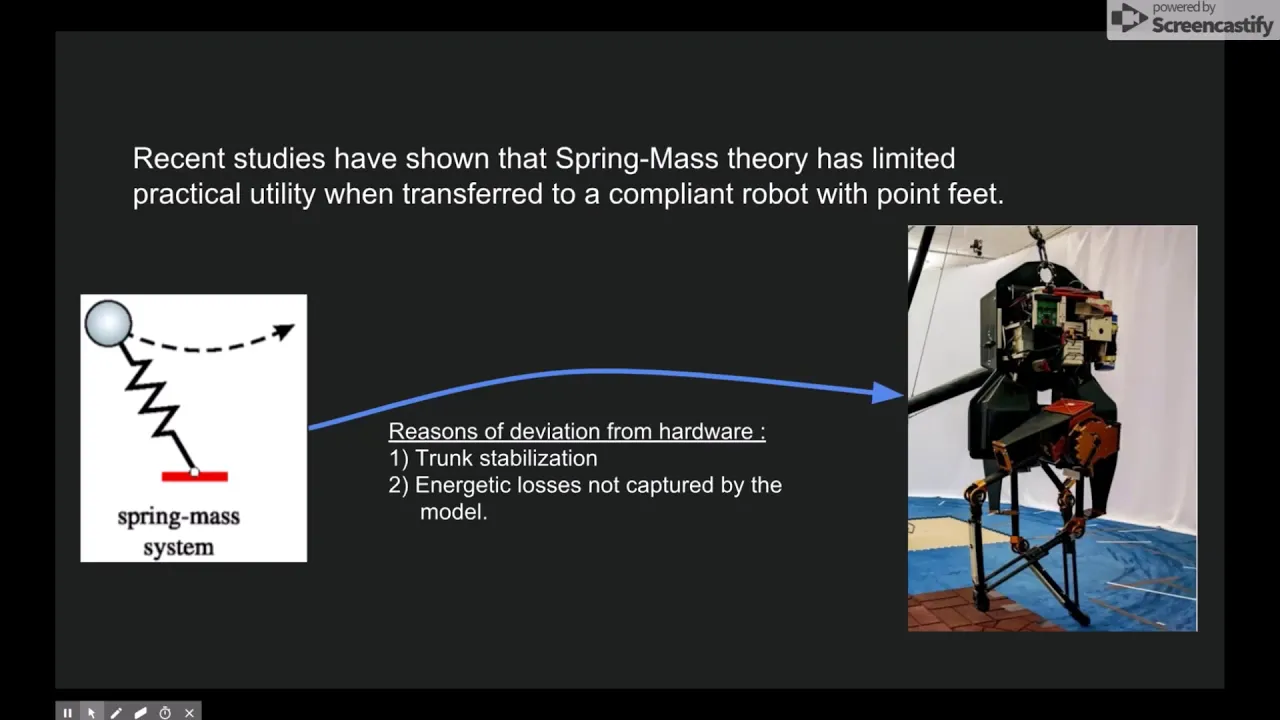
Gorkem Secer: TSLIP-based Deadbeat Running Control of Bipedal Robot ATRIAS
DynamicWalking-wv6qm
298 views•2018-06-22
4:10
Robotics
Self-Driving Cars Need Lessons On Human Drivers | Maddie About Science
skunkbear
26K views•2018-08-21

3:12
Robotics
Milrem Robotics’ THeMIS UGVs used in a live-fire manned-unmanned teaming exercise
MilremRobotics
99K views•2021-05-20
Trending

55:06
Medicine
NOLAN WELLS AUTOPSY: DEEP TISSUE DISCOLORATION BACK OF HEAD, NECK BONE MISSING
nancygrace
561K views•2026-07-22

22:34
Business
Big Tech's Biggest Gamble Is Finally Falling Apart
houseofel-ai
79K views•2026-07-22
32:49
Engineering
we're almost finished the house (ep.125)
JennaPhipps
347K views•2026-07-22

16:00
Environmental Science
We flooded a field - the results blew our minds
MossyEarth
73K views•2026-07-22