A systematic physical examination follows a logical sequence: beginning with general assessment and vital signs, progressing through head-to-toe inspection (hair, skin, nails, HEENT), then moving to organ systems (respiratory, cardiovascular, musculoskeletal, abdominal, and neurological), with each section including inspection, palpation, percussion, and auscultation as appropriate.
Install our extension to search inside any video instantly.
619 - Unintentional ASMR - Assessment / Exam / Head to Toe
Added:Hi, I'm Rebecca. I'm the PA that's going to be taking care of you today. First, I'm just assessing the patient's emotional state, overall health and hygiene, um well-being, whether she's in any distress, and everything looks good.
So, then we'll move on to taking vital signs. So, I'll do blood pressure first.
All right.
And now I will do heart rate and respiratory rate.
All right, good. And then if I had the equipment, I would do temp and O2 sat.
Um, can I get your height and weight? I am 5'6, 130. All right, great. So, that is the end of that exam. We'll move on to hair, skin, and nails. So, first I'll start with skin. Um, I'm just going to be inspecting the skin under the arms.
Good. And then can you stand up for me?
Okay. And then just looking at legs. Can I pull this down?
>> Yeah.
>> Good. And then turn around.
>> Good. Just looking for any moles, lesions, or other abnormalities. And now I will do um palpate for temperature, texture, moisture, and then do trigger after that.
Okay. Can you turn?
Oh, can you take your socks off?
>> Yeah, I can. Sorry.
And I also want to make sure I'm looking at her feet in between her toes.
>> Sorry about those.
>> Good. And then can you lift up your feet so I can look at the bottom?
Good. Let me help you.
Good. And then can you hold out your arms and then flip?
Good. And now I will assess Terger.
Good. All right. So now we'll move on to the um hair portion of the exam. So first I'm just going to start by inspecting the hair. Looking at the scalp all the way around the hairline behind the ears.
Good. And then I'm just going to be assessing for texture, any signs of thinning or hair loss. And everything looks good. So now we'll move on to the nails. So first I'm just going to inspect the nails on the fingers and the toes.
All right. And then I'll do um capillary refill.
Good.
>> And then she does have toenail polish on. So, okay. I'm sorry about the corn.
>> All right. Good. All right. And that is the hair, skin, and nails. So, now we'll move on to the H, E, and T. So, first we'll do head. So, first I'm just going to inspect the head.
Just looking around, palpating. Um and then I'll palpate the temporal arteries, the frontal, maxillary sinuses, and then bilateral parodits. Okay. And now we'll do the eye exam. So first I'm just going to inspect the outside of the eye. Could you close your eyes for me? All right. And then open. Just looking at the inside of the eye. And everything looks good. So we'll start with visual acuity.
So, if you could hold this card, cover up one eye, and tell me the lowest line that you can read.
>> 937826.
>> All right. And do the other eye and read it backward. Read the line backwards.
628739.
>> All right. Perfect.
All right.
Now, I'm just going to be checking her corial light reflection. If you could just look at me. Good. Good. And then I'll do direct and consensual pupilary response.
Good.
All right. Um, now I'll do extra ocular muscles with the H test. So, if you could look at me or look at my finger and then follow my finger with your eyes and not your head.
All right. And then follow my fingers as I make towards your nose. Good. Um, and now I will do visual fields. So, I'm gonna hold up a number like this, and you just tell me what you see. Okay.
>> Two.
I [laughter] messed up.
>> That's okay. Ready?
Two.
Four. One. Two. Good. All right. Um, now we will do the funoscopic exam. I tried to cheat.
All right. Um, and then while I do this, I'm also going to be testing her red light reflex.
All right. You just look at me.
All right. And then do the same thing to the other eye.
Looking at red light reflex.
All right, perfect.
Oh, and I forgot to ask you, do you wear corrective lenses? Nope. Okay. All right. So, that is the end of the eye exam. Um, we're going to move on to ears. So, first I'm just going to inspect the outside of the ear on both sides and then do the tug test. Does this hurt? Nope. Okay.
Does that hurt? Nope. All right. And now I'll do the exam to see the inside.
All right.
Okay.
All right.
Okay. And now we're going to do the whisper test. So, if you could cover up one ear and then I'm going to whisper a series of letters of numbers and you tell me what you hear. P W P L W Okay, and then cover up the other ear.
Aw.
Okay, perfect. And now we'll move on to the nose. So, first I'm just going to inspect the outside of the nose and everything looks good. And then I will look at the inside.
All right.
You look up for me.
>> Yeah, I know.
>> Yeah.
Yeah, we'll do it.
All right.
All right.
Okay. And then we're going to do nasal patency. So, if you could cover up one nostril and then breathe in and out and the other one.
Good. All right. And that is the nose.
So now we'll move on to mouth and throat. So first I'm just going to examine the outside of the mouth, the lips, and then if you could open your mouth.
Okay, I'm just looking at the internal structures, the teeth, the gums, underneath the tongue. Could you lift your tongue up for me? Good.
All right. And could you open your mouth and say ah.
Good. And just looking at the uvula rise. Um, and then if you could stick out your tongue. Uh, all right. And do it side to side. Good.
All right. And now we will do neck. So, first I'm just going to examine the musculature of the neck.
Everything looks good. Um, I'll do the thymus really quick. If you could turn that way. I'm going to come behind you.
My hands like that. Okay. And then ask you to swallow.
You swallow.
Perfect. All right. You turn back around.
Okay. And now I will palpate her lymph nodes. So we have submental, submandibular, tonsular, post oricurricular, pre-oricuricular, occipital, um, anterior cervical, posterior cervical, supraclavicular, and then if I could palpate the deep cervical chain, I would. All right. And everything looks good. So that concludes the H, E, and T exam. We will now move on to lungs and thorax.
Um, so first I'm just going to inspect her respiratory rate, her depth, effort of breathing, and whether she's in any distress and everything looks good. So we'll start with the posterior chest. If you could swing your legs that way.
Where's this one?
Swing [snorts] more around.
Yeah, there we go. All right. So, I'm just inspecting her posterior chest. Um, everything looks good. So, also, can you co cover your um arms over your chest like so? Good. All right. And I'm going to start by palpating four areas on the posterior chest.
Right. Is it okay if I lift this up?
>> Yes.
>> Good. And was there any pain?
>> Nope.
>> Okay. And now I will do um tactile femist. So every time you feel my hands like this, I want you to say um blue balloon. Blue balloon. Blue balloon.
Blue balloon. And one more time. Blue balloon. Good.
All right. And now I'm going to assess um chest wall expansion.
All right. Can you take a deep breath in?
All right. Perfect. And now I will move on to percussing in seven areas in a ladderlike fashion.
All right.
Good. And now I will oscultate in those same areas. Um, every time you fill my stethoscope, can you breathe deeply in and out through your mouth?
>> [sighs] >> All right. Good. And now we can move on to the anterior chest. So if you could spin around All right. So, first um start with inspecting inspecting the chest wall movements, her respiratory rate, and everything looks good. So, I'll start by palpating three areas on the anterior chest.
Could you lift up?
Good. All right. And now I'll do tactile fmitus on those three areas. So, every time you feel my hands, say blue balloon. Blue balloon.
Blue balloon.
Blue balloon.
Blue balloon. Good. All right. And now I'll do chest wall expansion.
Breathe really deep.
All right.
Perfect. Um Oh, and then now I can percuss in six areas on the anterior chest.
up.
Good. And now I will oscultate in those same six areas.
Um, can you breathe deeply in and out through your mouth?
Feet [sighs] lift up.
All right, and that concludes the lung and thorax portion of the exam. So, we can move on to cardio. So, I'm going to have you lay lay back at a 30 to 45 degree angle. First, I'm just again inspecting um respiratory rate, depth, effort of breathing, and whether she's in any distress here. Little feet. All right. Um so everything looks good on inspection so we can move on to the um jugular venus pressure.
Right. So what I'm going to do is look with tangential lighting for her um IGB pulsations and then look for whenever they stop.
All right. And then I also need to find her sternal angle right here.
Okay. And then measure All right, perfect. Everything looks good.
So now I can move on to the um corateed exam. So first I'm just going to inspect the corateeds on both sides.
Just looking at the pulsations and before I palpate I will oscultate for any brewies.
with the bell as well.
All right. And everything sounds good.
So I will palpate um one at a time.
Good.
All right. And that is the parotted exam.
So after that we can move on to the um precordium exam. First I'm just inspecting the precordium.
We'll do a bikini drape.
There we go. All right. First I'm just inspecting the preordium.
Um and everything looks good. So now I can um palpate for heaves and thrills in the five cardiac locations.
Okay. Could you lift up?
All right. And now I'm going to palpate for thrills in those same areas.
Could you look up again?
All right. Good. And now I will palpate for PMI starting with my hand and then moving inward. Could you lift up again?
All right. And it is right here. So good. Um and now I can um oscultate with the bell and diaphragm in those five cardiac locations as well.
Could you lift up?
All right.
And now we can do the peripheral vascular exam.
So I'm going to have you sit up really quick. [snorts] All right. And I'm just inspecting the upper and lower extremities first and then I can palpate her pulses. So first I will do radial on both sides and then er good and then brachial.
Good. And then I did capillary refill during the nail exam earlier. So now we can do lower extremity pulses. So we'll start with papil.
Okay, we'll do posterior tibial.
All right, other one.
Okay. And then we'll also do um dorsalis pedus.
Okay. And then we will um assess for lower extremity edema starting at the dorsome of the foot.
Good.
Good. All right. And now that concludes the cardio exam. So we can move on to msk. So first I am going to start with the TMJ. So I'll start pal inspecting it. Palpating it.
All right. Can you open close? Um protrude. Retract lateral retrusion.
Good. Perfect. All right. And now we can move on to the spine. So if you could stand up for me.
All right. So, first I'm just going to start by inspecting the spine, palpating your landmarks. Can you can I pull these down?
>> Yeah.
Good. All right. And then we're going to go through range of motion. So, just do what I do. Um, flexion, extension, bilateral rotation, and lateral um, flexion. Bilateral lateral fction. Good.
All right. And then we're going to touch our toes for flexion. And then extension. And then bilateral lateral flexion, touching the sides of our knees, and then just ro bilateral rotation, just moving the top of your body. Good. All right. in that spine. So now we can do shoulder. You can have a seat.
All right. First, I'm just going to start by inspecting the shoulder, palpating all the landmarks.
All right. And then we can do range of motion.
So flexion, extension, um abduction, adduction, internal rotation, external rotation. Good.
[sighs] Elbow. Then we can inspect the elbow.
Inspecting the um elbow and then palpating all the landmarks bilaterally.
All right. Good. And then we can go through range of motion. So flexion, extension, um, pronation, supernation. Good. Um, and then we can do wrist. So I will start just by inspecting the wrist, palpating all the bony landmarks all the way up to the fingers and thumb, the radial styloid, and then the anatomical snuff box as well.
All right, good. And now we can do range of motion. So wrist flexion, extension, radial deviation, er deviation.
That's what awesome Oh, finger abduction, adduction, um, flexion, extension, thumb flexion, thumb extension, thumb abduction, adduction, and then opposition. Great.
All right. And now we can move on to the hip. Can you stand up for me? Okay. So, first I'm just here we just inspecting the hips, the ASIS, PSIS, iliac crest.
Just palpating all the bony landmarks and inspecting it. And it looks good. So now we'll do range of motion. Flexion, extension, abduction, adduction, um internal rotation, and external rotation. And then we'll do it on the other leg as well. Flexion, extension, abduction, adduction, internal rotation, external rotation.
All right, you can have a seat.
Um, okay. So now that was the hip. So we can move on to the knee. So first I'm inspecting the knee. I am palpating all of the bony landmarks. She's very ticklish.
palpating all the landmarks. Okay, everything looks good. So now we'll do range of motion. So um flexion extension um internal external rotation.
I'll do the other extension.
>> [gasps and laughter] >> Sorry, I should have done it together.
>> That's okay. Internal, external rotation. Great.
>> Um, now we'll do the ankle, foot, and toes. So, inspecting, palpating.
Good.
They're freezing.
>> They are cold. Okay. And now we will do range of motion. So we have um we can plantar flex, dorsif flex um ankle inversion and everversion um ankle.
Oh toe toe flexion and extension.
[snorts] Good.
All right. And that is msk I think. Um so after msk we can move on to um abdomen. [clears throat] You can lay down.
All right.
First I will start by inspecting the abdomen. looking at the skin surface, the contour shape um and any movements and then um I would ask the patient are you in any pain? Good. Um if she was I would palpate those areas last and examine those areas last. So for abdomen first I will um oscultate for Um, bowel sounds in all four quadrants.
>> Yep.
>> Um, and then I will oscultate the vascule for any is using both the bell and diaphragm.
So we have the aorta, renal arteries, iliac arteries and femoral arteries.
Okay. And then using the bell as well.
Okay.
Now I will percuss in all four quadrants assessing dleness and tony.
Good. And now I can um percuss and measure the liver span. So, first I'll start down here. Moving up, looking for dullness.
Okay. And now I'll start up here and move down.
All right. So, looks about like that.
All right. And that looks good. And then I can palpate first lightly in all four quadrants. Just looking for any signs of any peritineal signs.
Okay. And now palpate deeply.
All right. Any any tenderness? Nope. Good.
Okay. And now I will palpate for the liver.
So, can you take a deep breath for me?
All right. Feels smooth.
Um. Okay. And then I will um palpate and measure the abdominal aorta as well.
All right, looks great.
And that is the abdominal exam. So now we can move on to neuro. You can sit up. Okay.
All right. First, I'll start just by assessing um the patient's mental status using a series of orientation questions.
So, what is your name?
>> Molly.
>> And what is the date?
>> Um the 5th.
>> And the day?
>> Tuesday.
>> And what is the building we're in?
>> The LRC.
>> And why are you here?
>> For physical exam practical exam.
>> Good. And while she was answering those questions, I was also assessing um her fluency of speech. So after the mental status exam, we can move on to cranial nerves. So first we'll do cranial nerve one.
Close your eyes. Can you cover up one nostril? Um and then I'm going to ask you what do you smell?
Alcohol.
>> Okay. And the other one?
>> Alcohol. Good.
Um cranial nerve two we assessed earlier with um [clears throat] during the eye exam with pupilary response um visual not visual acuity and visual fields. Um cranial nerves 3, four and six we assessed earlier with EOM with convergence um and pupilary response and light reaction. Um so now we can do cranial five. So can you close your eyes for me? I'm just going to touch some areas on your face and you tell me if you feel it. You feel like?
Yes. Yes. Okay. And then for the um motor part of cranial nerve five, can you clench your teeth for me? And then I'm just feeling the massitor and temporales muscles. Okay. And then cranial nerve seven, facial. Can you raise your eyebrows and smile? Good.
Cranial nerve eight we did earlier with the whisper test. Cranial nerves nine and 10 we did earlier with the uvula rise. um phonation and swallowing. And then so cranial nerve 11 spinal accessory. Can you shrug your shoulders and then resist my hands?
Good. And then cranial nerve 12 hypoglossal we did earlier when I asked her to stick out her tongue and protrude side to side. All right. And that's cranial nerve. So now we can move on to the motor exam. So, first I'm just inspecting um body position, bulk um and any involuntary movements. And now I will palpate for tone just passively bilaterally.
Good.
Good. And now we can do u muscle strength. So I'm just going to ask you to resist um my hands. Okay. So let's do Resist.
Resist.
Resist.
Resist.
Hey. Um.
Resist.
Okay. Um. Oh. Can you resist?
Okay. Do this.
Good. And then can you grip my hands?
Good. All right. Resist and resist.
Resist. Wait. Sorry.
Resist.
Resist.
Resist.
And resist.
Resist. And resist.
All right.
Do we need wrist flexion?
Resist and resist. Good. So that is the motor portion. So we'll move on to sensory. So for sensory first we're going to test the spinoofamic tract by um just crude touch and then we'll do sharp versus dull. So can you close your eyes for me? I'm just going to touch you in areas on your arms and legs and tell me if you feel it.
Yep. Yep. Yep. Yep. Yes.
Yes.
Yes.
Yes. Yes. Yes. Yes. And also your hands as well.
Yes. Yes.
Yes. Okay. And now we'll do sharp versus dull.
So this is sharp. This is dull. Okay.
Good. All right. Close your eyes.
Sharp.
Sharp.
Sharp.
I'm sorry. Sharp. Sharp. Sorry.
Sharp.
Sharp doll sharp sharp doll sharp doll.
Okay, good.
And now for um to test the posterior columns we will do um vibration and proprioception.
So, first I'm just going to um [clears throat] place this on your finger and you just tell me if you feel the vibrations. Okay.
Yes.
Yes. Okay. And then toes as well.
Yep.
Yep.
Yes.
Okay. And then I'm going to move your finger like this.
And then you just tell me if it's up or down. And close your eyes. Ready?
Up. Okay.
Down.
Up.
Down. Good. All right. Okay. And now to test um cortical and posterior columns.
Um can you close your eyes for me? I'm going to place some objects in your hand and you tell me what they are. Can you hold your hands for me?
The pen light. Good.
Um the reflex.
>> Good.
Okay. And keep your eyes closed. I'm going to draw a number on your hand and you tell me what it is.
three two good okay and now we'll do um the twopoint discrimination so this is one point this is two points >> okay you tell me if you feel one or two close your eyes >> two okay one two. Good.
All right. And then I want you to keep your eyes closed. I'm going to touch you on your arm or your leg and you point to where I touched you. Okay.
Good. All right. And then keep your eyes closed. Um I want you to tell me if I'm touching you with one hand or two hands.
>> Two.
Two, one, two. Good.
All right. And now we can do our reflexes.
So, first we will do um brachio radiialis.
That's good.
Okay. And then we will do biceps.
Okay.
Okay. All right. And triceps.
Perfect. All right. And patellar.
All right. And then Achilles.
Okay. And then I will attempt to do Babinski.
Good. Okay. And that is our reflexes.
So now we can do um coordination.
So first I'm going to start by testing and this is for our um cerebellar and basil ganglia system. So first I'm going to start with upper extremity. So could you rapidly tap your fingers for me?
Good. And then touch my finger and touch your nose. Do it one more time. Good.
All right. And then could you rapidly tap your toes?
Good. And then could you take your heel up your shin on both sides? Perfect.
All right. And then we can do we'll do gate.
So first I'm just assessing just her regular stance. Um yeah, you could just walk for me.
Good. And then walk back. [laughter] Good. And then could you walk on your toes?
Good. and your heels.
Good. And then tandem walk for me.
Perfect.
Okay, good.
And now let me think about if I forgot anything.
Um, that concludes our exam.
Related Videos

0:19
Medicine
How Strong Are Breast Implants? Watch This Demo at LPH
londonprivatehospital
967 views•2026-04-20
4:16
Medicine
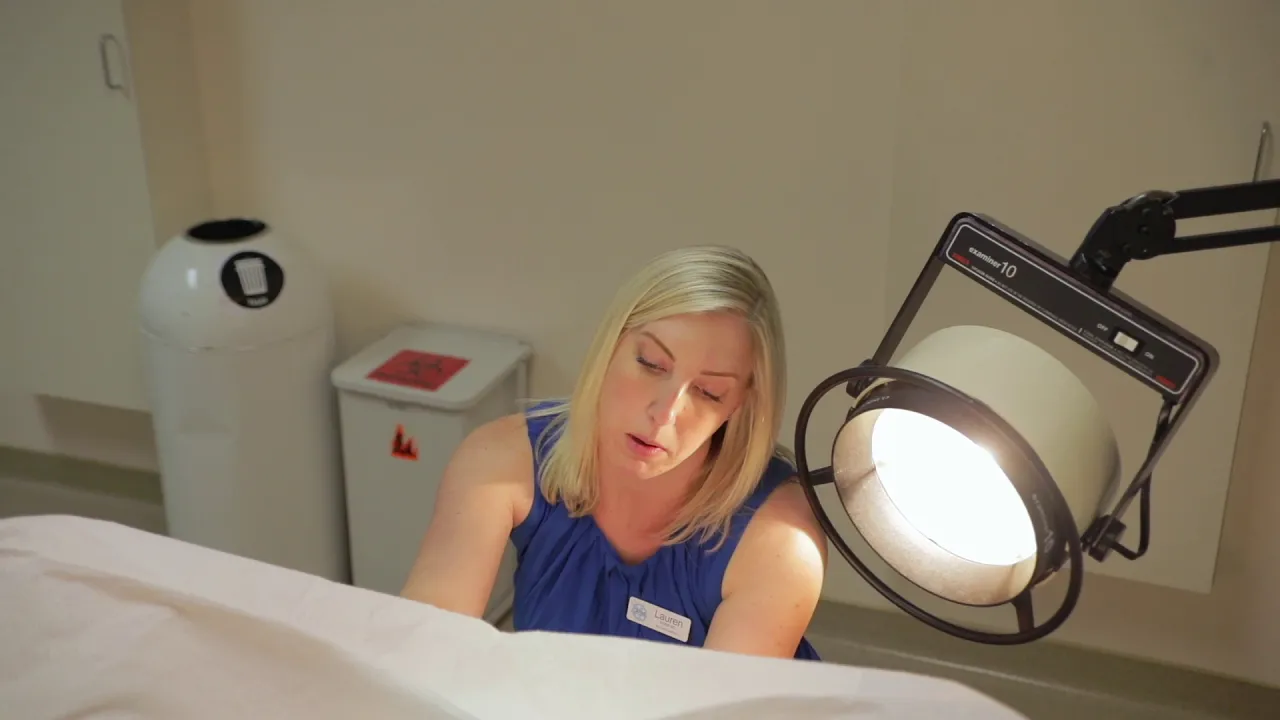
What is an Office Hysteroscopy? | Fertility Testing Explained at DIRM
DelawareInfertility
17K views•2019-05-06
13:25
Medicine
Pharmacological Management of Stroke Antiplatelet-Acute and Secondary Prevention
Learningin10
8K views•2019-03-04

3:25
Medicine
PMG - Pediatric Pain Management
EASTtraumasurgery
3K views•2019-07-01
20:29
Medicine
Anemia Symptoms And Treatment for Chronic Kidney Disease (CKD) patients
DADVICETV
27K views•2019-08-07
12:30
Medicine
Prostate Cancers and Mimics - Diagnosis
Pathologyminitutorials
3K views•2019-11-20

11:55
Medicine
Vitamin A for Vaccines & Viruses (including Measles!)
DrDavidMD
691 views•2025-03-11
4:10
Medicine
Making the Most of Your Cardiology Report | CONNEQT Cardiovascular Health Resources
conneqthealth
774 views•2025-03-04
Trending

5:07
Philosophy
One Must Imagine Sisyphus Happy
vlogbrothers
61K views•2026-07-21
25:15
Business
Future of Taylor Farms
maighstirtarot5385
11K views•2026-07-21

12:30
Business
The Downfall of OnePlus!
techwiser
65K views•2026-07-21

23:12
Engineering
My Friend Locked Up The Engine On His K-Swapped Bug...
boostedboiz
128K views•2026-07-21