Linux was developed organically without a master plan, relying on natural collaboration where different people contribute based on their strengths and interests, with trust networks of small groups (typically 5-15 trusted individuals) driving the development process rather than formal management structures.
Install our extension to search inside any video instantly.
Linus Torvalds Reveals How Linux Was Built Without A Master Plan
Added:the converse of mistakes that were made as as as you started, let's say, building it and extending it.
>> Really in the very early days, I have a hard time even imagining what I did that I could have done wrong.
It really none of >> [snorts] >> my programming career [music] was really planned. It was a passion for me. I started programming when I was so young that >> [snorts] >> that I read all these books about assembly [music] language without really noticing. I did not So, kind of a background, I did not understand that assembly language was supposed [music] to be the symbolic form of a machine code.
So, I always [music] called what I wrote assembly language even though what I actually wrote was the literal numbers.
I wrote the machine code because I I did not have an assembler.
So, to me assembly language was the data [music] statements that had the numbers in them. That's how I started doing assembly language.
And uh anybody who actually knew what they were doing would have called that machine code and [music] would have bought an assembler because they realized that's just stupid. But I didn't know what I was doing, so I literally for several years including my first few months with the Motorola 68K, I would do the assembly by hand and actually write machine code.
So, and that was just because I didn't know what I was doing.
So.
>> How how about is the is it [music] you know, then fast forward to the kind of Linux community starting to build um in terms of management of the community community, I mean, I think this is a I guess Linux is known to be the biggest collaborative effort of mankind. I just read some I think Wired called it or something like that. But obviously the management How did How did you get it going?
>> So, I I actually think building the pyramids took a lot more planning than Linux because one of the things that I think is really interesting is how there was zero management, there was no logistics, there was no planning going on at [music] any point. And what happened was through open source, people did what they were good at doing. So, for example, I still don't maintain a website. [music] I have never in my life done any web programming because I'm not interested.
>> [music] >> I think that kind of stuff is you have MIS people to do that for you, right?
I'm interested in programming. Uh yeah, and and >> [applause] >> But, there are people out there who who they set up a website and do all the DNS magic, and [music] they can do it in their sleep because, I mean, that's what they do, and they don't even think of it as their job. It's just that something that they do on the side.
And [snorts] uh And the first that's what happened when when I put Linux out for FTP at the for the first time.
>> [music] >> I never figured out how to set up an FTP site, right? There was somebody who did it for me. So, Ari Lemke. There was uh the whole when business started happening, um I didn't get [music] into this for the business side. I wanted to do, again, programming. So, when other people started selling Linux I Linux, I was like, "Yes! Now I can avoid [music] caring about that side, too." Uh I got out of for the very early versions, I had to do my own programs in user space just because, I mean, I was >> [music] >> the only person there. So, for the first couple of months, I would release not just my kernel sources, but I would also release two disk images.
And two disk images because the first disk image was the binary version of the kernel just so you could write it to the boot floppy and the other disk image [music] contained your root file system.
There was no init, there was no init. It is too fancy. [music] We only need a root shell and that's it. That's how real men do things. [music] Right?
And and then somebody else came along and said, "Hey, this is stupid. [music] You need to have init." Then I was like, "I do?"
And and and they just did it. And [music] I stopped doing my disk images because again, that was not what I was interested in. So, the the real power of open source as far as I'm concerned, well, one of them is that different people are good at different things and different people have different interests. And what open source really allows is that you don't even have to you don't have to do the [music] planning ahead of the logistics of setting up a company. And I have >> [music] >> realized this is about entrepreneurship and you should set up a company and you should know that you need an MIS person and you need an executive assistant and you need this and that and and you need to know how to balance the books. And as far as I'm concerned, the big advantage of open source is people do what they're [music] good at and they automatically gravitate towards that. If you're good at doing a website, you like doing [music] that kind of things, you just do it. And and that was very interesting how there was [music] no planning involved because we didn't need to plan. It was all very organic.
And that's actually how the development has worked, too, that we have I mean, we've had some situations. We've had the source control management issues. We've had that happen a few times where we had really painful problems with maintaining the source code and and having to to completely change how we did things. And then we really had to do that in a planned manner. I mean, that those did [music] not happen randomly. But, those are actually very few. Most of what happened in in Linux development [music] was very natural.
The the hierarchy we we use for [music] doing development, the fact that I work with 10 maintainers, roughly, at 10 or 20 maintainers who all have their own subareas, and they have their submaintainers that they work with and they trust and and they have their portion of their subareas, and we have this network.
>> [music] >> It wasn't like we designed that, either.
It's just happened because that's how people work.
Uh so, a lot of uh a lot of Linux development has been very very much an organic process.
>> I I think I guess trusting uh two-way trust between the parties.
>> Yes, but on the other hand, we a lot of this is stuff that I analyze later, saying, "Hey, that's how it works." And I'm wondering, "Why does it work that way?" But, the fact is that is how people work, that the whole two-way trust between a small number of people.
You trust your [music] friends. You trust the people you've worked with for over time, and you don't trust 100 people. I would never trust this audience. I mean, you're you look like a shifty couple of guys and gals, right?
You trust your close relatives. You trust 5, 10, 15 people. Even people who know a lot of people, even when you have like a huge network of people [music] you rely on, you maybe you're on LinkedIn and you have maxed out and you have 5,000 people in your network, how many of those do you trust?
10. Right?
And that's kind of a basic issue that that the way people work is [music] is I think inherent in our brain. I mean, the the 10 might be five for some people who are not [music] that socially adapt, and it might be 50 for some that are. But but at the same time, the whole development process actually, I think is is again it works really well, and I think one of the reasons it works really well is because it grew up. We didn't try to enforce a certain hierarchy on it. We used the hierarchy that just worked [music] on its own.
And that turns out to be the right hierarchy.
>> Okay.
Related Videos
6:13
Computer Science
TOP 15 Data compression Interview Questions and Answers 2019 Part-2 | Data compression | Wisdom jobs
wisdomjobs
281 views•2019-06-28

27:51
Computer Science
CTS 158: 802.11w Management Frame Protection
ClearToSend
4K views•2019-02-04
23:21
Computer Science
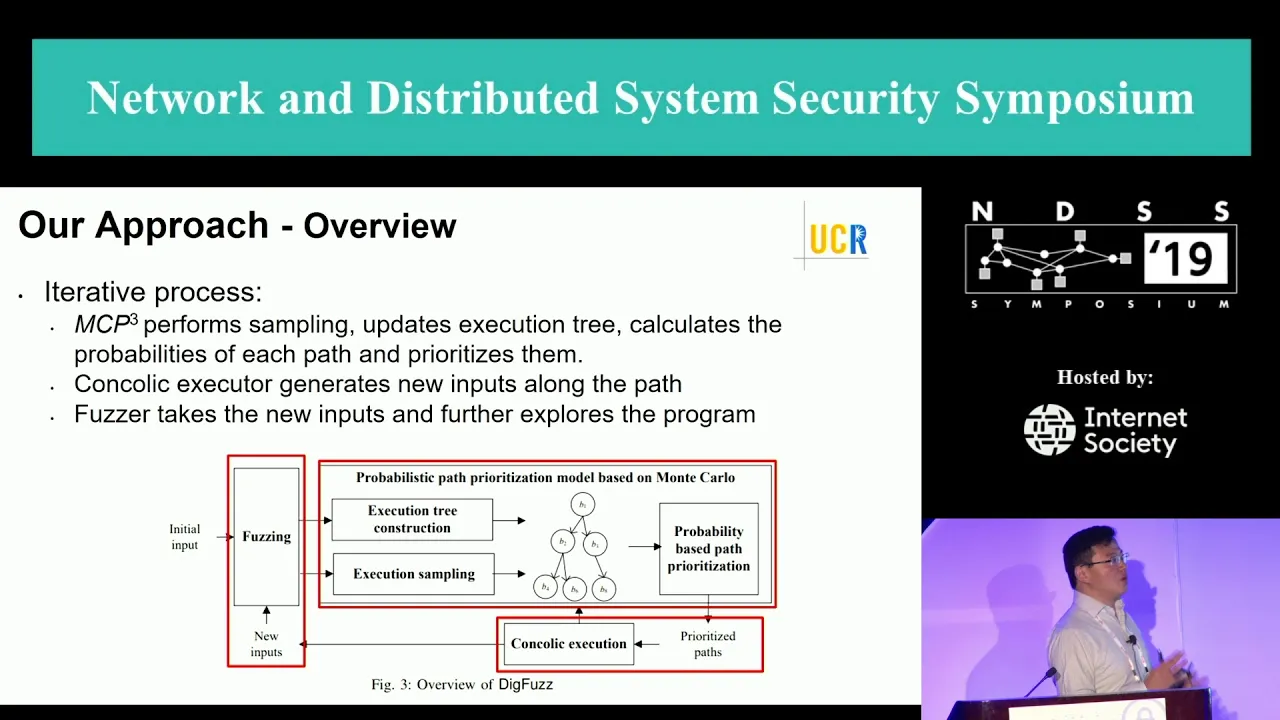
NDSS 2019 Send Hardest Problems My Way: Probabilistic Path Prioritization for Hybrid Fuzzing
NDSSSymposium
496 views•2019-04-02

12:48
Computer Science
How realistic is Cities: Skylines?
CityBeautiful
159K views•2019-02-14
46:39
Computer Science
GUIs & TUIs: Choosing a User Interface for Your Python Project | Real Python Podcast
realpython
2K views•2025-04-04

25:15
Computer Science
The OSI Model - Explained by Example
hnasr
225K views•2019-05-12
1:10:47
Computer Science
Cloud Computing - Introduction
elithecomputerguy
98K views•2019-10-07
2:24
Computer Science
From Traveler's Dilemma to Dynamic Routing | Demystifying Networking
IITBombayJuly
5K views•2019-08-04
Trending

13:25
Business
Playstation NO DISC/NO BUY Fight Is Over...
DavidJaffeGames
4K views•2026-07-23

16:52
Anthropology
Americans Confused in Australia for 17 Minutes Straight
IWrocker
17K views•2026-07-23

7:38
Blockchain & Crypto
Bitcoin Social Interest: Dozens of us Left
benjaminjcowen
12K views•2026-07-23

11:32
Business
Tesla Profits Plunge & SpaceX Stock Continues Fall
TheJohnJohnstonLounge
6K views•2026-07-23