Kiki brilliantly reframes hoarding as a neurological survival mechanism rather than a moral failing, highlighting the deep connection between emotional safety and physical space. This shift from shame to science provides a more profound and sustainable framework for behavioral recovery.
Install our extension to search inside any video instantly.
My Brain was Rebuilding my Clutter Corner | Clean with Me
Added:Kiki says it's time to reset this clutter corner because it is a hot mess.
Hello everyone and welcome back to a hoarder's heart for today. Oh yeah, we are getting back in this living room and cleaning out my little clutter corner.
Now this didn't become cluttered overnight. This was kind of slowly building over the past couple of weeks, if not maybe a month and a half, because my brain was purposely rebuilding this.
And I'm going to dive deep as to the mindset of why. Why did my brain want to rebuild this clutter in this corner?
Now, I want to give a very special shout out to Midwest Magic Cleaning. Oh my goodness. Thank you so much for mentioning me in your channel. That really means a lot to me because we have the same vision. We just want to help people clean and declutter their spaces, whether their homes or big warehouses.
We all just have the intention of helping people. And if you are new to my channel, welcome. I'm so happy that you're here because I was a level four hoarder and now I am a level one hoarder. I talk about the mentality behind this stuff. Why people have such a tight grip on the items because it's not just about the stuff. It's what the stuff represents. And what it represents is security, protection, control, abundance. It's all falls under the scarcity noise umbrella. There's just a need to hold on to it. And of course, I'm going to explain more as we start to declutter my little clutter corner. So, here is the corner of the living room that we are going to be resetting. Now, this corner gets cluttered a lot repeatedly. Now, could I do 15-minute declutters every day to reset it? Sure.
Could I even do two-minute hotspots every day to put a big dent to make sure that it's reset every night? Of course, I can do all of that. But subconsciously, my brain is rebuilding the horde, the clutter. Why? because it actually self soothes my nervous system.
Still, the old identity, the old me, because it represents my childhood and a cluttered bedroom that I had as a little girl, full of imagination and opportunities. But the new me, the new identity, knows I don't need cluttered spaces anymore to feel safe. I can feel safe without them. So, let's start with the most easiest things we can start to put away. And that is well, actually the graduation favors that I made for Brandon's party that is coming up.
Everything is ready to go. I'm trying to get everything together. So, I'm just going to take this box and put it over with the other stuff so that we can get ready for his party. Right over here is a bin of pictures. Of course, I have all the pictures out again getting ready for Brandon's graduation party so I can have posters of him to celebrate, but that bin belongs all the way over there in that corner shelf. And of course, I can't reach that yet because there's a ton of stuff in front of it. So, for now, I'm just going to pick it up, put it on the couch, and continue chopping away at this center spot so I can eventually put it away. Next is going to be putting away this pillow and this little bed. Now, my niece and nephew are visiting from Indiana, and sometimes they sleep over, but it doesn't belong out in here. Now, my nephew is sleeping over again. So, I'm just going to pick this up and take it into Brandon's room again, just making that room in the living room. So, let's talk about why my brain was rebuilding my hoorde as we basically just put stuff away. It's kind of a combination of my ADHD and my hoarding disorder, just kind of combining superpowers, if you will.
>> [laughter] >> Because my ADHD, you know, we have challenges with working memory and executive function. And I kind of I kind of like the external memory, meaning I like the clutter. I like the clutter in the room. Believe it or not, it kind of like calms my monkey mind down a little bit. And with my hoarding disorder, well, we all know that possessions basically are linked with identity. And the stuff is basically a physical autobiography of my life, but especially emotional regulation, making all this stuff feel protective rather than simply useful. And let's not forget habits that everybody has because habits become tied to specific contextes. Like in my stuff, it's clutter and locations.
So the same corners in my house often get cluttered again, triggering the same behaviors over time. So basically all this in a nutshell is just to say my clutter corner wasn't coming back because I wanted clutter. It was coming back because my nervous system still believed clutter was a part of what safety looks like. Recovery wasn't just changing my home. It's teaching my brain that peace can become familiar too over time, clearing out the spaces over and over again. And in my case, healing isn't about making your home look perfect. It's about teaching my nervous system that I'm finally safe without needing the clutter to prove it.
Remember when we talked about the identity lag? It's kind of where I'm at because there's kind of an internal well battle between the two identities. The old hoarder self in me and the new girl who does not need clutter to feel safe.
Now, I'm just going to pause that thought for a second to show you this chocolate. I ordered it on Amazon for Brandon's graduation favors. Now, it came in melted. I understand that it's hot and I knew as soon as it got delivered to my house, I brought it inside. But when I opened it, it was already melted. I had to buy new stuff.
And Amazon is saying that I cannot return it. But I feel like if you're going to sell chocolate, you need to be able to keep it cold in the summer so that the chocolate is not melted. I don't know. I'm actually going to give them a personal call because I don't really think that's fair. And I noticed that I'm not the only one who had that problem. Now, I'm going to of course start putting stuff back, right? like this is the home to chocolate, but we have a big family vacation coming up soon. So, I think we'll be bringing some of that to the house. But anyway, let's talk about why this corner always gets cluttered again, right? Because every time I clean that corner in the living room, it comes back. Not immediately, sometimes weeks, sometimes months, but eventually this exact pile quietly begins to rebuild itself. And for years, I just believe that I wasn't trying hard enough and that I wasn't putting in enough time and I should do 15-minute declutters daily and I was putting myself down, that I lacked discipline, that I was failing at this. But after recovering from a level four hoarding and doing research and learning about trauma and trying to understand my own ADHD and hoarding behaviors, I don't think that's what's happening anymore at all. I think this clutter corner is just trying to tell me that it's not just clutter. It's a memory. It's an identity. And it's my nervous system trying to feel safe. and I'm looking at it through the wrong lens. It has nothing to do with the lack of discipline or that I am failing. What's happening is that subconsciously my brain is trying to recreate what my childhood bedroom looked like because many of you know that I was allowed to have a completely messy bedroom. My mom thought I would outgrow it. And in my bedroom, I had all my toys, all my creation, all of my things that I absolutely loved. And as a childhood core memory, that is foundational safety. So when things get stressful, when schedules are jampacked, my nervous system, my brain is consistently trying to revert back to the safety of my childhood. I'm not intentionally trying to get this messy again. I'm not intentionally trying to even recreate my childhood bedroom. It's just as a little girl when life felt overwhelming. Or in middle school when I was badly bullied, I could always disappear into my bedroom because it felt predictable. It felt familiar. And that room was not minimal. It was not perfectly organized. There were books, there were toys, there were crafts, little treasures, projects, clothes, collections. Everything was there. And man did that room become my emotional home base. I felt love. I felt creation.
I felt like myself. And it all became a part of my identity as childhood coding.
And that's why my brain is continuously rebuilding these little clutter corners when life feels overwhelming in the present time. Because it's survival. and survival depends on predicting what comes next. When something is familiar, your brain spends less energy trying to understand it. That familiarity can create a sense of safety even when the environment isn't actually helping you.
So, this is where my brain learned. This is what home looks like or this is where I figured life out. That's why the messes return in my house because clearing everything can sometimes feel emotionally unsettling. And I've kind of said that before that sometimes when I declutter it feels empty. It feels strangely uncomfortable. And this is the actual mentality of hoarding disorder.
So that you understand it because the nervous system hasn't fully learned that open space can be safe. Now that's not to say that we can't turn it around because we are turning around. It just takes longer than most people because we are creating a new identity. The person I am today, a recovering hoarder, someone who loves peaceful spaces, someone who can breathe easier without piles, someone who knows her worth isn't measured by what she keeps. These two identities don't switch overnight.
They're both wired into my nervous system. One says, "Build the pile." The other gently says, "We don't need that anymore." It's teaching the nervous system that the new identity is safe.
Every time I choose to clear this corner again and again, I'm not just moving objects. I'm practicing a new version of safety. So, it's not just about decluttering and throwing stuff away.
It's not just about doing a 15-minute declutter once a week. It's not just about towing a two-minute hot spot daily. That is equal to telling a recovering alcoholic, just don't drink, and you solve the problem. You have to address the root problem because I always say beneath every behavior there's a feeling and beneath every feeling there's a need. Meet the need. A lot of the times that need is safety and survival wired into a behavior because it is predictable and it makes the brain feel safe. Paper is another example that made me feel safe since I was a child.
mainly from my drawings, but that's okay because I want to show you I have gotten an obnoxious amount of mail in the past month because we had to vote. I don't know this from our bank. They gave us packets upon packets that they had to send us. Of course, we're going to be recycling that immediately because it's just it's just too much stuff. So, for today, me and Miss Kiki, we don't see this clutter corner as proof that I've failed, as proof that I'm never going to be able to clean out my house. We just see it as information, showing me where my nervous system still feels attached to an older version of safety. And honestly, I have compassion for myself and I have compassion for anyone who is in the same boat as me because no one's trying to become a hoarder. It's just a mental illness that I was born with and I was simply a girl trying to create a space that made me feel safe, that made me feel okay. But today, I'm building a different kind of safety. One where I feel good throwing stuff away. One where I can find stuff easily. One where I can breathe and enjoy the open spaces and create a home where peace feels just as familiar as clutter once did. Because healing isn't about making your home look perfect. It's about teaching your nervous system that you are finally safe without needing the clutter to prove it.
And right now I get to show you that we did open up the spaces. Now I have these open baskets because this is where I work every day. I work from home. So that's why with my ADHD, it's easier for me to have these open baskets. But overall, I'm glad we did a pretty good job opening this up. And if it becomes cluttered again, like kind of a little bit how that corner is, that's okay.
We're going to give ourselves love and we're going to give ourselves grace because it is quite okay. We are human.
And my hope and my prayer is that this video motivated and encouraged you to clean, declutter, and let something go in your home today, too.
Related Videos

0:39
Psychology
Inside Ronaldo’s Team Meeting
RonoSphereCR7
1K views•2026-04-17

7:25
Psychology
You Are Not So Smart: Chapter 4 Hindsight Bias, What is it?
TheBey8nD8
230 views•2019-09-15

49:35
Psychology
Sigmund Freud's Mind - Master Your Inner World (Your Unconcious Mind)
Ngaslife
1K views•2025-01-25

11:29
Psychology
What affects your mood?
RandyPaterson
602 views•2019-05-16
3:45
Psychology
Can you outsmart this logical fallacy? - Alex Gendler
TEDEd
2164K views•2019-11-25

1:02:21
Psychology
Understanding the Relationship between Fear of Falling and Mobility in Older Adults
fallpreventioncommunityofp3788
823 views•2019-04-08
54:04
Psychology
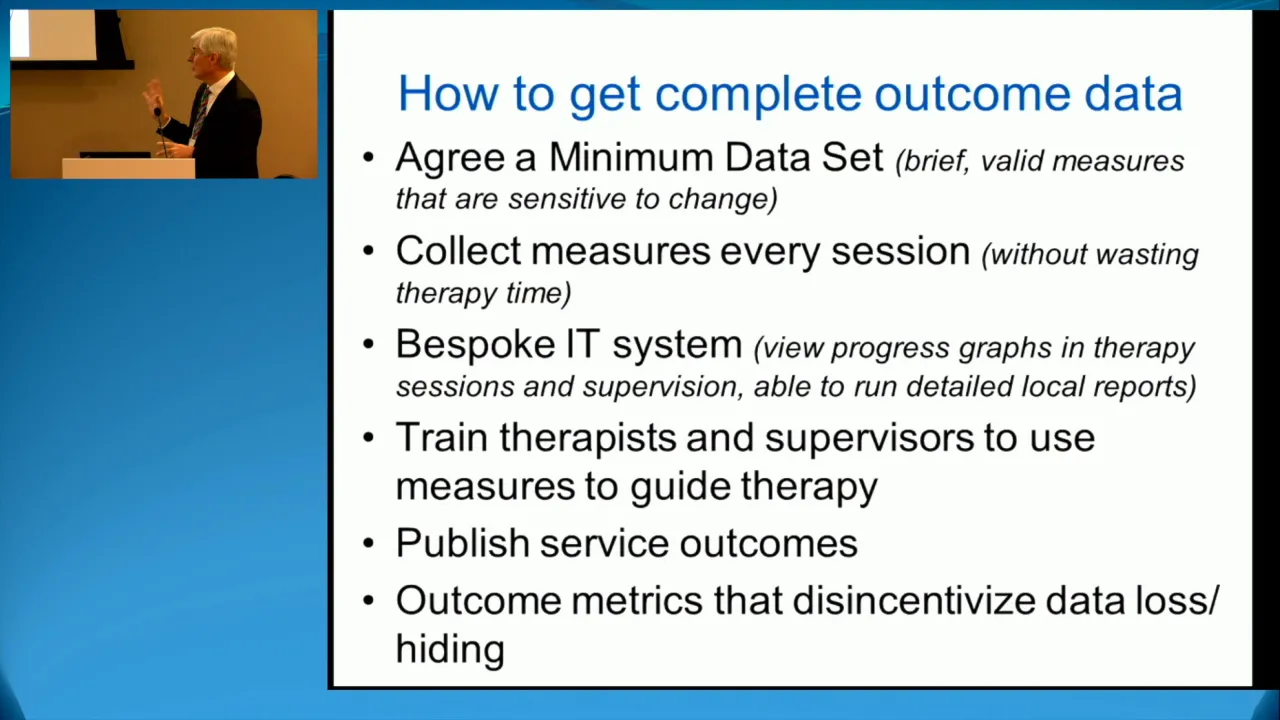
Measurement-based Care in Psychotherapy Workshop - Future of Psychotherapy Conference 2019
UofTPsych
243 views•2019-04-25

51:52
Psychology
Dr. Carol Tavris — Mistakes Were Made (But Not by Me)
skepticmagazine
14K views•2019-05-02
Trending

9:05
Artificial Intelligence
2.4 BILLION Records Got Leaked...
DeepHumor
15K views•2026-07-22

13:25
Business
Playstation NO DISC/NO BUY Fight Is Over...
DavidJaffeGames
4K views•2026-07-23

19:32
Business
Should I buy a Sawmill?
essentialcraftsman
29K views•2026-07-22

16:52
Anthropology
Americans Confused in Australia for 17 Minutes Straight
IWrocker
17K views•2026-07-23