The Backrooms horror film uses the liminal space concept as a psychological allegory for how trauma and unreliable memory shape human consciousness. The surreal, distorted environment represents how our minds reconstruct memories imperfectly, creating distorted versions of reality. Characters Clark and Mary, both damaged individuals with unresolved trauma, are drawn into this space where their psychological wounds manifest physically. The film suggests that the Backrooms is literally built from people's memories and minds, with Clark's obsession with architecture influencing the space's design. The ending reveals that Mary, like Clark, becomes trapped in a repeating loop of trauma, symbolized by the imitation Mary entity that will remain alone forever. This represents how trauma creates psychological loops that trap individuals in their own damaged mental states.
BACKROOMS Ending Explained - What it's REALLY aboutAdded:
Imagine that you passed through a solid wall and found yourself in another world or another dimension. It's just like the one you were in, but with a twist. It feels familiar, but something is wrong.
Everything just feels a little bit off, like it's a memory of a place that is not quite right. And then you discover that you aren't alone here. You have just entered what is known as the backrooms. And what happens next is one of the most controversial and divisive horror movies out this year. So, let's talk about A24's Backrooms. People are saying everything from it's the best horror movie of the year to the worst that they have ever seen and claiming that they walked out because it was that boring and bad. In this video, I'll recap everything that happens in the movie and explain it, including that insane ending and what it really means.
Because a lot of people are missing a very important thing which changes everything. I'll answer the questions that this film leaves you with, and there's a lot of those like the true nature of the entity, what the film was really about, and how the backrooms was even made. and I'll be sharing some really crazy theories about what's really going on here. If you're new here, I'm Mad Morph and this is my movie club where I talk about films and TV.
You can also listen to this channel as a podcast on Spotify and everywhere you get podcasts. No AI is used at any point in the making of this video or the writing of this script. This is all human-made content, and I make everything myself. I don't even have an editor. This is my voice and my content.
And if you want to find more of me, you can check out my gaming channel, which is just Mad Morph, or my podcast where I read books to help you sleep. It's free and it's called Down to Sleep. All the links you need are in the description for this episode. So, if you're also tired of AI slop movie recap and explain channels explaining films to you with robot voices, hit subscribe and join the club. This is Backrooms Explained. The movie opens with a found footage style.
It's someone's camera footage and the perspective is of us watching the tape as they explore what is known as the backrooms. What exactly those are we'll go into later. The man radios for help saying he got separated from his group and he says there's something else in here. A seagull flies into the room and he heads the way that it came. Perhaps thinking if a gull came in it might be his way out as well. And walking along the long hall, he sees shop signs and furniture halfformed and clipping through the wall. A door opens behind him with a loud creek that is taken directly from the Portal video games, and a giant figure slowly emerges and starts to chase him. We watch as he hits a dead end, is caught by the monster that we don't really get a good look at, and his screams distort as the tape that the footage is being played on ends. And in the reflection of the TV, we can see people in white coats watching, and we get the title screen, backrooms. We get a flashback of a child and her mother leaving handprints in concrete outside their home. It's interrupted by a construction vehicle dumping the ruins of the house that it's demolishing on top of them. This is Mary, played by Renata Reinfer, known for sentimental value, a different man, and the worst person in the world. She's watching this go on. She was the kid in the memory, and she's watching her childhood home be torn down to make way for a new tower development. She watches as these men demolished with sledgehammers, literally getting closer and closer, hit by hit, to the handprints of her childhood in the cement. The symbolism here has the subtlety of the sledgehammer that tells you that memories are important and that they're being changed and built over.
Her voice over says, "We all have our loops, our habits, behaviors that keep us walking in circles. The path you made was the one that kept you safest as a child." While she's saying this, we meet Clark, played by Chewetel Edgio, known for 12 years a slave as the underutilized Baron Moro and Doctor Strange. and I loved his performance in The Recent Life of Chuck, which is as criminally underrated as he is. I think he's one of the most overlooked actors working today, and he should be in more things. He's actually about to be in Mike Flanagan's movie, The Exorcist, alongside Scarlett Johansson. So, maybe we're about to see horror be the genre that gives this man the love that he deserves. For now, he's playing Clark, the owner of Ken Clark's Ottoman Empire, a furniture store. Remember how this whole thing started with a picture from a furniture store? Yeah, that we watch as he comes to work. We see bills unopened showing things that aren't going well for him or his store. And it's revealed that Mary is his therapist and that her voice over was her talking to Clark as they have a session together. During the therapy session, Clark says, "I hurt people. I don't want to. It's just the way I'm wired. Maybe I deserve to be alone." They do a role-play exercise to help him in therapy where Mary plays Barbara, Clark's wife, who has kicked him out.
They repeat a scene from Clark's past.
It's when he came home drunk and accidentally broke a glass which woke his wife up and they had an argument.
Clark gets really angry even though they're only pretending for therapy. And the info that we get from this is that his wife was an adult student who was going back to school. That they wanted kids and Clark was working at the store to provide and pay for everything but drinking a lot and coming home drunk.
He's also really bitter and angry that he never became an architect and he feels like he's trapped selling furniture to make ends meet. This is the core of Clark as a character, a failed architect that refuses to believe he isn't one that is pissed off that he's running a failing furniture store. We see Clark as this Captain Clark character filming an advert for the furniture store and he sits on a throne and the chair breaks. Filming the advert is his assistant manager, Cat and Bobby.
In Clark's back office, the walls are covered in sketches and floor plans of buildings and houses, showing us that he's really holding on to that long deadad dream of being an architect, holding on to the memory, the dream, and remembering it. We see Mary at home watching an advert for her own book and audio self-help series. It says, "Open the window. Be the author of your own design." Her book is called The Window Within. We see that she has kept one of the handprints from the demolition. a piece of concrete literally sat next to her dinner plate, showing she's holding on to that memory and keeping it close.
You will spot parallels like this between the two characters throughout the movie. And we see Clark, who is living in the furniture store in bed, watching an old sci-fi movie. He's drinking and then the power on the TV goes out before the lights in the store flicker and go out. He looks at a picture of him and his wife on the bedside table as he remembers her and he goes for a drive listening to the therapist's audio tape. He parks up outside what we can assume is his old family home that his wife still lives in. And he just sits there and stares up at the window. There's no lights on.
She's probably asleep in there. But what's important here is windows and doorways. They pop up all throughout this story. While he's doing this, he's listening to that self-help audio tape.
And Mary's voice says, "Your consciousness is a room full of memories that is constantly evolving. But as you walk through life, an untrained mind can put up walls to protect itself." She says, "The window isn't locked. The latch was never broken. Are you ready to step through?" I have a really dark theory for what might have actually happened here, but I will tell you that at the end. For now, we see Clark doodling a bunch of abstract architectural designs. And we watch Mary at a function as she sort of steps through doors herself and seems out of place. And when she observes a mother and a daughter, this triggers her and she disappears off to a back room to medicate herself. This is showing us that it's not just Clark, but Mary, too.
That they are both somewhat broken individuals that have their own traumas that they're carrying with them in their memories. Also, that they're both medicating in some way. Clark with drink, Mary with the medication, which he probably prescribes for herself. But this is where everything changes because Clark is drinking and watching TV in the same place, but the TV changes quickly to a CCTV feed. It shows inside the back rooms, and then the power goes out again. Clark goes to the breaker box and sees a crack of light that's coming through the wall like it's the edge of an open doorway. But it's not a doorway, it's a wall. So confused, he goes up to it to put his ear to it to listen. And he falls through the wall and ends up in the back rooms. It's a yellow walled place with bright overhead lighting and a pile of furniture stacked up in the middle of the room. And Clark starts to explore. But what are the backrooms? The backrooms is a liinal space horror.
Traditionally, a liinal space refers to the space in between. It's the space or area that separates where you are and where you are going. A hallway, a stairwell, an empty airport, a train platform. And in internet aesthetics, a liinal space is an empty or abandoned place that appears to be eerie or surreal. So, that is the vibe of this back room area. As Clark picks up a chair and sees that it's actually two chairs melded together on top of each other, showing us that it's not furniture taken from the store, but furniture that was created here, he walks through oddly designed and shaped rooms that feel like hallways and rooms where everything just feels slightly off, oddly designed, like they don't belong. And this is all practically done. They built around 30,000 square ft of set to explore and film this in. even saying that crew members were getting literally lost in the back rooms. Clark finds a caveman stand which is repeating greetings in 50 languages. It's actually the same recording as the Voyager golden records which were launched into space in 1977.
These were intended for any intelligent extraterrestrial life forms to find in space. And here they are in the back rooms. Clark finds the room that he saw on his TV screen and sees the camera up on the wall. He finds a hidden panel with a bag hidden in it that's full of tapes and floppy discs and an ID card.
We can assume that this is the stored research bag from the guy at the beginning who was got by the monster.
Clark crawls through into another room and finds a large chair. He sees shoes half clipped through the floor and these are actually the shoes worn by his assistant manager and Bobby from the advert shoot earlier. There's also a parrot that is halfway formed through the floor. Not a real one. It's the stuffed one that was on Clark's shoulder during that advert shoot. And then in the middle of the room, there is a hole in the floor and there are a bunch of chairs that seem to have been tossed into it. I'll come back to this at the end. For now, Clark hears a noise and when he peers back through the opening, he sees a shadow and the caveman Standy grabbed and pulled past the opening. So, Clark runs because the monster is here and he finds the exit and he grabs a chair to prove to himself that this was real and to remember it. And somewhere else, we see a man in a white suit watching the CCTV of Clark entering that room in the back rooms. Clark goes to see Mary and asks if she ever 5150ied someone. This is California legal code for a 72-hour involuntary hold. He's testing to see how likely it is that if she thinks he's crazy, she'll have him locked up. He tells her about the backrooms. He tries to explain it, but it's difficult. He says, "Imagine describing a dog to someone who's never seen one before, and then you ask them to draw it. They'd get some stuff right, but not all of it." He explains that it's massive down there. And he produces a map that he's been working on. This shows us that what we saw is not the only time that Clark has been in, that this is actually 3 days later as he says, "I haven't had a drink in 3 days."
implying since that night that we saw him drinking in the bed and going into the back rooms for the first time, he has been exploring them and mapping it out. Perhaps while waiting for his next appointment with Mary as she's the only person that he has in his life to tell her about it. Mary doesn't really believe him, so he says he'll come back with proof and for an apology. This is an important moment because it's showing how outside of the roleplay therapy even sometimes Mary is kind of a surrogate for Clark as his wife. Why does Clark need so badly to prove to Mary, his therapist, that the backrooms is real and get an apology? It's all wrapped up in his resentment, his bitterness, his rage, and his anger for how his own life is going. So, Clark goes to get Cat and Bobby, who filmed the advert with him earlier, and this kicks off one of the coolest segments of the film as we change perspective once again. We go back into a handheld found footage style for the next chapter as Clark, Cat, and Bobby go down into the back rooms. Some people have said the entire movie should be shot this way. I actually disagree.
The style was done to death after Blair Witch and Paranormal Activity, but it's still very effective. Here, it's used just the right amount in my opinion. As Clark leads them deeper into the back rooms, he ties a rope around Bobby to go down a steep opening to see what's down there. I think this is the real reason that Clark brought them here. He wants to get proof, but also this is clearly an area that he's led them to because he hasn't been able to explore it on his own. Maybe he's even scared of what's down there. So, he's brought two expendables with him to send down into this hole to see what is going on. Also note that he has not warned them or told them anything about the fact there could be something else down here. It shows Clark as selfish and that he's using them. He lowers Bobby down the hole and he finds a bunch of clothes all piled up. Interestingly, he finds a t-shirt that is a copy of the t-shirt that he was wearing earlier. But when Bobby goes toward a dark room, he sees something, the creature, move in the darkness, and he tries to run back up and get out of the steep opening. He makes it, but before they can get the rope off of him, he is pulled back down. The rope is tied to a bed, which then pulls and hits Clark and Cat and knocks them down into the basement as well. Just in time to see Bobby dragged into a compartment, leaving a bloody trail behind, and we never see Bobby again. Cat goes after him, screaming, and Clark just runs away. We get this handheld chase scene as Clark runs through the backroom seeing strange items, piles of furniture, odd-shaped rooms. It's really reminiscent of the found footage backrooms YouTube videos that director Kane Parsons created as well as video games. The director has said that the game Portal is a massive influence on him and his style. I found all of the handheld scenes to be perhaps the scariest. There's something about that perspective that makes me feel like I'm going to be jump scared. But maybe that's just the gamer in me. What did you think of these segments? Let everyone know in a comment. Clark finds a darker room with a Christmas tree in, and there's a half-formed person in a chair who turns a light on. An oddlooking woman stumbles around the tree, kind of a zombie walk, and starts to chase Clark. Clark runs through a bunch of different rooms, including pool levels, and hears Cat shouting on the other side of a wall. It's like Cat can see Clark, but to Clark, he just sees a wall. So, he puts the camera down and runs over to help. And as we watch, someone picks up the camera and they seem to be very tall. So, it's the monster from earlier. It's a terrifying moment that was really, really well done as Cat tells Clark to look behind him.
And the chapter ends. The second half of the story follows Mary, the therapist, as we see another flashback of her as a child growing up in a house that looks kind of like a neglected hoarder's home with anti-csychotic pill bottles left around and paper covering the windows.
And little Mary sort of tries to peek out the window and then goes to open the door. Or maybe it's the window that she's opening, but her mother stops her and scolds her and says, "I never said you could go outside. It's no good.
They're all over the place." These flashbacks tie into and show us Mary's own obsession with windows when it comes to mental health and the title of her book and philosophy on life. But this is a dream as a construction vehicle bursts through the wall of her childhood home and she wakes up as an adult in bed. And we again see the little concrete handprint that's now on her bedside table. It shows us with her dreams and the handprint that she's holding on to these memories quite desperately that it's a trauma that she carries with her.
She gets an answering machine voice message from Clark where he says, "I opened the window. I won't be coming back." Remember Mary's book is called The Window Within and it tells you to open the window. This is what Clark thinks he's done by discovering the back rooms and he's going to go live in them.
We cut back to that scientist from earlier. This time he's with his family and the never-ending story is on TV. And then an advert runs for Captain Clark's.
He seems to recognize Clark from the CCTV earlier. We'll come back to this at the end. Mary finds the door of the shop open and letters piling up, letting us know Clark has been missing for a while at this point. She finds a map that he drew on a whiteboard and the door that he drew on the wall, and she watches as a fly goes through the doorway. She finds a mural showing a giant on a throne and it says tables don't bleed and a giant in a chair lifting someone up towards a window. It says the floor plan changed again. I don't know who signed the plans but the handwriting looks like mine. This kind of wall scrolling is very Portal and Valve inspired which Kane Parsons again has said is a big influence on his style.
This is straight out of Portal and Left for Dead and other games like that. Side note, you can also see this influence in another recent movie called Good Luck, Have Fun, Don't Die. There is a lot of portal wall scroll references in that one. And then Clark appears behind Mary.
He's kind of like hiding behind the corner and then steps out and he says, "This is every place that ever was." She asks him how long he's been here. But before he can answer, there are footsteps. Clark says, "Stay calm. It's only me. You know me." But out of nowhere, he grabs Mary from behind, chokes her out, and says it's for her own good. While unconscious, Mary has another flashback to staring at window panes. This time in a psychiatric hospital where her mother is wheeled away from her. We see child Mary in the corner of her own home. As the camera pans down through the floor, going levels upon levels upon levels of the backroom version of her home eroding. I think this shows the back rooms as a representation of that trauma of a memory that is just being repeated and repeated and repeated and remembered less and less. How deeply seated and dug it is inside of her as a result. She wakes up at a kitchen table tied to a chair with Clark in front of her. And Clark repeats the same words that Mary said earlier about repeating patterns and behavior and ending up alone. It's a super weird and surreal scene as Clark has three of the stilllife entities with him. It's like a strange family dinner.
Kind of reminiscent of Texas Chainsaw or Resident Evil 7. Welcome to the family, son. So, Clark explains these imitation people saying, "This place built them or remembered them." And the more times it remembers something, the less it does, just like what we just saw with Mary's levels of her family home. Clark says, "These are just versions of people in the real world, but they've been remembered wrong. out there is a guy in this shirt, a guy with a lamp, and he looks at the woman with the red hair, but doesn't say anything and looks away.
This is because Clark knows exactly who that is a memory of. We can assume that the still life entity with red hair is actually a version of Clark's wife. He says they can't feel anything and he sticks the knife into the shirted man at the table who just sits there. Clark says they're like furniture. Think back to the mural. Tables don't bleed. He wasn't talking about tables. He meant the people that are down here. Then he says one of the last things I was ever expecting to hear him say in this moment and he says, "The best part is you can eat them." And he cuts out three servings of the man's belly who sat at the table. And he doesn't even move. And he just pulls out this squelchy white fatty substance and slaps it on their plates. But when Clark opens the fridge to get a drink, in there is the head of Cat, his assistant manager from earlier.
He says, "I tried to help her." her and he trails off. Do you think she was killed by the entity or did Clark kill her? Cuz at this point, Clark has lost it. And at first, it's a jarring, sudden change, but we got to keep in mind he may have been down here for months. And who knows how long it's really been because time may move differently down here. Keep in mind that Clark was seeing Mary for a reason, a therapist. He may have previously been unstable, or it might have even been court ordered. We just don't know. What we do know is that Clark is not very well now. Now he wants to collect on that apology and whilst Mary is trying to do it, he says, "No, no, no, no. He wants it slower and he wants it in roleplay." He scalps the red hair of the entity and puts it over Mary's head so that they can play out the scene from earlier again and she can pretend to be his wife. Clark starts to shout at Mary just like he would his wife earlier about how hard he has to work, but she shakes the wig off of her head and says, "Your wife left you not because of your drinking or the rage. It was the whining. Nothing's ever your fault. You blame your brain. You are your brain. So Clark says he thinks he doesn't want to change, that he likes it in here, and he's right where he's supposed to be. Mary says, "Then don't.
Just stay and let me go." Mary admits that she can't help Clark, and she doesn't know how to fix him. This scene is really important. It's the crossing of a threshold for these two characters who have been moving in parallel throughout the entire story. Now is the moment that Clark refuses to change and accepts that he's not going to work on himself. And it's also the moment that Mary accepts that she can't save him.
I'll come back to why this is important later. Clark cuts one of Mary's arms loose and apologizes. And then the ex-wife imitation hears something, looks scared, and runs away. And then out of the darkness of another room comes the giant entity, the monster. It's revealed to be a giant deformed version of Clark in his pirate sultan outfit.
Incredibly jarring the first time that you see it. And Clark introduces Mary saying, "This is our therapist. Don't worry." She says, "We don't have to change." And the giant creature picks Clark up by under his arms like a baby.
And Clark says, "It's just the way we're wired." and pirate monster Clark bites into him and kills him as he screams and Mary gets loose and runs away. Mary tries to escape the back rooms whilst being chased by pirate Clark, running through room after room and eventually ending up on a ledge high up in a tower of rooms without walls. Honestly, the way this scene was shot was really, really well done. I'm not great with heights, but it's not a particular fear for me, but the way this was shot made tingles go up my legs and turned them to jelly. I can't remember the last time my body had a genuine physical fear reaction to watching a movie like that.
What was the last movie that made you feel that way or got a physical reaction out of you? Let everyone know in a comment. Mary climbs up the stairs and goes through a door into the ceiling and ends up in the back room's version of Clark's store. There is another caveman set up in here in blue gas tank. So, whilst fighting the monster, Mary stumbles into literally everything and sets off the trap. The caveman standies are set up in here not to welcome and greet these entities, but to capture them. The tanks go off. Gas shoots out, gassing both her and the monster. And as they crawl along the floor, Monster Clark actually manages to get on top of her. And she uses the cement handprint that she's still carrying with her in her pocket and bashes him in the face with it. She does this over and over, getting blood all over herself, but the monster just keeps coming. She hits him until this memory, this cement handprint, completely breaks into lots of little pieces. She hides in a tight hallway that giant Clark can't fit into.
And she looks back with a face like she pies him. She looks almost sad for him.
She's looking back and it's symbolic of how she couldn't save Clark. And now there's this monster in front of her, just like she couldn't save her own mother. And she turns away and goes further down the hallway and then is gassed by people in hazmat suits and captured. We see her in front of a portal, a gate. So, she's now outside of the back rooms and is taken to a facility where she has her brain scanned. She's led through the hall and sees that they've captured Pirate Clark.
Now, she's in an interview room, and she meets Phil. Phil is the scientist that we've been seeing throughout the movie.
This is our third time seeing him, and he wants to interview her. He asks her first, "Can we establish how you got in here?" She says, "Through the wall of a furniture store." He shows her a picture of Captain Clark's store to confirm that was the location, asking if she was shopping. She says, "I was looking for someone." He shows her CCTV of Clark and says, "Was it this man?" But Mary asks, "Where am I?" Phil says, "I make sorry, my company, we used to make MRI machines. Not anymore." He confesses that he too goes in the back rooms and that they are studying it. He says, "I'm convinced that nothing in our lifetime or in all of recorded history means more than this." And Mary asks, "What's going to happen to her?" Phil says, "That decision is not up to me." And then continues to talk about the back rooms.
He says there's doors opening everywhere, and we don't know why. But as he rambles on, it just kind of fades out as Mary sits there with a little knowing smile on her face. She knows that she isn't getting out of here. Not alive. Anyway, take a quick look at the symbolism of how this scene is shot.
From the bottom up, half of the wall is yellow, which we associate now with the backrooms, and the top half is white, which leads up to the skylight above the outside world. At first, Mary is shot from this angle, where her head is well above the line of the backroom's yellow, while she thinks that she's escaped. But as the interview continues, it changes to this angle. The top line of that backroom's yellow is a lot higher. It's almost like she is submerged by it from behind, letting us know that she's never escaping and that it is consuming her.
We cut to scenes of Mary's demolished childhood home, but the concrete handprints are back in place. This is a remembered version of it that exists in the backrooms. We see missing posters for Cat and Bobby, as well as a backroom version of where Cat and Bobby lived, as well as a backrooms version of Clark's store, which is where Mary was earlier.
Then we see a room with a layout that is just like the room that Mary was just being interviewed in. And sat in a chair just like Mary was, we see this misshapen, misremembered entity. And then we see that it is a deformed still life version of Mary and the movie ends.
But what does it all mean? And what is this movie really about? What happens to Mary? Where was she at the end? Or more importantly, when was she? What's the deal with Clark, the pirate? the scientists and that ending. I've got the answers and my review and some absolutely crazy theories to share with you. I'll tell you exactly what I think and why I think so many people are hating this film. But before that, now is a great time to hit that subscribe button if you haven't already to come back for more like this. This is a movie club, like a book club but for movies.
So, make sure you leave a comment letting everyone know what you thought and hit the subscribe button to join.
There is a lot to talk about with this one, so let's get into it. What is Backrooms really about? This film and story is packed with symbolism and hidden meanings. And there is a crazy twist that nobody is noticing. It follows the story of Clark and Mary as well. They're damaged, broken individuals. And the back rooms represents this mix of memory and damage and trauma. It's an allegory for how they deal with it. Did you notice that when those characters are in the real world, their surroundings and the way that the scenes in reality are shot are not entirely different from how the backrooms are shown? Clark especially currently lives in a liinal space and Mary is shown to have grown up in one.
Clark was literally living in an empty furniture store whilst being consumed with bitterness and rage. This explains why he feels more comfortable in the back rooms. He's already been living that way for a very long time. While Mary is traumatized from her upbringing with a psychotic, mentally unwell mother, forced to stay inside, and we see that it causes her fixation on windows. We can assume that experience is what drove her to become a therapist.
It's the motivation for going above and beyond to look for one of her patients, Clark, that leads her to the backrooms.
And just like she said to Clark, we all have our loops, our habits, behaviors that keep us walking in circles. The path you made was the one that kept you safest as a child. This is what we're seeing told throughout their story. She became a therapist and walked that path to be the person that would have kept her safe as a child that could have saved her mother. Now, keep that in mind when we look back at that dinner scene after Clark kidnaps Mary. Up to this point, the two characters have been like mirrors to each other running in parallel. All through the movie, they cut from Clark to Mary and Mary to Clark as they're shown to be similar but with contrast. And when Clark snaps at the dinner table and shows the true parts of himself, he talks to Mary as if she's his wife. He is revealing the darker parts of himself figuratively and literally with the reveal of Pirate Clark. But he isn't the only one showing a dark and tragic truth. Mary also snaps and says, "I don't know how to help you." And she isn't just talking to Clark. She's talking to her mother. We know that she ends up in a psychiatric hospital when Mary was a child. She became a therapist to try to help her to help people like her. But here she is again unable to help someone who has lost themselves completely. We all have our loops, our habits, behaviors that keep us walking in circles. The path you made was the one that kept you safest as a child. When she looks up at the sky through the window in the interview room, it is a symbol of that loop. Here she is again trapped inside on the other side of a window. As for the concrete handprint, she carries that around with her at all times by her dinner plate, by her bed, and then even in her pocket, which saves her life. It is a very clear symbol of her childhood and this memory that she's clinging on to and she uses it literally to defeat a manifestation of someone else's damage. Why is the backrooms the way that it is? And why does it get things wrong? The backrooms is creating itself from memory or from other people's memories. It makes a point of showing that Clark is an architect and how important this is to him. It is an obsession, a focus. We see him doodle weird drawings and artworks.
And we have normal floor plans and projects pinned all over his office walls. And in the backrooms, the mural even references changing plans and them being signed off on with his handwriting. What if the backrooms are shaped the way that they are in this weird and abstract architectural design because of Clark? Just as it's being shaped by the memories and the influence of the outside world, is it possible that him living in the furniture store right above that door is shaping the very back rooms themselves. Designing and building out this great architectural marvel that Clark could never build in the real world. I know in the actual internet backroom law, there are different origins than this for it and it's created from another guy's mind who visited it first. But what if in the movie it's shaped by Clark and that's why the scientists are so eager to find him? Maybe they know he's having this big influence on the back rooms. Clark as a character didn't need to be a failed architect. It's there for a reason. Remember when Mary's tape said, "Your consciousness is a room full of memories that is constantly evolving.
But as you walk through life, an untrained mind can put up walls to protect itself. The backrooms seems to be building itself out from people's minds and memories. And Clark as a person is putting up walls upon walls, which explains the hallways and the outofplace walls forever and ever. a symbol of the self-p protection and isolation from the trauma and the damage that these characters have experienced.
Why then does it get so many things wrong? Consider this. Are Mary's flashbacks entirely truthful? Are anybody's? Memory is our own version of events. In psychology, it's very well known that our memories are very untrustworthy and unreliable. We misremember, we invent, we fill in blanks. Memory is highly reconstructive and every time you recall an event, your brain pieces it back together like a puzzle from the bits that it has.
Memories fade. They're susceptible to influence and bias. Have you ever had a childhood memory and then become confused if you're really remembering it or just remembering it because you were told about it or just saw it on a family tape or a recording? This is a bit like how the backrooms work, too. They're remembering just not exactly. How was the backrooms created or opened and who are the scientists at the end? The company that we see throughout represented by Phil and that gets Mary at the end are responsible for opening the back rooms. Now they monitor it and study it. The doors like the one in Clark's shop are opening up unplanned because of whatever this company did that created this instability in this portal. As Phil said, hundreds of them are opening up all over the place, and we don't know why. But how did they open it in the first place? The portal that they bring Mary through at the end before they interview her is the threshold. This is a gateway to the back rooms which was created by the Async Research Institute. This potentially could be the first opening to the backrooms. It's at least the one that they're going into whilst they study it.
The Async Research Institute used to develop MRI machines. We can guess that through their research and studies and experiments to develop this hardware, just like in the newspaper clipping in his house, they accidentally open this portal to the back rooms. In the law that exists outside of the movie, this company's plan is to use the back rooms for storage and to build homes and residences for people to live in. Yep, it's capitalism. It's free real estate, baby, and it's all for profit. I also think that's what's going on in the movie, and we're clued into that by the knocking down of the childhood home that's being turned into the towers.
This is likely something that would be explored in any sequel. What happens to Mary at the end of Backrams, and why was she smiling at the end? And the real tragedy is that Mary is not going to be let go by this company. They've said how important a find it is and Phil says it's not up to him. This is a big clue that Mary's not getting out of here alive. The best she can hope for is that she is sent back into the back rooms as an experiment and finds another way to escape. The source of her knowing smile is the idea that perhaps her mother had a point. It really wasn't safe outside.
But for me, the true origin of that smile is an ironic one. It's her sitting there and taking in the fact that here she is again sat there looking out of a window through a pain just like in her childhood. She has ended up back inside but this time trapped forever just like she said earlier repeating her own patterns and behavior and loops that lead to her being in the same place alone. And what about that imitation Mary that is sat down in the back rooms?
This is even more tragic. It's the backrooms remembering Mary and creating a version of her just like it did with Clark and the others. But this imitation will likely just sit quietly in that interview room alone for the rest of time, just like she did as a child. Sat inside her home and never allowed out.
Another repeating loop. Why was the monster Clark? And why did it eat him?
Clark has been living in his shop because his wife kicked him out of the house. He sleeps by a doorway into the back rooms and lives literally on top of it. He spends all of his time here. He works there, sleeps there at night, and drinks and watches TV there. We only see him leave to either go to therapy or to sit and stalk outside his wife's house.
And the backrooms is creating things on the influence of what's around it and the people around him. In this case, the mind and memory of a failed and angry architect who is in therapy for rage issues. Pirate Clark, this monster mimic in the backrooms, is the creation of this monstrous part of Clark from a memory that it doesn't actually have.
And there's a very clear reason for why it's him in the pirate outfit while he debases himself to make an advert. It's not just built out of the most shameful and hidden parts of Clark's psyche. It shows how much those parts actually dominate him. Clark wishes he made it as an architect. He resents that he's stuck here selling furniture and he blames his wife for that. The monster takes on this image of his great shame. And it's so big that this entity is literally bigger than all of the others. It's very telling that the wife mimic runs from him when he comes home into the kitchen, just like Clark said. I hurt people and I don't mean to. We also get this from the story of him coming home drunk and accidentally breaking a glass. Clark is not a good guy. He gets Cat and Bobby killed in the back rooms. He's been down there long enough to know there was something in there and he never warned them. He put them at risk and got them killed. He may even have killed Cat. So why did Pirate Clark eat him? Pirate Clark is this misremembered version of Clark himself, but it continues to remember and learn from him and his memories and thoughts and actions.
Remember what Mary said on the tape?
Your consciousness is a room full of memories that is constantly evolving.
Earlier in the movie, when Clark puts the camera down, what did the monster do? It came in and picked it up. It was learning from him. He had just been running around for the last 10 to 15 minutes holding this camera. And so, this imitation Clark picks the camera up. Equally, what was Clark doing right before he died, eating the imitation humans? He's been down there doing god knows what for who knows how long. And the monster ate Clark because it is a warped version of Clark. To the backs and this misremembered memory, Clark eats people. So big Clark eats people, too. And his entity is big and angry and full of rage and dangerous because that's what's inside Clark. The mural in the back rooms was scrolled and doodled by Clark and it shows the giant lifting Clark up towards a window just like it picks him up at the end. This to me says that Clark has been picked up by his giant self a few times and that he felt that this moment was a big breakthrough for him. That this entity has allowed him to connect with that part of himself that he was hiding away from. Remember how Mary's book is all about opening the window and breaking through the window pane. You can really imagine what kind of odd dynamic has existed between Clark and Pirate Clark, an odd family setup in that backroom kitchen. Clark gets to play as man of the house and father as well as child when lifted up. He coups to himself that he doesn't have to change. It's just how we're wired. The same excuse that he's made for that part of himself time and time again in the real world. Here he is now making it to a literal manifestation of it. And it doesn't work. It consumes him quite literally. takes a big bite out of him and then drags him around the same way that that angry part of his personality consumed him in his real life. But here's the question. Did Clark kill his wife? Given that we see the imitation version of Clark's wife terrified of this monster Clark and run away from him and nod to him coming home drunk and in rages, what happened in the real world?
I have a wild theory that before running away to the back rooms, Clark might have actually murdered his wife. We see him drive at night after drinking and pulling up outside the house in the middle of the night and staring up through the window into the dark. Mary's voice on the tape is saying to him, "The window isn't locked. The latch was never broken. Are you ready to step through?"
And then in the next scene, you see Clark doodling art and abstract architecture. Whereas everything before on his walls was very plain and straight floor plans and house plans. What if that night he took Mary's voice literally and went in through the window and murdered his wife? We see so much rage from his actions and his words that I don't think it's a really big leap, especially with what he did at the end.
We know he blamed his wife for everything and he had a huge resentment towards her and even watched him scalp her still life imitation. Maybe Clark was a bigger monster than we're ever even shown. What do you think? I might be reaching with that one, but it's just something that occurred to me on the rewatch. What was the deal with the throne room and the hole that was filled with chairs? This was the lair of Pirate Clark. And to me, that hole in the floor is the result of the backrooms trying to create the right throne for him. And every time it fails, he throws it down that hole until it comes up with this large colored throne that matches what a Sultan pirate needs. It matches that misremembered memory. As Clark said, every sultan deserves his own throne. We know this is the memory from recreating the advert because there's also the fake parrot here half clipped into the ground as well as the shoes of Bobby and Cat who were standing right there filming him on the throne. Equally, it could be that hole being filled with broken chairs is the backrooms remembering how Clark broke the chair when he sat on it.
But here is a really wild theory. What if the question is not where Mary ends up at the end, but when is there time travel in the back rooms? The tape at the start of the movie where N warn goes missing and is killed by pirate Clark at the very beginning is dated 19th of June 1990. The first time we see Phil, he's watching a tape of Clark entering the back rooms for the first time on CCTV dated 29th of June 1990, 10 days later.
In that first scene, Phil looks like this. When we see him next, it's when he's watching Clark's advert on TV, and he looks like this. similar but probably the same age as he was when watching him on the CCTV. It's at this moment that he realizes, "Hey, that's the guy who was in the back rooms on our tapes." Using that advert, he's able to locate where Clark is, or rather where a doorway might be. But is it just me? Or when Phil is talking to Mary at the end, does he look a bit younger? His hair is thicker. There's less gray on the side of his head. So when they're questioning Mary about how did you get here, maybe he means here in time. Yes, this sounds a bit crazy, but apparently the back rooms has a big history of time travel in its lore. Time doesn't move in the same way in there. So, could this be a hidden tease to this being a part of its future? Phil is certainly more important than this movie is letting on. They have Mark Dlass playing him. And in the scene in his home, he's got a framed newspaper clipping saying about Bay Area startup Async Research awarded 1.2 million in a grant to develop the next generation of MRI hardware. That's dated in 1987. Phil is really important. I think he's the one who discovered or developed this technology that opened the back rooms.
In the interview room, he says, "I uh we the company," and corrects himself. It's through this research and developing the hardware for MRIs that they opened the portal sometime between 87 and 1990. So, what if Mary has somehow gone back a few years, and that's shown with Phil's hair being slightly different? So, what if the capture of pirate Clark and the interview with Mary actually happens before the other times we see Phil? That would explain why future Phil is so shocked to see Clark and the pirate captain on TV because years ago they captured an entity that looks just like that. What do you think? Are we seeing different timelines overlapping at all during this one? Or have I completely lost my mind? Was it just a good hair day for Phil? Maybe he just does his hair a little bit differently when he goes to work. Let me know in a comment.
So, was it good? Was it that bad? And why are people hating on it? I came into this movie with pretty much no knowledge of what the backrooms are actually about other than seeing the occasional video game or video on my feed. And I absolutely loved this film. Its story, the symbolism, the overall concept and aesthetic of the backrooms. I found it to be really creepy and interesting. The backroom tower scene turned my legs to jelly and I went to bed thinking about the movie so much that I had a dream borderline nightmare that I was in the back rooms. It was a heat wave all week here and I woke up all hot and freaked out. I had to literally get up and put a fan on for some comforting noise. I can't remember the last time a movie did that to me. I might have to go all the way back to the Blair Witch, the original Blair Witch. And that's not to say that this movie is incredibly scary.
It is a slow burn psychological thriller horror mystery, but it definitely got under my skin. I thought the acting was amazing, especially from Edgia 4, who's one of the most underrated actors working today. and Kane Parsons for being 20 years old and this being his first feature. I thought it was brilliantly shot and directed. So why are so many people hating on it? I think that opening scene, the cold open of the lost crew member being eaten set things up for the feeling of dread that we have for the rest of the movie. It's important for us to know that there is something else down there so that we feel that fear when Clark is exploring.
But I think for some people that set them up to expect more of the same throughout, more scares, more chases, more monsters. It was a fast-paced and horrific opening that was followed by a very slowb burn mystery. Personally, I loved that. But I can understand how for some, if they wanted the rest of the movie to be like that, they never got it, and now they're unhappy. Similar to how the recent 28 Years Laters movies were torn to shreds by the masses for not being scary zombie movies full of monsters and fighting, they were instead an exploration of island isolationism, manhood, and humanity, which I actually really loved, and I explained them fully in my videos for both of them. But some people hated those movies. We are in a new world for horror. I've been saying for a while that horror is kind of the last genre where we're getting interesting and original stories being told. It's been an amazing few years for horror and for storytelling. But there are still people who just want horror movies to be big and dumb and scare them out of their mind. And I'm not saying that's a recent thing for horror. Horror has always been that way. But there are more people going to see them because the marketing for horror movies has got really, really good on social media.
Horror is now big business, and more people seeing something means there's more people to not get it and to dislike it. I'm personally not a fan of jump scares, but I love the stories and the metaphors that horror creates and allows for. Back rooms is a perfect example of that. People who just wanted it to be a scary movie are going to bump up against that reality and not have a good time if they don't enjoy looking deeper into everything on the screen. As horror has this resurgence and becomes more popular on Tik Tok and social media, more people are going to see the latest big horror films, but they find stories and not cheap jump scare fests. The recent movie Obsession has performed really well with that audience because it's got this big, loud, amazing performance from Indie Navarati in it, and it's a lot of fun.
It's a thrill ride with a good story, and Backrooms is a different kind of animal. I actually liked Obsession, but my video on it had some criticism for it, and I got a lot of negative comments on there. Anyone who's been on the internet for 2 minutes in today's world knows that there is no longer a place for nuance, and Backrooms has a lot of nuance. It's asking a lot of its audience. There's a lot of show don't tell. I mean, this video is so long for a reason. There is a lot to talk about.
So, seeing videos of people walking out of seeing the back rooms and saying, "Don't waste your time. Worst movie ever." I couldn't agree less with them.
But that's the beauty of art and having different opinions and getting to share them online. So, let everyone know what you thought, good and bad, in a comment below of backs. This was Backrams Explained. Let me know in a comment what film you'd like to see me talk about next. And come back for more like this by hitting that subscribe button. It lets YouTube know that you want to see more videos like this one. If you've made it this far, thank you so much for watching and for listening, and I will see you next time. There are some more videos on the screen if you want another movie explained right now. Until next time, you can find more of me at the links in the description, including my gaming channel and my podcast where I read books to you to help you sleep.
Until next time, enjoy your movie nights and your TV binges, and I will see you in the next one. The nine.
Related Videos

Fouchon is Defeated | Hard Target
ActionPicks
4K views•2026-05-28

It Takes Two 💞
barefootandindependent
1K views•2026-05-31

Supply and demand, my friend. #movie #edit #shorts
gaskinpenton
11K views•2026-05-28

🎬 Across the Line (2000) 4K | Brad Johnson Neo-Western Thriller 🔥 | Crime & Border Justice
BabelWestern
734 views•2026-05-30

An Anime For Every Letter In LGBTQIA
KrisPNatz
2K views•2026-05-31

Mark Kermode reviews Tuner
kermodeandmayostake
2K views•2026-05-28

Once Upon A Time In The West (1968) - 20 Hidden Facts Nobody Knows
AmazingMovieRewind
111 views•2026-05-28
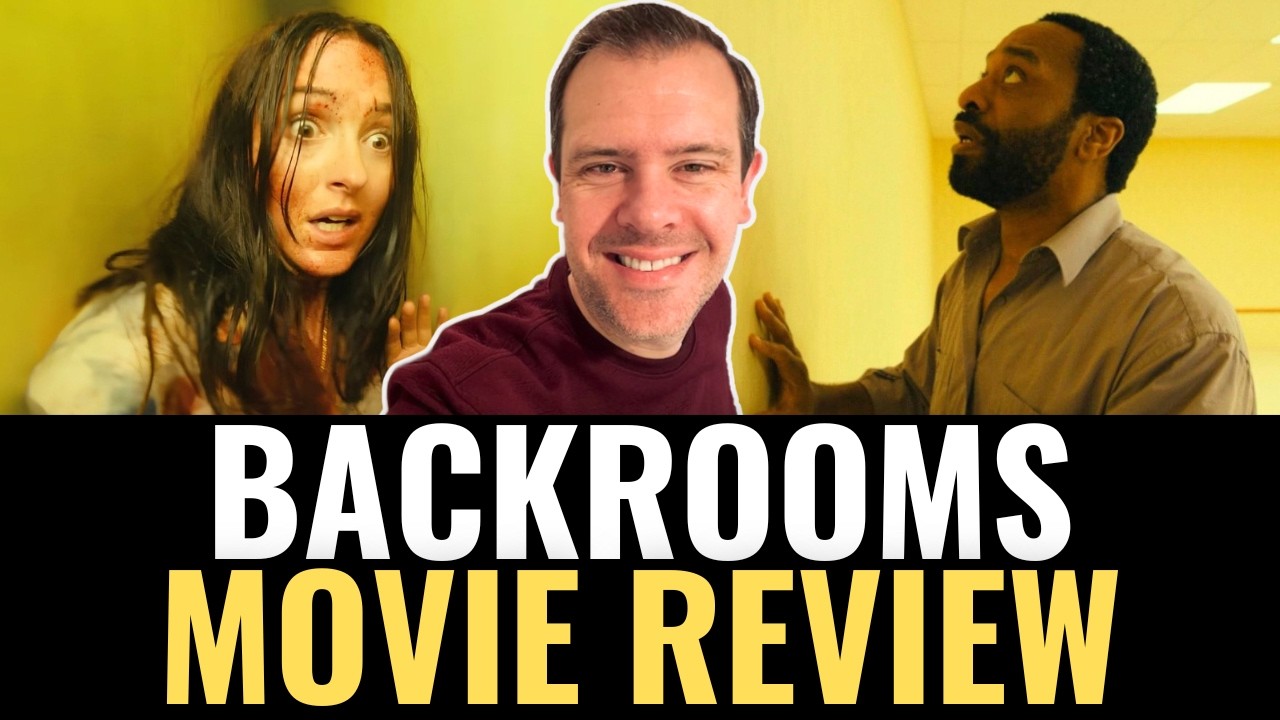
Backrooms Movie Review
TheAwardsContender
785 views•2026-05-30



