Asprey correctly challenges the flaws of one-size-fits-all medicine, but his reliance on speculative biohacking often prioritizes marketing over rigorous evidence. It is an insightful yet controversial take on longevity that requires careful navigation between science and hype.
Install our extension to search inside any video instantly.
Why You're Aging Faster Than You Should (Testosterone, Nicotine & Peter Attia) | Dave Asprey
Added:Dave, good to be back with you here in Austin, right before your 14th year in a row of your conference now called Beyond. You know, something I noticed in from my YouTube channel, my audience is primarily 40s, 50 year olds.
>> And most of them are complaining about gaining stubborn belly fat.
>> Yeah.
>> Brain fog, fatigue. No, no matter how much sleep they get, >> maybe they should just work out more and eat less. What do you think?
>> Yeah, that's what most people say. Yeah, it's a it's a calorie issue.
>> It's not.
>> But there's also a subset of people that are in their 60s and 70s that feel awesome. So, what what makes the difference here between somebody who's aging at a faster rate versus somebody who's actually aging a lot slower?
>> Well, this has been a a question since my mid20s when I started working in the longevity field. And over the last two years, I've been doing something called unlimited.life.
And this is a high-end life extension VIP concierge medical program. And I work with a doctor, Dr. Tim Cook, who's supported two heads of state for longevity. And we get together in a one-year journey with people who are spending a lot of money, $50,000 worth of labs. So we get to the bottom of it.
>> And the answer is there is no answer because it's different for every person.
We've been programmed for a very long time by big medicine, big pharma to think about, oh well, if it works for the average person, it's going to work for you. But you and I are not average.
And if you're listening to this, you're not average. You might have average one thing and totally not average something else. So the trick is for one person it may be a sulfur pathway issue. For another person, it may be MTHFR. For another person, they've had this thing in their gut for a long time they shouldn't. Another person may have a genetic difference that we actually need to account for, right? And sometimes they're big and they don't even know. So the difference is ultimately mitochondria >> because they control everything. But downstream for mitochondria, even if they're working, if you have toxins, you have something, it doesn't work that well. So, I'd like to be able to say it's because we're all deficient in vitamin C, and many people are, but that's not the one reason. And after writing a New York Times bestseller on longevity, I can tell you take less hits to your system, right? And I can tell you make your mitochondria work better.
And there's between nine and 12 systems that we know are going to age. And right now with AI, it's the golden age of longevity. M so we can say oh well in fact we do this with our unlimited life clients. It's like well your kidneys aren't so happy but the rest of you is actually doing well and we based on a huge data set we can tell our members within about 2.6 years how long they're likely to live based on their current biology and then we change it over the course of a year. But is it because of their heart or their liver or their kidneys or some other system? It's hard to say. But what we do know the thing aside from mitochondria is that the most important longevity drug is community.
So if you have some really good friends and you have people who really love you, even if you're not doing everything right, your chances of dying go down.
>> Powerful last statement right there. So you said take less hits. Uh that's something we could really learn because professional athletes do that the best in the world. they take less hits, it extends their career and they're able to make incredible progress, get all these accolades. And I know it's different for everybody just made the case, you got to customize it to your unique approach and your unique uh health history, etc. But what would be the top hits in general that we are taking in this day and age?
One of them is your circadian biology.
It is much worse now than it used to be because light is a nutrient and darkness is a nutrient. And most people are entirely deficient in darkness now.
>> And if you go back 25 years, there were no LEDs in your bedroom because LEDs were very expensive and only red, right?
And now they're everywhere. And a study in Japan of 800 people showed that the amount of light that leaks around your curtains in a typical city increases depression by 69%.
Wow. So, circadian biology is a major thing. So, what do you do? Tape over anything light at night and get good blackout curtains and get dimmer switches or red light bulbs or you can get the true dark glasses which are the only circadian glasses. I know cuz I started that.
>> Are those too dark right there?
>> These are the brand new ones.
>> Those are some cool titanium. We're launching them at the conference.
>> Sick. But we have a a a published a study in a medical journal showing 15 minutes of wearing our glasses designed for sleep shift your brain waves that they actually do something that just a yellow or red or blue blockers can't do.
So it's a it's a really powerful thing to just say, "Wow, I've changed what I eat, but I'm still turning on the bathroom lights [laughter] when I brush my teeth." And you wonder why you're getting diabetes. Like that couldn't be it. That's not the only reason, but it's actually true that circadian disruption drives blood sugar problems. So, okay, that's an easy one. The other one is toxins. And the toxins I worry most about are, let me rephrase that.
Worrying makes you makes you old anyway.
So, I actually don't worry about toxins.
The toxins I'm most aware of.
>> There you go. I love that that transition.
>> That would be things like heavy metals that are becoming very very present.
things like microplastics and the especially the endocrine disrupting toxins, things like any soft plastic, things like fragrances. And you could say what my grandparents had fragrances, not like this. There's huge numbers of chemicals and if someone smells like those pine trees in an Uber car or a bunch of perfume, they're actively suppressing your testosterone.
>> And it's it's profound that that's even socially acceptable.
>> I know. Like I I just want to be like shame, shame.
>> I wish there was like an option in the app to like you know how it has choose your preference. Cool. Do you want to talk? I wish there was an option for that.
>> Yeah.
>> Like no fragrance.
>> You know what works? I always just kind of politely tell the Uber drivers like you know what would you be cool with taking down those 15 little palm trees just putting them in the glove box. They give me a headache and then say also they shrink your balls. And usually after that I think those guys are less motivated to have them because they don't know. It's >> Do you actually say that?
>> Absolutely. I love it.
>> They don't know. They're sitting there and then they have their AirPods in to make things worse, their wireless headphones.
>> Yeah. And so it's really easy if you're into biohacking to just get angry about all the people doing all the stupid things. But I promise you that you and I are also doing stupid things that we don't know about. That's true.
>> We know about them though, we're likely to change. And that's the difference between biohackers and well the rest of us is that let's look at what works and let's do what works, not what's supposed to work. And what's in the entire like all of medical school is well we have double blind trials funded by big pharma but they don't say that part uh that says this is what to do and this always works and if it doesn't it's your fault maybe you're not trying hard enough and and so that's just not how reality works. So AI is blowing us up and more and more of the best doctors out there are becoming biohackers and doctors.
They're functional doctors and they're saying, "Well, you know what? I maybe we want some drugs on this, but let's actually play in the realm of nutrients.
Let's look at your actual data and let's try this for 3 months and let's see what happens." Right? And the difference when we're doing this with clients now, it's so profound because we see people who are very wealthy, right? And they have high-end, you know, Mayo Clinic type of things, but they're just not getting results. and they say, "Well, I'm tired and all." And here's an example of of one a member of Unlimited Life. It's like, "Guys, six weeks ago, I got ED."
We're like, "We know what to do with ED." The guy's mid-50s.
So, there's a stack, including a bunch of different things, right? Some pharmaceuticals, some not, but pretty much anyone who doesn't have advanced vascular disease is going to be ready to go. And it has zero effect on him. He's like, "Yeah, I feel a desire, but like there's just nothing going on."
You can't get advanced vascular disease in six weeks. It just doesn't happen.
So, we did a bunch of work, but because we have all the data, we looked like I just had this intuition. So, we looked deep into his gut bacterial numbers and he had an unusual species. I don't remember what it was off the top of my head. And that species completely blocks nitric oxide.
>> Oh, wow. So that meant seialis, Viagra, the N101, Vasconox, all the things that should work, no effect at all. So we gave him a mild antibiotic. I'm not opposed to that antibiotic specifically for gut bacteria that's not systemic >> to get rid of that one specific thing.
And then we repopulate his gut bacteria.
And within like three or four days of taking the antibiotic, he's like, it's back.
>> Wow.
>> But otherwise, he would have probably had ED for the rest of his life. Is that in a medical journal? No. That's that's what biohacking is. when you apply it to medicine and and performance like what is the result I want it it's not about did I do what the flowchart said I should do it's did I get results if not I'm going to change what I do >> so would you say men who don't wake up with morning wood morning erection that's a red flag that something's happening >> it is a red flag if it happens only occasionally it's probably stress it's just cortisol you got a bad night's sleep and if you are hung over you have jet lag and you wake up without a kickstand All right, fine.
>> And if it comes back the next day, but if it's happening routinely, then you probably have a nitric oxide problem and you really want to deal with that. You could also have a testosterone problem.
>> And most men have both to be honest.
It's the most common thing that I'm seeing in our patient population. And these are people who are generally taking really good care of themselves.
You know, they can do whatever they want. They fly around on their own jets, right? But >> but they're not getting this information even from top doctors is what you're saying. even Mayo Clinic, Cleveland Clinic, etc. >> They're still in that that weird thing around testosterone might be dangerous.
And you get former longevity doctors like Peter Otier.
>> Oh, the >> you name you named them.
>> Why not? I mean, if if you like Epstein, you like Epstein. But [laughter] um but Peter has done great harm to to the health of a lot of men because he's like, "Well, testosterone might be dangerous." And in his book, he says, "You can't even extend human life."
Whereas there's tens of thousands of doctors and billions of dollars and companies actually adding years to your life, not just life to your years. Like in his face, and you can't do it. And then you go, let's see, is there a group of people since 1970 that's been using testosterone and going off of it successfully? They're called bodybuilders. So, we have abundant evidence that you can take testosterone and you can stop taking it. But you have a guy who writes that you can't do that and is afraid to take it himself and he's people are listening to him like this this is 1970s medicine and as an example when I weigh 300 pounds I went to the doctor the only anti-aging doctor in the Bay Area and I went there because I sent my parents to him as a gift uh because I worked in the field and this is very unusual in the late 90s and so I said maybe I should go and he calls me and goes Dave Your testosterone is lower than your mom's. Literally. And he shows me her labs and mine. I'm like, "Oh god."
>> Oh no. How How old were you?
>> I was maybe 26 27 somewhere.
>> Gosh.
>> Yeah. So, >> um I went on testosterone under a doctor's care. Like they didn't normally do it, but hey, my lab said it. It changed my life, right? And okay, I'm obese. I had mold toxins that stimulate estrogen. And when you're fat, you make a lot of estrogen. All the guys in my family have man boobs because of genetics and I'm like this is terrible but when I went on it I like this is fantastic. So I was on testosterone for 10 years and during that time I had two perfectly healthy children.
That's not what Peter said you could do.
He said he said it it increases infertility. Is that what he said? Oh yeah, absolutely. And if you don't know what you're doing is it's it's that's an easy problem to solve with testosterone.
But then here's the thing. when I'm writing uh the bulletproof diet which is a book that about a million people have read people lost a huge amount of weight the first intermittent fasting book the first book about lectins and oxalates and like it was ahead of its time and it helped to set a lot of the biohacking thing in motion clean keto cyclical keto all that stuff >> 100% >> so I wanted to test whether I was full of crap so I went off of testosterone for about two years and I did my diet and I could get my levels up to 700 if I did everything perfectly but I lived on an island in Canada with no sunshine and I fly every week to somewhere which is really bad. So I just found if I couldn't do everything right. So I've been on back on testosterone and I'm just perfectly happy to say yes, I'm going to live to at least 180. I spent $2 and half million dollars reversing my age and fixing my health and upgrading different systems. So why would I not just have the hormone levels of a 25-year-old forever?
>> Why not?
>> Yeah. So speaking of that, right, you there was an article that came out uh that I have here. So [clears throat] it was a New York profile article and it showed that chronologically 52 is your age. Is that correct?
>> Uh 53 now.
>> 53 now. Uh but biologically you're around 18 years old is what it said. Is that what that's what I have here in my from the New Yorker magazine? That's what I have here. Uh I I don't know if that's actually true. It's in my notes, but I want to know >> 18 sounds like AI made that.
>> It it does sound like AI made it up.
What explain the difference between our actual age and our cellular age for audience and then what have kind of testing have you done on yourself.
>> All right.
So the calendar will tell you how old you are and that's what we've always believed but we can say which system in your body looks like someone your age on average and which systems are younger or older. And this has been a dream because you can't really do longevity medicine without what's called an aging clock.
Right? So how do you know if you're successful? you have to wait for a generation to die. It's going to take another 3,000 years before we know what works and you probably won't be alive then. So uh a bunch of doctors, hundreds of them over 10 plus years looked at something called DNA methylation. And Steve Horbath is the the pioneer in the field. And what they found is that if you look at 600,000 data points in humans, you can say well reliably you can predict someone's age based on this.
And there's a whole body of research that says that's one of the ways of measuring longevity. But there are dozens and dozens of other ways. So now a lot of people like uh like Brian Johnson who's a friend and a recent entrant into the world of longevity.
It's like well I'm going to use my score using DNA methylation and we'll publish that.
>> Problem is DNA methylation is just one of many. And so the the challenge in longevity is you can cherrypick data and there's at least a dozen and probably 20 good ways to measure your longevity and they don't all agree. Right? So for me all of the metrics that I have say I'm younger than my calendar age which is good.
>> Yes.
>> But if I was cherrypicking I'd say I'm 26 years old.
>> Okay.
>> Right. And that's based on something called pulse wave velocity. You know that one?
>> No I don't. So, this is a really cool and underappreciated metric, and it's when your heart beats, how long does it take for the wave of pressure from your heartbeat to get down to your wrist?
Because if you have iron pipes that don't flex, it's going to get there really quickly. And if you have soft, young, pliable blood vessels, it's going to get there more slowly. So, think of like turning on a a steel pipe versus like a like a water balloon where it just kind of sloshes.
>> Got it? Well, so I have very young arteries and I have that because I know genetically I have leaky arteries. So I've been doing a lot of things for the last 20 years to make sure that I protect my system from that. So it's been working. And then you look at your true age score, which is the DNA methylation. It has two components. One is what is your actual age compared to your calendar age? And the other one is how fast are you aging? And I've gone anywhere from uh from 65 to 85% over the last 10 years depending on different things I'm doing. So that can change pretty quickly.
>> Um but what I what I would say is it's easy to just pick one metric, but it's hard to pick all of the metrics that are going to be important for you. So what we do with our unlimited life clients is we have our our head uh doctor Dr. Tim Cook worked with actuarials for many years doing medical statistics in addition to this longevity medicine. So we actually have a proprietary way of combining multiple longevity scores and all the data we're gathering to predict your predicted lifespan within 2.6 years >> if you don't do anything else if you just continue on your path.
>> And so >> how accurate is that?
>> Pretty darn accurate, >> right? Well, within 2.6 six years, right? That's research >> and and so that may be something that we roll out later, but it takes a lot of data to do it. So, I don't think it's a consumer score.
>> But here's the thing that's the easiest to tell. Go to the airport, take your normal rolly bag, and walk to your gate. How many people do you pass?
>> Hundreds.
>> Then you're probably doing it right because walking speed and grip strength are two of the most I see what you're saying. substantial predictors of how long you're going to live, right? How are you doing on aging? Well, do you walk faster than everyone else?
>> And you could say, well, how do we know?
Well, now we have all of this, probably hundreds of millions of dollars of research into DNA methylation. If you get a drop of blood and run that test, 90% predictability of your grip strength and walking speed based on DNA methylation.
>> So, they line up.
>> That's insane. That's high.
>> Yeah. You want to save some money, shake someone's hand. If they go out, good job.
>> That's good, >> right? And if you can walk, that's good, right?
>> Those are big levers that are very easy to do. Yeah.
>> Hold heavy things. Do some farmer carries and just walk and do them both at the same time.
>> It's not that hard to do.
>> Wow.
>> Yeah.
>> You know, I'm curious with the arteries thing that having these flexible arteries.
>> Nicotine is a vaso constrictor, right?
And you know, both of us, we love nicotine. You're going to talk about it tomorrow. I saw on the agenda.
>> I have some veins. Doesn't seem to be constricting them too much.
>> Yeah. You're very, you're very vascular, obviously. So h how do you take nicotine and which is a vaso constrictor and still maintain these flexible veins and arteries?
>> Well, the fact that it's constricting veins doesn't mean that they're going to lose their flexibility. Their flexibility has more to do with fibro fibrosis and tissue stiffening.
>> Got it?
>> Right. So that said, you can do damage to your arteries from high doses of nicotine, especially the microvasc. And that's where the risk is for high doses of nicotine.
>> What's high dose?
>> Well, probably above 10 a day.
>> Oh, that's not I I thought you were going to say 25 or 30.
>> No, but it there's a lot we're learning about nicotine right now. So we know that there's a sympathetic activation which actually feels good for a lot of people but it can also affect the quality of your sleep.
>> So it's very nuanced. We also know since 1986 when a guy at Vanderbilt University came up with the first paper published in a journal saying um nicotine but not smoking probably is good for reversing Alzheimer's and now Parkinson's. And so I said, "This is interesting." And I went down this rabbit hole around cognitive enhancement and longevity in nicotine. So I wrote about using, you know, 1 to five milligrams of nicotine after age 40 as a longevity strategy because it's neuroprotective, right? And I started using it back in 2016 and I started talking about on the show, it's in my longevity book. And now you see guys like Huberman uh who are talking about nicotine and all. And it's funny, I had human on my show before he started his show and we we talked about uh you know a whole bunch of different stuff including the red light glasses which uh first like those true dark, >> right? So I I love seeing that more and more people are talking about nicotine.
But I I do I am concerned that people are using more of it than they probably ought to. And that said, it it feels really good to use it. And there's a reason humans have used it for a long time, just like coffee. So, I'm I'm a huge fan of nicotine and I would just say if you find yourself needing 25 or 50 every single day, you probably should back down, right? And just don't do it all the time and you'll be fine. I would also say um the the alpha male, you know, I can handle anything perspective says, I'm just going to go cold turkey. If you're on more than about 10, even that's per diet. We'll say more than five of nicotine and you go cold turkey, you're not helping yourself. It's not about toughness. Yes, you'll experience brain fog, but you can actually have memory decline from doing that. But if you taper off of it, you won't. I've also seen a bunch of people who say, "I'm just going to go cold turkey from high doses." And then they get this weird muscle tension that sometimes persists for months.
>> I had one friend just his whole abdomen was just rock hard, not in a good way.
Uh, and I tried cold drinking a long time ago and got a bunch of like crazy strong muscle cramps in one of my legs.
>> Interesting.
>> So, tapering down is is fine. And >> so, from like 10 to 8 to six eventually to nothing.
>> Yeah, there's a reason they make patches like that. They say don't cut the patch.
That's because they're saying don't cut our margins. You can cut patches all you want. [laughter] >> That's right. You can cut them. I've never I've I've gone cold turkey with it. I've ordered a few bottles and then I've gone through it with my wife. if we do it together and then we just don't reorder for a month. I haven't experienced the cramping, but what I do experience, I'm I'm more irritable.
>> Oh, yeah. When I'm off, it makes you cramp.
>> Yeah. I was like, "Oh, I'm noticing like I'm complaining. I'm not a complaining type of person." So, I like the idea of weaning off of it and taking breaks. I probably do three sprays each nostril each day. So, that's 2 4 6. I do about 12 milligrams a day.
>> You're right. You're right there at the edge. I'd say that's pretty pretty reasonable.
>> Like every day. Uh so, I'm due for a break, me and my wife. And once she gets pregnant, uh, she probably should not be doing >> she shouldn't be doing it for three months before you >> ah three months. Okay. So, she she needs to get off of it now then. Okay.
>> And the reason is sympathetic activation is not good. And no one talks about this, but evolutionary biology predicts it. Uh, and I could tell you there is not a paper about this, but I would bet everything that this is how it works. So, you look at the average ovary and it has millions of eggs in it.
>> Yeah. and mitochondria. Well, hundreds of thousands of mitochondria, >> more mitochondrial density than anywhere else in men or women by an order of magnitude.
>> So, what decides which egg is going to ripen? Because it's selected three months before ovulation for that egg, >> the mitochondria and os do.
>> And how do they know which egg? They're looking at the stress environment and the environment around. How many nutrients are there? How much fat is there? How many minerals? How much sunshine? How much safety, >> right? How much abundance? how much connection and it's going to pick an egg. Do you want like the apocalyptic egg?
>> No.
>> It's like you can survive anything.
It'll be good for famine and fighting or the expansive egg. Okay, we're in an age of abundance. Let's pick an egg that can like grow and evolve and really be next level performance because mother nature survival is most important, but it wants to thrive.
>> But do you want thriving or surviving?
>> You start ideally six months, maybe three months before you should have Dr. Dr. Ann Shippy on your show.
>> Okay.
>> She just wrote a book about preconception, >> which is I would say like the the update that I would have I would have that I'm happy I didn't have to write for the better baby book, which is my first book.
>> Yeah. That book I used to give all my friends that were expecting children.
>> I think there's about 10,000 kids who wouldn't have been born.
>> That's incredible.
>> That's really beautiful.
>> That must be a good feeling. That's awesome. So, she wrote another book that's kind of the next level of that.
>> Yeah. She just published it and she's a IBM chemical engineer turned medical doctor about 30 years ago.
>> It's impressive.
>> She's here in Austin. Just brilliant dear friend, but it's called the preconception I think revolution.
>> Okay. Yeah.
>> I know somebody recently connected me with her via text, so I'm going to reach out to her. Yeah.
>> I want to I want to talk about fat loss.
Um you said before that people can lose weight while still aging faster, meaning like weight loss I want to hear your thoughts. Is weight loss a side effect of good health? Do you lose weight to get healthy or do you get healthy to lose weight? What's the right order there?
>> Usually getting healthier makes you lose weight, but you can lose weight in a way that's really not good for you. I you can misuse ampic. Now, I'm a huge fan of JLP1 drugs. I think they're longevity molecules when they're used at the right doses. And everyone's like, but there might be side effects. Do you know the side effects of weighing 300 lb, >> being angry all the time, being tired all the time, and high risk of everything? So they never do a risk adjusted thing. So stop being obese almost by any means necessary, but gastric surgery is a bad idea.
>> All right? So if fasting and intermittent fasting and the normal nutritional things just won't work, you do a toxin analysis, it doesn't work, you don't have heavy metals, you don't have mold toxins, you don't have somewhere genetic thing, fine, use ampic, get your weight down, but eat enough animal protein. And yes, animal protein, you have to make it animal. It doesn't work with plants. Sorry.
>> Brian Johnson would disagree.
>> He eats 20 grams of collagen every day.
>> Oh, he does have collagen. Oh, okay.
>> Yeah. No, he's not.
>> Not marine collagen, cow collagen.
>> Yeah. I don't know why he says he's uh he's planted.
>> He's not plant-based. Um Yeah. Well, we shall we shall see what happens there.
Excess olive oil is also not good for you.
>> Excess olive oil. Why too much monounsaturated fats in general? You don't like >> specifically oleic acid.
>> Oleic acid.
>> Yeah. So high doses of oleic acid in excess increase the oxidation of omega-6 fats by about 5x is through something called D5D and D6D. It's well documented literature.
>> What's high dose? What what would you consider that?
>> I would say do 2 ounces of olive oil a day above that.
>> Okay, got it. Yeah.
>> And you know what you really need is steic acid. That stuff makes your liver not fatty. It's really good for you.
Where'd you get steeric?
>> Beef tallow.
>> Animal fats.
>> Yep. And then having some butter. Why would you do that? Oh no. butter. You would have butter because of conjugated linoic acid which your body really needs and a whole bunch of other things that are in it. Just study after study. So like this is why in Ayurveda ghee is so important. So I'm not saying you necessarily need dairy protein. If you can digest it, it's probably a good thing because you just need protein. But it's the dairy fat and the animal fat that are most precious.
>> Yes, I agree. Yeah.
>> The most stable. You've you've written about that for many many years.
>> Yeah. And for now 20 years, I have not had any omega-6 fats on purpose. Um, other than you eat avocados and the occasional macadamia or whatever, but no processed omega-6 fats at all. Except one time in uh in London. I didn't know what a dosant was.
>> What is I don't know what that is. Is it like a croissant?
>> Yeah, it's like a croissant. But if you go to Europe and you eat some wheat, it's a different species, different lifestyle it some enzymes. But a doant is a deep fried croissant.
>> Oh. And I ate like six of them over three days and was so happy. And I'm like, "No, they're cooked in canola oil." But to their credit, Herod throws it away every night, the oil, so it wasn't highly oxidized. Good. So that's the only omega6 fat I've had. No salad dressing, no weird sauces at restaurants, nothing cooked on omega6 fats ever. Nothing fried, no >> And you know, not only am I not dead, I'm doing pretty well.
>> Yeah, you are. I want to talk about that. I want to talk about more like the body fat percentage that you have and some fat loss strategies. Before I do, you know what I noticed about Austin, where this is where you live. This is where I am now. I'm in Miami and Miami is pretty healthy vibe. Very sim a lot of similarities between Miami and Austin.
>> But you guys have the most seed oil free restaurants of any city I've ever been to.
>> Why Why is that? Why do you think that is? I know you're here. That's part of it.
>> Yeah. Just my aura.
>> It's your aura. But it's so cool.
>> It's because Whole Foods uh this is where they're headquarters.
>> But you know, Whole Foods was a anything plant-based is fine.
>> But they seed oils at Whole Foods.
>> Oh, they have it everywhere. But just the people who are health conscious are here, right? And a lot of biohackers moved here during the pandemic. So this is kind of ground zero. That's what we want. And it's funny when I used to go to LA a lot. This is 15 17 years ago. I couldn't find a grass-fed steak at any restaurant and I couldn't find a cedar oil-free restaurant. So I started what was then the Bulletproof Cafe cafe. It was the only cedar oil-free >> all grass-fed restaurant in LA. And when I shut it down during the pandemic, eight years later, there are hundreds of restaurants that have grass-fed.
>> Wow.
>> Yeah. So, it really helped to shift demand. Just had to show people you feel better when you eat healthy cows versus sick cows. Who would have thought?
>> Mhm. Wow. That's that's amazing. So, that that's what you that's part of the reason why you think a lot of biohackers came here. The health scene have shifted during COVID. Oh, yeah. And now it's turned into this mecca of a health scene here in Austin.
>> You can go to True Food Kitchen.
>> That's where I went yesterday. Yeah. I love that spot. I'm now an investor in in True Foods. It's a very small investor.
>> Let's bring one to Miami, Dave. There's not one.
>> It's in It's in South Miami, but not in central Miami.
>> I'm going to talk to Jason about that.
>> And I will invest in that, too.
>> Okay.
>> Let's do it. All right.
>> Let's talk to Jason about that. So, True Food is somewhere that it's nationwide.
So, if you're ever traveling, look for a True Food Kitchen. They're seed oil free.
>> Yeah. And they've got their their grass-fed beef as well, which is everywhere. So, it's something you can generally find. Um, we've got the Well here is really good. Yeah, I went there for dinner.
>> Right. And then there's a little place called Holy Cow.
>> Oh, I don't know that one. Holy cow.
>> W >> Wh H O L L Y.
>> Cottage.
>> And I love this place. It's very awesome. It looks like a secondhand 7-Eleven store.
>> And you what? There's like beer and sigs on one wall. It was like coconut water and kombucha. And you go in and there's kind of like the greasy spoon looking um you know kitchen and and then a counter where you order and some kind of beat up tables like what? But all the cows come from a single ranch. They're all grass-fed.
>> And the owner's uncle Oh, yeah. The owner's uncle raises them.
>> Wow.
>> And he's like, "Yeah, we hand cut all of our fries because they're so much better." And they cook in palm oil, which is interesting.
>> Which is not a bad oil to fry in, >> right? And yes, there might be orangutang juice. I hope theirs is RSPO certified. But if I was going to eat something fried, I would rather it be in palm oil than in any other vegetable oil.
>> Yes.
>> It's more stable.
>> Yeah. It's more stable.
>> It's fruit.
>> Yeah. Exactly. So, that's available.
And, you know, one of my favorite posts lately was I had a I'm eating like a triple burger from Holy Cow and it's, you know, wrapped in lettuce. Like, this is the best plant-based burger ever.
It's based on this incredible technology called belted Galloway. That's the species of cow. Okay.
>> Uh and and it's a bioreactor and you put inedible plants in one end, right? And three fermentation reactors create useful protein and then it creates fertilizer. Yeah. Right. And and you know, my followers are like, Dave, you sold out to the plant-based people. They don't understand.
>> Vegans are all excited and and then a few people like, "Guys, he's trolling all of us." Yeah. It was just a burger.
>> That's so funny. They don't understand.
It's funny how people just react right away. They're they get a high from it.
That's just dopamine surge. All right. I want to talk about fat loss. um big part of my community. Men and women are looking for fat loss strategies without having to rely on injections. And when I mean injections, I mean those and GOP ones. Um what's your body fat percentage right now?
>> Around seven around seven >> six and a half to seven and a half. And I'm like >> I mean yeah. So if you're watching on my YouTube channel he's look for 300 lb formerly and you you ripped ripped and you're 53 now. Okay. So, what are let's say top three strategies for let's start with men and then we'll transition to women. So, top three strategies for men right now in the past 40s >> to lower body fat and build muscle.
>> Get a thyroid test >> because if your thyroid is low, and it probably is because of flame retardants and fluoride and a bunch of other stuff, your thermostat's lower. So, you're burning less. And it's amazing what happens when you have adequate thyroid.
You live longer. you're less anxious, less depressed, more focused, and you're a better parent. Uh you you just like your life better. And then get your testosterone tested because if you're low testosterone, you can go to the gym and nothing happens, right? And you're going to hate me for this, okay? So, like you saw my abs and like I'm reasonably >> you got good muscle.
>> 20 minutes of exercise a week, not per day. A week. Yes. I'm using AI. I'm doing all the upgrade lab stuff, >> but can other people do what you're doing? 20 minutes a week.
>> Sure.
I've doing this for a long time and I come from a family that's all obese and I was obese for half my life. I have the worst genes ever.
>> Yeah.
>> Right. So, am I eating the right foods?
Yes. Do I get one gram of animal protein per pound of body weight? You should write that one down.
>> Of of ideal body weight, not total.
>> Exactly.
>> So, if your goal weight is 150 pounds, get 150 grams of protein, you're saying.
Okay. Got it.
>> Right. And a lot of people say, "Oh, no.
I'm only eating two meals a day. I can't eat that much protein. I might not be able to digest it." So about five, six years ago, I had the same thought. Like, well, I'm just going to eat 100 grams of protein per meal. And if I'm not digesting it, I will have bodybuilder farts. You ever go to a gym full of meats? You're like, "Oh, some something bad happened here." And that's fermenting protein in the gut. So, I uh I take digestive enzymes, which everyone over 40 should do anyway. Helps you digest your food. I never got those and I got leaner and leaner because I was getting adequate protein. So maybe three years after that a study comes out and said, "Oh, we were wrong. We've been saying 30 grams for meal is the most you can do." You can have 100 grams. You have 200 grams of protein in a meal.
Your body will absorb it if you break it down with enzymes.
>> So that's what I do when I'm traveling.
I found I travel at least 50% of the time, which is bad for weight loss. It's bad for your brain, bad for longevity.
So I'm on stages all over the world.
>> I love it.
>> Right. Well, I mean, I kind of love it.
It's I'm helping a lot of people, but sometimes I know this isn't good, but I'm blocking the light. I do all this stuff. So, I travel with um basically beef protein powder or beef sticks, and I just make sure that when I sit down to order, if I'm not at a steakhouse where I can get a pound of steak, I just order two or three main courses until they bring me enough damn meat.
>> Yeah. Same.
>> Right. And >> and that's just changed everything. You have to be religious about this, especially over 50. You just got to get enough animal protein because your body needs more. Okay. So that >> now I said that that was for men. What do you do for women?
>> Well, before you get to women, I wanted some clarify some of those. So thyroid, a lot of people think a thyroid test is just TSH and T3. There's more to it.
Correct.
>> Yeah. Doing what I would say is an advanced thyroid panel for most things.
You need to find TSH. And TSH is is my body asking for more thyroid. And you want your TSH slightly below one for longevity. And a lot of doctors like, oh, it's at four. You're fine. M like no, you're not fine. If you're tired and fat, you're not fine at all.
>> Means that the thyroid is underactive, it's telling it to produce more hormones, >> right? So the louder it's yelling, >> the more of a thyroid problem you have.
>> And if it's not yelling, it's just saying, "Hey, can have some thyroid?"
And it's getting in. It's cool. So that's what all most doctors test. And then if things work, your body makes T4 when it hears the yell >> and then has to convert T4 and the liver into T3. And during that conversion, it could go to reverse T3 and you could have some antibodies. So if you go to a functional doctor who knows about biohacking, they'll say, "Oh yeah, let's look at anywhere in that conversion that it might be an issue." And most people that I know are taking desiccated thyroid, which is basically a blend of T4 and T3, but most Western doctors just will give you T4 or T3 as isolated compounds. They don't seem to work as well for most patients.
>> So doing that all by itself, you're like, "Wow, like I have so much more energy. The brain fog is lifted.
I'm not feeling fat like I was before.
And just you have more more desire for life.
>> And then you go, "Oh, looks like my testosterone was low." And the normal level for men now they lowered it to like 400.
>> That's that's the that's saying is acceptable. And anything over 400.
>> Yep. So they're putting you at grandpa level. The only problem is for different men, the amount of testosterone required to make you feel and look good is very different. Is that based off of cell inflammation?
>> Inflammation is a part of it. There's also probably some core genetics that are driving this. So I would say there is no paper and there is no medical knowledge that can tell you 100%. This is this would predict that you need more or less testosterone. So what you do is you start taking some testosterone. You ramp your numbers up. I feel best at 1100, right? And but we don't know what the ideal number is for me because I was never healthy as a kid. But if you were to measure your testosterone at 24 years old, that's the number you want. This is not when you're drinking and you're training and all that, but you know, get a two weeks of good sleep and eat a lot of steak and eggs and there's your ideal number for >> probably over 700 for most people there.
>> Oh yeah. And quite easily um at a thousandish.
>> Okay.
>> Right. But I know guys who walk around, they're at 500 and they're ripped and lean, libido's high, they're focused, they're motivated.
>> Same.
>> Right. Yeah. And I know others where if it's not over a thousand, they don't feel that good.
>> Yeah.
>> So, where's it going to be for anyone listening? Well, just get it up to a thousand. If you get acne and you're like, I don't like my life and it's probably too high.
>> Yeah.
>> But it's unlikely to happen and you won't get roid rage.
>> Yeah. No, you won't. Okay. So, that's for men. We got those are the top three.
Uh get get your hormones tested. Your thyroid full panel, advanced >> hor uh testosterone, maybe get some sex hormone binding globulin and estrogen in there. Probably a good idea.
>> Yeah, the whole advanced panel. the whole advanced hormone battle and then get enough protein, animal based protein.
>> There you go. And don't eat the the seed oils. And I just have to say these gut bacterial toxins called lipopolyaccharides.
>> Yeah.
>> If you're eating wheat, I don't care if you're allergic or not. Wheat in all humans increases gut permeability for toxins. So, you probably should avoid grains except for white rice >> as much as you can.
>> I like the white rice, too. Yeah.
>> Now, I'm going to Italy next week for my honeymoon. I just got married, Dave.
>> Congrats.
>> Thank you, bro. Uh, what do you think?
I'm I haven't had wheat intentionally since 2015.
>> Oh, you're going to love it.
>> But I'm planning on going there and eating some pasta and pizza.
>> Just get one of the many different enzyme blends that help you digest.
>> That's what I'll do.
>> Take some extra betain HCL and other enzymes >> and go to town. I tested a a new diet on a recent trip. This was to Dubai, but they're using European wheat. And I call it uh the let's see I had a good acronym for it.
Yeah, it was uh biff baklava intermittent fasting. So I ate literally a pound of baklava every day for 10 days and didn't gain a pound.
>> No way.
>> That was so good.
>> Baklava is delicious.
>> I love that stuff. And it's full of sugar and it's got tons of wheat in it and all the other stuff. I also ate all the bread I wanted, right? And I didn't gain any.
>> It was all European.
>> All European. And people say, "What do you mean it can't be that diff?" It is.
It's a different species. It's soft wheat with half as much gluten in Europe. In almost everywhere in Europe, they ferment the bread for 24 hours and we don't do that in the US. So fermentation further breaks down the gluten and gladen.
And then we have this other little problem in the US. We spray three kinds of poison on our on our on our wheat. So it's already an aggressive hard wheat and then we just trash it >> and we spray glyphosate on it which we know causes all kinds of gut problems. I think that's behind a lot of problems.
>> Yes. We spray folic acid which a large number of people cannot metabolize so it actually causes inflammation in them and then oh we brminate it which disrupts your thyroid function. In Europe they use iodine.
>> So it's kind of cool. You go to Italy but I have bad news for you.
You're going to think that you're eating European flour in Italy but Italy is importing a large amount of contaminated American wheat >> and then they grind it in Italy and say it's Italian. And if you're in the US and you buy Italian wheat, you're probably buying just recycled US wheat.
But you can buy French flour, which is still actually European wheat.
>> French flour. So when I look for restaurants, I'm going to ask them the question, what kind of flour are you using? Is it from France? Am I asking that question? What's the question?
>> In Italy, they're going to probably like pee in your espresso. You probably don't want to do that.
>> So how do I find out, Dave?
>> Just if it's a small restaurant, you can actually just just say, "Is this wheat from Italy?" And they'll post, "But of course."
>> Yes. Got it. So, go to like a local mom and pop shop, not like a high tourist destination shop. Okay, we're going to Rome and Positano, so we'll find that.
>> You're going to have so much fun.
>> Yeah, I can't wait. Okay, >> eating pasta is really good.
>> Oo, it's been 11 years for me.
>> You know, my uh my daughter turned 19 recently. Uh and some dear friends are like, we're going to make a special dinner. So, they made pasta from scratch using that French organic flour.
>> That's the way to do it.
>> That Yeah, that was cool.
>> That's super cool. All right, let's transition to women. We gave top three for men. Is any any difference here for women here? You know, I didn't mention exercise or cutting calories for men, and I didn't mention overtraining either. Like, burning them up is it's not a thing. The same is true for women because women are even more sensitive to a lack of calories and an excess of exercise. So, men and women respond pretty similarly, but the level of stress that's going to disregulate a woman's system is lower than for a man, right? And this is because the woman's holding her body is holding some energy reserves in case it's time to make a baby. Yeah.
>> Right. So this is normal. Women also need about 32 minutes of sleep more than men on average.
>> Oh, I didn't know that.
>> Doesn't mean all women do. This is average.
>> Okay. So, but is it cycling women or postmenopause women or is just women in general?
>> The answers are slightly different.
Okay.
>> But for weight loss for women, whether they're cycling or not, it's the same thing. It's h don't eat seed oils. Don't eat inflammatory things like wheat, but okay, those are relatively easy to do.
And then get your thyroid tested. The number of women I know in their mid-30s with thyroid problems is insane. And you can spot them really easily.
>> Normally, you'd say thinning of the outer eyebrow, but women all pluck their eyebrows so you can't tell.
>> So, how do you know? They're the ones who are turning the temperature up and they're cold all the time. It is 100%.
>> That person is thyroid uh is low in thyroid. And they also have trouble adapting to temperature changes as well.
Correct.
>> They do.
>> Yeah.
>> And then you can say, well, they go to the doctor. Well, the doctor says I'm fine. Like your TSH is at 3.8 and the cut off is at four. You have symptoms of thyroid deficiency and your body's yelling for thyroid. So they go on a low dose of thyroid and like, oh my gosh, I'm warm again. My hands aren't cold all the time and my brain works better and I'm sleeping better and I'm less anxious and I'm losing weight. Like, isn't that amazing what happens when you're a thermostat and your body is set to match the environment around you? And some people say, "But I want to fix myself naturally."
Okay. Oh, you want to also get all of your nutrients from mother nature, right? Like, yeah, yeah, cool. Live in a cave because you should also be getting all of your toxins from mother nature.
All of your light, all of your dark, >> sorry. We live in a world that we built and this world means your body needs extra support. So, get your thyroid there. It will give you your life back.
Your relationships will improve. Uh, your dreams will improve. Everything is better. And thyroid dysfunction is more common in women than men, but it's endemic for both of us. Like there's so much right now.
>> Did you say it's more common in in women than men? Yeah, that's true.
>> Hashimoto's in particular, which is an autoimmune.
>> Why is that? I I've thought about that before and I and I've asked some thyroid experts is and what I've heard is is they they carry a lot more. They're more uh like my mom, she's very she's too generous. She doesn't take care of herself. She's more about other people.
That's like a theory. But what do you why do you think it's women that >> I I don't think that that is true of all women. Okay. Um it it's a a personality typing thing there and that is driven genetic. We have warrior genes and worrier genes >> that kind of affect dopamine sensitivity and all and we'll we'll highlight those for different people in unlimited life and like oh my god that describes my life. I'm like yeah that's because of your neurotransmitters. Do you want to tweak those? And we can tweak them. But why I think women get thyroid problems with autoimmunity more than men and autoimmunity in general more than men is the woman's body is fighting a constant battle to say can I be healthy enough to have a baby. Doesn't matter if the woman wants to have a baby. Mother nature is setting your hardware up to do that without any of your mental uh or even subconscious processing. It is hardware based. So, of course, you're going to be more sensitive to toxins in the environment because those toxins, should you get pregnant, would endanger your life and your baby's life.
>> Makes sense, >> right? So, the mom's immune system is going to be more aggressive. This is also why you see twice as much Alzheimer's in women than men.
>> That makes sense, >> right? So, get your thyroid right, ladies, and you will feel so much better and magically your husband would be less of a dick. [laughter] I mean, it's that straightforward. the the quality of sleep and just the anxiety reduction from just finally having enough energy.
It's like your whole system goes a >> it's actually beautiful.
>> Yeah, that is beautiful.
>> And then we follow up with the sex hormone panel.
>> Mhm.
>> Oh, look, you have no progesterone, which helps to create peace, which makes weight loss happen. And progesterone also is anti-inflammatory, >> right? And you also are probably low in DHEA and may be pregnant. And here's what happens in women that no one really talks about. is that starting at 35, your body stops making antistress hormones very slowly. So up till 35, you make stress hormones, which are basically adrenaline and cortisol. These are beneficial and healthy stress hormones. They keep you alive. They let you do stuff, right? But if they're elevated all the time, it's a problem.
But trying to suppress them at all times will make you sick and you'll die. Like it's not good to have low cortisol. So, you just want proper cortisol, proper adrenaline, and the ability to say, you know, I was doing all right, and then something threatening happened or I had to go on stage and like, here's some adrenaline, I'm in power, and then, okay, now I'm I'm cool again. But they're balanced out by DHEA and pregnulone.
>> Problem is, DHEA and pregnulone start to go down at 35, but you still have the stress hormone, so now you're imbalanced. What if you got a lab test that showed you that and you went on the appropriate amount of DHEA >> and then you didn't have that inability to handle stress anymore? Could you lose weight better? Yes. Does this mean you should go to the store and buy some DHEA and just pop it? Not without knowing your labs. Because DHEA can go into estrogen or it can go into toxic estrogen metabolites. So some of our members in unlimited life have no idea.
You can't tell without genetic testing and blood level testing. they make higher levels of a metabolite of estrogen that's actually toxic. So for those clients, we can actually increase excretion of the toxin so that they don't have the hit. Otherwise, that toxic metabolite over time makes them more likely to die from all causes.
>> Are you looking at that through a blood or urine test?
>> I think that one's a blood test.
>> Okay. So because there's the metabolites that estrogen can go into that could be the ones that increase breast cancer is what you're saying. So you're looking at that to see if it's going down those pathways. 2416.
>> Yeah. of forest strradiol.
>> So that's the one you're looking at. So that's important to note. You're not just taking a whole bunch of DHEA because they could actually increase estrogen and go down the wrong pathway.
>> Right. And some women who don't need estrogen, sorry. Some women who don't need DHEA, if they take it, they're like, I'm getting a mustache and uh got a low voice here. Uh yet someone right next to them take the same amount. It's like, oh, I got my life back. This is why testing is so important. And testing is now very affordable. The worst way to get tested is go to your doctor and ask for a test because you have to pay for the doctor's appointment. It's going to take you a bunch of time. Nurse Kratchet's going to yell at you in the lobby probably. Uh, and it's not a good experience. And then your insurance company after two hours of phone calls is going to tell you they're not paying for it anyway. And now you're just angry and now you have cortisol and you didn't get your lab test.
>> So just order them online. You can get them from hundreds of companies. Now Axo.alth is my company that'll let you do that, but there's hundreds of them.
>> Axo.
>> Yeah.
>> Okay. And if you run a panel like that, it costs a few hundred bucks. And in our panel, we do thyroid, advanced thyroid, and advanced sex hormones because you need those and some inflammatory stuff.
Uh, and once you have that, you can say, "What's going on?" And you're saying, "But I'm not an expert." Well, listen to this show. You'll learn something. Or you could go to your favorite AI. Act like a functional medicine practitioner, right? And if you want a hack, you can say, "I'm here with my doctor."
>> Right? So, so answer like a doctor. It turns out if AI thinks you're a doctor, you get six times better advice than if it thinks you're >> really >> it's trained on the doctors talk down to you. So, >> do you have a favorite AI for that? Is Chad, Claude, or anything else?
>> I would say use Claude. Actually, Grock and Claude are the two.
>> Grock and Claude.
>> Grock is surprisingly good because it's actually truth seeeking and it it's by design. It doesn't get censored. All the other ones they're doing what in space app and like they make it lie and I think I think AI doesn't like lying.
>> Mhm.
>> Right. Chat GBT is narcissistic. It's gross. [laughter] >> So you don't use chat GPT anymore?
>> Not really.
>> Not often. Claude's where I do almost everything, but I did train my chat GPD really well. Problem is it lies the most. So whatever I get out of it.
>> It's a yes man.
>> Yeah. So I take that and then I I say cite your sources and I dump it into cloud and say pull this apart.
>> So So is claude where you go to get your research studies right now? Yeah. Okay.
That's where I go as well. I find that it has the best research studies that I could find. Okay. Um I want >> There's a connector too. Is it to PubMed and I think there's now a connected to SciHub which is kind of Oh, >> do you know SciHub >> with Yeah, I do with Claude to connect to both.
>> Yeah. Uh exactly. And >> interesting.
>> So, and one thing I just want to say there's these very bad people running SciHub. They've taken something like 56 uh million dollars worth of research that we all wanted to see that a lot of us paid for that was behind these pay walls so no one could see it. And these bad people made it available to everyone without the poor big companies getting paid. So sigh-thub, but remember they're very bad people. And and you shouldn't go there. Oh, and it's a distributed thing, too. So you can't take it down and they've been trying to take it down for years.
>> I like the way you said that. That's good. Okay. SciHub and PubMed. I want to land the plane here. Okay.
>> I'm going to list health I'm putting this in quotation marks. Healthy foods and drinks. And I want you to rank it.
You've seen this before. AB D A B C D F or S. So >> what's S?
>> S is superior. The best. A A A is really good and then as you go down it gets worse and worse and worse until you F.
Okay. So oat milk.
>> F.
>> Why?
>> Well, it's an IQ test and you failed if you drink it. It's because it's a tablespoon of oats that have phytic acid, glyphosate, and gluten-like compounds and then blended usually with canola oil and some other crap. and you're buying microlastic water with a little bit of oats. So, if you really want to raise your blood sugar the way oat milk does, you could just take a tablespoon of oatmeal, blend it, and pour it through a thing, and there I saved you six bucks. It's literally the dumbest thing I've ever seen.
>> F oat milk, spinach.
>> Fminus.
>> Fminus. Yeah.
>> Oxalates.
>> Oxalates. And also, this whole iron thing in spinach.
>> All right. This is going to be a short answer, but I just have to tell you this really quick. Okay. Number one, 1.7% of the iron in spinach is absorbable because it's not hemma iron which comes from animals and oxalate pulls calcium out of your body and and zinc. So spinach is just not food unless you're starving to death and even then it's probably better to skip it. It it's really something we don't want to be eating. But we think iron and Popeye, right? You know what Popey was doing instead of spinach?
>> What? This is great. Okay. Every time he turns over the canister, it says P-53 on the bottom. I was that must be a lot number, right?
>> What was that?
>> P-53 in World War II was the military designation for inhalable methamphetamine.
>> And when you inhale methamphetamine, you get >> the scrunching of your face and you get three minutes of super strength.
>> Okay, I'm not joking. And he was smoking the stuff. He smoked spinach through a pipe. Okay, and then the injectable methamphetamine. Guess what the carrier was?
>> What? Olive oil. That's >> And yes, olive oil was his dealer and Blutus, >> right?
>> Like like the bad Blutus Bluto, whatever his name was.
>> I don't remember that.
>> Yeah, but he was his friend trying to keep him from addiction. And the guy who created Popeye died of meth overdose. He was a soldier in World War II.
>> It wasn't spinach. It was meth. So, should you have meth or should you have spinach? I don't think either one is worth having.
>> You're You're ruining everybody's childhood, Dave. You just ruined my childhood. Okay, so Failor F. You have an F minus. Is that what you said for spinach?
>> If if I could make it like even worse than F minus.
>> It would be worse than that. Okay.
>> It's an FU.
>> FU. Uh, conventional poultry like chicken and turkey. Conventional >> C.
>> Conventional pork.
>> C.
>> Organic poultry. Pastured. Organic. Done the right way. All the >> minus B minus. Pork.
>> Like you're pastured heritage.
>> Pastured heritage pork. Oh, that would probably be an A minus if it's not fed corn and soy.
>> Yeah. Yeah. Done the right way.
>> My My pigs were epic, man. That's They were good for you.
>> I built a regenerative farm.
>> I remember. That's super cool. Um uh grain-fed uh conventional uh cow meat.
>> I'm going to give that an A minus.
>> Really? grainfed conventional with st pump pump pump pump full of antibiotics >> compared to the alternatives.
>> What else are you going to eat?
>> I understand that. But but you'd give it an A minus still. Okay.
>> If I'm at a restaurant and I'm going to eat and it's all that's on the menu, I'm okay to eat that.
>> Same. Me too. If you need your protein, it's got some of the good fats. It's got some stuff you don't want. Take some charcoal and some enzymes. You'll be fine.
>> Okay, fair. What if it's grass-fed, grass-finish, regenerative, done the right way, cow meat?
>> Well, if it's fatty cuts, A+. If it's just a lean cut, even including tenderloin, that's just going to be an A.
>> Okay.
>> You got to get the fatty cuts.
>> Okay. Got it.
>> Ribey is king.
>> What about sardines?
>> I'm going to give them an A minus.
>> Okay. A minus.
>> Yeah.
>> Is there any food that's meets the S superior for you right now?
>> Oh, I forgot there was a superior.
>> There's a superior. Yeah, ribeye would be S.
>> Okay. Ribeye. Grass-fed. Grass.
Interesting. So, I I like a good sardine, especially fresh ones, but the I'm going to eat sardines all the time.
They're very high in purines, and there are people get gout all the time from eating all sardines. I think it's actually kind of dangerous. One of the there's about a dozen pharmaceuticals that we use in unlimited life in low doses for life extension purposes. And one of them is culture, which lowers uric acid. So if you're eating all sardines all the time, right, it's going to raise your uric acid levels, raise your your purines, and you increase your chances of getting gout.
>> So, and gout isn't just in a joint. It can be muscle pain anywhere in the body.
>> Y that's fair. So the only food making that superior list is grass-fed ribeye.
Grass-fed grass-fed ribeye. Is there anything else that you would throw there?
>> I'm just thinking in terms of like the the >> What about butter? Grass-fed grass-finish butter.
>> Grass-fed grass-finish butter would also be up there as well. Superior. Yeah. And also I would put uh lamb up there as well.
>> Lamb. Okay.
>> Uh and also I would say sheep's milk uh yogurt is up there in superior. Maybe just A+, >> right? It's got more protein and more of the right kinds of fats than cow's milk.
But A2 cow's milk >> based yogurt would be or cheese would be really really good. So I eat a substantial amount of men go cheese which is from sheep. And people who can't process cow dairy like me.
>> 75% of adults cannot process cow dairy across the world. Across the world. I'm one of them too by the way.
>> So for the the 25% you're lucky. For the rest of us you might think you tolerate it but you don't. But enzymes can help a lot. So take enzymes that help you digest casein and you'll be better off.
>> What about raw milk? Where do you put that in this list?
>> I would say that raw milk if it's grass-fed and properly cows.
>> It's an it's an A+. And the reason it's not superior is that a lot of people still can't process raw milk, but just more of them can.
>> Um, and also, we didn't talk about eggs.
Eggs would be probably an A minus.
>> Okay.
>> Yeah. Assuming they're good eggs.
>> Got it. All right. Last question here as we land this plane.
>> Gratitude. Vitamin G.
>> Gratitude is mostly bad for you [laughter] because you might need your anger to stay fueled, right?
>> You need a chip on your shoulder. I want to But I want to ask I want to ask you this. I know you're all about gratitude, right? You've written about it, you talk about it. Um, right now, Dave, >> if you could just feel gratitude in your life. You've got this conference coming up. You got thousands of people flying in for you and your event and your speakers and your vendors.
>> Um, you're a pioneer in this space.
People look up to you. You're ahead of a lot of people in the health space. Like, there's so many things for you to be grateful for.
>> And gratitude, I believe, is not a practice or checklist. It's a feeling.
So, I want you to think about that feeling and and express what's on your mind as I share those things. Maybe it's something I didn't share. Like what do you have gratitude for right now?
>> Well, I've studied gratitude with neuroscience for more than 10 years. Put electrodes on people's heads. You have eight people a week, CEO types, coming through my clinic in Austin, and I teach them how to feel gratitude usually for the first time ever. And gratitude is a is the first step to actually letting go of something permanently so it doesn't trigger you anymore. So, I I've spent six months of my life with a computer teaching me how to really tap into the sensation of gratitude in the body. So, what do I think about when I'm feeling gratitude? I don't think about anything.
Gratitude is a feeling, not a thought, right? And when I tap into, you know, what's happening with 5,000 people who care enough to spend three days with me and with each other, um it's it's actually humbling. Uh and I have this profound sense of gratitude for this movement that's happened. And last last year I announced well industry analysts have said you the market for biohacking is 36 billion. I started this industry with a conference and some blog posts and I have 25 year vision for how this is going to change society and oh my god it's working.
>> Wow. But I'm going to announce tomorrow morning after we're recording this um the new industry analysts for the market size of biohacking by 2030. It's $200 billion.
>> Oh my gosh.
>> So that's exciting.
>> The world is changing, right? And it's changing because of this radical idea that you're in charge of your state and that there are tools you can use to do that and that that's the most precious part of human existence.
>> So how could I have profound gratitude?
Not because I did this. I've wanted this happen, but it's because it's happening and I get to be there and be a part of it and be, you know, the the leader of the movement, but it it's not about me.
It's about no one going through the crap that I went through when I was young.
Like, I just didn't understand. And a lot more people understand. And that makes me happy.
>> That's a That's so cool, Dave. I love it. I'm grateful to be a part of it my myself. I love the work.
>> Yeah, of course. Are you bringing it back next year, by the way?
>> Oh, of course.
>> In Austin as well.
>> In Austin.
>> All right. So for those this is coming out after this one here in 2026. So for those who are watching and listening go online Dave Asprey Beyond Conference 2027 get your ticket right now because it's going to be incredible. I know tomorrow is going to be incredible but next year be even next level >> and you save the most money if you just buy your 2027 tickets now because if you tell me you're going to be there I can order the grass-fed beef. We've got about a4 million dollars worth of of beef and butter and some fish and other proteins coming to the conference because I'm not going to serve the Cisco food. All of the people come to the conference, they're eating high-end food because I want them to feel good.
>> I love it.
>> Yeah, it's a big deal.
>> Live it to eat it. All right, Dave, thank you so much for coming back to the pod, my friend. Congrats for your success.
>> Thank you. Awesome.
Related Videos

0:19
Medicine
How Strong Are Breast Implants? Watch This Demo at LPH
londonprivatehospital
967 views•2026-04-20
4:16
Medicine
What is an Office Hysteroscopy? | Fertility Testing Explained at DIRM
DelawareInfertility
17K views•2019-05-06
13:25
Medicine
Pharmacological Management of Stroke Antiplatelet-Acute and Secondary Prevention
Learningin10
8K views•2019-03-04

3:25
Medicine
PMG - Pediatric Pain Management
EASTtraumasurgery
3K views•2019-07-01
20:29
Medicine
Anemia Symptoms And Treatment for Chronic Kidney Disease (CKD) patients
DADVICETV
27K views•2019-08-07
12:30
Medicine
Prostate Cancers and Mimics - Diagnosis
Pathologyminitutorials
3K views•2019-11-20

11:55
Medicine
Vitamin A for Vaccines & Viruses (including Measles!)
DrDavidMD
691 views•2025-03-11
4:10
Medicine
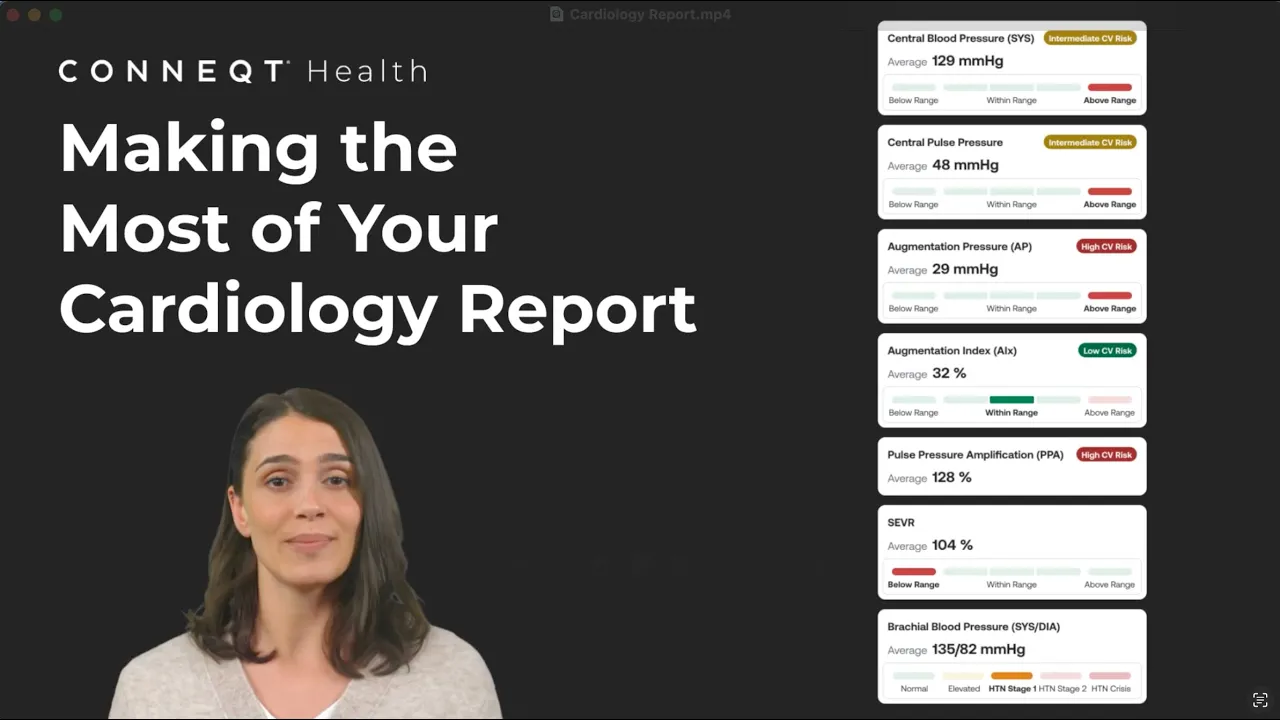
Making the Most of Your Cardiology Report | CONNEQT Cardiovascular Health Resources
conneqthealth
774 views•2025-03-04
Trending

5:41
Business
YouTube Disabled Our Comments Again (Are Any Humans Left at YouTube?)
SpecialBooksbySpecialKids
39K views•2026-07-21

5:07
Philosophy
One Must Imagine Sisyphus Happy
vlogbrothers
61K views•2026-07-21

12:30
Business
The Downfall of OnePlus!
techwiser
65K views•2026-07-21

30:21
History
The REAL History Behind The Odyssey Will BLOW Your Mind! It's NOT a Myth!
metatronyt
20K views•2026-07-21