A successful system design interview follows a structured 45-minute blueprint: first, define scope and SLAs by splitting functional and non-functional requirements within 5 minutes; second, perform back-of-the-envelope calculations and define API contracts; third, design a minimal high-level architecture with clear component purposes; fourth, address bottlenecks through caching, sharding, and message queues while applying CAP theorem trade-offs; fifth, discuss observability and reliability. Senior engineers proactively drive the interview, justify trade-offs, and avoid premature overengineering, demonstrating leadership and technical maturity.
Install our extension to search inside any video instantly.
How to Pass a System Design Interview (The 45-Minute Blueprint)
Added:Here is some interesting data. Out of 100 engineers who apply, around 75 pass the HR interview. Only 20 clear the coding round. And then system design instantly cuts the remaining pool in half. But here's the upside. The system design round is the ultimate differentiator. It is exactly where you dictate your seniority level and lock in the massive salary premium. Interviewers aren't grading you on how many tech buzzwords you can drop per minute. They are measuring signal versus noise. They want to see how you navigate ambiguity, how you justify trade-offs, how you structure your thoughts, and whether you can think like a senior engineer, especially when the system is under heavy load. The biggest mistake mid-level devs make, they sit back, fold their hands, and wait to be asked questions one by one. Senior engineers don't do that. Having been on both sides of the interview table for over 14 years, I can tell you that successful candidates take control immediately.
They drive the interview. And today, I'm giving you the exact 45minut blueprint to do the exact same thing. We're breaking down a real 45minut interview minuteby minute.
Minutes 0 to 5, the scope trap. You get handed a ridiculously vague prompt like design Uber. A mid-level dev panics and immediately starts sketching out database schemas. A senior dev stops, takes a breath, and sets a strict 5-minut time box to define the problem boundaries. Your first move is to explicitly split the problem into functional and non-functional requirements. Functionally is simple.
What does the system do for the end user? For Uber, keep it to three core features. Max rider requests a ride.
Driver accepts the ride and then we track the driver's location in real time. Do not try to build search pricing, ratings, and ride sharing pools in the first 5 minutes or any extra nice to have feature. For non-functional requirements, here is the exact script you can say out loud to your interviewer. Before we look at components, I want to clarify our scale and SLAs's. For example, do we need strong consistency for payments? but eventual consistency for driver locations. Next, what about the latency budget for location tracking? Is anything under 500 milliseconds acceptable? Why all these questions?
Those three answers will shape every architectural decision downstream. Also, one important question that can change the architecture is the readto-right ratio. If your system has a 100 to1 readto-right ratio like x.com or any other newsfeed, your architecture will look completely different than an IoT logging service that is 99% rights. But beware of the cardinal scene right here in phase one, premature overengineering.
If you start pitching multi-reion database sharding before you even know if the system receives 10 requests per second, you're signaling zero engineering maturity. Rule of thumb for phase one, scope it tight, establish the SLAs's, lock it down in under five minutes, and get the agreement from your interviewer. That's it. Then you move forward.
Back of the envelope estimations and API contracts. A lot of engineers dread this part because they think they're being tested on complex math. They spend 15 minutes obsessing over exact decimal places for storage calculations and lose precious time. Your interviewer does not care if your multiplication is off by a few decimal points. What they care about is order of magnitude and what those numbers imply for your hardware. Round your numbers aggressively. 10 million daily users doing 10 actions a day is 100 million events. Divide by 100,000 seconds in a day and you get an average of 1,000 requests per second. So at peak, let's say 2,000 queries per second. Why did we do that? 30 second math exercise because now you know if a single application server or database instance can handle the incoming network throughput. If your payload is 10 kilob and you have 2,000 QPS, that's 20 megabytes per second of network bandwidth. Easy for a single instance.
If it were 2 GB per second, you instantly knew you needed horizontal partitioning. Math isn't trivia. It's architectural justification. Immediately after numbers, define your API contracts and protocols. Don't just say we'll use APIs. Make specific statements. We'll use REST over HTTPS for right booking because it's a stateless transactional operation. One request, one confirmation, connection closed. But for real-time location streaming from drivers, we need birectional websockets or server sent events. We do this in order to avoid HTTP polling overhead.
Next, choose your primary data model.
Don't just blurt out, we'll use posgress. Try to justify the decision based on the access patterns. Do you need strict acid compliance and the relational integrity for payments? Then we go relational or do we need ultra low latency or geospatial indexing for driver coordinates. Then we choose a specialized NoSQL like radius or Cassandra. Let's recap the rule of thumb for phase two. Keep calculations simple.
define protocols and justify your storage choices. Now with requirements and constraints locked, we move into phase three, minutes 10 to 20, where we treat highle architecture.
This is where mid-level engineers make a fatal mistake. They are trying to design day 1000 architecture on day one. Senior engineers build iteratively. Don't try to sketch out the entire enterprise ecosystem on your first pass. Start with a pristine minimal foundation. Client, load balancer, gateway, service, and storage. Make sure your core data flow works seamlessly on paper. First, trace the end-to-end happy path and walk your interviewer through a single request.
For example, the mobile client sends a ride request to our load balancer, which terminates TLS and forwards it to the API gateway for authentication and rate limiting. The gateway roots it to the ride service which writes to the database and returns a ride ID. Here is the golden rule for this phase. Never draw a box without stating its purpose out loud. Don't just drop a load balancer on the board silently. State explicitly, we place a load balancer here to distribute our peak traffic of 2,00 QPS across stateless application instances and perform health checks.
Clearly separate your read path from your right path. If 95% of your traffic is users viewing driver locations on a map, show how those read queries hit an in-memory cache or read replica, completely bypassing your heavy transactional write database. Let's recap the rule of thumb for phase three.
Keep the initial design embarrassingly simple and functional. Prove to the interviewer that your core system works logically before you try to scale it.
Now that we have a solid working blueprint at minute 20, we enter the most critical part of the interview.
Phase four, where we deal with deep dives, bottlenecks, and hard trade-offs.
Phase four, minutes 20 to 35. Right now, your interviewer is going to stress test your baseline design. They will lean in and ask, "Your database is taking 20,000 writes per second during peak hours. How do you stop it from collapsing?" This is where you prove you're a senior engineer. First line of defense caching strategy. Don't just say add a cache.
Specify the pattern. You can say we'll implement a cash aside pattern using an in-memory store like radius. Red requests hit the cache first. On a cache miss, we load from the primary database, write back to the cache, and return the response. On cache hit, we return directly. To handle memory limits, you can mention TTL and eviction policies.
For instance, the least recently used LRU pattern. Next, how to tackle database scaling? If reads are the issue, add red replicas with asynchronous replication. In the end, you have more replicas to read from and distribute the load. If rights are choking the system, introduce sharding or horizontal partitioning. But we have a warning here. Always explain your sharding key. If you shard an Uber database by city ID, what will happen during New Year's Eve in New York? You will create a massive hotspot partition.
The fix? Use a composite key like combining the city ID with a hash of the driver ID. This distributes big city traffic evenly across multiple physical shards, preventing single node meltdowns. Furthermore, to handle right surges, introduce a synchronous decoupling using a message cue. You can say this to your interviewer. Instead of synchronously writing location updates directly to the database, we push location events into a distributed message queue. Worker nodes pull from the queue at a controlled rate, giving us automatic back pressure protection during traffic spikes. This leads straight into breaking down trade-offs using fundamental engineering principles like the cap theorem. During a network partition, you cannot have both strong consistency and high availability.
Consistency means your data is accurate.
Availability means your system never goes down. You must explicitly choose one and justify why to your interviewer.
Here is the exact senior level script for trade-offs. For driver location tracking, we prioritize availability and we settle for eventual consistency. If a rider sees a driver's icon 2 seconds out of date, the app still works. However, when it comes to financial transactions, consistency is non-negotiable. If there's a network failure, it's much better to safely reject the payment with a clean error message than to risk data corruption or double charging a customer. Always proactively address single points of failure. Scan your diagram and point out risks before the interviewer does. For example, right now our primary database node is a single point of failure. We'll set up multi-region automated failover with health check heartbeats to guarantee high availability. We'll pair this with a standby replica that continuously streams updates. By doing this, we ensure a failover node is always ready to take over the moment the primary goes dark. The rule of thumb for phase 4 would be this. Don't be defensive when challenged. Welcome bottlenecks as opportunities to showcase advanced architectural patterns such as event-driven cues, caching strategies, and failover mechanics. Use the bottleneck to demonstrate judgment, not ego.
Phase five, resilience, observability, and closing. Most candidates think the interview ends when the architecture works on paper. However, senior candidates know that unmonitored systems are broken systems waiting to happen. So spend 2 minutes on system observability and reliability. For instance, you can mention distributed tracing. We'll inject a unique trace ID at the API gateway to track a single request across all microservices. Or you can mention circuit breakers. If a downstream payment service slows down, a circuit breaker trips to prevent cascading failure across the entire application.
Before we close, here are the three red flags that trigger almost instant rejection. Red flag number one, overengineering too early. In contrast, you want to prove the basic flow first.
Red flag number two, getting defensive when the interviewer questions your choices. Basically, treating questions like attacks instead of opportunities to navigate through trade-offs. And red flag number three, bad clock management, spending 25 minutes on math and having zero time left to draw the architecture.
Let's do a final synthesis of the 45minut matrix. Minutes 0 to 5, scope and SLA, where we cover functional versus non-functional. Minutes 5 to 10, estimations and API contracts, where we discuss order of magnitude. Minutes 10 to 20, highle design, where we show a simple five box happy path. Minutes 20 to 35, deep dives and trade-offs, where we treat bottlenecks. Minutes 35 to 45, observability and wrap-up. If you execute this structure, you instantly separate yourself from most engineers who wander without direction through the system design rounds. You show leadership, structure, deep technical maturity, and clear communication under pressure, the same as a senior engineer does.
Related Videos

6:13
Computer Science
TOP 15 Data compression Interview Questions and Answers 2019 Part-2 | Data compression | Wisdom jobs
wisdomjobs
281 views•2019-06-28

27:51
Computer Science
CTS 158: 802.11w Management Frame Protection
ClearToSend
4K views•2019-02-04
23:21
Computer Science
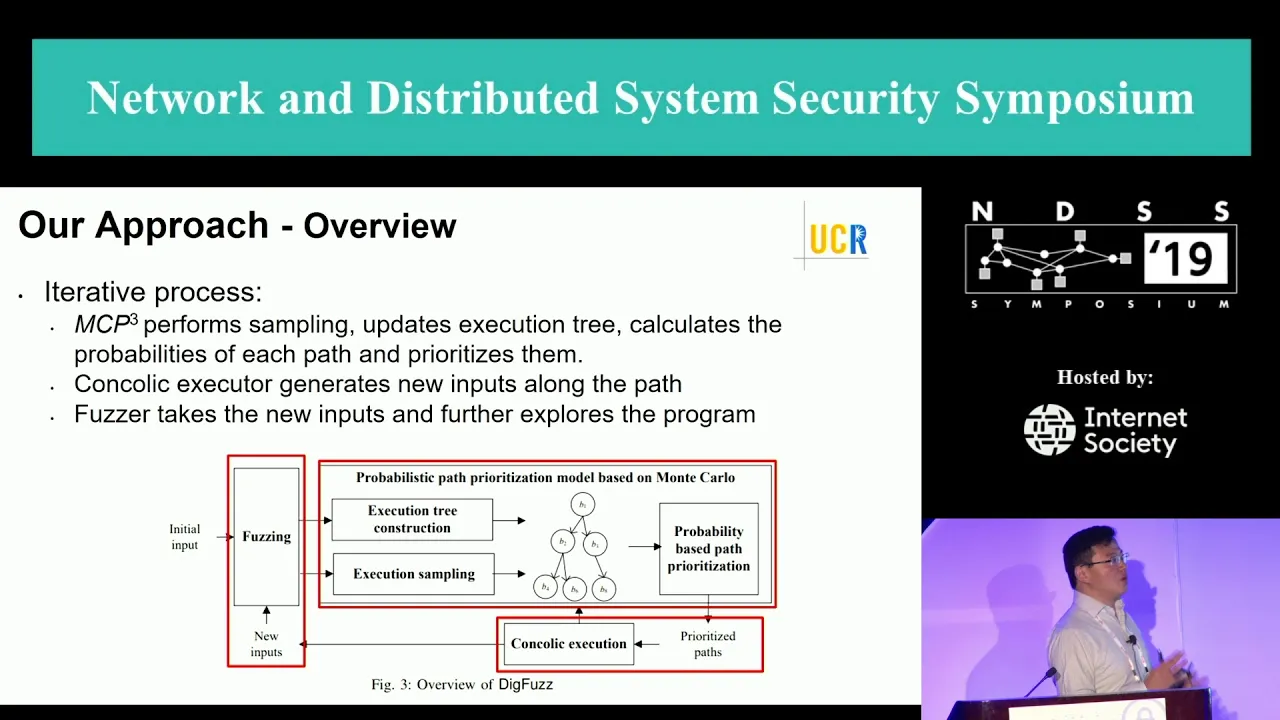
NDSS 2019 Send Hardest Problems My Way: Probabilistic Path Prioritization for Hybrid Fuzzing
NDSSSymposium
496 views•2019-04-02

12:48
Computer Science
How realistic is Cities: Skylines?
CityBeautiful
159K views•2019-02-14
46:39
Computer Science
GUIs & TUIs: Choosing a User Interface for Your Python Project | Real Python Podcast
realpython
2K views•2025-04-04

25:15
Computer Science
The OSI Model - Explained by Example
hnasr
225K views•2019-05-12

1:10:47
Computer Science
Cloud Computing - Introduction
elithecomputerguy
98K views•2019-10-07

2:24
Computer Science
From Traveler's Dilemma to Dynamic Routing | Demystifying Networking
IITBombayJuly
5K views•2019-08-04
Trending

5:07
Philosophy
One Must Imagine Sisyphus Happy
vlogbrothers
61K views•2026-07-21

25:15
Business
Future of Taylor Farms
maighstirtarot5385
11K views•2026-07-21

12:30
Business
The Downfall of OnePlus!
techwiser
65K views•2026-07-21

23:12
Engineering
My Friend Locked Up The Engine On His K-Swapped Bug...
boostedboiz
128K views•2026-07-21