During Kenya's Moi era in the 1980s, university student leaders Wafula Buke and Nixon Wekesa were falsely accused of spying for the Libyan embassy, subjected to torture, and imprisoned for 10 years despite evidence proving their innocence; this case illustrates how political regimes suppress dissent by targeting student activists, using fabricated charges to silence legitimate political movements and academic freedom.
Install our extension to search inside any video instantly.
Buke and Wekesa: How university students were SPYING for Libya
Added:So now the first time when I meet this guy whom we ought to have fought in the first meeting I'm climbing the stairs to go and join him in block.
>> I think the cell was cell number 54 >> 54. Will you survive by playing cards?
>> How how did I how when the guy just came in I just looked at him. I said this must be you know that instinct.
>> You didn't know him?
>> I didn't know him. I'm tell the truth.
when the way he came you know age you know our age was similar >> and then he looked just looked you could see a typical student >> so when I just looked at him I said >> you know you >> now he knew me told me >> he went back to court >> to say you government you messed me >> you tortured me and they they they compensated you how much >> 6.5 million >> did you go back >> mean they gave me 2 million So in other words, the the state agreed that they wronged you.
>> If the state did not agree, they wronged us.
>> Yes.
>> The law pointed out >> that you had wronged that we had been wronged. The state up to today has never said it.
>> No, apologized.
>> The good thing is apologized recently for gave us 10 billion to receive.
>> You know, >> they promised to give him something >> told them that they promised to give me something on T. We not >> the Libyans.
>> Oh yes, he got ambassador.
>> The ambassador >> the ambassador told him >> that uh anyway you got I think they wanted to know whether the guy will come back.
>> You will be arrested >> and they said on Thursday come we can give you something small.
>> So he told this guy.
>> Yes.
>> So >> few people you promised me the most important thing was the green.
>> Yeah. Of course God >> say I promised something. Please arrest me. Wait for me here and arrest me on Thursday. Don't let somebody arrest you.
There was a time in this country when the mention of Libya could land you in trouble.
That was in the 1980s.
Indeed, around 1987, the Libyan embassy was closed and the ambassador sent back home.
I have with me today two student leaders of those days who are accused of spying for the Libyan embassy.
Perhaps out of those activities, the Libyan embassy was then finally closed.
I have brought them here to tell us the truth.
Did they spy for the Libyan embassy since they have suffered for it?
Were they innocent?
Let's listen from Let's get it from them live.
One of them has been here before. Wafuk with wafulabuk is Richard Nixon wesa kibony.
>> If you have an advanced degree or strong professional experience, you could qualify for the US EB2 national interest waiver. It is a green card py that does not require a job offer or employer sponsorship. Your application is based on your skills, experience, and the impact of your work. If your work creates meaningful impact and help solve real world problems, you may qualify.
The International Scholars Program can guide you through the process. Visit the website and download the EB2 NAW handbook for more information.
>> I'm happy to meet you.
>> Pleasure, bro.
>> I I I I used to hear a case troublemaker uh for many years. I think the mediator is Why were you giving the government so much trouble?
>> It's a long It's a long story, but to be short.
>> Yes.
>> The government first of all baptized me.
That name Nixon.
>> It was not your name.
>> It wasn't my name.
>> What's your name?
>> My name's Richard Wesa. That's what is on my >> And Nixon is the one you know.
>> Nixon is the one you know because that is exactly what the state wanted you to know.
That name was given to me in court in house and the idea was to profile me to look like and a very ambitious Kenyan who could as well go for big political office. It was the story begins with with you being a student leader that but that that bit I know from reading >> right >> but I'm meeting you for the first time today >> at least met him for a little while now >> right >> even you meeting you in person was just recently >> but knowing you I knew a lot more than him >> your story like his goes back to student leadership >> right >> you are the chairman at >> I was the first chairman of Kenyata University students association the kusa >> when kinata was inaugurated as university full-fledged university 1985 >> it used to be a college >> it used to be a college >> Kenyata University college >> a college of university of Nairobi >> then Moy made it a fullyfledged university >> university in 1985 >> after shortly after Moy University right >> so it became the third university >> third university yes >> so I was the one who was the first chairman and it is me who gave the inaugural address >> how >> to president Moy >> you are a student how >> yeah I would explain is that time there were three people was supposed to speak when the president comes in for inauguration.
>> Yes.
>> The chancellor.
>> Yes.
>> The chairman of the council at that time it was I can even quote their names. The chairman was Negoa Phillip former.
>> Yes.
>> The the vice chancellor was Peter Kashier >> former PS.
>> Then me I was the student leader.
>> The big boys.
>> I was the big boy. I was a big boy of the day. In fact what happened? Why even we have this narrative? It started that day.
>> Yes.
>> When the president came to give his speech.
>> Yes.
>> The procedure was as a student leader.
>> Yes. You write your speech, then you give that speech to the vice chancellor.
The vice chancellor takes to the security agencies. They go through the speech.
>> Then now they bring back the speech to you to read as a student leader.
>> Yes.
>> So me and they give that speech to you 40 minutes or so when the pres when they hear the sudden the president is about to come that's when they give you the speech.
>> When it's too late for you to even change >> change anything >> and you told not to change >> of course. So me when they gave me that speech >> Yes.
>> I read the first statement. Thank you.
Excellence everything. Thank you.
Excellence. In every sentence, thank you. I said B. I'm a student leader chairman. Am I just going to tell students thank you, thank you, thank you.
>> What's wrong with saying thank you your excellence?
>> Because there were issues that were supposed to be aired. The students had actually specific grievances. So when I saw that I I read the first paragraph, >> there are things in the in the speech that I >> I had written on things >> and they were not there.
>> They were not there. I will explain that shortly.
>> So when I I read the first paragraph, said thank you, finished. I just took the speech put in my pocket then spoke of cuff.
>> Did you know that was bad? It will lead you to trouble.
>> But you see this is an issue of trying to even help the president by the way >> because it was important for the president to know what was actually ailing the the students and the Kenyan nation by the way.
>> It helped because the issue we're talking about was a student in Kenyata University graduates takes the same time frame in in the course structure.
>> He graduates after three years. It's a professional course and a student in BA Nairobi who a DO joins a job group K.
>> Yes.
>> The teacher or the the B8 student finishes a joins a job group J.
>> A job group below >> below. Yeah.
>> Him is professional.
>> Yes. And >> the nonprofessional B and B start with >> group K which is higher than >> higher than Yeah.
>> And this is in fact what gave birth to cooped by the way. This that struggle we had that time is what gave birth to Cooper. Even them they know. So when we point to that's where I took the risk you would say I risk whatever but I was doing it in the interest of the students and Kenya >> because this eventually what also coupet has been doing.
>> Yeah.
>> So when we raised that point when I read that speech I thought I had made my day as a student leader.
>> Kumba it was called a kiss of death cuz immediately the president was happy. He walked with me up to a point but the enemies I met that day is what changed me that >> but my had no problem with >> he had no problem. I moved with him now student leader and he was feeling okay because by the way when I look at it I don't know if it's politics but he was genuinely happy. Yes, >> that was his style anyway. You know, you never know. He would laugh with you, but but on that day he laughed with me and I was happy because for me I had said the truth >> but I made very serious enemies because one the whole of that fraternity the power >> I think they knew now this one will deal with him. I didn't know I was so so innocent you know I didn't know this our games if it's now of course I would handle it different now in that scenario >> when we were just moving going for the lunchon we know they were diplomats we are moving with diplomats so I just saw one diplomat said Mr. pronouncing my name in an asent like it wasn't you know you know those days you to differentiate between by the way some Asian and some Arab countries is difficult >> yes >> but I was given a card with a number I said ah you are good you very good we want people who who speak like you so I said fine and everybody that day was greeting me well anyway so it didn't matter >> you are a hero that time >> I was a hero and I was feeling nice >> yeah so you took the >> I took the card put in my pocket I didn't think about it Yes.
>> So I came back to the university went about my normal life.
>> Yes.
>> Very normal for almost a year.
>> I mean for almost 5 months >> when now and you know we're talking about 2085 we are graduating us in 2008 in >> towards the end >> towards the end. So when we reached around April just no May now we had even started doing the final exam those ter papers blah >> then we realized people are going to graduate and when they go out there that are normally had not been rectified >> the difference between the BA >> BA and B of education >> had not so we said no we must have a sitting so we had a sitting minister then professor came to the university >> and precided over that sitting he promised and said we are going to sort this matter former team which we formed. We came to Joo house. We had negotiations in broad daylight. It was covered by press at the end of the day. They put on every newspaper in Kenya that students from Kenyata will join at the job group. K >> official. Everybody was happy. Even me, I said now I'm okay.
>> At least at least my I can >> I can I can go up leaving my tener because elections had even started.
>> Very satisfied that I done something to take over from >> from me on Monday. Day of doom. We wake up on Monday, statement has come. There were no negotiation with students. There was nothing like an agreement with students. It was fake.
>> Does the minister deny >> the minister? So students my chin. Yeah. Right. The next day, Philip Colono says if I see you near this campus, you are dead.
>> Who? Who that? Who says that?
>> The commissioner of Nairobi commissioner. Commissioner Philip Alonzo.
>> Colono the late.
>> The late.
>> Yes. Before you became commissioner of police.
>> Yes. He says if I see you near this campus, you are dead. Hey, >> go home. Go home. So, we take our things home. When we just get home like this, the next day we get letters, communication, expelled.
>> You are expelled. How many of you?
>> 50.
So, what kept us what kept us quiet for some time was they said they're going to put up a committee of uh of uh of >> to review >> to review because actually they knew that we had done nothing. By the way, >> Bishop Lawi Matthew was a chairman of that committee. So you know he comes me for example me when I appeared before that committee he asked me only one question >> yes >> do you think the students were right to to try out or not I said they were right and that's the end of it I said they were right because >> it is not them who had promised to move students from job group J >> if you had been asked that question today what would you have said >> you know I just find it a silly question because actually if you're not if you are genuine you want to you want to find out >> I'm asking you if it was today what would you say >> of course Now I'm a bit mellow for the purpose of maybe being readmitted to the university.
>> I I would say yeah that's my colleagues actually said that they were readmitted.
>> You see so I don't know what you call it foolishness but that's what happened and that's how I condemned my fate. But for me up to today what makes me happy is that I did something that is markable you in Kenya the teachers part I'm part of the contribution of the success.
>> I think invited you >> and even even coupet invited me to address their annual annual conference in Machakos two years ago.
>> Yes.
>> And they >> you shared this story with them.
>> Yeah. I addressed the teachers and they were very happy. Imagine they gave me over 100k. No my friend in this country when I get an >> did you pay tax?
>> Well I don't whoever was giving you the whoever was giving me the money must have must have paid the tax but that's the kind of acknowledgement I get and that's why I appreciate that.
>> So now here you are.
>> Yes.
>> You have appeared before the review committee headed by Bishop >> Matthew. Yes.
>> Some people have been readmitted.
>> Yes. Some of us were expelled. So they >> How many now were unlucky?
>> 15.
>> Unlucky.
>> Unlucky. You were told go home.
>> Yeah.
>> So what did you do now?
>> So when we came home the first two month after we had been having some hope in those 3 months because we thought maybe they would reason and say we go back.
>> So now that you're hoping >> now been sealed.
>> Yes.
>> I sat down and said what options do I have? Then I remembered >> the guy who gave me the card at >> you look for the card.
>> I look for I had my my you know those things you must keep them >> your student ID your whatever because you know you're an expel. You must keep some of your things. Well, >> so when I checked, I found the card. I said, "Ah, >> I was telling >> salvation could come from here."
>> I said, "Let me try this." So I went to the call box near GPO.
>> You knew it was a diplomat.
>> I knew it was a diplomat, but I didn't know who. That is the correct.
>> Or from where?
>> Yes.
>> So I went when I called from the GPO, number went through someone said, "Hello, >> who are you?"
>> Just to get it right. Those days we used to go to GPO to call because there are no mobile phones. There were no mobile phones and you must always >> 50 cents >> and you must always have a a notebook cuz that notebook determined your life.
When you meet somebody in the street you write his number >> so that you can go and see him tomorrow maybe for a hand out or something cuz life was hard.
>> Yes.
>> So when I called he received an phone said hello who am I speaking to first then I said welcome to the republic of Jamaria.
Huh? Jamaria >> did you know what it meant? Of course now me my when when the name first of all came then I huh then before I could even >> did you know it was Libya >> I'm just coming so before I could even now function Kab said no it's Libya the other person now called me now the charge the affair himself >> you you discon disconnected >> no I called he picked it's like you know there are people >> you pass step one go to step two >> yes >> so I think the one who the number had been given I think was made for a general >> line. Yeah. Then they connect now to the boss.
>> Yes.
>> So when he said then to be before I could even then this one now picked >> Mr. Long time why we we we were expecting you actually that's what he said. I was like guys then said welcome to the Republic of Jabria Libya embassy said wow >> did you know you are s >> now that's where my mind now started working. So I was like dibia.
>> Then he told then he told me very quickly he told me cut that uh phone where you calling from. He said jeep he said cut that phone. I mean before you cut take this number and cut that number. So he gave me a number. I wrote it down. Then he told me cut then call me after 1 hour >> from another booth.
>> From another booth.
>> Not the same booth.
>> Not the same booth.
>> There were several there. I know even not >> some people like Jongu are using that as as their office >> the office >> I remember you want to make a call then a call comes >> comes please something like that >> so I changed now from there I moved up to ambassador >> around there >> so I went and called put in the call after 1 hour >> there was another another set telecoms >> tech that line so when I called he picked very quick then told me called me tomorrow at 10:00 and you'll be at Westlands.
Westlands. He said >> call from Westland.
>> He told me, "Call me at 10 and you must be in wastlands."
>> Then he cut, he just told me Westland.
You call from wastlands.
>> Yes.
>> Just there. Those both whatever. So me I cut the phone. I kept quiet. The next day in the morning now you know I'm wondering do I tell my friends about this or do I keep quiet? What am I getting into? But then you see when I look at the options I have I have to wake up in the morning. I have to ask my brother for transport to town. I have to come and I said I said forget this nonsense. Let me go.
So I went when I got there I I I took like there was somebody now you know people who interrupt like like you have said somebody was the call box was not finishing. Ah so I was spend like two to five minutes. So I was forced now to when I went to the other one I just called told me we agreed you call me at 10. said I'm I'm sorry or somebody said okay do you see that uh you go to sit center parking you will see a yellow Mercedes plates number plates it's diplomatic plates said go and open the door and enter inside and keep quiet and >> yeah yeah up to that you're not running away >> I'm telling you so I was like no no no but I mean I did to me I didn't I wasn't looking at it in terms of that I was looking at in terms of survival but >> yeah what options do What options do I have?
>> Yes. Uhhuh.
>> So I went I went opened the door. Threw them as was there. Open the door and then sat inside and kept quiet.
>> Nobody in the car.
>> Nobody in the car. The door opened. So I went and sat 45 minutes. Nobody's coming. I can't call back. There's no mobile phone. So the instruction you have been given is the end of it. So you sit in the car and leave. Yeah.
>> If you move from there, >> you determined my vent. I would have run away.
>> No, it was something different. So I sat. He came. This is the first time I'm meeting him. I've never seen him. First time he came said welcome to Maria. Then he started telling me he tells me you know if you would have come to that embassy you would by now be in jail.
Reason when you appear that embassy they will photograph you. The moment you come out they will arrest you. And you being we know your case though they knew our case because it was common knowledge.
>> You would just be arrested. M >> number two anywhere if I would have been with you anywhere by now you would be arrested.
>> Our experience confirmed that by the way >> when it comes my part maybe one of the embassy was arrested.
>> Yes.
>> Yeah. So he said the only way I could save you is by arranging this kind of meeting. Then he said by the way also let me tell you I'm always followed by this special branch. Your people they follow me. If the only thing they do is that they follow me and forget that even the vehicle is part of me. So when I park my vehicle they don't care about the vehicle they just care about me. So they will follow me up to where we are going. They will take photographs of who I'm meeting. When I come back to my vehicle they don't know if somebody has entered. So like you so he told me people are so preoccupied with the wrong things. See I now sat in the car. We went to his home his home and also in his home he said so he's now telling me these things as we move on. You know I'm learning me. I didn't know this.
>> So he told me when you enter this compound of mine, if you ever come here again, you'll be arrested. They take photographs of anybody who comes and anybody who who leaves.
>> Yes.
>> So from today, if we have to communicate to you, you must stick to my guidelines.
>> How we meet?
>> How we meet. So he said fine. So he told me now. So I started telling the story.
We sat down. Now it was a comprehensive discussion. I told him >> in the house.
>> In his house.
>> They were not seeing two people in the car.
>> We were in the house. No, but when you were in the car, the special blind one, >> we we like you see when I when I entered the car, it had first of all, it had a blind the back blinder, you know. But then when I he drove, he told me lie down. Actually told me lie down >> cuz on the side windscreens on the side.
>> Hey, and you are still there, >> my friend.
>> If you are pushed into a corner, if you push an aer into a corner, it will bite you.
>> This was a case of pure. It is it is these people themselves who led who created me. I really I wasn't I I I had no option. So when when we got there this guy was very elaborate. He asked us how many are you? I told him we were four cuz we're operating for secretary general called Mumi guy called Fred Nyakundi and another one called Nessi >> four. Three kisses one >> one >> lawyer. So he said fine. So I told him so he told me okay I want to meet your friends so that we can agree together. I don't mind but they have to also to know that if they are seen and if they don't get serious they'll just be arrested and these guys will arrest you and add charges on you. In fact he said it as if he so we now had to set up an elaborate way of meeting. So he said the easiest thing go and get a post office box. Once you open a post office box, you just write uh you write I write a message put there you open if I put the message in the morning you come out to open the box you collect whatever message I have and you go that's what we did so in survival I cannot cheat survival he gave us some little quid to survive >> some little money here >> yeah here and there we want to >> what else did you want from him >> so we now met four >> so we arranged now the last meeting we the same style we went to the same place got interview and crumble inside four of Mhm.
>> flat on the on the Nini on that Mercedes down. We went to his house. We sat in his house now and we he asked us what do you want? So we told him our biggest priority is to get our degree. So he said fine if you want to get your degree if you go to Libya you are going to spend 8 years. Reason first four years you must learn Arabic. Second uh 3 years you must learn the Greek was in Arabic.
So he said it will be a waste of time. M >> then he said the best thing I can do is take you to Uganda cuz you know at that time NRM was in power >> had just taken seven had just taken and the relationship you know between Libya and was very good. So he said I can help you go to Uganda and get it there.
>> So he said amen. So he said now do you have passports? We said no. He said okay I'll help you get passports. You know that time passport was about money. M so also on the Libyan front >> you know revolutionary countries never allowed refugees in their countries >> because their position is that you should stick in your country and change it >> stick there and change the country >> you going to go to Cuba no they don't even idol you have to go stick in your country and fight for change >> they help you to change your country >> and if you have to go there then you go there to prepare to come back >> and fight for change >> not for luxury that's why he would not have allowed in Libya >> correct And you see now now that I'm what he's saying now is making a lot of sense to me. In fact, if I would have told him that time that I was >> because they had English in Vasqueis also classes.
>> Yeah. So he has a point very major.
>> So they they said he was taken to Uganda >> to Uganda. So we came got passports. You know that time it was our system is just our system >> passport.
>> They gave you passport without knowing these are dissident.
>> Well two two 2,000 shillings for an officer at that time. you would not even mind whether you are you are whatever because at the end of the day that's the system it's a correct position >> I remember teachers were earning 3,000 >> 3,000 so 2,000 and we were given we had more than uh 15k for that job >> so we paid this one in fact one of our friends found some his his homemates >> in the department so they did the thing very fast three days passports four passports in our names fourth day I mean fifth day we went to Uganda He told us when you get to Uganda you go to the to the embassy of Libya in Uganda then the rest will follow. So we went to Libya to I mean to Uganda when we got there the he just said one is we just got the gate in fact is like they were waiting because when we got there we told them we are from Kenya we have been sent by one is said oh welcome welcome so we got him so we welcome welcome very well then he said okay I've arranged a meeting for you you're going to meet a commander there and a commissa of the new an government so we met he told us what do you boys want we said we want to finish the degree but like book is saying I didn't get it and actually >> I didn't get it you know you didn't get it I didn't get it much later I got it cuz that's not the kind of answer perhaps somebody expected >> so what happened is that they told us okay >> we met high ranking it was a serious thing cuz we the connection the way it has come so we would not even have been denied mary entrance so they said okay the only condition if we go the formal way the way you want >> we have to convince the vice chancellor >> and then that means you have to get transcript >> but then they said if it were that you are part of our program you know now I'm understanding what it meant >> yes >> so we came back now to look for >> passport >> transcripts >> you remember they had locked our transcript under lock and >> nothing we came we struggled we tried the hungering thing cuz we had nothing this one they were it was strictly in the vice chancellor's docket >> and you know what it meant so we failed so as we were failing like that we see we were >> and you were communicating to them in Uganda >> we were communicating to that you are you are making. Yeah, we're not getting so and then here of course we are talking talking with the the diplomat and even when they accuse us for being spies I really wonder >> because actually it is them who who did not do their work >> you see and that's what the nani said that's what the even even the ambassador said these fellows instead of doing their intelligence gathering they are busy testing the wrong thing >> that's why it was changed to NI to NSIS and I agree with that yeah the way those these guys were going it was becoming an apparatus the special branch wasn't >> the special branch was yeah it wasn't so I think you see my point so that's how >> we we managed to stay with this guy for 6 months and they didn't >> then now this is a day that brought problems this I want to summarize this story >> yes >> when we were just uh like uh 3 days like this >> to go to Uganda >> to go to Uganda because we now got communication that we must go to Uganda >> yes >> we were now to look for him it was an emergency we had written not put in the mailbox but he hadn't picked >> yes >> and we didn't know The reason why Kumbbe is because the the the US Secretary of State George H was coming to Kenya.
>> Yes.
>> And he was coming to Hilton.
>> That is his main uh main main place.
That's where he was supposed to hold a press conference. That's where he was supposed to engage his government business.
>> Yes.
>> So even him he had been put under total pressure.
But you know him he liked Hilton. All the day you would go to Hilton every day you used to go there take a cup of tea and go.
>> So we knew that. And he had said in case you have an emergency, the moment I just see you at Hilton, I see your face, I will know there's an emergency.
>> Yes.
>> So one of our colleagues uh Fred >> went there earlier because he had a date with his girlfriend. You know how these things are. I should say the truth. So he went there earlier.
>> Yes.
>> You know you are an experienced student.
You have a small opportunity. Why can't you show that you >> to your girlfriend that you are on Porter?
>> You can go to Hilton Hill of those days.
H >> of those it was a big thing. He would you wouldn't walk there even to ask for a cup of tea. The way you sit you have to be very careful.
>> So he went there earlier.
>> So when he got there earlier the diplomat was actually there but he was in the corner.
>> Then as we came like 30 minutes late when we just got near the booth you know there are this booth on the side of this way.
>> When we got there the whole place was totally under surveillance. I know these are this was now the Americans also.
They have joined the Kenya intelligence cuz the nan coming there. the >> shoes is coming there.
>> So we just sensed unusual >> problem.
>> So we said ah our friend inside must be in danger.
>> So just by we could not go there ourselves because going there would have meant we are also adding ourselves into the pan by coincidence I would say I don't know what happens in the world afraid we had been within within KU but who was not expelled was passing there.
So he he saw us know the guilty the guilty the guilty feeling >> I'm back and these guys are are uh out out. So whatever we tell him you just have to look like he's good. So we told him but we Fred is inside there with his girlfriend but the way we are seeing it we might he might not have money to pay the bill. So take this note to him so that we we tell him to wait a bit as we look for money just that but we had written a different message in the message we had said this place is is surrounded tell the commission I mean the the the ambassador >> the ambassador that there's danger because Fred was there so if Fred was there we knew Fred was going to be arrested we didn't have any business with ambassador in terms of his relationship but for our person so Fred the Machar went in. Sorry I've said machar but that sometimes not to mention yeah but there are many macharas in so he went and gave the note to to Fred innocently with his girlfriend gave him the note and then dropped went came back told told us >> so when when Fred read that message he panicked he panicked he told his girlfriend >> so he looked for a way he stood up as if he's going to look for he menus and he pretended until he went and gave them that ambassador that cannot >> then passed.
>> Kumbbe was photographed and he's is photographed by now the intelligence services of the world. You understand?
>> Yes.
>> They photographed him.
>> He you know they they know if you are doing something they all know.
>> So they photographed him.
>> Then he came and sat down. When he sat down on his table the ambassador after some 2 minutes or so woke up. He rather not woke up then he just passed by where Fred was. then came and said, "Excuse me, do you smoke?"
>> I mean, do you have a match?
>> A match? You know them? They were they were big. They could smoke there. I said, "Do you have a match?"
>> Then he dropped a packet of one pocket, >> the pocket of the cigarettes just on the table here.
>> So Fred was like, was like, but he dropped the and then he went to the toilet. So Fred just knew the when he opened, he saw >> told him, "Follow me immediately."
So when we Fred s the man went there like he's in the toilet. Then Fred followed when he got there he just met him at the toilets.
>> He had 5,000. You know those days it was 200 200 200.
>> Yes. 5,000 is a lot of money. A lot of money.
>> So he just was 2,500.
>> Yeah. He just gave him 500 shillings. I mean 5,000 shillings like 200 200. Then told him >> go through this exit to go through the kitchen and come out.
>> You know there was a way that was coming out from Ken Kong.
>> Yes. Yes, we did.
>> When you enter toward mean that that cave >> I know >> you know it >> they let there a place they later put there >> to block it.
>> Yes. Yes. Yes.
>> So he took he came from there went their side and took off. That is when now we started being being hunted. They realized two things. One who is this guy Kenyan meeting a diplomat in a hotel where there's an American I mean senior coming and then he disappears. You know every day they used to beat us in your house. The question was how did you manage to escape how did you get out of that?
>> How did you get out of that that hotel?
>> That was a giant question. In fact they prayed until Yeah. And that's what they used to.
>> So in other words you are saying afterwards you people arrested >> afterwards now we we got arrested because they took that photograph circulated it then they discovered we are students Kenyata blah blah then they not even arrest Fred that day. That's where the only time I can give them some some marks is that they didn't arrest Fred after when they discovered who he was. They let him >> so they let him organize a meeting.
>> So he organized a meeting of whatever >> to come.
>> Student rebels.
>> Student rebels. Me I was not there because me I when I when they gave me that 1,000 I realized let me go to Kisumu.
>> Yes.
>> In the name of going to there's a school called New Kisumu High School. They had said I should go there and teach. Isn't it? But I took advantage now >> of going. I was preparing to go >> to go to >> to Uganda.
>> Oh. Because you have been told to come back.
>> We have been told to come back. We had all the documents and so we had no problem.
>> Yes.
>> But now what broke me is when they arrested this ones, my brother was at that time working as an as an accountant one in the office of the president.
>> He had just been promoted as an a financial to Ethopia.
>> Uhhuh.
>> Yes. So my the one I follow >> this guy sorry I I say to God because he passed away this is the kind of guy he passed away the kind of guy who got from 1 to six 10 points all level 37 3 Alliance high school from 1 to six everything >> the family star >> family star >> so I could not destroy a family stubborn >> so what happened >> so when when they arrested this ones now they came to to to to crack me. So you know how they knew now >> they knew me. So they this guys where does this guy stay? They definitely they now knew >> your brother. They knew you stayed with your brother.
>> Yeah. So they came there.
>> My brother woke up at night.
What? We want this guy. He's not in. So my sister-in-law just called me the next day in the morning crying. Tommy >> did they force him? Did they tell him that he should produce you?
>> They told him.
>> And if he they told him and then even him he just said okay so let me find out where he is. You know even him was shocked. They told him >> they told him we want your brother. If you don't get your brother by in 24 hours time, you will see >> you take his position.
>> You will see.
>> By application end.
>> So when when when when the morning now when my sister-in-law called me, she was literally said now you know I said I'm coming from Kisumu. I brought myself I would have gone. But let me tell you this thing has got emotional tabulation.
Mumba >> this is this these things have emotional stress and that's why they're not good things >> cuz it's not just you it's a family now I was imagining they they have banged me they bang my brother what will happen to my father and mother >> these are old people this a teacher who has built his reputation my mother is a nurse can you imagine they have taken their child to university only for the child now to come back and the whole thing is >> the whole house >> he would understand my political thought >> so you decided to >> so I came back so when I came back I thought I was coming to talk to him so that uh We could see what to do. When I just landed in the morning at 5 ping those stairs at Parklands, my friend Kum had just been waiting around there. I did not even get to the stairs. 5 minutes.
Next, where my friend the next minute they bring that wheelbarrow of theirs, call it a wheelbarrow, the white thing, >> they know they took me to Parkland's first of all police station and booked me and I will be >> then the next thing the wheelbarrow came on it >> blindfolded >> blindfolded that's now how they read my state >> to where now >> to house 23 days >> 23 days >> 23 how many days at house And were I think 14 14 16 >> 14 days now >> what happened at your house >> now you know >> the usual story >> the usual story but now for us you know it was bad it you know they were they used us to do three things that's why it was very bad one they expelled the ambassador and closed embassy they closed it they were looking for a way of closing it and they got the opportunity they closed it two they wanted to they had people they targeted that's why I knew somebody like just had to go to jail whether I said it or not he they had they wanted him dead or alive. We can even see from the import when they say that we were supposed to go and recruit the union union from Nairobi University.
>> So you're being accused of several things.
>> Yes, I'm counting them. One was that one of us. We were supposed to recruit the student union.
>> Actually, he he he connected the embassy to student leaders.
>> They accused you of connecting the Libyan embassy to student leaders.
>> That would include this group here. And the group the crook you say had just now been he was going for election >> for chairman >> and they knew that if he gets the chairmanship it's a >> I wondered >> you know when I read that paper >> yes >> said surely I know the indust >> you know there's no way he could have introduced the embassy to anybody I have to be the one >> it has to be >> I was wondering >> what what's going on because it has to have been me that time I was a top rebel Yes. Anyway, >> and you see by coincidence also we happened to come from the same place. I know we had never met you know each other that >> we did not we only met we met in committee that's the first time him he had known me because he was in KU and I was a chairman of the students so he knew me.
>> I I you addressed us actually.
>> Yeah. He came tot >> I was I was first admitted in KU.
>> So as a first year you arrive and just welcome us the politics of students.
Yes.
>> So I came actually I was listening to him saying can I perform because I also headed for German.
>> So I think he said now him him I I know him is more militant by the way that one I have to agree.
>> Don't spoil my name. Sorry.
>> No no no. I'm trying I'm trying I'm trying to explain that his arrest was a forgotten conclusion. It had even nothing to do with the with whatever.
>> If you look at the whole structure of the university all these years the student leadership it's something of conviction. So the leaders were not people who elected just on basis of heal.
>> So to talk you say that you can have to recruit somebody like him cuz mira by then by the way had just been arrested in jail.
>> Yes.
>> Me what I know is that the target was they didn't want him as an >> so now let me ask you so now they accused you of several things. One of them >> first one was student union. Number two, we prepare that we prepared political dosier on Charles Rubia and >> Charles.
>> So you see the target was >> so they achieved that because they used our statement to say we prepared to the Libyan embassy on Charles.
>> So which which do you you understand what I'm talking about? The third charge was we went to the union workers in Mombasa and recruited the union officials so that we can cost unrest.
That one >> through the Libyans through the Libyans.
Was it true?
>> I that one is now the biggest first because I have never known any person in the trade union.
>> That one is not possible even. I don't know.
>> The fourth one was that we we recruited journalists >> to Kenyan journalist.
>> Yes. to do stories that were positive for the Libyan.
>> Was it true?
>> Of course, it couldn't have been. Do you remember that after that they started nabbing this journalist who are put in more Kenya? I remember there was was it who >> there was Yeah, there quite a number there was in Jugunam whatever. Yeah.
>> So those ones had already been they had already set up the the plan.
>> Yes. Yes. So what they used they used for big propaganda purposes and they achieved them the embassy they closed the the child they bang him for traitor >> they arrested him they broke the union what was the other charge >> there's another charge is good you know I'm talking about a paper this paper is 80 talking about a newspaper of Tuesday April 1987 this one so let me see the other charge that was Yeah.
>> Mhm.
>> It was in the papers.
>> It was the paper. The headline Sunday was headline in fact.
>> Yeah. And then they said we introduce M Kenya to members of M Kenya.
>> Introduce the >> we introduce ambassador to the M Kenya members. So you see the whole picture.
>> So what followed after that?
>> So after that we >> 23 days in >> in in committee.
>> Are you in house?
>> Are you being tortured >> my friend? Those are things you don't talk about. When I tell you this an emotional turbulence, it's not a joke.
>> You would you would you discourage people from ever trying to >> I would just tell them that if they get involved in these things, let them have the the political consciousness to know what it is.
>> That's not it's not picking.
>> No, it's not a joke. It's not the kind of thing you pick it. You pick it.
>> Depends on the level. If it is this one of throwing stones on the street, that one is a different story. But if you are really engaged in political consciousness, things of change, >> yes, >> it's a different story. You must have political consciousness. We are live examples as we talk >> and we I'm giving you this story after more than 20 years. Why? Because at this time it's important for the country to know.
>> Yes.
>> That sometimes political systems get very ruthless to the wrong people.
>> Yes. To the wrong people.
>> To the wrong people. Because actually like my case I was a student 23 years of age. Look at the extent where they pushed me. Baka. I was dealing with an ambassador and I was charged for spying.
>> Just for survival.
>> Just survival. And I was a student leader. was just sent away because 3 months to just because I raised the issue >> 3 months to graduation >> to graduation because just because I raised the issue of of uh teachers which was correct and it's even being implemented now >> so after 23 days >> yes after 23 days >> you taken to court >> at 5 in the evening >> the court of cha >> chunga 5 in the evening and when you arrive there >> 5 in the evening >> yes you go and there's nobody in the courtroom so we go to that courtroom there was nobody in that courtroom >> nobody >> nobody there it's only you there's and you >> and >> so you get there they read for you that they just read the story they read >> Mr. Richard Nixon Wesa and Chunga was very dramatic.
>> This man was like we wanted to be you know the name like Richard Nixon Wesa president of >> America you know that's how he gets sarcastic then he starts reading these things. So >> the charge now looks like you actually were spying you know a big thing you know >> what do you call that >> espanage >> you are charged of >> espionage >> my god >> yes >> you know this thing was mandatory death sentence >> so now >> did you plead guilty >> my friend >> I'm telling you you had to plead guilty I don't seen anybody in house who doesn't plead guilty >> oh the torture you go through >> yeah that's why when we went to high court to appeal against these things they the high court agreed agreed with us 100%. Because they said this is a fuss.
>> That's why the high court just ruled and said the government had been unfair.
They expuned all these charges from the court sheets and said these guys are nothing. They had nothing wrong.
>> But you've been sentenced for >> but I'd been sentenced for espionage.
Meaning you know espionage. You remember the story of James Bond?
>> Yes.
>> You you and me I think we have been watching this James Bond movie. So I was being put at that level.
>> James Bond when you see James Bond that's the level I was being put.
>> How many years were I given? 10.
>> So you served 10 years?
>> No.
>> What happened?
>> It was just luck again. This one was just lisa. I would have gone I would have even I would not be there.
>> Yes.
>> When see I was a chairman. So I was taken in first. So when I was just taken in first >> they had agreed I think they had a deal.
They had their own rating of how many years I was supposed to be jailed.
>> When they got there because of the charge you know they made a mistake.
They wrote a very serious charge. You can't get less than 10 years for espenage. Espenage is either death >> or 20 or life.
>> Yes. M >> so it there was no way >> that was life.
>> So when they read espionage BCH even if he was their person could not give us anything less.
>> Yes.
>> So he gave us 10. He gave me 10.
>> Yes.
>> My colleagues were at the back. Yeah.
You know after me they were supposed to be coming.
>> Yes.
>> So you know four of us they had that had been given >> 10 years.
>> They fainted. All of them in jail house.
They fainted. We are not >> these are young people 22 23 >> 23 22 they said we are not going to court tomorrow said no way >> they say we are not going >> we are not going >> kill us. So they called now chunga from >> kill us.
>> Yeah they said kill us because now wait had reached bhana.
>> So they called chunga the special branch called chunga told him.
>> Is it true that part of the reasons why you plead guilty after they have beaten you? You you you you want to end the beating. Yes. But they also promise you you'll get something light. Nor in fact you see when you compare the torture you're going through >> and then what they offering you in terms of sentence you say if these guys are going for 6 months and they beating me like this why there are many people who are taken there and when they go back there guys who died >> you if you go to court and refuse that charge and they take you back to that same house >> you could have a >> so you you thought it would be a light sentence I told you light sentence. I said the guys here you have been given 10. They said they are not going to court. They said if they go they not going to plead guilty.
>> They said yeah they said now this is because actually it was not part of the deal >> cuz 10 years is already death.
>> Death >> at that age you said that they were >> Yes.
>> So they realized there's a problem. Even them they also realized that it was actually unfair. Even them they knew in their heart it was wrong.
>> Yes.
>> So they realized this this espionage charge had to be mitigated.
>> Yes.
>> So they called now they call Chunga.
Mhm.
And this this what I was told by my colleagues because you know that my thing is done.
>> You have started your 10 years.
>> My 10 years. So this one now they in the evening they forced they called them okay >> in the listening when they were listening >> they called when they were listening >> that pleased give them >> give them 15 months said I will do that.
>> So now they went and pleaded. in the morning before they went there and even not waste time did not waste time to read those things.
He just said like the case of what what 15 months and so they came >> that's what happened.
>> So how did that save you?
>> So how it saved me? So after I went for for a lawyer of course that time it was a the speaker current speaker was a lawyer.
>> You went for a lawyer.
>> Yeah because >> who could touch a distance those days?
>> You know him.
>> I I can only remember >> by the way him >> and and I think but especially Kura Kura. Do you know do you know >> mother those are the people who touch this >> do you know him actually people people have never known that he build his career from this >> true it's true >> the speaker >> papa Roma >> yes he started you know he's the one who defended the air force people took >> yeah that one I know yes >> that is the same thing >> so that's why >> so you went for him >> so he went for him and it came from home now you know because my father was a teacher from So he came his job was just to plead and say if there's jail this guy's at 15 months >> and the same charges >> same charges why would you give him 10 >> that's how I survived >> now when I survived like that this is now where the story of this young man starts >> how again now tell >> you see now for him >> yes >> all along he had not participated in this Libyan thing he didn't >> yes >> number two him now he realized that actually >> these things are dangerous >> these things are dangerous But this is where to start because even in Uganda they knew him in Libya they knew him but they knew him and he had never gone there.
>> So that now that's his story now we can talk.
>> So how did you what is your connection with with Nixon here?
>> You know Nixon we share many things. He was a student leader chairman.
>> We share >> we also share we shared a prison cell in block E. M >> so when he was you were you were then sent to committee >> much later I now joined him after his case having >> you also jailed later >> when you went to committee you you met him >> yes >> now um you of course being expelled being jobless throughout but having >> jobless throughout you have shared that >> we shared that and first first we chairman >> unfortunately I have no job for you people I can only offer you a couple even >> but um you know you know in prison I would have known a gun right >> you know we ought to have fought with this guy because if you go to prison in prison they're normally fights >> you are brought together then you're jailed >> and you jail a man because this one leaked information of this one >> your wife leaked information and he has brought us here and then those fights took place I remember there was a guy called I I don't fear mentioning names >> and minor >> you know minor leaked information that led to the rest of this guy and his father >> so they kept calling one day they just jumped the teacher >> in prison the prison one was a boxer >> another one was a car so >> it was Marushu Well, we later on stage manager. They took them to court actually >> for fighting.
>> Yeah. But we schemed with Mando and say that I'll be a witness and I was to say that they were beaten by what by the wers >> but the the issue I'm trying to say is >> that in prison those fights take place.
So you would ought to write >> because he has put your name because we never met but according the story of the nation >> this guy introduced the ambassador >> to him >> to >> you to me >> you saw that in the nation but when I was when I was in your house they told me he actually gave the story so just tell us a story that you did you guys have been told by me have never met me so >> so nobody has told us everything so now this guy go to a f >> but >> did you tell them or No, I didn't know book. I'm telling you the truth, professor. I didn't know I did know.
>> I knew Bu I knew Bouet in in in house >> the meetings. No, no, no. You must have >> No, no, no. I'm saying I'm saying I knew him in in in committee physically.
>> I never met >> but the torture environment you had to say well I introduced >> Okay. But that I know is what happened.
So we ought to have fought with this guy.
>> But somehow I think we're not we're too young to fight. Yeah. Yeah.
>> But my story with Libya begins >> uh differently.
>> For me it was first year >> you know I must say that I was more radicalized before going to college before in college than him.
>> So when you go there we are already leftists and we as Libya Cuba those are our people.
>> So I arrived there America bombs Benas >> and Tripoli think and they kill the daughter to Gaddafi.
>> So I wait I expected the university to organize a demo. M that this can't be allowed. I read Ghana demonstrated Nigeria >> demonstrations Tanzania >> students are demonstrating >> Ethopia beat now here nothing >> and we just stayed shortly so it's in that case you have to organize a demo >> so we went into preparations after >> and was in first year you know >> yes first year first year first >> so we organized no then we have to have a demo so I bring out organized things anyway we end up to cut the story short I end up being arrested by the administration the police but uh they managed to diffuse the the demo so I just leave it at that after discussing and calling with the administration they settled it so then I lived on I stood for chairmanship they made sure I don't make it they me out actually I had to force myself back by a coup I was in power for that six days they came and and then they gave me an almat so I said no watch I don't good stories I've gone through >> at that time where is Miguna Muna that time >> Miguna was a first year when I was in second year.
>> Okay.
>> Actually, he didn't back me in first year.
>> Okay.
>> I was too hard. So now in third year I now go for chairmanship having worked so hard to make sure that I get it.
>> That's just about the time when this guy has been jailed.
>> Mhm.
>> So now of course things don't go well after 9 days in office they come for us, crash us and they take me house. That's now when I start encountering issues of Libya.
>> Now I had given these people an excuse.
>> No, before that let me just go back to the demo.
>> You know, we we thought how can we organize a demo?
>> Mhm.
>> We need posters >> and pictures of >> of the Libyan people, >> the bombing.
>> So we sat as a team of rebels who had formed a team from the national services. People are going to be progressive. So we need someone to go to the embassy. Who will go? I was the chairman of that caucus.
>> Nobody spoke.
So I said, "Okay, if everybody's scared, then let me let me go to the Libyan embassy and get those things."
>> So a comrade of mine called buildard builder builder.
Okay. Builder said, "Ah, you know, if you go, we shall not have a chairman to front this year.
>> So let me go. If I'm arrested at least me.
>> We had we had that level of commitment.
Yes. The guy says if you go we shall not have a chair. So what you do? You stay.
We've invested a lot in you. We don't want it. So let me go too bad.
>> At least you can be able to stand.
>> So the guy went and here's his story. So the guy went to checking then he decided ah see the door is open. He entered.
>> Yes street.
>> He entered. Wow wow wow wow.
>> So he go there and say hey you have come here >> they ask him people >> you've come here he say yes how will you get out so the guy said no I'll get out that time we were rebels I think >> so the guy was given those things put them here put them >> he was no he was then he asked for the green book >> mhm the green book actually that was >> which had been banned >> been banned so he said for the green book uh we shall organize Yes.
>> Yeah.
>> But first of all, you go.
So the guy got out when he said somebody just came say let's go.
>> He told let's go.
>> Let's go.
>> He's walking with you. You know you're walking like this.
>> No, no, no. He was not being taken to taken to >> So they took the guy walked saw the guy >> with his with his whatever they called posters.
>> So then he reached on the way the guy turned out.
>> So he told that guy was very in fact I don't know why I don't know I know that time remember the L solidarity has been very strong. Yeah, it has. It has suffered a lot. That has brought them together.
The guy played on it like finishing me.
>> Please just let me go.
>> I won't go back.
>> So he convinced him and the guy said, "Okay, fine. Please don't go back."
>> Then when he realized the guy was good, he told him, "But please, they have told me they're going to give me important things on Thursday." She also just wait underestimate.
>> But You know >> they had promised to give him something >> told them that they promised to give me something on T.
>> The Libyans he got ambassador the ambassador >> the ambassador told him >> that uh anyway you got I think they wanted to know whether the guy will come back >> you will be arrested >> and they said on Thursday come we can give you >> something more small. So he told this guy.
>> Yes. So you guys >> few people you are reckless.
>> They promised me the most important thing was the green.
>> Yeah. Of course God say I promised something. Please arrest me. Wait for me here and arrest me on Thursday. Don't let somebody else arrest me.
So the guy came said when I succeeded he got us a few things. Anyway he he was allowed to come with those things. You know the person who arrested >> took their money >> decided >> that he can't take a L a fellow L >> to inside >> to house I'm saying the first instance >> yes >> the L left the L free >> that was the first one I've not gone the second one >> I've not gone the second one >> yeah the things he was carrying >> yes he arrived with them >> he brought you people >> he brought some things >> then now >> Thursday now >> using using now the link as you see >> Thursday >> Thursday he came check check the guy was not there.
>> Mhm.
>> I said now how do I go back? Let me just enter >> again.
>> He enter the place.
>> You've come back. You must be very smart guy.
>> Stupid or smart?
>> I think no. No. Brave.
>> Brave.
>> Yes.
>> Yes. So the guy went he got the green book. No the green book.
>> He had already got it. They told him >> this green book we shall send you through post office.
>> They gave them an address.
>> Mhm.
>> Then the rest of the rubbish was given.
>> The pamplet.
>> So when the guy got out and had loaded >> got a stranger showed up. Let's go. This one is not not.
So the guy walked to arrive there. They said >> removed the socks, >> all the rubbish. And the only thing he remembers is that he thinks they may have lifted him by the ear. Still he was floating on his ears alone.
>> They beat him up big time.
>> And they told him never to go back.
>> They told him.
>> Yes.
>> Oh, they left him.
>> They left him.
>> They would leave you if if if you're not persistent.
>> If you know they had no information >> information on him. So So they needed now to find out who he was.
>> Yeah.
>> But they leave you go so they can now follow you. Yes.
>> I think so.
>> Yeah. That's what I learned later. So now the boy came and told us what he had gone through.
>> Yes, they were doing >> now at the university that time >> you know the government was so smart that stupid >> they had planted a police inspector on me >> called >> he schemed his way and became my friend.
>> So so on on the book the book arrived and uh he went and kept in his house or something like that. Then the inspector went to ask him hey please you I know you have that book so you give me then doesn't realize that this guy >> you began to realize they allowed the book to come in >> so that they can use it to further address other people >> that is that is >> as well in fact the reason why I clash with >> is that the guy came and told me but you know what this man you walk with he stays in your room comes there >> this guy came and asked for the green book how did he know I said Sure.
>> M >> can you track him?
>> So he said he told works in add architectural development design those things.
>> We followed him. I think it must have been okay who follow >> he went upstairs and came down and disappeared >> out of campus.
>> So he had also said he works in engineering.
>> Somebody followed him >> went to engineering branched and went to central police station.
>> Then he had he asked for he had a girlfriend.
So say please >> I hope you're not leaking police secrets.
>> No say the girlfriend said but you leave your things here. I said fine. So when he left his file I went and checked the file to see which kind of subject when I checked was those music things those tales of music.
>> So we confirmed that the guy was not right. Yes.
>> So now that's how my Libyan connection now comes. So now when I'm arrested >> they go back. In fact, at Central Police Station asked the lawyer, um, what do you think they're going to charge us when we arrested and many others? The lawyer friend, >> he said, >> I think they'll just beat us and allow us to go back to school.
>> In the understanding of this boy, you can't take Sam to prison for nothing.
Even me, as I was asking, >> I was asking because I had no, I was not a Libyan spy.
>> I had not had an illegal meeting.
>> I was just an innocent guy. Mhm.
>> So we reach there and I find the data >> this guy >> left.
>> They said tell us >> and they're telling him you know what they saying is that I've already told them.
>> Yes.
>> So he's tell us yeah your brother was here was here >> and he gave us all information our should not take long just be short >> confirmed we see deal with say what is it I've never met. Oh >> because that that was in the opinion a lie.
>> Even me when they were telling me even me my problem was according to them I knew there was no way I could not have known it.
>> Obviously you believe it.
>> Yeah. So now >> the story got me beaten beaten beaten >> till I real I reached a point and realized he have survived.
>> So they told me >> they beat you properly.
>> The other area I was beaten is the name of the diplomat. I didn't know >> one one is ali that's one of the problem >> so >> of course you are beating I break down and tell them everything but malata couldn't crack it whips could not give me the name >> so from nowhere >> they just told me you're lying you know the name was one is malat yes >> thank you bring him tea >> bring tea You tea.
>> Actually when they bring you tea means yeah you are making sense.
>> So I I I I took >> I took the tea now. Now tell us just how do you meet?
>> So now I said yeah we we had we first of all met in Afro unit. Why would a diplomat go to afro unit >> a gingi place?
>> I know >> but you see me. Yeah. Now me I didn't do anything. Yes. Me I didn't know anything. So I'm mentioning places where I have gone >> next to next to some chips. Imagine >> so in that place he told he told me he can fund me, you can help me.
>> You are now lying.
>> Yeah, I'm lying. When I had to get out of this thing.
>> So then I said now how is he giving you these leaflets that you are distributing? Say I used to bring to the hall of residence and he puts the pigeon hole and I go and pick them. Where did you meet? You met Serena.
>> He gave me this. These are things I'm just cooking up.
>> End the story.
>> But funny enough, the pione thing was true.
>> Now, that one is a coincidence.
>> That's what I'm saying. He was trying to to launch on anything to to survive.
>> But somehow when he said that confirmed confirmed we had opened, we had opened books.
>> So they knew.
>> So now all those things say okay fine now.
And then then um how much were you given for your campaign?
>> This is the truth about my involvement student politics at the cost.
>> The first year when I stood for chairmanship >> yes >> I asked my cousin Fred Nas >> he gave me 250 shillings >> 250 >> to make posters >> and that's all >> and that's the only man I held even if anything was spent by other people but the money that I put in was more than 50 >> in the second time.
>> Yes. Second time when I stood for chairmanship.
>> Yes.
>> I had um a meeting in we for CCU >> and Laka was there governor >> and some other guys. I said you guys that time actually I had spent my bum I was remaining one shilling.
>> You how much?
>> I was made one shilling in my pocket.
>> One book.
>> I I still remember.
>> So I told those guys help people.
>> Yes sir.
>> So people raise money gave the highest as some kind of guest of honor >> 50 shillings. It came to total of 450 shillings. That's the money I had when I pledged into the presidential campaign.
>> But now into the chairmanship campaign.
>> So now these guys asked me how much >> you said >> in house. Now >> in your house >> 21,000 >> you told him 21.
>> Yes.
>> Basing on because he would have said no.
Given that you know for us for example because of the passport we said something like 20. So he would have made a mistake of saying oh I would say something sensible and for me it was a So that that 21 that 21,000 shillings is what I used for the campaign. So finally they take >> and you said you are given by the Libyan guy by the embassy. You remember the name? Now I know the name.
>> Whatever.
>> One is Musala.
>> Mali.
>> Mali.
>> Mali. Yeah. One is Ali Malatti. Malatti is M U S U A I L I T.
>> At least you deal with me. I know the guy. He gave me the name.
>> So >> any chance you have met later in life?
>> No. After that you know they expel him.
Then you know remember after some time >> you you got there but now you see most of the time as we spent in inside.
>> So but I think by the time now we came back to census somebody told me that he had gone to to to another country >> but we've never met >> but we've never met it was impossible >> actually the embass was was close when I was in >> after being jailed it was close to me.
>> So now I go and they tell me to plead guilty.
>> Yeah.
>> Of course I said I don't I'm not going to plead guilty. Then I was given what everybody knows.
>> So now the first time when I meet this guy whom we ought to have fought in the first meeting >> in I'm climbing the stairs to go and join him in block E.
>> I think the cell was sell number 54.
>> We survive by playing cards.
>> How how did I how when when the guy just came in I just looked at him. I said this must be you know that instinct. You didn't know him.
>> I didn't know him.
when the way he came you know age you know our age was similar >> same age >> and then he looked just looked I you could see a typical student >> so when I just looked at him I said but I know you >> now me >> so that's how how we end up now sharing um >> a destiny >> that has changed our lives >> and change the lives of our >> many people around us And uh we we've been spies for some time.
>> This one can't be absorbed easily anywhere. Also can't be absorb. We are we are suspects everywhere.
>> But are you clean people?
>> No, we're very clean guys.
>> Let me tell you. In fact, >> the best human beings.
>> If if somebody was exposed to the kind of of opportunity, if I was radical, I'm telling you, >> I would have just gone for gorilla train >> that time.
Now makes a joke of it. I'm sorry. Let him say it himself. I I I I really you know for us we needed that connection badly. M yeah we even go the level where we are dealing with underground movements >> you know most of the things we're doing at the university we're being guided by comrades who are underground >> even give a speech they develop the points guys who are Kenya under so we were prepared >> we needed that connection that this guy got >> but you didn't get it in the wrong hands >> that's what he has always been blaming the wrong person who got the connection >> that's what he has been blaming me for but I told him >> you see the the the the the political conscious you develop.
>> Yes.
>> Does not start from a spar of true of a moment.
>> You see like him you look at his chronology he was building it >> and he had you know Kenya Nairobi had very serious >> socialization >> socialization mentorship.
>> Yes. Kenyat at that time you know it was a 5050 >> that's why I moved >> that's why he moved actually >> so you know you you don't develop political conscious they just by sp of the moment actually me the trigger in all this was just yeah that was a purely wrong thing to do >> and so in my mind if I would if they hadn't taken me too fast I would have built into some of consciousness of a different nature but so you see so that's why >> him he was >> he he had he had he had mentors >> he had mentors he had >> to do the wrong things. Well, I don't know if it's the wrong thing.
>> I was lucky to have been brought up by by >> my teacher in in in form six.
>> Yes.
>> In Amira High School, the best teacher I ever met. I've never met any better teacher after him and he gave us some ideological grounding. So, as I came and cut my father's books also, I read many books. John Okello, Abraham Lincoln, those those books. So I I had actually a a fairly clear understanding of how I can participate in changing this country. Unfortunately the connection for Libya which was do you and Libya was very very important.
>> The reason why they were disappointed that he was talking about education is because at the time >> Libya was having what they call Maba International a training ground for rebels in the whole world including the Irish Republican army. without training the ANC everybody. Yes. And >> and this guy is talking of education.
That's the point.
>> This one is talking of education instead of going for real education that is relevant to the needs of the country.
>> What would you have said if they asked you what you wanted?
>> No, but I answered the question when I went to Uganda.
>> Yes.
>> After you didn't want to go to M like >> after a prisoner when they said please which country can we take you? I said no I'm I'm not a a for seeker. I'm a I'm a revolutionary >> and you don't move away from the theater of war. So I just want to be in reli when I looked at the script >> this is exactly the script they were laying >> that's what they wanted for you >> that's what they wanted actually they wanted me just to say I'm fed up here >> because you look at even the way they arranged we met that n you know by the way the people the boys we met in Uganda were big boys >> and when when we told them but we want a degree they were like >> supported I told them So they said no Kenya is a neutral country. We cannot Uganda is a neutral country. We cannot you know help you stay here.
>> I said well if you must take me anyway they take me to Libya or take me to Cuba to >> Cuba.
>> The reason I was choosing those two countries is because one they can't accept me as a refugee.
>> Two if they admit me there they can only prepare me for >> for a struggle for change.
>> So for me if I land that connection my history would have changed completely.
Maybe I'll be my excellency.
>> Mhm.
>> Yeah. Maybe he had made the opportunity he got >> that. That's what he keeps telling me.
>> It landed on the wrong >> B. That's what he keeps telling me.
>> He was still growing up.
>> So for me, that's why I say and that's the point. Sometimes when when you talk about political >> political torture, you know, I I mean I I'm looking for a better word, but this is a point. Sometimes state machinery, especially those guys in power, >> you know, >> they get very very wrong approach on how to deal with. There's one thing that always happens. The moment you go, you reach a place and you you you say you are going for dissidence, you make people go underground.
>> When they go underground, you change people who are good, what you call good, hey, they become deadly.
>> It's true.
>> You the moment it's good to deal with an opposition that is self-evident.
>> If you deal with an opposition that goes underground, it's a different ball. And this is exactly what we are pointing out.
>> You people >> at least I know a fool has never had a a really job. Hey, I'm the I'm I'm the just waffle cut.
>> You also you have not been employed again.
>> See, I'm telling you, I've been the longest job I've employed employed in my life is is one year and these are just like TGRC. See, I've been giving examples.
>> Yes.
>> Imagine I got that degree after 22 years, right?
>> You you you finally got your degree. I got it. You you didn't >> you refused. But when came to power, I remember teaching people whose numbers were frightening me.
They left university even before.
>> That's the thing. Yeah, that's the thing. Became a professor.
>> You >> Yeah, >> you you didn't go back when >> I went back >> then >> you see >> because there was a general amnesty for the >> exact the professors and the students came back.
>> I went back.
>> I remember came back. Yeah. I went back as a person who had really been exposed to revolutionary education.
>> Mhm.
>> So now, >> so you were readmitted?
>> Yes, I was readmitted for 3 months. I was there. But now any time you never told me went back >> you see I I I listen lecturers and they give me the the western interpretation of politics in Latin America. So when he finishes excuse me I have another opinion and I give my revolutionary interpretation of the Kennedy engagement in southern those things >> on almost everything and every time I spoke students agreed with me. Seven lecturers said yes you're right actually I'm wrong.
>> So now after some time lecturers now didn't want me to speak.
>> So >> because this was in a hurry they want >> so now engaging in this process just to be called a degree holder let me leave without a degree after I can't be a deal. So after 3 months I go discuss this bullshit nothing I'm doing here >> I got out >> and you you went back >> me me you know the advantage we had is that you know us we were in third year.
>> Yes.
>> So we just did two semesters.
>> So you went to do two semesters.
>> Yeah. two semesters of I got it. So imagine let me tell you the gratification I felt in my heart for getting that paper >> had nothing to do with with with any imagination.
>> No no no it was just for me a fulfillment of something I actually deserve to get.
>> So you got your degree?
>> I got it.
>> Were you ever employed as a teacher?
>> That's what I'm telling you. I I >> it was useless.
>> It was useless in terms of of employment.
>> I'll get a job.
>> They could not employ you. How the only job I did for Kbaki was I became his presidential campaign as an in as a what do they call it presidential campaign for for his team that one it came from merit that's the only thing I did for 6 months or so the rest of the stuff I'm telling you there are things that any cler of six can doc job ted him he was him he was a TGRC was slightly rank >> and he brought you a com I gave it as a condition say for the process to go on >> you have to employ >> victims of the struggle without interview without checking their papers so we line the bump those who are illiterate even if you're take the letter get you a child do a job 50,000 >> yeah the co thing I went for that one I qualified because actually they were looking for somebody who had that experience patient >> so that but you know look at 6 months what >> told me >> yeah He went back to court.
>> Yeah.
>> To say you government, you messed me.
>> You tortured me. And they they they compensated you how much?
>> 6.5 million.
>> Did you go back?
>> Mean they gave me 2 million.
>> So in other words, the the state agreed that they wronged you.
>> The state did not agree they wronged us.
>> Yes.
>> The law pointed out >> that you had been wronged.
>> That we had been wronged. The state up to today has never said it.
>> No. Huru apologize.
>> We are back. The good thing is >> apologized recently for some gave us 10 billion shillings which you to receive.
I think >> yeah now I think that's a point >> the whole one of 10 billion got >> no no we don't >> is it on the way >> we don't see >> do you promise when you get you'll you'll remember me >> I'll not remember you you are a professor >> invite me I came here because I wanted to meet the professor professor is not a small thing but a professor >> we talking about 10 billion would be good money to who then anyway if it okay fine >> there's something you said because you You talked about picking revolution ideas through reading your father's books, very good teacher.
>> Uh in this country there has been problems with students being exposed to literature >> and increasingly what we call literature has become something else. The books have been radical books have been removed. The serious works of arts have been removed. The remaining ones have been diluted. Even if you read river between by Google >> the book we read and at some point you felt like crying >> those things have been removed.
>> What is your view on literature for students?
>> You know it is um an education curriculum is u is is is designed by the view by the goals of the government.
what the government wants to achieve. It seeks to achieve those objectives using a software that it installs in the students using the literature you're talking about.
>> Yes.
>> So under the MU administration, we didn't need to know politics. We need to know we needed to know government.
>> And you'll remember that um political we didn't have political science because science points at analysis.
>> Yes.
>> He gave us government. government political which has come back >> the issue is please grow up and start dispassing meetings maintaining order don't allow bus to be sold that is what they wanted from the political science department which was now called >> government >> they wanted not MPs and counelors >> now we ask ourselves what government we have what vision does it have >> it is a vision of suppressing people repressing people so they can achieve objectives are that those that people would really want. So the literature that the root administration would want has to be a literature that doesn't inspire and uh sorry to drag >> students called me one time and asked me please we had a team of people who want to take over soon leadership please can we meet you say how many are you said we are seven so I said so I said can you meet a textbook center said yes so I went inside the bookshop so they arrived that day and I told him you want to go for >> leadership. leadership.
>> Which books have you read here?
>> Actually, one mentioned the river between >> books that are political. You know, I told him, you know, in politics, we don't meet just because we speak the same language. We meet because of ideas.
Which books have you read here?
>> And uh it's a disaster.
>> It's a big disaster.
>> It's a disaster.
>> Even Mandela is not mentioned. Even Obama is not mentioned >> and you're going for chairmanship.
>> So I told him, you guys, the way you're talking, I think you don't know what you're doing. M >> there's nothing we can discuss. Let's dispass. I won't talk.
>> Yeah.
>> And pro just to to add something.
>> So now >> sorry.
>> Yes. I'm just concluding. So now >> I'm saying that um >> it is impossible to have literature independently >> reworked >> in terms of content >> in an environment that does not support progressive ideas.
>> Under this regime, >> history will be suppressed because they don't want history. you don't want to remember anything. The literature will also be diluted and maybe focus on sex or some of those things that don't really pursue change.
>> Yeah.
>> Actually, I was just trying to to to rework his his point.
>> Yes.
>> The the the change in in in in from uh what you would call book knowledge >> to mutando.
>> Mhm.
>> And then the transmission from one generation to another >> are two things that you're not supposed to separate. We used to read river because it is something that was generation >> yeah the real life as it as it changes >> we've changed now the whole thing into era >> theaw era does not have any history >> there's no basis river between was built on what happened googisaw on the ground in his life >> colonial period >> colon col colonialism up to that so you you would connect with it >> the era as a disconnect and that's why when you look at what Malala is doing >> Malala the the senator >> there's one thing I like about him forget about the politics >> his creativity in terms of literature >> is modern >> he's modern >> he's appealing to the young people >> he's appealing to the young people but you can see he's passing a message relevant >> and he's passing very key messages >> and and and he's rattling the >> he's rattling the system you see so other than the politics if we just go to the academic of That >> that's where that's the approach that is lacking and that also means the lecturers are also lacking creativity >> the creativity the malala way cuz how then do you do do you create something out of nothing in a system >> where you are disconnecting the the past >> you are bringing so what do you the the guy to believe into something >> wonderful wonderful >> like you see we are here the reason why we are here is because we we know we on sixth floor us >> yes >> so in a few years people say those guys >> those guys but what Have we left? How much have we left?
>> Since you have been around for a while and you have done your thing and you are now on the sixth floor and about to leave.
>> Yeah.
>> Needless to say, you have suffered for this country.
>> Right.
>> What do you feel when you look back? Do you think we are we are doing well? The moment we start talking about young people actually talking of presidency >> to me that's exciting.
>> You know we have reached there >> cuz I'm imagining my age. our our seventh our sixth floor now >> 40 30 years down the line you didn't talk of a you wouldn't talk of a young president >> you did >> I don't think so >> you didn't cuz the youngest president at that time was the youngest presidential candidate we're talking about candidates we're not talking about anything the guys you would see actually it's only has never grown old cuz actually has been has occupied this space for like 20 years >> yes >> he has always been the presidential candidate >> so do you think do you see hope >> yeah what I'm saying is and then the thing that impressed me was most was when I saw youth actually emerge.
>> Yeah. When I saw them just come up and and say >> you're talking about the gen of 2024.
>> It tells you that society has actually evolved.
>> Maybe the only thing like you have said which helped us >> was the educational impact on leadership.
>> These ones they are being educated on the streets.
>> On the streets >> you see the the difference.
>> What? Because we must now finish. I'm being told >> it's okay. It's okay.
>> What do you seea bring on board in Kenyan politics?
>> You've already said it.
>> It's a generational It's a generational It's a generational inspiration whether whether whether >> whether he runs president or not or not >> whether he runs and wins or not. It's a generational inspiration cuz they have reached there. Can you imagine? Ask yourself like I've said in in 1886 at because we are the ones who ought to have run. Yes. me and at that time that's the age now we're talking about do you see possible >> the way we banged do you think it would have been possible >> so there's hope there is hope there is hope for this generation >> the genz >> the genz this generation >> the involvement of people like babu we know >> yes they have they are working themselves >> they are working themselves to fit the current political dispensation and it's up to them that's our job us like you you've seen our trajectory it's been a frustration so we are saying now that we and sixth floor. Eh, >> but now we must stop.
>> Uh, you are no longer distant, >> my friend.
I wish I had that record of that that that that ruling of the court.
>> One, all the charges against me were fake and the court proved they were fake. Number two, my degree which I took 22 years has never been used. Number three.
So now I am asking you >> what is the distency about me?
>> You are an innocent Kenyan.
>> I'm just an innocent Kenyan. In fact, I've been punched unfair.
Let me tell they're using a hammer to kill a fly. I don't even understand >> about him. About him.
>> But the same story I told you. We grew this.
>> But this is a gorilla.
>> He went to Uganda to train as a gorilla.
>> He's the one who is telling you >> but ask anybody in this in this country the truth about it. Yes.
>> What has changed in him? Does he does he move around and kill people?
>> No.
>> So what is it that you are complaining about? If he went to Uganda and trained, maybe it would have been academic exercise.
>> But the thing is him as a person, this is just a boy who is doing his business in BMA there.
>> He loves for everybody. He has a more a more focused airport. He cannot >> should the government be afraid of people like >> there's another question. Why it's a waste of government resources?
>> Asant.
>> Thank you.
Nixon, >> bro. Thank you.
>> It's been a pleasure.
>> Nixon, I've just heard about Nixon.
>> Pleasure.
>> But it's good.
>> Yeah, >> this is our country.
>> Uh we contribute to making it a better place.
>> Uh what you have shared today, I'm sure people can see including those in power.
>> Yes. And those who execute orders >> sometimes be humane like the the man who told his tribes men, >> "Don't finish me.
>> Don't finish me.
>> Don't finish me."
>> Yeah. And the guy saved him.
>> And papa who came to your rescue.
>> Yes.
>> Thank you very much.
Related Videos
1:05
History
osman bey happy and sad moments
FateheUmmat
201 views•2026-04-19
1:10:29
History
Gregory Williams lecture "Life on the Color Line", 1999-09-14
BallStateUniversityLibraries
1K views•2019-07-31
18:08
History
5 National Parks To Visit In PA's Laurel Highlands
Redoubt_Productions
433 views•2025-06-14

1:26:15
History
Uncovered Untold Histories by Prof. Touraj Atabaki
elaheomidyarmir-djalaliins6723
148 views•2025-01-22

4:41
History
A Super Quick History of Bulgaria
MrHistory1
69K views•2019-09-12
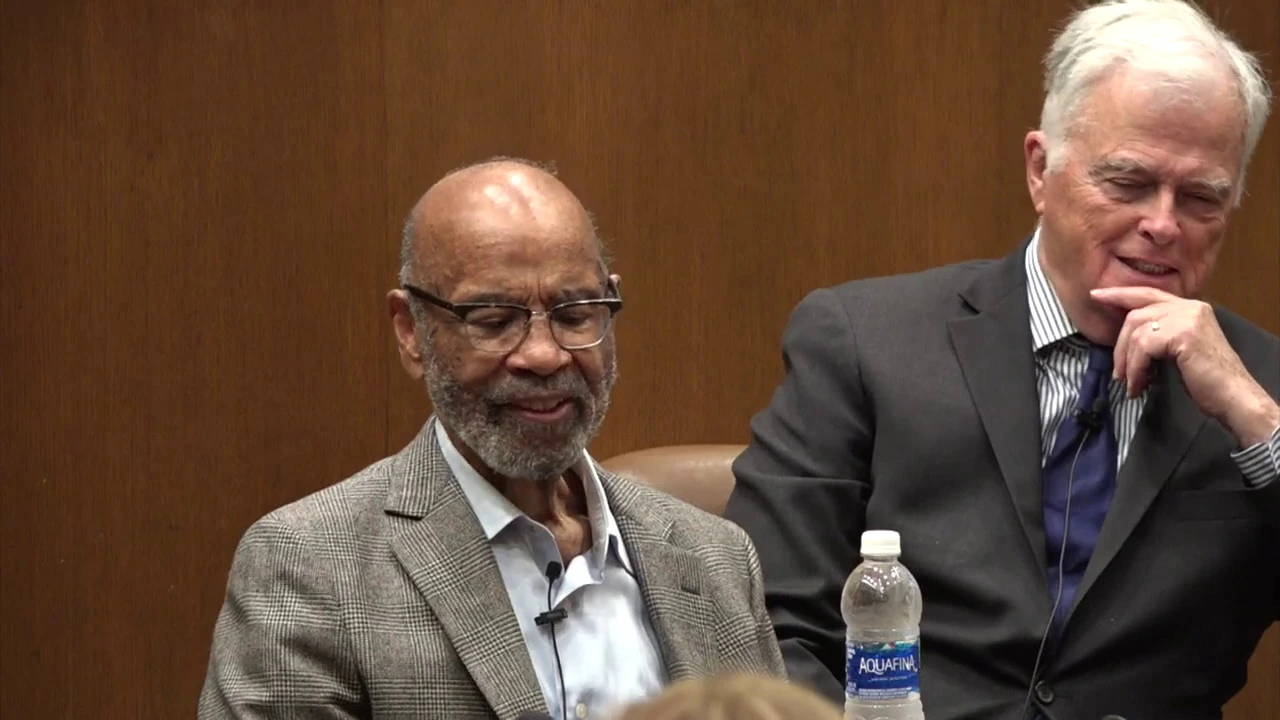
1:29:43
History
Won Over: Reflections of a Federal Judge on His Journey from Jim Crow Mississippi
ndhistoricalsociety
212 views•2019-12-09
1:00
History
St Andrew's Day: Explained, a little.
visitscotland
36K views•2019-11-30

7:59
History
The Times Atlas of World History | Wikipedia audio article
wikipedia-fan02
290 views•2019-06-16
Trending

13:25
Business
Playstation NO DISC/NO BUY Fight Is Over...
DavidJaffeGames
4K views•2026-07-23

22:40
Business
Steam and Xbox Just Dropped The Hammer On PlayStation
OhNoItsAlexx
9K views•2026-07-23

16:52
Anthropology
Americans Confused in Australia for 17 Minutes Straight
IWrocker
17K views•2026-07-23

20:36
Business
SuperBike Factory Has Gone... What's Next for the Motorcycle Industry?
thatbikersimon
11K views•2026-07-22