Shermer reduces the profound human search for meaning to mere evolutionary glitches, mistaking the biological "how" for a definitive answer to the spiritual "why." This reductionist logic explains the mechanics of belief while completely bypassing the existential depth of the experience itself.
Install our extension to search inside any video instantly.
Why Do People Believe in God? | Michael Shermer
Added:Michael, we're friends and so I will and private so I'll admit to you that I would like to believe in God.
Now, do you feel sorry for me?
>> [laughter] >> I don't know because most of us would like to believe in God.
I guess I actually think that there's a like a deeply evolved propensity to believe in something ultimate force that explains everything.
So on the believing brain I talk about patternicity the tendency to find meaningful patterns in random noise. We just connect the dots to explain things and agency the tendency to impute into those patterns some hidden agent and invisible force that's running the show.
I think God is the ultimate pattern and the ultimate agent. Explains everything is hidden you know powerful and so on.
I think that's just wired into our brains. I think it's inevitable people will believe in gods or God of some kind. Now the monotheistic God that most people believe in today that's fairly new on the scene in terms of the long long history. But I I don't feel bad for anybody that that believes that as long and I don't even worry about it as long as it doesn't lead them to fly planes into buildings and things like that.
>> Sure. Sure. But you don't want me to live in in error my whole life. You know, I I I would think you would be interested in your friend to see what's true. So so the fact that I do want to believe in in God. I I Am I looking for a pattern? I I don't know. But I mean I I I I I have I I find in myself that deep interest and and and and why is that? I mean is it because I'm looking for a pattern or looking for an agent? I mean I think I'm I'm I'm above that.
Am I fooling myself?
>> I'm sure you're above and on the basic level but even like metaphysics and philosophy and cosmology and you know these the big thinkers you that you talk to on the show.
How could you not be interested in this question? Because we we do want to know well, where did the universe come from?
You know, why is there something rather than nothing? You know, what does it all mean? These are just sort of we just have to think about these things. That's just what we do. Right? As your friend, I would say >> [snorts] >> I'd prefer you didn't believe in something that probably isn't true. Uh, I would invite you to you know, become a skeptic. Oh, you already are a skeptic.
Okay.
Uh, and and in a way um I think the more rational scientific worldview at the very least should lead us to be agnostic in the sense of you can't know. I use that word in the way Huxley meant it that it's not knowable.
There's no experiment we're going to run and surely by now you've interviewed everybody on the planet that's thought about these things in a deep way.
There is no ultimate answer. Nobody We don't know if if there is or not. So And do you say that in a real way or do you say that in a sort of a subjunctive way to to sort of make the conversation but you yourself really if not 100% 99 however you know, are sure that there's no such thing as a nothing beyond the physical world as we know.
>> I make the distinction between the ontological question about does God exist or not that we can think about and talk about and talk about all the arguments and then personally you're just sort of subjective I have to get up tomorrow and do something so what am I going to believe? I I would be shocked and amazed if it turned out there was a God. I would at this point. I mean I've you know, I'm 57 years old I've thought about this my whole life and I you know, I know all the arguments pro and con I would be I would be amazed.
You once believed in God, right?
>> Yeah, I did. Uh, when I was in high school and then into college at Pepperdine University I was a born again evangelical Christian. I really believed. And when you do believe the the worldview becomes very internally consistent and and externally coherent.
It it all makes sense. Everything Nothing happens without a reason.
Everything happens because God has some plan. From finding a parking spot at the supermarket to getting the job, to the person you marry, your career, you know, everything.
And in a in a sense, that's comforting because uncertainty is a little anxiety-producing, right? Causes cognitive dissonance. So, that's one of the things religion does and belief in God reinforces. And uh but if you pull back and go, "Okay, but what is actually true?" And the arguments that get me more than anything else are anthropological and psychological, sociological.
All these different religions and all these different people believe in different gods, different aspects.
They can't all be right. What are the chances that, you know, you got it right and everybody else got it wrong? And that's what I asked myself at that point when I really believed when I was in graduate school and I got to thinking, you know, all these different groups around, you know, I took anthropology. It's like, "Wait a minute. I mean, they're not ignorant, you know, they they believe like I believe, but something completely different. Maybe we're all wrong."
>> So, the the antagonistic approach of all the different religions kind of the core thing that set you free. It was, yes. There's just the recognition that belief systems are culturally determined, bound by geography, where you happen to have been born. I mean, if we were Indian, you know, we we wouldn't be talking about the Christian God, right? So, that alone tells us something.
>> And and does your feeling of eliminating the shall we say the the the monotheistic Western religion with the anthropomorphic God, does that does that extend to all sorts of of non-physical things? Do you wrap into that because there's a vast number of other possibilities beyond just the the Judeo-Christian God or the Indian God? I mean, there's a there could be a whole other way of supernatural kinds of things. Do you do you do you reject all of that? I do. I'm a materialist. Well, I mean, Hume nailed this problem of design this argument from design what we would call like the anthropic argument or the design argument. That it even if you concede that that doesn't mean there's a single God. There might be three or four gods. There might be a suite of them.
Maybe it's a juvenile God. He's trial and error. You know, and nobody wants that, right? So, better to just say, you know what? We maybe there's no God at all.
And Yeah, but but again, that's no no um God that has agency and God that has intentions and and intelligence and will. But how about something that is that that that is supernatural that's sort of a a force? In other words, anything beyond the the physical world as we know it. Okay, so the problem with postulating there might be a supernatural is no different than saying there might be a paranormal. I claim there's no such thing as the paranormal or the supernatural. It's just the normal, the natural, and the stuff we can't explain yet. And the moment you say, "Well, okay, you have the X the unexplained. What is that?" Okay, so I'm going to postulate this paranormal supernatural explanation. What are you going to do when the the sphere of science incorporates that and then and then it becomes part of science. Like, "Oh, quantum consciousness. It has to do with physics and neurons and it isn't paranormal as any ESP at all. It turns out it's quantum consciousness." What if that was right? That's not paranormal [clears throat] anymore. That's not that's not just subsumed under neuroscience and physics, right? That's the fate of all these claims. They either disappear because we're not interested in them anymore or they become part of science. And I would expand that all the way out to God.
That the moment you say, "Well, okay, God is not part of our our universe."
Okay, then how do we know about him?
Well, occasionally he he pokes his hand in to stir the particle. I wish you'd see it. Really? So, how do you measure that? Well, it's a miracle. Okay, but where what's the evidence for the miracle? You know, at some point we have to talk about it in a way that is concrete. We can test it. And the moment we're on that level, then we're doing science, and then then it is not supernatural anymore.
>> The argument against that says is that if God does intervene or if there's some supernatural powers or or realm that intervenes, it doesn't do it on a repeatable law-like basis. So, you it cannot be subject to the the experimentation of science because it's not repeatable. Separate labs can't look at it the same way. Maybe, but what if it was just a super advanced extraterrestrial intelligence that like to enter in and and and we're just there's multiple bubble universes and and he plays with it.
>> Right.
It could be that.
>> Absolutely. Yeah, but nobody would There's no way to distinguish. If that were the case, it's impossible to distinguish if if if we had that in our case. Right. A sufficiently advanced extraterrestrial intelligence is indistinguishable from God.
>> Right. So, then what are we left with?
Right. Okay, we can talk about it cuz it's fun, but really, seriously, there's nowhere to go with it from there.
>> Well, that by itself is very significant because if that's a possibility, that speaks strongly to the nature of ultimate reality. We may the the the problem that people have is that they think that that therefore that's a god.
And what you're saying, and I agree with that, that there's no way you can determine if that's a god or or another civilization or who knows what beyond that. But the fundamental question is is there anything that exists, god, extraterrestrial civilization, anything that is beyond the physical as we know it or can conceive it today?
Well, I I would have to honestly answer it, I don't know. And neither do you.
And nobody does. It isn't possible to know. But some people would say there isn't because it it in principle couldn't you couldn't have anything like that.
>> Well, I mean, I guess it just depends how far out you want to push the epistemological wall.
I mean, in terms of what we actually know, I think the best we can say is maybe, but maybe not. And I don't I don't think we're going to know.
So, in this case, here's how I always end these conversations. I just say, "You know what? It's okay to say I don't know. We don't have You don't have to construct a whole religious belief around it. I don't have to construct a whole non-religious belief We just just say, 'I don't know.' Uh and leave it at that. It's okay to say that."
Related Videos

0:39
Psychology
Inside Ronaldo’s Team Meeting
RonoSphereCR7
1K views•2026-04-17

7:25
Psychology
You Are Not So Smart: Chapter 4 Hindsight Bias, What is it?
TheBey8nD8
230 views•2019-09-15
49:35
Psychology
Sigmund Freud's Mind - Master Your Inner World (Your Unconcious Mind)
Ngaslife
1K views•2025-01-25

11:29
Psychology
What affects your mood?
RandyPaterson
602 views•2019-05-16
3:45
Psychology
Can you outsmart this logical fallacy? - Alex Gendler
TEDEd
2164K views•2019-11-25

1:02:21
Psychology
Understanding the Relationship between Fear of Falling and Mobility in Older Adults
fallpreventioncommunityofp3788
823 views•2019-04-08
54:04
Psychology
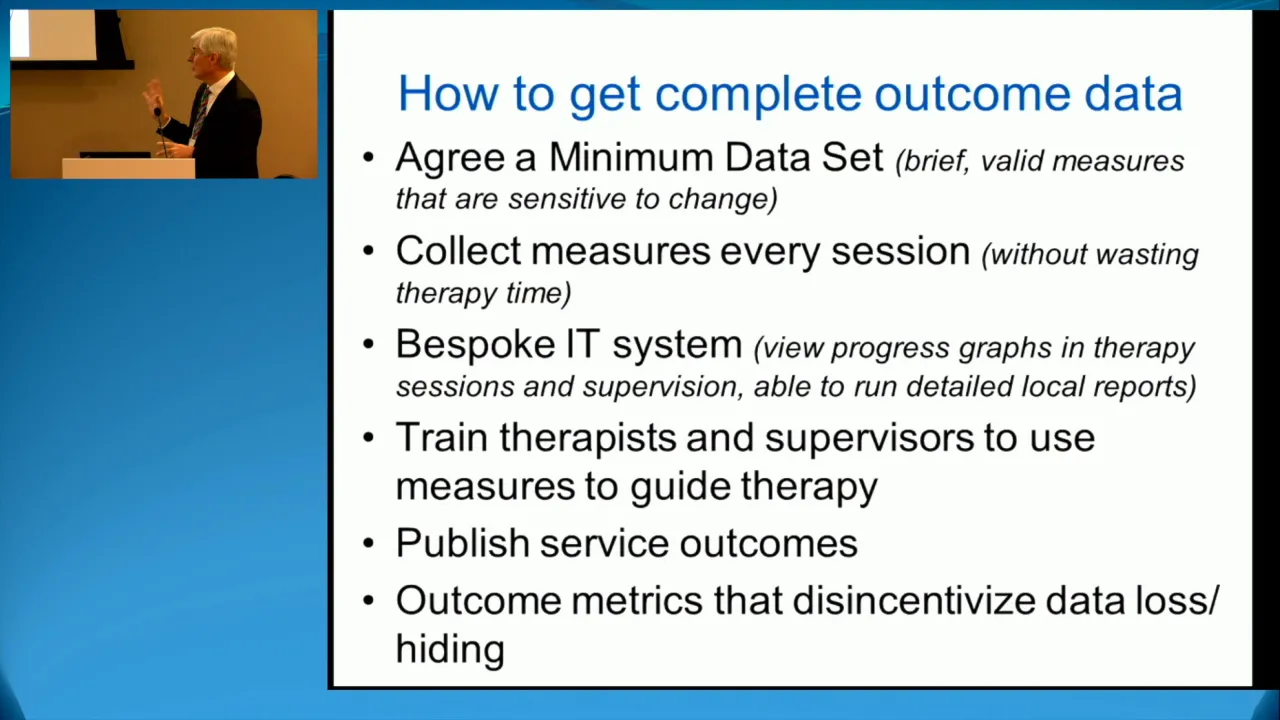
Measurement-based Care in Psychotherapy Workshop - Future of Psychotherapy Conference 2019
UofTPsych
243 views•2019-04-25

51:52
Psychology
Dr. Carol Tavris — Mistakes Were Made (But Not by Me)
skepticmagazine
14K views•2019-05-02
Trending

13:38
Law
WOW! Judge TURNS THE TABLES on Trump in His OWN $10B LAWSUIT!!!
MeidasTouch
197K views•2026-07-23

13:25
Business
Playstation NO DISC/NO BUY Fight Is Over...
DavidJaffeGames
4K views•2026-07-23

22:40
Business
Steam and Xbox Just Dropped The Hammer On PlayStation
OhNoItsAlexx
9K views•2026-07-23

16:52
Anthropology
Americans Confused in Australia for 17 Minutes Straight
IWrocker
17K views•2026-07-23