This video offers a clear and logical breakdown of how basic geometric principles can solve complex spatial puzzles. It is a perfect example of how to make abstract math feel both accessible and satisfying.
Install our extension to search inside any video instantly.
Perimeter of this Tangram Horse
Added:You guys, this looks like a fun one.
We're given a tangram image of a horse.
Now, we're told that the area of the horse is equal to 400 square units. And the question's asking us to find the perimeter of the horse. If you want to try it on your own, pause it right now, cuz I'm going to solve it in 3 2 1.
First, let's talk about what is a tangram. Since we're told that this is a tangram image, we know that all of these shapes can fold up into a square. Let's see if I can remember this. Let's pull the two larger pieces out and rotate them like this. And I think we can move this piece here. This can go there. This can go here. This fits here, and this will go right here. So, all these pieces will come together to make a square.
That's what a tangram image is. And it's cool, you can make a lot of different animals with these shapes. And here's some examples of some other animals you can make. So, since we know all of these form a square with an area of 400 square units, that means each side of this is going to be 20 units. And this side is split in half, this will be 10 and 10.
And this is also split in half, it'll be 10 and 10. And then we can pull this parallelogram out, and this top part will be equal to 10, which means the base of this red triangle will also be equal to 10. Let's look at the parallelogram, the top is equal to 10.
What is the side equal to? Well, they tell us it's a 45° and 135° parallelogram, but that doesn't mean anything, cuz we can stretch this like this, and it's still a 45° and 135° parallelogram. So, we don't really know anything about the sides yet. But I do know that whatever this yellow side is minus this red side will give us this missing side. So, later on, after we find out this yellow side and this red side, we can then find out the purple side. Let's pull out this orange triangle, and this orange triangle is an isosceles right triangle. In other words, a 45-45-90 triangle. That means that the hypotenuse is equal to square root of two times this side. So, the hypotenuse is going to be equal to 10 root two. Now, let's find some more of these. This is also a 45-45-90 triangle.
Since we're given the hypotenuse, we want to divide by the square root of two to get this leg. And then we can rationalize the denominator by multiplying top and bottom by the square root of two. In the denominator, the square root of two times the square root of two is equal to two, and then 20 divided by two is equal to 10. So we have this leg is equal to 10 root two.
In a 45-45-90 triangles, the legs are congruent. So this will also be 10 root two. And then this blue one is congruent to this yellow one, so it will also have legs of 10 root two. Next, let's focus on this red 45-45-90 triangle. Same idea to get the legs, we can divide the hypotenuse by square root of two. And we can rationalize the denominator by multiplying top and bottom by root two.
On the bottom, root two times root two is equal to two, same thing on this side. And then 10 divided by two is equal to five. So this leg is equal to five root two. And same thing for this leg, it'll also be equal to five root two. And now we have everything we need to find this side of the purple parallelogram. If you recall, these three pieces fit together like this.
Since the leg of this yellow triangle was equal to 10 root two, and this leg was equal to five root two, that leaves this side of the purple parallelogram is equal to five root two. So we can label both of these as five root two. Next, this pink 45-45-90 triangle is congruent to this red triangle, so this leg is going to be five root two. And this will also be five root two. this side is shared with the square, all the sides of the square will be five root two. Now we can find the perimeter of our horse.
First, let's look at the red triangle.
The hypotenuse is equal to 10, and the leg is equal to five root two. Next, we can look at the orange triangle down here. This is equal to 10, and then for the hypotenuse, we have a little piece here and a little piece here. This whole hypotenuse is equal to 10 root two, and this side of the red triangle is equal to five root two. So that means these two pieces of the orange triangle will be the difference of these, which will be 5 root 2. I'll do the yellow triangle later. Let's do the green square next.
Each of the sides of the green square are equal to 5 root 2. And then for the pink triangle, each of these legs is equal to 5 root 2. Next, let's do this blue triangle. Each of these legs are equal to 10 root 2. And then for the tail made up of a purple parallelogram, we know this is equal to 10 and this is equal to 10. And these two sides are equal to 5 root 2. Now, we've got everything done but the yellow triangle.
We got to figure out this piece, this piece, and this piece. For this piece, the hypotenuse of the pink triangle is equal to 10. And then the hypotenuse of the blue triangle is equal to 20. Since this part is 10, that leaves 10 for right here. And then for the hypotenuse of the yellow triangle, it's equal to 20. Since this is equal to 10, that leaves 10 for right here. Next, we can work on this piece. This side of the orange triangle is equal to 10. And this side of the yellow triangle is equal to 10 root 2. So, to get this piece, we have to subtract the whole 10 root 2 minus this 10. And then this doesn't simplify, so we'll call this little piece here 10 root 2 minus 10. And then to get this last yellow piece, this whole side is equal to 10 root 2 and this piece is equal to 5 root 2. So, this remaining portion will be 10 root 2 minus 5 root 2, which is equal to 5 root 2. And now I think we have everything we need to find the perimeter. Let's go clockwise from here. It'll be 10 + 10 + 10 root 2 + 5 root 2 + 10 + 5 root 2 + 10 + 10 root 2 + 5 root 2 + 5 root 2 + 5 root 2 + 5 root 2 + 5 root 2 + 5 root 2 + 10 root 2 minus 10 + 5 root 2. We'll take care of both of those. + 5 root 2 + 10. So, this is the the of the horse. To clean things up a little bit, let's combine like terms like this. 10 + 10 + 10 + 10 is equal to 40, and this positive 10 and negative 10 can cancel each other out. 10 root 2 + 5 root 2 + 5 root 2 is equal to 20 root 2. 10 root 2 + 5 root 2 + 5 root 2 is equal to 20 root 2. 5 root 2 + 5 root 2 + 5 root 2 is equal to 15 root 2, and 5 root 2 + 10 root 2 + 5 root 2 is equal to 20 root 2.
20 root 2 + 20 root 2 is equal to 40 root 2. 40 root 2 + 15 root 2 is equal to 55 root 2. 55 root 2 + 20 root 2 is equal to 75 root 2, and 75 root 2 + 5 root 2 is equal to 80 root 2. And that is the answer to our question. Let's give it a label of units and put a box around it. The perimeter of this tangram horse with an area of 400 square units is equal to 40 + 80 root 2 units. And that's approximately 153.137 units. How exciting. As a follow-up challenge, you can do this cat right here. The area of the cat is equal to 100 square units, and I want you to find the perimeter. Actually, you should find the perimeter.
How exciting.
Related Videos

Solving a 'Harvard' University entrance exam question
AsadInternationalAcademy
125 views•2026-06-14
Algorithms for Generalized Signed Distance and Winding Numbers (PhD thesis)
NicoleZFeng
269 views•2026-06-15

Notes 6.3 Rectangle, Rhombus, Square
matthewmills6952
1K views•2026-06-18

Does the math actually hold up? Let's break down the logic.
rawXopinion
1K views•2026-06-15

NYT Hard Sudoku Walkthrough | June 17, 2026
Rangsk
2K views•2026-06-17
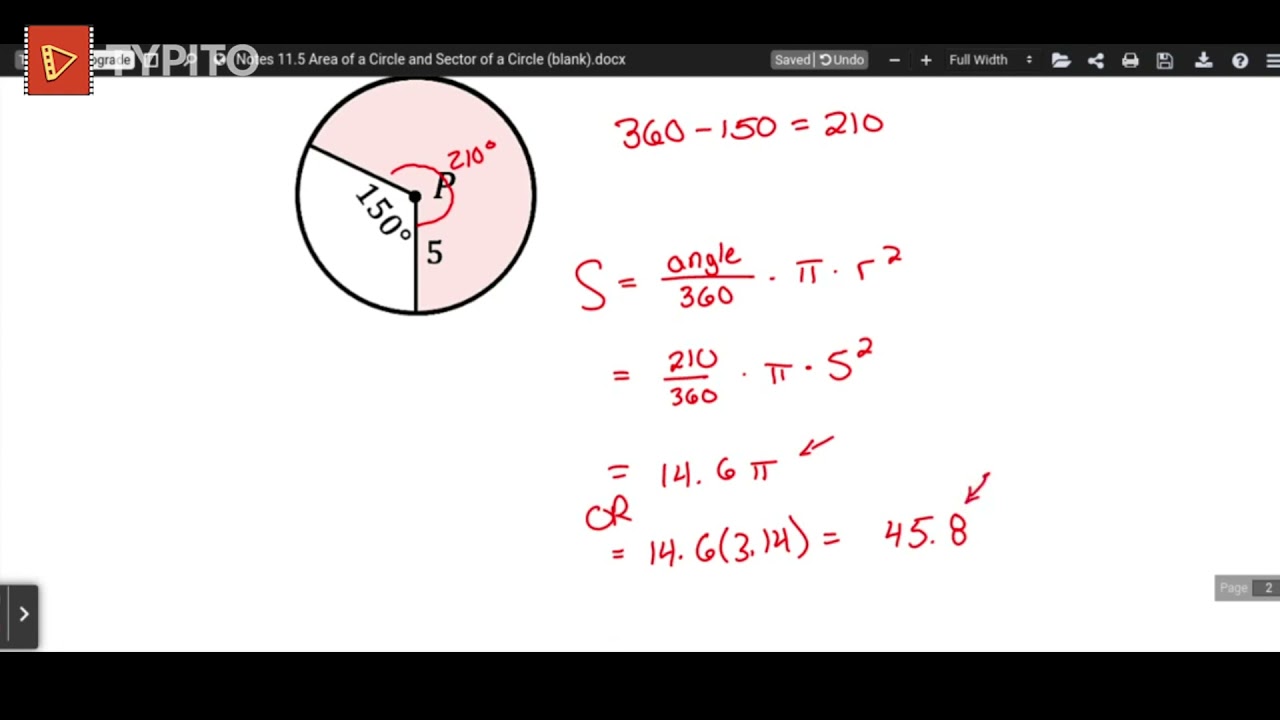
Notes 11.5 Area of a Circle and Sector of a Circle
matthewmills6952
251 views•2026-06-18

Notes 4.2 Isosceles and Equilateral Triangles
matthewmills6952
444 views•2026-06-18
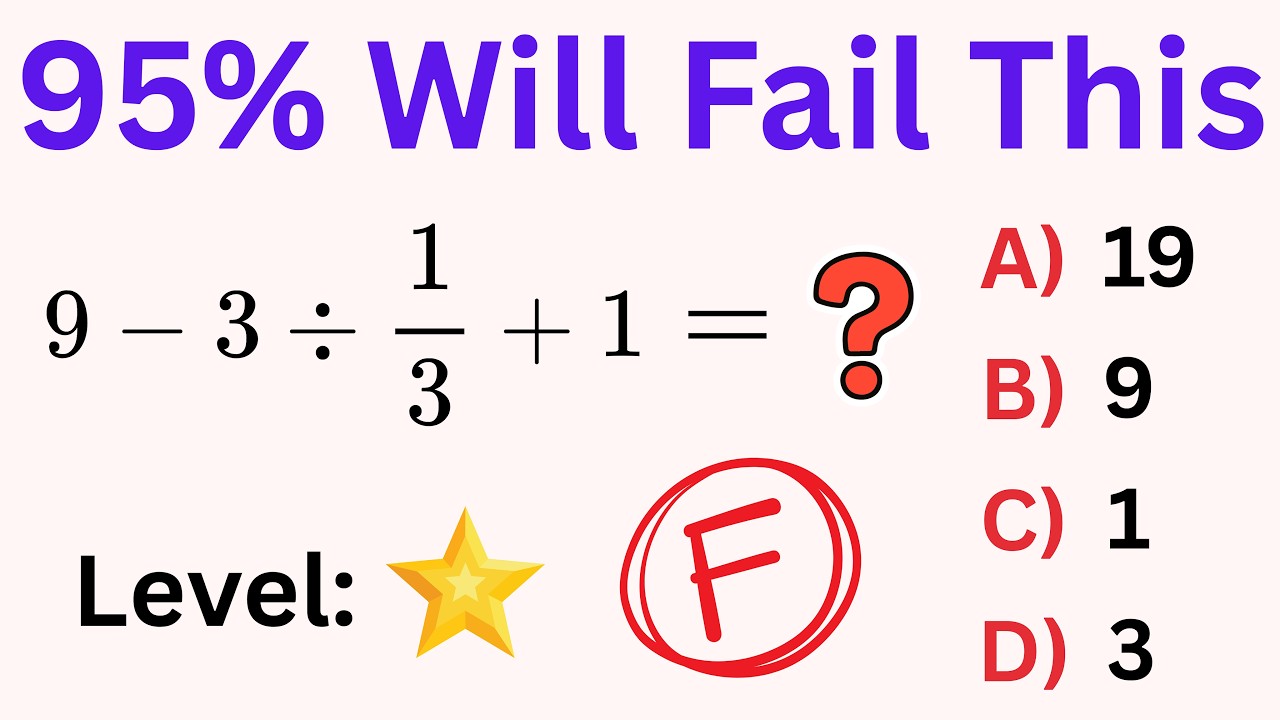
Can You Solve This?
brain_station_videos
1K views•2026-06-15



