American Lutheran history demonstrates that maintaining confessional orthodoxy and practicing gracious unity are complementary rather than opposing goals, as evidenced by the diverse predecessor bodies of the AALC (including the Ohio Senate, Iowa Senate, Buffalo Senate, and Norwegian bodies) which, despite theological disagreements on issues like predestination and church governance, ultimately united through their shared commitment to the Lutheran confessions while allowing for legitimate differences in interpretation.
Install our extension to search inside any video instantly.
Gracious Confessionalism: Lessons from American Lutheran History
Added:Okay. So, this is part two uh of the follow-up to the the previous talk which uh was an outline of what I talked about as gracious confessionalism.
And in the last talk, I hope you were all here. Most of you were here. If you're not, you may be a little bit lost. So, I'm sorry. Um but I'll I'll try to explain things enough that if you weren't here, you should be able to to generally follow along. Uh but just a quick overview of what I talked about yesterday. I know that it was late in the day and you were all tired uh just as you are right now. Uh I know it's a tough spot to speak like right before dinner you've been sitting all day. Uh and uh and that probably sounds pretty good to most of you right now. It does to me too. Um and yesterday though I I spoke about some debates in 17th century Lutheranism in Germany. These kind of various schools of thought and how they approached things a bit differently. And now I'm going to move historically toward our American Lutheran context.
And so I think what you're going to see is that which is what I talked about yesterday. A lot of the kind of issues, struggles, questions that the church has faced in the past are very much still with us today. Uh and they are still questions and themes that we need to be wrestling with uh as as a church body today. So, we're going to be speaking uh about some about the predecessor bodies of the AALC. Uh not so much about the formation of the AALC itself as I'm trying to root us a bit more in our history. Now, I just want to say this before I get into this. American Lutheran history is so complicated.
Like, it's really complicated. Um our our bishop has a you may have seen a chart that he created of American Lutheran church bodies. And it's got arrows going here, here, here, and here.
And it's it's it's a very helpful chart.
You should look at it if you haven't if you want to get a hang of all of this.
Um, and this is it's just something about the nature of how Lutheran came to America that was distinctive from a lot of other uh other religious bodies because essentially what you had is a bunch of you had small groups really of immigrants settling in various parts of the country that tried to kind of find each other and say are there people we can cooperate with. It's very different from what you find with some other reformed bodies where the divisions are just the results of splits. Uh there is that too as we can certainly talk about but it's more complicated than that. So I am going to to try my best to give you a general picture of this. I'm going to try to be as accurate as I can. I may make some missteps because I confuse these things somewhat too trying to keep some of these particulars together. So I'll do the best I best I can here. So, first I want to kind of lay out what are the predecessor bodies of the AALC.
And if you're not familiar with this history, there are two different bodies known as the American Lutheran Church.
And when we think of the American Lutheran Church, you probably are mostly thinking about uh the second one here, the TALC. Now, I always I I always found it very strange to have a T capitalized for the 'the' and I know we've done that in the past as well. And and I always wondered like why is that the case? Why do you capitalize a T for the you don't do that for anything. Well, the reason is because it differentiates it from what was ALC. Uh and so if you you think that's a little odd, that's the reason for this. So there's the old ALC as it's sometimes referred to uh which is a body formed in 1930. And this was uh this was a union of three distinct senates that we are going to be talking about here.
Okay. So as you you look at a lot of early American Lutheran you're see going to see a lot of names of states and we still have a couple of these names around today. We have the Lutheran Church Missouri Senate or the Wisconsin Evangelical Lutheran Senate that that retained those state names. Uh we don't you know we don't have that uh in our church body. And the reason for that is that's really where that church body settled and then they grew beyond those those individual states. So we have here uh the Iowa Senate in 1854, the Ohio Senate. Again, we'll talk about these in a little more detail. And then we also have the Buffalo Senate. Buffalo obviously not being a a state um but a city in in New York. And so these three bodies came together to form what was the old ALC. Now we also had the union of the Norwegian churches with those church bodies uh to form what was the newer ALC or the TALC as it's sometimes called. Uh now these Norwegian bodies I have four that that were part of the merger here. The Norwegian Senate, uh the Hoggy Senate, United Norwegian Lutheran Church of America and the United Evangelical uh Lutheran Church.
Uh, and something you probably note as you look at all of these is and as you see more of these names, some of them are just so similar, it's really difficult to keep them all all together.
But, uh, that's just how it is. Now, I want to talk a little bit about the kind of culture of American Lutheranism in the 19th century. This is really important again because I think it tells us something about our identity. And I'm going to talk about how this relates to the the same kind of divisions or different approaches that we looked at in the 17th century.
Now, I'm starting with the 19th century, not because the 19th century is, you know, the first time we have Lutheran in America. There have been Lutheran in America almost since America itself, uh, you know, was was colonized. Um, but Lutheran were were desperate. Um there there was no real organized Lutheran body until Muenberg, which is a name that many of you probably are somewhat familiar with, um organized what became the the Pennsylvania Ministerium.
But by the time you get to the mid9th century, the Lutheran Church is not really in great shape for a number of reasons.
And one of those is simply the reality that America is a Calvinist country. Okay, America is a Calvinist country. It is in the DNA of this country. It's in the way people think. It is in the questions that people ask. It is just in the way that people live in this country.
And because America is a Calvinist country, it was very difficult for early Lutheran to really retain their Lutheran identity in full. I mean, it's inevitable that any culture you're around is going to influence you, right?
I mean, that's of course that's the case. You're going to be like the people who live around you. And so culturally, many of the Lutherans, especially as they they began to speak English as their primary language, um they began to be influenced by a lot of the reformed culture around them.
As they spoke English and German was lost among some, they couldn't even read German theological literature. They read what was in English and well, what's in English? Not a lot of Lutheran works.
There are some. you can find the works of Martin Luther. Uh but it's not like there was wide accessibility in English of Lutheran material and that means that even you know leoty when they're reading devotional books when they're singing hymns that are in English like they're Calvinists they're Calvinist books they're Calvinist hymns uh and so those things are really forming the way people are thinking you know about about themselves. Another problem is that there is a scarcity of Lutheran clergy.
And so we do have these, you know, circuit writing pastors that go from one church to another, but they can't be there every week. And so what happens is they find other people to fill the pulpits. And who fills the pulpit? Well, the Calvinists and the Methodists. Uh and so there's a lot of preaching that is also not distinctively Lutheran.
And so we have a bit of a crisis at this time that Lutheranism still exists in a formal sense and it's not to say that nobody is teaching genuine Lutheran theology uh but it is not all that prevalent within Lutheran churches uh of of this time and even if it is present from the pulpit the you know devotional material uh and the hymns that the leoty are singing are very much not Lutheran.
So the people are still being formed by a spirituality that is from uh from another tradition.
Along with this there are many Lutheran at this time that are studying at reformed seminaries in order to to get their their training to become Lutheran clergy.
So for example, uh Princeton theological seminary which was really the the heart of a rigorous American Presbyterian theology. Uh this was now a place where a lot of Lutheran clergy went to train and at at the time Princeton had a very high view of scripture. Uh there are things that may be attractive about it, but they certainly weren't getting a Lutheran education. Okay. With all of that background, we have to understand to get the dynamic that we're going to be talking about here. Okay. Um, there is a man named Samuel S. Schmucker and you got to know his name to know anything about the history of Lutheranism in America. And, uh, his years here are 1799 to 1873.
Um, Samuel Schmucker has a propo proposal for something that he calls American Lutheranism. And essentially he says, well, we we are Lutheran, but we are Lutheran in an American sense. We have a different culture. We have a different country. and Schmucker made a proposal for some uh some changes to the Lutheran confessions, the Auxburg confession in particular.
And at the time, some of these kind of disperate Lutheran bodies had formed a larger body called the General Senate.
So many Lutherans at this time had this desire that there would be eventually one American Lutheran church. You know, you don't have in Europe when you look at these Lutheran churches, it's not like there were all of these different denominations, right? denominationalism in the way that we think about it is really an American phenomena. Um you don't have like all these various different denominations in Germany or in Denmark or or other places in Europe.
And so the desire is to have something similar to what they have in other countries as a national Lutheran church of some kind. And so the general senate is a kind of first attempt to do that.
Now it's not a really formalized centralized uh body.
and Samuel uh Schmucker starts promoting this this notion of American Lutheranism that is really not a faithful kind of Lutheranism uh in the general Senate.
And so from there break off these these confessional groups as we'll talk about.
Now something else that I need to say here uh is that there's something going on in Germany in the 19th century that is very positive in the Lutheran church.
Uh I love the 19th century. I it's it's my favorite era to read about. These are my favorite texts to read. I don't know why. I just I just love this era. And I think a lot of the reason why I'm so attracted personally to the 19th century is that the the problems that the world faced at that time are very similar to the ones that we face today. Uh you've had rationalism essentially destroy the church. We're still battling that in maybe some different ways. You have mass secularization at this time.
You have significant political polarization.
as we have in our world today. And so often as as I read these Lutheran theologians of of that era, they speak so strongly to today because in some ways the problems haven't really changed. They they've morphed into different forms, but the essential problems I think still remain essentially the same. And so as rationalism has really corrupted and really destroyed the church in so many ways uh throughout the prior century there is a rediscovery of traditional theology. Now this rediscovery of traditional theology in the 19th century is not just Lutheran. Um the reformed do it too. Calvinists do it and this happens to uh Roman Catholicism as well.
This leads to the first Vatican council in 1870 uh where you have the the first declaration that the pope is infallible, the declaration of people infallibility.
And you also have like high church Anglican movements. You don't know what high church means. I'm going to explain that in a little bit uh because it is a little bit relevant to some of the things we're talking about. But people are looking to the past, right? In an age of confusion, people look to the past to find wisdom and stability. This is very much what we're seeing in our culture today. This is why it is the case that a lot of of younger people especially younger men are are looking toward traditional liturgy. They are interested in reading the church fathers earlier writers. There is this desire like you had in the 19th century to recover truths in the past to find wisdom and stability from what has been said before. So this is happening in in Lutheran churches. So there is a movement that is sometimes referred to as neolanism in in Germany. And so neolanuanism, new Lutheranism, this is this again revival of the Lutheran confessions and and traditional Lutheran theology. I have some names here that are kind of representatives of this. Um Adolf von Harles, Ernst Hankenberg, Friedri Philippi, August Christian Vilmar, Friedick Julius Stall. If you don't know who any of those names are, that's that's okay. Uh maybe a popular representative of this for those uh who are pastors especially is the the Kylin Deich Old Testament commentary series.
Uh they they were both part of this neolan movement especially uh France de Lich who was extremely influential.
Uh and so these people they're they're recovering the Lutheran confessions.
They are reading a lot of older sources and they are promoting a high view of scripture and writing extensively against rationalism and secularization.
Again, a lot of wisdom I think for today in these writers. Um, now there is one figure whose image I have up here. Uh, this is Charles Porterfield's Kra. Uh, Kra is a name that some of you know and I know that because I asked you yesterday and some people raised their hand that they knew Kra's name. So Kra is a really significant figure, one of the most significant figures in in certainly in the history of American Lutheranism. Uh if you don't know his name, you should at least know his name.
He has a wonderful book called The Conservative Reformation and its theology. Uh which in many ways is I think probably the best treatment of the Lutheran Reformation really that there is. It's the principles of the Reformation. It's very long, but uh but it's it's a very helpful book. Okay.
See, I think another reason I like the 19th century is all the all the good theologians then had beards. You know, there's uh maybe I'm a little bit biased, but for some reason, you get to the 20th century, they all shave the beards off. You know, it's it's an unfortunate thing. Um, so, so Charles Kra is his story is is an interesting story because he was kind of in one of these Lutheran churches that had lost its identity and he started reading all these older Lutheran sources and was captivated by it and and really began to just rally people around this. And so I found this treasure in traditional Lutheranism largely through his read of Martin Kemnets uh and and he wanted to just teach everybody. So he becomes this wonderful leader who forms uh he starts this confessional Lutheran revival among English-speaking Lutheran at at this time and we'll talk about him a little more as we go on. Um Kra uh is initiates the formation of this new body called the general council which is opposed to the he was in the general senate previous to this but because the general senate is not actually holding to the Lutheran confessions it's not really a Lutheran body.
Now at the time in the 19th century we have these things that are going on with those who have now been Lutheran who have been in America for a few generations. Um but you also have mass German uh migration immigration into uh into the United States and many of those Lutheran who came to the United States at this time were part of this or influenced by this neolan revival. So they were traditional Lutheran and they brought that uh theology and practice with them.
this um this German immigration leads to the formation of say the Missouri and Wisconsin Senate and the Iowa Senate as well which is one of our predecessor bodies as we'll talk about. Okay. Now as I I talked about yesterday we have these kind of two dangers that we have to avoid. And this is as I said it's always been this challenge that we jump too far to one side or too far to the other side. And um on the one hand, we can become what's called sectarians.
You've heard that term sectarianism.
Some of you have heard that term. I'm sure I see some people nodding. Yeah. To be sectarian is is to kind of separate yourself from like all other Christians and to have your your kind of little group who doesn't interact with anybody.
You start saying, "Well, nobody else is really a Christian except for this this little group of people here."
So sectarianism is when you kind of split off for no good reason as a a group or a body from others and you generally have a uh almost exclusively kind of condemnatory view of everybody else. Okay? And so we talked about last time how there were some who had this desire to have this extremely rigid set of doctrines that went beyond the Lutheran confessions to tell everybody else that they had to subscribe to.
Um and then we have the problem of unionism. This is the other problem, right? So the other problem is that we we say we start to say well God cares a lot about unity which he does. Scripture says this. We are called to be gracious toward other people. Maybe we should just kind of ignore theological differences and maybe we should all kind of join together. Yeah, we can have some differences, but let's just say that's secondary stuff and we don't really need to talk about it. We don't need to divide over it. So, as we looked at yesterday, we have these two different biblical callings. The one is to preserve our doctrine and to rebuke false doctrine. It's one of the callings of of the pastor. And the other calling though is to be gracious, to be quick to listen and slow to speak, to seek unity in God's church.
And so, how do we mediate between those two things? How do we obey our Lord's calling in both of those areas?
Well, I think we could see some examples of wrestling through this question. And this is a question that we still have to wrestle with today. I'm not saying there's always an easy answer to it. Uh but here I'm going to be talking about the Ohio Senate first. And this this image is of uh Matias Ly. Matias Ly is probably the most significant theologian of the early Ohio Senate.
And he has Who here has has ever read Matias Ly? I'm curious. Okay. So, okay, some of you I see some of you. I don't know if I saw Gage, but I figured he'd be jumping up like this with his hand up. But uh um Matias Ly is a um a writer who I do recommend recommend reading. He has a really wonderful commentary on the Auxburg confession. It's really long. Uh he has a number of sermons that are published. He's got some um meditations on the sermon of the mount that are that are published and well and well worth reading today. Um, so the the Ohio Senate was formed by the Pennsylvania Minister Ministerium. And so Pennsylvania uh the Pennsylvania Ministerium starts uh churches in Ohio and at some point the the churches in Ohio are really affected by unionism.
This they they have largely adopted reformed theology. They've largely adopted uh reformed practices.
um but not not entirely.
And there is then as part of this immigration that happens, this German immigration to the United States, there are a number of confessional Lutheran that settle in Ohio, become part of the Ohio Senate, and it is is really moved toward a confessional uh doctrinally more robust Orthodox Lutheranism.
Now, um, Matias Ly ultimately desired at the very beginning of the Senotical Conference, uh, which was a union that that no longer exists, but included the Missouri Senate and the Wisconsin Senate, as well as the the ELS. Um, and as those groups are beginning to to think about forming these more united church bodies, uh, Ly and the Ohio Senate are interested in joining this this new effort.
And uh ultimately that fails ultimately that fails and it really fails mostly with one issue. Um though there are some other differences as well and that is over the doctrine of election of predestination right and so uh the doctrine of election or predestination is something that is addressed in our Lutheran confessions. It's in article 11 of the formula of concord.
Uh, and there really, as I look throughout Lutheran history, there really hasn't been, at least until this point, as far as I'm aware, uh, there has not been much significant debate over this particular doctrine. It's not it it's in fact that article in the formula of concord is interesting because all of the other articles in the formula of concord, this is the last of the Lutheran confessions that's written.
All of those other articles are written because there's some debate about it and and the document is written to try to make peace because these people are arguing this, these people are arguing this. let's find a resolution to it. But the doctrine of predestination, they say, "Well, there's no debate about it among us yet, but they're seeing what the Calvinists are doing with predestination." And they say, "So, we're going to try to resolve this before it becomes an issue."
And so, they wrote Article 11, and there was never a debate about it again.
That's a joke. Okay. Um, of course there's debate about Yeah. So, but this debate doesn't really start up again until this this particular time.
Now, there are different interpretations of of the doctrine of election, and everybody in this controversy believes they're representing the Lutheran confessions properly. Um, but this ends up creating a split uh between Matias Ly and and the Missouri Senate because the Missouri Senate took a different approach to election and and the Missouri Senate made a decision that they were not going to allow what's called the intuit view, which means in view of faith, of the doctrine of election. If you don't know exactly what that means, uh I don't know, ask me after, but don't worry about it now.
>> So, uh then we have this other Senate which is called the the Iowa Senate, which is one of our predecessor bodies.
Uh and some of you may recognize this this image here, this man here, Wilhelm Leo. Uh Wilhelm Leo had connections with CFW Walter and the Lutheran Church of Missouri Senate at one time. They broke as well. Walther broke from him. Lo Leia had a very different view of the office of the holy ministry. Um and where that authority comes from. You see you got a lot of ruptures here uh among Lutheran.
We certainly like to to fight one another. Um now the Iowa Senate uh was founded by students of Wilham Lea after this rupture with with the Missouri Senate knowing that there was not going to be a connection here. Now Leia himself uh did not come to the United States but he had deep connections with the church and deep concern for the church in the United States. So the Iowa Senate was centered in Deuke Iowa and the Iowa Senate held to the Lutheran confessions. Uh they they would say that they held to them um not just in so far as they agree with the word of God but because we call a quia subscription. So they had a strong view of subscription to the Lutheran confessions. But as they started writing they said some kind of confusing things. Uh and this caused some issues which were corrected pretty quickly. And that is that they they began to distinguish between they said well we are we affirm the primary doctrines of the book of concord but we reject the secondary or we don't not that they reject they allow for differences on the secondary doctrines.
This was kind of confusing. The question is always what does that mean? Who decides what's primary and secondary?
can't just call anything secondary and disagree with anything you want. Um, what they were really trying to say is things like, well, the the perpetual virginity of Mary is kind of mentioned offhand once, right? Is that actually the something that we're bound to or is that just a kind of off-hand reference?
Uh, that's really what they're trying to say, what they're trying to to say here.
and they end up seeking the advice of some theologians, some of the the neolans in Germany to try to get uh some of their insight as to how they should how they should deal with this. And all of them said, "Hey, you guys shouldn't be talking about this primary secondary doctrine thing. That's really not how subscription works." And they were like, "Okay." So, they stopped. Um but uh they and they really wanted to have to have some unity and fellowship with other confessional Lutheran in the United States. And so they met with the Missouri Senate with hopes that they would be able to establish a relationship with them. And they just could not come to agreement with Missouri. Um, and a lot of this had to do with one particular doctrine, and that is what's called kilazasm.
All right. If I say kilazm um, who knows what I'm talking about?
Okay. Okay. Less than half of you, which is what I expected. Not a term that you hear much, right? Kilasm. What the heck does that mean? This is usually referred to as premillennialism. Okay. Does that term sound more familiar to you? This is the idea that there is going to be a a thousand-year reign of Christ that kind of fits between the end of this age and then the final age like like the final entrance into glory. There's this kind of intermediate thousand-y year reign where Jesus returns and establishes some kind of peace for that time period.
And um the Iowa Senate, it's not that the Iowa Senate at all taught this doctrine, but they believed that it was allowed uh it was an allowed opinion in the Lutheran confessions and the Missouri Senate rejected this idea that it was allowed. They they believed that it was rejected or was contradictory to the Augsburg uh confession. Though I did find a note while I was reading about this recently that Walther actually said when he met with Lamea and or not with Lamea, sorry, I'm just looking at his picture here. sorry, with with the representatives of the Iowa Senate as this discussion happened, he did say, "Okay, well, the way you're talking about this isn't heretical. It's just problematic." So, he was willing to say, "They're not heretics uh for this, but it did lead to a breach between them, so there wasn't going to be fellowship."
Okay.
Now, the Iowa U Senate here uh did not officially join this other body, the general counsel I mentioned before with Charles Kra. Sorry for throwing all these things at you. I know you all look very tired and I'm sorry. Uh but the uh general council we'll talk about in a minute here. This is the other kind of large body of Lutheran churches that have come into communion with one another. Um Iowa doesn't join but has a strong relationship with them that's maintained. They have an advisory role.
They go to their to their meetings. Uh they work on a on a joint himnil together as well.
Now, the Iowa Senate characteristics, it it tends to be more high church or many of the congregations were what you call high church. Okay, the term high church, low church, they're actually Anglican terms. I just don't know what other term to use. So, this is this this is just kind of what's accepted. Uh high church essentially means a more ornate liturgy.
Um you know, more traditional vestments, those kinds of things. uh low church means a little bit more of a simple service, a little bit less ornate uh liturgy and things like that. And so the tendency of many of these congregations through Leia's influence is more in that kind of high more lurggical end of things. Okay. And um the Iowa Senate largely came to really oppose the Missouri view of the doctrine of uh of election. Okay. Okay. Hold on.
I Okay, I thought I was missing a slide here. I think I may. That's okay. All right. Um, so just some important theologians to know in these groups. A house, we have Matias Ly. Richard Lensky comes from from that tradition. Uh, if you have ever heard of Richard like Lensky's commentaries, they're widely used New Testament commentaries used well beyond the Lutheran church. Uh, I heard once that they were John MacArthur's favorite commentaries, if you know who that is, a a Baptist pastor who passed away recently. So, that's just to say his influence is far beyond the Lutheran church. He's usually my first go-to when I'm I'm looking at someone who really examines, I think, the the Greek text. Well, I I love I love Linsky. But, um most important theologians of the Iowa Senate, uh the Friils, Godfried, and Conrad Sigund. Uh Yan Michael Rue is is another influential theologian theologian there.
Then we have the Buffalo Senate. Now, look at this guy's picture. Does he look pleasant? I mean, come on. Have you ever seen a more angry-l looking man? Um, Pastor Graal. Now, the accounts of Grabel and his personality fit that picture pretty well, I will say, when you read some about the history of the Buffalo cited. Now, uh, Grao was was once imprisoned. Well, he was so this is an immigrant group imprisoned. Um, and maybe I should back up because I don't think I mentioned the Prussian Union, did I? And I should have said that earlier. Um, so there's a thing that's going on in Prussia in Germany at this time. And that is there's something called the Union Church where there is basically this forced union of Lutheran and reformed churches together. They want one joint Protestant church. Uh, many Lutheran fought against this idea because they believe that they were going to lose their Lutheran identity.
This largely did happen. And it seems that every time there's an attempt to unite Lutheran Reformed churches, the reforms went out for whatever reason.
So, um, Grao is refuses to use these new church books that were mandated. Uh, and he's saying, "No, I'm using our Lutheran liturgy." He's eventually he's imprisoned for this. Uh, and then he leaves for America with some others who wanted religious liberty. And so, they settle in Buffalo, New York. Now they also wanted to have union with Missouri with the Missouri Senate. And so what happens uh is that well they meet with the Missouri Senate like others do. They don't agree on the issue of ordination in the office of the ministry um and they kind of excommunicate each other in a way and then Walter decides he's going to be petty and plant churches in places where there are buffalo cinned churches just because. Uh so sorry that's just the reality. Now I will say Graba was not any nicer really to him either. This is just uh what what you find in these these conflicts here. Okay. Now he had a Graba had a very strong view of ordination. He would say that ordination is um is necessary for a right and proper call. Now when I say strong view, at least in in my read of 17th century Lutheran sources, this seems to be basically unanimous in those texts as well. So I so I there are aspects of Graba's view that I think go beyond that. Um he he has an almost absolute view of obeying the pastor and everything the pastor says, which is I think not a healthy place. Um uh but but on some of these issues, I think he's simply representing the the tradition.
Okay. Um and he has a high view of the visibility of the church. So there are um when we talk about the church, there are two elements of the church. We could talk about the invisible nature of the church and the visible nature of the church, right? The invisible nature of the church is like that we are all spiritually united to one another in Christ and we are united to Christ the head, right? The mystical body of Christ.
And that invisible nature of the church is not dependent upon relations between external organizations, right? We have brothers and sisters in the family of Christ that are in totally different Christian traditions because we're all part of the same body of Christ.
But uh there is the visible element of the church which is the external organization of the church. And so this is you know we talk about well I mean you can think of course of just the word and the sacraments. They're visible things but also the external organization of the church fellowship agreements in the church those kinds of those kinds of things. Uh, Grao has a very strong view of the visible nature of of the church here. Okay. Now, the Buffalo Senate honestly is not very successful in doing missions work. Um, and some of that maybe is because of how kind of rigid and cold they tended to be, at least in reading some accounts of uh of their kind of mode of of operating. So, they didn't grow as fast as the Ohio and Iowa sen.
All right. Now, and I know you're probably eyes are glazing over at this point. Here is the last of the sentence that come together to form um the the ALC or the second ALC. Uh we have the the Norwegian we have the Scandinavian sins largely Norwegian here. So there's a Norwegian Lutheran senate 1853.
Um they they are a very strongly kind of uh confessional group. They hold strongly to Lutheran confessions.
Um they sent pastors initially to Missouri seminary and then they also split with Walther because Walther was sympathetic to some degree to the south in the civil war. Uh and they they split because of that. They were part of the founding of the Senotical Conference.
But the Norwegian Senate felt that they were constantly looked at with skepticism. They were constantly being questioned as to their orthodoxy and they just didn't want to be in a position where they just felt like they were constantly having to defend the fact that they were confessional Lutheran. and so they decided to leave.
Okay. Then we've got the United Norwegian church which is a mix of confessionalism and pyotism. U I'm gonna talk a little bit about what those two things mean and how they relate. Um generally opposed to Walther's doctrine of predestination.
Then there's the HGI sinned which is a more uh lowurch pyotistic senate. Uh if that name Hgi sounds familiar you know we've been going to HGI chapel here on campus. That's the same HGI there. Um and then these churches eventually agreed to allow for diverse views on the issue of predestination which was one of the issues of controversy uh to form the ELC in 1917.
Uh and essentially the that agreement outlined essentially what the formula of concord says in article 11 saying as long as we agree with these things uh we uh we we can unite around the confessions despite some different interpretations. Is there >> question the first three form the fourth one?
>> Um yes that's correct. uh the Danish United Evangelical Lutheran Church 1884. Uh their anti-grunt I don't need to give you all the details about this. So but but there's a small Danish church as well. I'll just say that. Okay. I don't expect you to remember all of this. I so much information.
>> Yeah, I should give you a test. Maybe it would keep you awake if I did, you know.
>> Well, thank you. It's just um >> Yeah. Yeah.
There you go.
>> Yeah, this is we have a course at the seminary, the history and polity of the AALC where you go through a lot of this history. Uh if you want more details about this, I'm just trying to squeeze it into this little time period. So, >> yeah, anybody can take it if you want this in more detail. Auditing is cheap.
That is true. Yeah, it is. It is. It's good to know that the history of of your church.
Um okay, then there is this group called the the general council.
Now the general council is not um is not a direct predecessor to the AALC but is but many of those theologians and bodies are very important for the for our history. Uh and as I said Iowa was in constant conversation with the theologians of of the general council.
Ohio was as well but not quite in in as formal of of a way. Um, but the general council, particularly the theologians in Pennsylvania, uh, really became the primary most influential voices for Englishspeaking Lutheran. They they were the primary, uh, dogmatic textbook, theological textbooks.
And so this was founded in 1867 by 10 different Lutheran sinnidates. So this is a union of these different cinnids, these different groups that are still essentially operating independently, but they have union in this this general council.
As I mentioned before, uh there was this other general Lutheran organization, the general senate that had really abandoned its commitment to the Lutheran confessions, which is why this this group starts and many people in the general senate end up leaving and joining the general council as a result of this. It is formed through the initiative of the Pennsylvania Ministerium. Um, and I don't know, maybe it's just because I'm from the Northeast, you know, so I'm very favorable toward these Pennsylvania Pennsylvania Lutheran, but uh, this is Pennsylvania is really a center for this confessional Lutheran strong theological revival of this time. Uh, there are two primary figures involved in in the founding of this this general council.
Charles Kra, I already already mentioned other is William Posivant who's in that image there. uh he is he's a very important figure for mercy work uh and deaconist training and does a lot of very important things for the church as well. They opposed this notion of American Lutheranism. This this idea that Lutheranism had to change its theology now in an American context.
Um they adopted what is called the Gailsberg rule. Sometimes you'll run across this term um of Charles Kra. Now the Gailsburg rule came out of this concern that Lutheran congregations were having all of these reformed pastors come and preach in their churches and they were worried of course because their people are getting a lot of uh you know Calvinistic theology from the pulpit in their churches. And so um this Charles Craut sets this rule which essentially which is summarized as uh Lutheran pulpit for Lutheran pastors, Lutheran altars for Lutheran communicants. And so the Lutheran church needs to be the Lutheran church.
Now there are four points of debate in this the the gen that exist in the general council and it ultimately leads some some bodies including the Iowa and Ohio Senate not to join because there are some even even though they they they like the constitution they like kraut they're they need to be convinced uh that the body has taken a strong enough stance on these particular issues. The first is kilazm which we already mentioned that wasn't an issue with Ohio because they allowed kilasm. The second is open communion, allowing because there were some of these bodies in the general council that seemed to have practiced a much more open communion policy, opening their altars to to non-luans as well as having non-luans preach on regular occasions. And then there's this other practical question that takes up a lot of time and that is can members of Lutheran churches join secret societies.
So Freemasons, right? you know, the Freemasons. Um, and Freemasons are the subject of many a great conspiracy theory. Uh, but Freemasons were very popular at this time. Uh, it was it was very popular to join the Freemasons. And this became an issue because there are there were concerns that loyalty to a group like the Freemasons was not consistent with the Christian Confession for a number of different reasons. And I will say in the midst of this particular controversy, pretty much everybody agreed that they were not it was not a good idea, right?
Like like not I don't know of any theologian pastor at this time that's saying Christians should join these secret societies. But it was really more of a pastoral question of how do you handle the issue? And there were some that took a very strict stance that said well just don't let them join a church if they're a member of a lodge. uh and others said,"Well, no, we we need to just kind of carefully teach and then deal with these issues, but it's not something that should exclude somebody from membership by itself." Okay. Now, the general council ended up merging with the uh general senate and then another group that I didn't even mention at at this point mostly for the sake of time uh and that is the United Senate of the South. Now the knights into the south just arises because the civil war happens really and so those who are in the southern states come together and form this body. Um in 1918 they come together to form the United Lutheran Church in America. Now, the really unfortunate thing about this is that though the general council, especially the Pennsylvania Ministerium, was really in many ways the kind of hub of of certainly English-speaking confessional Lutheranism in the United States. This was kind of the death of Krauss's vision because now they had united with this group that they were really formed to oppose and and that group had changed in some ways but not really in a fundamental way and I think you see that with the development of what happens here. There's then they merge with a couple other smaller bodies to then form the the Lutheran Church of America or the LCA in 1962 which then is one of the bodies that forms uh to become the ELCA. Now if you look at the the kind of landscape before the ELCA of American Lutheran churches um this this group the the LCA was generally considered the most theologically liberal of of these various groups.
Okay, which again was not was the opposite of the intention of the general council.
Okay, theologians of the general council. You got to know these guys.
Okay. And and this is my uh in some ways I feel that my mission in life is to get people to read these three people. Okay.
Uh and so don't listen to anything I say. It doesn't really matter, but you should read these guys because most of what I say is just taken from them.
Okay? Um and these are all theologians from Pennsylvania.
And the first of these is Charles Porterfield Cra.
And Charles Porterfield Cra as I mentioned was this just great leader. uh he was somebody that was so able to he just he had this ability to inspire people to inspire people with this confessional vision. It's incredible the amount of students that he had to just produce this amazing theological material but also the amount of students that he had that just did mission work and mercy work in these amazing ways. Um really a a just gifted man in in so many ways and intellectually as well. And I'll talk about little that more in a second here. Um then the second is River Franklin White.
Thanks. That that was my wife.
Widner is Yeah. I Widner is my guy.
Okay. Um you know I there was a uh somebody some of you may know the uh the popular Baptist pastor John Piper. Does anybody know that name?
I when I was a Calvinist because I used to be a Calvinist. I um in college I listen to John Piper all the time and um yeah well okay I got this one good thing from him.
Okay. Uh and that is that I heard him say one time. He said pick one. He said it's a good thing to to pick one theologian one dead guy. And he used that term dead guy too. Pick one dead guy and and say and use that person as your your kind of mentor. have your living mentors, too, but pick somebody from some other age and and take that person as your mentor and devote yourself to reading what they have to say and listening to what they have to say. And I said, you know, I'm going to do that. And I chose Luther. That led me to Lutheranism. And then I read Widner and Widner's been that guy for me ever since. Uh so I have a personal connection to Widner. I love Widner. Um but he is and we're now using his dogmatics texts for our um for our seminary students and Widner is just an incredible guy in so many ways. his biography uh as well as as his his theological writing. And he wrote so extensively in these amazing ways on so many different topics that it was said that he could take over any class in any discipline in the seminary and he would teach it at least as well if not better than the specialist in the subject. Like really impressive stuff, right? So uh so taught he wrote books on ethics. He wrote books on uh multi-olume a multi-olume set on Christian dogmatics. He wrote multiple biblical uh commentaries. He wrote what was at one time a standards Greek textbook for biblical Greek that was used far beyond the Lutheran church in many reformed seminaries and other in other schools.
Uh and he was also considered uh by many who met him and knew him to be among the best living preachers. And it's really a incredible thing that somebody can do all of those things. So, um, okay, the next figure here is Henry Eester Jacobs, uh, also from from, uh, Pennsylvania. Now, Jacobs did a couple very helpful things for the church. Um, one of these was he was a wonderful theologian in his own right. Okay? So he wrote he wrote a couple great theological works that were meant to introduce Lutheran dogmatics, but to do it in a way that if you didn't know anything about Lutheran theology, if you were coming from a totally different tradition, you could pick it up and you'd understand what he's saying.
Totally. Uh and he had this just amazing ability to write in a way that's readable but also extremely deep. Uh it's very difficult to to be able to do that. Well, but the other thing that he did is that he said, "Let's get Lutheran stuff into English because we want the Americans to know this tradition. We want our people to know this tradition."
And so Henry Jacobs uh did this translation of of Luther's works. It was uh I think it was originally published as six volumes. Uh now there were some Luther works in English already but a more a little bit more of a uh kind of not comprehensive uh but something that would introduce you to his major works all in one set. Um he edited a series of commentaries called the Lutheran commentary in the New Testament trying to get Lutheran commentaries um in in English. He did a bunch of translation projects of older Lutheran theologies um the evangelical theology uh sorry the doctrinal theology of the evangelical Lutheran church by Henrik Schmid which is like a classic work of of Lutheran kind of compilation of older Lutheran theologians he got that into English and um he translated he didn't do the whole thing himself but he coordinated a translation of the book of concord that was used for many years uh and so a a lot of people still read work that is influenced by Jacobs today.
Extremely influential and uh helpful figure. So with all of that now, and I know it's taken me a little while, that's the history stuff. Okay, I'm done with the history stuff. You can you can breathe. It's okay.
See, initially I was going to have three talks and it was going to be quite as squished, but but um so okay, but I think we we can do this here. So, I'm going to go through the three three different approaches that we see in American Lutheranism. And I think what we will see is that these three approaches line up with the three that we just saw yesterday. If you remember this, the approaches of the different schools dealing with the these the the question of how is it that you balance this call to be bold in your theology and clear in your theology with the call to be gracious.
We have the approach of the general senate.
The general senate says that Lutheran confessions are not really absolutely binding at least at one time according to to Schmucker and his approach didn't really take but uh he he thought they could be changed as well. They sought some kind of real unity of Christian confessions. They didn't have a strong uh distinction. Many of their pas like between Lutheran and reformed. Some of their pastors went to reformed seminaries. uh it was common to have reformed preachers in their in their pulpits.
Um they had a very strong use of philosophy even in places where the conclusions of their philosophy departed pretty significantly from traditional um Lutheran orthodoxy.
Okay.
Do you notice those are all the same basic points I mentioned before with the theologians at Helmstead with Kixstus.
Then we have the the synotical conference and their general approach.
So the synotical conference approach uh is one that is going to be a stricter approach, one that is going to emphasize much more the need for purity and unity of doctrine. Um one of the major points of debate is that they reject this notion of open questions. Right? The idea of open question says that there are some doctrines that are left open in the sense uh that the clergy in a given church body might not all agree with with the same conclusions on on those things.
Now, of course, if you're talking about open questions, whether you're going to allow them or not, you have to say, okay, what things are open? Because not everything's open pretty clearly, right?
Uh and so the confessional Lutheran Church is not going to say that the confessions uh the issues addressed clearly in our confessions are open questions. Um one of the issues that was debated for example here is the notion the issue of the Sabbath. Here's just an example.
Um among Lutheran in America there are two views operating about like in terms of how they view the Sabbath. And the one view is going to say that there's if you look at the Sabbath command, you look at the ten commandments, there's a question that is like all of the other commandments, it's pretty easy to see how they apply to us today. But this whole Sabbath thing, how does that apply to us today? It's not as easy because there's not there's clearly we're not called to rest on Saturday, which was the Sabbath, right?
So what is it that applies today? Well, there is one approach that would say, well, there's something that that is eternal about that Sabbath law, which is a general principle of rest. Like we are to rest. God created us to rest. We work and we rest. That's the creational pattern that happens with um you know in the garden. And so that pattern of work and rest is something built into creation.
And that is something that does continue today. But it doesn't it's not on a Saturday. Um that doesn't mean what you find among some of the reformed there's this very legalistic you can't do anything on Sunday kind of thing but there's something that's eternal about this notion of rest there right um Missouri took a a different approach to that which would say that there's really not not anything binding about that Sabbath commandment in that sense today so that's the sonatical conference view so that would be an issue that other churches say that's an open question like um I would say that's an open question we can disagree on exactly how that Sabbath thing works it's not really communion breaking It's not like explicitly even discussed really in the Lutheran confessions and that opinion is the majority view of the certainly the 17th century. Um okay so the sonatical conference and this is really really a major issue here if not the major issue which is that they required not only affirmation of a quia subscription to the confessions but they required an affirmation of specific interpretations of the confessions as a basis for fellowship which is essentially the same approach that Abraham Kolov had that I talked about yesterday.
So with the issue of predestination for example uh there was a very strong stance taken on one interpretation of what the formula meant on the doctrine of predestination uh which was something that was set down as required as a condition of fellowship.
Now I I will say this I've done a lot of reading in the last couple years of Lutheran sources after the formula of concord and I may be wrong on this. I'm happy to be wrong if you want to show me. I haven't found one person who holds to Walter's view of predestination. I just haven't I haven't found anyone prior to Walter uh between the formula of Concord and Walter. Now, I may be wrong about that, but that's that's what I found. And a number of other people that are looking into this issue as well in those same texts tell me the same thing. Um so do with that what you will but I I think this does create it creates a bit of a dilemma right to say if there's one interpretation solely one interpretation that is definitive for the issue of fellowship and that interpretation differs from like the most important theologians of the tradition it it seems to be at least in my view it seems to be a problem and that was the view that uh Ohio and Iowa took as well. Okay. Um, there is a stronger focus here in the Sautical Conference on a kind of separation from other Christian traditions. Uh, and they do tend to be more pessimistic about philosophy. So, you kind of have the opposite end. And there's good reason for this in a lot of ways because they're dealing with uh the challenges of rationalism. Philosophy was used at this time a lot as a tool against Christianity. Um, and so totally understandable why this is the case. Um, but they're they're generally rather pessimistic about philosophy. Now, I want to say the emphasis on this separation from other Christian traditions also makes a lot of sense.
It's not just arbitrary. There's a reason for it. And that is they're escaping the Prussian Union. They're they're they're coming to America to have freedom to be Lutheran. So, of course, that's what they're going to focus on. It makes total sense. Uh and so so I'm not even I'm not saying this as a point of critique. This is just a point to say because of their culture or circumstance that is something that defined them uniquely. they have these unique fears because of their own situation. Um, which just happens to be a bit different from some of these other churches in just in terms of their their background and what their concerns are.
Um, then we have the approach I I mentioned Iowa and the general council.
You can put some others here too, but and that is these are general categories, right? These are general you there's there's all sorts of in between here. Um, and the first of these is uh an affirmation of a quia subscription.
So they would say that we affirm the uh book of concord the Lutheran confessions because uh they agree with with scripture. They would say that unity is grounded in the confessions. So unity is grounded in a subscription to the Lutheran confessions. Uh and so and and that's kind of it. That's the ground for unity. That's the primary one. Well, really two things. Unity grounded in the Lutheran confessions. uh and then the more ultimate one which is in scripture in in a commitment to the absolute authority of scripture. Okay.
And so this view as you see is more like the view we talked about as the yaina kind of view that would say we we don't need binding documents outside of those confessions uh and certainly not ones written by single theologians. And so this is a genuine difference here where whereas the Senotical Conference and these other Lutherans, they're all confessional Lutheran. But the question and this is a perpetual question we still have to ask and we still wrestle with uh which is is our for unity. Do we need to just have agreement on these confessions or an interpretation of these confessions? Okay. Uh and I do want to say this approach it's not like these are so neatly divided. Um if you look at somebody like for example Arthur Carl Peeporn um he is a who is a Missouri Senate theologian um I think one of the best theologians that church body has produced uh he very much takes this view that we find here in the general council or Iowa this idea that unity is greater than confessions themselves.
Um then we have uh among these theologians a more kind of mediating view of philosophy. Right? So they're not committed to it to such a degree that they're kind of reinterpreting their theology in light of certain philosophical conclusions, but they're also not despising it. At the same time, they also do generally have a greater willingness to work with non-lutheran various areas, but they do follow what's called the Gailsburg rule. In other words, they're still restricting altars and pulpit. And so they're essentially saying here is like here's the boundary, right? We can work with other Christians, but we can't work with other confessions in this one specific way.
Altar and pulpit fellowship. And so we have that that phrase. That's the kind of fellowship that we are restricting when we're talking about things, not other forms of of fellowship. Then you have, you know, the Wisconsin Senate would take that much farther to say we can't even have a prayer fellowship with other Christians of different traditions.
Now, I want to now look at some examples here. These are examples of what I've called gracious confessionalism. And that's the model I think we see in some of these groups as I talked about um like the in in the Iowa Senate, but I think we see in much of the general council as well, at least in its initial founding.
Um and the the first one is from River Franklin Widner. I mentioned him already, right? Rever Franklin Widner. I said this is the guy that I just I love him. I've read everything he's written.
Uh, and he had this very strong relationship with DL Moody. DL Moody, is that a name that you guys know? Who knows DL Moody?
Okay, you guys know DL Moody? Good. Uh, the Moody Bible Institute, if you've heard of that, that's named after DL Moody. Um, and DL Moody, if you know anything about him, you know he's not a Lutheran.
Nothing really Lutheran about DL Moody.
Uh but uh Widner was called to start a Lutheran seminary in Chicago which he did. Uh William Pacavant asked him to to make a sacrifice, move away from everything he knew and go out to Chicago and start a seminary with with like no money. And he believed God called him to do it. So he went and did it. And when he was there, uh he he became acquainted with DL Moody. DL Moody heard his preaching and was extremely impressed.
And so Widner and Moody struck up this great friendship and he began teaching courses at Moody's Bible Institute, which is just a kind of a wild thing because you think this like revivalist guy DL Moody, what's he doing with with this confessional Lutheran theologian who's who's, you know, just repeating theology of a bunch of dead Orthodox theologians.
Um, but they have a great friendship.
I think there's just a wonderful example in this and that is to say the two men had this deep respect for each other and could recognize the gifts in one another but they wouldn't share communion at the same altar. But that didn't stop the genuine love that these men had for one another. I think that's a wonderful thing. Even to the point that Widner was like I'll I'll teach at your Bible institute and he did. And Moody said, Moody said of of Widner at one time that he was the best teacher of the Bible he had ever listened to.
Charles Kra, Charles Kra was um he was really the inspiration for Widner. He was his teacher. They were very close. And Charles Kra models this I think in his own life. this this ability to just work beyond our little Lutheran bubble and make connections and relations that were uh meaningful and effective.
He was, this is just a kind of a crazy thing. He was a professor of intellectual and moral philosophy at UPEN.
UPEN is an Ivy League university and he is a very traditional Lutheran theologian. That's just kind of an amazing thing. He served as vice provost of UPAN for a time.
That kind of connection and and and influence can only happen if you are willing to work beyond your circle.
And Kra did that. Krath built relationships with the the most important reformed theologians of his time.
Um he maintained correspondence with uh Philip Chaff. Philip Schaef is well known for his church history. Or if you've ever seen like the um sets of the church fathers and those like big volumes, you know what I'm talking about. You've seen those. A bunch of guys have them behind them at their desk. If you watch YouTube videos with guys who talk theology, um he was the an editor on on those those volumes. Okay. Um he also maintained a relationship with Charles Hodgej who was the most um probably the most important Princeton theologian at the time who was a he was a Calvinist and they actually reviewed each other's books and they critiqued each other and they respected each other and they read each other and they didn't read each other in the worst light.
That's true on both sides. And Kra didn't just read him to critique him.
He he praised his defense of the absolute authority of scripture, but disagreed, of course. And again, they're not going to come to union in the same church. And that's okay.
You don't have to pretend your theological differences don't exist, but you also don't have to be a jerk about it.
It's really okay. I promise.
I wasn't expecting applause there, but um Henry Ester Jacobs, the other figure I mentioned here in the general council, he intentionally wrote works to speak beyond the Lutheran church and he never hid his theology in any way. Right? This isn't like a pretending he believes something else. And he had this ability again to read people that he didn't always agree with and cite them positively. He went out of his way to read John Calvin a lot. He knew John Calvin very well. Why did he do that?
Because he knew that this is a Calvinist country. And he said, "If I'm going to like communicate with these people, I got to know what they have to say." And so he's going to say, "Hey, where he's right, he's right. And where he's right, he's good." And he's also going to, of course, critique Calvin on various on various points.
There's something that I find really amazing about these these men and this is just a pattern I see over and over again and and something that I tried to to emulate and just pray that that the spirit would help me to do this. Uh and I think that should be all of our prayer and that is that these men intentionally spoke without personally attacking people toward their opponents when they spoke publicly. usually speaking positively.
There are times when you know that there is personal hurt caused by someone else from another senate in these theologians and you know that because you read the personal correspondence and you see what's going on.
And the public statements are things like, well, we we praise them for their desire to adhere to our confessions.
While there are some theologians who are criticizing those who have a more maybe high church view uh of of the ministry, something like that with pretty vicious attacks at times.
the response someone like River Franklin Widner you know responds to some of those who were extremely critical of him calling him a the you know rationalist with like the most untrue thing ever if you've read anything he's written um and you know what he says he says well they've really helped to revive the congregational life in this church and I praise God for that that's a amazing way to to speak to those who are not always speaking in the most gracious way uh that doesn't mean hiding the truth or anything. Uh but but that graciousness of speech I think is is important. It's important.
Okay.
Um one last example I just I just want to give and there's another theologian that I didn't mention here that that I could have um named George Henry Gerbering and that's a name I know some of you know. Hands who knows him. Okay, I see some more hands there than some of the other ones.
he wrote this really great book um called the way of salvation in the Lutheran Church and it's it's a book that has introduced so many people to the Lutheran faith. It's it's a wonderful text. Um it's one written against revivalism but not in a it's definitely critical but but in a way that someone who is maybe compelled by them would still be able to read the book and not feel really offended. You know, again, kind of hard thing to do sometimes, and I'm sure some were offended anyway, but you know, um, Gerbering writes not really a biography of Weidner.
Weidner was his teacher and mentor, and they taught together in Chicago, but it's like a kind of a reminiscence of of Weidner's life.
And he talks about his relationship with Widner. Now, Widner, as much as he was a gracious man, he was still German, so he was still rigid in his opinions, right?
Thank you. I was hoping for a little laugh there. I don't know. All right.
And uh they they disagreed strongly. He said there were times they had very different opinions about things in terms of I think it was mostly the way the seminar was to be run. They had very different ideas about certain things.
And but they also had some differences theologically.
And he has this phrase that he repeats over and over again. And he says when he talks about their their even their fights.
He says, "But we were brothers and brothers disagree.
He was my brother and I loved him." And every time they talk, he talks about their disagreements. He just says that over and over again. He was my brother and I loved him.
That is how I feel about this body. I mean to be frank.
There are those I know who have had strong disagreements with each other, with me.
But that's the spirit that I I hope we show forth. We can disagree. We can even get kind of angry, maybe raise our voices a little bit, but my brother pastors here, you are my brothers and I love you. And I hope you will extend the same grace to me.
What does this mean for us?
There are a few things I want to say.
I've got 13 minutes here. I know this is a long talk.
So, I'll try to keep it brief.
One thing I want to say is this. As we look at the history of our body, orthodoxy and pyotism are not always opposed.
I know we like to do this thing where we oppose orthodoxy and pyotism. Pyotism is just as much part of the Lutheran tradition as Lutheran or what we call Lutheran orthodoxy. It it is. And I think what you find in a lot of um these theologians of this time is that I love I I appreciate you all texting me saying you love me. Thank you as I'm getting texts here. IT'S BLESSING as you uh as you read a lot of these theologians, you note that that when they talk about the pyotist or they talk about pyotism, many of them take a very balanced view of this to say there are really good things that the pitist did and they say, "Yeah, they they they uh took some things too are right and which I think is true. Um but but there are things that are that are beneficial. We don't have to throw everything out and that's in our heritage. We have openly pistaches in our heritage. Uh and I don't think we need to be ashamed of that. I think that we can say yes there are things that need to be corrected.
But there there is much about pyotism that is positive. And the more I've read a lot of the early pyotists, uh, more recently, pyotism, if you look at the term and look at the people that are called pyotists, it almost means nothing because all these people are called piotists. And so there are theologians called pyotists that I mean, the the only thing that maybe differentiates them is they don't use they don't have as heavy of a use of philosophy in their writings and they're just they use a lot more scripture. Um, they're biblically oriented uh in the way that they write and speak. They emphasize prayer and mission and these kind of things. These are good.
Christian piety should not be opposed to Christian orthodoxy.
This seems obvious, but we struggle with this.
We can care deeply about our spiritual lives and the spiritual lives of our people. And yes, personal holiness because scripture says it literally everywhere all the time and the entire Christian tradition says this. We don't have to throw this out and we cannot throw out these things. It can and does coexist with confessional orthodoxy. In fact, if you read the confessional Lutheran theologians following the Reformation, many of them wrote really extensive works on Christian ethics and devotion and prayer.
And these theologians that that I'm looking at here, not only do they talk about it, but here is the most powerful thing is that they model it.
St. Paul says to his readers, "Follow me as I follow Christ."
That is a weird thing to say, man. I look at my life and I say like, "Follow me. Do what I do." I don't feel like I have any right to say that to my congregation, right? If I'm preaching.
But we are to we are to do that. We are to strive to be like that to live exemplary lives because it matters for our hearers and it matters for the outside world.
It is not legalism to care for Christian spiritual development.
It is frankly absurd to think that that is the case.
We can and should talk about spiritual disciplines. It is not legalistic.
Our confessions talk extensively about growth in sanctification. Luther talks extensively about growth in sanctification.
Our whole tradition does. We have books written on it and books and books and books written on it from every single important theologian in the entire tradition.
Okay, I'm getting fiery about this.
Trying to wake you up.
spiritual renewal, things that are emphasized by the intermission, which which um some of our uh Scandinavian bodies that make up the the uh ALC have as part of their heritage. This this kind of thing, and not always in the right way. There are weird ways to do it that aren't healthy and aren't consistent with our confession, but spiritual renewal is good. We should want spiritual renewal in ourselves and for our churches.
The emphasis of the pietists on evangelism, on mission, on going out to the world is good.
It was something that was really powerful to me when I, you know, was I I looked at when I was looking at Lutheran churches. I just knew I was a Lutheran.
I didn't know where I wanted to go or what. I just because I read a bunch of old books. I read all the dead guys that I'm talking about here. And I started talking to people from all these different Lutheran bodies and and um at the time it was um Dr. Lions who I spoke with and about this body and what impressed me so much was that I kept hearing two words and that was confession and mission.
This idea that that we are strong on our confessions and our theology but we are here for mission. We are here to serve.
We are here to be a light to others and not just to not just to be curved in on our ourselves uh even as a body on ourselves but to reach out toward others. That's part of the pyotist heritage and that's a good part of the pyotist heritage.
Again, yes, there are things that are dangerous. Yes, there are things that went too far, but there are things that we should be proud of about that.
Next point, boundaries of fellowship are the confessions. And we just see this in all these predecessor bodies that there was there was a lot of disagreement about interpretation of the confessions on various points, right? Say take Graau and Ly um when the Buffalo and Ohio Senate, they had very different views of the office of the holy ministry, but those two church bodies eventually united in the ALC. The Norwegians did not all agree on intuitive day, which is the debate about predestination. But what they did all was say, "We all affirm the the formula of concord and what it says, but there's some disagreement about the particulars of how it's to be applied. Eventually, they form unity because they find that we still have our unity. Even if we may disagree on some of the the points about this, we all affirm what is in our confessions. We also have this unity of high church and low church congregations that come together like Buffalo for example seems tended to be very high church.
Um the well the the like how it was exactly the opposite of that and we have everything in the middle too. It's all part of our tradition and it is we have high church and low church worship in our tradition. Uh and and that is that's part of our heritage and we do need to retain some of that distinction to be consistent with that heritage because again we recognize that despite precisely how ordinate your liturgy may be, whether you speak or chant, we share a common confession.
we have the the issue of millennialism.
Uh, and I'm not using that as an issue of, you know, the ALC. We've never made a stance on millennialism or anything.
It hasn't really been a an issue as far as as at least as I've been around.
Maybe there's something prior to this, but um, but we see this other example of, you know, Ohio rejects this idea of millennialism. Iowa allows for moderate forms of it. There are boundaries around it, but they still uh establish end up establishing fellowship. So we have to have uh and seek unity but we can allow for some difference and it's okay.
Um because well I mean the reality is like not all none of us have our theology perfectly right.
That's not an excuse for indifferentism about theology. It's just a recognition that there are going to be some differences of interpretation. And if you narrow things down so much well beyond our confessions, you're going to end up cutting everybody else off from fellowship until it's just you in your room.
I know a man who did exactly this who ended up starting his own. He went from one church body to a more restrictive one to a more restrictive one. And eventually he's got a church in his room. He's got like two guys who zoom in with him because nobody else is orthodox. We don't want that. That's sectarianism.
And then this is the Yeah, this is my final point. I'll end with this throughout. We see throughout this history, we have a confession that is for the world. And that means we need to bring it to the world. We are we should not be spending all of our time fighting each other. And this is the stupid problem with Lutheran is that we sit around and yell at each other and fight with each other about all these dumb things instead of actually focusing on our common faith and common mission together. And what it does, it's an embarrassment to the outside world. Do you know how many times I get comments on like the videos and stuff that I make? I get these comments that say, "Luan theology is really attractive, but it looks like you all hate each other, and I'm not." And I decide to become an Anglican. It happens all the time.
I'm saying I get these comments every day. I'm telling you, there are are hundreds of young men that want to be in Lutheran churches, but they see the fighting and they say, "I do not want that." and they leave.
We have to realize how what we say and how we speak to one another publicly affects the witness of the church. It does.
Second point, we need to be willing to engage with a Lutheran voice that never stops speaking uh truth, but do so in a way that like we can speak to other Christians. Go to broader Christian events and organizations. Meet people outside of your confession. We need voices doing that.
Because if people just want to look up Christian things and go to Christian events who don't know much theologically, maybe they're looking for where they want to land, they're going to see a bunch of Calvinists and they're not going to see us because we say, "Well, I don't want to look too bad because I don't want to look like too nice to my Calvinist buddy over here."
How is that helping anything? How is that helping our church? We need to be out there. We need to be doing things with others. Again, we have a like not here's the thing. You don't need to be afraid of whether you're getting too close with somebody who's not Lutheran or something because we have the line and that's altered pulpit fellowship.
That's it. That's the line. If you're not doing that, go for it. Don't worry about going to speak at a conference because there's a Baptist there.
they don't have a disease. Well, maybe they do, but probably not. Not because they're a Baptist.
We need to be willing to do that.
And that also means that we need to be paying attention to the church as a whole so that we can actually engage beyond our borders.
And again, that's something that that a lot of these guys that I've looked back in history, they did so well. They were paying attention to what was happening with other churches. They weren't doing it so that they could be like, "Let me see what the other church is doing so I could copy it." That's not what I'm talking about. Okay? To be clear, I'm not saying, "Well, the Calvinists do this and they get members. Let's do the Calvinist thing." No, that's not what I'm saying. But we need to be able to enter into conversations that are going on more broadly because when people I see this all the time. People are asking questions uh and whatever the current cultural dialogue or dialogue in the church might be broadly about one thing or another and they're looking for an answer. And if they don't find the Lutheran giving the answer, they just find the other guy who's giving the answer and then they end up maybe in that church or that tradition. Like we need to be proactive and out there and talking about these things.
And if we weren't busy fighting each other, we'd be able to actually do that probably pretty well.
We also need to try to speak with accuracy about other traditions. This is a problem I find, and it's not just that I find this here, I find this with everybody. Um um but theological traditions like churches tend to work with caricatures of other people. We all do this at times at least.
But that's not still not doing what God desires for us to do. Like we I I mentioned the the verse multiple times now where James I'm almost done here, Dean, so don't don't kill me. Um, I know I'm out of time here. Um, I mentioned the the verse in James. You know, we're we're the apostle James says that we should be um quick to listen and slow to speak. And that's what I'm talking about here, right? So, instead of just jumping into a this is why these people are wrong, listen to what they actually think first and ask some questions and and read some books. Read some books from some some other traditions if you want to explore it.
Right? If you are a pastor and somebody is coming to your congregation and they come from a Baptist church and they're trying to figure out what they think, you know, spend some time and read a Baptist book and try to figure out, okay, h how are they thinking? What do they really think? Because if you go to that person and represent their tradition falsely with some weird caricature, they're probably not going to listen to you.
So, it's important to do that. Be accurate. Be fair.
And the final point, seek ecumenical dialogue where possible. Okay? Now, by ecumenical, again, I don't mean just merging churches. I'm not talking about unionism at all. By ecumenical, I mean just communicate with other people.
Um, be willing to communicate with people from from other traditions and see where it is that we agree and where we disagree. You may find in ecumenical dialogues that you're talking past each other sometimes. That's happened. That's happened quite a bit in in a number of dialogues that have happened since the second Vatican council for example.
Well, there have been some places where the modes of thinking and speech have made the differences, not that they aren't there, seem greater than they actually are. So, do that.
And there are people that are uh that are doing this kind of stuff. It's not like no Lutheran are engaged in this, but I think we're often afraid because we don't want it to look like something like u unionism and ecumenical uh dialogue is not by itself unionism. It just means it's your Christian duty to seek unity in some way because Jesus prays for it.
And if Jesus prays for it, we should kind of care about it. Uh and again, that doesn't mean at the expense of truth. And it's probably never going to mean that, you know, that Rome suddenly repents of their views and accepts the uh, you know, the book of concord.
Probably not going to happen. We could pray for it. You know, you never know.
It'd be great. Sounds great. But it does mean at the very least that we may be able to come to some common understandings in in some places where collaboration is helpful for for a fallen world. um even even if it is not something like altar and pulpit fellowship.
All right. Well, um this is this is the end of my second talk here. I know there was so much information. Um but I hope that um I hope that you see the relevance of this history as I've gone through it. I know some of this is like just really complicated with all the different groups and who relates to who. But I hope that this kind of application at the end here shows you why why I'm doing this. why some of this really really matters. And so, as our our presiding pastor has asked us to um start to really think a bit more about the ethos of the AALC, my hope is that some of this will will give us a bit to think about as we're thinking about um you know, who we are and what our you know, unique calling in the world is as as God's children, his chosen people. Well, um I am going to end here with a word of prayer. So, the Lord be with you. also with you.
>> Let us pray. Lord, uh we are grateful for your word. We are grateful for the great truths uh that you reveal to us.
We thank you Lord that you have revealed doctrine. You have revealed true and right teaching to us in your word that is true and is without error. I pray Lord that we would hold firm and stand fast in the teaching in the doctrine that you have revealed to us. And Lord, I pray also that you would help us to show grace. Show grace not with uh compromise but grace in also speaking the truth.
Lord, I just pray that you would be with this body. Guide us in our future. Help us to model and mirror Christ and his love for the world in our relation to one another and in our relation to the outside world. Lord, may you use us as a body and each of us as individuals as your instruments to serve this world that is in such need. And we lift up these prayers before you in the name and for the sake of Jesus Christ who lives and reigns with you and the Holy Spirit, one God, now and forever.
>> Amen.
>> Amen.
Related Videos
1:05
History
osman bey happy and sad moments
FateheUmmat
201 views•2026-04-19
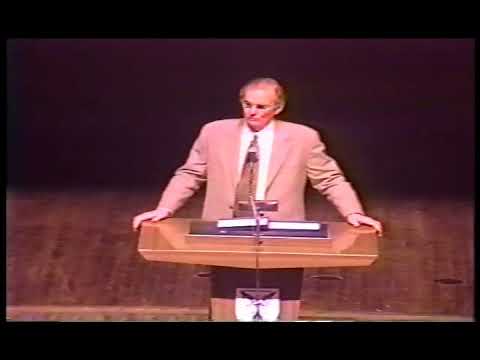
1:10:29
History
Gregory Williams lecture "Life on the Color Line", 1999-09-14
BallStateUniversityLibraries
1K views•2019-07-31

18:08
History
5 National Parks To Visit In PA's Laurel Highlands
Redoubt_Productions
433 views•2025-06-14

1:26:15
History
Uncovered Untold Histories by Prof. Touraj Atabaki
elaheomidyarmir-djalaliins6723
148 views•2025-01-22

4:41
History
A Super Quick History of Bulgaria
MrHistory1
69K views•2019-09-12
1:29:43
History
Won Over: Reflections of a Federal Judge on His Journey from Jim Crow Mississippi
ndhistoricalsociety
212 views•2019-12-09
1:00
History
St Andrew's Day: Explained, a little.
visitscotland
36K views•2019-11-30

7:59
History
The Times Atlas of World History | Wikipedia audio article
wikipedia-fan02
290 views•2019-06-16
Trending

13:55
History
MIC DROP: Smithsonian Director Called Out For Woke Propaganda
TheAmalaEkpunobi
37K views•2026-07-23

9:05
Artificial Intelligence
2.4 BILLION Records Got Leaked...
DeepHumor
15K views•2026-07-22

16:52
Anthropology
Americans Confused in Australia for 17 Minutes Straight
IWrocker
17K views•2026-07-23

13:25
Business
Playstation NO DISC/NO BUY Fight Is Over...
DavidJaffeGames
4K views•2026-07-23