This video covers key Grade 10 Advanced mathematics concepts including solving quadratic equations by graphing (determining number of solutions by observing x-axis intersections), performing operations with complex numbers (addition, subtraction, multiplication using FOIL and distributive methods), working with pure imaginary numbers (simplifying powers of i using i² = -1 and i⁴ = 1), completing the square method (finding c = (b/2a)² and factoring using algebraic identities), and analyzing discriminants (D = b² - 4ac) to determine the nature and number of roots (positive perfect square = 2 real rational roots, positive non-perfect square = 2 real irrational roots, zero = 1 repeated real root, negative = 2 complex roots).
Install our extension to search inside any video instantly.
Grade 10adv-Term-3- Module 1 EOT-Part-1
Added:Hello and welcome my dear students to my channel mathematics made easy. This is Mr. Rika welcoming you to today's revision session especially for grade 10 advance who are going to give the math exam next week. So on your special request here I am with module one revision from the heel. Uh we are going to be covering the first seven learning objective. Uh we are going to do it in two parts. This is part one and whatever I'm not able to cover in this session I will be covering in part two. So stay glued to the channel. Make sure you subscribe so that you don't miss any upcoming videos. Let's get started and see what questions we are learning today.
Okay. So, we are going to now solve uh question 1 to three from learning objective two where you solve quadratic equations by graphing. Now, because the graph is given in this question, we don't need to find the discriminant.
Okay? So, very um easy method. We will use a shortcut because it is MCQ in the exam. No need to do the step. So just look at the graph. Is this blue graph of this function number one question is it touching the x-axis?
No. Right? So therefore in this question we can directly say it will have complex root and the discriminant will be negative because this graph is not touching the x-axis. So we cannot find any solution. It's like no solution. No real solution. For question two however if you see closely the graph touches at two points. Can you see the points? one is + 5 and one is minus 2. So there are two real distinct solution. Now if you actually need to find the solution using discriminant, you also know the formula b ^ square minus 4 a c and you may also use quadratic formula. But since in this question the graph is already given, we can directly get our answer from the graph. It is only asking you to determine the solution, the number of solution and the value. For question three, if you see the graph is inverted.
It is like opposite of a U shape and it touches the x-axis at exactly one point. So there will be one real repeated root. Let's look at the value. So this is -1 -2 -3. So this is -4. Yeah. So x is -4 in this question. X is -2 and x is + 5. Okay. This is how you get your solutions.
So as I promised this is the answer key, the proper answer key. These are the steps uh ideally that you should be doing. But as I suggested because it is MCQ exam, I would suggest you there's no need to find the discriminant. Just from the graph, you know, because it does not touch x-axis, no real solution. Kalas, that's enough. Similarly, for question two, even though you can find the discriminant, you can do the quadratic formula. Looking at the graph you get the two answers minus2 and five directly. And the last question the graph touches at only one point. So there's a double or a repeated root at minus4. Hello and welcome to my channel mathematics made easy. This is Mr. Chika welcoming you to today's session. In today's session we will be solving from your EOT heel for term three grade 10 advanc module 1 lesson 1 three questions. So this is learning objective number three where you perform operations with complex numbers. In this video, we are going to be covering question 29 to 32 from page 25 of your math book. So, let's get started. We'll be covering all the operations one by one. Uh we'll start with addition, then subtraction, then multiplication.
So, let's begin with the first question.
Here you are given two complex number.
This is the first one. This is the second one. Remember a complex number has two parts. real part which can be any number x without any imaginary part and the imaginary part which is multiplied with i which is the iota here which denotes your imaginary part. So like simple algebra we have the rule that when we add or when we subtract two complex numbers we will add like terms together. So we collect the real part with the real part that is the number with the number and the imaginary with imaginary. For example, in the first question, question 29, the real part of the first complex number is six and the real part of the second complex number is four. So, we are going to combine the real part together and similarly we are going to combine the imaginary part together. So, what is the imaginary part? It is the part which is multiplied to iota. So, if you see it is negative here. So minus 3 even here the sign is -2 and I already take I outside means I combine the like terms imaginary with imaginary real with real. So let's solve 6 + 4 is 10 plus iota* now there is negative signus 3 - 2 so it will be min - 5. So your final answer is the complex number with the real part 10 and imaginary part - 5 i. This is how we do addition of complex number. The first question was addition. Let's now do subtraction.
So subtraction is also similar to addition. The only difference is that because of the negative sign when we open the bracket the sign of the inside term will change. So let's open the brackets. So -1 + 4 I there is no change of sign here because uh outside there is positive and we just remove the brackets. However, for the second complex number, if you see there is a negative sign outside followed by brackets. So when we open the bracket, the negative sign changes and inside one had positive so it become minus1 and here it was - 5 I so it became + 5 I. So that's how what we get after we open the brackets. Now like the previous question we will combine real part with real part. So the number with the number. So it will be -1 -1 combined together and imaginary with imaginary. So 4 I with 5 I so 4 + 5. So what is the final answer for this one? -2 + 9 I that's how you do subtraction. Remember in subtraction be careful to change the sign. Okay let's go to another question.
Okay. So now let's solve these two question. These are on multiplication of complex number. For question 31, I will use foil method. And for question 32, I will use distributive property. Even though the methods are different, but the answer in both will be same. So you are free to use the one that you find easy. So fo i l you have studied this in term one. So it should be easy. F means the multiplication or the product of the first term. So the first term here is two here it is 3 multiply 2 * 3 6 O is outer terms means the outside terms outside is 2 and minus I remember you have to take the sign also so 2 * with minus I so -2 I is inside terms so 3 mult*ly with I so that's 3 I and L is the last terms which is last here last here so I multiply with minus I there is a negative sign and iota. Now in the end you have to add all of them. So let's add 6 - 2 I + 3 I - I². Now what's the value of I square?
You already know it's -1. So minus of I² will be + 1. I combine it with the real part which is 6. And I combine imaginary with imaginary. So 3 I - 2 I 3 - 2 is 1.
So this is going to be 7 + i as the final answer. Let's do question 32.
Again it will be solved using different method distributive property. But the answer will always be same. So let's do that also.
In this method distributive property we break the first term into two parts. So what is the first term? Five and minus 2 I break and the second I copy same two times.
Now remember whenever it is distributive property we have to multiply term wise and make arrows or brackets carefully. I multiply five with four this with this and then there is negative sign 5 with i then - 2 i with 4 you multiply and then negative becomes positive 2 i multiply by i. Can I write 2 i²? Yes. Now we know the value of i² is how much - 1 I replace. So this last term becomes 5 * 4 is 20 and 2 i² I combine. So 2 i² next step minus 20 - 2 18. Let's see the next term here. This is - 5 i and 4 * 2 - 8 I. Again both are imaginary. I can combine together. So it's like addition with a negative sign.
So - 5 I - 8 I will give you -3 I. So the final answer is 18 real part -3 I imaginary part. So both methods foil method and distributive are very good for multiplication. You can use the method which works for you which you find easy. Make sure you don't do silly calculation mistake. All the best. Now let's solve some more questions. Here uh we are now on learning objective four perform operations with pure imaginary number. We'll be solving questions 7 to 12 from page 25 of your math book. Now before we start doing these questions I want to remind you about uh iota which is the imaginary part. So remember the value of i² is minus1 and if you want to calculate more powers you can calculate using this value. And if I take the positive square root then the value of i is square root of minus1. If you imagine if you remember this much that a pure imaginary number has iota which has the value i equal to square root of minus1.
We can solve all of these questions uh correctly. So let's do them. The first one if you see here there is square root inside uh there is negative. So whenever you see in the square root negative uh sign you will remember it is the complex number it is the imaginary number and you have to use the value of iota. So if I break this into two parts I can write 23 in the square root and minus1 separately. Similarly I can write 46 and minus1 separately. So minus1 is what it is the value iota. So I can replace this and this with iota. So iota multiplied with iota is iota squared. So I get iota square. Now 23 and 46 these have some common factor. I can write 23 * with 46.
If you factor it, it is 2 * 23. So I'm just writing it in this way. So that in the next step because 23 is common I can take it inside the multiplication and this will give me 23 * 23 * 2 and I square already I know is -1 so I can put a negative sign outside. Now inside the square root I have 23 2 times so I can take it out. So - 23 * <unk>2 this is the answer. Now these are the steps I do to explain you. If you feel like your calculator can give you some shortcut, you may use it. But be careful of your sign. Let's do one more to make it easy.
Now this is again six uh and in the negative sign I will put separately minus one. Similarly three separately minus one. Now minus1 and minus1 this is iota * iota. So I2 and six can be written as 3 * 2 and there is already one more 3. So I combine everything together again because it is square root I can take three outside inside I'm left with two and I square is multiplied which is minus1 so negative sign this is the answer remember all these four question are about multiplication so we can do the multiplication as we like now I'm going to use the shortcut for question n because I've already explained you how to do it so I will do it like this 5 multiplied with 10 so 10 can be written as 5 * 2 negative and negative is two times So iota square so what's your final answer 5 comes out square <unk>2 and because of iota negative so - 5 square<unk>2 that's your answer for this question let's do question 10 this is important now if you see here there is no square root only you have i how many times and there is negative sign also so first multiply the number 3 * 2 * 5 there is negative sign so it comes outside and now you multiply iota how How many times? 1 2 3 so I multiplied with I multiplied with I three times. Can I say it is I3 and this number I can multiply. So 2 * 5 is 10 * 3 - 30. Now I will break my I3 in terms of I2 and I I can break right. So I2 * I1. Now I2 is already negative. I know the value of I2 is minus1. So negative negative become positive.
So this I2 I replace with negative. So negative negative positive. So 30 I.
That's your answer. This how you solve question 7 to 10.
This is how the answer key for question 7 and 8 looks like. I will also give you the answer key for uh question 9. This is the answer for question 9. We already solve it. This is for 10. We already solve it. And uh last but not the least there was two more question which is 11 and 12. So these are the answer. Let me quickly solve a few of them. So answer 11 I'm doing.
Answer 11 was a ^ 11. Now see one thing I want to tell you. If I want to solve a ^ 11 I want to find the value. How I do it? For that I will use the fact that I² is minus1.
So if I try to do I4 for example. Let's see. So I2 square means -1 square. So it is + 1. So remember I ^ 4 will always give you 1. So the period of iota is four. After power four it will repeat.
So how can I break 11 in terms of four?
Can I write 11 as I 8 * I3? Because 8 + 3 is 11. And then I can write 8 as 4 * 2. Right? So when I do that I4 is already the value 1. So 1 ^ 2 is always 1 and i3 now I can break as I2 and I1. So what is the answer? This is 1. I2 is minus1 and there is iota. So minus i. That's how you get your answer.
Okay. Let me do 12 also for you. So 4 I is multiplied to - 6 I². So we will open the bracket and then we will solve. So 4 I as it is. When I open the bracket see the power is 2. So -6 * with - 6 and I to the^ 2. Let's multiply the number 4 * 6 * 6 that's going to be a big number. So we will just solve it.
And remember there is -2 times becomes positive. What is the value of I square minus so don't forget. So this - 4 I and you multiply 6 with 6 which is 36. So if you do the multiplication 36 * 4 - 144 I that's how you reach to this answer. You can use calculator for shortcuts and for simplifying multiplication. But the important thing you need to remember for solving questions like 11 where the power is given is this factor. Now see the moment you know that I4 is one you can solve any power. For example, if I give you I to the power 25 find the value. How will you do? Let's see. So first I need to find multiple of four.
So 6 4s are 24. So I can write I6 or better I write I4 to the^ 6. So this is 24 and how much is more left only one because I need 25. Now I4 is one. So this whole thing is one. So what is your answer? Only I any power you can calculate using this value. Now before we go to the next question which is from uh module one learning objective number five I need to revise for you the method of completing the square. So pay attention there are three steps you will be doing for any question that you get from this part quadratic functions. Uh the equation will be of this form ax² + b x + c. It will ask you two things.
Find the value of c and it will ask you complete the square. So the moment you see these words, the moment you see this equation, you have to remember these steps. This method which I'm now explaining is called completing the square. So remember the value of C. The formula to do it is B / 2 A². Always find this number. So first you find half of B which is B by 2.
Then you do the square which is B by 2 square.
and then uh you do the result means you add it to it and make a perfect square.
Now the moment we want to make perfect square there are two identities which are very important a + b whole square and a minus b whole square. So these algebraic identities you will learn and you will use it while you solve the question on completing the square. What is the expansion? A + b whole square is a square + b² + 2 a. This you will use when there is plus sign and this one you will use when there's minus sign. So the only difference is minus 2 a. The sign will change here. Okay. So learn these formulas and now we are ready to solve question five. Let's go. Okay. So let's apply the formula now for completing the squares for the following question 90. I will first solve 19 and 20 for you and then show you the answer key for the remaining question. So first we need the value of a, b and c. If you compare your a is 1, b is 10, c you need to find out.
So as I explained to find the value of c we need to learn the formula b / 2 a².
You can use your calculator carefully not making any sign mistake to put the values and get your answer. B is 10 and a is 1. So 10 divided by 2 that's 5. So 5 squared. So the value of c is 5 squared or 25.
So first part is done. value of C. Now we need to do the perfect square tromial. For that in the same equation which is given in the question we will now put the value of C which is 5 square. Now observe carefully all sign are positive. So we will use a + b whole square a squared b² + 2 * a * b. How much is a the first term? First term is x the second term is 5. So a + b square that's your perfect square tromial.
Which identity did I use? Let me write again for you. A + b square is a² + b² + 2 * a. This is the identity I use because all sign was positive. So the perfect square tromial also has positive sign. Now let's do question 20. Here you see the negative sign. So therefore we will be using the negative identity. A minus B whole square is A² + B square and the product is negative sign let's find A B C a is 1 B is -14 and C we need to find out I'll use the same formula C is equal to B / 2 A square so when I put the value carefully using calculator don't make mistake so B is -4 2 * A² so this is - 7 squared the C value is 7 squared or 49. Now you must be wondering why I changed the sign because even if it is a negative sign with even power two it is same as positive. Now we put back in the equation. We've got the value of C. Now we put it here in the question to do the factor. So X² minus there is negative sign be careful and C value is 7 squared. So if I want to apply this identity a minus b whole square I need the middle term. So let's change it a square b square or easy the middle term is -2 * a * b. So how much is a? The value of a is x. The value of b is 7. So I put the value and check 7 * 2 is it 14? Yes. Giving us the answer.
So a minus b a is x. B is 7 negative sign. And that's your perfect square tromial. So this is how you do the question. You find the value of C using formula and then do the factors. Now please check your answers using the answer key. Okay. So as promised I'm showing you the answer key. This is the answer key for question 21 uh which was x² + 24x + c. So the answer is this one.
For answer 22, the answer is this one. For answer 23, this one. And for answer 24, this one.
Okay. Now, because it is a little different and there is fraction involved, I will do one question of this type for you. Question 23. So, step one, find the value of C, which is B / 2 A.
This time you will see it will come fraction. Compare. Get your A B C. So, your A is 1. Your b is - 9 and you have two also. So do the square. So if you see the value comes out to be a fraction which is 9 / 2². This is the value of c.
Now let's put it back in this question.
So x² - 9x + 9 / 2². Now if I want to apply because there is negative sign I will use the same identity a - b² which is equal to a² + b² - 2 a b so let's use that this is a² this is b² - 2 a * b this is the value of b okay so I can apply in a similar way so this will become a minus b² that's how you get this answer. So I hope it is clear even if it is fraction the method remain same. Please learn the formula carefully because it will not be provided in your exam and don't do silly calculation mistake while you use the identity and in that way you will be getting correct answer always.
Similarly let's find the value of discriminant for this question. a x² + b x + c = 0. We know the formula of discriminant. I've already explained you it is b ^ square - 4 a c just use your calculator don't do silly mistake plug in the right value b is the number which is multiplied to x so it's min - 8 be careful of sign a is 1 and c is 16 so if you solve this using your calculator it will come zero so when discriminant value is zero what is the condition one real root which is repeated so the value of the discriminant for question 24 is zero The number of roots actually there are two roots but they are repeated. So you will only say uh the number of root is uh one which is the repeated one. Same value two times and the type of root is real. Okay, that's how you solve it.
Let's do one more 25. Here the value of a is 1, b is -1 and c is - 26. So let's get to our discriminant.
Now to save your time because it is MCQ I would suggest you to use calculator but make sure you don't do any mistake while you do the calculation. So put the value of B - 11 - 4 * 1 * - 26. So this is going to be 121 + 24 * just do the multiplication use your calculator. So 26 * 4 that's going to be 104 and you add to it 121. So this is 225 which is a perfect square of 15. You can double check from your calculator.
So because it is coming uh a perfect square that means it will have two distinct real solutions. So discriminant is 225 which is positive and it's a perfect square. So the number of uh roots will be two and the nature of the roots will be the type of root is real.
This is a formula sheet that I have pasted from your book. You are expected to learn these formulas. It will help you for solving the questions correctly.
So when you find the value of discriminant if it is positive and it is a perfect square then there will be two real and the nature of the roots will be rational. Rational means they will be like a fraction. If the discriminant is positive but it is not a perfect square then even though the two roots will be real they will be irrational in nature means they will have like this radical sign. Okay. Rational means like a fraction 1 by two like that. This is the first part where discriminant is positive. Now if discriminant is zero means p² - 4 a c is 0 it'll have one real but rational root. Okay. And if you see the graph also see in the first case the graph touches at two points. Why two points? Because there are two real roots. However, for the second case, because there is only one rational root, it'll touch at the same point only one.
So here it is two points. Here it is one. However, if the discriminant comes out to be negative, there will be only complex root, no real roots. Therefore, the graph will not touch your x-axis at all. There are complex roots. So this is an important formula.
And based on this, let's solve some more questions.
Okay. So let's solve these questions which are based on the value of discriminant. So in this question, you have to do two things. Number one, find the value of discriminant. D is what for each of the question. And then after you get the value of the discriminant based on that, you have to tell the number.
What is the number of roots and what is the type of root? So let's start solving. Uh the standard formula of a quadratic function is ax² + b x + c= to 0. So if we compare let's see how much is our a. a is the number multiplied to x². So a is 3, b is -2 and there is no c. So c is zero. Let's find the value of discriminant which is given by the formula a d is equal to b ² - 4 a c.
Let's plug in all the values of the function and get our value of discriminant.
- 2 - 4 * 3 * 0. Now if you see carefully here C is zero. So this term whole is zero. So the only thing which is remaining is 4. So discriminant value is a perfect square because four is the perfect square of two. So the moment you get your discriminant as a positive number and a perfect square, we can easily say that the number of roots will be two because they are distinct roots and it will be real because the value of discriminant is positive. So learning from the table whenever d is greater than zero and a perfect square the number of roots will be two and the type of two roots will be real. They will be real roots. Now let's solve this one. ax² + b x + c = 0. Let's write the value of a b c a is 20 b is 7 and c is -3. Plug in the value in the discriminant.
7² - 4 * a is 20, c is -3. So this will be a big number. You can use your calculator to solve. 7 square is 49.
Negative negative become positive. So this is 240. So again it is 289 which is a perfect square of 17. So it's a positive number. So here in this question you can write that because the discriminant is positive and it is a perfect square. Again this question also has two real roots. That's how you solve question on discriminant. The value of the discriminant tells you how many number of roots and how many type of roots it will be. So please learn the formula.
That brings us to the end of today's session. Uh there are a few more questions left for module one which I will be covering in part two. Uh please like, share and subscribe to the channel if you found the video useful and comment uh which video you want me to make next. Until then this is Mr. Chika signing off from today's session. See you in my next video. Bye students.
Related Videos

Solving a 'Harvard' University entrance exam question
AsadInternationalAcademy
125 views•2026-06-14
Algorithms for Generalized Signed Distance and Winding Numbers (PhD thesis)
NicoleZFeng
269 views•2026-06-15

Notes 6.3 Rectangle, Rhombus, Square
matthewmills6952
1K views•2026-06-18

Does the math actually hold up? Let's break down the logic.
rawXopinion
1K views•2026-06-15

NYT Hard Sudoku Walkthrough | June 17, 2026
Rangsk
2K views•2026-06-17
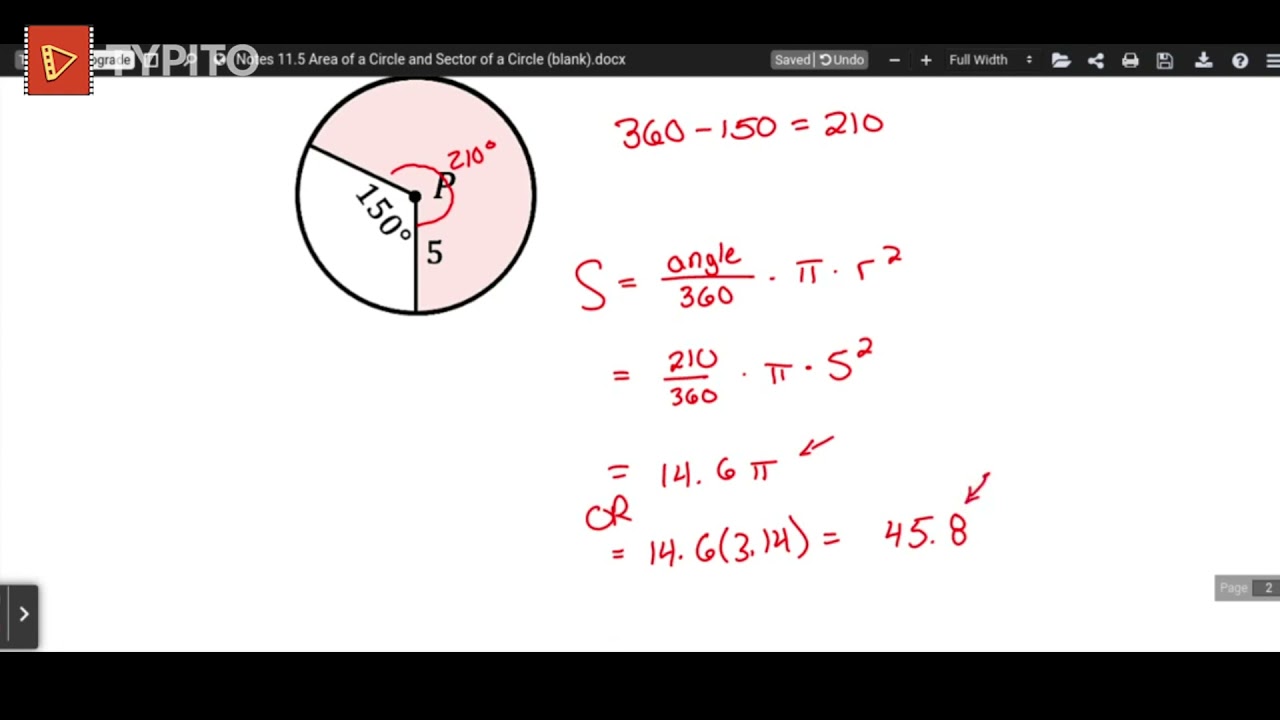
Notes 11.5 Area of a Circle and Sector of a Circle
matthewmills6952
251 views•2026-06-18

Notes 4.2 Isosceles and Equilateral Triangles
matthewmills6952
444 views•2026-06-18
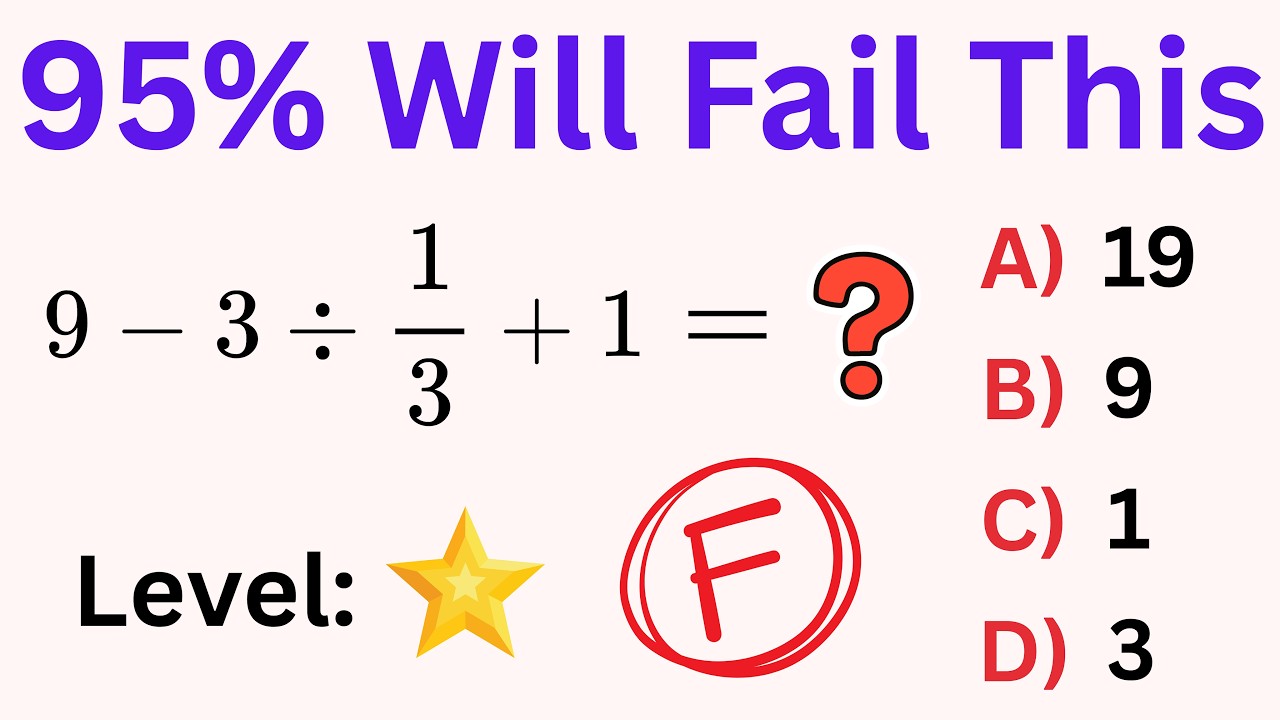
Can You Solve This?
brain_station_videos
1K views•2026-06-15



