The universe contains numerous strange objects that challenge our understanding, including the Boomerang Nebula (the coldest place in space at 1 Kelvin), KELT-9b (a planet so hot its atmosphere is being torn apart), APM 08279+5255 (the largest water reservoir ever found near a black hole), Tabby's Star (which sparked alien theories due to its strange dimming patterns), the Boötes Void (a region so empty it's called the great nothing), SGR 1806-20 (a magnetar with a magnetic field powerful enough to affect Earth), V838 Monocerotis (a star that created beautiful light echoes), and Mira Star (a dying star leaving a 13-light-year tail). These objects demonstrate that space is far stranger than we think, with phenomena that are freezing, violent, empty, mysterious, and powerful beyond imagination.
8 Strange Space Objects Scientists Still Can't ExplainAdded:
Space isn't just stars and planets. It's hiding things so strange even scientists are still trying to explain them. Number one, Boomerang Nebula. What if I told you there's a place in space colder than space itself? Meet the Boomerang Nebula, a dying star located about 5,000 lighty years away from Earth. Space is already freezing, but this place takes cold to another level. Its temperature is around 1 Kelvin, just 1° above absolute zero, where atoms almost stop moving. And here's the crazy part. It's even colder than the leftover heat of the Big Bang.
The reason? This dying star is throwing gas outward at incredible speed. As the gas expands, it cools down like a natural cosmic refrigerator. From far away, it looks beautiful, almost peaceful. But in reality, it's a star in its final stage, slowly throwing itself into space. The Boomerang Nebula proves that space doesn't always need fire to be terrifying. Sometimes the scariest thing in the universe is cold. And if you think this is extreme, wait until you hear about a planet so hot its atmosphere is being ripped apart.
Number two, Kel T9B.
This planet is so hot it doesn't just burn, it breaks matter apart.
Meet Kelt 9b, one of the hottest planets ever discovered. It sits about 670 lighty years away from Earth, orbiting a star much hotter than our sun. But this planet isn't peacefully moving around its star. It's trapped in a brutal heat zone. One year on Kelt 9b lasts only about 1 and 1/2 Earth days. That means this planet completes an entire orbit before your weekend is even over. Its dayside gets so insanely hot that hydrogen molecules are torn apart. Then those atoms move to the cooler night side and join again only to be ripped apart once more. That's not normal weather. That's cosmic destruction on repeat.
K9B is not just a planet. It's a world being cooked alive. And next, we're going from fire to the biggest water reservoir ever found near a black hole. Number three, APM08279 + 5255.
What if I told you the biggest water supply ever found is sitting near a black hole? Meet APM08279 + 5255, a powerful quazar billions of light years away. At its center is a super massive black hole. But the shocking part isn't just the black hole. It's what surrounds it. Scientists found a massive cloud of water vapor around this monster. Not a lake, not an ocean, but a cosmic reservoir.
And this water supply is estimated to be 140 trillion times more than all the water in Earth's oce. Think about that.
The largest water source we know of isn't on a planet. It's floating around one of the most dangerous objects in the universe. Space doesn't just hide fire and darkness. Sometimes it hides impossible amounts of water. And next, we're talking about a star that dimmed so strangely, some people thought aliens were involved. Number four, Taby's star.
This star dimmed so strangely, people started asking if aliens were involved.
Meet Tabby star. One of the weirdest stars ever observed.
Normally, when a planet passes in front of a star, the light drops just a little. But Tabby star was different.
Its brightness dropped in strange uneven patterns, sometimes by a massive amount.
That made scientists wonder what could be blocking so much light. Some people even suggested a giant alien structure might be orbiting the star. But later the more realistic explanation pointed toward clouds of dust blocking the light. Still the mystery made this star famous because for a moment it reminded us how little we actually know about the universe.
Tabby star proves that space can turn one flicker of light into a massive mystery.
And next we're going into a region of space so empty it's called the great nothing.
Number five, Booty's void.
What if I told you there's a region in space so empty it feels like the universe forgot to finish it? Meet the Booties Void. One of the strangest empty regions ever found in space. Normally, when we look across the universe, we see galaxies spread everywhere like lights in a city. But this place is different.
The Buote's void is a massive cosmic region where galaxies are extremely rare.
That's why people call it the great nothing. Imagine traveling through space for millions of light years and finding almost nothing around you. No busy galaxy neighborhoods, no crowded cosmic streets, just darkness, distance, and silence.
It's not completely empty, but compared to the rest of the universe, it feels almost abandoned. The Boot's void proves that space isn't only strange because of what it contains. Sometimes it's strange because of what's missing.
And next, we're talking about a dead star with a magnetic field so powerful it sounds impossible.
Number six, SG1806-20.
This dead star has a magnetic field so powerful it sounds impossible.
Meet SG1806-2, a magnetar about 50,000 lighty years away. A magnetar is not a normal star.
It's the crushed core of a dead massive star packed into an insanely small space. But what makes this object terrifying is its magnetic field. It's so powerful that even from far away, it can release bursts of gamma rays strong enough to affect Earth.
In 2004, SG1806-2 produced a giant flare that actually disturbed Earth's ionosphere. Think about that. A dead star halfway across the Milky Way still managed to touch our planet. That's not just power. That's cosmic violence. SG1806-2 proves that some dead stars don't go quiet. They become monsters. And next we're talking about a star that created one of the most beautiful light echoes ever seen in space.
Number seven, V838 Monoserotus.
This star didn't just explode in brightness, it painted space with light.
Meet V838 Monoserotus, one of the most mysterious stars ever observed. In 2002, this star suddenly became extremely bright. For a moment, it looked like a normal stellar explosion. But then something beautiful happened. The light from the outburst started moving through nearby dust clouds, creating a glowing effect called a light echo. It looked like rings of light spreading through space. Almost like the universe had dropped a stone into a dark cosmic ocean.
Scientists still debate exactly what caused the eruption, but the images it created became some of the most unforgettable views ever captured by Hubble.
V838 Monoserotus proves space is not only dangerous and strange. Sometimes it creates beauty from chaos. And next, we're talking about a star racing through space while leaving a giant tail behind it. Number eight, mirror star.
This looks like a comet, but it's actually a star. Meet Mirror, a red giant star that has been watched by astronomers for around 400 years. But in 2007, NASA's Galaxy Evolution Explorer found something shocking. Mera was racing through space and leaving behind a massive tail of material. Not a small trail, a tail about 13 lightyear long.
That means the tail is longer than the distance between our sun and some nearby stars. Mirror is an old star shedding its outer layers as it moves through the galaxy. And that material may one day help create new stars, planets, and maybe even life. So mirror isn't just dying, it's leaving ingredients for the future behind it. Space has a strange way of recycling everything. Even a dying star can leave a legacy across the darkness.
Space isn't just beautiful. It's cold, deadly, empty, powerful, and full of mysteries we still don't understand.
Which one shocked you the most? Comment space for part two and follow for more.
Related Videos

Spiral Galaxy NGC 3370 from Hubble | NASA APOD 2025-11-05 #Shorts
galaxygallery
938 views•2026-05-30

SOMETHING inside the SUN is CHANGING
RaysAstrophotography
1K views•2026-06-03

Captured the Blue Moon (with a twist) 🌙✨ #space #bluemoon #telescope
realAstroExplorer
674 views•2026-06-01

There May Be A Giant Hole In The Universe... And We Might Be Inside It | The Cosmic Ledger Entry 015
TheCosmicLedger
145 views•2026-05-31

The Map We Sent to the Stars in 1977 — Why Scientists Now Regret It
TheAncientRecord7
183 views•2026-06-03

10 Planet Where a Black Hole Replaces the Sun
cosmicexplorer-EN
147 views•2026-06-02

Is this a copy of our galaxy? Discover Galaxy M81!
UniverseDocumentaries-cc4mb
995 views•2026-05-31
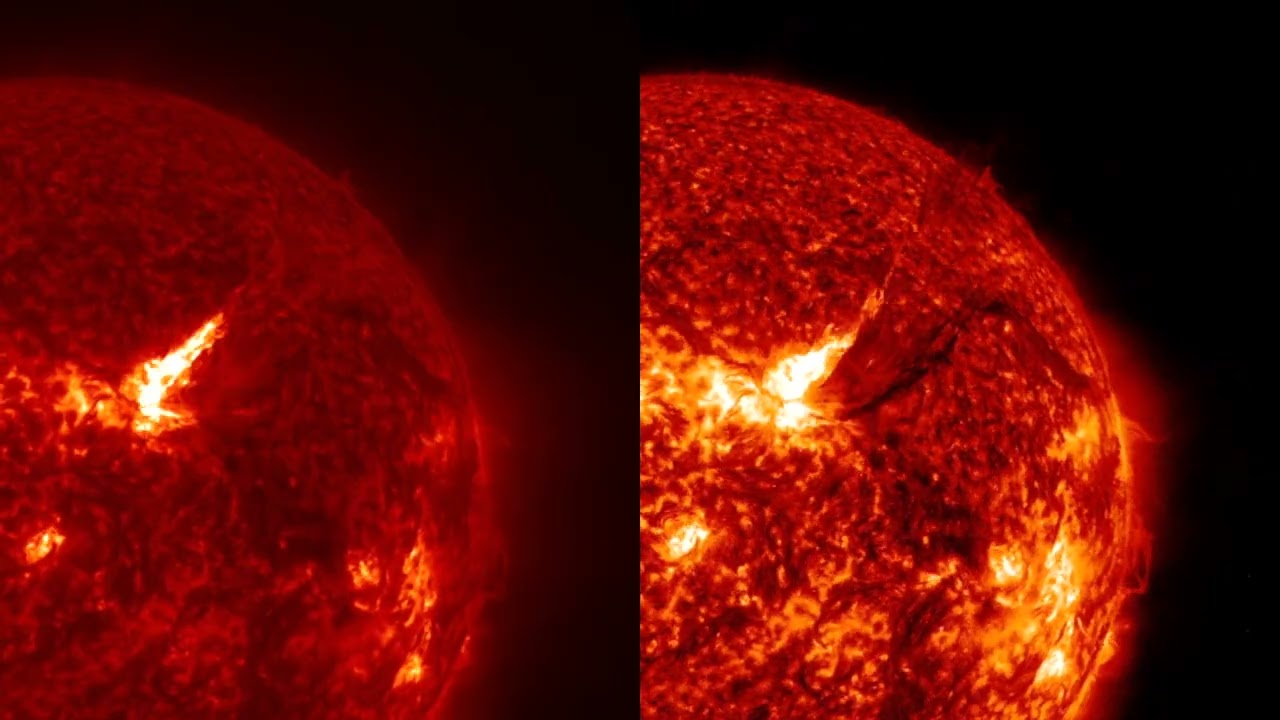
Solar Flares and CMEs at Earth - More Likely | S0 News June.3.2026
SpaceWeatherNewsS0s
2K views•2026-06-03



