NASA's Hubble Space Telescope, working alongside other observatories like Kepler, James Webb, TESS, and the upcoming Nancy Grace Roman Space Telescope, has contributed to the discovery of over 6,000 confirmed exoplanets; Hubble's unique ultraviolet vision and long-term observation capabilities make it particularly valuable for studying the atmospheres of these distant worlds, resolving planet-forming disks, and revealing planetary environments that were previously unimaginable.
Install our extension to search inside any video instantly.
6,000 Planets Found! What’s Next? 🚀 #Hubble #shortsAdded:
Hubble does not stand alone. Together with data from retired NASA telescopes such as Kepler and new telescopes such as the James Webb Space Telescope, the Transiting Exoplanet Survey Satellite, and the upcoming Nancy Grace Roman Space Telescope, Hubble [music] will continue to offer new insights and opportunities for combined observations. Hubble's unique capabilities remain valuable [music] to our understanding of these worlds. Its powerful ultraviolet vision and ability to observe exoplanets over long periods of time make it a scientific powerhouse, teaching us more about the atmospheres of these distant planets. As we mark over [music] 6,000 confirmed exoplanets, we celebrate the growing number of newly discovered worlds and our deepening knowledge of them. Hubble's legacy is woven into that journey, resolving planet-forming disks, [music] reading atmospheres light-years away, and revealing planetary environments that were unimaginable when it first launched. The next 6,000 [music] exoplanets and beyond await.
With many more years of Hubble observations, we will keep venturing further [music] toward new worlds, new chemistry, and perhaps one day new life.
Related Videos

Spiral Galaxy NGC 3370 from Hubble | NASA APOD 2025-11-05 #Shorts
galaxygallery
938 views•2026-05-30

SOMETHING inside the SUN is CHANGING
RaysAstrophotography
1K views•2026-06-03

There May Be A Giant Hole In The Universe... And We Might Be Inside It | The Cosmic Ledger Entry 015
TheCosmicLedger
145 views•2026-05-31

Captured the Blue Moon (with a twist) 🌙✨ #space #bluemoon #telescope
realAstroExplorer
674 views•2026-06-01

The Map We Sent to the Stars in 1977 — Why Scientists Now Regret It
TheAncientRecord7
183 views•2026-06-03

Is this a copy of our galaxy? Discover Galaxy M81!
UniverseDocumentaries-cc4mb
995 views•2026-05-31

10 Planet Where a Black Hole Replaces the Sun
cosmicexplorer-EN
147 views•2026-06-02
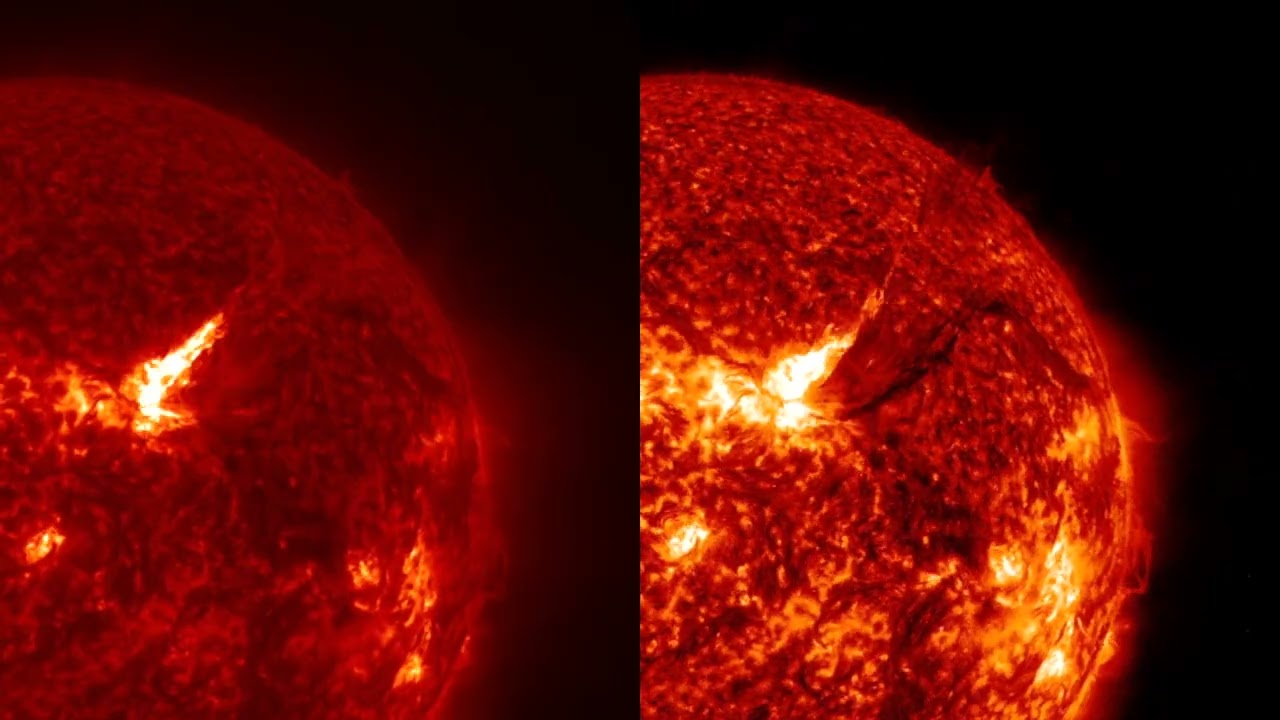
Solar Flares and CMEs at Earth - More Likely | S0 News June.3.2026
SpaceWeatherNewsS0s
2K views•2026-06-03



