James Webb Space Telescope's ultra-deep fields have revealed mysterious 'little red dots' - extremely bright, compact galaxies from just 600 million years after the Big Bang that initially challenged standard cosmology predictions. These objects appear red due to redshift and dusty envelopes, with V-shaped spectra showing strong Balmer breaks and high-velocity hydrogen emissions indicating rapid gas inflows. Scientists initially feared this violated the Lambda-CDM model, but recent analysis shows most early galaxies fit predictions after corrections. These dots likely host million-solar-mass black holes that accrete gas voraciously, with dense gas clouds (not dust) shrouding central engines. Friction from infalling gas produces excess light, explaining the brightness without X-ray or quasar signatures. Over 341 such dots have been identified across JWST fields, resolving the over-brightness mystery without altering cosmology. These objects may reveal seeds of today's supermassive black holes.
JWST's Little Red Dots: The Early Universe Mystery SOLVED? | Er. Mahato G本站添加:
James Webb Space Telescope's ultra-deep fields [music] have revealed swarm of mysterious little red dots. These are extremely bright compact galaxies from the early universe, just 600 million years after the Big Bang. Their intense luminosity challenges our standard models of galaxy formation. Current cosmology predicts much dimmer galaxies at this epoch.
[music] These objects appear red due to their red shift and dusty envelopes. They [music] show V-shaped spectra with strong Balmer breaks. High-velocity hydrogen emissions suggest [music] rapid gas inflows. Scientists initially feared this broke the lambda-CDM [music] model.
Early concerns focus on impossibly massive galaxies too soon. Recent analysis shows most early galaxies fit predictions after [music] corrections.
Little red dots likely host million solar mass black holes. These black holes accrete gas voraciously [music] boosting brightness. Dense gas clouds, not dust, shroud the central engines.
Friction and infalling gas produces the excess light. No X-ray or typical quasar [music] signatures confuse pure stellar models. Over 341 such dots identified across JWST fields. This resolves the over-brightness without altering cosmology. Early dark energy remains a fringe hypothesis for other tensions.
Future observations will measure black hole masses precisely. [music] Little red dots may reveal seeds of today's supermassive black holes.
>> [music]
相关推荐

Spiral Galaxy NGC 3370 from Hubble | NASA APOD 2025-11-05 #Shorts
galaxygallery
938 views•2026-05-30

SOMETHING inside the SUN is CHANGING
RaysAstrophotography
1K views•2026-06-03

🎬 Title: Milky Way & Andromeda Collision: The Future of Our Galaxy 🌌 #astroph #askap
SulaimanKhanSulaimani
429 views•2026-06-01

NOAA Warning! Massive Double Cannibal CME Impacting Earth: G4 Storm Watch!
worldnewsreporttoday
1K views•2026-06-04
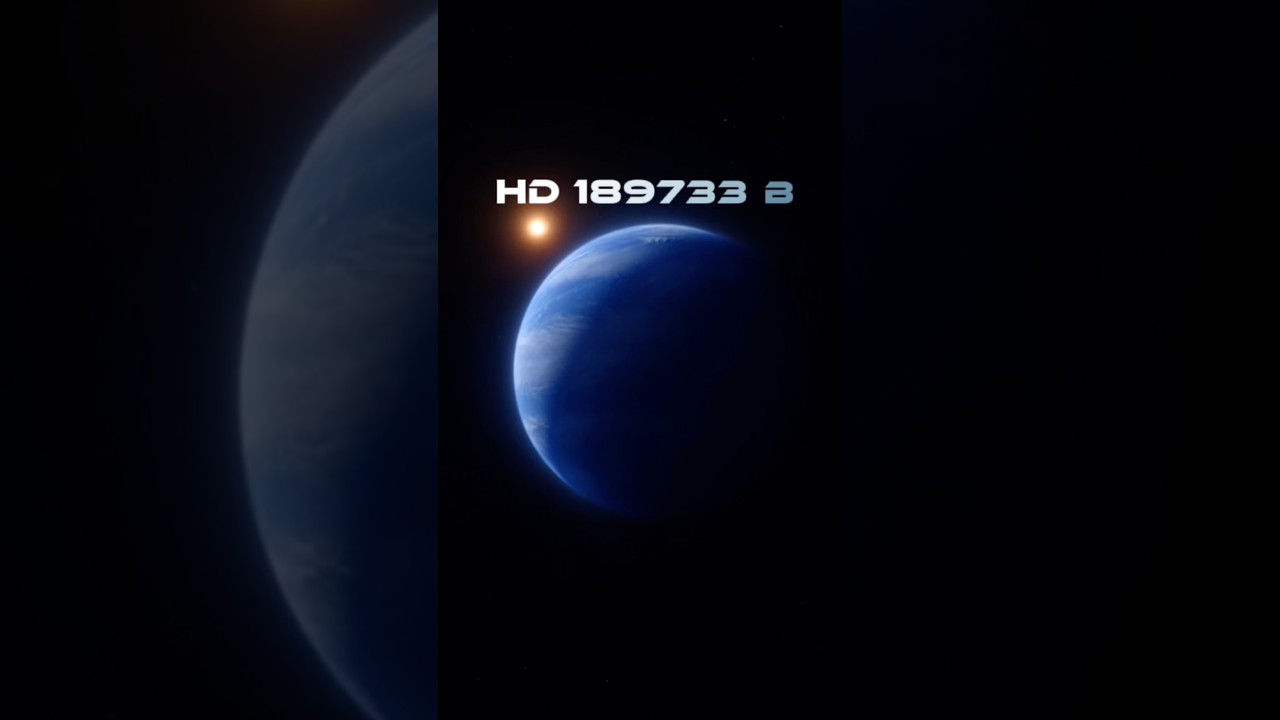
🌌 HD 189733 b | The Planet Where Glass Rains Sideways
EVENTHORIZONUK
3K views•2026-05-31

Captured the Blue Moon (with a twist) 🌙✨ #space #bluemoon #telescope
realAstroExplorer
674 views•2026-06-01

10 Planet Where a Black Hole Replaces the Sun
cosmicexplorer-EN
147 views•2026-06-02

Is this a copy of our galaxy? Discover Galaxy M81!
UniverseDocumentaries-cc4mb
995 views•2026-05-31