Linux achieved complete 100% domination of the world's top 500 supercomputers in 2017, a milestone no operating system had ever achieved, driven by its open-source flexibility, deep customization capabilities, and cost advantages that made it superior for high-performance computing workloads like nuclear simulations, climate modeling, and pharmaceutical research. Microsoft, which had previously treated Linux as an existential threat through hostile tactics including legal challenges and marketing campaigns, ultimately embraced Linux as a strategic necessity, developing Azure Linux and committing to open-source collaboration, demonstrating that dominant companies cannot indefinitely resist disruptive technologies when technical and economic fundamentals decisively favor the new approach.
Linux Quietly Won the Supercomputer War — Here's What Microsoft Did Next
Added:Somewhere around the year 2017, a war that had been quietly raging for two decades finally ended. And almost nobody outside a small circle of engineers noticed it happened. Linux, the free open- source operating system built by volunteers and later backed by a handful of technology companies, achieved something no operating system had ever managed before or since. Complete total 100% domination of the five 100 most powerful supercomputers on planet Earth.
Not 90%, not 99%. Every single machine on that list, from the fastest scientific computers doing nuclear weapons simulations to the systems modeling climate change decades into the future, all of them without a single exception running Linux. That dominance has now held steady for eight consecutive years running an unbroken streak that has quietly persisted through multiple entirely new generations of supercomputing hardware.
And here is the part of the story that makes this genuinely fascinating rather than just a dry statistic. Watching this unfold from the sidelines was a company that had spent years actively trying to prevent exactly this outcome. A company that eventually had no choice but to completely rebuild its own strategy around the very operating system it once tried to destroy. That company was Microsoft. And what it did next reveals an enormous amount about how real power actually shifts inside the technology industry. often quietly, gradually, and only after years of resistance, eventually give way to simple, undeniable technical necessity that no amount of corporate willpower can indefinitely postpone. To understand just how remarkable this complete takeover actually is, you need to understand what supercomputers actually are and why they matter so much in the first place. These are not ordinary computers scaled up. They are among the most sophisticated pieces of engineering humanity has ever built. machines specifically designed to perform mind-bending numbers of calculations per second. Used for tasks like simulating nuclear weapons without actually detonating them, modeling hurricane paths days in advance, designing new pharmaceutical compounds atom by atom, and increasingly training the massive artificial intelligence systems reshaping the modern world. The organization that tracks and ranks these machines twice a year, publishing what is known as the top 500 list represents the closest thing the computing world has to an Olympic medal table for raw computational power. Governments spend billions of dollars building these machines specifically to appear near the top of that list since supercomputing capability has long been treated as a genuine marker of national scientific and even military strength. Not unlike the way nations once measured prestige through nuclear arsenals or space programs. A competition where the underlying hardware matters enormously, but where, as this story reveals, the software running underneath every single competitor turned out to converge on exactly the same answer. The top 500 list itself has a genuinely interesting history that helps explain why it carries so much weight within the scientific and technology communities.
First published in 1993, the list is compiled twice a year by a team of computer scientists who benchmark submitted systems using a standardized test called Lindpac, which measures how quickly a machine can solve a massive system of linear equations, a computational task that scales in a way that makes it useful for fairly comparing wildly different supercomputer architectures against one another using a single consistent number. Making the top 500 list, let alone reaching the very top of it, has become such a significant point of national and institutional pride that governments around the world have periodically accelerated supercomputer construction projects specifically to claim bragging rights ahead of a scheduled announcement, treating computational supremacy as a genuine matter of international prestige, not entirely unlike Olympic medal counts where the underlying achievement matters less to the general public than the symbolic victory of simply topping the table. The kinds of problems these machines actually solve go far beyond abstract computational benchmarks, too. And understanding their real world applications helps explain why nations are willing to spend such enormous sums building them in the first place.
Weather and climate modeling represents one of the most computationally demanding applications in existence, requiring supercomputers to simulate the interactions between oceans, atmosphere, ice sheets, and land surfaces across the entire planet simultaneously. projecting decades into the future with enough precision to inform genuinely consequential policy decisions. Nuclear weapon stewardship programs, particularly within the United States, rely heavily on supercomputer simulations, specifically to verify that aging nuclear stockpiles remain safe and reliable without requiring the kind of live underground testing that international treaties now generally prohibit, making these machines a literal cornerstone of modern nuclear deterrent strategy. Pharmaceutical and biotechnology researchers increasingly use supercomputing power to model how potential new drug compounds might interact with specific proteins at the molecular level, dramatically accelerating a discovery process that historically relied on slower, far more expensive physical laboratory experimentation. The story of how Linux actually conquered this incredibly demanding prestige driven corner of computing is genuinely remarkable precisely because it happened gradually than all at once. The very first Linux-based system appeared on the top 500 list all the way back in 1998.
Single, relatively modest entry in a list still overwhelmingly dominated by proprietary operating systems built by established computing giants. The kind of specialized expensive closed source software that had defined high performance computing for decades before Linux ever existed. From that single toehold in 1998, Linux's presence on the list grew steadily year after year, gradually displacing one proprietary operating system after another until finally in November of 2017, Linux achieved something almost unthinkable just two decades earlier. Complete and total market capture. Every single one of the 500 fastest supercomputers on the entire planet running some flavor of Linux underneath. That total conquest has now persisted unbroken for eight consecutive years through countless individual machines being retired and replaced by newer, faster systems, through the arrival of entirely new categories of supercomput. And through the recent explosive rise of exoscale computing, machines so powerful they can perform more than one quintilion calculations every single second. The specific technical path that led Linux to this position traces back to something called Beowolf clustering. A concept pioneered in the mid1 1990s by researchers at NASA who realized they could link together large numbers of ordinary relatively inexpensive computers using standard networking equipment running Linux across all of them in coordination to create a combined computing power rivaling far more expensive purpose-built proprietary supercomputers costing many times more to build and maintain. This approach represented a genuinely radical departure from how supercomputing had traditionally been done since the dominant proprietary vendors of that earlier era built highly. Specialized custom engineered hardware and software specifically for supercomputing applications commanding enormous prices precisely because customers had no meaningful alternative available to them. Beaowolf clustering built entirely around freely available Linux and inexpensive mass-produced commodity hardware components demonstrated that research institutions could achieve comparable or even superior computational performance at a small fraction of the traditional cost. A genuinely disruptive economic proposition that proprietary supercomputer vendors ultimately proved unable to compete against over the following two decades. This cost advantage compounded relentlessly over time as Linux-based clustering approaches matured and improved. While research funding for computing infrastructure, particularly at universities and government laboratories operating under increasingly tight budget constraints, remained perpetually limited relative to researchers own ambitions. Every dollar a research institution saved by choosing Linux- based commodity, clustering over proprietary alternatives was a dollar that could instead go toward buying additional computing nodes, expanding a systems overall capability, or funding the actual scientific research those systems existed to support in the first place. This economic dynamic created a powerful self-reinforcing cycle that ultimately proved impossible for proprietary supercomputer vendors to counter since Linux's own open-source nature meant improvements made by any single research institution, university or company could be freely shared back to the broader community, compounding the platform's overall technical capability at a rate no single proprietary vendor's own internal engineering team could realistically match working in isolation. The most recent top 500 data makes this dominance almost impossible to overstate. As of the most recent rankings, the list includes multiple exascale systems exceeding that staggering one quintilion calculations per second threshold. led by a machine called El Capitan housed at Lawrence Liverour National Laboratory in the United States achieving a peak performance of 1.742 exoflops an almost incomprehensible number representing more raw computing power than nearly anyone outside specialized scientific computing could reasonably picture in their head right behind El Capitan sits frontier another American exascale machine followed by Aurora meaning the United States alone currently operates several of the most powerful computers ever built by human beings all of them without except ception running on Linux.
A fact that would have seemed genuinely improbable to anyone familiar with the state of supercomputing just three decades earlier. The United States leads the overall top 500 list with 172 total systems, representing roughly a third of the entire list and nearly half of the aggregate machines combined. While China follows with 62 systems and Germany with 41, a genuinely global competition for computational supremacy that nonetheless remains completely unified around a single shared operating system foundation underneath every single participant. Why did Linux specifically win this particular battle so completely when it took considerably longer to gain comparable dominance in other areas of computing like desktop usage where it still remains a distinctly minority choice even today? The answer comes down almost entirely to customization and cost. The exact two qualities that made Linux so threatening to proprietary software vendors in the first place decades earlier. Supercomputers are not mass-produced off-the-shelf machines.
Each one represents an enormous custom engineered project, often costing hundreds of millions of dollars, built to extraordinarily specific technical requirements that vary dramatically from one research institution to another.
Linux's open source nature means the engineering teams building these machines can modify the operating systems own underlying source code directly, optimizing it at the deepest possible level for their own specific hardware configuration, their own specific scientific workloads, and their own specific performance requirements. a degree of customization that proprietary closed source operating systems simply cannot offer since modifying that kind of software requires the original vendors direct cooperation adds significant licensing costs and moves at whatever pace that vendor's own business priorities happen to dictate rather than the research institution's own scientific timeline. If you are finding this breakdown genuinely fascinating so far, take a second to like and subscribe because this channel covers exactly this kind of quiet decades long.
Technological shift, the ones that completely reshape entire industries while barely making a ripple in mainstream news coverage. This total supercomputing dominance did not happen in isolation either. It connects directly to Linux's equally overwhelming, though slightly less absolute dominance across nearly every other corner of serious large-scale computing infrastructure. As of recent industry data, Linux now powers roughly 90% of all public cloud computing workloads worldwide alongside an estimated 51% of the entire global server operating system market. And remarkably, 96% of the world's top 1 million most trafficked websites by traffic volume run on Linux- based servers somewhere behind the scenes.
Kubernetes, the container orchestration technology that has become the standard method for managing largecale computing infrastructure across the entire cloud industry, now sees production adoption above 80% among organizations surveyed by the cloudnative computing foundation.
And the overwhelming majority, 96% by some measurements of those production Kubernetes deployments run specifically on Linux underneath. Put simply, wherever computing work genuinely matters, it's serious. Scale, scientific research, enterprise cloud infrastructure, or the websites and services billions of people use every single day, Linux has become not merely the leading choice, but very nearly the only meaningful choice available at all.
It is worth taking a moment to compare this overwhelming Linux dominance across nearly every serious computing environment against the one notable exception where Linux still remains a distinctly minority player. Personal desktop and laptop computers used by ordinary consumers going about their daily lives. Even as of the most recent measurements in 2026, Linux accounts for only around 3% of the global desktop operating system market. According to independent measurement services, a figure that has grown steadily but remains a tiny fraction compared to Windows continued overwhelming majority position on personal computers worldwide. This stark contrast, Linux capturing effectively 100% of supercomputing and roughly 90% of cloud infrastructure while remaining stuck around 3% of desktop computers reveals something genuinely important about how technology adoption actually works across different market segments with fundamentally different underlying dynamics. Desktop computing decisions are overwhelmingly driven by consumer familiarity, existing software compatibility built up over literal decades of accumulated habit, and the powerful inertia of simply continuing to use whatever operating system came pre-installed on a purchase machine.
Factors that have very little to do with the deep technical customization and raw performance advantages that made Linux so dominant within supercomputing and enterprise infrastructure specifically.
This split reveals a genuinely important nuance often lost in broader conversations about Linux's overall market position. The operating system has not achieved anything close to universal victory across all of computing. In some simple singular sense, it has instead achieved something considerably more interesting and more consequential, complete and overwhelming dominance, specifically within the segments of computing where deeper technical sophistication, raw performance, and genuine customizability matter most, while remaining a comparatively minor niche presence within the consumer. facing segments of computing where those same qualities matter considerably less to the average buyer's actual day-to-day purchasing decisions. Understanding this particular distinction matters enormously for correctly interpreting Microsoft's own strategic behavior throughout this entire story because the company has never seriously attempted to compete with Linux specifically within the supercomputing or serious cloud infrastructure space choosing instead to fully embrace and build directly on top of Linux within exactly those specific segments while continuing to defend and actively invest in Windows almost exclusively within the consumer desktop market where Linux has never posed anything close to a comparable existential competitive threat to Microsoft's own core historically dominant business. Now, here is where Microsoft's own particular story becomes genuinely fascinating because the company found itself on a direct and painful collision course with exactly this unstoppable trend. Throughout the late 1990s and early 2000s, Microsoft treated Linux as an existential threat to its entire business model. a threat serious enough that the company's own chief executive at the time, Steve Balmer, publicly compared Linux to a cancer, specifically because of the danger it posed to Microsoft's proprietary software licensing revenue.
Microsoft's own internal strategy documents from that era, later leaked to the public and widely known afterward as the Halloween documents, revealed a deliberate corporate campaign explicitly designed to undermine Linux and the broader open-source movement surrounding it, using tactics ranging from aggressive marketing campaigns, questioning Linux's reliability to reported financial backing of legal action against companies deploying Linux. all specifically aimed at slowing exactly the kind of momentum that would eventually deliver Linux complete and total control over the supercomputing world entirely. Microsoft's specific tactics during this earlier hostile period went well beyond simple public rhetoric and internal strategy memos, extending into aggressive legal and financial maneuvering that many industry observers at the time viewed as a coordinated proxy campaign against the open-source movement more broadly.
Microsoft was widely reported to have provided financial backing to a struggling software company called the SEO group, which subsequently filed a series of high-profile lawsuits against major corporations, including IBM, claiming ownership over portions of the Linux kernel's underlying code and creating years of genuine legal uncertainty across the entire enterprise technology industry about whether deploying Linux might expose a business to unexpected legal liability. Microsoft simultaneously ran an aggressive public marketing campaign called Get the Facts, specifically funding comparative studies designed to convince potential customers that Windows offered superior reliability and lower total costs compared to Linux for serious business use. Studies that critics widely accused of being selectively framed to favor Microsoft's own commercial interests rather than offering genuinely objective, even-handed comparisons between the two competing platforms.
None of these tactics, however aggressive or wellunded, managed to meaningfully slow Linux's inexurable march toward complete supercomputing dominance, precisely because the research institutions and government laboratories actually building these machines were making their purchasing and engineering decisions based on cold, hard technical and economic fundamentals rather than being swayed by corporate marketing campaigns or intimidated by legal uncertainty that ultimately proved largely baseless. Once SEO's core legal claims collapsed under scrutiny in court and the company eventually filed for bankruptcy. This particular chapter of the broader story offers a genuinely useful lesson about the actual limits of corporate influence over deeply technical purchasing decisions made by sophisticated engineering organizations.
Marketing and litigation can meaningfully slow adoption within markets driven substantially by brand perception and legal risk aversion among less technically sophisticated buyers.
But among engineers building nuclear weapons, simulation systems, or climate modeling infrastructure specifically chosen for its raw technical superiority, those same tactics proved almost entirely powerless to change the fundamental underlying calculation driving their decisions. That strategy, whatever short-term success it may have achieved within Microsoft's own core desktop software business, utterly and completely failed to slow Linux's momentum within high performance computing and eventually the broader cloud infrastructure market that would come to define the modern technology industry. By the time Satya Nadella took over as Microsoft's chief executive in 2014, the writing on the wall had become impossible for Microsoft's own leadership to continue ignoring. Linux had already captured the overwhelming majority of supercomputing and was rapidly expanding its dominance across the emerging cloud computing market that Microsoft itself desperately needed to succeed in through its own Azure platform in order to remain relevant as the broader computing industry moved decisively away from the traditional desktop software licensing model that had made Microsoft one of the most valuable companies on the planet for decades. What Microsoft did next represents one of the most complete and consequential strategic reversals in the history of the technology industry. And it happened in carefully sequenced stages spread across more than a decade.
Nadella's very first major public move was rhetorical but genuinely significant, publicly declaring that Microsoft loves Linux. A statement so jarring given the company's recent history that it briefly became something of an industry punchline before gradually over the following years becoming an accurate description of the company's actual behavior rather than empty marketing language. Microsoft joined the Linux Foundation, the nonprofit organization coordinating much of Linux's ongoing kernel development and began actively contributing code directly to the Linux kernel itself. an almost unthinkable level of direct technical collaboration given the openly hostile posture the company had maintained toward that exact same open-source project just years earlier under previous leadership. The most consequential piece of Microsoft's strategic reversal, however, involved the company's own cloud platform directly because Azure's continued commercial success depended entirely on Microsoft's ability to properly support the Linux- based workloads that customers increasingly demanded. Given Linux's already overwhelming dominance across the broader server and supercomputing world by that point, Microsoft began quietly developing its own internal Linux distribution around 2020. Originally called CBL Mariner, built specifically to power Microsoft's own firstparty cloud services and edge computing infrastructure rather than being offered directly to outside customers. That internal project eventually evolved into something considerably more significant, publicly rebranded as Azure Linux in 2023 and then finally in 2026 expanded into Azure Linux 4.0, zero, a full generalpurpose Linux server distribution that any Azure customer worldwide can now deploy directly on their own virtual machines alongside a companion product called Azure Container Linux specifically optimized for the kind of largecale automated container orchestration that modern artificial intelligence infrastructure fundamentally depends on this evolution from a quiet internal project into a full public commercial offering followed a deliberate carefully staged pattern that reveals just how methodically Microsoft approached this particular strategic transformation rather than treating it as some hasty reactive scramble. The company first proved the underlying technology internally for several years through CBL Mariner powering its own services like Azure Kubernetes Service and various edge computing appliances without ever exposing customers directly to the underlying operating system choice essentially using its own infrastructure as a real world testing ground before ever risking its reputation with external customers on an unproven product. Only after years of internal validation did Microsoft take the symbolically significant step of publicly rebranding the project as Azure Linux in 2023, associating its own corporate name directly with a Linux distribution for the first time in the company's history. A move that would have seemed almost unthinkable to anyone familiar with Microsoft's own hostile rhetoric toward Linux just two decades earlier. The final step, expanding Azure Linux into a full general purpose publicly available server distribution.
in 2026 represented the culmination of this careful multi-year process transforming what began as a hidden internal engineering tool into a fully commercial product Microsoft now actively markets and promotes to its enterprise customers worldwide industry analysts covering this transformation have specifically noted that Microsoft was actually the last of the three major cloud computing providers to release its own dedicated generalpurpose Linux distribution arriving well after both Amazon Web Services and in certain respects Google had already established their own comparable offerings within the same product category. This comparatively late arrival reflects both a genuinely more cautious institutional approach toward major open- source commitments likely shaped by lingering awareness of the reputational damage the company's earlier hostile posture had caused within the broader open source developer community and the unique challenge Microsoft specifically faced in convincing skeptical developers that its renewed embrace of Linux represented a genuine durable strategic shift rather than a temporary purely opportunistic accommodation that might reverse itself the moment circumstances has changed again in the future. Microsoft's own public statements about the current scale of this transformation are genuinely striking to hear directly from the company itself. According to statements made during Microsoft's open source summit presentation in May of 2026, more than twothirds of all customer computing cores running on Azure today run Linux rather than Microsoft's own long-standing proprietary Windows Server operating system. and critically the underlying infrastructure powering Microsoft 365, GitHub and OpenAI's chat GPT itself all sit on Linux foundations somewhere beneath the surface. Brendan Burns, the Microsoft corporate vice president overseeing Azure's open-source and cloudnative strategy, explained directly that when Chat GPT scales across more than 10 million compute cores worldwide, serving roughly a billion queries every single day, it is specifically Linux and Kubernetes, making that staggering scale of operation actually possible in practice. a direct public on the record admission from Microsoft's own senior leadership crediting Linux by name as absolutely essential to the company's single most important current strategic priority. The financial scale underlying this particular admission deserves genuine attention because it helps explain exactly why Microsoft's leadership has been willing to speak so openly and directly about a dependency the company might once have preferred to keep quietly buried inside an internal engineering document rather than announced publicly at a major industry conference. Microsoft has committed tens of billions of dollars to its ongoing partnership with OpenAI, spanning both direct financial investment and the staggering ongoing cost of physically constructing and operating the data center infrastructure required to actually serve OpenAI's massive and continuously growing computing needs.
Microsoft's own senior leadership has repeatedly described this artificial intelligence partnership in public investor communications and earnings calls alike as absolutely central to the company's entire future growth strategy across virtually every product line it currently operates from cloud computing through productivity software and beyond. Given financial and strategic stakes of that magnitude, quietly hiding or downplaying the specific technical foundation, making all of it actually possible would represent a genuinely strange and counterproductive communication strategy. Whereas openly and confidently crediting that foundation, Linux and Kubernetes specifically, allows Microsoft to simultaneously demonstrate technical credibility to sophisticated enterprise customers while also subtly reinforcing the broader narrative that Microsoft has become a genuinely trustworthy committed partner within the open source community rather than merely a reluctant, opportunistic latecomer to that world.
This connects directly back to the supercomputing story we started with because the exact same underlying technical qualities that delivered Linux complete and total dominance over the top 500 supercomputer rankings, deep customizability, proven reliability under extreme sustained workloads and freedom from expensive proprietary licensing costs at massive scale are precisely the same qualities now making Linux equally indispensable for training and running the massive artificial intelligence systems that represent the current defining technological competition across the entire industry.
Training a modern large language model requires coordinating tens of thousands of individual computers working together in nearperfect synchronization for weeks or months at a time. Technically speaking, an extremely similar challenge to the one supercomputing engineers have been solving using Linux for the better part of three decades, which meant Microsoft, once it fully committed to competing seriously in artificial intelligence infrastructure through its partnership with OpenAI, found itself needing exactly the same underlying technology that had already completely conquered the world of traditional scientific supercomputing years earlier.
There is a genuinely important broader lesson embedded within this entire story that extends well beyond Microsoft's own particular corporate journey. Dominant companies can sometimes delay or resist a disruptive technological shift for a surprisingly long period of time through aggressive legal action, sustained marketing campaigns, or simple institutional stubbornness. But they generally cannot prevent that underlying shift indefinitely once the true technical and economic fundamentals move decisively against their original position. Linux's complete conquest of supercomputing did not happen because of clever marketing or because Linux advocates won some public relations battle against Microsoft and other proprietary software vendors. It happened because Linux was simply measurably technically better suited to the specific demands of that particular computing environment. And no amount of corporate resistance from companies like Microsoft could ultimately change that underlying technical reality once research institutions and engineers were free to make their own choices based purely on what actually worked best for their own specific demanding requirements. This particular lesson carries genuine weight well beyond the specific story of Microsoft and Linux, offering a useful and somewhat humbling framework for thinking about how any dominant incumbent company eventually confronts a genuinely disruptive competing technology it initially perceives as an existential threat rather than an opportunity worth exploring. History offers numerous parallel examples across different industries entirely. established companies that initially dismissed, attacked, or attempted to legally suppress an emerging competing technology, only to eventually find themselves forced to fully adopt that same technology once its underlying technical and economic advantages became simply too overwhelming to continue ignoring or resisting through purely defensive means. What makes Microsoft's own particular journey through this pattern so remarkably well documented and genuinely instructive is the sheer length and completeness of the transformation involved. Spanning more than two full decades from Balmer's initial hostile cancer comet through to Microsoft's current genuinely missionritical dependency on the exact same technology for the single most consequential strategic bet in the company's entire multi-deade corporate history. Reasonable observers can and do continue debating whether Microsoft's eventual embrace of Linux reflects some kind of genuine cultural or philosophical transformation within the company's own leadership or whether it simply represents cold rational economic necessity responding to shifting market fundamentals largely outside the company's own direct control. The evidence available genuinely supports elements of both interpretations working together simultaneously. Microsoft's core that underlying business incentives clearly shifted dramatically once cloud computing and artificial intelligence infrastructure became more commercially important to the company's future than traditional desktop software licensing revenue ever was. Yet the depth, consistency, and sheer duration of Microsoft's sustained investment in Linux and the broader open source ecosystem surrounding it over more than a decade now suggests something considerably more substantial than mere superficial temporary opportunism designed purely to plate skeptical customers in the short term. What makes this story worth returning to now, years after Linux first achieved complete top 500 dominance back in 2017, is watching how directly that earlier victory in supercomputing has flowed into Linux's current, arguably even more consequential role underpinning the entire artificial intelligence revolution, reshaping the technology industry today. The exact same operating system that quietly conquered nuclear weapons simulation labs, climate modeling centers, and pharmaceutical research institutions has become, without most casual technology, observers ever fully connecting these two stories together, the essential foundation underneath chat GPT, Microsoft's own massive Azure cloud platform, and virtually every other major artificial intelligence system currently being trained and deployed anywhere in the world. Microsoft's own journey from Balmer's infamous cancer comment through Nadella's declaration of love for Linux and finally arriving at genuine missionritical dependency on Linux for the company's single most important artificial intelligence pet represents perhaps the clearest and most completely documented example available anywhere of exactly how thoroughly a supposedly defeated mocked and actively attack technology can eventually become absolutely indispensable to the very company that once tried hardest to destroy it. There's a quiet, almost poetic symmetry running through the entirety of this story that deserves acknowledgement before wrapping up. The machines simulating nuclear weapon stockpiles, modeling the planet's changing climate decades into the future, and discovering the next generation of life-saving pharmaceutical compounds all quietly run on the exact same open- source foundation. Now, training the artificial intelligence systems millions of ordinary peoples interact with every single day through products like ChatGpt.
Linux did not need Microsoft's permission or approval to conquer the supercomputing world back in 2017, and it certainly did not need it to become equally indispensable to the artificial intelligence revolution unfolding right now in 2026. What Microsoft ultimately needed and eventually found the humility and strategic clarity to pursue was the willingness to stop fighting a war it had already decisively lost years earlier and instead build its own future directly on top of the very foundation.
Its own former leadership once tried so hard to convince the world to fear and reject. If this kind of deep dive into the quiet decadesl long technological shifts reshaping the entire computing industry behind the scenes is exactly the kind of content you want to see more of on this channel. Make sure you like and subscribe because there is a lot more of this remarkable story still waiting to unfold as artificial intelligence infrastructure continues scaling to levels that would have seemed like pure science fiction to the engineers who put that very first humble Linux system on the top 500 list all the way back in 1998. Engineers who likely had no idea just how far their quiet experiment would eventually travel.
Related Videos

TOP 15 Data compression Interview Questions and Answers 2019 Part-2 | Data compression | Wisdom jobs
wisdomjobs
281 views•2019-06-28

CTS 158: 802.11w Management Frame Protection
ClearToSend
4K views•2019-02-04
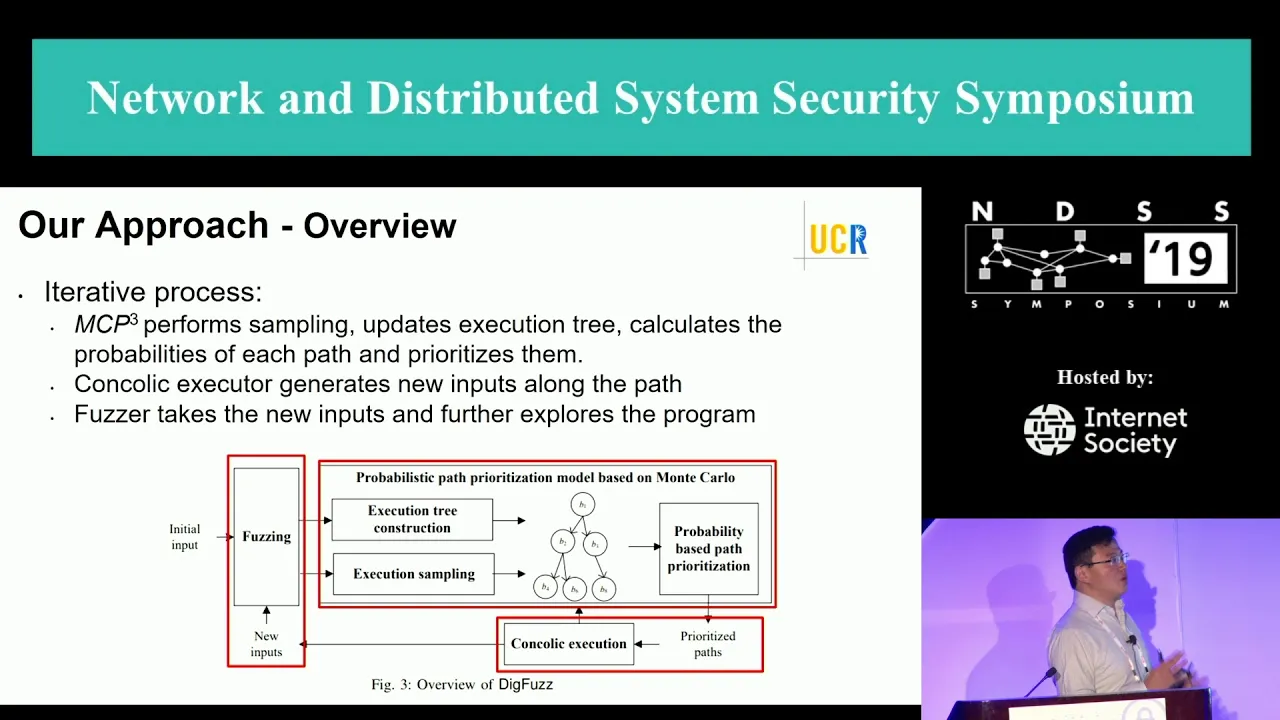
NDSS 2019 Send Hardest Problems My Way: Probabilistic Path Prioritization for Hybrid Fuzzing
NDSSSymposium
496 views•2019-04-02

How realistic is Cities: Skylines?
CityBeautiful
159K views•2019-02-14

GUIs & TUIs: Choosing a User Interface for Your Python Project | Real Python Podcast
realpython
2K views•2025-04-04

The OSI Model - Explained by Example
hnasr
225K views•2019-05-12

Cloud Computing - Introduction
elithecomputerguy
98K views•2019-10-07

From Traveler's Dilemma to Dynamic Routing | Demystifying Networking
IITBombayJuly
5K views•2019-08-04
Trending

YouTube Disabled Our Comments Again (Are Any Humans Left at YouTube?)
SpecialBooksbySpecialKids
39K views•2026-07-21

One Must Imagine Sisyphus Happy
vlogbrothers
61K views•2026-07-21

The Downfall of OnePlus!
techwiser
65K views•2026-07-21

The REAL History Behind The Odyssey Will BLOW Your Mind! It's NOT a Myth!
metatronyt
20K views•2026-07-21