The need to be needed is not love but a survival strategy that originated in childhood, where individuals learned that being useful was safer than being simply present; this pattern creates a false self built around meeting others' needs while hiding one's own vulnerability, and psychological freedom requires learning to need openly without disguising it as generosity, which is one of the hardest things a human being can do.
Install our extension to search inside any video instantly.
The Dangerous Need to Be Needed — Carl Jung
Added:There is a particular kind of person who feels most alive when someone else is falling apart. Not because they enjoy the pain. They would never describe it that way and they would be offended if you suggested it. But watch closely over years across relationships and a pattern emerges that is impossible to unsee once named. They gravitate toward people who are struggling. They stay in situations long after staying stops making sense.
They feel a strange hollow discomfort in relationships that are calm, stable, and require nothing from them. They call it love. They call it loyalty. They call it just who I am. It is none of those things, not entirely. It is something quieter and considerably more complicated. There is a specific ache that comes from being needed. It feels like purpose. It feels for a moment like proof that you matter, that your existence has weight, that if you disappeared tomorrow, something in the world would genuinely break. Most people chase this feeling without ever examining it. They just keep finding themselves in the same role again and again with different faces attached to it. The fixer. The one everyone calls at 2:00 a.m. The one who holds the family together during the crisis nobody else wants to face. The one whose relationships all seem to involve somewhere beneath the surface. Someone who cannot quite function without them.
And here is the part that goes unspoken.
They chose this not consciously, not with any awareness of what they were doing, but something in them selected for it over and over with a precision too consistent to be accidental. Carl Jung spent decades studying the parts of the psyche that operate outside conscious awareness, the motivations that drive behavior while presenting themselves as something entirely different. He was not interested in what people said they wanted. He was interested in what their choices revealed, especially when those choices contradicted the story being told about them. And one of the quieter, more unsettling things he observed was this.
What looks like generosity is sometimes a hunger wearing a disguise. The need to be needed is not love. It is a survival strategy that learned to speak the language of love so fluently that even the person carrying it can no longer tell the difference.
Somewhere earlier, usually much earlier than anyone wants to admit, a version of this pattern was rehearsed. A child who discovered that being useful was safer than being simply present. A child who learned that affection had to be earned through service, that being wanted required first being necessary. Nobody explained this to them directly. Nobody had to. Children are remarkably efficient at reading the emotional economy of the household they are raised in and adjusting their entire personality to survive its terms. If love had to be earned by being helpful, they became relentlessly helpful. If attention only arrived when something was wrong, some part of them learned quietly and permanently how to make sure something was always wrong nearby. Not through sabotage, rarely anything that dramatic. More often through selection, an unconscious radar tuned to detect exactly the kind of person, the kind of situation, the kind of chaos that would require rescuing. and once found an entire self mobilized around the task of being indispensable. This is not a character flaw. It is architecture built early, reinforced often, and so deeply embedded by adulthood that it no longer feels like a pattern at all. It feels like personality. It feels like values.
It feels like being a good person in a world full of people who simply are not.
But there is a question underneath all of this that almost no one asks because asking it threatens to unravel something they have built their entire identity around.
What happens to you when no one needs you anymore? For most people carrying this pattern, that question does not produce curiosity. It produces something closer to dread. Not the ordinary sadness of loneliness, something structurally deeper, a sense that without a crisis to manage, without someone leaning on them, they are not entirely sure who remains. The role has been worn so long it has fused with the skin beneath it. This is where the pattern reveals its actual cost. Notice what happens when the people they rescue begin to recover. When the struggling partner starts managing their own emotions. When the dependent friend develops other sources of support. When the family member they've spent years holding together learns finally to hold themselves, there should be relief.
There rarely is. Instead, there is a flicker of something closer to loss.
Sometimes even resentment quickly buried beneath guilt for feeling it at all.
Because progress, real progress, threatens the only role that has ever made them feel secure. They will not admit this. Most of them do not even know it consciously. But watch what they do next, and the pattern speaks for itself. They find someone new to fix.
Most people don't resent your strength.
They resent the version of you that no longer requires their rescue.
There is a particular type of relationship this pattern produces with reliable consistency. And once you see its shape, you recognize it everywhere.
One person perpetually giving, perpetually available, perpetually absorbing the emotional weather of everyone around them. The other, whether through circumstance or character, perpetually receiving. It looks from the outside like devotion. It functions underneath like an economy with only one solvent party. And the giver defends this arrangement fiercely even to themselves because admitting its cost would mean admitting something harder that they built it this way on purpose.
Jung wrote about a concept he called the shadow. The parts of ourselves we refuse to look at directly because looking would cost us the story we've constructed about who we are. Most people assume the shadow is made only of cruelty, of anger, of the ugly impulses we're ashamed to admit. But Yung was precise about something people miss entirely. The shadow can also contain need, not gentle, ordinary need. The kind of need so large it frightens the person carrying it, so they bury it beneath a personality built entirely around meeting the needs of others instead. It is easier, infinitely easier, to become the person who takes care of everyone than to sit with the terror of discovering how much you actually require from the world and how little control you have over whether it arrives. So the need gets inverted, redirected outward, disguised as strength. You do not have needs, you are needed. There is a subtle but critical difference between those two sentences.
And almost no one who lives inside this pattern has ever paused long enough to notice it. Being needed provides a kind of control that being in need never does. When you are the one others depend on, you set the terms. You decide how much to give, when to give it, how visible your exhaustion is allowed to become. There is a strange brittle power in that position. And power, even power built on quiet depletion, is seductive to anyone who once felt utterly powerless. This is the part that requires real honesty. Somewhere in the architecture of this personality lives a memory, often preverbal, of being the one who needed and was not met. A cry that went unanswered long enough to teach a lesson too early for words.
Needing is dangerous. Needing makes you small, makes you wait, makes you dependent on someone else's willingness to show up. So, the child adapted. The child became the one who shows up instead. And it worked. It worked so well that decades later, the adult version of that child cannot remember choosing this. It simply feels like who they are. But there is a cost accumulating quietly beneath every act of caretaking that looks from a distance like pure generosity.
The cost shows up first in the body long before it reaches conscious thought. A tightness that never fully releases. A fatigue that sleep doesn't touch. A low hum of resentment toward the very people they insist they're happy to help. a resentment they immediately suppress because feeling it contradicts the identity they've spent a lifetime building. Good people don't resent the people they love. So, the resentment goes underground, joins the rest of the shadow material, and waits. It always surfaces eventually, usually sideways. A sharpness in tone that seems disproportionate to the moment. A sudden, uncharacteristic withdrawal that confuses everyone, including the person withdrawing. an exhaustion that gets labeled burnout when what it actually is is a psyche quietly rebelling against decades of self- erasia disguised as service. Here is something almost no one wants to hear about this pattern. The people being rescued often sense at some level below language that the rescue is not entirely about them. They feel the subtle expectation embedded in the caretaking. The unspoken requirement to stay somewhat broken because their wholeness would leave the caretaker without a function. They feel the discomfort that surfaces whenever they try to stand fully on their own. They may not have words for it either, but something in the relationship tells them, "Don't get too well. Don't need me less. I don't know what I am if you don't need me." This creates one of the more painful dynamics in human relationships. And it explains a phenomenon that confuses almost everyone who lives inside it.
Why do the people I help the most seem to resent me? They don't resent being helped. They resent the invisible contract attached to it. The sense that their dependency is somehow required for the relationship to continue functioning as designed. Nobody ever states this contract out loud. Nobody would ever admit to writing it. But relationships are governed as much by what remains unspoken as by what gets said. And the unspoken terms here are unmistakable to the person living under them. Even if they can't name what's wrong, the caretaker rarely sees any of this. From inside the pattern, they experience only the sincerity of their own giving. They feel the exhaustion, the sacrifice, the years spent absorbing everyone else's crisis, and they cannot understand why gratitude seems to be in perpetually short supply. But sincerity and self-awareness are not the same thing.
You can give with a completely genuine heart and still be using the person you're giving to. That sentence deserves to sit uncomfortably for a moment because it is not an accusation. It is closer to a diagnosis. The genuine caring and the underlying hunger for relevance are not separate. They are fused operating simultaneously. And most people carrying this pattern have never been given permission to look at both truths at once without collapsing into either denial or self-hatred. Jung believed that psychological wholeness required precisely this kind of double vision. Not the comfortable fantasy that our motives are pure, nor the punishing conviction that they are entirely corrupt, but the harder, more honest middle ground that human beings are almost always driven by more than one thing at once. And maturity begins the moment you can hold both without needing to resolve them into something simpler.
The caretaker's love is real. The caretaker's fear of irrelevance is also real. And it is the second one quietly that has been steering the car the entire time. There is a specific kind of terror underneath this pattern that rarely gets named correctly because the caretaker has spent so long avoiding it that even they no longer recognize its shape. It is not a fear of being alone.
Plenty of people who don't carry this pattern are alone and function fine. It is a fear of being unnecessary, of existing in a room where your presence changes nothing. of loving someone who would be entirely fine without you. Of dying and discovering that the hole you leave behind closes over faster than you imagined because the world, it turns out, does not require you to keep functioning nearly as much as you needed it to. This is the fear that built the entire structure.
Every act of relentless helpfulness, every relationship selected for its brokenness, every instinct to insert yourself into someone else's crisis before they've even asked, all of it traces back to this single unbearable possibility that on your own merits, simply as you are, without anything to offer, you might not be enough to justify taking up space. Sit with that for a moment, because most people who live this pattern have built an entire adult life designed specifically to never have to sit with it.
Jung had a phrase for the process by which a person becomes fully themselves rather than a collection of adaptations built to survive childhood. He called it individuation. And one of the more uncomfortable truths embedded in that process is this. You cannot individuate while your sense of worth depends on someone else's dysfunction.
The two are mutually exclusive. If your value requires other people to remain in need of rescue, you have not built a self. You have built a function and a function, however impressive it looks from the outside, is not the same thing as a person. This is the threshold most caretakers never cross because crossing it requires giving up the one thing that has reliably worked for them their entire life. The role has flaws, yes, exhaustion, resentment, relationships that never quite balance, but it works.
It produces the feeling of mattering reliably on demand whenever they need it. Why would anyone abandon a strategy that reliable in exchange for the terrifying uncertainty of discovering whether they matter without it? Most don't. Most spend decades in this configuration, quietly depleting themselves in relationships engineered around other people's brokenness, mistaking the exhaustion for virtue, mistaking the resentment for unfair treatment, never once turning the lens back toward the actual architecture underneath. But some do turn that lens inward. And what they find there is rarely what they expected. They find that the child who once needed and was not met is still in there, still waiting, still convinced that needing anything openly is dangerous. They find that every act of caretaking has been in some hidden chamber an attempt to give that child what it never received, filtered through everyone except the person who actually needed it. You were trying to rescue yourself the entire time. You were simply doing it through other people because doing it directly would have required admitting how much you were still hurting. That admission is the actual threshold. Not stopping the caretaking entirely. Not becoming someone who no longer helps anyone.
Something more precise and considerably harder. Learning to need something openly without disguising it as generosity towards someone else. This is where most people quietly stop trying because it turns out to be one of the hardest things a human being can do. sit in a room with someone and simply say, "I need you." without immediately following it with a joke to soften it.
Without offering something in return to balance the ledger, without pre-apologizing for taking up space, no performance, no transaction, just the plain exposed fact of needing another person. For someone who built an entire identity around being the one who never needs anything, this feels less like vulnerability and more like annihilation. Because if you need something and it isn't given, the old wound reopens exactly as it did the first time. And some part of that person, the part still operating on the logic installed decades ago, would rather manage everyone else's needs forever than risk feeling that particular pain again. So they keep giving, keep fixing, keep positioning themselves as the strong one, the reliable one, the one who holds everything together while quietly starving. Most people never notice the starvation because it doesn't look like starvation from the outside. It looks like competence. It looks like generosity. Sometimes it looks like saintthood. The most exhausted people in any room are often the ones being complimented for how effortlessly they carry everyone else. There is a particular kind of loneliness that belongs specifically to caretakers. And it is different from ordinary loneliness because it is surrounded by people. You can be endlessly needed and still be entirely unknown because the version of you that everyone relies on is not the same as the version of you that occasionally secretly wants to be the one who gets held. Nobody offers to hold the person everyone else depends on. It doesn't occur to them. Why would it? You spent years training the people around you to see you as the source, never the vessel. And a source by definition is not supposed to run dry, but it does run dry. Every source does eventually without exception. And what happens in that moment when the caretaker finally has nothing left to give is often the first genuine crisis of their adult life. Not because the world falls apart around them, but because for the first time in decades, they are forced to face themselves without a role to hide inside. This is usually where the real work begins, if it begins at all. Not in the dramatic collapse itself, but in the quiet, unglamorous aftermath where the person has to ask a question they've spent their entire life arranging their circumstances to avoid. Who am I when nobody needs me? There is no clever answer to this question. It cannot be solved the way a problem is solved. It can only be lived with slowly, uncomfortably, in the absence of the old strategies that used to make the question disappear before it fully formed. Jung believed that this kind of confrontation, however painful, was the only real path towards psychological freedom. Not the freedom of having no needs, which is a fantasy, but the freedom of no longer needing to disguise your needs as something else in order to feel permitted to have them. The people who eventually find their way through this do not become less caring. If anything, their caring becomes more precise because it is no longer contaminated by a hidden agenda they were never willing to examine. They help because they choose to, not because their entire sense of existing depends on it. But that shift asks for something most people are never willing to surrender. It asks you to give up being the hero of every room you enter. Not because heroism is inherently false, but because in this particular configuration, the hero role was never really about the people being rescued.
It was about maintaining a version of yourself that never has to feel small, never has to feel unnecessary, never has to sit quietly in a room and simply exist without producing anything of value. Giving that up does not feel like liberation at first. It feels like disappearing. Because if you are no longer the one who fixes things, the one everyone calls, the one holding the structure together, some part of you genuinely does not know what remains.
And that uncertainty is not weakness. It is the sound of a false self built decades ago for survival finally being asked to step aside for something that has never been allowed to develop.
This is the part almost nobody tells you. Underneath the compulsive helper, underneath the fixer, underneath the one who cannot walk past someone drowning without diving in, there is a person who was never given the chance to simply be cared for without earning it first. That person did not disappear. They were only ever hidden, tucked beneath decades of usefulness, waiting for a moment safe enough to exist without a function attached. They are still there. And the tragedy, if there is one, is not that this pattern exists. Every human being adapts to what they were given. The tragedy is how many people spend their entire lives mistaking the adaptation for their actual nature, never once separating the two long enough to ask which parts were chosen, and which parts were simply survival, wearing a familiar face. Most people don't resent needing others. They resent the version of themselves that had to disappear in order to become needed instead. There is no tidy resolution to offer here. No five-step method for becoming someone who can rest without guilt, receive without repaying, exist without proving.
That kind of change happens slowly, unevenly, usually with long stretches where the old pattern reasserts itself with the same certainty it always has, disguised as always as love. What changes, if anything changes at all, is smaller than people expect. A pause before rushing in. A question asked before a rescue is offered. A private uncomfortable recognition in the middle of helping someone that some part of this is for you, not them. That recognition doesn't fix anything by itself. But it is the first honest moment most caretakers have had with themselves in years. And it raises a question that Jung in his own quiet unflinching way seem to understand better than most people who have written about the psyche since. What happens to a person who spends their entire life being needed and never once lets themselves be simply loved? Nobody answers that question for you. It waits patiently in the space between what you give and what you have never once asked for in return. And it will keep waiting for as long as you need it to.
Related Videos

0:39
Psychology
Inside Ronaldo’s Team Meeting
RonoSphereCR7
1K views•2026-04-17

7:25
Psychology
You Are Not So Smart: Chapter 4 Hindsight Bias, What is it?
TheBey8nD8
230 views•2019-09-15

49:35
Psychology
Sigmund Freud's Mind - Master Your Inner World (Your Unconcious Mind)
Ngaslife
1K views•2025-01-25

11:29
Psychology
What affects your mood?
RandyPaterson
602 views•2019-05-16
3:45
Psychology
Can you outsmart this logical fallacy? - Alex Gendler
TEDEd
2164K views•2019-11-25

1:02:21
Psychology
Understanding the Relationship between Fear of Falling and Mobility in Older Adults
fallpreventioncommunityofp3788
823 views•2019-04-08
54:04
Psychology
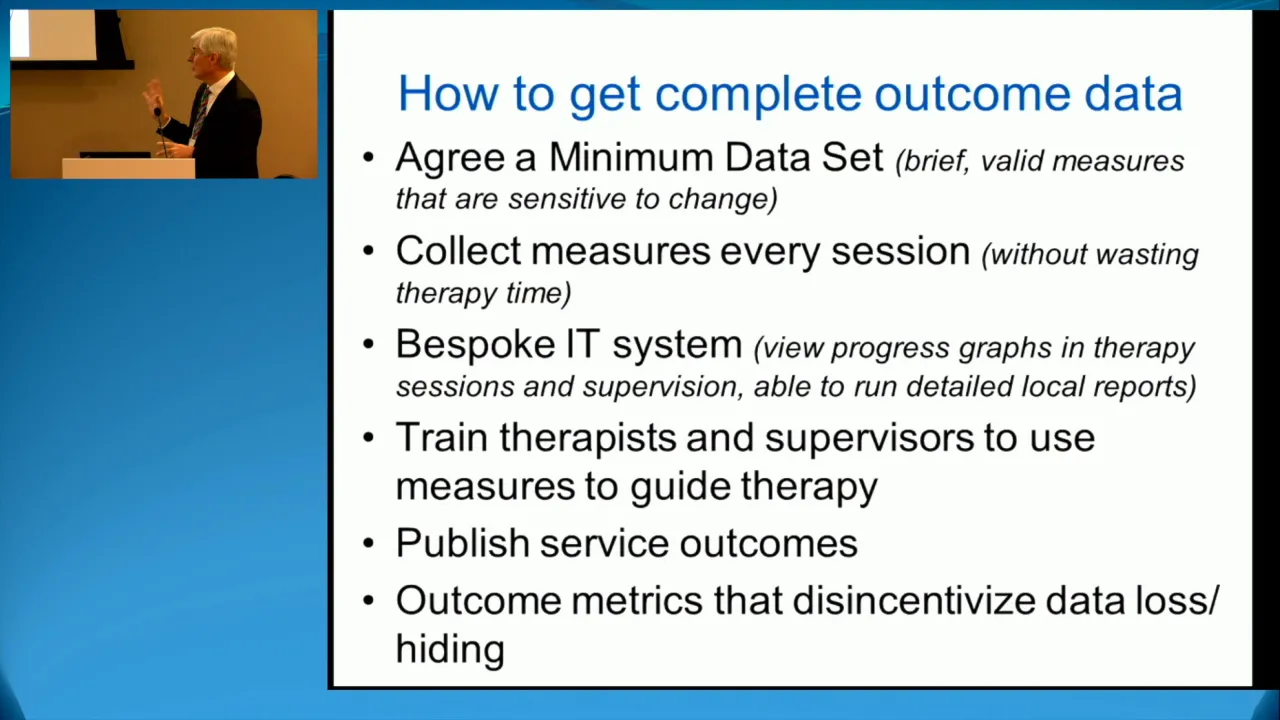
Measurement-based Care in Psychotherapy Workshop - Future of Psychotherapy Conference 2019
UofTPsych
243 views•2019-04-25

51:52
Psychology
Dr. Carol Tavris — Mistakes Were Made (But Not by Me)
skepticmagazine
14K views•2019-05-02
Trending

13:25
Business
Playstation NO DISC/NO BUY Fight Is Over...
DavidJaffeGames
4K views•2026-07-23

22:40
Business
Steam and Xbox Just Dropped The Hammer On PlayStation
OhNoItsAlexx
9K views•2026-07-23

16:52
Anthropology
Americans Confused in Australia for 17 Minutes Straight
IWrocker
17K views•2026-07-23

20:36
Business
SuperBike Factory Has Gone... What's Next for the Motorcycle Industry?
thatbikersimon
11K views•2026-07-22