Asteroids that pass close to Earth can pose significant threats due to their potential to cause catastrophic damage upon impact, and their orbits can be altered by gravitational interactions with planets, making ongoing scientific monitoring essential for long-term risk assessment.
Install our extension to search inside any video instantly.
Scary Asteroids That Will Hit Earth In Our LifetimeAdded:
2007 VK184 caused a bit of a stir when it first showed [music] up. This one's about 130 m wide, so roughly the size of a football field and then some. At one point, NASA gave it a 1 in 1,800 chance of hitting Earth on June 3rd [music] of 2048. That's not something you ignore.
An impact from an asteroid that size could wipe out an entire metro area and cause serious damage around it as well.
Shockwaves, fires, a massive explosion in the sky, and depending on where it hits, possible tsunamis. For a while, it was high up on NASA's watch list, but as tracking data improved, the risk went down and eventually got removed altogether. That said, it's still flying around out there, and its orbit brings it close to Earth every few decades. So, while it's off the wait list for now, may not be forever. The thing with space rocks like this is that even a tiny nudge from something else, like gravity from a nearby planet or another close pass, could alter its path just enough to cause trouble later on. 2001 WN5 doesn't get talked about a lot, but it's coming really close in the not-so-distant [music] future. It's just over 2,600 ft across, way bigger than most of the others we've mentioned. It's expected to pass by Earth in June of 2028, and it's going to come within 155,000 mi. That might sound [music] far, but it's actually way closer than the moon.
Close enough that you could possibly see this with binoculars. If it were to hit, we'd be in serious trouble. An object that big [music] could cause destruction on a huge scale. Luckily, it's not expected to collide with us, at least not this time around, but because it's passing so close, scientists are keeping a very [music] close eye on it. It's one of those rare chances to study a big asteroid up close without it, of course, [music] hitting us. The other reason they're paying such close attention is because Earth's gravity might slightly change its orbit during the flyby, and if that happens, future passes could end up a lot more [music] dangerous.
Related Videos

Spiral Galaxy NGC 3370 from Hubble | NASA APOD 2025-11-05 #Shorts
galaxygallery
938 views•2026-05-30

SOMETHING inside the SUN is CHANGING
RaysAstrophotography
1K views•2026-06-03

Captured the Blue Moon (with a twist) 🌙✨ #space #bluemoon #telescope
realAstroExplorer
674 views•2026-06-01

There May Be A Giant Hole In The Universe... And We Might Be Inside It | The Cosmic Ledger Entry 015
TheCosmicLedger
145 views•2026-05-31

The Map We Sent to the Stars in 1977 — Why Scientists Now Regret It
TheAncientRecord7
183 views•2026-06-03

10 Planet Where a Black Hole Replaces the Sun
cosmicexplorer-EN
147 views•2026-06-02

Is this a copy of our galaxy? Discover Galaxy M81!
UniverseDocumentaries-cc4mb
995 views•2026-05-31
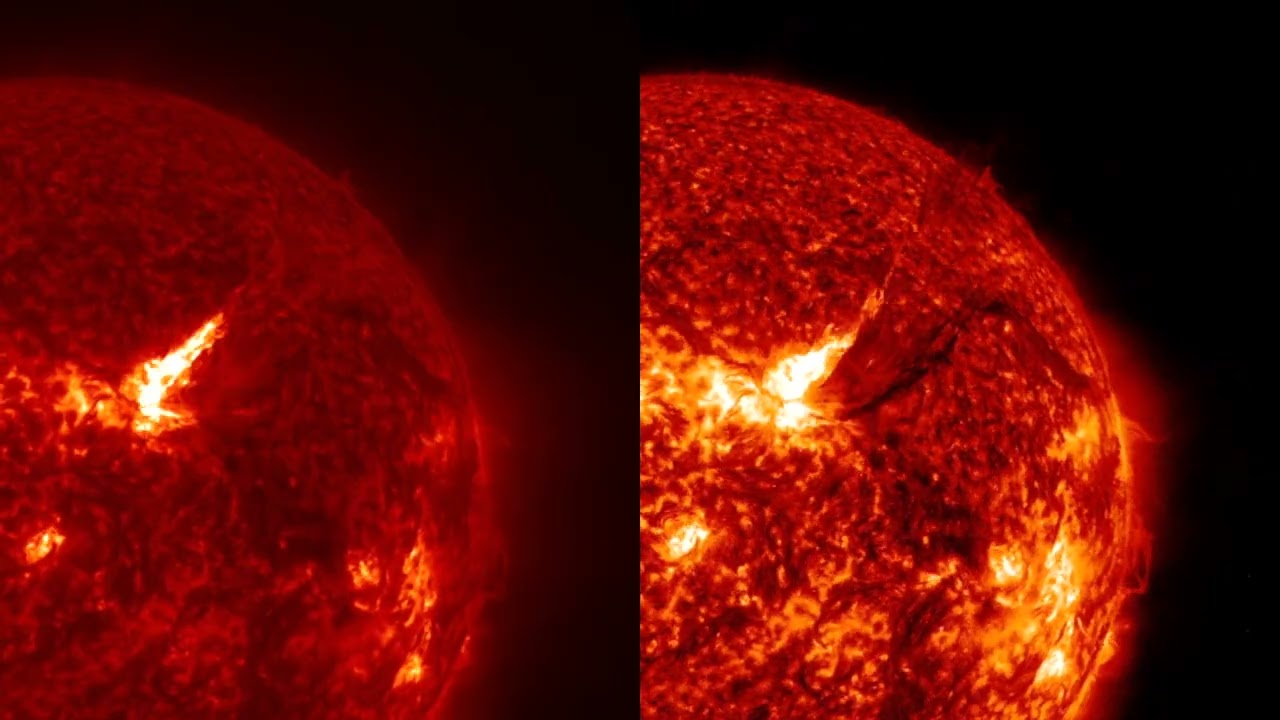
Solar Flares and CMEs at Earth - More Likely | S0 News June.3.2026
SpaceWeatherNewsS0s
2K views•2026-06-03



