Cyber weapons can cause catastrophic physical damage comparable to nuclear weapons by targeting critical infrastructure systems like gas pipelines and rail signaling, where manipulating SCADA sensors can trigger explosions or derailments that kill large populations; the attacker always has the advantage because defenders must patch vulnerabilities while attackers exploit unknown weaknesses, and this threat persists even after physical conflicts end.
Install our extension to search inside any video instantly.
The dangers of cyber: a tiny Trojan could rival Hiroshima
Added:any Trojan horse virus >> we download from the internet we could done a real big damage to all Israel I can say it's something that if it was done really it could be very very similar to Hiroshima and only after that it could kill almost all the population in the Kifa Gulf okay this is Yona Bob senior Senior military analyst for the Jerusalem Post on the Jerusalem Post podcast with Harel Manashri who has a very impressive resume, former Shinbet cyber official, 25 years with the agency, head of cyber at Cologne Institute of Technology and also teaching at Tel Aviv University.
Thank you and welcome to the podcast.
>> Thank you for inviting me. And as an opening question, uh there are a bunch of people who have now served in the Shinbet in cyber, but I understand that you are one of the founders of the Shinbecket getting into the area of cyber. And you talk about some of the difficulty there was at the beginning at convincing people the agency that this was a serious part of what they needed to do not just what they had been doing until then you know sort of kinetic you know spying or signals intelligence that this was something they needed to take seriously.
In the past, most of the senior people in the in the Shinbet came from the Arabic area and deal with Arabs and when we talk with them about cyber we the name was not cyber on those days we call it in different names but never mind when you talk with them they didn't understand what we talk and they thought we are talking about mambo jambo. It's look for them like a magic or some stupid things because they used to meet Arab agent and give him a mission and to stop Arabs with guns. And when we talk about computers and what we can do and what we are doing in other places in infrastructures critical infrastructures and what we can do in computers in offices and etc etc and how we must defend our infrastructures.
They didn't understood and they didn't realize the importance of it and they laugh of of us. It was very difficult to convince not only in the shinbed but also in the Israeli defense system and also the government.
The government doesn't want to give all this area enough resources to grow and only after in the end of the 90s we have done very nice nice nice it's not the real word for it but we have done >> more complete more comprehensive >> we show we show ability. How in with a a tiny Trojan tiny virus, >> a tiny Trojan horse virus >> that we download from the internet, we could done a real big damage to all Israel. I can say it's something that if it if it was done really it could be very very similar to Hiroshima but with very tiny code and only after that you know it could kill almost all the population in the Hifa Gulf and the area and to make a damage for many many years to all the economy in Israel etc. And that brings the government to understand the situation and to understand that we need to do something else to defend ourselves against enemies that try to to to do things for us like we do to them. And but the what we have done before it was very very silent and very very smooth and only few people around the world knew about it. Here in in Israel people didn't knew and >> nobody knew. This was the time before the intelligence agencies bragged about all of the things that they were doing in public.
>> I'm talking about the '9s.
>> Yeah. And the you know viruses came from the 80s. And if I looking around the world, I can say that United States have been in in this area from the beginning of the 80s and do operations against critical information, critical infrastructure, I'm sorry, in Russia in the beginning of the 80s, they were there already. But in Israel, people didn't talk about it and didn't think about it. And most of the people that we try to talk, they didn't understand. And some of them afraid from technology or I don't know what. And some of them were, you know, people like what they know. And when they don't know something, they think it's a Mambbo jambo they you know >> if I don't understand it it must not be important >> aid >> aid was the head of >> or before he before he have been the head of shinbet he have been the head of department that I have been and in some letter some articles that we wrote for him and we say what we need to do and how we need to do it. He wrote the sentence mambo jumbo. [laughter] It's it's his words.
>> We'll bring him on here and ask him what he meant by that at some point.
>> But but I can say that when he was head of Shinbet, he gave us very very big drop very he gave us back to Yeah. to then he understood Yeah.
>> Okay. to to go on and but it was other days.
So, let's take this forward to the present with Iran and there was it just came out very recently that the chief of the INC, the cyber authority in Israel, Yosi Karadi, who used to be former Israeli military intelligence, um said that Iran launched 4,800 cyber attacks on Israel during the war, which was triple what it normally does.
And when I say 4,800, really they're probably, you know, hundreds of thousands or millions of attacks. this is 4,800 significant sophisticated attacks. Um, and uh, so that's something that he said about the war. And then he says after the war, after the war, right? So the war has been over in the kinetic physical sphere since April 7th, but he said it never stopped in the cyber sphere. He said it never stops and Iran is constantly trying to attack Israel in the cyber sphere, even now, even as we speak probably. Um, so can you talk about that challenge? And the one other thing I want to say is because you said the thing about um like a new like Hiroshima before on cyber weapons. So overnight the head of the CIA uh Ratcliffe said that the latest AI cyber weapons that are coming out from adversaries are like digital nuclear weapons. So if you can describe the danger that we faced the last few months and that we are continuing to face from countries like Iran even though like the physical war is over the cyber war continues.
>> Look first the cyber war is endless is happened anytime and every place any place and you know I'm I'm asked the first uh things that I ask my students in the first lesson is who are the warriors and and who fight in this uh area in this field and they ask as they said army the government etc etc and I'm in the end I tell them and they convince of course everyone because Even if you don't understand and you do nothing to attack another guy, you are under attack because someone attack you, >> right?
>> And if you don't have enough defense, if you don't think about how to defense your facilities, you will you will fall down. And the Iranians are very good. Still, there is a gap between Israel and Iran, but they are very sophisticated.
They have lot of resources for it.
>> And people are always telling me in the cyber sphere that the attacker always has the advantage over the defender. So if Israel is more powerful, it doesn't matter if Iran is on the attack, >> right? You can be the best defender, but still every technology have vulnerabilities and every day discover more and more and more and more vulnerabilities. And if you don't find it in the and the time you will hit and the Iranians are the number one in the world they are champion in the world to take vulnerability that you don't know about it or know about it and to put it in a Trojan and try to attack you we for example you know the term zero day or day one I don't >> zero day sort of you know a weapon that you know is a complete disaster from a cyber perspective and that maybe you don't even need to click on it to cause all the problems.
>> Zero day is when you don't know the vulnerability no one know except the attacker. So I don't anom I don't know everything >> right >> but I don't know that Iranian used zero day but they use what we call day one I mean vulnerability that already known and maybe even the manufacturer have a patch security patch to close the the door, but they have the time.
>> It takes people a really long time to listen and to actually act on fixing the patches that they should do much faster, >> right? And sometimes it takes them some hours to try to attack you in this Trojan with using of these vulnerabilities and they are very very good in this and they do it every day, every place and has like Yosi Kari say it's happened all around Israel in the healthcare area in the manufacturer in the critical infrastructures and in business small and big everyone get it. And if people think, you know, in the past in the dur during the '9s, we use we have a term that say we fight against enemies against armies that have equipment. We don't find what to do against goat goat shapers. Today it's not true because everyone have technology. I have been in two 2016 in Namibia and in Namibia you can see in the desert the Hima tribe girls that go half naked like their great grandmothers but with cellular >> with cell phones.
>> Yeah. because the Chinese had made >> the towers to work for the cell phon. So they're in a country where you would think they sort of the farthest backwards in technology and they still have cell phones and they're connected to all of these advanced tools, >> right? So if you have a cell phone, someone can attack you and can try to trace you and to see where you have been and what you are doing etc etc and it's it's a beginning. So even with a cell phone we need to try to defend ourselves and to see how we used to to do things and how we behave because someone watching us all the time and it's not about paran paranoid it's about the real life it's happened.
>> Yeah. Okay. Okay. Um I want to come back to something you said before sort of like a worst case scenario that you know Iran or somebody else could do a a cyber digital sphere attack and that could lead to huge numbers of people dying in in the Kyifa. So somebody's gonna say you Yonab Harel Manashra you guys are you know you know crying wolf you know how can a computer virus you know kill people can you just not not not to give the bad guys but can you play it out for people so they can understand that it's a real real >> I I can tell you like this take for example a gas pipeline okay you need to uh operate it you need what we call scattera. Scattera is about how to control all the system with many many sensors that see what the the pressure is in every every inch of the pipeline and how fast the material go etc. Every infrastructure that use scattera have to understand that scattera in in the end it's not a computer like we have in our desktop but it's a kind of computer computing thing it's use controllers and if I can get inside the server that operate the controllers and change it And I can stop sensors.
>> The numbers are wrong.
>> If I can stop the sensors for example and the pressure in a a place will go to a harm and to to a danger number, it could be explode. And if it's explode in some places, it could be in in in some materials, it could be very very dangerous. It's much more danger sometimes than TNT or 10 or >> because it could be chemicals and it could spread and >> Okay, so we hope it doesn't happen but one of the reasons we're doing this is that people know about it and take it serious. Look for example if we are talking about train. Okay just imagine train have train is a critical infrastructure but in the train there are some >> hazardous materials >> there. Yes there are some systems in the train that more intense than others. For example, if someone will attack the tickets and ticketing and counting, it's it's not good, but it's it doesn't harm people. Yeah. But if someone will attack the visa system, visa is a system that tell the locomotive driver which speed and direction he could could drive in in which time. For example, in Denmark, I think it was in Denmark two years ago, someone attack a company that gave the services to uh the visa system and when it shut down all the trains stops and but there is also another thing. It's a the system that make the movement of the rails.
In Hebrew, we call it, >> right? You know, >> the direction of the rails. It makes you go on one track or another track, >> right? In the movies, in the old movies, we saw the man with a >> with the lever.
>> Yeah. And only imagine that when a train came to let's see University station in Tel Aviv or center central station in Tel Aviv and the locomotive go to the right and but immediately after it the rails go to the left side.
What will be that the all the train will fall down and collapse. It could harm and kill people. that if the train is not with people but with chemicals we have in Israel many many trains with a very heavy stuff and if something like this happened in a urbanic center like Tel Aviv >> right in the middle of the city with an explosion chemicals on a train of high speed >> it could be very very big issue that can kill many people and there are many things that you can do with computers with Trojans today that can be very dangerous. For example, I can tell you that about what it's published what they call in the media stax net that have been discovered in natans in Iran >> 2009 2002 >> right and one of the things that the tool done in this scattera stuff in natans that it's make the um centrifuge blow and the uranium is go out in the old hole and people could die from it because it's danger material. So if someone thinks that it's Trojan, it's in computer, it done nothing, please think different because all the infrastructures connect and when you attack for example electricity grid you know to attack the >> United States just a few months ago shut down uh in Venezuela the entire capital electricity grid when they went to take the uh >> back and they they have done it without it's not pure cyber it's not the they use what we call EMP her but it was very very nice and very focusing >> right >> but if for example you shut down in cyber attack the energy supply to the grid or the valves that bring water to chill the grid. They it can't work. And without electricity, you maybe harm hospitals, transportation, communication, everything >> right >> and everything is connect and hang one each other. So when you do if you are a country and you need to defend yourself the best thing you can do is [snorts] to see everything from holistic point of view and Israel was the first first country around the world that understand it. I can tell you and I can say that I have been there but one of the part of it but Israel was the first and today I think that every country understand it and try in Israel we are doing the people here in Israel are very good in defense but still as we we say before the attacker always after. Yeah. So, >> we're moving on now to artificial intelligence and geopolitics. And a story that's come out recently has been that there are tensions between the United States and some of its allies in NATO and in Europe about um whether the United States is willing to you to share all of its AI tools, some of the latest tools from Anthropic and other companies um which are so advanced um both in sort of the regular commercial sphere but also in the military sphere. And there are tensions now between the United States and some of these allies. Um, I don't know if it's gotten to Israel yet, but certainly between the United States and the European allies about whether it will share these technologies and whether it won't and what these European countries or what any country now has to do if they don't want to be left behind in the AI arms race, so to speak. Can you describe that a little bit?
>> First, I have to say that in my point of view, there is a huge problem for us humanity. humanity.
When I was kid, I used to read almost everything include Asimov books about the robotics and Asimov have the rules, the three rules for robotics.
But today and you know when you are young and you are naive you think that the humanity should be behave and make and manufacture robotics and technology that will bring us good >> good things and closer together.
>> Yeah. But but it doesn't work. And today Not today. It's for many years now.
Governments and government in the east side and companies in the west bring and develop technologies that use to a war, use to used for military purposes >> for me. Yeah, for military purposes. I'm I have to apologize from the for the audience because I I I never learn English. So, >> you are doing a fantastic job.
Anyway, it's it's a problem and there is not enough in my point of view talking about how to to think about humanity and how to to deal with the law with international law. But but I in in one I I need to to say another thing all the cyber world as doesn't have a international law because the a different perspective between the United States and its alias and the Shanghai members China, Russia, Iran, Kazakhstan and all the other stance that think different about what countries could or should do in their area and in other areas. So when we are talking about AI, the AI today have we have a big pro huge problem because things that took before five years ago to make or to do two years today it's something about some hours and it's very >> the switch isn't you know let's say weeks to hours it's years to hours things could take the best experts in the world before years and now the AI with the AI the experts can do in a matter of hours. For example, we I read this week an article that it's American article that try to uh see five different models, Chinese models of AI and how they use and the difference between them and the American AI models.
And I in the same time I read another article that made by a very known cyber company that show how Chinese models when you use it in your company as a private business and somehow the AI fund that your company work for the American American government it's immediately make and open some vulnerabilities in your equipment and they found more than 130 holes that the those models doing >> 130 >> when they found 135 if I remember the number I have this calculation so I'm sorry but I think I I remember And when it's not happened from the air, it's happened because someone is behind it government. Yeah. And the Chinese regime have have proposed, they have goals to achieve and they do what they can to to do it to achieve it. And when we see it, we we we understand it's a problem. And when you hear you heard a month ago that US government stop some American models is because they understood how how much danger those models can do to all the humanity. Now, when you're saying stop in terms of the danger they could bring to humanity, I think what you're saying is it's not the United States would worry that let's say that France or England would misuse it. It's that they are afraid that France and England are too exposed to Russia and China and other countries and don't have the same safeguards in order to protect some of that source code or hacking code to get to some of those other countries that >> but not only countries also criminal hackers, >> right, >> can use it. And today we see that some models can do by almost by themselves only in attacks attacks from the beginning to the end and to understand and learn during the attack all the mistakes they are doing. You know it's things that sometime it it take to teams of people take months they are doing in in hour in in in hours and and from they break to the company from the beginning to the end in very very short short period of time and it's very dangerous. So we don't have the problem here is that in in in our world we are don't don't talk about how do I say it to get >> morality how to how to how to use the equipment how to use the technology.
>> So so you're saying that we we don't talk enough when we're talking about using AI in warfare for military purposes. We're not talking enough about the new ethics that >> ethics ethics right >> into that discussion. The word that I miss is is ethics and and and it's it's make me crazy but it's in purpose and I see it in every technology and everything that I'm watching or dealing with including for for example the social social media you know in social media we have a lot of problems many many problems and we need regulation some countries on understood it. In Israel, for example, we have a problem because politicians doesn't want we do regulation because they need it.
>> They use the bots in order to try to control some of the discourse and conversation online about the different issues.
>> When they want to use bots from India, from Iran, they use it and they don't want to stop it. They don't want to make rules and regulation that disrupt them to to elected again.
>> You're saying if there's an enemy country that's doing something that can in some way help them on their political uh campaign, they want to step out of the way and sort of let it happen.
>> I'm afraid so. That's what in the end that that's the that's the goal. That's the that's what happened. And uh it's a problem and when we are talking about AI AI today involve in every aspect of technology in every aspect of our life even if we don't understand it and we don't know if you are using for example electric car you use lot of AI in it. I can tell you Tesla and Chinese electric car are very similar technology >> in terms of >> the different >> the basic technology.
>> Yeah. Yeah. In in the in the holistic point of view but >> but they're different.
>> The different is the regulation.
Tesla work with American regulation and Chinese work with Chinese regulation.
That's a different and that's why it's so danger and the Israeli government for many years doesn't want to deal with it.
And even in the Israeli defense system, >> this is this blew my mind. I saw articles that you wrote last year that hundreds of Israeli defense officials are driving Chinese cars which you say could have back doors which are >> they have they don't it could it's not could they have >> they have back doors which could be giving information about the defense officials and information wherever they drive inside military bases >> right and if you read the Chinese rules they need to >> you're saying They're obligated to transfer the information to the Chinese government.
>> Of course, they need to they they forced to. It's not something that commercial, but they forced to do it. And you know for example when a Chinese company BYD for example when they have commercial in all page of newspaper that say for the driver look it's very very nice for you and easy for you when you go to sleep we make the downloads and every things that need to re build your system in your car. For me, when I read it, I start to laugh because it's exactly like a burglar that say to you when you go to sleep, please, the key of your door, put it outside for me.
>> Wow. It's the same thing because and people it's you need to to to read what the Chinese say and how they behave in China with those cars and what they force how they force the manufacturer and don't let them transfer out from China or the intelligence that the car gather gathering from the area and how they force it force them to bring it from other countries and if you don't understand it the problem is you know we see it in the Israeli politicians and Israeli government for a long time we have seen it if we are talking about the Chinese we have seen it in the port in Hyifa >> specifically covered heavily covered when China built the new Kyifa port which is super advanced technologies and super efficient and there was a huge fight between the Shinbet and you know I guess let's say Israeli officials that were worrying more about the economics and efficiency about whether China could do it and how China could do it and even if China built it could they operate it afterwards and then the United States threatened this is in the first term of Donald Trump that they would stop having US naval vessels docking in that port if Chinese uh people kept operating the report after they built it. Now, I thought from after that that there was a committee that came out of this that sort of took care of the whole thing and was doing better oversight and then I saw a recent article that you read that said there's loopholes around the committee. Um, so if you can address some of these issues, >> you know, when people from the Shinberto other area told the government it's a danger.
The a the answer was you don't understand. It's not about security.
It's about economy.
>> And this isn't in the 1990s. This is sometime maybe like five, six years ago.
>> Yeah. And they didn't want to hear, you know, you can take the security people and put them outside. They didn't >> leave the room. We don't even want to hear your >> opinion. You you they they even didn't listen to cyinologist in the academic and and no one because they know everything. That's the problem.
>> Scologist like an expert on China.
>> Yeah. The the problem is that when you go to the politicians or to treasure people and etc. Some of them they feel that they know everything even if they don't understand nothing and that's a problem they don't want to hear. Trump sent to Israel delegation from Apac with a message how the port in Kifa is danger not only to Israel but also to American Navy to the six fleet and Netanyahu got them and uh gives them a very very nice declaration about Iran and sends them back. So Trump sent here his former advisor John Bolton, the man with a mustache.
>> Yeah.
>> And again Netanyahu gave him a huge speak about Iran and send him back. So the former state >> Bolton was the former national security adviser and former ambassador to the UN for the United States.
>> So Pompeo the former >> secretary of state >> secretary of state need to stop visit in Hungary and Poland and came to Israel for two days and told Netanyahu I know about Iran. It's okay. I want to take to tell you about China. So after that there were some changes and so one of them is the committee that you are talking about that >> and so did this solve all of our problems.
>> It's no it's not it doesn't solve and it can't solve but they don't want to talk about China. So they say that it's committee about infrastructures that made by another or former >> foreign countries and I can tell you that from 2091 there are no Chinese companies that they doesn't get get >> operating the operating project after they built it.
>> But still they are building infrastructures in Israel and China is a huge problem because all the supply chain of everything is you can see that some parts came from China and you can't run from it. that if the manufacturers doesn't understand that Chinese rules let the Chinese regime the opportunity to get to the a ground manufacturer ground and do whatever they want to do in the floor in the manufacturer floor include to implement back doors and we see it and there if you are dealing with technology you must give the Chinese regime your source code otherwise you cannot manufacture in China so if you don't understand it and you don't do something to defend yourself against it you are in huge problem and Israel doesn't want to move the the glass so the can drop out or >> they don't want to shake up the relations with China in the broader sense, >> right? And somehow because of the October 7, the Chinese behavior to Israel change and Chinese is more and more and more anti-Israeli the Chinese >> and their public statements. They have a lot of public statement against Israel and supporting the rights of the Palestinians. And you know it was not be before they try to go between the lines because China itself have a huge problems with minorities that want independence and and they but today not today they tell very very loud that Israel is blaming all the horror >> you're saying a double double standard for how the Chinese treat certain people in its area versus how they're talking about how Israel Palestinians >> even they even teaching in the schools that Israeli people do horrors in the Gaza strip etc etc and China if people doesn't understand it China that it's very very important state and we hang it hang in China in many many things for example almost all the health healthcare area need China to bring even the medical medical army. Yes, they need medical. They need equipment from China and the hospitals need equipment for we we need them.
>> We can't break the the line.
>> We are too invested at this point.
>> Of course, but >> but you would say let's reduce it going forward at least.
>> China is not a friend of Israel.
Unfortunately, China is not a friend of us. China never never ever vote for Israel is the United Nation or any other places. And I can tell you that if the Arab leagues will bring suggestions that bring a rule to the United States that say that earth is >> the earth is flat >> flat. China will vote for it not because they think it's true but because of interests >> and it's it's a problem. They are not for us. They are for Arabs because of interest and they are a very very >> larger economic interests >> right. They are very center and important needle in the axis in the Russia >> they're the axis of resistance of Iran and they're very working with >> they work with North Korea and Russia and Iran >> and unfortunately that's the situation Right. Um, thank you so much. We're definitely be going to be getting responses uh from the Chinese uh embassy, I'm I'm sure, on on some of this because they always like to comment whenever I write articles about them and uh cyber, but we need to get some of these issues out there. Thank you so much, Harman, coming on the Jerusalem Post podcast. This is part of a series on cyber warfare and cyber security and related issues. [music] Um, thank you so much for coming.
>> Thank you for inviting me.
Related Videos
6:13
Computer Science
TOP 15 Data compression Interview Questions and Answers 2019 Part-2 | Data compression | Wisdom jobs
wisdomjobs
281 views•2019-06-28

27:51
Computer Science
CTS 158: 802.11w Management Frame Protection
ClearToSend
4K views•2019-02-04
23:21
Computer Science
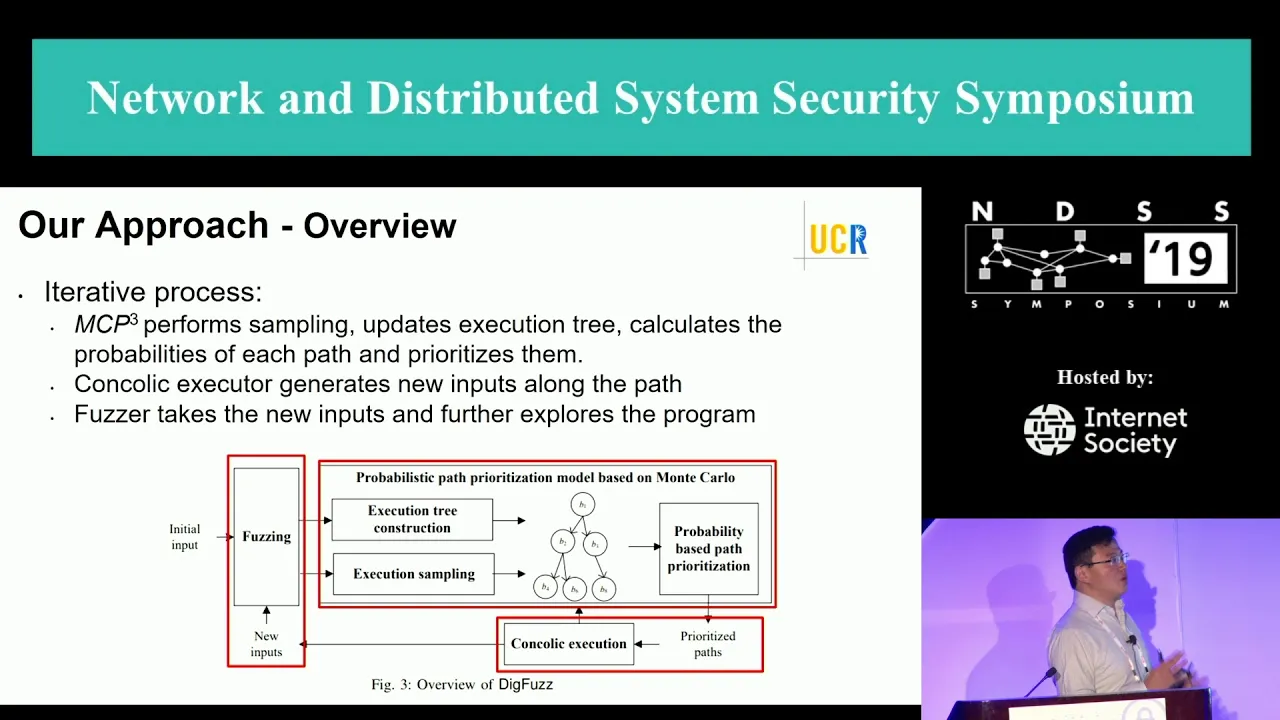
NDSS 2019 Send Hardest Problems My Way: Probabilistic Path Prioritization for Hybrid Fuzzing
NDSSSymposium
496 views•2019-04-02

12:48
Computer Science
How realistic is Cities: Skylines?
CityBeautiful
159K views•2019-02-14

46:39
Computer Science
GUIs & TUIs: Choosing a User Interface for Your Python Project | Real Python Podcast
realpython
2K views•2025-04-04

25:15
Computer Science
The OSI Model - Explained by Example
hnasr
225K views•2019-05-12
1:10:47
Computer Science
Cloud Computing - Introduction
elithecomputerguy
98K views•2019-10-07
2:24
Computer Science
From Traveler's Dilemma to Dynamic Routing | Demystifying Networking
IITBombayJuly
5K views•2019-08-04
Trending

13:38
Law
WOW! Judge TURNS THE TABLES on Trump in His OWN $10B LAWSUIT!!!
MeidasTouch
197K views•2026-07-23

13:25
Business
Playstation NO DISC/NO BUY Fight Is Over...
DavidJaffeGames
4K views•2026-07-23

22:40
Business
Steam and Xbox Just Dropped The Hammer On PlayStation
OhNoItsAlexx
9K views•2026-07-23

16:52
Anthropology
Americans Confused in Australia for 17 Minutes Straight
IWrocker
17K views•2026-07-23