By deconstructing the "Vox aesthetic" into a modular logic, this workflow demonstrates that creative mastery is shifting from manual execution to high-level systems design. It effectively turns the editor into an architect of AI-driven processes rather than a mere technician of software.
Install our extension to search inside any video instantly.
Claude just Edited an Entire Vox Documentary From Scratch! (Here’s How)
Added:Claude can now officially create Vox style documentaries like this one completely from scratch. Everything you're seeing right now, all six of these Vox style animations were created entirely using AI. And even if you've never used AI to edit a video before, in this video I'm going to show you everything you need to know to create Vox style documentaries like this using nothing but Claude. First, we're going to start from zero and create the story line and voice over using AI. Then I'll show you how we trained Claude to think like a real documentary editor and plan out animations. And finally, we'll use Claude and Hicksfield to create all six of these stunning documentary animations from scratch with sound design as well.
And by the end of this video, you're going to be able to use Claude to create stunning documentaries like this completely from scratch, even if you don't know a single thing about editing.
And real quick, if you'd like to learn AI video editing from A to Z, we're building a full AI editing fundamentals course inside Ultimate Editors, but more on that later in the video. Now, before we create the crazy animations, we first need the story line and voice over that guide our documentary. So, let's quickly do that. Every documentary needs a good story. And typically, Vox covers political or historical problems backed up by numbers, facts, and cool stories.
What makes their videos special is that these numbers and stories are brought to life by this rough paper style that makes it feel like you're watching an animated movie. Now, I know you clicked on this video to see how the vlog style is created with Claude, so I'm going to keep this part quick. Here's how we created the story line inside of Claude.
I asked it for a 60-second Vox documentary script. It covers one subject across six different settings.
It has to include facts, numbers, graphs, historical event, and a simple story just like Vox. I let Cloud process and it gave me this. The script was really high quality and definitely felt like a Vox video. And on top of that, it included a real variety of scenes. A section with numbers, a section with a graph, a human example, and even a short story. Now that we had the perfect script, it was time to generate the voiceover. Vox documentaries are known for the cinematic voiceovers. It almost feels like a narrator telling you a story. To get that same experience, I took my script and headed over to 11 Labs. 11 Labs has a lot of AI features, but the one that we need is this one right here, the text to speech. It turns any script into a highquality audio recording of someone reading it. So, I clicked on it, pasted in the script that Claude just made. Then on the right, I chose a voice that fit the documentary.
I decided to go with Alex the business book narrator. Set the speed to medium and clicked generate. After some processing, it created this amazing voiceover that actually sounded like a real documentary, which meant that now we had both the story and the voiceover.
It was time to start creating the Vox documentary edit using AI. But before Claude can create a stunning Vox style edit, we first need to train it on the Vox style. You see, out of the box, Claude doesn't know how to edit a Vox documentary. But that's not a problem because we can teach it. We already have the script of our story. So, the first thing Claude needs to learn is how to look at a script and plan out documentary animations and scenes based on it. Here's what I did. First, I downloaded 10 Vox documentaries that I really liked. All of them full of animations that are built around what's being said in the script. Then, I headed into 11 Labs and clicked on the speechtoext function. This transcribed any video and gives you its script. I clicked transcribe, select the YouTube tab, and pasted the URL of each video.
After processing, we get this, the full script of the video with timestamps, exactly what's being said and when it's being set. Then I click on export, export as a JSON, and download. We now have 10 documentaries with all their animations, and we have their exact scripts with what's said and when it's said. So, I fed all of this into Claude and told it to study these documentaries and their scripts, analyze what's being said, look at the video, and analyze what's being shown, and deduce why.
Claude processed all 10 documentaries and created what we call the Vox editor brain. It's a complete guide on how the editors at Vox think when coming up with the scenes they want to show. And you're going to see just how important this skill is later in the video when we create the six stunning animations.
Because it lets us feed Claude any script and it automatically plans every scene for our documentary exactly how Vox does it. The best part is if you also want to create a Vox documentary using AI, you don't actually have to train Claude like I did. You see, I asked it to turn everything into a skill that you guys can download and tell Claude to save. And every skill that we create in this video is going to be available inside my AI editing fundamentals course in Ultimate Editors when it goes live. If you're an editor that wants to learn how to edit all kinds of amazing videos with AI, check out Ultimate Editors. The link's going to be down below. So, now Claude can take a script and plan animations. The next step is turning that plan into Vox style designs, which means we now need to teach Claude how to design scenes just like Vox does. How on earth are we going to do that? Well, when you look at Vox scenes, they have a lot in common.
They use a certain design language, common fonts, common colors, and common styles. We just need Claude to look at these and analyze the design system that Vox uses. Here's how. First, I needed to collect references of the Vox design.
So, I head into Pinterest since I can find a lot of designs there and search the term Vox documentary animation design. I spend around 15 minutes collecting 100 different highquality Vox designs that all fit the style. And I placed them all in this Figma file like so. So now we have a wall of Vox designs that Claude can study. Then I took the Figma PDF of this inspiration wall, uploaded it to Claude and prompted it to study every one of these designs and find the patterns and design systems that make up the Vox styles, the colors, shapes, text, objects, macro designs, micro details, and textures. And after letting it process, it came up with this in-depth PDF called the Vox design guidelines, which broke down exactly how Vox designs all of their scenes.
Honestly, this was the most important part of creating the six stunning Vox animations, as you're about to see in a bit. And of course, I asked it to turn all of this information into a second skill for you guys, the Vox design brain. There's just one thing to keep in mind. Claude knows the Vox style, but Claude can't actually generate images.
This is why we use a platform like Hicksfield, which can generate images, video, and audio. Since Claude knows the design and Hicksfield can generate the images, we just need to connect Claude to Hicksfield where Claude teaches it the design and Hicksfield executes the image. If you haven't connected Hicksfield to Claude yet, it's super simple. Go to this website, copy the MCP link, then head into Claude, click Customize Connectors, add, add custom connector, and paste the link here. Now, just look at how far Claude has come. It can now look at a script and plan out every animation that needs to be on the screen and when using the Vox editor brain. And then it can take that land and turn it into highquality Vox designs that fit the branding using the Vox design brain. Just stay tuned to see how easy these skills make it to create the six amazing Vox style animations that I'm going to be making later in the video. But now this means that it's time for the final step, turning these designs into highquality Vox style animations. How on earth are we going to get Claude to do that? Take a look. Vox animations have a lot in common. The choppy frame rate, the movement, the transitions, the simple camera movement.
This means that just like design, Vox uses a certain system for animating their scenes. But we can't get Claude to watch the animations. So, what I did was go through multiple animation scenes from Vox and manually explain to Claude everything that's happening. Every Vox scene breaks down into five major assets. There's the text, which usually has this minimal text pop-up animation.
Then there's the main object, which typically has a paper unfolding animation or some kind of position pop-up. Then there's the background, which doesn't really animate. Then there's the secondary objects. These are just here to add more design and they usually have some kind of subtle static animation. And finally, there's the camera movement which sometimes has a zoom in or sometimes a camera pan around the scene. After explaining all five of these to Claude, it understood the assignment and built the third skill, the Vox animator brain. This was the vital skill needed to create the six stunning Vox animations at the end of the video. I'll show you how we built them in just a second. And just like the designs, Claude can't actually create animations, but Hicksfield can. So Claude is the brain that understands how Vox animations are created and it directs Hicksfield to create the animations themselves. So with all this training wrapped up, Claude can now do three huge things. First, it can look at any script and use the Vox editor brain to plan out the exact scenes we need to create for the viewer. Second, it can take this plan and use the Vox design brain to create Vox style designs that look amazing and fit the branding. And third, it can take those designs and use the Vox animator brain to create animations that look exactly like the ones Vox creates in their videos, which now officially meant that Claude could theoretically create a full Vox documentary if we give it the script.
And that is exactly what we did. But before we put it to the test and create the six stunning Vox animations that you saw at the beginning of the video, you might either be an editor that wants to learn how to use AI in your workflow or even just a beginner editor that just got into video editing and feels overwhelmed with how much there is to learn. Let me tell you, this is completely normal and we all had to go through it. I recently interviewed our students and they all mentioned that learning editing on YouTube is overwhelming and unstructured. That's exactly why I decided to build Ultimate Editors 2.0. It's the best platform for beginner editors to master the viral editing styles of 2026 and make $2,000 per month in 90 days. But now we added something even better. First, you're going to get access to the Premiere Pro and After Effects master classes to learn the editing programs step by step.
Then you're going to get access to the viral editing style breakdowns of 2026.
The cinematic style, the minimal animation style, the SAS motion design style, and the 30 plus viral animation breakdowns. Then on top of all of this, you're even going to get access to the $2,000 per month editor blueprint. So, you're not only going to learn the editing programs, master the viral editing styles of 2026, but you'll even learn how to make $2,000 a month as a video editor. But that's not it. With AI advancing fast, we're all struggling to keep up and learn how we can incorporate AI into our workflow to make us better editors. That's why I created the AI editing fundamentals course, where I'll teach you everything about editing amazing AI videos like this box documentary from scratch. And this course is launching in about 2 weeks. If this sounds interesting and you'd love a step-by-step course on video editing, the viral editing styles and AI video editing, it's all available inside Ultimate Editors 2.0. The link is going to be down below. Click the link and we'll see you guys inside. But now that Claude was trained and ready, it was time to put it to the test and create the six stunning Vox animations that you saw at the beginning of the video. With Claude fully trained and all the skills inside, here's how we create a Vox documentary using nothing but Claude.
Before I start, I first prompt Claude to load up all three Vox documentary skills. The editor brain, the design brain, and the animator brain. Then I tell it I'm going to ask it to edit a Vox documentary for me. It all starts with step one, planning out the edit. I upload my script and I prompt Claude to read through it and use the Vox editor brain to plan out every single scene for the video, just like a Vox documentary.
After some processing, it thinks exactly like a Vox editor and creates a full plan of every scene it's going to create. Here's exactly how it works.
Every phrase that's being said in the script gets a breakdown of what the big focus should be and based on this, a general guide on what the design needs to include. My documentary starts with a phrase about how in 2004 the average person could focus for 2 and 1/2 minutes, whereas now it's only 47 seconds. So Claude planned to introduce a year counter, then transition to a character on the left with text on the right highlighting it, and then to finish it off with a clock and text overlapping it. This was literally perfect. The second scene was about how this is happening from Tokyo to Toronto across the globe. So Claude planned a map animation of both cities, then transitions to a global map with red circles mapping out each city. The third scene was about attention span dropping yearbyear, exactly in 2007 when the iPhone dropped. So Claude planned a graph with a circle around the year 2007, then transitioning into a micro shot of the graph to emphasize this. My fourth scene introduced the average worker, how they check emails a lot, and how the reason is that the apps are designed to do that. So Claude planned an introductory scene revealing the character in the middle. Then two object scene showing the character and a MacBook and finally transitions into a big circle that closes the whole scene.
My fifth scene talks about how the character's workday is divided into percentages. So Claude planned a circle graph around the character highlighting every percentage is needed. Finally, my sixth scene was a concluding scene with a quote. So Claude planned to simply write it on the screen with some extra design assets. This plan was more than perfect. Claude thought exactly how the Vox documentary editors do and created scenes based not only on what's being said in the script, but also on how we want the viewer to feel throughout the video. Now, with our plan created, it's time to bring it to life. This brings us to step two, creating the Vox style designs. I prompt Claude to use the Vox design brain to design every scene it planned exactly how Vox would, the rough paper, the textures, and the fonts. I tell it to use a blue teal accent color because I think it would look good and use Hicksfield to create the design mock-ups. It processes for a few minutes and then it starts sending me designs for every scene from the table. For my first scene, it gave me this design for the year counter, this design for the character and text, and this design for the clock and text. All of them matched the Vox style perfectly, which was exactly what we needed. For my second scene, it generated this map image of Tokyo, this map of Toronto, and this finishing global map scene. This could have been done much better, but it still did an amazing job. For my third scene, it created this vog style graph with a highlight around the year 2007. Then this micro shot of the graph with the year circled and it looked amazing. For my fourth scene, it created this character introduction with highlighted text, this sideby-side setup with the MacBook, and this concluding circle closing scene, and this was perfect. For my fifth scene, it came up with this simple character and piraphph diagonal design, and I honestly loved it. And finally, for the sixth scene, it created this text focused design, which was awesome. Using the Vox design brain that we taught it, Claude could create stunning designs that looked exactly like Vox. And honestly, this was just mind-blowing. Remember, if you guys also want access to these skills and want to learn how to edit videos like these using AI, the link to Ultimate Editors is going to be down below. You're definitely going to want to be inside by the time that we release our AI editing fundamentals course. Now that every scene has its design, it's finally time to turn them into full animations and create the Vox style documentary, which brings us to the final step. Step number three, creating the Vox style animations. Here, I prompted Claude to use the Vox animator brain to turn every single one of those scenes with its creative direction into a Vox style animation using Cance 2.0 in Hicksfield.
I told it to make sure to use the rough, choppy, jittery Vox look on all the animations and for each scene to transition between the designs to make the edit flow a lot better. Now, this is the step that costs the most money in credits. But don't worry, this whole edit from zero cost me around $20 in Hicksfield credits, and that's with testing. Cloud first processed the three designs for scene one and created this amazing year pop-up character reveal and text highlight that transitions into the clock scene at the end. This looked like something straight out of a Fox documentary. For scene two, it created this map highlight that transitions to a different city and zooms out into the global map while highlighting the two big countries with red circles. It could still use some work, but it looked awesome. For scene three, it created this graph drawout scene with a line draw, then slowly transitions into the micro shot of the graph at 2007. The transition was rough, but the overall animation looked amazing. For scene four, it started with a paper crumble reveal of the character in the middle, then transitioned to the two object scene with the MacBook before zooming out and closing it all in one circle.
Really solid flow. For scene five, it created the reveal on the left side with the circle graph, drawing out on the right side, which all looked great. And finally, for scene six, it finished it off by writing the text out, highlighting it, and having a hand icon pop in from the bottom of the screen.
This was crazy. Using the Vox animator brain, Claude was able to nail the animation style down to a T. And with all six animations created, all I did was download them, import them into Premiere Pro with the voice over, align each one where it belonged, and add a mysterious synth wave soundtrack that felt like Vox. And with all this complete, this is what our final edit looks like. In 2004, the average person could focus on one thing for 2 and 1/2 minutes. Today, 47 seconds.
This isn't happening in one place. From Tokyo to Toronto, every country that got smartphones got the same problem. And researchers can map the moment it arrived. Average attention span, measured yearbyear, doesn't decline gently. It falls off a cliff. Right here, 2007.
The year the iPhone shipped. Meet the average worker. She checks emails 74 times a day, not because she wants to, because every app is engineered to pull her hand back. Here's her workday. 60% fragments shorter than 10 minutes. Only 3%. This sliver is deep focus. So, the real question isn't how we lost focus.
It's who profits from never giving it back. Ladies and gentlemen, creating this Vox edit taught me one thing about AI. It's a lot better when people actually know how to use it. If you're concerned about AI ending video editing jobs, I wouldn't be worried about that.
And I'll make a separate video on why.
What I would be worried about is other editors learning this before you, creating better edits than you, and ultimately closing higher quality clients than you. Because AI has done one thing to the editing space. It has killed the need to learn complex styles and programs. Instead, now you just need to understand content psychology, which is how good content is edited. You need to understand good design, which is what makes a good scene design and what doesn't. And ultimately, you need to understand how to edit videos with AI.
That's exactly why I decided to create the A toZ AI editing fundamentals course in Ultimate Editors, where I'm going to be teaching you everything about AI video editing from the AI programs to the training to the skills. On top of this, our editing fundamentals course also teaches you how to design good scenes. And our Viral Talking Head Master Class teaches you advanced editing psychology. Thanks a lot for watching all the way to the end of the video. Stay tuned for our next banger.
We'll see you guys soon.
Related Videos
6:13
Computer Science
TOP 15 Data compression Interview Questions and Answers 2019 Part-2 | Data compression | Wisdom jobs
wisdomjobs
281 views•2019-06-28

27:51
Computer Science
CTS 158: 802.11w Management Frame Protection
ClearToSend
4K views•2019-02-04
23:21
Computer Science
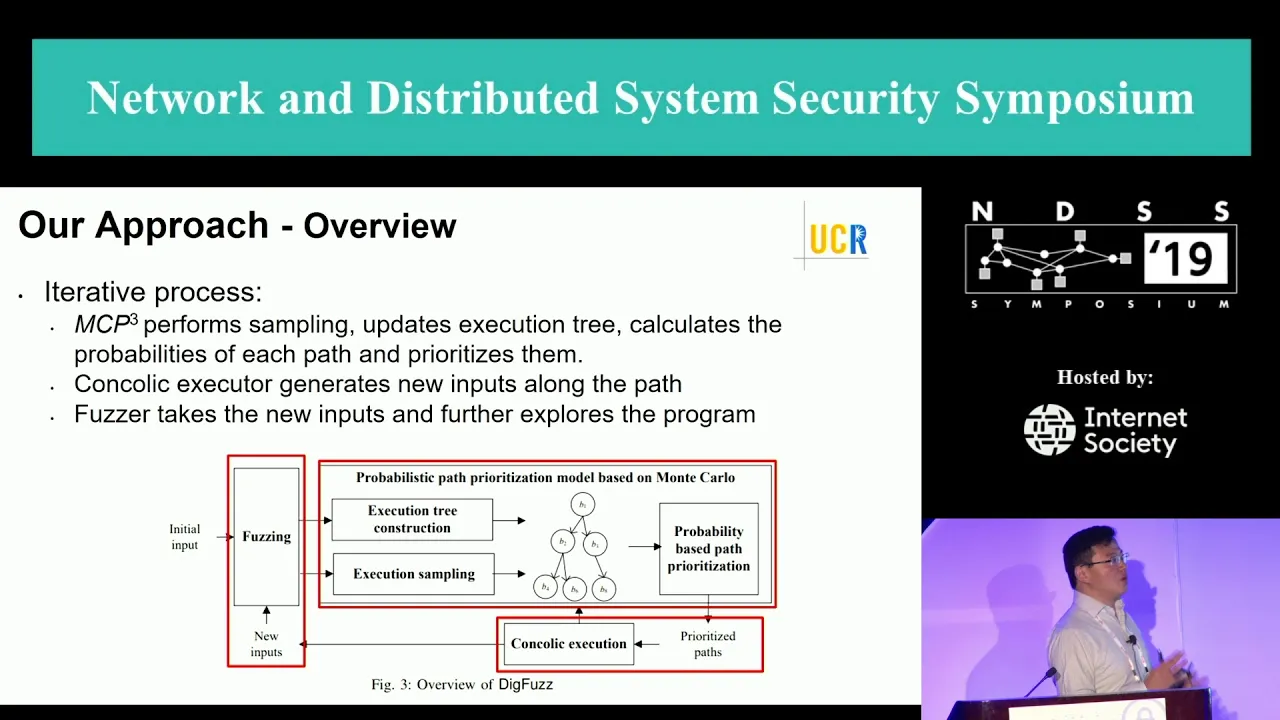
NDSS 2019 Send Hardest Problems My Way: Probabilistic Path Prioritization for Hybrid Fuzzing
NDSSSymposium
496 views•2019-04-02
12:48
Computer Science
How realistic is Cities: Skylines?
CityBeautiful
159K views•2019-02-14
46:39
Computer Science
GUIs & TUIs: Choosing a User Interface for Your Python Project | Real Python Podcast
realpython
2K views•2025-04-04

25:15
Computer Science
The OSI Model - Explained by Example
hnasr
225K views•2019-05-12
1:10:47
Computer Science
Cloud Computing - Introduction
elithecomputerguy
98K views•2019-10-07

2:24
Computer Science
From Traveler's Dilemma to Dynamic Routing | Demystifying Networking
IITBombayJuly
5K views•2019-08-04
Trending

13:25
Business
Playstation NO DISC/NO BUY Fight Is Over...
DavidJaffeGames
4K views•2026-07-23

16:52
Anthropology
Americans Confused in Australia for 17 Minutes Straight
IWrocker
17K views•2026-07-23

7:38
Blockchain & Crypto
Bitcoin Social Interest: Dozens of us Left
benjaminjcowen
12K views•2026-07-23

11:32
Business
Tesla Profits Plunge & SpaceX Stock Continues Fall
TheJohnJohnstonLounge
6K views•2026-07-23