This video presents 10 fundamental backend concepts every developer should understand: HTTP methods (GET, POST, PUT, PATCH, DELETE) and status codes for API communication; authentication (verifying identity) and authorization (controlling permissions); database indexes for faster searches; transactions for data consistency; concurrency control to prevent race conditions; caching with Redis for performance; message queues for background job processing; idempotency to prevent duplicate operations; rate limiting to protect systems from abuse; and scalability through vertical/horizontal scaling with load balancing. These concepts collectively enable developers to build fast, secure, resilient, and production-ready backend systems.
Install our extension to search inside any video instantly.
Don't Attend a Backend Interview Before Watching This Video
Added:Most back-end developers know how to build APIs and connect databases, but real back-end engineering begins when thousands of users start sending requests at the same time. Databases slow down, servers fail, messages get duplicated, and small mistakes become major outages.
So, here are 10 back-end concepts every developer should know.
Number one, HTTP and APIs.
Back-ends usually communicate through HTTP. Get retrieves data, post creates data, put replaces data, patch updates part of it, delete removes it.
The server then returns a status code, such as 200 for success, 400 for an invalid request, 401 for unauthenticated access, 403 for forbidden access, or 500 for a server error.
Number two, authentication and authorization.
Authentication answers, "Who are you?"
Authorization answers, "What are you allowed to do?"
Logging in proves your identity.
Authorization decides whether you can view, edit, or delete something.
A back-end should always verify permissions on the server.
Number three, database indexes.
Imagine searching for one user inside a table with millions of rows.
Without an index, the database may scan the entire table.
An index works like the index of a book.
It helps the database find records faster.
But, indexes also use storage and slow down rights, so only index columns that are frequently searched, joined, or sorted.
Number four, transactions.
A transaction groups multiple database operations into one action.
During a bank transfer, money must be removed from one account and added to another.
If one step fails, the entire transaction should be rolled back.
Transactions protect data from becoming incomplete or inconsistent.
Number five, concurrency and race conditions.
Back ends process many requests at the same time.
Imagine two users trying to buy the final concert ticket. Both requests may see that the ticket is available and both may complete the purchase. That is a race condition.
Transactions, locks, unique constraints, and atomic operations can help prevent it.
Number six, caching.
Frequently requested data can be stored in a fast cache such as Redis.
The back end checks the cache before querying the database.
If the data exists, it is returned immediately.
Caching improves performance and reduces database load.
The main challenge is keeping cached data up-to-date.
Number seven, message queues.
Some tasks should run in the background.
After an order is placed, the system may need to send an email, create an invoice, update inventory, and notify the warehouse.
Instead of making the user wait, the back end can place these tasks into a queue.
Workers then process them separately using tools such as Kafka, RabbitMQ, SQS, or Azure Service Bus.
Number eight, item potency.
An item potent operation can be repeated without creating an incorrect result.
Imagine a payment succeeds, but the response is lost. The user retries the request.
Without item potency, they could be charged twice.
An item potency key allows the back end to recognize repeated requests and return the original result.
Number nine, rate limiting.
A back end cannot accept unlimited requests.
Rate limiting controls how many requests a user or application can make within a certain period.
For example, an API may allow 100 requests per minute.
When the limit is reached, the server usually returns status code 429.
This protects the system from abuse and overload.
Number 10, scalability and load balancing.
As traffic grows, you can scale vertically by using a more powerful server or scale horizontally by adding more servers.
A load balancer distributes incoming requests across those servers and avoids unhealthy instances.
Horizontal scaling works best when the back end is stateless, meaning any server can handle any request.
And those are 10 back end concepts every developer should know.
HTTP explains communication.
Authentication protects identity.
Indexes improve database performance.
Transactions protect data.
Concurrency prevents race conditions.
Caching improves speed.
Queues handle background work.
Item potency prevents duplicates.
Rate limiting protects the system.
And load balancing helps it scale.
Once you understand these concepts, you stop thinking only about writing code.
You start thinking about performance, reliability, security, and system design.
Related Videos

6:13
Computer Science
TOP 15 Data compression Interview Questions and Answers 2019 Part-2 | Data compression | Wisdom jobs
wisdomjobs
281 views•2019-06-28

27:51
Computer Science
CTS 158: 802.11w Management Frame Protection
ClearToSend
4K views•2019-02-04
23:21
Computer Science
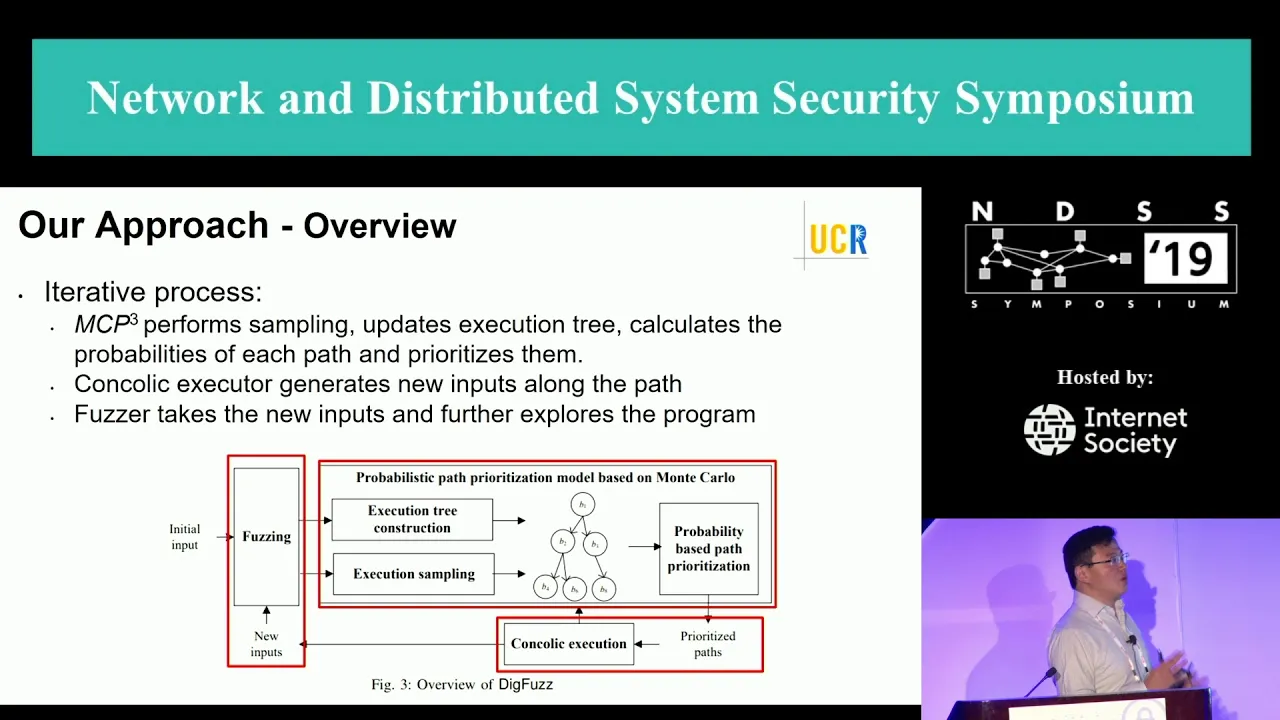
NDSS 2019 Send Hardest Problems My Way: Probabilistic Path Prioritization for Hybrid Fuzzing
NDSSSymposium
496 views•2019-04-02

12:48
Computer Science
How realistic is Cities: Skylines?
CityBeautiful
159K views•2019-02-14

46:39
Computer Science
GUIs & TUIs: Choosing a User Interface for Your Python Project | Real Python Podcast
realpython
2K views•2025-04-04

25:15
Computer Science
The OSI Model - Explained by Example
hnasr
225K views•2019-05-12

1:10:47
Computer Science
Cloud Computing - Introduction
elithecomputerguy
98K views•2019-10-07

2:24
Computer Science
From Traveler's Dilemma to Dynamic Routing | Demystifying Networking
IITBombayJuly
5K views•2019-08-04
Trending

13:38
Law
WOW! Judge TURNS THE TABLES on Trump in His OWN $10B LAWSUIT!!!
MeidasTouch
197K views•2026-07-23

13:25
Business
Playstation NO DISC/NO BUY Fight Is Over...
DavidJaffeGames
4K views•2026-07-23

22:40
Business
Steam and Xbox Just Dropped The Hammer On PlayStation
OhNoItsAlexx
9K views•2026-07-23

16:52
Anthropology
Americans Confused in Australia for 17 Minutes Straight
IWrocker
17K views•2026-07-23