The Andromeda galaxy, the largest in our local group, is approaching the Milky Way at 110 km per second and will collide with our galaxy in approximately 4.5 billion years; despite being 2.5 million light-years away, its gravitational pull is already affecting the outer edges of both galaxies, initiating the merger process that will reshape our universe.
Install our extension to search inside any video instantly.
4.5 Billion Years Until Total Collision #astronomy #universe #scaryAdded:
Right now, another galaxy is hurtling toward us at 110 km per second. It's been heading our way for billions of years, and in 4.5 billion years, it's going to hit. And here's the part no one talks about. It's already started. The Andromeda galaxy, the largest in our local group, is closing in on the Milky Way. Even though it's 2.5 million light-years away, its gravity is already tugging at us. The outer edges of both galaxies are beginning to interact.
Imagine the birth of a new galaxy. How do you think this cosmic merger will reshape our universe? Follow for more space explainers.
Related Videos

Spiral Galaxy NGC 3370 from Hubble | NASA APOD 2025-11-05 #Shorts
galaxygallery
938 views•2026-05-30

SOMETHING inside the SUN is CHANGING
RaysAstrophotography
1K views•2026-06-03

There May Be A Giant Hole In The Universe... And We Might Be Inside It | The Cosmic Ledger Entry 015
TheCosmicLedger
145 views•2026-05-31

Captured the Blue Moon (with a twist) 🌙✨ #space #bluemoon #telescope
realAstroExplorer
674 views•2026-06-01

The Map We Sent to the Stars in 1977 — Why Scientists Now Regret It
TheAncientRecord7
183 views•2026-06-03

Is this a copy of our galaxy? Discover Galaxy M81!
UniverseDocumentaries-cc4mb
995 views•2026-05-31

10 Planet Where a Black Hole Replaces the Sun
cosmicexplorer-EN
147 views•2026-06-02
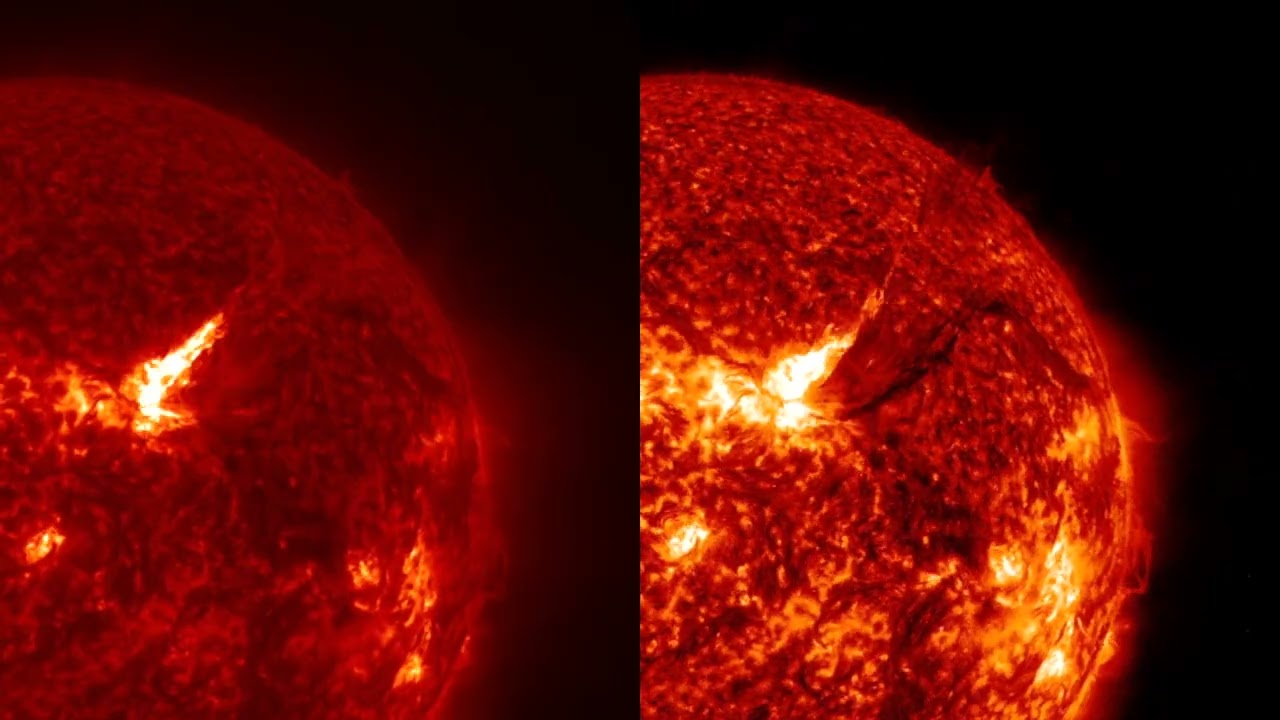
Solar Flares and CMEs at Earth - More Likely | S0 News June.3.2026
SpaceWeatherNewsS0s
2K views•2026-06-03



