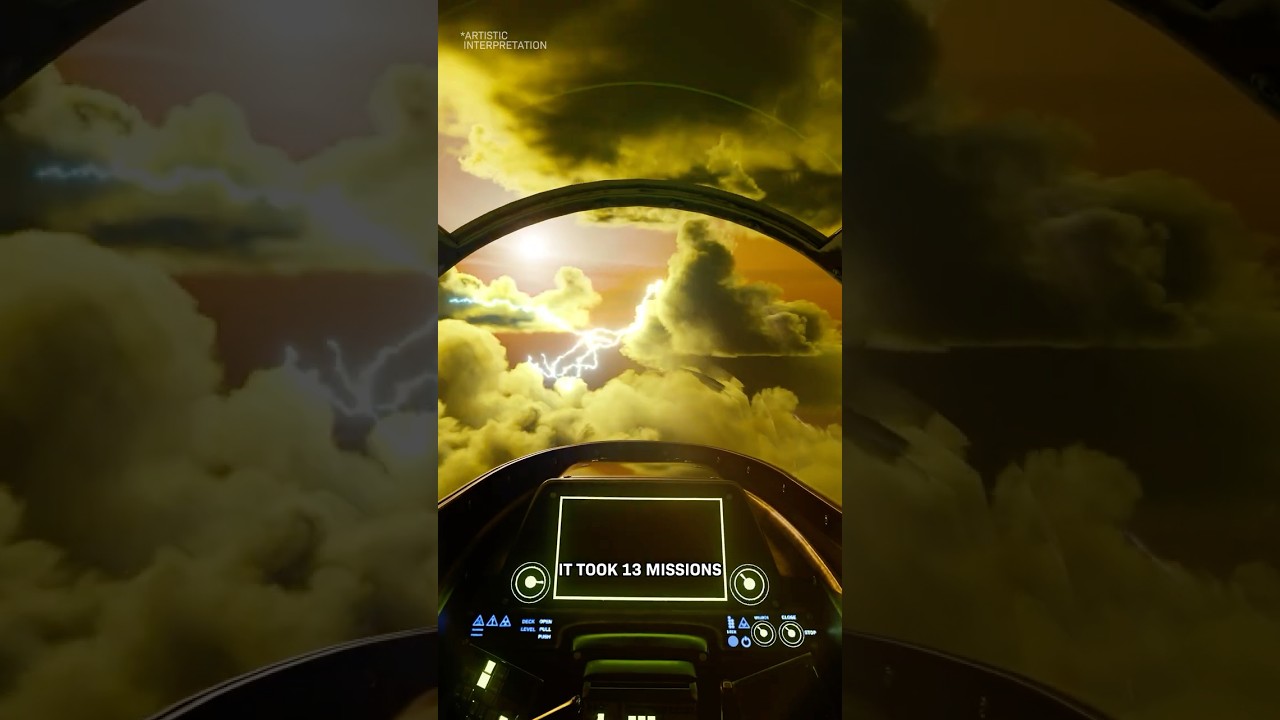
Great power alliances are fundamentally transactional rather than based on genuine partnership, meaning they dissolve when the strategic convenience disappears; Russia's 24-hour cancellation of five major arms agreements with Iran (S-400 systems, Su-35 fighters, satellite cooperation, submarine technology, and nuclear framework) demonstrates that such relationships are terminated when the partner's utility declines or becomes a strategic liability, as evidenced by Russia's domestic production of Iranian drones and Iran's internal instability.
Install our extension to search inside any video instantly.
Russia ABANDONED Iran in 24 Hours — 5 Secret Arms Deals CANCELED Without Warning
Added:Five contracts canled, not renegotiated, not delayed, not quietly stalled through diplomatic ambiguity, canceled in writing within 24 hours by the one government that Tran believed would never abandon it. Moscow has just walked away from five secret arms agreements that represented the backbone of Iran's military modernization strategy. And the message embedded in that cancellation is more devastating than the weapons themselves ever were. Russia did not negotiate. Russia did not explain.
Russia simply closed the door. and in doing so told Iran something that the Islamic Republic has spent 3 years refusing to hear in the calculus of great powers. There are no allies. There are only temporary alignments of convenience and the moment the convenience disappears, so does the partner. You need to understand what just happened here because this is not a routine diplomatic friction point. This is the unraveling of what Tran believed was its most strategically important relationship of the past decade. Iran built its entire post2022 security architecture around the assumption that the partnership with Moscow was durable, that the drones for technology exchange, the S400 negotiations, the satellite cooperation, the nuclear submarine assistance program, all of it constitute a genuine strategic alliance forged in shared opposition to American power.
That assumption has just been demolished in 24 hours without warning. And the speed of the abandonment tells you something that years of diplomatic communicates never could. Russia never saw Iran as a partner. It saw Iran as a tool. And tools get put down the moment they stop being useful or the moment holding them becomes more expensive than the alternative. Before we explain exactly what was canceled and why, you need to understand how this relationship was built in the first place. Because this story does not begin 24 hours ago.
It begins with a marriage of convenience that both sides understood differently from the start. When Russia launched its full-scale invasion of Ukraine in February 2022, Vladimir Putin discovered within months that his military-industrial complex had a critical vulnerability, precision drone technology. The Russian defense industry, despite decades of investment in tanks, artillery, and missile systems, had badly underinvested in the loitering munition and reconnaissance drone capabilities that were proving decisive on the Ukrainian battlefield.
Iran, isolated under sanctions for decades, had spent that same period building exactly the capability Russia lacked. The Shahed 136, originally developed for use against Saudi and Emirati targets in the Yemen theater, became the solution to Russia's most urgent operational gap. By late 2022, Iranian designed drones manufactured initially in Iran and then increasingly under license at a Russian facility in Alabuga were being launched against Ukrainian power infrastructure in the thousands. This was the foundation of the relationship. Not ideology, not shared civilizational destiny, a transaction. Russia needed drones. Iran had drones. Iran needed advanced military technology, hard currency, and diplomatic cover at the United Nations.
Russia could provide all three. Both sides called it a strategic partnership.
Both sides knew privately that it was something narrower and more fragile. The five agreements that were cancelled represent the full expansion of that transactional relationship into something Thran believed had become permanent. The first, a long negotiated deal for the delivery of the S400 Triumpha air defense system, which Iran had been pursuing since 2007 and which Moscow had repeatedly delayed, citing technical and political complications before finally appearing to move toward completion in the past 18 months. The second, a satellite cooperation agreement that would have given Iran access to Russian reconnaissance satellite data with resolution capabilities far beyond anything Tyrron's own space program could produce independently. The third, an agreement on Sue 35 fighter aircraft deliveries, a program Iran needed desperately given that its air force still operates American F4 and F-14 airframes purchased before the 1979 revolution. Aircraft that are now closer to museum pieces than functional combat platforms. The fourth, a naval technology transfer agreement covering submarine quieting technology that Iran's Navy considered essential to developing any credible underwater deterrent in the Persian Gulf and the Indian Ocean. The fifth and in some ways the most strategically significant, a framework agreement on nuclear technical cooperation that while carefully worded to avoid direct proliferation concerns was understood by intelligence services on three continents to represent Russian willingness to assist Iran's civilian nuclear program in ways that edged uncomfortably close to dual use applications. All five canled in the same 24-hour window. Not through a phone call between foreign ministers, not through a diplomatic note delivered with the customary softening language of international relations. Through formal written notifications delivered to Iran's Ministry of Defense and Ministry of Foreign Affairs, citing what Russian officials described only as changed strategic priorities. A phrase so deliberately vague that Iranian officials reportedly spent the following days trying to determine whether it constituted a temporary pause or permanent termination. Sources within Iran's negotiating delegation, speaking to regional intelligence contacts, describe the notifications as having the tone of a business letter, not an alliance communication. That detail matters more than almost anything else in this story because it confirms what Thrron did not want to believe. Moscow was never speaking the language of alliance. It was speaking the language of contracts. And contracts, unlike alliances, can be terminated for cause.
Now, I want you to understand the specific calculation that drove Moscow's decision because this is where the story becomes genuinely consequential for power dynamics far beyond Iran's borders. Russia is conducting a wartime costbenefit analysis and Iran's value in that analysis has been deteriorating for months. Three factors converge to produce the cancellation. First, the Alabuka drone manufacturing facility, originally dependent on Iranian technical assistance and component supply, has now achieved sufficient domestic production capacity that Russia's military planners assess they no longer require the same level of ongoing Iranian technology transfer.
Russian industrial sources indicate Alaba is now producing Shahed derived drones, rebranded as the Giran 2, at a rate exceeding what Iranian direct supply ever provided, using increasingly localized components. Russia learned what it needed to learn. The teacher is no longer necessary once the student has mastered the lesson. Second, and far more consequential, Iran's domestic instability over recent months has transformed Tran from a strategic asset into a strategic liability in Moscow's risk calculus. A partner whose internal security apparatus is experiencing the kind of stress that produces succession crises, banking system disruptions, and questions about regime durability is not a partner you deepen military cooperation with. It is a partner you quietly distance yourself from. While the distancing can still be characterized as a business decision rather than a political abandonment, Russian intelligence assessments, according to two separate Western intelligence sources monitoring Russian Iranian communications, concluded that continuing high-profile arms agreements with a government whose domestic stability is in serious question carries reputational and strategic risk that outweighs the marginal military benefit Iran can still provide. Moscow did not abandon Iran because Iran became weak.
Moscow abandoned Iran specifically because Iran's weakness threatened to become contagious to anyone closely associated with it. Third, the broader diplomatic context. Russia has been engaged in a careful multi-track effort to manage its relationships with Gulf Arab states, Saudi Arabia, the UAE, Qatar as part of a strategy to maintain OPEC plus coordination on oil production levels that Moscow's war economy depends on. Those Gulf relationships have become considerably more valuable to Russia than the Iranian arms relationship, particularly as Gulf states have positioned themselves as primary beneficiaries of any reduction in Iranian regional influence. Continuing to deepen military technology transfers to Thran at this specific moment would directly complicate Moscow's careful balancing act with the Gulf States, whose oil market cooperation matters more to Russia's war sustaining economy than Iran's drone supply ever did. Here is where the story moves from analysis into something approaching betrayal.
Because the manner of the cancellation reveals something about how Moscow actually views the relationship it spent three years publicly celebrating. There was no transition period, no graduated reduction in cooperation that would have allowed Iran to adjust its strategic planning, diversify its supplier relationships, or prepare its domestic political messaging. Iranian military planners, who had built medium-term defense modernization timelines around the assumption that Russian S400 systems and Sue35 aircraft would begin arriving within the next 18 to 30 months, now have to restart those planning processes from zero with no clear alternative supplier capable of providing equivalent capability at comparable cost or political acceptability. China is the obvious alternative, but Chinese military technology transfer to Iran has historically been more cautious and more commercially demanding than the relationship Thrron believed it had secured with Moscow. The speed and totality of the cancellation suggests Moscow had been planning this decision for some time, executing it the moment domestic Iranian instability provided sufficient diplomatic cover and choosing not to provide Thran any advanced warning that would have allowed Iranian negotiators to attempt lastminute concessions or alternative arrangements.
The retired Iranian diplomat and former ambassador to a European capital, speaking anonymously to a Gulf based news outlet because of the sensitivity of criticizing Moscow publicly, offered the assessment that cuts most directly to what this moment represents. Iran spent 3 years believing it had finally found a great power patron willing to treat it as an equal and discovered in 24 hours that it had instead been operating as a contractor whose contract was non-renewed the moment its utility expired. Now, let us give the strongest possible version of the argument that this cancellation is less catastrophic than it appears. Russia and Iran have weathered periodic friction throughout their partnership without it producing fundamental rupture. Moscow delayed the original S400 sale for over a decade before appearing to move toward completion. And Tran absorbed that delay without abandoning the broader relationship. The drone supply relationship that began in 2022 has continued robustly even through periods of diplomatic tension because both governments understood the transactional core of the partnership could survive disagreements at the margins. It is entirely possible that this cancellation represents exactly what Russian officials are calling it. A temporary reccalibration driven by genuine strategic priority shifts rather than a permanent severing of the relationship.
Once Iran's domestic situation stabilizes, whether through regime consolidation or through whatever political transition follows the current instability, Moscow may well resume negotiations on some or all of these five agreements, particularly the drone related technology exchanges that have proven mutually beneficial for three years running. Furthermore, Iran retains significant independent leverage that does not depend on Russian goodwill.
Tyrron's ballistic missile program, its enriched uranium stockpiles, its proxy network across Lebanon, Iraq, Yemen, and Gaza, and its control over a significant share of regional energy infrastructure, all constitute strategic assets that exist independently of any Russian arms relationship. Iran is not rendered defenseless by losing access to Russian S400 systems or SU35 aircraft. However damaging those losses are to specific modernization timelines, the Islamic Republic has spent four decades building military capability under conditions of near total international isolation. It has institutional experience adapting to exactly this kind of supplier abandonment, having survived the loss of American military supply relationships after 1979, European arms embargos throughout the 1980s and 1990s, and periodic Chinese and Russian supply hesitations at various points over the past two decades. And finally, there is a structural logic to skepticism here that deserves acknowledgement. Great power relationships are rarely permanently severed through single dramatic gestures. Diplomatic relationships, even damaged ones, tend to find pathways back toward functional cooperation when the underlying strategic incentives that created them in the first place remain unchanged.
Russia still needs drones. Iran still needs technology and diplomatic cover.
Those structural incentives have not disappeared simply because five specific agreements were paused. That argument deserves every word given to it. Now, here is the wall of reality that explains why this moment is different from the periodic friction the relationship has weathered before. Every previous instance of Russian Iranian friction occurred while both governments retained confidence in their respective domestic stability. The S400 delays of the 2010s happened while Iran's government faced no internal legitimacy crisis and while Russia's war in Ukraine had not yet begun consuming its military-industrial capacity. This cancellation is occurring at the precise moment that Iran's domestic political and financial stability is genuinely structurally in question. IRGC banks frozen, succession crisis unresolved, security force loyalty showing measurable deterioration. Moscow is not pausing cooperation with a stable government during a moment of minor diplomatic friction. Moscow is severing high-profile commitments to a government whose continued existence in its current form is now a live strategic question.
That distinction changes everything about how to interpret the cancellation.
This is not a negotiating tactic designed to extract better terms from a position of mutual strength. This is riskmanagement behavior by a government that has concluded its partner may not be in a position to honor commitments, deliver promised cooperation, or remain a viable strategic relationship within the time frame these agreements were meant to span. When a great power begins treating its partner survival as a genuine variable in its strategic planning, the relationship has already changed in character, regardless of what either government says publicly. The alternative suppliers argument also requires scrutiny it is not currently receiving. China's historical caution in transferring advanced military technology to Iran is not a temporary posture that Beijing might revise upward to fill the gap Russia just created. It reflects a consistent Chinese strategic preference for maintaining commercial and diplomatic flexibility with multiple regional partners, including Gulf States, and even cautiously with American allies, rather than deepening identification with an increasingly isolated and domestically unstable Iranian government. China is far more likely to use Iran's weakened negotiating position to extract more favorable commercial terms on existing oil purchase agreements than to step into the strategic vacuum Russia has just created by accelerating military technology transfers. Iran is not simply losing one supplier and gaining time to find another. It is losing its most committed supplier at the exact moment when every potential alternative supplier has independent reasons to be more cautious, not less, about deepening the relationship. Now, watch what this abandonment does to the broader architecture of alliances and rivalries that Iran has spent years building its regional strategy around. Begin with the practical military consequence inside Iran itself. The Iranian Air Force's continued reliance on aircraft that are in some cases older than the pilots flying them was supposed to be addressed through the now canceled Sue35 agreement. Without it, Iran's air defense posture against any future Israeli or American air campaign remains built around aging Russian-drived systems and domestically produced platforms that defense analysts consistently assess as inferior to what regional adversaries feel. The canceled S400 deal compounds this vulnerability directly. Iran's most sophisticated current air defense capability. The domestically modified Bavar 373 system is a credible but generally assessed as less capable platform than the S400 it was meant to supplement. Israeli and American military planners who have spent years calibrating strike planning against Iranian nuclear and military infrastructure around the assumption that S400 deployment would eventually complicate those operations now have one fewer variable to plan around. Move to the proxy network. Hezbollah, the Houthis, and Iraqi militia groups have depended not just on direct Iranian funding and weapons, but on the broader perception that Iran possesses backing from a great power patron capable of deterring overwhelming retaliation against Tran itself. That perception was always more important strategically than the actual military hardware Russia provided. A great power patron creates strategic ambiguity that complicates enemy decision-making. The visible public 24-hour abandonment of five major agreements strips away that ambiguity.
Israeli and Gulf strategic planners can now calculate Iranian retaliatory options with one fewer layer of uncertainty about whether escalation against Iranian proxies might trigger a wider response involving Russian interests or capabilities. The deterrent value of the Russian relationship which was always more psychological than material has been publicly and unambiguously removed. Move to China.
Beijing has been watching the Russia Iran relationship with the specific analytical interest of a government calculating what great power patronage actually costs and delivers in moments of genuine strategic stress. China's own relationships with smaller dependent partners, North Korea most obviously, but also various belt and road partner states facing debt or political crisis operate under similar dynamics where Beijing has historically calculated the costs of continued support against the partner's strategic value with cold precision. Watching Russia abandon Iran within 24 hours during a moment of genuine crisis provides Chinese strategists with a useful data point about how quickly great power commitments can be revised when domestic instability in a partner state creates sufficient strategic risk. This is not a comforting data point for any government, including North Korea, whose strategic security planning depends partly on assumptions about how reliably its great power patrons will stand behind it during moments of genuine crisis. Move finally to the Gulf States who are watching this unfold with the particular satisfaction of governments seeing a regional rivals most important external relationship visibly fracture in public. Saudi Arabia and the UAE have spent years managing a careful, expensive hedging strategy against Iranian regional influence, including normalization agreements, defense spending increases, and diplomatic outreach designed to manage risk from a powerful and unpredictable neighbor.
Every signal that Iran's external alliances are weakening, that its great power patron is distancing itself, that its military modernization timeline is being disrupted, directly reduces the threat calculus that has justified years of expensive Gulf defense spending and diplomatic maneuvering. Riyad did not have to do anything to benefit from this cancellation. Moscow did it for them.
Let us address the human reality beneath the diplomatic and military analysis because abandonment of this kind does not occur in a vacuum separate from the people whose lives are shaped by these decisions. There are Iranian engineers, military officers, and technical specialists who spent years building professional careers around the assumption of deepening Russian technical cooperation. People who learned Russian, who traveled to Russian facilities for training, who built their professional identities around managing a relationship their government told them was the foundation of Iran's future security architecture. Those careers, those years of specialized training, that professional investment, now exist in a kind of limbo, attached to a relationship that may or may not resume in any meaningful form. There are families of IRGC personnel who were told implicitly and explicitly that Iran's strategic isolation was ending, that powerful friends had finally arrived, that the sacrifices of living under decades of sanctions and isolation were producing tangible strategic benefits in the form of advanced weapon systems that would finally provide genuine security.
Those families are now absorbing the realization that the promised security may not materialize. that the relationship their government celebrated publicly for three years was from the other side never more than a transaction that ended the moment it stopped being convenient. This is in its own way a smaller and quieter tragedy nested inside the larger geopolitical story.
Not the tragedy of war or economic collapse, but the tragedy of strategic dependency of a government that built its security planning around the goodwill of a partner who never understood the relationship as anything more than business. discovering that lesson in the worst possible way at the worst possible moment with no alternative readily available. Let us return to where we began. Five agreements, 24 hours, no warning. The S400 system that Iran pursued for 17 years gone. The Sue35 aircraft that would have replaced an Air Force flying museum pieces gone. the satellite cooperation, the submarine technology, the nuclear framework, all gone in the same single diplomatic motion, executed with the procedural coldness of a business letter rather than the gravity of an alliance ending. Thrron believed it had found finally, after decades of isolation, a great power willing to stand beside it. What it actually had was a great power willing to use it for exactly as long as using it remained more valuable than the alternative, and not one day longer. Vladimir Putin is looking at his Alabooga production lines tonight. No longer dependent on Iranian technical assistance. No longer needing to extend strategic commitments to a partner whose domestic stability has become a genuine question mark. Xinping is filing away a useful data point about the actual durability of great power commitments to smaller struggling partners. Saudi Arabia and the UAE are watching their most significant regional rival lose its most important external military relationship without having to spend a single realale or Durham to make it happen. And in Tehran, in the offices of military planners who spent years building Iran's modernization strategy around Russian partnership, there is now the particular specific disorientation of discovering that the foundation you built your house on was never as solid as you were told and that no one is coming to help you rebuild it. The Islamic Republic has survived isolation before. It survived the loss of American partnership in 1979. It survived European arms embargos through the 1980s and 1990s. It has institutional memory of standing alone and it has institutional capacity to adapt to exactly this kind of supplier abandonment. But there is a difference between surviving isolation when you expect it and surviving abandonment when you were told repeatedly publicly by your own government's propaganda apparatus that isolation was ending. The first kind of isolation is hardship. The second kind is betrayal. And betrayal, unlike hardship, changes how an organization plans for the future. It changes who it trusts. It changes what promises it believes. And for an Islamic Republic already managing a domestic crisis of confidence in its own institutions, discovering that its most celebrated external partnership was never more than a transaction adds one more loadbearing wall to the list of structures currently cracking under simultaneous pressure. Russia did not abandon an ally in 24 hours. Russia simply stopped pretending it had one.
Thank you for watching. If this video gave you what the headlines never explain, the real mechanics behind how great powers actually treat their partners when the cost of loyalty exceeds its benefit, please like it and share it. Because at the Geo Network, we do not just tell you what happened. We show you what it means and why it changes everything that comes
Related Videos

This map shows where it's safe to be trans in America. It's shrinking. | w/ Erin Reed & Zooey Zephyr
MishaCollins
103 views•2026-06-18
Why Can’t Mahama Stop This Growing Trafficking Crisis of Young Girls in Ghana
Ghanaboyni3
492 views•2026-06-21
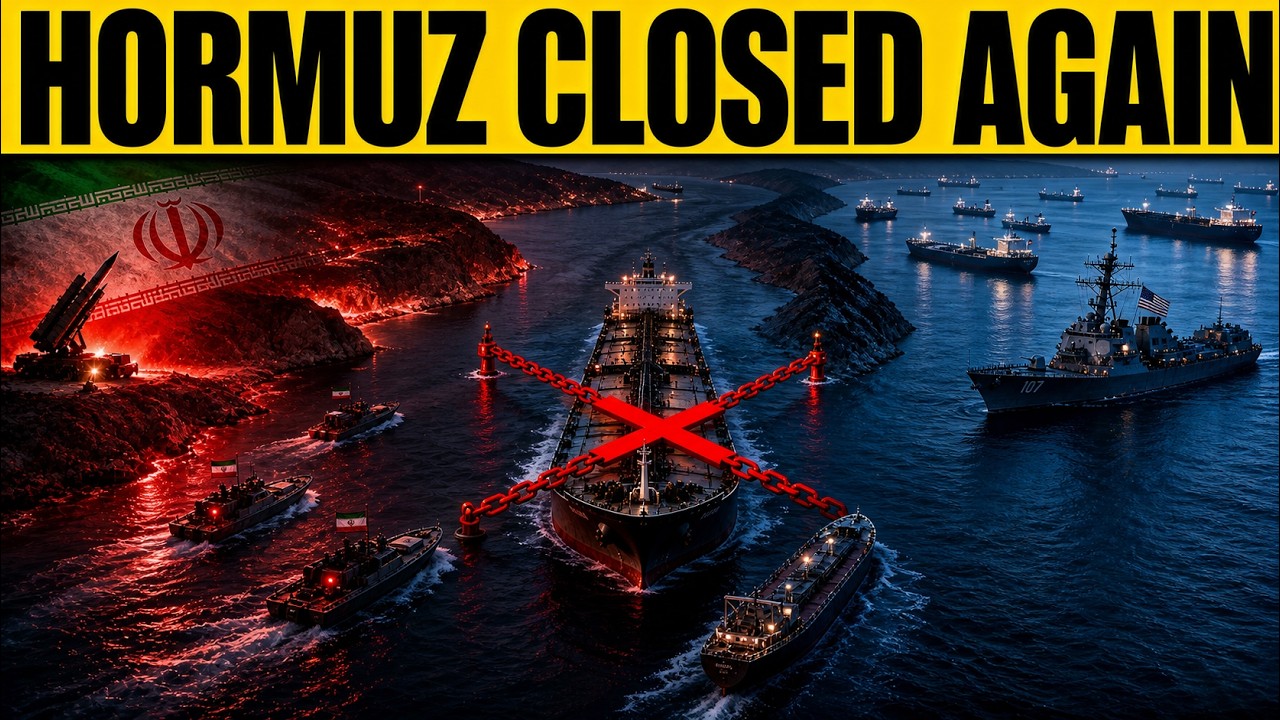
The Iran Deal Just COLLAPSED In 72 Hours — Hormuz Is CLOSED Again
WorldOrderNetwork
876 views•2026-06-21
Saudi, Turkiye & Pak FMs To Meet In Egypt | 'All Of Lebanon Must Burn' | WION Headlines
WION
283 views•2026-06-19

LIVE | TOM TV 8:00 PM MANIPURI NEWS, || 18 JUNE 2026
tomtvimphal
14K views•2026-06-18

How Did Trump "Trick" Anyone? He Wasn't Exactly a Mystery
tompowelljr
6K views•2026-06-18

EU Votes AGAINST Mass Immigration!!
COUNTYGAINS
2K views•2026-06-18
China Unveils Vision for a New World Order
chinaglobalsouth
220 views•2026-06-19