Flamey masterfully explains how genuine lethality transforms a game from a passive story into a psychological flow state where every decision actually matters. It’s a compelling argument that true player satisfaction is earned through the risk of loss, not the safety of plot armor.
Install our extension to search inside any video instantly.
How I Learned to Stop Saving My D&D Players
Added:I don't think this asparagus has the energy left to withstand that, do you?
>> Satoru Gojo, look what I have here.
>> Next.
>> What is difficulty? It's the thing we absolutely hate, but can't live without.
We rage and complain, but the second that you take that struggle away, the magic dies. In our games, we need that friction, the genuine threat of losing everything, because without it, winning means absolutely nothing. And that's exactly what we're going to talk about today. Why making your games harder actually makes them better. Let's get into it. Something funny that we do as humans is we spend our actual free time seeking out stress on purpose. We build entire hobbies around failing, getting frustrated, and occasionally watching our beloved characters get turned into fine paste by a displacer beast. And then we come back next week and do it all again. Every game, including video games, board games, tabletop, whatever, is basically people voluntarily agreeing to make their own lives harder for practically no reason. And modern D&D has this weird habit of trying to smooth that all away. 5E especially loves making players feel like unstoppable action heroes full of health bars, generous rests, and plenty of safety nets. But if you zoom out and look a little wider at the world of games, video games, OSR, tabletop stuff, whatever, you start noticing something.
When I play a game that's easy, I barely remember it. But as soon as stuff gets difficult, my brain has to like go into overdrive mode. I can literally remember every single detail of what happened.
And there's actual science behind this as well. This dude, whose name I can't pronounce and I have tried several times, came up with this idea called flow. It's that state when you're so locked into what you're doing that time just disappears. Your brain and your actions basically merge into one thing.
To get there, the challenge in front of you has to match your skill almost perfectly. Too easy, you're bored. Too hard, and you're just anxious and want to log off. But interestingly, some of the most immersive gaming experiences on record actually happen when the challenge blows past your skill level.
Studies on games like Tetris found that players hit peak immersion not in the nice balanced flow zone, but when they're straight-up overloaded, when the game is demanding more of you than you think you have. Think about why that tracks for D&D or any other role-playing game. A totally normal world balance fight is fine. Your players aren't really that engaged, but they're still enjoying the session. But the second combat goes sideways, the table realizes, "Oh no, we might actually lose this." Every single person locks in without fail. And that's what I mean.
That's your brain going into overload mode and refusing to let anything else in. I've watched this happen at my table more times than I can count. A couple of skirmishes go by and no one's really having to put much effort into it. It just feels like you're going through the motions. But as soon as like the barbarian drops to a single-digit HP on the second round, you can literally feel it in the atmosphere. Something changes.
People start whispering to each other, looking at the map, trying to figure out their next plan so that they can save their barbarian friend. That shift isn't about luck. It's literally difficulty doing exactly what it's supposed to do.
Game designer Nicole Lazzaro's term for that specific feeling of triumph you get after clawing your way through something brutal, hard fun, she calls it fiero, which basically means the intense satisfaction or pride you get from overcoming a challenge. And it really does make sense when you think about it.
If there was never really a chance you'd lose, winning doesn't really mean anything. There's a philosopher, Gwen Bradford, who argues achievement only really matters when it forces you to actually exercise willpower. Grinding through a nightmare dungeon with your party and barely surviving is what makes the story worth telling later, you know?
All right, here's a question for you.
Have you ever cranked the difficulty up on a video game expecting an epic challenge and instead you just watched enemies soak up hit points for twice as long? That's called the sponge effect and it's everywhere. Skyrim is a classic example. Bump the difficulty slider and enemies don't get any smarter or more dangerous in any interesting way at least. They just become giant meat sponges that absorb your arrows forever.
It's what I'd call lazy difficulty design. It doesn't make your combat more tense. It just makes it longer and more tedious and less thrilling. And if you compare that to something like the Ghost of Tsushima on lethal mode, instead of pumping up your health bars, it just makes weapons actually deadly for you and for the enemy. A couple of whacks and someone's going to be going down full stop, which really does completely change how you play. You're not just like button mashing just to survive.
You're playing like a samurai would.
Every swing matters. Every opening counts. The difficulty isn't just about big numbers. It's shifting how the whole fantasy feels, which is incredible. And this I feel is the exact mistake I see a lot of GMs making, myself included back in the day. If a fight felt too easy, the instinct is just give more hit points. And what happens? The fight doesn't get more strategic or scarier, it just adds an extra 10 minutes to the encounter and everyone's just waiting longer to finish an encounter that they found boring. Real difficulty in D&D isn't about damage sponges, it's about making the world feel like it can actually hurt you. When threats are genuinely lethal, players stop mindlessly swinging their swords every turn. And it makes them start to think about using what they've got, the environment, clever positioning, the one weird item they picked up three sessions ago and forgot about. And something in there I think about a lot, combat in modern D&D has this weird ritual about it. Roll initiative. The second those words come into a DM's mouth, a cage kind of comes down around the table and everyone's locked into this rigid structure, move, action, bonus action, repeat. And a lot of creative weird out-of-the-box thinking just stops. Old school Renaissance games, OSR stuff, go in the completely opposite direction.
Combat is brutal. A single unlucky hit can just kill your character. No saves or anything like that, you're just done.
And because of that, players are terrified of just walking into a fight head-on. So, they don't. They scout first. They set traps. They try to talk their way past. And lethality itself becomes the reason players start actually engaging with the world instead of just their character sheet. That's the real trade-off we're talking about here. High lethality rewards player skill over character optimization. It's rewarding the player who thought their way through a problem rather than just building a better stat block. And speaking of character builds, let's talk about that for a second. 5e and 4e before I spent an enormous amount of effort trying to make sure every class is mathematically fair in a fight. And look, I get the impulse. Nobody wants to feel like they picked the bad class.
But, chasing perfect balance has a side effect. It flattens everything out and classes start feeling interchangeable instead of unique. And while some could argue that D&D is a competitive board game, it's also a more of a collaborative story. A little imbalance isn't a bug, it's an opportunity. If your wizard is a walking glass cannon who can also reshape reality with a spell slot and your fighter is a wall of muscle who just does not go down. That disparity forces them to actually need each other, which is the whole point of the party, isn't it? Think about it this way. If every class did roughly the same damage, survived roughly the same number of hits, and had roughly the same toolkit dressed up in different flavor text, what exactly would you be optimizing for? Not a lot. You'd just be picking whatever reskin looked coolest.
But, when the wizard genuinely can't take a hit and the fighter can't solve a locked door and a riddle situation on their own, the party actually has to function like a team instead of five solo characters standing near each other. The friction is where the good stories come from as well. Perfectly balanced games are often perfectly forgettable, which means that you as a GM need to make each one of those players choices feel like they actually matter. You need to make sure that you give each class an opportunity to shine.
Player psychology is another big thing with this. There's a term from the competitive gaming world coined by a guy named David Sirlin called the scrub mentality. A scrub is a player who invents their own arbitrary rules about what's fair or honorable in a game. If a strategy is genuinely effective, but feels cheap or annoying to deal with, the scrub refuses to use it and just complains that it's unfair. Meanwhile, the actual expert player looks at the same strategy and goes, "Okay, how do I overcome this?" Why does this matter for your D&D table? Because if your encounters are too easy, players never have to develop expert mindset. They're basically just coasting on the same three moves every single fight, and it will work fine forever. But when you actually crank the difficulty up, players are forced to drop the lazy habits and have to engage with the system for real, which makes everything so much better for your players. They start getting to build these skills they can get better at over time. They can start to feel like they're mastering the system, and it's much more satisfying for them. One of my favorite phrases in all of gaming, and I mean that completely sincerely, comes from Dwarf Fortress. If you don't know who that is, it's the famous chaotic fortress management sim where your dwarves will absolutely, without fail, eventually die in some increasingly ridiculous way. And the community's whole motto is losing is fun. Because there's no way to actually win Dwarf Fortress, every fortress falls eventually. Starvation, a tantrum spiral, a war elephant rampage, whatever. But the guaranteed failure is exactly what generates the best stories.
Nobody tells their friends about the fortress that ran smoothly for 200 years. And you need to bring that mindset to your tables. The campaign isn't about executing a flawless hero's journey without a single scratch. When [ __ ] hits the fan, and it will, that's not the game-breaking. That's the game handing you the best story of the year.
I think one of the single biggest design flaws sitting quietly inside modern D&D, the only real failure state is death, a full-on total party kill. And once that's the only consequence at the table, players respond exactly how you'd expect. They min-max. They optimize hard for survival. Because deep down everyone understands that if their character dies, their story might just end. Nobody wants to build the weird flavorful role-play heavy character who's mechanically a little worse in a fight because the stakes of worse than a fight are dead. And you're probably wondering, how do we fix that? Steal a page from narrative-first games like Blades in the Dark or Torchbearer, and borrow this idea called failing forwards. Failing forwards doesn't mean nobody ever actually fails, or that the consequence gets erased. It means that when a roll goes badly, the story still moves, but something changes. Tension goes up instead of just nothing happening.
Compare these two. Binary failure, you failed to pick a lock. The door's still locked. You roll again, which is great, riveting stuff. Failing forward means that you do pick the lock, but your tools snap loudly in the mechanism. And now the enemies down the hall know exactly where you are. Torchbearer does this beautifully with something called the grind. Failing check, and you might still get what you wanted, but you get hit with a nasty condition, hungry, angry, exhausted, that kind of thing.
Every action starts costing something.
Exploration actually feels dangerous, and every success feels earned instead of just assumed. You don't have to run a whole different system to steal this.
It's more of a mindset to me, to be honest. Next time someone at your table rolls badly on a persuasion check, don't just say the guard doesn't believe you, nothing happens. Say the guard doesn't believe them. And now he's signaling that to his captain. The player is still failed, but the clock is now ticking in a way it wasn't 30 seconds ago. It also applies at the campaign level, too. What happens if the players fail to save the queen? All the BBG finishes his evil plans. The answer shouldn't be, "Well, I guess the campaign's over." It's more like the world changes and maybe the villain wins, but now the party's playing a resistance movement in the ashes of that failure. High narrative stakes like losing an ally or a stronghold, a relic, build real emotional investment without needing anyone to actually die for it to matter.
Now, I know some of you are thinking, "If we crank the difficulty up this hard, aren't we just locking less experienced players out of the game?"
Not at all. The only way that you're going to mess this up and make it that way for new players is if you purposely do it. If you're a newer GM, figuring out the difficulty you need to put in place for your players is also something that you need to build upon. And if you're a newer GM and you're trying to compare D&D or tabletop games to video games, they are genuinely different. In a video game, the code is the difficulty. There's no negotiating with it. At your table, you are the difficulty. The GM is the algorithm, and that's a lot of responsibility to be carrying around. Miyazaki, the guy behind Dark Souls, has talked about this a lot. His games are brutally hard, but they're fair. When you die, you should understand exactly why, so you can learn from it and come back better. That's the whole design philosophy. Compare that to a trap that just instantly kills a player with zero warning, zero telegraphing, nothing. That doesn't feel like you're making anything more challenging. It's just like a cheap way of getting rid of the player. It breaks trust. But if you signal that, you know, they see an enemy ahead a couple of sessions before they have to deal with it, they can choose to prepare or avoid it or or go in anyway knowing the risk.
That's earned difficulty. This is exactly why session zero matters so much in my opinion. If you sit down before the campaign starts and actually talk about lethality and the consequences and tone. Is this a gritty low magic world where a single crit can end a character permanently or heroic pulpy campaign where death is rare, but the stakes are more about the world and the people in it. Neither answer is wrong, but your table really needs to agree on one before the dice start rolling. Just set the difficulty contract up front so nobody gets blindsided later because like as a GM, your goal isn't to defeat your players, it's to hand them adversity that's genuinely hard but genuinely climbable, if you get me. And honestly, this stuff bleeds into real life a little too. There's research suggesting that engaging with tough open world games can actually build a kind of stoicism and even reduce feelings of loneliness. The structured struggle of an RPG becomes a low stakes place to practice being with discomfort and pushing through it anyways. And shared relief from surviving something and being triumphant builds real friendships. I'm not exaggerating. Some of my closest friendships trace straight back to a fight we barely survived together. So basically, put it all together, harder is better. Doesn't mean making your table a miserable slog nobody actually wants to sit through.
It's about building encounters that are hard but doable. And here's what that actually looks like in practice. Push your players into that overloaded everyone's leaning in state by throwing asymmetrical genuine lethal problems at them. Stop treating death as the only real consequence. Steer the failing forwards mindset and let bad rolls escalate the story instead of just stalling it. Let your players experiment, screw up and actually get better and let them occasionally outthink your carefully planned encounter completely. That's a win for you as it is for them. And keep it fair.
High stakes only work if you're telegraphing danger and respecting player agency the whole way through. We literally live in a world packed with media built for passive consumption and genuine difficulty in a campaign where the outcome isn't guaranteed stands out precisely because it demands something from you. The value is never just about reaching the top of, you know, the mountain. It's everything that happened on the way up. So, the next time you're prepping a session, don't just balance the math, raise the stakes. Break that initiative cage and let your players fail sometimes because as any Dwarf Fortress veteran will tell you, losing is fun. How do you deal with difficulty in your games? Let us know in the comments if your thinking is different to mine or you have some other way of dealing with it that you think people might find helpful, then please share it below. And if you're a player and your GM does a really good job of this, let us know your stories. And if you think they could use this advice, then share this with them. Thank you for watching and as always, stay spicy, adventurers.
Related Videos

0:39
Psychology
Inside Ronaldo’s Team Meeting
RonoSphereCR7
1K views•2026-04-17

7:25
Psychology
You Are Not So Smart: Chapter 4 Hindsight Bias, What is it?
TheBey8nD8
230 views•2019-09-15
49:35
Psychology
Sigmund Freud's Mind - Master Your Inner World (Your Unconcious Mind)
Ngaslife
1K views•2025-01-25
11:29
Psychology
What affects your mood?
RandyPaterson
602 views•2019-05-16
3:45
Psychology
Can you outsmart this logical fallacy? - Alex Gendler
TEDEd
2164K views•2019-11-25

1:02:21
Psychology
Understanding the Relationship between Fear of Falling and Mobility in Older Adults
fallpreventioncommunityofp3788
823 views•2019-04-08
54:04
Psychology
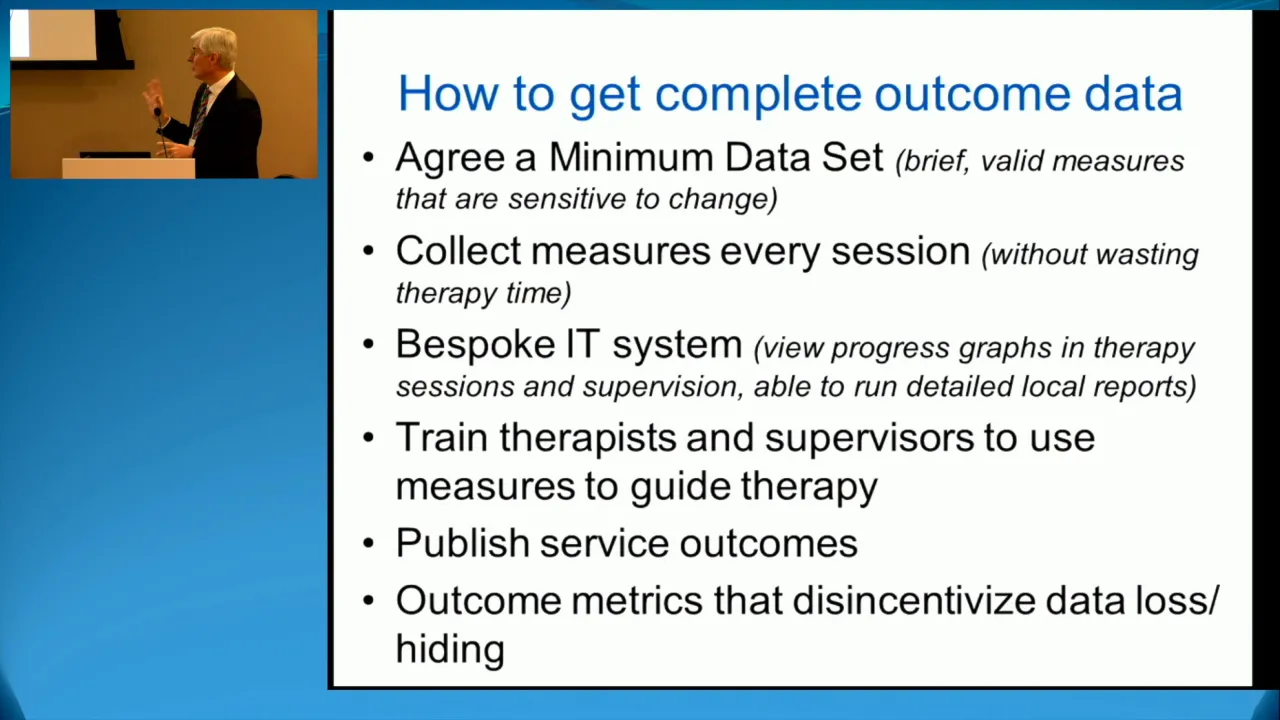
Measurement-based Care in Psychotherapy Workshop - Future of Psychotherapy Conference 2019
UofTPsych
243 views•2019-04-25

51:52
Psychology
Dr. Carol Tavris — Mistakes Were Made (But Not by Me)
skepticmagazine
14K views•2019-05-02
Trending

13:38
Law
WOW! Judge TURNS THE TABLES on Trump in His OWN $10B LAWSUIT!!!
MeidasTouch
197K views•2026-07-23

13:25
Business
Playstation NO DISC/NO BUY Fight Is Over...
DavidJaffeGames
4K views•2026-07-23

22:40
Business
Steam and Xbox Just Dropped The Hammer On PlayStation
OhNoItsAlexx
9K views•2026-07-23

16:52
Anthropology
Americans Confused in Australia for 17 Minutes Straight
IWrocker
17K views•2026-07-23