This video demonstrates how to solve the definite integral ∫₀¹ (x² - x)e^(3x) dx using integration by parts, applying the LIATE rule to select u = x² - x and dv = e^(3x)dx, then performing two successive integration by parts steps to arrive at the final answer of approximately -3.757.
Install our extension to search inside any video instantly.
CMFP0043 Mathematics 3 - Revision Final Exam (Question 3a)
Added:Okay, so for question three, we have integration by parts. They ask us to integrate x squared minus x e to the power of 3x starting from 0 to 1. Okay, using integration by parts. So, to use integration by parts, so we have to use u dv equal to uv minus with v du. So, by right we have to identify first what is u, what is dv. So, in order for us to identify which one is u, which one is dv, we have to follow l i a t e, liate. Which we have here algebraic and also exponential, right?
Exponential is here.
And then a is algebraic.
So, by right we have to follow the priority here, which a is will going to be your u and dv will be the exponential.
Okay, so right now your u is equal to x squared minus x and then you differentiate this guy.
You're going to get 2x minus 1. Then you will get du is equal to 2x minus 1 dx.
Then from here also you're going to get your dv is equal to e to the power of 3x dx. Don't forget to include dx as well.
And you have to integrate this one. So, your v will become e to the power of 3x divide with 3. So, you already have your u, your du and your dv. Now, you substitute inside the formula that we have here. So, by right, okay, uh the in- uh definite inte- because this one is definite integral, right? We can do that one later. No need to include the limit first. If you prefer to include include the limit, it's up to you. For me, I'll just settle integral first and then I will substitute later on. So, we have x squared minus x e to the power of 3x dx is equal to uv minus VDU. So, our U is equal to x squared minus x. So, you copy.
x squared minus x multiplied with V, which is e to the power of 3x divided with 3 minus with V also e to the power of 3x divided with 3. DU is 2x minus 1 dx.
Now, this one you can just maintain like this. But then if you see here, this one also we have to use um we have to use integration by part or you want to use tabular integration also can. But that one is up to you. But for me, I'll just simply use uh integration by part again. So, by right here, maybe to make it easy you can bring 1/3 outside first.
Okay?
It's up to you this one. Which one you prefer to use? So, our U is 2x minus 1.
Then dU dx is equal to 2. Then your dU is equal to 2 dx.
Okay? And then the next one we have uh dV is equal to e to the power of 3x equal to 3. So, this is your dx and then V is equal to e to the power of 3x divided by 3 multiplied with the differentiation of 3x, which is equal to 3 also. And here you're going to get e to the power of 3x divided with 9. So, from here, you can substitute. First, copy x squared minus x e to the power of 3x divided with 3 minus with Okay, this one minus, huh?
Minus with U, which is we have 2x minus 1. V, which we have 3x Sorry, e to the power of 3x divided with 9 minus with V, which is e to the power of 3x divided by 9 dU, which is multiply with 2 dx.
So, from here we can get x squared minus x e to the power of 3x divide with 3 and here minus with mm 2x minus 1 multiply with e to the power of 3x divide with 9 minus with 2 over 9 e to the power of 3x.
dx and then from here you solve again because we still have the integration there.
So, x squared minus x e to the power of 3x divide with 3 minus with 2x minus 1 e to the power of 3x 9 minus with 2 over 9 multiply with e to the power of 3x divide with 3.
Plus with c.
Okay? And then this guy you can multiply it out. You can make it equal to 2 2 over 27.
This one is up to you all.
X man on your own, huh?
Okay. Now, you can substitute inside.
Okay, so we have integral earlier, right? If you remember. So, this one I will bring this to the next page. Okay?
Oh, sorry.
Okay, so from here we have earlier x squared minus x and then e to the power of 3x divide with 3 minus with two x minus one multiply with e to the power of three x divide with nine Okay, and then minus with two over nine multiply with e to the power of three x divide with three. Okay, we will substitute zero and one inside it. The limit Okay, so we will do the upper limit first. We substitute.
Okay.
Substitute limit equal x is equal to one first which is here we have one square minus one e to the power of three divide with three minus with two multiply with one minus one and e to the power of three divide with nine then here uh minus two over nine e to the power of three divide with three then minus with zero square minus zero multiply e to the power of zero divide with three minus with two multiply zero minus one multiply with e to the power of zero divide with nine minus with two over nine e to the power of zero divide with three So from here you simplify and then you going to get equal to the first one just now zero minus with e to the power of three over nine minus with two over 27 and e to the power of three minus with zero one plus one over nine minus two over 27 Then you going to get negative five over 27 e to the power of three minus with one over 27 or if you calculate it in the form of in the form of decimal place also can.
So, you're going to get -3.757.
So, this is the answer for this question. Sorry.
Okay.
Okay, that's it for this question. Thank you.
Related Videos

Solving a 'Harvard' University entrance exam question
AsadInternationalAcademy
125 views•2026-06-14
Algorithms for Generalized Signed Distance and Winding Numbers (PhD thesis)
NicoleZFeng
269 views•2026-06-15

Notes 6.3 Rectangle, Rhombus, Square
matthewmills6952
1K views•2026-06-18

Does the math actually hold up? Let's break down the logic.
rawXopinion
1K views•2026-06-15

NYT Hard Sudoku Walkthrough | June 17, 2026
Rangsk
2K views•2026-06-17
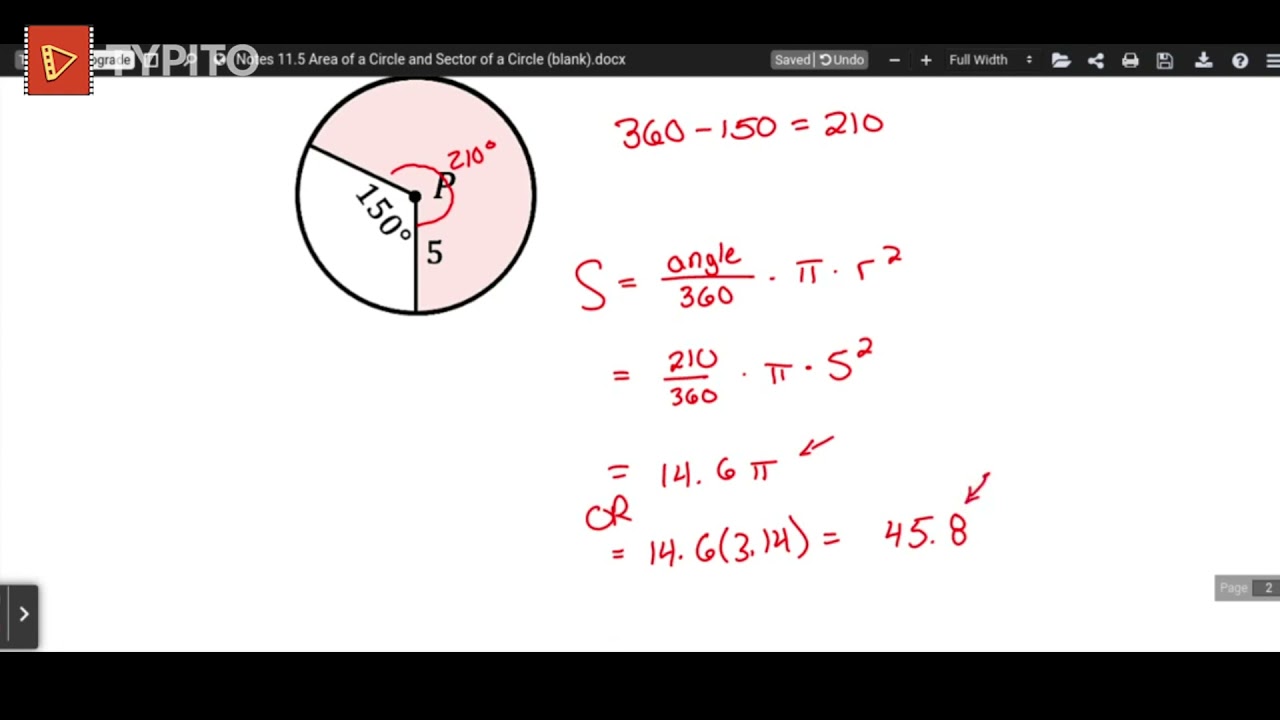
Notes 11.5 Area of a Circle and Sector of a Circle
matthewmills6952
251 views•2026-06-18

Notes 4.2 Isosceles and Equilateral Triangles
matthewmills6952
444 views•2026-06-18
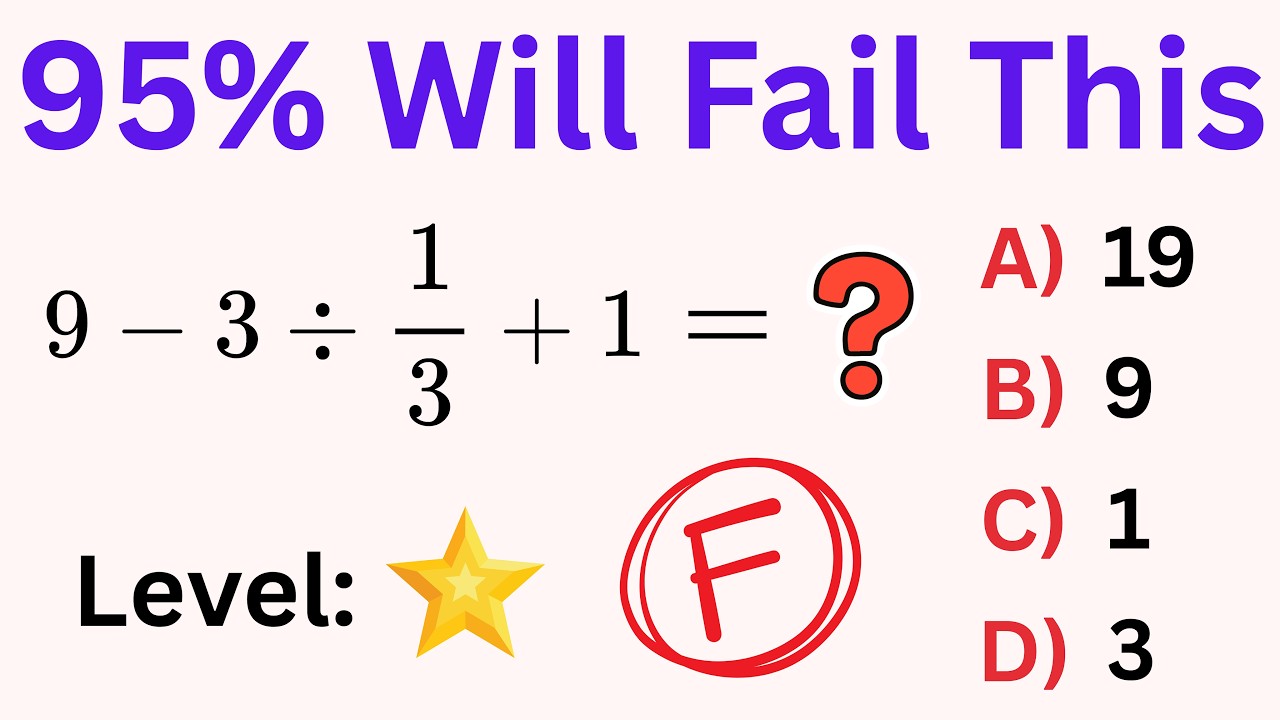
Can You Solve This?
brain_station_videos
1K views•2026-06-15



