This analysis brilliantly deconstructs the illusion of competitive efficiency, proving that chasing the meta is a mathematically losing game for most players. It serves as a sobering reminder that in a gacha economy, personal enjoyment is the only investment with a guaranteed return.
Install our extension to search inside any video instantly.
Is It EVER Worth Chasing The Meta? | A Mathematical Analysis | Grand Live & Beyond
Added:Hello everyone, Berb here. Today I'll be talking about pulling for the meta.
There's a lot of cards coming up that are quite good that will go and boost the power level of your account and perhaps even make you quite competitive with the other players in the PvP events, in the Champions Meetings and League of Heroes in the future. And this is not necessarily a should you pull for these cards or not. This is a discussion on when really should you care about the meta and for what reasons. Now, I'm not going to go and delve 100% all on the side of psychology. As you can see, this is the gacha template and not the scratchpad theme. So, I have tried to go and narrow this focus down into a single element that has a mathematical backing, which is return on investment. We'll get through there and then I will go and go and put my view on when is it good to pull for the meta, okay? So, that is the topic for today.
There's a lot of cards coming up that have been talked about. Namely, an examples that come to my mind are thrown, Symboli Chris S for late surgery, even Christmas Oguri who's been good for a few CMs. And there's a lot of cards that have been here for a while that are good for quite a long time, like, you know, Kitasan Black as we've been going through for over two years.
We have ECP, we have Mejiro McQueen, we have our parents for the styles that we enjoy, like Say and Sky and Mejiro Dober. And there is an inherent value to them in the PvP events, the Champions Meetings that have been going on.
As I calculated in one of my first videos on my pull plan, on what I was doing, my original pull plan, it's an estimate that, hey, you get about 24,000 carrots per month. The thing is is that of these 24,000 carrots, 8,000 of them I estimated to be performance base and 16,000 of them were going to be for the gifts and the events. This is heavily skewed to the anniversaries because we just get a massive amount of carrots on those anniversary drops. But, this is relatively accurate. You can check for yourself on like the any of the gotcha calculators that you have lying around and it will roughly be this. I think this is slightly less than what we are actually grabbing, but the big part about this is talking about that 8,000 performance-based carrots. And one small aspect of that is the PvP events because this 8,000 carrots is your team trials.
It is also your champions meetings and there's a few other things as well like your clan rewards and stuff like that.
Now, champions meetings is one small aspect of this. So, the actual mathematical question that I will be getting through in this video is how much do champions meetings and League of Heroes and the like actually give you depending on your win rate. And there is a mathematical approach to this. This is our good friend the binomial problem because there's multiple variables. And we'll be going through that a bunch. I'll be going through a few different examples.
Uh 100% win rate, 80% win rate, 60% win rate. I actually do 40% win rate and 1% win rate. And the reason for that is 100% win rate is the mathematical maximum. 80% win rate is a very very competitive player, better than myself.
I got like 65% win rate I think in the previous CM. 60% win rate is a relatively competitive player that I think will comfortably get into a finals. 40% win rate, you can still backdoor into a finals and it kind of goes and is in that area of getting lower level like long shot wins to A wins and sometimes sneaking into A finals and sometimes just winning the B finals. So, that's little nice little middle ground there. And then the 1% win rate that just goes and gets one win in group B. That's it. And goes from there.
Okay? Those are the situations where I'll be asking. Now, the easy one is that 100% win rate because the Champions meeting gives you five 10 five win tickets per day for a total of 20 win tickets, 10 in the group one and 10 in the group A, as well as an A finals victory as well. The problem is that once we go and we don't have 100% win rate, we have to figure out how many five win tickets mainly there are because those are rewarded differently and not scaled linearly with the rest of the field. So, we have a binomial distribution.
Um I'm going to assume the same win rate over the course of the tickets, but I'm not going to go and do this 100% flat over the completely eight because if we do that an 80% win rate will basically just immediately just net us five five win tickets, six four win tickets. It'd be really easy. So, I'm going to account for an increased difficulty in day two.
And basically what I'm going to do is say we have a slightly higher win rate on day one and then we normalize to our win rate on day two. And I think this is relatively the way it works. If you're an 80% win rate player, I think you'll find you'll have 90% win rate on the first day and 70% win rate it seems to be pretty good on the day three four.
And if we do that, we take our binomial equation as per usual and we find the number of arrangements arrangements times the win percentage raised to the number of occurrences ti- times the lose percentage raised to the number of occurrences of losses. So, a five win ticket at you know, our 90% win rate would basically be the same thing as a 70% I'm going to do. So, this is the day two calculation. If we have an 80% win rate average in which we are getting on our last eight tickets on day three and four, um a 70% win rate in this case, we will find that on a five win ticket we just win one one arrangement of winning all five of 70% chance on each time for a 16.8% chance of getting a five win ticket if we are an 80% win rate player. If our overall win rate is 80% and we're getting 70% win rate in our second day, we will have a 16.8% chance of getting a five-win ticket. We multiply that by eight tickets and we have an expected number of five-wins tickets to be 1.34 tickets per per, I guess, day three four of Champions Meeting. For day one two, we would literally just plug in 90% instead. It's a little more difficult with four wins because the number of arrangements of four over five is actually five. There's five different ways to miss one and we basically do four wins. So, it's 0.7 raised to the fourth multiplied by 0.3. We find out there's a 36% chance that we get a four-win ticket if we are an 80% win rate player, in which we multiply that by eight and our expected number of four-win tickets is 2.88. And then we do the same thing for three, two, one, and zero. And as you can see, and you probably noticed this, it's quite likely if you're a high win rate player, you may see this on day one, that you get a few five-win tickets and you get a few four-win tickets. And if you're 90% plus win rate, you can see that the five-win tickets is relatively common, but you still drop one or two unless you're at exactly 100%. And this goes down as we go along. Now, I'm going to have to estimate somewhat. We are taking the expected values and sort of normalizing them a bit, but basically on day one for a 80% win rate person, um someone who easily makes it into a finals, we can say on day one you probably get five five-win tickets, two four-win tickets, and perhaps a singular three-win ticket just to make sure we don't, you know, overload the top wins and save some of these wins for day two. And then on day two, I think it's relatively common for an 80%er to get a singular five-win ticket, a three four-wins, three three-wins, and perhaps even a two-win on a low roll through just maybe a couple instances where they lose their Christmas Oguri a few times. And you can do the sanity check of just multiplying and adding these together and you find there's 64 wins in this specific arrangement that I chose because basically I'm saying, you know, I'll round this one up, I'll round this one down, I'll round this one up, I'll round this one up, down, up, down, up, down, etc., etc. And I find that, hey, 64 out of 80 is an 80% win rate. So, I believe this is a relatively good model for the 80% mark.
For the 60% win rate, which I think is a standard strong character that will most likely make it into that A finals bracket, um we basically do the same math and the difference is that while the um it was 90 and 70, I'm bringing it down to like 75 and 45. And we're going to find that a lot of the 5-1 tickets go away. If you're a 60% win rate character, you saw me um like last Champions meeting, it was very rare for me to get a 5-1 ticket. I got like two of them or three of them. And then from there it was like a lot of fours and threes. And basically it's the same thing, just a different arrangement. Our five wins kind of just become four wins or four wins become three wins or three wins become two wins. And it's a little more spread out in the middle bracket of fours and threes. So, there is, yes, an advantage of having very high win rate because you get the more five wins and you know five wins are a skewed a lot higher in terms of rewards. The same thing for 40%, which I think is someone who could backdoor A finals, but even if they don't they're a strong contender in B finals. We basically perhaps have a single 3-1 ticket on day two, but the rest of it is honestly a bunch of twos and ones. So, 32 wins, 80 losses, and our 80 total um will give you a 40% win rate with these uh it's 1331 and 1331 on both days as well. So, 4321 and 3210. So, putting it all together, we can see the arrangements that I have chosen. I don't necessarily need to say it again.
But basically the 5-1 tickets are eight on 100% win rate, five on 80% win rate, two on 60% win rate, uh and then uh one singular four win on 40% win rate. And the character rewards, like I said, for these round two five wins, is really what's important, and they're quite hard to get. But, basically, everything is scaled normally on round one, but on day two, that round two is scaled double.
So, a lot of this, honestly, you could estimate it a different way that's probably close to this one, but I needed to get some math in here cuz I know a lot of you enjoy it. So, if you don't enjoy math, we're almost done. Do not worry.
So, if you go and you multiply basically all these arrangements by the carrot rewards for what they are, you're going to find that a 100% win rate person will get 1,600 carrots in the round of the qualification rounds. An 80% win rate will get 925 carrots, 60% will get 685, 40% will get 495, and 1% win rate, which is just someone who literally turned on the game, threw random three Umas, and was really bad and really unlucky, and just got basically one win on day one and day three, and made it to finals, will still get 245 carrots because of base minimum rewards. I'm not taking into account that uh you're subtracting 30 because that is the same for everybody. But, basically, you just subtract 60 from these, or 120 carrots from these. But, honestly, it doesn't really matter too too much. If you look at a graph of this, you can see it's relatively exponential, but honestly, once you start um like getting beneath like 90% win rate, there's not much difference. You see the difference between 80% and 20 and uh 40% is only like 500 carrots. So, empirically speaking, or rather, from an aggregate amount, or I don't know how to put it simply, um from an just a raw number of carrots, there isn't much difference between 40% and 80% as long as you're making your A finals. And that's why I generally suggest just try to make A finals. If you can make it, it's really nice because the finals carrot is actually quite a lot. If you win, you get, of course, 10 tickets * 150 plus the 2,500 bonus for 4,000 carrots. If you get second place, you get 3,000 carrots worth of stuff. And if you get third place, you still get 2,100 carrots worth of stuff. And a B1 is equal to an A third place. So, this is why that 40% I think is fine to backdoor or not. It's a little bit of RNG, but honestly, it's perfectly fine. So, let's take a look at the difference in carrot generation when I go and put all this stuff together.
Now, if you have a 100% win rate, I'm going to assume you're going to win A finals and we're just going to give you the 40,000 carrots for 5,600 carrots total.
If you're an 80% win rate, I'm going to say two out of three times you're going to win A finals cuz you have a very strong build, perhaps a meta build. And then sometimes you'll get, you know, screwed over and get second place instead for 33% of the time. So, we just weigh those amounts based on the carrot values and we find you make 4,600 carrots. So, 1,000 less than a 100% win rate.
If you're at 60% win rate, the assumption is that let's say you are just throwing your ticket in and you have a 33% chance to win second place or third place depending on how strong you are and race RNG. So, you know, it's random for across all three. 360%ers come in and they get put together, anyone can win. So, we're going to weigh them equally and average them out for 685 plus the average of the three wins for 3,718 carrots. 40% win rate will give you a 50% chance of second and third. Let's say you don't even have a chance if you backdoor. Well, you're still fine. You still get 3,000 carrots from finals and even if you go on you just go and don't even like do anything, get third in B finals, you still get 1,245 just from participating in winning a single time in a in in a in graded league. So, your baseline is 1,245.
So, if you actually look at the difference, and here's the point, is that one second, let me grab drink.
Here's the point.
If a card would cause you to become what I would call competitive and very strong, this is probably more than a singular card can do.
If you were previously either barely backdooring or not backdooring, and then this up this just magically makes you whatever this Uma pull is whatever this card pull is magically makes you an 80% win rate person who is very strong at the top of the meta and winning almost all their races.
The difference between the two is one singular 10 pull. That's 1555 carrots.
That's it.
More likely or rather if you are a very strong player or a whale that is buying a lot of cards and it would make you get closer to that 100% win rate, you will only get 1,000 carrots or 623rd pull.
Now, if for some reason you believe that you're even getting like the most generous of it of just backdooring into 100% win rate, which is never going to happen, you have a total of a grand 17 pulls for that.
So, as we stated before in a previous video, the EV of a spark because you take the expected value of a 0.75% chance multiplied by 200 pulls for a singular spark is 1.5 copies plus the pity copy you get means that 200 pulls is worth 2 and 1/2 copies of a card. So, you can say that a card that requires 1 LB or more to exist or you only want 1 LB is a singular spark to grab basically in expected value and you probably should be going to 200 even if you grab it early just because hey, you know, it's more copies still give you stuff and that pity copy is worth something.
Anything that requires 3 LB plus 2 MLB really requires two sparks because your expected value is 2 and 1/2 per spark, so you should at least have an expected value equal to five so you don't have to be less than that 50% mark in that case.
So, two sparks will get you to the point in which that you can get that 3 LB to 4 LB MLB um copies of the card and for things that are double banner where the pity can only be used on one or the other, that's a topic for another video.
Umas, if you're wondering because hey, once you grit them get them, you do not need to continue pulling to pity, even still have a 133 pull expected number of pulls until you grab them. So, even though you can get lucky, if you get unlucky is worse, and on average it'll still take you 133 pulls to grab this specific banner Uma character. So, your return on investment, which is the mathematical portion that I will be answering, we'll get into the rest of it later, is that the difference between, if we're taking a reasonable, very frankly quite generous, um assumption that it increases your win rate by 40% and gives you that 1555 carrots advantage, the return on investment is just terrible.
A spark's 30,000 carrots, if you're pulling for an Uma just to be meta to increase your win rate by 40% to get the extra 1555, it's going to take you almost 13 Champions Meetings. If you're having a card to do it for a singular spark, and you have to pull completely to pity, it takes almost 20 Champions Meetings. And for a double spark, which is an MLB card, if you need it just for a few Champions Meetings, and you are only pulling for return on investment, it requires 38.58 Champions Meetings. To put in perspective, we are on CM 15, and it would require CM 53, every single CM up until past JP, who is on 46, to get to the point at which you would return based on the additional carrots gained from Champions Meetings and League of Heroes.
So, what I'm here to say is, of course, you will not get an ROI, and some of you already probably knew that, but I hope this has at least gone and reinforced your view as well. You can't just pull for cards because you expect a return on investment, or you cannot just pull for Uma's just because you think you need to get the carrots back. It is just simply not efficient. And this was true of Christmas Oguri Cap. Even if you were free-to-play and you just wanted the free carrots, if you are only pulling to get carrots back on the Champions Meeting, she was, you still would need to would use her for 13 carrot 13 Champions Meetings. And I think we've had seven.
There's seven total that she is top meta for.
That's not even at that point to return the actual value of the Umas if you were to win every time.
And that's not even going to like be guaranteed.
The thing is that the performance carrots are great. And this is the part where I go and say, "When should you really pull for meta?" Cuz I understand there's a lot of other things that Champions Meetings give just than a return on investment in carrots. But if Champions Meetings are just only for carrots for you, don't pull just for Champions Meetings. There is 16,000 carrots of that 24,000 that I estimated that are based off of the gifts and the events that are non-performance based.
This is not including anything of team trials, not including anything of your club, and stuff that just from being active in the game will give you. The whole point is that these 16,000 carrots are only given to you if you want to play the game and you actively play the game.
There's something that I really abided by growing up, and I think it was pretty common. It used to be called the $1 per hour rule, which is if I was going to spend money on a game or buy a game, I would go and say, "How much enjoyment would I get? How many quality hours would I get in the game?" And then I would compare it into the price and say, "Well, you know, for me it was a dollar.
If I can go and spend $60 on a game and get 60 good gaming hours out of it that I am 100% enjoying, I think that would be worth it." This usually caused me to buy things on sale, to be honest. And we had some games which are fine games, like and they have their problems, I know, but they're fine games with a good story you can get some sort of enjoyment out of. And when I were to watch people play or to buy them. The problem with them is is that their run time was just too short. If the game was even $30, but it was a 4-hour experience, it was a little tough because I'm paying a lot of money when there's other games that exist that are have very long experiences that I could get quite good enjoyment out of that if I enjoyed the way that they were playing, let's say, you may not enjoy these particular genres, of course, but there are games in every genre like this. They have a long enough run time of what they're trying to do that it sort of satisfies this rule. You can very easily spend 60 hours in Baldur's Gate just playing through a singular story run. Same thing with Persona. It's like what? 200 hours for some reason?
And then there's some games that have some sort of replayability. Like you can either forget about them or you can just go and try a different build out or you can just go and remake your farm. And you know, it just lets you play that 10 to 15 to 20 to Elden Ring apparently is like 100 um level of experience and just be able to get to that level of the $1 an hour rule. I have like what? 2,000 hours in Skyrim over the course of the 12 years that I've owned it or so.
That's definitely gone and done this rule that I've done.
And there's this the reason why a lot of people are able to justify for MOBAs and for multiplayer games that this is their main game. I am okay with just spending $60 on a skin or $40 or $20 on a skin or $7 on a skin, whatever it is, to look cool in the game that I'm playing consistently because I am playing this game 120 hours every single month, right? If I am 100% playing this game, this is the primary game, and I have a lot of time to game, you can see why people are able to go and spend money on skins like this because, hey, one, they may not have the $1 an hour rule, but even if they did, if they're not playing any other games and they have the cash to do so, it makes sense.
And a lot of games as well have a very, very low barrier to entry because they are rather cheap and usually on the indie side and they have great replayability or they have the friend exception where, hey, if we're able to play with friends, any game's going to be fun and perhaps this $1 an hour rule like my friends telling me to buy it, I'm just going to buy it to have a good experience with my friends as well.
All this to say is you can kind of go and put this into um Musume terms. This $1 an hour rule, if you've never heard of it, it's because, well, it's right now it's the $2 an hour rule because we love inflation. And well, you can just kind of go and attribute this to this game as well. First of all, you could just say, hey, this is my primary game and if I'm enjoying this game and I'm playing this game for, you know, 3, 4 hours a day just doing whatever I want to do, you know, I may be able to justify the carrots that are just I'm buying them. I may buy a carrot pack in the anniversary or so. I think there's a much easier way to do it is that, hey, this game refunds you 16,000 carrots per month, let's say, as an estimate, as a low estimate.
So, if a thing that I need to buy may be meta that causes me to be powerful and I would enjoy the game because of that, that's very key. If I don't care about Champions Meeting, why are we pulling for meta in the beginning with? Because, hey, we should be going and pulling for things that we care about. Pull for more characters for more story. Pull for the things that make you better on team trials if you like that. Pull for the things that get you to do fan runs if you really care about being in a high-level clan. Whatever you do to enjoy this game, pull for those goals.
Now, if you care about Champions Meeting, you may have to go and care about the meta a lot more, but just make sure that you're going to enjoy the game for the number of months that it takes for you to get those carrots back.
That's a good guideline and I that I think is quite good it may seem a little short-term, but it kind of just makes sense when you think about it. If you have a character, make sure that they're able to give you 2 months of enjoyment and not just like a Champions Meeting here or there just to feel powerful, make it like Dober or Sayan Sky that has enabled your role for multiple months after you have actually gone and done it. Getting Sayan Sky on your account now, she's about to be legendary assist, remember that. Getting Sayan Sky back on her initial release would give you almost a year of being able to play front runners, which would be top meta for quite a while at least in like half those CMs if not more. And that would give you quite a lot of enjoyment when compared when combined with other meta cards. If you are having to pay for an MLB card, well, that costs 60,000 because that is a spark and double spark rather. And something like Kitasan Black would definitely give you 4 months worth of enjoyment, but something else that would give you that much for a double spark are scenario cards. And these are incredibly underrated even by me back in Rico time.
Say hello. Agnes Tachyon will make you feel incredibly powerful if you pull 60,000 on this and you get a little bit lucky and perhaps MLB one or the other.
The thing is they drop off after 4 months, right? At what levels? It depends on what role you're playing, that's a different video. However, it's undeniable over the next 4 months if you have very high MLB copies of these cards, you will feel powerful in Grand Live, which is 4 months, which satisfies this. The same thing happened with Rico.
Rico was great and just so happens it was good in that for the longer tracks, too. It gave you additional value, but at the end of the day, hey, it gave you 4 months of enjoyment and you're going to get those carrots back.
This is just a guideline. Of course, if you see stuff on the horizon that you really, really want, you have to modify your pull plans and perhaps make some sacrifices. It's called deferred gratification. It happens in real life, too, with, you know, stock trading and stuff. You're putting away money now to hopefully make it bigger later. Not financial advice. But, um the same thing happens with this.
I know I want ticket.
There's a whole lot of stuff that I haven't been pulling for right now that I could have pulled for NTR. I could have pulled for a second Sparkle CB to get that last copy. I could have pulled for Maruzensky here in a bit. But, I know that I need to budget out like 120,000 carrots in the month of July in order to get everything I need.
So, I have deferred my enjoyment of this game now for more enjoyment later and hopefully in the next four months in Grand Live, I will be rather powerful and I will enjoy it. And that's the other big thing is that you should be pulling for your oshi. You should be pulling for the things that keep you put in this game. You should pull for things that make you enjoy the game.
We actually have the luxury of hindsight. And I don't think this has really been talked about too much.
Japan had to go and do this alone. Even Korea and Taiwan and the other servers, they have six months worth of hindsight.
We have the luxury of having like four years of hindsight at this point. So, we know how these scenarios are going to work. If you did not like Track Blazer and you figured out you weren't going to play it a lot, you really shouldn't go and get NTR. And it's the same with these cards. And I know these are pretty much must pulls for this time, but perhaps if you know you're not going to like Grand Live and you've been watching guys in the way that Grand Live is going to be and you're be like, "You know what? I think I'm going to wait until, you know, Grand Masters when X My Role is good, right?" I know I'm not going to like anything competitive. I'm not going to like this game at all in Grand Live because I'm just walking around and I'm resetting runs and whatever. And you have whatever gripes that you do. If you think that you're not going to like this scenario and you're not going to play very much, don't pull for cards.
Pull for the cards in the scenarios where you want to feel powerful because you know you are going to enjoy the game. And that really, I think, is the last slide. That's really the thesis of this is that, "Hey, combination of using your hindsight because you know that you are going to play this game a lot in the periods where you're going to have a lot of carrots that you can go and generate more carrots. And then the scenarios where you know you are not going to like So you don't like a scenario in the future, see it like scenario eight or nine, let's say. Well, just go into maintenance mode. You are now playing a visual novel game. You are playing your dailies and you are just waiting until the next scenario and perhaps you don't need to pull for anything because you don't care at that point, right? You're just going to clock it in. You're going to go and see whatever happens. You're not going to have the most powerful cards. You may even do an open league instead of a graded league.
I hope this has been helpful. I know it has been a little bit all over the place. This was like very much at the very edge of being a scratch pad video, but that math portion at the start, I hope was useful to some as well just because people like math too from this channel. Um, otherwise, um, pull what you want, right?
Take care everyone. Verbout.
Related Videos

Solving a 'Harvard' University entrance exam question
AsadInternationalAcademy
125 views•2026-06-14
Algorithms for Generalized Signed Distance and Winding Numbers (PhD thesis)
NicoleZFeng
269 views•2026-06-15

Notes 6.3 Rectangle, Rhombus, Square
matthewmills6952
1K views•2026-06-18

Does the math actually hold up? Let's break down the logic.
rawXopinion
1K views•2026-06-15

NYT Hard Sudoku Walkthrough | June 17, 2026
Rangsk
2K views•2026-06-17
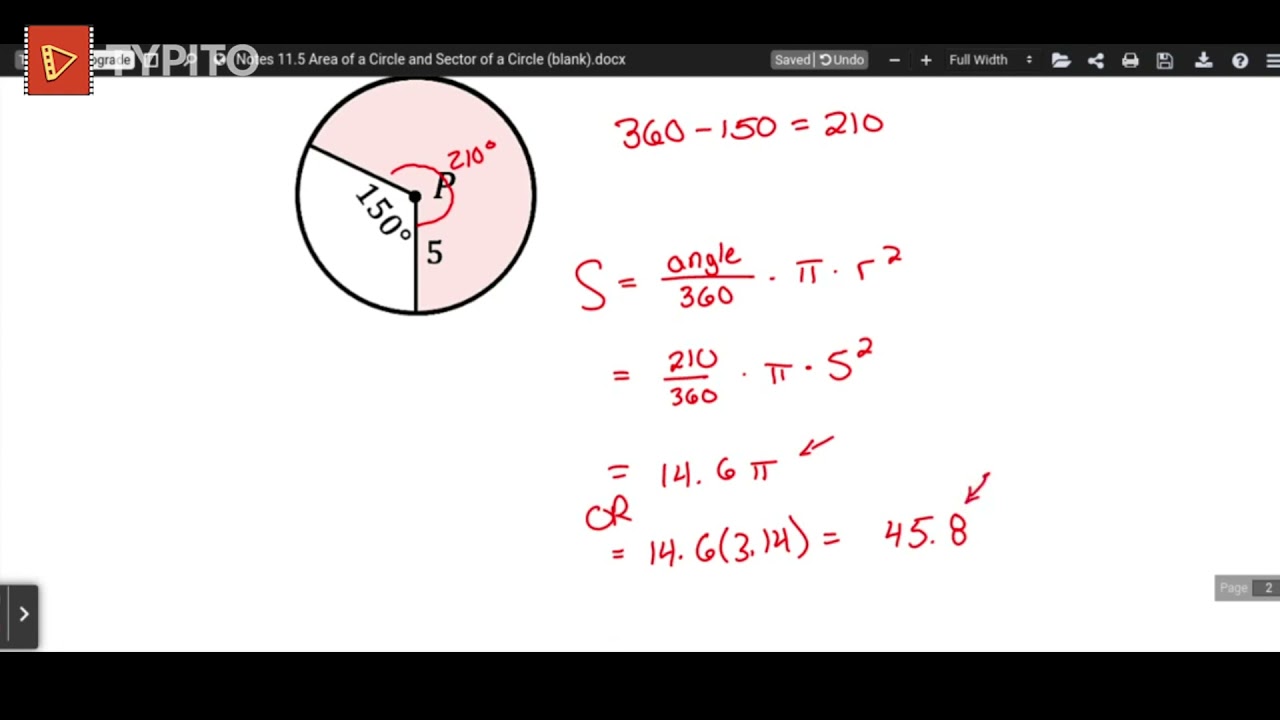
Notes 11.5 Area of a Circle and Sector of a Circle
matthewmills6952
251 views•2026-06-18

Notes 4.2 Isosceles and Equilateral Triangles
matthewmills6952
444 views•2026-06-18
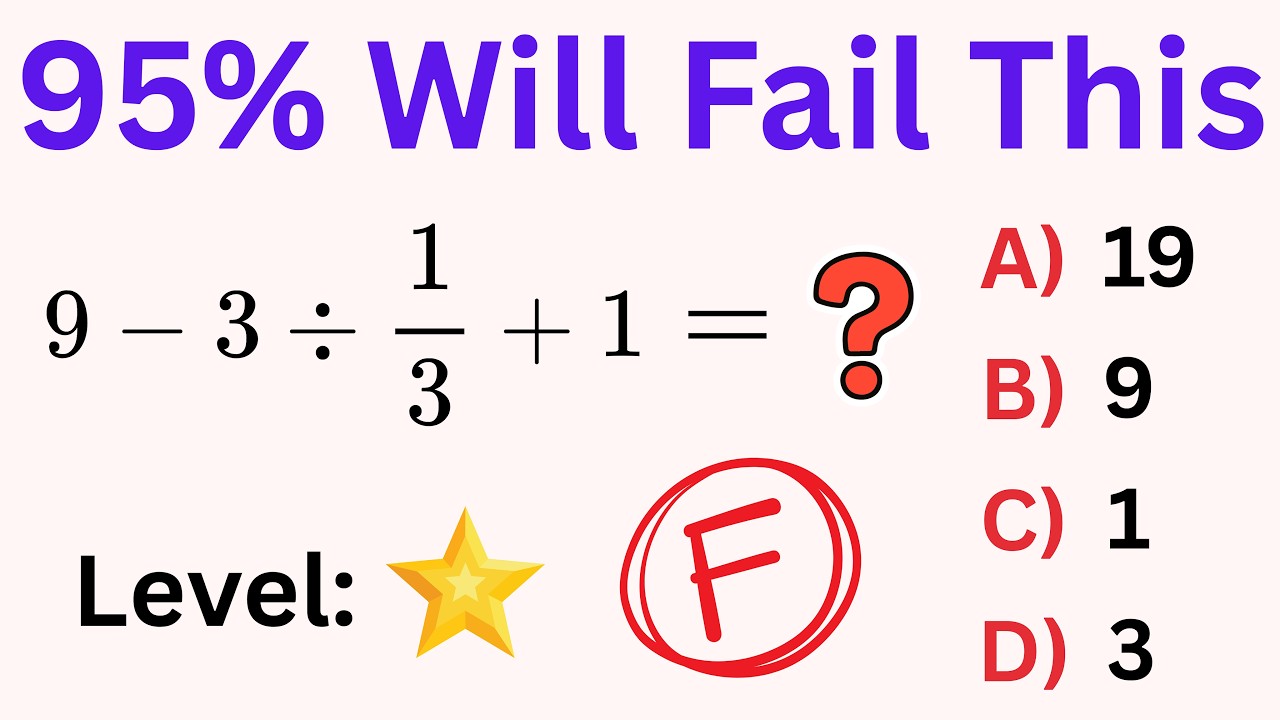
Can You Solve This?
brain_station_videos
1K views•2026-06-15



