To solve exponential equations where the variable is in the exponent, such as 3^A + 3^A + 3^A = 90, first combine like terms to get 3 × 3^A = 90, then divide both sides by 3 to isolate the exponential term as 3^A = 30. Since 30 cannot be expressed as a power of 3, take the logarithm of both sides and apply logarithm laws (log(xy) = log(x) + log(y) and log(x)/log(y) = log_y(x)) to solve for the variable, yielding A = 1 + log_3(10).
Install our extension to search inside any video instantly.
Olympiad Mathematics | Russians | Can you solve this?
Added:Hi everyone.
Are you ready?
If you are let's solve this problem here.
We have three to the power A plus three to the power A plus three to the power A equals 90.
Okay, so the first step to take is to add this up.
Okay, and you're going to have three of three to the power of A.
And this is equal to 90.
Okay, so the next step is that we divide both sides of this by three.
Divide this by three.
Three can cancel with three.
So that on the left hand side we're going to have three to the power of A and it's equal to 30 divided by three.
90 divided by three is 30.
Now at this point we are looking at 30 and we know that 30 cannot be written in the base of three.
In fact as a matter of fact 30 is just three times 10.
Right? So that means that three to the power A will now be equal to three times 10. So since the base on the left is not the same as the base on the right we have to do what? Take the log of both sides.
>> [snorts] >> And that will give us log three to the power A equals log three times 10.
And then from one of the laws of logarithm The law says that log x * y is the same as log x + log y So, we can apply this to the right hand side of the equation.
So, that we will have log 3 to power a to be equal to log 3 + log 10 Although I know that log 10 is the same as 1.
But, we want to work with the log 10 for now.
So, there's also another law that talks about the power.
Okay?
We are looking for this um power. We're looking for the value of a.
And if we do not bring it behind, we will not be able to find its value. So, we have a log 3 and it's going to be equal to log 3 + log 10 Now, what do we do from here? At this point to get the value of a we will have to divide everything by log 3.
Okay? So, that will help us to cancel out the log 3 from the left hand side.
Okay, so like I said we will divide both sides by log 3.
Divide that by log 3.
And then we'll divide this also by log 3.
Now, log 3 will cancel itself.
A will be equal to log 3 over log 3.
That will give 1.
+ log 10 over log 3 And at this point, we have to apply the law that says that log m divided by log b is the same thing as log b. Okay, log m to base b.
See that?
So, we will apply this on the right hand side and we are going to have log 10 to the base of 3.
And our a becomes 1 plus we have log 10 to base 3.
So, this becomes the value of a in log form.
So, to continue, we will now verify what we have done.
The equation is 3 to the power a plus 3 to the power a plus 3 to the power a equals 90.
This is the equation that we have solved.
And from our calculation, we got a to be this value.
Now, do not put in the value of a yet.
Simplify to get 3 of 3 to the power a being equal to 90.
So, at this point, we will now put in the value of a.
And what is the value of a from calculation?
1 plus log 10 to base 3.
So, we have 3 into 3 to the power of 1 plus log 10 to base 3.
So, what will this give us? That's what we want to find out.
Now, let's um apply one of the laws of indices.
a to power Okay, let me use x to the power m plus n.
And this is the same as x to the power m times the same x to the power of n.
This is me applying the product sum law of indices.
So, at this point, what should we do?
We have our three, and if we go into the bracket, then we have three to the power one times three to the power of log 10 but to base three.
Now, from here three to the power one is already three, we know that.
It's um three, we know that. But, from here we have three to the power of log 10 to base three. There's a law again that you apply there and it says that m to the power of log b to base m is equal to b. I mean, the whole of this is equal to b.
Because log to base m and these are going to go.
Now, we'll apply this same rule to what we have here. This is three and this is base three.
So, this and this are going to go. So, we have three to the power one and 10 in the bracket.
So, this is three multiplying three to the power one, which is three, then multiply by 10.
Okay, so we have three times three times 10 is 30, like we said before.
And um three times 30 will give us what?
Three times 30 will give us um 90.
Yes. No wonder the equation that we have solved is three to the power A plus three to the power A plus three again to the power A being equal to 90.
The same 90 we had from our verification.
So, this means that our A, which is 1 plus log 10 to base three, satisfies the equation.
Thank you for watching.
If you want to see more videos like this one, then you have to subscribe, like the video, comment, and share.
Thank you.
Related Videos

Solving a 'Harvard' University entrance exam question
AsadInternationalAcademy
125 views•2026-06-14
Algorithms for Generalized Signed Distance and Winding Numbers (PhD thesis)
NicoleZFeng
269 views•2026-06-15

SUPER B - WAP vs WBPS
gravitylive7425
171 views•2026-06-20

Notes 6.3 Rectangle, Rhombus, Square
matthewmills6952
1K views•2026-06-18

Does the math actually hold up? Let's break down the logic.
rawXopinion
1K views•2026-06-15

NYT Hard Sudoku Walkthrough | June 17, 2026
Rangsk
2K views•2026-06-17
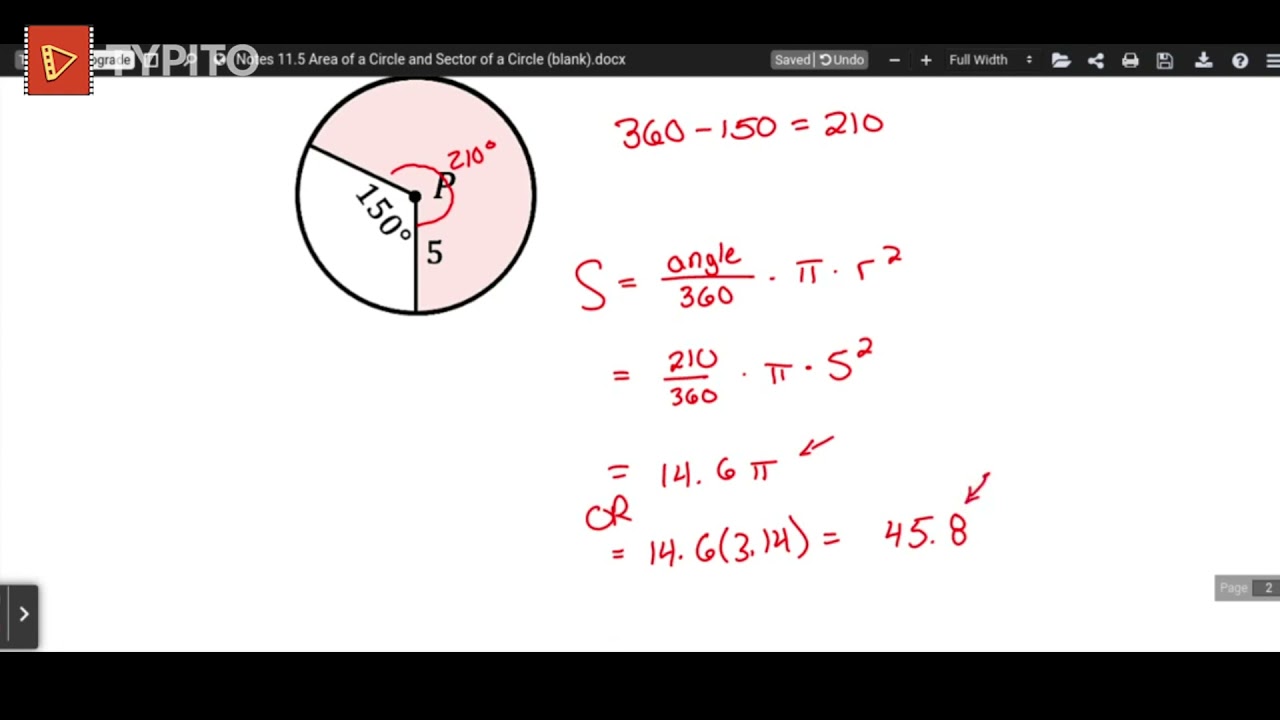
Notes 11.5 Area of a Circle and Sector of a Circle
matthewmills6952
251 views•2026-06-18

Notes 4.2 Isosceles and Equilateral Triangles
matthewmills6952
444 views•2026-06-18



