This video introduces Awesome LLM Apps, a comprehensive open-source repository containing over 100 tested AI agent applications, RAG tutorials, and agent skills that developers can clone, customize, and deploy. The collection is organized into categories including starter agents (single-file Python scripts requiring only an API key), advanced agents (using multi-step reasoning and tool calling), multi-agent teams (orchestrator-synthesizer patterns), voice AI agents, MCP integrations, and RAG systems ranging from basic retrieval to agentic patterns. The repository emphasizes accessibility, with most agents running in under 50 lines of Python and getting started taking just 30 seconds. This ecosystem demonstrates how open-source AI applications can lower the barrier to building production-grade AI systems.
100+ AI Agents You Can Actually Run — Awesome LLM Apps Complete Guide
Added:Over 100 AI agents and RAG applications that you can actually run right now.
Welcome to awesome LLM apps, the fastest growing collection of open source AI applications on GitHub. Let us dive into what makes this repository truly special. This is a curated collection of over 100 AI agent apps, agent skills, and RAG tutorials hand-built by the Unwind AI team. Each one is tested end-to-end and ready to deploy. Clone it, customize it, ship it. 100% free and open source under the Apache 2 license.
With over 120,000 GitHub stars and 18,000 forks, this is one of the most popular AI repositories on the planet.
Over 80 contributors have helped build this massive ecosystem. It has been featured as the number one repository of the day on TrendShift. The collection is organized into 12 major categories. Over 100 agent apps, more than 20 RAG tutorials, and a growing section of voice AI agents and MCP integrations.
There's a template for every use case imaginable, from simple single file scripts to complex Let us start with the starter AI agents. These are single file Python scripts that run with just an API key. Perfect for beginners and rapid prototyping. No complex infrastructure required. The AI travel agent builds personalized day-by-day travel itineraries. Just describe your destination and preferences and it creates a complete trip plan. It runs on Streamlit with a single Python file and needs nothing more than an API key.
Simple, elegant, and incredibly useful.
The AI data analysis agent lets you ask questions of any CSV or Excel file in plain English. The medical imaging agent performs diagnostic analysis on X-rays using Gemini. Both run in under 50 lines of Python. There's also a podcast agent that The AI music generator agent turns a text prompt into a full MP3 track. The AI meme generator drives a real browser to create memes, not an image API. These showcase the wide range of starter agents, from simple generation tasks to full browser automation. Moving to the advanced agents, these use multi-step reasoning, tool calling, and persistent memory for complex real-world tasks, production-grade patterns you can build upon. The AI deep research agent combines OpenAI agents SDK with Firecrawl for comprehensive web research. It plans complex queries, visits multiple sources, cross-references findings, and produces a structured research report with proper citations. This is the AI fraud investigation agent cross-references public records to flag facilities that do not add up. It searches business registries, property records, and news sources, then cross-examines its own findings. This is a real multi-source investigation system you can run locally. The AI home renovation agent takes photos of your space and produces photorealistic renovation renders using Nano Banana Pro. The AI system architect uses DeepSeek R1 reasoning combined with Claude for architecture reviews and recommendations. Other standout advanced agents include the VC due diligence team for startup investment analysis, the full legal agent team for research and contract analysis, the recruitment agent for end-to-end hiring workflow, and a fascinating self-evolving agent that rewrites its own work. Multi-agent teams take collaboration to the next level.
Multiple AI agents work together on complex cross-domain tasks, sharing context and dividing work intelligently.
Multi-agent pattern works like this. An orchestrator agent receives the task and routes it to specialist agents who work in parallel. A synthesizer agent then combines their outputs into a unified result. This enables complex workflows that no single agent could handle alone.
The AI finance agent team is a complete financial analyst team in just 20 lines of Python using the OpenAI agents SDK.
The competitor intelligence agent team produces structured teardowns from competitor websites. All agents collaborate seamlessly. A truly unique feature of this repo is the agent skill system. These are installable capabilities your coding agent can use immediately. Works with Claude Code, Codex, Cursor, and other coding agents.
Agent skills install with a single NPX command. For example, the project graveyard skill finds every side project you abandoned and tells you why each one died. It helps you finish the one worth going back to. 10 seconds to install, zero configuration, and it works with any coding. Self-improving agent skills automatically optimize against evaluation criteria using Gemini and the Google Agent Development Kit. The advisor orchestrator worker pattern chains multiple models together with Claude as advisor, GPT as orchestrator, and voice AI agents and generative UI represent the cutting edge of this collection. These are the interfaces of the future and they work today. Voice AI agents provide speech-in speech-out interactions using cutting-edge voice APIs. The insurance claim live agent team handles real-time voice claim intake with Gemini live. The customer support voice agent answers phone calls grounded in your own documentation.
There's also generative UI agents render interactive components, not just text.
The AI dashboard canvas agent lets you describe a dashboard and charts assemble on a live canvas. The Shackleton component generator creates production-ready UI components from natural language. This is a whole MCP agents connect to external tools and data through the model context protocol.
This section shows how to wire AI agents to real-world services and data sources.
The browser MCP agent drives a real browser with natural language, navigate, click, and extract data. The GitHub agent lets you explore any repository in plain English asking questions about code and issues. The Notion MCP agent talks to your pages. The MCP flow is elegantly simple. The user makes a request in natural language. The MCP server resolves which tool to call. The external API executes and the result flows back through the agent. Clean, extensible, and standardized across all MCP agents. The RAG section is one of the most comprehensive parts of this repository. Over 20 tutorials progress from basic retrieval to advanced agentic RAG patterns. The RAG spectrum covered here is remarkable. Start with the basic RAG chain for simple document retrieval.
Move to corrective RAG that grades its own retrieval quality and retries before answering. Then explore agentic RAG with step-by-step reasoning and multimodal are local RAG agents run entirely on your machine with no API keys required.
The DeepSeek local RAG reasons over your documents completely offline. The Llama 3.1 local RAG lets you chat with any web page. Hybrid search RAG combines keyword The repo goes far beyond agents and RAG.
Let us look at the broader ecosystem of tools and applications included. Apps with memory remember who you are and what you care about across sessions. The chat with X section lets you talk to GitHub repos, Gmail inboxes, PDFs, arXiv research papers, Substack newsletters, and YouTube videos. Each integration is about 30 lines of Python. Autonomous game-playing agents showcase AI reasoning and strategy in action. The AI chess agent pits one LLM against another with validated moves. The 3D Pygame agent has DeepSeek R1 write and run game code live. Two different models battle in tic-tac-toe. LLM optimization tools help reduce costs dramatically. Tunify token optimization cuts API costs by 30 to 60% by using a compact token format.
Headroom context optimization achieves 50 to 90% reduction without sacrificing The repo includes complete fine-tuning recipes for Gemma 3 and Llama 3.2 using Unsloth. There are also comprehensive crash courses on Google ADK and the OpenAI Agents SDK. These teach you agent design patterns from scratch with working, tested code. Getting started takes just 30 seconds. Here is exactly how you run any app in the collection.
Clone the repository with git clone.
Navigate to any agent folder. Install all dependencies with pip install. Set your API key as an environment variable, then run the app. Most starter agents need nothing more than an API key. You have a working AI agent in under a minute. The architecture is intentionally simple and modular. Each agent is a self-contained folder with its own requirements file. You can grab one agent without touching anything else. This modular design means you can mix, match, and extend without breaking the rest of the collection. What makes this repo truly special is that every single app is designed to actually run, not just look good in a read me. The barrier to building AI agents has never been lower. Anyone can clone this, learn from it, and build production-grade AI applications. New templates drop every week, and you can get them delivered to your inbox through unwind AI. Over 80 contributors and thousands of developers around the world are building on top of these templates. The ecosystem is growing rapidly, and you can be part of it today. If you found this useful, star the repository on GitHub. Follow unwind AI for weekly templates delivered to your inbox. Like, comment, and subscribe for more deep dives into the AI tooling ecosystem. See you in the next tutorial.
Related Videos
TOP 15 Data compression Interview Questions and Answers 2019 Part-2 | Data compression | Wisdom jobs
wisdomjobs
281 views•2019-06-28
CTS 158: 802.11w Management Frame Protection
ClearToSend
4K views•2019-02-04
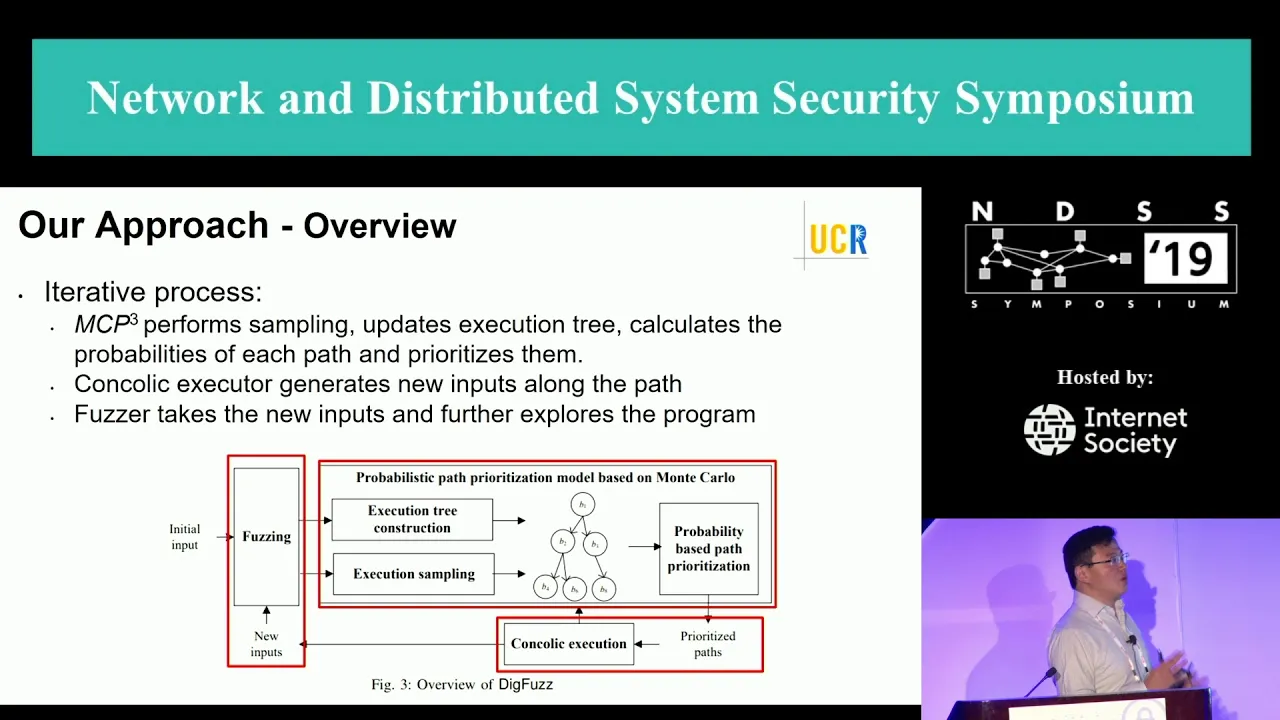
NDSS 2019 Send Hardest Problems My Way: Probabilistic Path Prioritization for Hybrid Fuzzing
NDSSSymposium
496 views•2019-04-02

How realistic is Cities: Skylines?
CityBeautiful
159K views•2019-02-14
GUIs & TUIs: Choosing a User Interface for Your Python Project | Real Python Podcast
realpython
2K views•2025-04-04

The OSI Model - Explained by Example
hnasr
225K views•2019-05-12
Cloud Computing - Introduction
elithecomputerguy
98K views•2019-10-07
From Traveler's Dilemma to Dynamic Routing | Demystifying Networking
IITBombayJuly
5K views•2019-08-04
Trending

WOW! Judge TURNS THE TABLES on Trump in His OWN $10B LAWSUIT!!!
MeidasTouch
197K views•2026-07-23

Playstation NO DISC/NO BUY Fight Is Over...
DavidJaffeGames
4K views•2026-07-23

Steam and Xbox Just Dropped The Hammer On PlayStation
OhNoItsAlexx
9K views•2026-07-23

Americans Confused in Australia for 17 Minutes Straight
IWrocker
17K views•2026-07-23