This video brilliantly demystifies the abstraction of the cloud by grounding it in the physical realities of power consumption and mathematical redundancy. It is a rare piece of tech communication that prioritizes structural logic over mere surface-level wonder.
Install our extension to search inside any video instantly.
The Genius Trick That Keeps Google From Ever Filling Up
Added:Right now, somewhere on your phone, there's a photo you can't take.
You know the moment. You lift the camera and instead of a shutter, you get a little gray box.
Storage almost full.
So, you do the ritual. Scrolling back through a year of your life, deleting screenshots and blurry dog photos.
Buying yourself just enough room for one more.
Now, here's the strange part.
That exact photo, the one your phone won't hold, you can hand it to Google and it just disappears into Gmail or Drive or Photos, no questions asked.
You've done it a thousand times.
10 years of email. Every picture you ever meant to sort. Files you forgot you owned.
And not once, not one single time has Google turned around and said, "Sorry, we're full."
Same you. Same data.
Two completely different worlds.
There's an obvious explanation for that.
Google must have some unimaginably huge hard drive.
A disk the size of a building, humming away in the dark, swallowing everything we throw at it.
That's wrong.
And the truth is a lot weirder than a big machine in the dark.
Start by throwing out the myth because it's the thing blocking your view.
There is no giant hard drive. There's no single anything.
When you save a file to Google, it doesn't land on a disk. It gets shattered into pieces and scattered across hundreds of machines you'll never see in a building you'll never enter in a town you've probably never heard of.
And the part almost nobody realizes, the same system holding your grocery list in Drive is the one streaming every cat video on YouTube to the entire planet at the same moment out of the same pool.
One vast, shared ocean of storage.
The thing that runs it is called Colossus.
Hold onto that name.
But hang on, if it's all just ordinary computers, why is it so reliable? Why not build one perfect, monstrous machine instead of a mess of cheap ones?
Because that machine can't exist.
Think about it for a second.
A single disk can only be read by one little arm moving to one spot at a time.
Put the world's Gmail on it and everyone is just standing in line behind everyone else.
The second one is worse. If everything lives in one place, then one failure, one fire, one dead part wipes out all of it.
You haven't built a vault.
You've built a single point of catastrophe.
And the third wall is money.
The cheapest storage on Earth isn't some exotic super drive. It's the same ordinary mass-produced disks anyone can buy churned out by the million.
Which is why Google made a bet right at the start.
Don't buy expensive hardware that pretends it won't fail.
Buy cheap hardware, assume it will fail, and be ready when it does.
And here's where it gets unsettling.
When you own that many disks, failure stops being an event. It becomes the weather.
Let me put a number on that.
Years ago Google ran a test sorting a mountain of data across around 48,000 drives.
And on basically every single run, a drive died. Not might die. Did.
Somewhere out in all those machines right now, while you're watching this, something is broken.
Something is always broken.
A hard drive is failing this very second and another one right after it. And the people who built this thing knew that.
So they didn't try to stop the failures.
That's the part everyone gets backwards.
They built a system that doesn't care.
Which leaves one question hanging in the air.
If drives are dropping dead all day, every day, why have you never lost a photo?
The answer starts in 2003 with a paper.
Three engineers wrote down a radical idea. Assume your machines are cheap and always breaking and make the software carry the weight. Chop every file into chunks, keep them on different machines, and let one master computer hold the map, the index of where every piece lives.
It worked beautifully.
Then Google got too big for it. That one master had to remember where everything was, and eventually there was just too much everything.
The map outgrew the librarian's brain.
Picture a coat check with a single clerk.
A few hundred coats, he's fine, remembers every ticket by heart.
Hand that one man every coat in a city, and he's done.
Not because he's bad at the job, because he's one man.
The fix, the thing that grew into Colossus around 2010, wasn't a bigger clerk.
It was to tear up the map and hand pieces of it to a whole team.
Spread the index across many machines, keep it separate from the data itself, and suddenly the ceiling's gone.
The system that used to choke on its own size could now hold, quite literally, the internet.
Good, it scales.
But the real question is still sitting there. The disks are dying.
How does your file survive when the drives holding it drop like flies?
The obvious move is to keep copies.
Three of everything. Lose one, you've still got two.
Simple, except look at the cost.
To keep one photo safe, you're paying for three. And once you multiply that by all the world's data, you're buying three planets worth of disks.
So there's a cleverer trick.
And honestly, the first time it clicks, it feels like sleight of hand.
Instead of copying your file, Google shreds it.
Say it breaks your photo into six pieces.
Then it runs a little math and creates three extra pieces, spare parts worked out from the original.
Now there are nine, scattered across nine different disks in different racks in different buildings.
And here's the impossible part. You only need any six of those nine to rebuild the whole thing.
Perfectly.
Bit for bit.
Which means three of them can be destroyed, three disks can burn, and your photo doesn't have a scratch on it.
All the safety of those copies at a sliver of the space.
This is how a company can promise something that sounds ridiculous. 11 nines of durability.
99.9 and just keep going for 11 digits.
What does that actually mean for you?
Roughly this, hand them 10 million files and they might lose one of them about once every 10,000 years.
That's not a marketing line.
It's just the arithmetic of scattering the pieces so widely that the universe would have to conspire to kill enough of them at the same time.
And if that math sounds exotic, it isn't.
It's the same trick that lets a scratch CD still play.
The same reason a torn, coffee-stained QR code still scans.
The same principle NASA leans on to pull a clean signal out of a spacecraft billions of miles away through the noise of deep space.
You've been living inside this idea your whole life. You just never saw it.
By now, you're probably convinced. This thing is unbreakable, bulletproof.
Nothing gets through.
Except one morning in 2011, tens of thousands of people woke up, opened Gmail, and found nothing.
Empty.
Years of email, conversations, plane tickets, messages from people who'd since passed away, simply gone.
And here's the twist that should scare you a little.
All those clever copies, all that scattering across machines, none of it helped.
Because what hit them wasn't a dead disk. It was a bug.
A flaw in an update that rippled through the live system and corrupted every copy at the same instant.
Redundancy saves you when a machine dies.
It does nothing when the poison is in the recipe itself and every copy drinks it at once.
What saves you then when every safeguard you've built fails together?
Tape. Magnetic tape.
The stuff of 1970s mainframes and dusty basement archives.
Because Google, for all its exabytes of gleaming disks, still keeps a copy of your data on tape, sitting on a shelf, offline, unplugged from the world.
And a bug can't reach a shelf.
They sent in the robots, pulled the cartridges, and read those accounts back one at a time.
It took hours instead of milliseconds.
You have to physically find the thing and spool through it, but every last message came home.
And the scale of that safety net?
Back then, a single full backup of Gmail was said to need something like 200,000 tapes.
Stacked up, that's a tower 4 km tall.
The most futuristic system on the planet, guarded by the oldest trick in the room.
After all of that, does Google ever actually run out?
And here's where the whole thing flips.
Never running out was never a fact about a warehouse. It's a fact about a treadmill.
Google installs new storage faster than we can fill the old, building the next data center before it's needed. While every year the disks themselves get denser and cheaper, holding more in the very same square foot.
Dead drives get pulled and replaced before you'd ever notice, the way a body replaces its own cells.
It stays infinite only by never once standing still.
It was never a mountain of disks somebody finished building.
It's an escalator running downward, and Google is sprinting up it, and it can never stop.
Which means the only real danger is whatever could force that treadmill to halt.
And it turns out there is one. It's just not the thing you'd ever guess.
It isn't space. They are not running out of room for disks.
It's power. Electricity.
The hardest thing to get now isn't land or money or hard drives. It's enough energy to run them, and enough water and cool air to keep them from melting.
Connecting a new site to the grid can take years.
And with AI now swallowing power on a scale we've never seen before, the question underneath the entire cloud has changed.
For decades we asked, will we run out of room?
Nobody's really asking that anymore.
Now the question is whether we'll have the power to keep the lights on.
Think back to that little gray box on your phone. Storage almost full.
The reason you'll never get that message from Google isn't a giant disk and it isn't magic.
It's a million dying drives held together by software that expects them to die.
It's math that rebuilds whatever is destroyed.
It's a shelf of tape standing guard against the system's own mistakes.
And it's a company that refuses to stop building for even a single day.
Infinite was never a place they found.
It's a thing they do over and over right now while you weren't looking.
Google won't run out of storage.
The only thing it can run out of, so the cloud was never magic. Just really good engineering.
If you enjoyed this, hit subscribe and I'll see you in the next one.
Related Videos
6:13
Computer Science
TOP 15 Data compression Interview Questions and Answers 2019 Part-2 | Data compression | Wisdom jobs
wisdomjobs
281 views•2019-06-28

27:51
Computer Science
CTS 158: 802.11w Management Frame Protection
ClearToSend
4K views•2019-02-04
23:21
Computer Science
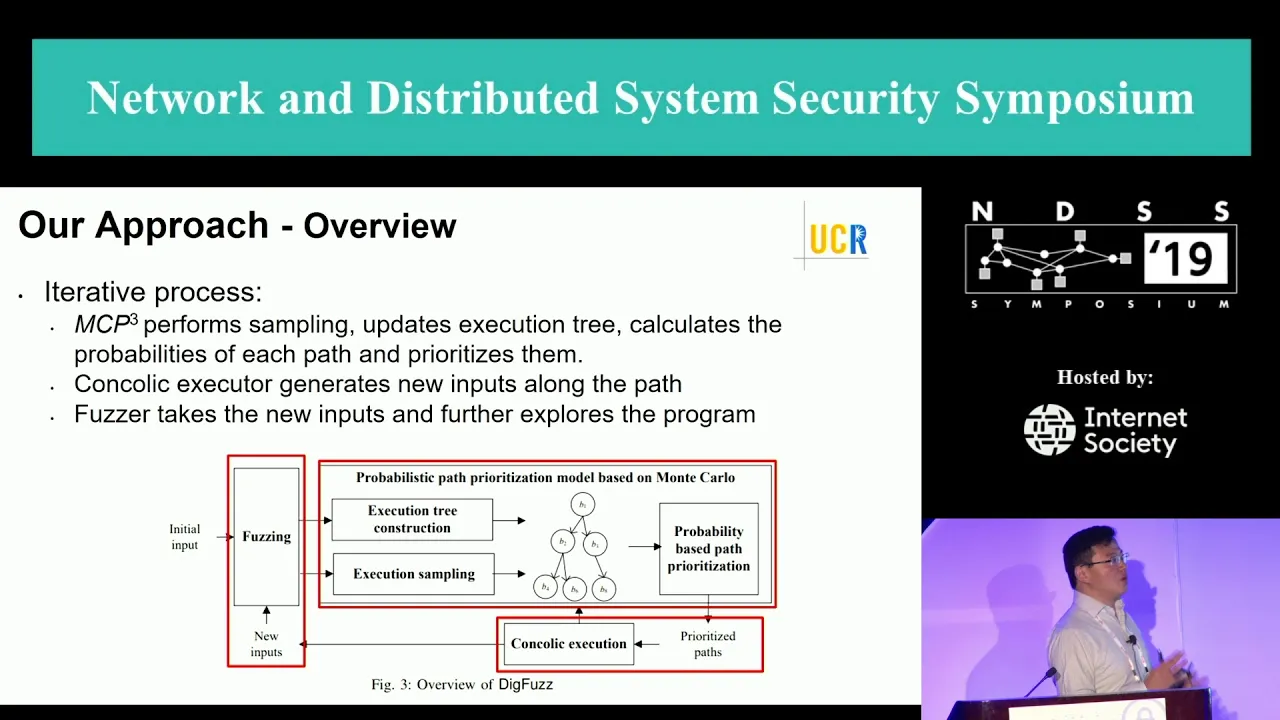
NDSS 2019 Send Hardest Problems My Way: Probabilistic Path Prioritization for Hybrid Fuzzing
NDSSSymposium
496 views•2019-04-02

12:48
Computer Science
How realistic is Cities: Skylines?
CityBeautiful
159K views•2019-02-14

46:39
Computer Science
GUIs & TUIs: Choosing a User Interface for Your Python Project | Real Python Podcast
realpython
2K views•2025-04-04

25:15
Computer Science
The OSI Model - Explained by Example
hnasr
225K views•2019-05-12
1:10:47
Computer Science
Cloud Computing - Introduction
elithecomputerguy
98K views•2019-10-07

2:24
Computer Science
From Traveler's Dilemma to Dynamic Routing | Demystifying Networking
IITBombayJuly
5K views•2019-08-04
Trending

13:38
Law
WOW! Judge TURNS THE TABLES on Trump in His OWN $10B LAWSUIT!!!
MeidasTouch
197K views•2026-07-23

13:25
Business
Playstation NO DISC/NO BUY Fight Is Over...
DavidJaffeGames
4K views•2026-07-23

22:40
Business
Steam and Xbox Just Dropped The Hammer On PlayStation
OhNoItsAlexx
9K views•2026-07-23

16:52
Anthropology
Americans Confused in Australia for 17 Minutes Straight
IWrocker
17K views•2026-07-23