This tactical evolution marks the chilling transition from traditional military valor to a cold, industrial game of attrition driven by economic logic. It effectively illustrates how modern warfare is being redefined as a contest of mass-produced expendability rather than human endurance.
Install our extension to search inside any video instantly.
Ukraine's ground robots eliminate two Russian positions, neutralizing numerous enemy forces.
Added:A new piece of combat footage circulating from the front lines in Ukraine shows something that would have sounded like science fiction only three or four years ago. Soldiers from Ukraine's 33rd Separate Assault Regiment say they carried out a coordinated attack on two Russian-held positions using remotely operated ground robots working in tandem with aerial drones.
And that by the time the operation was finished, both shelters had been destroyed and the Russian personnel inside had been eliminated. No sweeping infantry charge, no soldiers crawling through mud under machine gun fire.
Instead, a small team sitting somewhere behind the front line, watching screens, guiding unmanned ground vehicles and quadcopters into the enemy's own bunkers.
It is tempting to watch a clip like this and treat it as just another battlefield update, one more entry in a war that has produced thousands of drone strike videos over the past four years. But this operation belongs to a different category. It is not simply drones dropping grenades into trenches, which has become almost routine on this battlefield. It is a deliberate combined arms assault conducted by machines against a fortified enemy position with the explicit goal of seizing and destroying that position without exposing Ukrainian infantry to the first and most dangerous phase of an attack.
That distinction matters enormously, and understanding why requires stepping back to look at how this capability developed, who is building it, what it changes about the arithmetic of this war, and what it might mean for military far beyond Ukraine's borders.
Let's start with the unit itself. The 33rd Separate Assault Regiment is a relatively young formation, first stood up in December of 2023 as an assault battalion. Its early service took it through some of the roughest fighting of the past two and a half years. It helped blunt Russian incursions into Kharkiv Oblast in the months after Avdiivka fell in early 2024, when Moscow tried to draw Ukrainian reserves away from the Donbas by opening new pressure points in the north. Later that year, the unit crossed into Russian territory itself, taking part in the incursion into Kursk Oblast, storming and clearing entrenched Russian positions as Ukrainian forces pushed onto Russian soil for the first time since the war began. By the end of 2024, after repeatedly proving itself in some of the most demanding sectors of the front, the battalion caught the attention of Ukraine's commander-in-chief, who selected it for expansion into a full regiment with priority access to manpower and equipment. Today, the regiment includes not just its line assault battalions, but a dedicated unmanned systems company, nicknamed for its role in fielding robotic platforms, alongside a mechanized battalion, a tank company, and a full unmanned systems battalion of its own.
In other words, this is not a unit that bolted a few drones onto an old-fashioned infantry structure. It is a formation that has been built almost from the ground up around the assumption that robots and remote systems are now a core part of how it fights, not an accessory to it. The context helps explain why an operation like this one is even possible. Capturing a fortified position with unmanned systems alone is not something a unit can improvise on the fly. It requires an established workflow, reconnaissance drones that can loiter over a target for extended periods without being shot down, operators trained to fly first-person view strike drones with enough precision to hit narrow apertures like bunker entrances, ground vehicles capable of carrying explosive charges or weapons close enough to a hardened position to do real damage, and a command structure that can knit all of that together into a single timed assault, rather than a series of disconnected strikes. When the regiment says its operation involved ground robots and aerial drones working together to hit two occupied shelters, what it is really describing is a small-scale combined arms battle fought entirely by remote and autonomous systems in which each type of machine performed a role that used to belong to a different branch of a conventional army. Reconnaissance drones functioned like scouts, strike drones functioned like close air support, ground robots functioned like assault troops moving up to the objective itself, and somewhere behind all of it, human operators functioned as the command element, watching the battle unfold on screens, and making the decisions that used to be made by platoon and company commanders standing in the open, exposed to exactly the kind of fire their soldiers were facing.
This is not the first time a Ukrainian unit has claimed a first of its kind milestone in unmanned warfare, and it is worth placing this operation in that broader timeline because the pattern tells its own story about how fast this capability has matured. Reporting from within the Ukrainian military traces what may have been the first all robot assault on a defensive position back to early December of 2024. When the 13th Cartel Brigade used a mix of air and ground systems to seize a Russian position without a single soldier taking part in the initial assault. A senior American armored division commander who studied that operation closely wrote afterward that even though the robots managed to take the ground, Ukrainian infantry still had to move in quickly to actually hold it because the unmanned systems by themselves could not consolidate and defend the position over time. He described the moment as a warning shot for armored forces everywhere. Arguing that any army that continues to plan around traditional tank and infantry formations without reckoning with what unmanned systems can now do is making a serious mistake. A few months later in the spring of 2026, Ukraine's president announced what he described as the first time in the entire war that an enemy position had been taken exclusively by unmanned platforms with no Ukrainian infantry involved and no losses on Ukraine's side.
In that case, according to the announcement, the Russian soldiers holding the position actually surrendered once they realized their trench had been surrounded by ground robots and drones rather than by an assault team they might have been able to fight or negotiate with in more familiar ways. Around the same period, another elite formation reported what its officers called the first surrender in history to unmanned ground drones describing how first-person view aerial drones and ground robots together convinced a group of Russian soldiers that resistance was pointless. After which the machines themselves effectively escorted the surrendering troops back toward Ukrainian lines.
Later in the year, the same brigade reported that one of its ground vehicles mounted with a heavy machine gun and operated remotely or with artificial intelligence assistance had held a defensive position on its own for 45 consecutive days marking what appears to be the first time a position was defended entirely by an unmanned system without direct human presence backing it up on the ground.
Each of these episodes on its own could be dismissed as a one-off, a favorable set of circumstances that will not repeat easily. But taken together and now joined by this latest operation from the 33rd Regiment, they describe a trend line, not an isolated event. Roughly every few months for well over a year, some part of the Ukrainian military has managed to push the boundary of what unmanned systems can do a little further. First reconnaissance and resupply, then fire support, then holding ground defensively, then assaulting and seizing ground offensively, and now, it seems, doing so against multiple occupied positions in a single coordinated strike. This is not a single dramatic leap. It is closer to a steady, compounding erosion of the tasks that used to require a human being to be physically present in the most dangerous places on the battlefield.
The scale behind these individual headlines is worth dwelling on because it is easy to read about one operation and miss just how industrialized this practice has become. Ukrainian officials have reported that unmanned ground systems alone completed more than 9,000 missions in a single month earlier this year, a dramatic jump from prior months.
And that the number of units actually equipped and trained to operate these platforms grew from roughly 60 in late 2025 to well over 160 by the following spring.
Zoom out further and the country's commander-in-chief has described robotic complexes carrying out 50% more tasks month over month during periods of rapid scaling. Add in the aerial side of the equation, where Ukraine's president has referenced tens of thousands of unmanned missions carried out across just a few months earlier this year, and what emerges is not a boutique special forces capability reserved for a handful of showcase units.
It is becoming standard issue equipment, spreading across the force the way rifles or radios once did, precisely because commanders have found that these systems save lives in ways that older tactics simply cannot. To understand why that matters so much to Ukraine specifically, it helps to think about the underlying math of attrition that has shaped this entire war.
Russia went into this conflict with a population roughly three and a half times the size of Ukraine's, and it has leaned on that advantage relentlessly, treating soldiers as a resource it can spend more freely than its opponent can.
Ukraine, by contrast, has been fighting a war of survival with a shrinking pool of available manpower, worn down by four years of casualties, mobilization fatigue, and an economy and society straining under the weight of continuous war.
In a contest like that, every soldier kept out of a frontal assault on a fortified trench is not just a personal tragedy avoided, it is a strategic asset preserved. One frontline unit, after analyzing more than 160 of its own robotic assaults, calculated that achieving the same results with conventional infantry would have required well over 2,000 troops, and that roughly half of that force would likely have been killed or wounded in the process.
That is the brutal logic driving Ukraine's embrace of unmanned assault tactics. It is not really about technological novelty for its own sake.
It is about a country that cannot afford to keep losing soldiers at the rate a conventional offensive demands, finding a way to inflict the same or greater damage on the enemy while sending machines into the most lethal five or 10 minutes of any assault instead of people.
That logic extends beyond just direct combat. Some of the most dangerous jobs on a modern battlefield are no longer about storming a trench at all. They are about resupply, medical evacuation, and simply moving anything, human or material, across open ground that is under constant aerial surveillance from both sides. Reporting from deep inside frontline Ukrainian units has described how ground robots are now routinely used to rescue wounded soldiers and to ferry ammunition, food, and water up to forward positions, precisely because that kind of movement has become a death sentence for a soldier on foot or in an unarmored vehicle. Even reloading one of these resupply robots has become a hazardous task, requiring troops to sprint out under trees and hedgerows to avoid the kind of persistent drone surveillance that has made entire towns near the front effectively uninhabitable for anyone moving in the open. In some of the most intense sectors, entire multi-target missions involving several separate strikes against different Russian positions are now planned and executed with no Ukrainian soldier anywhere near the actual fighting. The whole operation run from bunkers well behind the line, directed by operators watching live video feeds from reconnaissance drones circling above.
None of this has gone unnoticed on the other side. Russian forces have adapted and continue to adapt in ways that show just how seriously they are taking this shift. Reporting on prisoner evacuation attempts has described Russian drone operators deliberately targeting Ukrainian ground robots, even when those robots were being used to transport wounded and captured Russian soldiers, striking the vehicles with first-person view drones after confirming through aerial reconnaissance exactly who and what was inside. Russian state media has also claimed multiple successful strikes against Ukrainian transport and ground robotic systems used for ammunition delivery and troop rotation, framing the destruction of these vehicles as a way to disrupt Ukrainian logistics at the source. This tells us something important. Unmanned ground vehicles are not magic invulnerable weapons. They remain vulnerable to exactly the same threats that make the battlefield lethal for humans, namely persistent aerial surveillance and precision strike drones. The difference is simply that when a robot is destroyed, no family receives a knock on the door, and no soldier's years of training and experience are lost forever. Russia, for its part, is not standing still on unmanned systems of its own. Its own robotic ground vehicle programs, while generally regarded as less mature and less widely fielded than Ukraine's, continue to develop, and its drone production, particularly of long-range strike and loitering munitions, has scaled dramatically over the course of the war. What is emerging on both sides of this front is not a one-sided robotic revolution, but a genuine arms race in attritable, expendable systems, where the side that can out-innovate and out-produce the other in cheap, mass-producible unmanned platforms gains a meaningful edge even if neither side achieves anything close to a decisive breakthrough. Analysts studying this dynamic have pointed out that this pattern is not confined to the war in Ukraine.
Other militaries around the world are drawing the same lesson, that low-cost, expendable unmanned systems can be used to saturate an opponent's defenses, absorb the first wave of casualties or losses, and force the other side into unfavorable exchanges of expensive weapons for cheap ones. Reports have described China stationing large numbers of obsolete fighter aircraft converted into attack drones near airbases close to the Taiwan Strait, a very different scenario from trench warfare in eastern Ukraine, but built on the same underlying principle.
Expendable unmanned assets can be sacrificed to expose an enemy's defenses and preserve trained personnel and expensive equipment for later in a fight. For military planners outside this conflict, particularly in the United States and across NATO, the message coming out of Ukraine has increasingly shifted from curiosity to urgency. Senior American officers who have studied Ukrainian robotic assault operations closely have described this as an adapt-or-die moment for armored and mechanized forces built around Cold War era assumptions about how ground is taken and held.
The concern is not simply that Ukraine has found a clever workaround for its own manpower shortage. It is that the fundamental logic of ground combat may be shifting in a way that will apply to any future conflict between technologically capable adversaries regardless of population size or manpower reserves. The Pentagon has its own experimental programs exploring coordinated swarms of unmanned systems operating across multiple domains at once, but critics argue that procurement timelines, bureaucratic caution, and a continued institutional preference for exquisite expensive platforms have left American forces lagging behind the pace of innovation happening in Ukrainian workshops and repair depots, where soldiers and engineers are iterating on new robotic designs in a matter of weeks rather than years. It is worth being precise about what these systems can and cannot do today because there is a real risk of overstating how close we are to fully autonomous human-free warfare.
The operation described by the 33rd regiment, like the other unmanned assaults that preceded it, still relies heavily on human operators controlling these systems remotely, watching video feeds, and making real-time decisions about targeting and maneuver. These are not autonomous killer robots making independent decisions to open fire without a person in the loop, at least not in the vast majority of documented cases so far.
What has changed is not that humans have been removed from the decision-making process, but that they have been removed from the physical danger zone. A soldier piloting a ground robot into a Russian bunker is still the one deciding when to detonate a charge or fire a weapon.
But, they are doing it from a position kilometers away, safe from the artillery, mines, and small arms fire that would have killed or maimed them in a conventional assault.
That distinction matters for another reason, too, because it shapes some of the harder questions this kind of warfare raises. When Russian soldiers reportedly surrendered to a Ukrainian ground robot rather than face further attack, it highlighted an unusual and genuinely novel situation in the laws and customs of war, which were never written with the possibility in mind that a soldier might need to surrender to a machine rather than to another human being. Questions about how surrender is recognized, how prisoners are then physically handled and processed when the force that defeated them was a robot rather than a soldier, and how accountability is assigned when something goes wrong during one of these operations are all genuinely unresolved.
Legal scholars and military ethicists have only begun to grapple with a battlefield where the decisive moment of combat, the point at which an enemy position falls, might not involve a single human being from the attacking force anywhere near the actual point of contact. There are also very real technical limitations that keep this from being a simple, universally repeatable tactic, rather than a demonstration of what is possible under the right conditions. Ground robots depend on stable communications links to their operators, and radio signals can be jammed, spoofed, or simply lost due to terrain, distance, or enemy electronic warfare, which remains one of the most heavily contested parts of the modern battlefield. Navigation is another persistent challenge, since these vehicles often have to cross broken, cratered, mined, and heavily obstructed ground without the benefit of GPS, which is frequently degraded or denied in contested areas, meaning operators sometimes have to guide these machines almost like remote-controlled cars, navigating an obstacle course under fire as described in some of the reporting on these operations, where a robot can be seen struggling against debris and craters before finding a way around. Battery life, payload capacity, and the sheer physical toughness required to survive artillery fragments and small arms fire all limit what a given platform can carry and how far it can travel before needing to return or be resupplied. And, as already discussed, these systems remain highly vulnerable to exactly the kind of drone strikes they themselves are designed to deliver, meaning that a robotic assault force can be destroyed by the enemy's own unmanned systems just as easily as a human assault force can be destroyed by artillery or machine gun fire.
None of these limitations erase the significance of what units like the 33rd Regiment are demonstrating. If anything, they sharpen it because they show that even with all of these real constraints, Ukrainian forces have found ways to make robotic assaults work often enough and effectively enough to keep refining and repeating the tactic across multiple brigades and regiments over more than a year and a half. This is not a single lucky success story. It is an evolving doctrine being tested, adjusted, and scaled under the most unforgiving conditions imaginable, real combat against a determined and adapting enemy.
Stepping back even further, it is worth asking what this all adds up to beyond the immediate tactical picture.
Ukraine's embrace of robotic and unmanned assault tactics has been described by people close to the fighting in strikingly personal terms.
One veteran quoted in recent reporting reflected on how differently the earlier years of this war felt when success in combat depended heavily on a soldier's individual skill, discipline, and physical courage under fire.
Now, that same veteran suggested technology increasingly decides outcomes and there is no going back to the way things were before. That is a strong claim and it should not be accepted uncritically because human judgment, leadership, courage, and adaptability still matter enormously in this war, arguably more than ever since someone still has to design these systems, train operators, plan these missions, and make the difficult decisions about when and how to use them. But, the sentiment captures something real about how profoundly the character of ground combat has shifted in a relatively short span of time from a fight primarily between soldiers to a fight increasingly mediated by remote systems, sensors, and screens.
What we are watching then in an operation like this one from the 33rd separate assault regiment is not an isolated curiosity, but a data point in a much larger and still unfolding transformation. Robots are not replacing soldiers so much as they are replacing specific tasks that soldiers used to have to perform in person, particularly the most exposed and most lethal moments of an assault, the ones responsible for the overwhelming majority of casualties in trench and position warfare. Ukraine, forced into this evolution by a punishing manpower disadvantage, has become something like a live laboratory for this new form of combat, refining tactics, techniques, and procedures under fire that militaries around the world are now studying closely, sometimes with genuine alarm at how far behind they may be. Russia, meanwhile, is adapting in its own ways both by fielding countermeasures against Ukrainian robots and by developing and scaling its own unmanned systems, ensuring that this arms race in expendable attritable machines is likely to intensify rather than fade regardless of how or when this particular war eventually ends. For the two Russian positions destroyed in this latest operation, the outcome was, according to the regiment's own account, total. The shelters destroyed, the personnel inside eliminated, and no Ukrainian soldier ever exposed to the kind of direct assault that would have been required to achieve the same result even 2 years ago.
Multiply an operation like that across the length of an 800-mile front line, across dozens of brigades and regiments increasingly equipped with their own unmanned systems battalions, and it becomes possible to see why so many analysts, officers, and officials now describe this as a genuine turning point rather than simply another grim milestone in a long and brutal war. It is also worth thinking about the economics underneath all of this because the numbers help explain why the shift has happened so quickly and why it is likely to keep accelerating rather than plateau.
A first-person view strike drone capable of destroying an armored vehicle or clearing a bunker entrance can often be built for a few hundred to a few thousand dollars, assembled from commercial components, batteries, and 3D printed parts that are widely available even under wartime conditions. A ground robot capable of hauling ammunition, evacuating a wounded soldier, or carrying an explosive charge into a fortified position costs more, but still represents a fraction of the price of a modern armored vehicle, and nowhere near the lifetime cost of training, equipping, and eventually caring for a human soldier who might be wounded or killed in the same task. This is the economic logic that sits underneath the tactical logic already discussed. When a machine that costs a few thousand dollars can be sacrificed to achieve what once required risking a soldier whose training alone might have taken months, and whose loss represents an irreplaceable cost to a country running short on manpower, the calculus tilts overwhelmingly toward building more machines. That is precisely what has happened inside Ukraine's defense industry over the past 2 years.
As small workshops, volunteer engineering groups, and increasingly formal state-backed manufacturers have scaled production of these systems from small artisanal batches into something approaching genuine mass production, with new models and variants appearing every few months as units feed lessons learned in combat directly back to the people building the next batch of robots. That feedback loop from frontline operator to workshop and back again in a matter of weeks rather than years is itself one of the more remarkable features of this transformation.
And it stands in sharp contrast to how major military powers have traditionally developed new weapon systems. A conventional defense procurement program of the kind familiar to the Pentagon or to major European defense ministries can take the better part of a decade to move from concept to a fielded tested system weighed down by competitive bidding processes, extensive testing and certification requirements, and budget cycles that were designed for an era when weapon systems were expected to remain in service for 20 or 30 years.
Ukraine, fighting for its survival, has had neither the time nor the luxury for that kind of process. Units in the field identify a tactical problem, informal networks of engineers and volunteers design a solution, small batches are built and tested directly in combat, and the results, good or bad, flow back into the next design iteration almost immediately. It is a wartime economy of innovation that more closely resembles a startup culture than a traditional defense industrial base. And it has produced an extraordinary diversity of platforms in a short period of time, ranging from small resupply carts barely larger than a wheelbarrow to larger tracked vehicles capable of carrying heavy weapons or multiple wounded soldiers at once. This is part of why so many foreign observers, including senior officers from NATO member states, have made a point of visiting Ukrainian units and workshops specifically to study this process rather than simply the finished hardware. What they are trying to understand is not just what a given robot looks like or what it can carry, but how an institution can be structured to iterate this quickly under fire.
Because the belief taking hold across a number of Western militaries is that whichever nation manages to replicate that pace of innovation and not simply purchase a fixed set of robotic platforms off a catalog will hold a decisive advantage in any future conflict involving a technologically capable adversary. There is a recognition, articulated by more than one senior American officer studying this war closely, that treating this as a procurement problem, something to be solved by buying a new category of equipment and bolting it onto an otherwise unchanged force structure, would badly miss the point. The deeper lesson is about organizational speed, about how quickly an army can learn from its own battlefield failures and successes, and translate that learning into new capability. And Ukraine's experience suggests that this kind of institutional agility may end up mattering as much as the robots themselves. There is a historical parallel worth drawing here, imperfect as any historical comparison inevitably is. Militaries have gone through moments like this before, moments when a new technology did not simply add a new tool to the existing way of fighting, but forced a rethinking of how ground was taken and held in the first place. The machine gun did this in the early 20th century, making the old tactic of massed infantry advancing in open formation catastrophically costly almost overnight. And it took years of bloody trial and error and millions of casualties before militaries worked out that the answer involved combining infantry with artillery, tanks, and eventually aircraft in new and more sophisticated ways, rather than simply charging harder. Tanks and mechanized warfare did something similar in the interwar years and into the Second World War, rendering static defensive lines far less secure than they had once seemed, and rewarding the militaries that rethought their doctrine fastest.
What is happening in Ukraine right now, with unmanned ground and aerial systems taking over the most dangerous phase of an assault, may well belong in that same category of change. A moment where the fundamental unit of the assault stops being a soldier with a rifle moving under covering fire, and starts being a network system of sensors, remote platforms, and the operators who guide them from a position of relative safety.
It would be a mistake, though, to conclude from any of this that human soldiers are becoming obsolete, or that future wars will simply be fought by machines while people watch from a safe distance. Every operation described here, including the one carried out by the 33rd Regiment, still depends on soldiers, just soldiers doing different things than they used to. Someone still has to hold and defend the ground once it has been taken. Since the American officer who studied the first all-robot assault back in December of 2024 specifically noted that infantry still needed to move in quickly afterward to consolidate the position because the robots themselves could not do that job.
Someone still has to maintain, repair, and resupply these systems, often under the same kind of dangerous conditions that made using robots necessary for the assault itself in the first place.
Someone still has to interpret intelligence, plan operations, coordinate between units, and make the countless judgment calls that no machine, however capable, can yet make on its own.
What is changing is not the total amount of human skill and courage required to win battles, but where and how that skill and courage gets applied, shifting away from direct physical exposure at the point of contact and toward the systems, planning, and support structures that make remote and robotic operations possible in the first place. The soldiers of the future may still need courage, judgment, and skill in abundance, but increasingly, where that courage and skill is applied is shifting away from the trench line itself and toward a screen, a joystick, and a signal running out across the battlefield that machines, more and more, are the first to enter, and sometimes the only ones required to win. The operation carried out by the 33rd Separate Assault Regiment against those two Russian positions is, in that sense, less a single dramatic event than another confirmation of a direction this war, and quite possibly the wars that come after it, has already been heading for some time.
Related Videos

1:08:04
Robotics
Setting up a curved screen with Immersive Calibration Pro 4 and multiple cameras (P3D v4)
FlyerOneZero
23K views•2019-07-21

1:01:27
Robotics
Robot Learning with Sparsity and Scarcity
allenai
379 views•2025-10-14

1:01:42
Robotics
Jorge Mendez-Mendez: Unlocking Lifelong Robot Learning With Modularity (2023-10-05)
umassmlfl
237 views•2024-01-06

2:16
Robotics
Northwestern’s MS in Robotics: Student Robotics Projects, 2023
NorthwesternEngineering
1K views•2024-05-31

11:14
Robotics
"Perfect" Turns: Turning by the Gyro - FIRST LEGO League (FLL) SPIKE Prime + EV3 RePlay Programming
ZacharyTrautwein
94K views•2020-10-02
1:01
Robotics
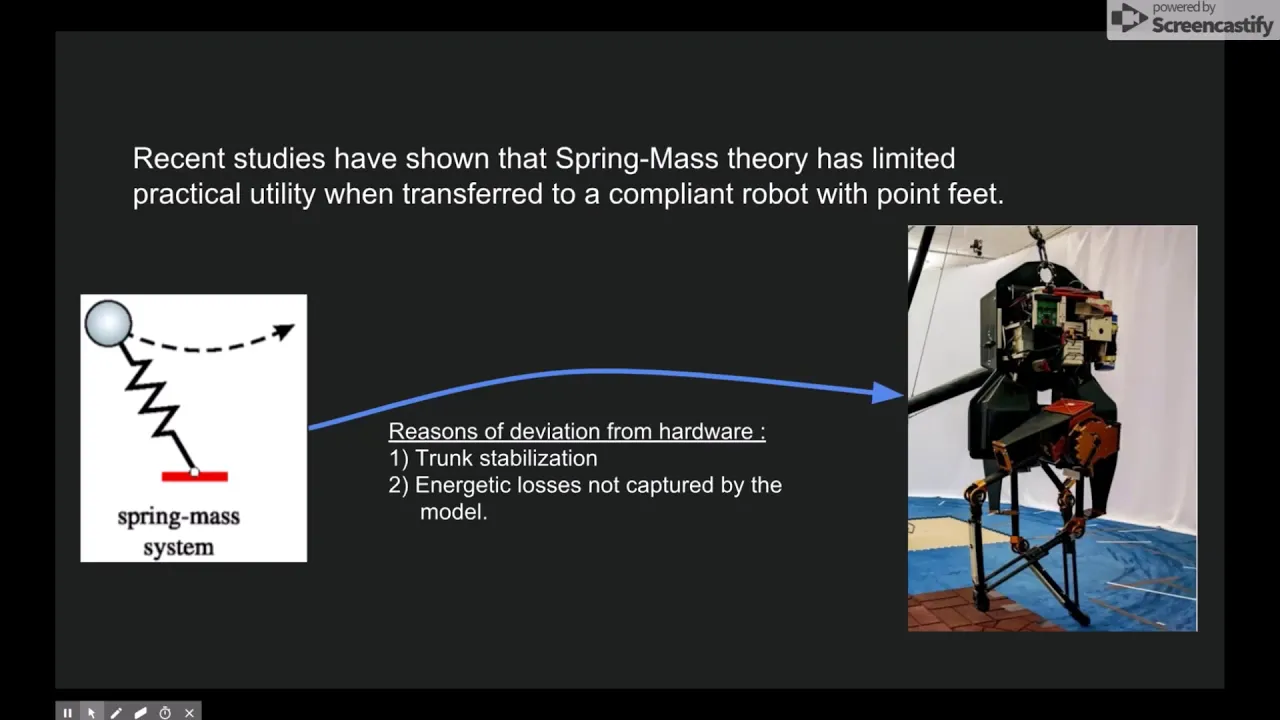
Gorkem Secer: TSLIP-based Deadbeat Running Control of Bipedal Robot ATRIAS
DynamicWalking-wv6qm
298 views•2018-06-22

4:10
Robotics
Self-Driving Cars Need Lessons On Human Drivers | Maddie About Science
skunkbear
26K views•2018-08-21

3:12
Robotics
Milrem Robotics’ THeMIS UGVs used in a live-fire manned-unmanned teaming exercise
MilremRobotics
99K views•2021-05-20
Trending

13:25
Business
Playstation NO DISC/NO BUY Fight Is Over...
DavidJaffeGames
4K views•2026-07-23

22:40
Business
Steam and Xbox Just Dropped The Hammer On PlayStation
OhNoItsAlexx
9K views•2026-07-23

16:52
Anthropology
Americans Confused in Australia for 17 Minutes Straight
IWrocker
17K views•2026-07-23

20:36
Business
SuperBike Factory Has Gone... What's Next for the Motorcycle Industry?
thatbikersimon
11K views•2026-07-22