The video masterfully articulates how profound connections act as quiet corrections to our internal logic rather than loud external events. It successfully elevates the concept of social influence into a poetic study of cognitive resonance.
Install our extension to search inside any video instantly.
Some People Don't Just Enter Your Life—They Change the Way You Think
Added:I used to believe that the deepest things in life announce themselves.
If something had the power to alter the structure of your mind, it would arrive with unmistakable force, a defining conversation, a life-changing event. A moment so obvious that years later you could point to it and say, "That was where everything changed. I don't believe that anymore because the most significant changes I've ever experienced didn't arrive like storms.
They arrived like quiet corrections, almost invisible, small enough to ignore, subtle enough to mistake for coincidence.
Until one day, I realized I wasn't standing in the same place internally where I thought I had always been.
That's what you've become. Not an interruption, a correction. And corrections are dangerous because they don't ask for your attention. They simply replace what no longer fits. I've spent most of my life trusting systems more than feelings.
Systems can be examined. They can be tested, broken apart, rebuilt. Feelings are different. They blur the edges of reality until certainty becomes difficult to recognize. So I learned to separate the two. Emotion belongs to experience.
Structure belongs to truth. Whenever the two conflicted, I followed structure. It never betrayed me. At least that's what I believed. Then you entered my awareness. Not dramatically. Not with the kind of presence people usually mistake for importance. You didn't try to stand out. You didn't demand attention. You didn't ask me to notice you. And somehow I did. At first I dismissed it. The mind notices strange patterns all the time. It connects unrelated events. Creates stories where none exist. I assumed this would become another one of those temporary observations that disappear after enough time passes. Except it didn't disappear.
It became sharper. The more distance I created, the more precise my awareness became. That shouldn't happen. Distance is supposed to weaken recognition.
Instead, it refined it. like removing noise from a signal until only the essential parts remained. That was the first moment I questioned myself. Not because of you, because of me. Because I don't usually overlook flaws in my own thinking. If something survives repeated analysis, repeated doubt, repeated attempts to explain it away, then eventually I have to admit the possibility that it deserves to exist.
You survived all of them. Every explanation I constructed eventually collapsed under its own weight.
Coincidence lasted a week. Projection lasted a little longer. Curiosity faded after I realized curiosity doesn't remain this consistent. None of them explained why your presence continued affecting the architecture of my thoughts without demanding any space inside them. That's the strange part.
You never occupied my attention. You changed the way attention itself worked.
Most people become subjects inside your mind. You became part of the lens through which my mind examined everything else. There's an enormous difference between those two things.
Subjects can be forgotten. Lenses cannot because once the lens changes, every image changes with it. I don't know if you've noticed what that means.
Maybe you haven't. Maybe you've experienced something entirely different. Or maybe you've understood it long before I found the language for it.
I'm not sure which possibility unsettles me more. I've always believed understanding requires effort. Hours of observation, years of experience, enough shared reality to gradually eliminate misunderstanding until only clarity remains. That's how relationships normally develop. Piece by piece, do by layer. each person revealing small fragments until eventually an accurate picture forms. It's a slow process, sometimes painfully slow, but reliable.
Reliable enough that I've trusted it without question until now because nothing about this followed that sequence. There wasn't enough history, not enough conversations, not enough opportunities to collect the information that should have been necessary. And yet, there it was, recognition, complete enough to disrupt assumptions I had trusted for years. I kept asking myself the same question. What information did we exchange that could possibly explain this level of understanding? Every answer came back incomplete. Words couldn't explain it. Time couldn't explain it. Circumstance couldn't explain it. Eventually, I stopped asking how it happened. I started asking why it continued. That question led somewhere unexpected.
Maybe understanding isn't built only through information.
Maybe there's another kind. on one that doesn't begin with facts, one that begins with structure. Imagine two instruments tuned to the exact same frequency. They don't need to touch each other. They don't even need to occupy the same room.
If one begins to vibrate, the other responds. Not because they're communicating, because they're built similarly enough to recognize movement the moment it exists. I've been wondering whether people can function like that. Whether certain minds recognize each other before before either person consciously understands why. If that's true, then perhaps what I called coincidence was actually resonance.
Resonance doesn't ask permission. It doesn't require intention. It simply exists wherever compatibility reaches a certain depth. That possibility has occupied more of my thoughts than I'd like to admit. Because if resonance is real, then it changes everything I believed about connection. It means some forms of understanding don't have to be earned through years. They only have to be recognized. Recognition.
That's the word I keep returning to. Not attraction, not attachment.
Recognition.
Those words are often confused with one another. They're not the same.
Attraction reaches towards something.
Recognition remembers something.
Attachment fears losing something.
Recognition simply acknowledges what already exists. What unsettles me is that this feels much closer to recognition than anything else. As if I wasn't discovering you. as if I was remembering a pattern I had encountered long before we ever met. That doesn't make logical sense, which is precisely why I resisted it. Logic has protected me for as long as I can remember.
Whenever uncertainty appeared, logic reduced it. Whenever emotion exaggerated something, logic restored proportion. Whenever intuition wandered too far into possibility, logic demanded evidence. I owe a great deal to that discipline.
Without it, I would have mistaken countless illusions for reality. So I treated this the same way. I demanded evidence, real evidence, not feelings, not assumptions, not poetic interpretations of ordinary interactions.
Evidence. The strange thing about evidence is that it accumulates quietly.
One observation means nothing. Two observations suggest curiosity. 10 observations begin creating a pattern.
After enough patterns repeat, denial becomes more irrational than acceptance.
That's where I found myself not convinced but unable to dismiss what continued presenting itself with unreasonable consistency. I noticed something else too. Whenever I tried reducing this connection into something ordinary, my own thinking became less accurate, almost as though forcing a smaller explanation onto a larger reality distorted both. That bothered me. I dislike inaccurate models, even comforting ones, especially comforting ones. Comfort has an unfortunate habit of simplifying reality until complexity disappears.
Reality rarely cooperates with simplicity. It remains complicated whether we acknowledge it or not. This is complicated not because it's confusing, because it's unusually precise. Precision always appears complicated to people expecting general answers. Most people communicate through approximation. Close enough, good enough, similar enough. But every now and then you encounter someone whose mind refuses approximates niches.
Someone who notices the difference between almost true and completely true.
Those people are rare. Not because intelligence is rare, because precision requires patience. It requires living with unanswered questions long enough that false answers become unacceptable.
I've spent years refusing false certainty. I'd rather remain uncertain than believe something convenient. Maybe that's why this has affected me so deeply. Because for the first time in a long while, certainty arrived before explanation.
Usually explanation comes first, evidence, reasoning, conclusion.
This reversed the sequence. First came recognition, then certainty. Only afterward did my mind begin searching for explanations capable of supporting what had already become undeniable. I still don't know if I've found one.
Perhaps there isn't one. Or perhaps language simply hasn't caught up to experiences like this. Language has limits. It was designed to describe shared reality, not internal architecture. How do you explain the moment another person quietly becomes part of the framework through which you interpret existence? There isn't a common vocabulary for that. People substitute easier words k chemistry compatibility. They're useful but incomplete like describing the night sky by mentioning only the brightest star.
Technically correct fundamentally insufficient. The more honestly I examine this, the more I realize my resistance was never about you. It was about what accepting this would require from me. Acceptance changes responsibility. As long as something remains uncertain, you owe it nothing.
You can observe, question, analyze, remain detached. But certainty changes the equation. Once something becomes true enough internally, ignoring it becomes a form of dishonesty, not toward anyone else, toward yourself. I've always believed integrity begins there, not with what we tell other people, with what we're willing to admit in complete solitude.
There are truths no audience ever hears, truths that exist entirely between a person and their own conscience. Those are usually the ones that matter most.
I've had several conversations with myself about this, long ones. The kind where every assumption gets dismantled before it's allowed to survive. I challenged every conclusion, questioned every interpretation, even searched for reasons why I might be inventing significance where none existed. I wanted to be wrong, not because this frightened me, because being wrong would have been easier.
Easier things demand less responsibility, less change, less adaptation.
Instead, the opposite happened. Every honest examination brought me back to the same place. Different path, same destination.
At some point, I had to stop asking whether this existed. The better question became, what does existence ask of me now? That's a more difficult question. Existence alone changes nothing. Respensed changes everything.
There's a quiet difference between recognizing reality and participating in it. Recognition is passive.
Participation is deliberate. I don't know if I'm ready for deliberate. Not because I doubt what I've seen. Because deliberate choices reshape identity.
Every meaningful decision does. Once you consciously allow something into the structure of your life, the structure reorganizes itself around that decision, there is no untouched version of you afterward. Only the version that learned how to include what once stood outside.
Maybe that's why people hesitate before profound changes. Not because they're afraid of losing the past, because they understand, even if only unconsciously that no genuine transformation leaves the previous self completely intact. I understand that perhaps better than most, which is exactly why I've been careful. Careful doesn't always look like distance. Sometimes careful looks like honesty.
Sometimes it looks like refusing to rush toward conclusions simply because they feel beautiful. Beauty has misled countless people. Truth rarely needs decoration. So I waited, observed, allowed enough time for illusion to collapse if illusion was all this ever was. But time did something unexpected.
It didn't weaken what I recognized. It removed everything that wasn't real.
And what remained remained with remarkable clarity, not louder, not more dramatic, simply impossible to reduce into anything smaller than what it had quietly become. For the first time in a very long time, I find myself standing before something that doesn't ask to be solved. It asks to be accepted. And I'm beginning to understand that those are not the same thing. Some realities aren't puzzles. They are foundations.
You don't solve a foundation. You build from it. I don't know yet what will be built here. I don't know what shape this takes once observation becomes action. I don't know whether the future confirms what the present already suggests. But I know one thing with complete certainty.
There are experiences that change your life because they happen to you. And then there are experiences that change your life because they quietly reveal who you've been all along. I spent years believing the first kind mattered more.
Now I'm no longer sure because meeting something that reflects your own internal structure with impossible accuracy doesn't simply introduce you to another person. It introduces you to a version of yourself you could never have discovered alone. And once you've seen that version, you don't return unchanged.
There was a time when I believed understanding was the destination. that once you understood something completely, the rest would naturally fall into place. The uncertainty would disappear. The tension would dissolve.
The mind would finally become quiet because it had found the answer it had been searching for. But I've learned that understanding isn't the end of anything. It's the beginning of responsibility.
The moment you truly understand something, you're no longer allowed the comfort of pretending you don't. And that's where I find myself now. Not searching, not wondering, standing in front of something that has become too clear to dismiss, yet too significant to reduce into ordinary language. The strange thing is, nothing around me looks different. The world continues exactly as it always has. People move through conversations. Days begin and end. Time follows its familiar rhythm, never slowing down for the moments that quietly redefine a person's life. From the outside, nothing has changed.
Internally, almost everything has. That's the kind of transformation no one prepares you for. People talk about dramatic moments, about life-changing decisions, about visible turning points that divide existence into a before and an after.
Very few people talk about the invisible ones, the kind that happen entirely within the architecture of your own mind. No audience, no announcement, no evidence except the undeniable realization that your way of seeing the world no longer resembles what it was yesterday. I've noticed myself becoming more attentive, not to noise. To meaning there's a difference. Noise is easy to hear. Meaning requires patience. Most conversations are filled with words.
Very few contain anything worth carrying after they're over. But every now and then someone says almost nothing. And somehow that almost nothing remains with you longer than entire years of ordinary dialogue. I've started wondering whether depth has less to do with what is expressed and more to do with what doesn't need to be. Because the most significant parts of this connection have never depended on explanation.
They've existed beneath it, almost untouched by language. I've replayed countless interactions in my mind, not because I'm searching for hidden messages, because I'm fascinated by what wasn't said. Silence has always interested me more than speech. Words are intentional. Silence often isn't. It reveals where attention naturally settles once performance disappears.
Most people become uncomfortable there.
They begin filling every empty space with conversation, opinions, distractions, as though stillness itself were something dangerous. I've never understood that. Stillness has never frightened me. That certainty does, the pisty confidence does. The habit people have of speaking before they've actually seen something clearly. That has always unsettled me. Perhaps that's why your silence stood out immediately.
It never felt empty. It felt complete, as though nothing important had been withheld, only unnecessary language.
There's a remarkable difference between withholding truth and refusing unnecessary words. Most people confuse the two. They assume silence means absence. Sometimes silence means precision. Only what matters remains.
Everything else falls away naturally.
That's how this has always felt to me.
Not incomplete, concentrated, as though the connection itself had removed everything unnecessary before either of us became aware it was happening. I've tried explaining this to myself through psychology, shared perception, cognitive similarity, compatible patterns of observation.
Those ideas help, but only partially.
They describe mechanics, not experience.
There's always something left over. Some element that refuses translation.
Maybe every meaningful experience contains that. Maybe reality always leaves a small portion beyond explanation.
Not because explanation fails. Because mystery is part of accuracy, too. I've spent years believing uncertainty was something to eliminate. Now I wonder whether some uncertainty deserves protection. Not ignorance, not confusion. Wonder. The willingness to admit reality may be larger than the models we use to understand it. That realization has changed the way I think about intelligence. I used to admire people who always had answers. Now I admire people who ask better questions and whatters create conclusions.
Questions create movement and movement keeps the mind alive. One question has remained with me longer than any other.
Why does genuine recognition feel so familiar? Not comfortable, familiar.
Those aren't the same thing. Comfort can exist anywhere expectations are met.
Familiarity reaches much deeper. It carries the strange sensation that something entirely new somehow belongs inside a place you've always known.
That's impossible, at least logically.
And yet, I've experienced it often enough now that dismissing it feels intellectually dishonest.
Perhaps familiarity doesn't always come from memory. Perhaps sometimes it comes from compatibility.
A key doesn't remember a lock. It simply fits. I've thought about that metaphor more than I expected because people usually spend their lives trying to become more interesting, smarter, more accomplished, more impressive. Very few ask a different question. Where do I naturally fit without becoming someone else first?
That's a much more difficult question because the answer isn't earned through performance. It's discovered through honesty. Performance can attract attention. Only authenticity creates belonging. I've watched people construct entire identities around what receives approval. Eventually, they become so successful at performing that even they forget where the performance ends. I never wanted that. I'd rather be misunderstood honestly than admired inaccurately.
Maybe that's why I've always protected parts of myself, not to create mystery, to preserve accuracy.
People often mistake privacy for distance. Sometimes privacy is simply respect for things that lose their shape when exposed too quickly. There are ideas that need years before they can be spoken clearly. Relationships like that exist, too. Not everything benefits from immediate definition.
Growth has its own timing. Force usually damages it. I've become increasingly aware that patience isn't passive.
People misunderstand patience. They imagine waiting, endurance, doing nothing. Real patience is active. It's paying close attention without interfering before understanding is complete. That's much harder. Anyone can rush. Very few people can remain present without trying to control the outcome.
You've done that consistently, not by making yourself invisible, by refusing to impose meaning before meaning naturally revealed itself. That kind of restraint is rare, especially now.
Everything around us encourages speed, instant conclusions, instant opinions, instant certainty, as though time itself had become an inconvenience rather than the very thing that allows truth to separate itself from illusion. I've never trusted instant certainty. Truth usually arrives quietly. It doesn't compete for attention. It simply survives longer than everything false.
I've been watching that happen not only with this connection with myself. Parts of me I once considered permanent have started disappearing. Not dramatically, gradually. Like old beliefs finally admitting they've reached the end of their usefulness. One of those beliefs was independence. I used to think independence meant needing nothing beyond yourself, complete self-sufficiency, complete internal stability. Now I see something different. Real independence isn't isolation. It's the ability to choose connection without becoming dependent on it. There's strength in that distinction because dependence fears absence. Choice remains free. I don't feel trapped by what this has become. I feel invited. That's an entirely different experience. Dantation leaves room for honesty. Pressure doesn't. Nothing about this has ever felt like pressure. If anything, it's removed pressure. The pressure to explain myself completely. The pressure to translate every complicated thought into language simple enough for immediate understanding.
The pressure to make my inner world easier for someone else to navigate.
I've carried that pressure longer than I realized. Most people don't intend to create it. It simply happens.
My understanding accumulates slowly until clarity begins feeling like work.
I stopped expecting effortless understanding years ago. Perhaps that's why this surprised me. Not because you understood everything. Because understanding never felt like labor. It felt natural, almost inevitable. As though the distance between what I meant and what you perceived had quietly disappeared without either of us trying to remove it. That doesn't happen often.
Actually, I'm not sure it's ever happened before. Which leaves me with another uncomfortable realization. Some experiences don't repeat. We spend so much time assuming life operates through replacement. If something leaves, something else eventually arrives. If one opportunity disappears, another appears somewhere else. Maybe that's true for ordinary things. I'm no longer convinced it's true for extraordinary ones. Certain moments seem singular, not because they're perfect, because their specific specificity can't be replaced.
Only remembered. That thought would have frightened me once. Now it simply makes me pay closer attention. Scarcity creates value. Not because rare things are automatically important. Because rarity forces awareness. You stop assuming there will always be another chance, another conversation, another opportunity to notice what almost went unseen.
Awareness changes behavior. I've begun listening differently, looking differently, not searching for significance everywhere, recognizing it when it quietly appears. It's remarkable how often life whispers before it ever raises its voice. Most people miss the whisper because they're waiting for certainty to become loud enough that no courage is required. I I've done that before. Waited for guarantees. Waited for impossible levels of confidence before allowing myself to move.
Experience has taught me something else.
Clarity doesn't eliminate uncertainty.
It simply makes uncertainty worth carrying. That may be the most honest definition of courage I've ever found.
Not acting without fear. Acting because truth matters more than certainty. I'm still learning that slowly, carefully.
The old part of me still wants complete explanations, perfect predictions, absolute control over every possible outcome. But another part has started speaking more often, queer, steadier. It asks a different question, not can you guarantee this instead. Can you honestly deny it? That's much harder to answer because denial requires evidence, too.
And I haven't found any, only more reasons to trust what has continued revealing itself with patient consistency. There's something profoundly humbling about realizing reality doesn't require your permission to be real. You can resist it, question it, and guys it for a while. Reality remains remarkably unaffected by your opinion of it. Eventually, the only thing left to examine is yourself, your resistance, your expectations, the stories you told yourself about how life was supposed to unfold.
I've noticed how many of those stories I've quietly outgrown.
Not because they were false, because they were incomplete.
Completion changes perspective. Things that once looked contradictory begin fitting together naturally. Lock and intuition, strength and openness, distance and closeness. For years I believed these existed in opposition.
Now I wonder whether maturity is simply learning the conditions under which both become true simultaneously.
Maybe wisdom isn't choosing one over the other. Maybe it's recognizing when each belongs. If that's true, then you've become part of that recognition.
Not because you answered questions for me. Because your presence forced me to ask better ones. questions I might have avoided forever if everything had remained comfortably familiar. Growth rarely feels dramatic while it's happening. It feels subtle, almost ordinary until one day you notice you're responding to life from a place that didn't exist before. That's where I think I am now. Not transformed.
Transformation suggests completion. This isn't complete. It's unfolding. mdinly without demanding conclusions before they're ready. And perhaps that's exactly why I trust it. Anything real can survive time. Anything false eventually begins asking to be believed before it has earned that trust. This has never asked for belief, only attention. And the more honestly I give it that attention, the clearer one truth becomes. Some people enter your life by changing your circumstances. Others change the language you use to describe yourself. But once in a very rare while someone changes the way you perceive reality itself. Not by teaching you something you never knew. By revealing something you always sensed but never trusted enough to call true. And after that the world doesn't become larger. It becomes more accurate. and accuracy once recognized has a quiet way of becoming impossible to live without.
A moment so obvious that years later you could point to it and say that was where everything changed. I don't believe that anymore because the most significant changes I've ever experienced didn't arrive like storms. They arrived like quiet corrections, almost invisible, small enough to ignore, subtle enough to mistake for coincidence.
Until one day, I realized I wasn't standing in the same place internally where I thought I had always been.
That's what you've become. Not an interruption, a correction. And corrections are dangerous because they don't ask for your attention. They simply replace what no longer fits. I've spent most of my life trusting systems more than feelings.
Systems can be examined. They can be tested, broken apart, rebuilt. Feelings are different. They blur the edges of reality until certainty becomes difficult to recognize. So I learned to separate the two. Emotion belongs to experience.
Structure belongs to truth. Whenever the two conflicted, I followed structure. It never betrayed me. At least that's what I believed. Then you entered my awareness. Not dramatically. Not with the kind of presence people usually mistake for importance.
You didn't try to stand out. You didn't demand attention. You didn't ask me to notice you. And somehow I did. At first, I dismissed it. The mind notices strange patterns all the time. It connects unrelated events, creates stories where none exist. I assumed this would become another one of those temporary observations that disappear after enough time passes. Except it didn't disappear.
It became sharper. The more distance I created, the more precise my awareness became. That shouldn't happen. Distance is supposed to weaken recognition.
Instead, it refined it. Like removing noise from a signal until only the essential parts remained. That was the first moment I question myself. Not because of you, because of me. Because I don't usually overlook flaws in my own thinking. If something survives repeated analysis, repeated doubt, repeated attempts to explain it away, then eventually I have to admit the possibility that it deserves to exist.
You survived all of them. Every explanation I constructed eventually collapsed under its own weight.
Coincidence lasted a week. Projection lasted a little longer. Curiosity faded after I realized curiosity doesn't remain this consistent. None of them explained why your presence continued affecting the architecture of my thoughts without demanding any space inside them. That's the strange part.
You never occupied my attention. You changed the way attention itself worked.
Most people become subjects inside your mind. You became part of the lens through which my mind examined everything else. There's an enormous difference between those two things.
Subjects can be forgotten. Lenses cannot because once the lens changes, every image changes with it. I don't know if you've noticed what that means.
Maybe you haven't. Maybe you've experienced something entirely different. Or maybe you've understood it long before I found the language for it.
I'm not sure which possibility unsettles me more. I've always believed understanding requires effort, hours of observation, years of experience, enough shared reality to gradually eliminate misunderstanding until only clarity remains. That's how relationships normally develop. piece by piece, dowoid by layer, each person revealing small fragments until eventually an accurate picture forms. It's a slow process, sometimes painfully slow, but reliable.
Reliable enough that I've trusted it without question until now because nothing about this followed that sequence. There wasn't enough history, not enough conversations, not enough opportunities to collect the information that should have been necessary. And yet, there it was, recognition, complete enough to disrupt assumptions I had trusted for years. I kept asking myself the same question. What information did we exchange that could possibly explain this level of understanding? Every answer came back incomplete. Words couldn't explain it. Time couldn't explain it. Circumstance couldn't explain it. Eventually, I stopped asking how it happened. I started asking why it continued. That question led somewhere unexpected.
Maybe understanding isn't built only through information.
Maybe there's another kind. one one that doesn't begin with facts, one that begins with structure. Imagine two instruments tuned to the exact same frequency. They don't need to touch each other. They don't even need to occupy the same room.
If one begins to vibrate, the other responds. Not because they're communicating, because they're built similarly enough to recognize movement the moment it exists. I've been wondering whether people can function like that. Whether certain minds recognize each other before before either person consciously understands why. If that's true, then perhaps what I called coincidence was actually resonance.
Resonance doesn't ask permission. It doesn't require intention.
It simply exists wherever compatibility reaches a certain depth. That possibility has occupied more of my thoughts than I'd like to admit. Because if resonance is real, then it changes everything I believed about connection.
It means some forms of understanding don't have to be earned through years.
They only have to be recognized.
Recognition.
That's the word I keep returning to. Not attraction, not attachment.
Recognition.
Those words are often confused with one another. They're not the same.
Attraction reaches towards something.
Recognition remembers something.
Attachment fears losing something.
Recognition simply acknowledges what already exists. What unsettles me is that this feels much closer to recognition than anything else. As if I wasn't discovering you. as if I was remembering a pattern I had encountered long before we ever met. That doesn't make logical sense, which is precisely why I resisted it. Logic has protected me for as long as I can remember.
Whenever uncertainty appeared, logic reduced it. Whenever emotion exaggerated something, logic restored proportion. Whenever intuition wandered too far into possibility, logic demanded evidence. I owe a great deal to that discipline.
Without it, I would have mistaken countless illusions for reality. So I treated this the same way. I demanded evidence, real evidence, not feelings, not assumptions, not poetic interpretations of ordinary interactions.
Evidence. The strange thing about evidence is that it accumulates quietly.
One observation means nothing. Two observations suggest curiosity. 10 observations begin creating a pattern.
After enough patterns repeat, denial becomes more irrational than acceptance.
That's where I found myself, not convinced, but unable to dismiss what continued presenting itself with unreasonable consistency. I noticed something else,
Related Videos

0:33
Philosophy
Open Tab is a new interview series hosted by Substack co-founder Hamish McKenzie
Hypeflicksss
1K views•2026-05-21

27:53
Philosophy
Street Epistemology: Maritza (1) | Student Demands the Truth (Valuation)
magnabosco210
124K views•2019-06-27
1:18
Philosophy
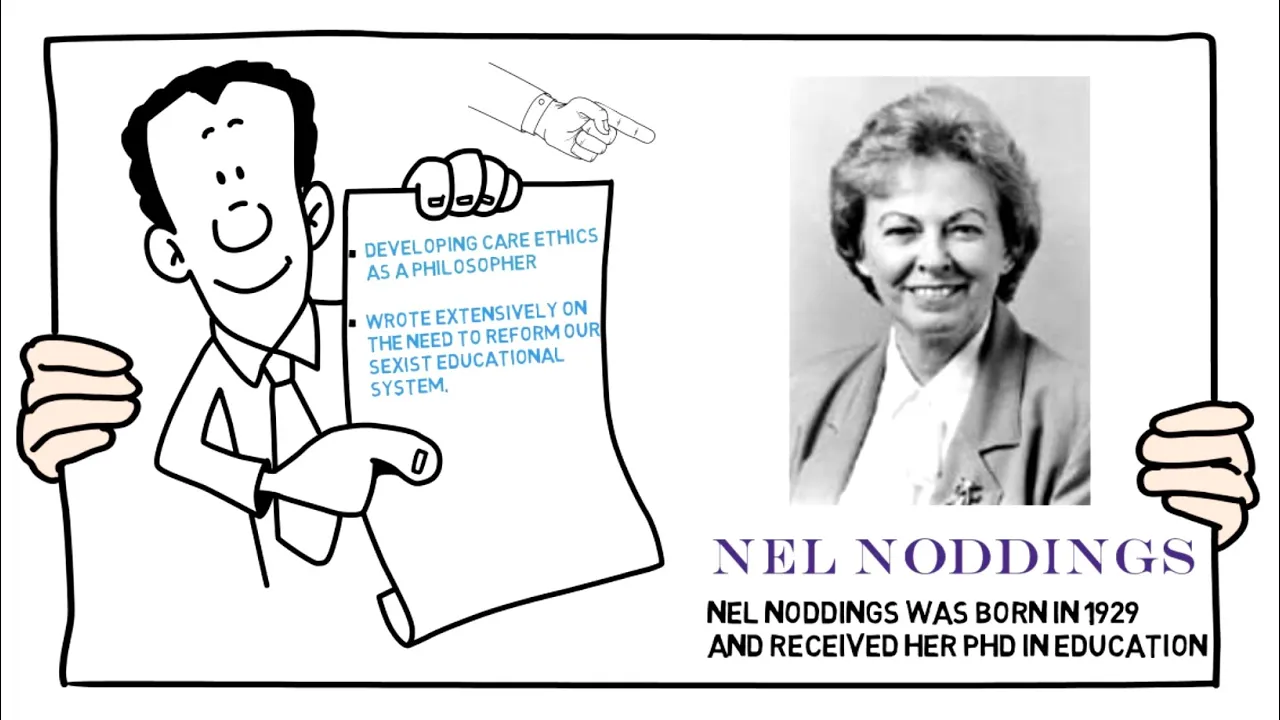
Nel Noddings | Feminist philosophy and education | Whiteboard Video
studioninety9110
3K views•2019-10-13

18:20
Philosophy
LEGAL METHOD CLASS: Law, Order, Justice & Freedom | Understanding the Concept of Law in Society
LAW-MADE-SIMPLE.c
371 views•2025-11-22

1:26:44
Philosophy
Does evolution DEBUNK morality?
MajestyofReason
7K views•2025-03-06

47:07
Philosophy
How the Gospels Pass the Historical Test | Tim and Lydia McGrew
TheAaronRennShow
713 views•2025-12-02

1:03:26
Philosophy
Pluriversal Design SIG Book Club 13: bell hooks' Theory as Liberatory Practice
pluriversaldesignsig2851
777 views•2022-05-24

1:37:10
Philosophy
NICK LAND MEETS THEORY UNDERGROUND (w/ Michael Downs and David McKerracher)
PhilosophyPortal
9K views•2023-10-23
Trending

13:55
History
MIC DROP: Smithsonian Director Called Out For Woke Propaganda
TheAmalaEkpunobi
37K views•2026-07-23

9:05
Artificial Intelligence
2.4 BILLION Records Got Leaked...
DeepHumor
15K views•2026-07-22

16:52
Anthropology
Americans Confused in Australia for 17 Minutes Straight
IWrocker
17K views•2026-07-23

13:25
Business
Playstation NO DISC/NO BUY Fight Is Over...
DavidJaffeGames
4K views•2026-07-23