Carl Jung's concept of the anima—the inner feminine archetype every man carries in his unconscious—explains why losing a woman who fully embodied this archetype causes profound self-destruction in men. Unlike ordinary relationships, such connections activate deep unconscious material, creating a mirror that reflects a man's unlived potential. When men lose this 'queen,' they face the uncomfortable task of confronting their own shadow and integrating suppressed aspects of themselves, a process that requires genuine psychological work rather than external validation. The pain stems not from losing a person but from losing the fastest path to self-wholeness that the unconscious may ever offer.
Install our extension to search inside any video instantly.
THE MOMENT HE SELF-DESTRUCTED BY LOSING THE ONLY QUEEN HE EVER HAD | CARL JUNG
Added:There is a particular kind of silence that settles over a man's life after he realizes what he has done. It is not the silence of an empty room. It is the silence of a mind that has finally run out of excuses. Picture him now somewhere ordinary at a desk in a car staring at a phone that will never light up with her name again. And for the first time in longer than he can admit, he is completely unbearably alone with himself. No performance, no audience, no one left to convince, just the truth.
Sitting across from him like it has been waiting patiently the entire time. This is the moment we are going to walk through today. Not the breakup, not the argument, not the slow fade that led here. The moment after. The moment when a man who once had everything he needed standing in front of him finally understands too late that he was never going to find it again. Because what he lost was not a woman who simply loved him. What he lost was the one presence in his life that reflected back to him a version of himself he never had the courage to become. Ask yourself something before we go further. Have you ever watched a man unravel, not loudly, not dramatically, but quietly from the inside months or even years after he let something real walk away? Have you ever wondered why some men seem to recover from losing someone within weeks? While others carry it like a wound that refuses to close, resurfacing in the middle of ordinary nights, in the middle of new relationships that never quite fit. In the middle of a success that somehow tastes like nothing. Carl Jung spent his life studying exactly this kind of unraveling. Though he never used the word queen, he used a different word. He called it the animma. And understanding it will change the way you see every man who has ever failed to hold on to something extraordinary. By the end of this, you will understand why losing a woman who was truly whole does something to a man that losing an ordinary connection never could. You will understand why some men self-destruct instead of grieving normally. and you will understand the final most uncomfortable truth of all that his collapse was never actually about her. It was about himself. It [snorts] always was. Stay with me because this is the part almost no one explains correctly. Consider for a moment how differently people grieve the people they lose. Some losses fade within weeks, absorbed into the ordinary rhythm of life, barely leaving a mark on the way a person moves through their days. Other losses linger for years, resurfacing in the strangest moments. A song on the radio, a certain quality of afternoon light, a stranger who laughs the same way. Why the difference? Why do some connections dissolve so easily, while others seem to attach themselves permanently to the architecture of a person's inner life? Yung would tell you the answer has almost nothing to do with how long the relationship lasted and almost everything to do with what the relationship was unconsciously carrying.
Some people are simply people. Others become without either party choosing it, a living symbol of something the unconscious has been waiting an entire lifetime to encounter. Carl Jung believed that every man carries within his unconscious an inner feminine figure, an archetype he called the animma. It is not a memory of a specific woman. It is something older and deeper than personal experience, an inherited psychic structure that shapes how a man relates to emotion, intuition, creativity, and connection itself. Jung believed that a man's psychological wholeness depends on his relationship with this inner figure. When he is estranged from her, he becomes rigid, defended, emotionally unavailable, cut off from his own depth without even realizing it. When he begins to integrate her, something in him softens and expands. He becomes capable of real intimacy instead of performance. Here is where it becomes fascinating. Yung observed that men often project this inner figure onto real women in the outside world. Most of the time the projection is partial, fragmented, temporary, attaching itself to whoever is convenient or available in a given season of life. But every so often a man meets a woman whose presence lines up so precisely with the deepest architecture of his unconscious that the projection becomes total. Suddenly he is not simply attracted to her. He [clears throat] is confronted by her. Something in the way she carries herself, the way she refuses to shrink, the way she seems to already possess whatever it is he has been quietly starving for activates a recognition he cannot explain and often cannot even name. He does not think I like this person. He feels without words this is the missing half of something in me. This is what we mean when we talk about the only queen he ever had. Not a woman who was simply beautiful or kind or devoted. A woman who, without ever trying to, held up a mirror to the parts of him that were unfinished, a woman whose very existence made his own unlived potential impossible to ignore.
It is worth pausing here to understand why the word queen fits so precisely, and why it is not simply a flattering title, but an accurate description of an archetype Yung would have recognized instantly. Jung believed the unconscious does not only contain personal material drawn from a single lifetime. Beneath the personal unconscious lies something older, something he called the collective unconscious, populated by archetypes, inherited psychic patterns that show up across cultures, across centuries, across mythology and dream and story, regardless of whether the individual dreaming them has ever consciously encountered them before. The sovereign woman, self-possessed, untouchable by manipulation, generous without being depleted, is one of these archetypal figures. She appears in folklore as the queen who cannot be tricked, the goddess who cannot be owned, the woman whose presence alone reorders the room around her. When a real woman embodies this archetype convincingly enough, she does not simply attract a man's attention. She activates something ancient in his unconscious, something that existed in the structure of the human psyche long before either of them was born. This is why the connection can feel less like ordinary attraction and more like recognition, as though some part of him has been waiting for her his entire life without knowing it. And this is precisely why so many men run from exactly the kind of woman who could have completed them. Think about how most men move through relationships. From the outside, it can look like confidence, control, even indifference.
But Jung would tell you that what you are actually witnessing more often than not is the persona, the mask a person constructs to navigate the social world.
The persona is useful. It lets us function, lets us maintain boundaries, lets us avoid exposing every raw nerve to everyone we meet. But the persona becomes dangerous the moment a man forgets it is a mask at all. He starts to believe he is the confident, detached, unbothered figure he presents to the world and slowly without noticing he loses access to whatever lives underneath it. Now imagine a woman enters this man's life who does not respond to the mask. She is not impressed by the performance of control.
She is not fooled by practiced indifference. She sees straight through to whatever is actually happening beneath the surface. And worse, from his perspective, she does not perform back at him. She does not chase, does not shrink, does not audition for his approval. She simply exists fully herself, entirely unwilling to negotiate her worth for his comfort. Consider how early this mask begins forming, long before any of the relationships we are describing ever enter the picture. Most men are not taught to identify their emotions. They are taught to manage the appearance of having none. A boy who cries is told to toughen up. A boy who expresses fear is told fear is unacceptable. A boy who needs comfort learns often by the time he reaches adolescence. That needing anything openly invites ridicule rather than care. By the time he becomes an adult, the persona is not a conscious choice anymore. It is simply how he has learned to survive being perceived. He mistakes it for his personality. He mistakes control for strength and detachment for maturity. Never realizing that both are simply wellrehearsed defenses against a vulnerability he was never given permission to feel safely. For a man whose entire sense of safety depends on staying hidden behind the persona. This is not romantic. It is threatening. It is the psychological equivalent of standing in front of someone while every defense mechanism you have built since childhood quietly stops working. And here is the part that explains almost everything that follows. When a man feels truly seen for the first time, his first instinct is rarely gratitude. It is often fear disguised as boredom, disguised as sudden emotional unavailability, disguised as a hundred small excuses to create distance from the one person who was never asking him to be anything other than honest. Yung noted something else about men who remain cut off from their own. Something that becomes especially relevant once we start talking about loss. A man estranged from this inner feminine principle tends to swing between two unsatisfying poles.
Either rigid over control where feeling of any kind is treated as weakness to be managed and minimized or unpredictable moodiness. Where suppressed emotion leaks out sideways in irritability, jealousy or sudden withdrawal that seems to come from nowhere. Neither pole feels good to live inside, and neither produces the kind of steady, grounded presence that real intimacy requires.
This is often the quiet backdrop against which the entire relationship with the queen took place. A man oscillating between distance and reactivity, never quite settled, while she remained the one steady point around which his instability orbited without either of them fully naming what was happening.
This is where the shadow enters the story. And if you remember nothing else from today, remember this concept because it explains more about human behavior than almost anything else in Yung's entire body of work. The shadow is everything a person has rejected, suppressed, or refused to acknowledge about themselves. It is not simply the bad parts. It includes buried strengths, unexpressed needs, disowned desires, anything that was punished, shamed or discouraged early enough in life that a person learned to bury it rather than integrate it. And the shadow does not vanish simply because it goes unagnowledged. It operates from underneath quietly influencing behavior and it has a very particular way of making itself known. It gets projected onto other people. Have you ever noticed how the things that irritate us most intensely in another person are often things we secretly recognize at some unconscious level in ourselves? A man who feels ashamed of his own emotional needs will often accuse an emotionally open woman of being too much. A man who has never learned to sit with his own inadequacy will often find himself without understanding why. needing to diminish a woman whose competence makes his insecurity impossible to hide from.
This is shadow projection and it is one of the primary reasons men sabotage the very relationships that could have saved them. When a man meets a woman who embodies everything he has spent his life suppressing in himself, his unconscious does not experience her as a gift right away. It experiences her as exposure. Her steadiness makes his instability visible. Her self-possession makes his need for control visible. Her emotional honesty makes his emotional avoidance visible. And so instead of rising to meet her, many men do the opposite. They test her. They pull away to see if she will chase because chasing would confirm the old comfortable story that he is more valuable than she is.
They minimize what she offers because taking it seriously would require him to look directly at everything he has been avoiding about himself. They grow cold in the exact moments she is warmest because warmth without armor is the one thing his defended nervous system was never trained to receive. These patterns rarely announce themselves as cruelty.
They tend to arrive disguised as small deniable moments. He takes an extra day to respond to a message he would have answered within minutes a few months earlier. He mentions casually and a little too often other women who require nothing from him, as though testing whether she will flinch. He grows suddenly critical of things that never bothered him before. Her ambition framed as too much. Her independence framed as distance, her honesty framed as harshness. each criticism a subtle attempt to shrink her back down to a size his defenses can tolerate. He withholds warmth in the exact moments she is most open, not out of malice, but because some unconscious part of him has learned that closeness, this real is dangerous, and distance, however painful, feels safer than exposure. None of this looks like fear from the outside. It looks like control. But Yung would recognize it immediately for what it actually is. a man attempting mostly unconsciously to manage a level of psychological exposure. He was never taught how to survive. There is something else worth naming here because it changes how we understand her side of the story entirely. A woman capable of embodying this archetype so fully did not arrive at that wholeness by accident. She almost certainly did her own confrontation first, faced her own shadow, unlearned her own conditioning, to shrink, to overgive, to mistake being needed for being loved. That is precisely why she recognizes his testing for what it is so much faster than someone earlier in her own process might have. She has seen versions of this pattern before, perhaps even within herself, and she knows from direct experience that patience offered to someone unwilling to face themselves does not produce transformation. It simply produces exhaustion. This is not cynicism on her part. It is hard one clarity, the kind that only comes from having already walked through her own version of the very confrontation he is avoiding. And she, if she is truly the woman we are describing, does not spend years fighting to be chosen properly.
She recognizes sooner or later that she cannot love someone into consciousness.
She cannot think her way through his defenses for him. She can only decide quietly and without spectacle, that she deserves a version of love that does not require her to shrink, to prove, to wait, or to beg. And so she leaves, or she simply stops reaching. Either way, the door closes, usually far more calmly than he expected, because by then she has already done the internal work of releasing what he was never emotionally available to hold. This is the moment his story truly begins, though he does not know it yet. For a while, nothing seems different. He tells himself he is fine. He tells himself relationships end, that this is simply what happens.
that he will meet someone else eventually, that time smooths over everything given enough distance. He may even move quickly into something new, another connection, another distraction, another face to project the old familiar comfort onto. This is extremely common and it is worth naming clearly because it explains why some men appear to bounce back from significant loss almost instantly. They are not actually processing the loss. They are avoiding it. Using a new source of external validation the same way they used the old one as a substitute for doing the internal work Jung believed was the only real path to wholeness. But here is what makes this particular loss different from an ordinary breakup. And here is where the selfdestruction truly begins to take shape. Because the woman he lost was not simply a source of comfort or validation. because she had through no effort of her own occupied the exact psychological position of hisma. Her absence does not function like an ordinary absence. It functions like an amputation of the mirror he unconsciously depended on to locate himself. Every replacement he reaches for afterward runs into the same invisible wall. He meets someone new and for a while it feels almost like relief, almost like proof that he has moved on.
But something is missing and he cannot articulate what. The new connection may be warmer, easier, less demanding of his growth precisely because she does not carry the same unconscious charge. And this is the trap. He begins without meaning to measuring every new woman against a standard he never consciously chose and can barely name. Nothing lands the same way. Nothing produces that same unsettling electric sense of recognition. He tells himself he is simply picky or unlucky or that the right person has not come along. When the truth, the one Yung would have pointed to immediately, is that he is searching for a projection that can only ever occur under very specific unconscious conditions and forcing it will not summon it back. It is worth being precise about what these new relationships actually feel like from the inside because the contrast is where the truth becomes impossible to ignore.
He may find someone attentive, someone easy, someone who mirrors his interests back to him without friction. And for a while, this feels like exactly what he needed. Someone lower maintenance, someone who does not ask him to look at himself so directly. But ease, it turns out, is not the same thing as depth. And comfort is not the same thing as recognition. Months into the new connection, he notices himself comparing, not consciously, not cruy, but reflexively. The way she laughs against the way the queen used to laugh.
The way she handles conflict against the steadiness he once took for granted. the way conversations with her stay comfortably on the surface where conversations with the queen used to pull him somewhere deeper whether he wanted to go there or not. He cannot explain this discrepancy to anyone least of all himself because admitting it would mean admitting that what he walked away from was never ordinary and that no amount of ease can substitute for a connection that once demanded he actually show up. This is the beginning of the quiet unraveling. Not a dramatic collapse in front of witnesses. A slow private erosion that shows up in ways that look from the outside like restlessness. He becomes harder to satisfy. Success feels hollow in ways he cannot explain to his friends. He finds himself at strange hours thinking about conversations that ended long ago.
Replaying details he swore he had forgotten. noticing her handwriting in his own habits, her opinions in his own instincts, realizing with a jolt of discomfort that some part of him has been arguing with her memory for months.
He may resent this. He may be furious at himself for still thinking about someone who is no longer in his life. But the unconscious does not release its material simply because the conscious mind demands it to. Jung believed the psyche has its own timeline, entirely indifferent to how inconvenient that timeline might be. Jung believed dreams were one of the most reliable places to watch this process unfold. And it is worth noting because so many men who go through exactly this kind of reckoning, report the same strange pattern without ever connecting it to anything psychological. She begins appearing in his dreams, not always as herself.
Exactly. Sometimes as a stranger who carries her particular calm. Sometimes as a locked door. Sometimes as a room he cannot quite find his way back into no matter how many times the dream repeats.
He wakes disoriented, unsettled, sometimes strangely emotional over what seems like nothing more than an unreliable nighttime story. Yung would have taken these dreams seriously, not as sentimental leftovers, but as direct communication from the unconscious, insisting on being heard through the one channel, the conscious defended mind cannot fully censor. The dreaming self does not perform indifference. It does not maintain the persona. It simply shows him night after night exactly what he refuses to sit with during daylight hours. And here is the deepest layer of the self-destruction. The part almost no one talks about honestly. Without her as an external mirror, he is now forced to confront the very material she used to reflect back to him. Except now he has to do it alone without the buffer of blaming his discomfort on her presence.
Every insecurity that used to surface only around her now has nowhere else to attach itself. Every unmet emotional need that used to feel like her fault now sits unavoidably in his own lap.
This is what individuation actually demands. According to Yung, not comfort, confrontation, the integration of everything previously disowned, undertaken without an external figure to project it onto or blame it on. Most people, when finally faced with this task directly, do not rise to meet it gracefully. They spiral first.
It [clears throat] is important to understand why this experience differs so dramatically from ordinary heartbreak because not every lost relationship produces this kind of reckoning and the distinction tells us something essential about what actually happened between them. Most breakups involve two people who were compatible enough, comfortable enough, but never activated anything particularly deep in one another's unconscious. These separations hurt sometimes badly, but they resolve in a fairly ordinary way through time, distraction, and the gradual settling of an attachment that was real, but not archetypal. The men who move on quickly from most relationships are not necessarily shallow or unfeilling. They simply were never confronted with a mirror this precise. And so there is no unfinished unconscious material demanding integration once the relationship ends. [clears throat] What we are describing here is a different category of loss entirely, closer to what Yung would call a numinous encounter, a connection that briefly touches something sacred and disproportionately significant relative to its outward simplicity. The rarity of this kind of encounter is exactly what makes its loss so disproportionately devastating once its true significance finally registers. This spiral can take many forms. Some men throw themselves into work achieving more than ever before while feeling less and less satisfied by any of it because external accomplishment was never going to substitute for internal integration.
Some men cycle through relationship after relationship. Each one ending faster than the last. Each failure adding another layer of confusion about why nothing seems to work anymore. Some men turn inward in far more corrosive ways. drinking too much, isolating themselves, becoming irritable and defensive with the people who still care about them, unable to explain even to themselves what exactly is wrong. Yung would say all of these are symptoms of the same underlying event. A man who avoided his own depth for years has finally lost the one person capable of reflecting that depth back to him. And now the depth is demanding to be reckoned with directly with no more delays available. This is the self-destruction we are talking about.
Not a single dramatic moment, though there is often a specific night, a specific memory, a specific silence that cracks the denial wide open. Picture that night for a moment because it is worth picturing honestly. It rarely arrives during a crisis. It usually arrives during something quiet and unremarkable, an evening alone after a week that looked on paper entirely successful. He is not thinking about her, or so he tells himself, right up until some small meaningless trigger, a scent, a phrase, the particular way the light falls across an empty side of the bed, and suddenly the denial he has been maintaining for months simply gives out beneath him. It is not dramatic from the outside. There are no witnesses. There is only a man sitting with the sudden total understanding that the life he built to prove he did not need her has left him feeling less like himself than he has ever felt and that no accomplishment since has managed to fill the space where she used to stand. This is the compounding cost of having spent years running from the very thing that could have made him whole and finally discovering that there is no substitute sophisticated enough to replace it. He did not simply lose a relationship. He lost access to the fastest, clearest path back to himself that he may ever encounter in one lifetime. And no amount of success, no amount of new attention, no amount of convincing himself he never really needed her changes what his own unconscious already knows to be true.
Now, if you are listening to this and recognizing pieces of your own story in it, pieces of a man who once had you fully and let the moment slip through his hands, I want to be very careful about what we take from this because there is a wrong lesson hiding here. And it is important that we do not fall into it. The wrong lesson is to hear all of this and think, "So, if I simply wait long enough, he will fall apart and come crawling back, and that will finally prove my worth." That is not the lesson.
And chasing that outcome will only trap you in the exact dynamic you have already outgrown.
Waiting for his collapse as evidence of your value quietly reinstates the very hierarchy you walked away from. One in which your worth still depends upon his eventual response rather than existing complete and independent of him. It also assumes his suffering is guaranteed to look the way you imagine it. Dramatic, visible, redemptive. Real psychological reckonings are rarely so cinematic. They often look from the outside like nothing at all. A man who simply grows quieter, who drinks a little more, who throws himself into distractions that never quite land. His unraveling invisible to everyone except the people who once knew what his presence used to feel like when it was fully engaged. His reckoning, if it happens at all, has nothing to do with earning your return. It is entirely about him and his own relationship with his own unconscious material. Some men faced with this kind of loss genuinely do the work. They confront the shadow.
They integrate what they spent years avoiding, and they become slowly and imperfectly capable of the kind of presence they were never able to offer before. Other men spend the rest of their lives circling the same avoidance, replacing one distraction with another, never quite reaching the confrontation Jung believed was necessary for real transformation.
You do not get to control which path he takes. And more importantly, your own healing was never supposed to depend on knowing the answer. Here is the truth that actually matters, the one this entire exploration has been building toward. You were never responsible for becoming small enough, patient enough, or convincing enough to make a man face his own unconscious. That was never your job. And it was never going to be love if it required you to shrink yourself into someone easier for him to avoid confronting himself around. The woman who leaves without a performance, without begging, without endless second chances offered to someone who has shown no willingness to change is not being cold. She is doing the one thing that actually creates the possibility of his transformation at all, which is refusing to keep absorbing the consequences of his avoidance on his behalf.
Individuation. The process Yung considered the entire purpose of a fully lived psychological life cannot be handed to another person as a gift. It has to be walked alone, faced directly, integrated piece by piece, often through exactly the kind of loss and discomfort we have been describing. Real integration, if it ever comes for him, will not look like a grand romantic gesture aimed at winning her back. It will look far smaller and far more difficult than that. It will look like a man sitting with feelings he used to outrun. Admitting fears he used to disguise as indifference, taking responsibility for patterns he used to blame on the women who left rather than on the defenses he brought into every room. It will look like him becoming slowly and without an audience, someone capable of offering the presence he once could not access, whether or not there is ever anyone left standing close enough to receive it. If he is ever going to become the man capable of holding what you offered, it will not be because you waited around long enough to witness it. It will be because losing you finally made continuing to avoid himself more painful than doing the work required to change. And whether or not that transformation ever actually happens is simply not something you can control, predict, or wait around for.
What you can control is this. You can control how honestly you look at your own remaining shadow material. The fear of not being enough that may still whisper underneath the clarity. the old habit of measuring your value by someone else's willingness to rise to meet it.
You can control whether you continue the work of integration in your own life, regardless of what he ever does with his. This is in the end what Yung would consider the only truly reliable measure of a well-lived psychological life. Not whether the people around you managed to meet your depth, but whether you kept walking toward your own wholeness anyway with or without them. You can recognize that if you were the one who saw through the persona, who activated the deepest layer of his unconscious simply by being fully yourself, who represented everything he had spent years too afraid to become, then you were never the problem in that story. You were the mirror, and mirrors do not apologize for showing an accurate reflection. If what he saw in you frightened him, that fear belonged entire to him, born from years of unintegrated shadow that had nothing to do with anything you did or failed to do. There is a quiet, powerful freedom in understanding this fully. You do not have to spend another moment wondering what you could have done differently.
What version of yourself might have made him brave enough to stay. The version of you that walked away whole and unwilling to negotiate your own worth was never the wrong version. It was in fact the exact version that revealed to him everything he needed to face. His self-destruction, if it comes, is not a tragedy that happened to you. It is the natural consequence of a man encountering his own unlived potential and choosing for whatever reasons belonged only to him to turn away from it rather than toward it. There is one more layer worth sitting with before we close because it addresses a question that tends to surface quietly. Even in women who understand everything we have covered so far on an intellectual level.
If none of this was your fault, why does it still hurt? Understanding a pattern psychologically does not automatically erase the emotional imprint it left behind and Yung would not have expected it to. Insight is the beginning of integration, not the end of it. It is entirely possible to know with complete clarity that his avoidance was never a verdict on your worth, while still carrying grief over what the connection could have become had he met you with the same wholeness you offered him.
Allow both to be true at once. You are permitted to grieve the version of the story that never got to happen. The partnership that could have existed if his shadow work had come before the loss instead of after it without that grief meaning you were wrong to leave or wrong to stop waiting. Notice too how much energy this refraraming gives back to you. So much of the pain that lingers after a loss like this comes not from the loss itself, but from an unconscious belief that his failure to hold on to you somehow reflects an absence in you rather than an absence in him. That belief, examined honestly, does not survive contact with what we have just walked through together. A mirror does not become less accurate because the person looking into it turned away rather than looked closely. A queen does not become less whole because a kingdom failed to recognize what it briefly held. The moment you stop measuring your worth by his capacity to receive it, an enormous amount of quiet suffering simply has nowhere left to attach itself. And here finally is the realization we promised at the very beginning. The one that changes everything once you truly absorb it. He did not lose a woman. Women in the ordinary sense can be replaced, dated, moved on from, forgotten with enough time and enough distraction. What he actually lost was the single clearest opportunity his unconscious may ever offer him to become whole, embodied in a woman who reflected his highest, most integrated self back to him without asking him to perform for it. That kind of mirror does not appear on command. It cannot be manufactured by trying harder with someone new because the unconscious does not respond to effort. It responds to recognition. And recognition of that depth is rare precisely because so few people ever do the inner work required to become someone capable of holding it, let alone offering it freely the way you did. So if you find yourself replaying what happened, wondering whether he thinks about it too, wondering whether some quiet part of him already understands what he threw away, understand this, that question was never actually about him. It was the last thread tying your own sense of worth to his eventual recognition of it. You do not need his recognition to know what you were. You do not need his collapse to validate what you already gave fully and honestly without pretending to be anyone other than exactly who you are.
The queen was never defined by whether the kingdom noticed her value in time.
She was defined by the simple unshakable fact of her own wholeness. A wholeness that existed before he arrived and continues to exist fully intact long after he failed to hold it. Let him face what he needs to face on whatever timeline his own unconscious demands.
Your task was never to manage his individuation for him. Your task, the only one that was ever truly yours, is to keep walking toward your own wholeness, undistracted by whether he ever catches up. And if somewhere down the road he does the work, if he faces the shadow he spent years avoiding, integrates what he suppressed, and finally becomes capable of the presence he could never offer before. Understand that this transformation will not belong to you either. It will be his earned through his own confrontation with himself. Arriving on a timeline that has nothing to do with your patience or your waiting. You are not required to be there to witness it in order for your own story to be complete.
Your wholeness was never contingent on being the reward at the end of someone else's long overdue reckoning. So let this be the final image you carry forward. Somewhere a man sits alone with the growing undeniable understanding of exactly what he let go. That understanding is his to hold, his to sit with, his to eventually transform into something meaningful or allow to calcify into permanent regret. Either way, it no longer requires anything from you.
Meanwhile, you continue on, not diminished by his absence of recognition, not waiting for a verdict on your worth that was never his to deliver in the first place. The question of what he lost stops mattering nearly as much as the clarity of what you already have.
Related Videos

0:39
Psychology
Inside Ronaldo’s Team Meeting
RonoSphereCR7
1K views•2026-04-17

7:25
Psychology
You Are Not So Smart: Chapter 4 Hindsight Bias, What is it?
TheBey8nD8
230 views•2019-09-15

49:35
Psychology
Sigmund Freud's Mind - Master Your Inner World (Your Unconcious Mind)
Ngaslife
1K views•2025-01-25

11:29
Psychology
What affects your mood?
RandyPaterson
602 views•2019-05-16

3:45
Psychology
Can you outsmart this logical fallacy? - Alex Gendler
TEDEd
2164K views•2019-11-25

1:02:21
Psychology
Understanding the Relationship between Fear of Falling and Mobility in Older Adults
fallpreventioncommunityofp3788
823 views•2019-04-08
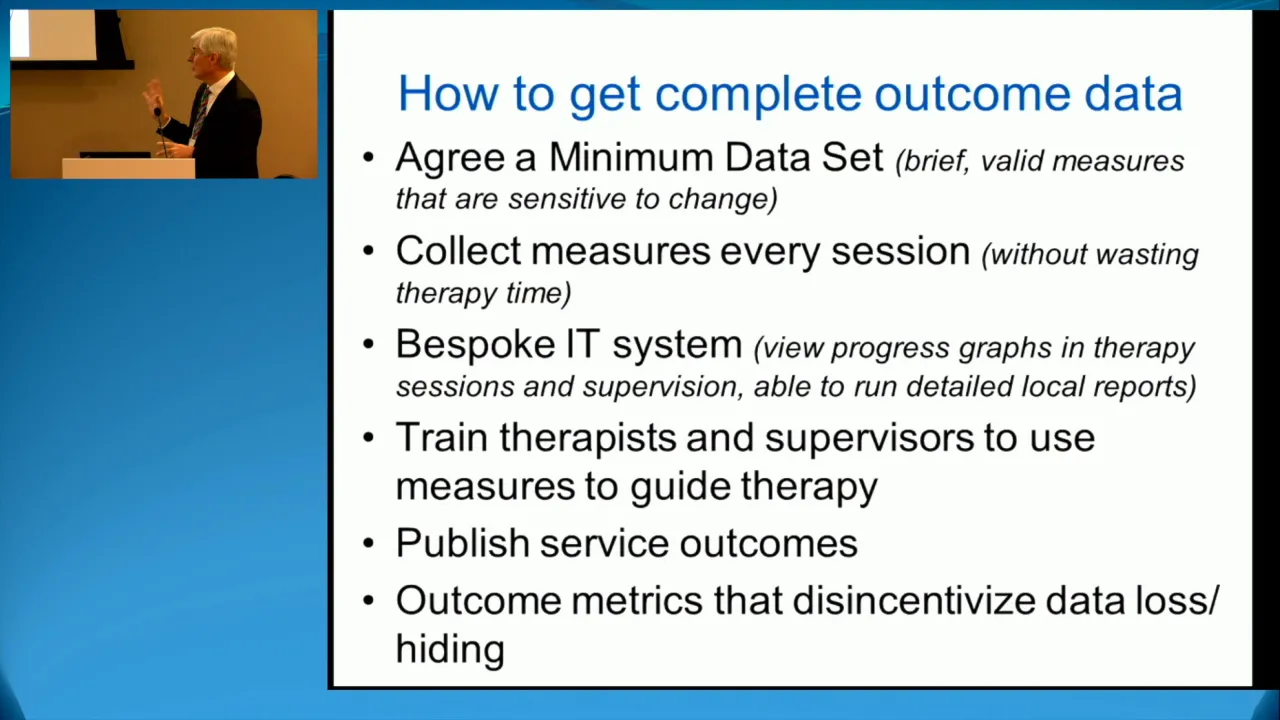
54:04
Psychology
Measurement-based Care in Psychotherapy Workshop - Future of Psychotherapy Conference 2019
UofTPsych
243 views•2019-04-25

51:52
Psychology
Dr. Carol Tavris — Mistakes Were Made (But Not by Me)
skepticmagazine
14K views•2019-05-02
Trending

13:25
Business
Playstation NO DISC/NO BUY Fight Is Over...
DavidJaffeGames
4K views•2026-07-23

16:52
Anthropology
Americans Confused in Australia for 17 Minutes Straight
IWrocker
17K views•2026-07-23

7:38
Blockchain & Crypto
Bitcoin Social Interest: Dozens of us Left
benjaminjcowen
12K views•2026-07-23

11:32
Business
Tesla Profits Plunge & SpaceX Stock Continues Fall
TheJohnJohnstonLounge
6K views•2026-07-23