High emotional sensitivity, when transformed from emotional absorption to objective behavioral analysis, becomes a powerful strategic asset rather than a weakness; this occurs when individuals learn to decouple their nervous system response from incoming emotional data, allowing them to observe human behavior patterns objectively, set absolute boundaries without emotional negotiation, and create an asymmetric advantage by depriving manipulators of the emotional feedback loops they depend on for control.
Install our extension to search inside any video instantly.
The Empath Is Entering the Rise That No One Believed They Had Inside
Added:Have you ever noticed how the most dangerous person in the room is almost never the loudest? When we think of dominance, power, or influence, our brains are hardwired to look for the classic signposts: high posture, rapid vocal cadence, continuous space occupation, and high frequency interrupt behavior. We look for the predator who announces themselves.
But in human behavioral metrics, the loud predator is rarely the most dangerous. They are predictable. They are reacting to their own internal pressure. The individual you never ever want to back into a corner is the silent observer. The person who has spent years absorbing, processing, and mapping every micro expression, vocal quiver, and structural flaw in the people around them. For years, society has mislabeled this profile. We called them too sensitive. We called them vulnerable. We designated them as the emotional shock absorbers for personality types that operate on exploitation.
But what happens when an individual with an ultra-igh perceptual threshold stops absorbing the impact and starts analyzing the structure? What happens when the person who was systematically underestimated decides to turn their observation inward, regulate their own nervous system, and execute a strategic pivot? Most people believe that an empath's natural state is passive tolerance. They assume that because someone possesses high effective empathy, they lack tactical drive. That is a critical failure in human profiling. High perception is not weakness. It is raw intelligence without a weapon. The moment an empath learns emotional compartmentalization, the exact second they stop reacting to baseline manipulation and start reading the underlying behavioral drivers, the entire dynamic flips. They don't rise with noise. They don't make grand announcements. They undergo a structural phase shift. If you have ever felt like your ability to feel deeply was a tactical liability, or if you have watched people around you mistake your quiet nature for a lack of force, you need to pay attention to what happens next. Because the rise of an observer isn't emotional. It is mechanical, calculated, and inevitable. And once it begins, no amount of counter influence can stop it. Right now, in this exact moment, someone in your life thinks they have you completely mapped out. They believe they know your trigger points.
They believe they know how far they can press your boundaries before you yield.
They have logged your patience as weakness and they have miscalculated your tolerance as a lack of strategic options. They think you are stationary.
They are wrong. In behavioral analysis, there is a specific phenomenon that occurs right before a complete operational shift. An individual who has been operating in a high absorption state suddenly goes quiet. Their blink rate drops. Their physical posture stabilizes. They stop offering non-verbal validation. The head nods, the soft agreeable hums, the fast micro smiles meant to soothe the room. They stop trying to fix the tension. If you stay with me for the next few minutes, I am going to show you the exact internal mechanism that triggers this shift. You will learn why those who underprofile you are actually handing you the ultimate tactical advantage.
How to turn high emotional sensitivity into cold situational control and why this specific type of rise takes everyone by surprise except the person executing it. Let's break down what has actually been happening up to this point. When you possess high perceptual capacity, your baseline state is processing massive amounts of incoming data. You pick up on micro frowns, subtle shifts in vocal tone, asymmetric shoulder drops, and suppressed hostility.
For years, you processed that incoming data emotionally. You thought, "What did I do wrong?" or "How can I lower the stress in this room?
That was not a lack of power. That was an unccalibrated asset. Manipulative profiles rely entirely on that unccalibrated state. They use emotional baseline spikes, guilt, anxiety, obligation to keep you in a reactive loop. As long as you are reacting to the noise, you cannot analyze the signal.
But then something subtle happens. The baseline changes. You reach a threshold where the emotional noise stops registering. You don't get angry. You don't raise your voice. Raising your voice is a stress response. It tells the other person that they still control your nervous system. Instead, your heart rate slows down. Your vocal pitch drops slightly to a neutral register. You stop explaining yourself. When an empath stops explaining, the entire dynamic breaks. Why? Because explanation is an attempt to seek alignment.
The moment you stop seeking alignment, you signal that you no longer require external validation to anchor your reality. You have shifted from an emotional node to an objective observer.
From an observational stance, everything changes. You see the manipulator's behavior not as a threat, but as a script. You see their aggression as an overcompensation for low internal control. You see their guilt trips as cheap lever pulling. And once you see the lever, it loses 100% of its mechanical force. This is the rise no one saw coming. People expect a fight.
They expect a confrontation, an emotional breakdown, or a grand exit speech. They do not expect absolute calibrated calm. They do not expect you to look directly into their eyes, process their attempt at control, and simply walk away without offering a single bite of emotional feedback. The rise of the observer is not loud. It doesn't require a podium, an argument, or revenge. Revenge is just another way of letting someone else dictate your energy output. True force is quiet. It is the steady, unshakable realization that your baseline clarity is far more powerful than their tactical noise. It is the moment you step into complete ownership of your internal state. Draw an invisible non-negotiable boundary and move forward without looking back to see who approved it. They didn't see it inside you because they were looking for noise. But you were never noise. You were the foundation. And the moment you choose to stand fully in your own authority, the game doesn't just change, it ends. Society consistently misinterprets quiet, highly observant individuals, often labeled as empaths, as inherently submissive or easily controlled. This fundamental error stems from a deep-seated misunderstanding of how human influence and dominance actually operate. Most people are conditioned to look for obvious high visibility signals of authority. They watch for loud vocal projection, rapid spatial dominance, continuous interruption, and visible displays of confrontation.
Because an individual with high baseline empathy does not lead with these aggressive behaviors, external observers assume a total lack of tactical force.
They view deep listening as passivity, high tolerance as a lack of options, and a desire for harmony as emotional dependency. This misdiagnosis is a critical vulnerability for anyone attempting to manage or manipulate that individual. What society fails to realize is that high empathy is not a character flaw or an emotional weakness.
It is an extraordinary perceptual threshold. An empath is constantly ingesting a massive volume of human data. They are tracking micro expressions, shifts in vocal cadence, physical tension, masked insecurities, and underlying motives long before those elements ever surface in conscious conversation.
In behavioral profiling, this level of hyper awareness is the absolute prerequisite for situation control. The person who sees the entire board always possesses the advantage over the person who only sees their own immediate move.
When a hyperobservant person operates without self-regulation, that influx of data overwhelms their nervous system, causing them to absorb the emotional chaos of others. This is the state where manipulators prey on them, mistaking their emotional absorption for permanent compliance.
However, the operational reality changes completely the moment that hyper awareness is decoupled from emotional reactivity.
High perception without high reactivity ceases to be a liability and instantly becomes an intelligence gathering asset.
When an empath stops taking the incoming data personally and begins viewing it objectively, their silent observation transforms into silent analysis. They are no longer absorbing the impact of a hostile interaction. They are dissecting the structural flaws of the person driving it. They begin to see that the loud, controlling behavior of others is almost never a display of true strength, but rather a desperate attempt to regulate internal anxiety and maintain a fragile sense of control. The observer maps every lever, every trigger, and every insecurity that the aggressive profile uses to mask their own instability. This is why mistaking high observation for submissiveness is such a massive tactical miscalculation.
The aggressive individual foolishly believes they are steering the dynamic simply because they are making the most noise. In reality, they are handing the quiet observer a complete blueprint of their psychological mechanics. The empath is not backing down. They are quietly mapping the terrain, assessing every variable and waiting for the exact moment when external noise collapses under its own weight. High situational awareness combined with absolute emotional composure creates an asymmetric advantage. By the time the dominant personality realizes they have lost control of the dynamic, the quiet observer has already restructured the entire room. The fundamental turning point in an empath's evolution occurs when they undergo an internal operational transition, shifting from emotional absorption to objective data analysis.
In the early stages of high perceptual awareness, an individual processes every external signal, a sharp tone, a sudden withdrawal, an unspoken hostility through their own emotional center.
They internalize the tension around them, treating other people's behavioral output as a personal responsibility or a direct threat to their peace.
This reactive state keeps their nervous system in a continuous loop of fight or flight, draining their cognitive bandwidth and making them exceptionally easy to manipulate through guilt, fear, or artificial urgency. The shift happens when the individual reaches a point of absolute emotional saturation and chooses to decouple their awareness from their nervous system response. Instead of asking how a piece of behavior feels, they begin asking what that behavior reveals. They step back from the emotional baseline and adopt the stance of a detached behavioral analyst.
Incoming emotional noise is no longer allowed to penetrate their internal state. Instead, it is stopped at the perimeter and evaluated purely as raw, objective information.
A sudden display of anger is no longer experienced as an attack that requires defensive posture or soothing intervention. It is cataloged as a visible sign of low impulse control and high internal panic. A passive aggressive comment is no longer digested as a hit to self-worth. It is decoded as a desperate attempt to regain leverage without taking a direct risk. By converting incoming emotional energy into actionable intelligence, the entire power dynamic flips. Manipulative profiles rely heavily on emotional feedback loops to gauge the effectiveness of their control tactics.
They throw out provocative statements, enforce strategic silences, or create chaotic scenes specifically to watch for the micro reactions, the sudden tension in the jaw, the quick defensive explanation, the posture of appeasement.
When the empath stops providing that emotional response and instead meets the behavior with neutral, analytical observation, the manipulator's script completely unravels.
The manipulator is essentially throwing punches into a vacuum, expending immense energy while receiving zero confirmation that their tactics are landing. This transition from absorption to analysis effectively transforms what was once a psychological vulnerability into a sophisticated threat assessment system.
The empath begins to recognize that human behavior follows strict, repeatable patterns.
Once you strip away the emotional charge of an interaction, people become remarkably predictable. You see the exact sequence of events that leads to a person's outburst, the specific insecurity driving their need for dominance, and the structural weaknesses in their arguments. The empath is no longer playing defense in an emotional arena governed by someone else's volatility.
They are calmly mapping the exact boundaries, motives, and limitations of everyone in the room, operating with complete cognitive clarity while everyone else remains trapped in their own reactive cycles. When an observer decides to withdraw, it is almost universally misread by those around them as a sign of defeat, retreat, or emotional injury. Manipulative profiles in particular tend to view an individual silence as a victory, assuming that their tactics have forced the other person into submission or a state of defensive isolation.
This is a profound misreading of behavioral strategy. Disengagement is not a passive surrender. It is a calculated lowbaseline operational reset. It is the deliberate termination of the emotional supply line that manipulators rely on to maintain their leverage and fuel their sense of control. Every manipulative dynamic requires two active components to function. A transmitter of chaotic or controlling energy and a receiver that absorbs and reacts to it. Manipulators feed on the emotional output of their targets. Whether that output comes in the form of anger, pleading, overexlaining, or visible distress, these reactions provide the manipulator with real-time feedback, confirming that their behavior is successfully dictating the other person's internal state. When the observer executes a strategic disengagement, they unilaterally sever this feedback loop. They do not fight back. They do not offer counterarguments and they do not attempt to defend their position. They simply go dark. By withholding all verbal, emotional and physical feedback, the disengaged individual deprivives the manipulator of the exact fuel required to sustain their control. In behavioral mechanics, this creates an immediate vacuum. The manipulator, accustomed to receiving a specific reaction, suddenly encounters complete neutrality. They issue a provocation and it meets absolute silence. They attempt to incite guilt and it drops into a void. Without a reactive receiver, the manipulator's actions lose all strategic force, forcing them to confront the emptiness of their own tactics. Furthermore, strategic disengagement serves as a critical recovery phase for the observer's own internal architecture.
High perceptual individuals spend vast amounts of energy processing complex social environments and high conflict interactions.
Entering a state of intentional disengagement allows their nervous system to return to its natural baseline, clearing out the accumulated cognitive fatigue caused by constant exposure to volatile dynamics. In this quiet state, free from the constant pressure to react or soothe, the individual regains absolute clarity over their priorities, boundaries, and long-term operational goals. This period of low baseline operation allows the observer to transition from a state of constant tactical defense to one of clear unshakable strategy. They are no longer burning bandwidth on immediate damage control or emotional regulation within a toxic environment. Instead, they are quietly fortifying their positions, establishing firm internal boundaries, and determining their next moves with total objectivity.
Disengagement cuts off the manipulator's visibility into the observer's mind, creating an information black hole.
While the outside world assumes the quiet individual has given up, the reality is that they have simply stepped outside the arena to recalibrate their strength, leaving the hostile actor swinging blindly in the dark. True personal force is routinely confused with outward aggression. But in behavioral analysis, aggressive posture is almost always a sign of high internal vulnerability. When an individual relies on loud vocal variance, rapid speech, physical posture expansion, and explicit confrontation, they are attempting to manually force control over an environment they fundamentally do not trust. They are expending massive amounts of physiological energy to project a version of strength that masks an unstable internal baseline.
Calibrated recalibration operates on the exact opposite principle. It is the art of exerting maximum situational control through minimal physical and emotional expenditure. The core foundation of calibrated recalibration lies in absolute nervous system regulation.
When a person has mastered their internal state, their physical presentation changes in ways that are deeply unsettling to aggressive or manipulative profiles.
Instead of escalating alongside an attacker, their baseline drops. Their heart rate remains stable. Their physical posture settles into a low tension state and their vocal cadence becomes measured, low register and completely devoid of defensive emotional charge.
This controlled stillness acts as an immediate psychological anchor in a room. While the aggressive actor is leaking energy through erratic movements and hostile tone, the calibrated individual presents an impenetrable, highly composed front that cannot be baited into an unforced error. This internal composure directly transforms how boundaries are set and enforced. In an unccalibrated state, an individual sets boundaries emotionally. They yell, argue, plead, or present long justifications for why they deserve respect. This approach is inherently weak because it invites debate. It treats a boundary as a proposal that requires the other person's agreement.
Calibrated recalibration eliminates the need for external consensus entirely. A calibrated boundary is stated once, calmly, clearly, and without fluff or defensive explanation, then immediately enforced through action. There is no emotional negotiation, no escalation, and no dramatic showdown. The boundary simply exists as a non-negotiable parameter of interaction. When faced with an individual whose nervous system is fully regulated and whose boundaries are absolute, aggressive profiles find themselves completely disarmed. They cannot find an emotional hook to leverage, nor can they incite the defensive panic that usually allows them to dictate the terms of engagement.
Every attempt to provoke a reaction is absorbed by an immovable neutral baseline. The power in this dynamic does not come from trying to change, convert, or overpower the other person. It comes from an unshakable refusal to allow the other person's volatility to disturb your own internal state. This level of self-mastery completely redefineses the concept of presence. It demonstrates that real dominance is not about filling the room with noise, but about being so grounded in your own authority that the room naturally quietens around you. By maintaining a regulated nervous system and enforcing calm, precise boundaries, the quiet observer shifts from being an easy target to becoming the most stable, unyielding force in any environment.
They do not need to fight for control because control is the natural byproduct of absolute internal stability. The phase shift that occurs when high emotional intelligence is fused with cold tactical clarity is quiet, definitive, and structurally irreversible. For much of an empath's life, high emotional intelligence operates as an unguided asset. It allows them to feel deeply, sense subtle interpersonal shifts, and understand the internal worlds of others. But without structural discipline, it leaves them vulnerable to continuous exploitation.
The shift takes place the exact moment this emotional sensitivity is anchored by tactical logic. Intelligence is no longer used to accommodate, excuse, or absorb the dysfunction of others. It is harnessed exclusively to navigate the environment with total clarity and self-p protection. When this merger occurs, the individual ceases to function as a passive observer and becomes an active strategist of their own life. They no longer view their deep perception as a reason to heal or fix volatile personalities around them.
Instead, they view those insights as objective data points that inform precise, unyielding decisionmaking.
Tactical clarity strips away the sentimental guilt, the false obligations, and the habit of giving second chances to habitual manipulators.
It allows the individual to look at a pattern of behavior and draw an immediate rational conclusion without needing the other person to validate or agree with it. This internal evolution leads to a rise that is fundamentally different from typical power plays.
Traditional displays of ambition or dominance are loud, performative, and often driven by a need for public validation. They involve grand declarations, aggressive moves, and visible conflict. The rise of a tactically calibrated empath, however, happens almost entirely beneath the surface until the outcome is already secured. They do not announce their moves. They do not issue warnings and they do not seek approval from the people they are distancing themselves from. They simply execute the necessary adjustments, reallocating their energy, cutting off access, changing their strategic direction with quiet, unflinching efficiency. By the time those who previously took advantage of the empath realize that a change has occurred, the shift is already complete.
The old levers of manipulation no longer work because the underlying psychological reliance has been entirely dissolved. Attempts to pull the individual back into emotional chaos meet an impenetrable wall of neutral composure and unshakable boundaries.
Because this transformation is rooted in a fundamental rewrite of the individual's internal operating system rather than a temporary emotional outburst, there is no going back. An emotional reaction can be calmed down, negotiated with, or manipulated back into compliance. But a conscious structural phase shift built on logical clarity is permanent. This quiet, irreversible rise ultimately redefineses the entire dynamic between the individual and their environment. It proves that the ultimate form of personal evolution does not require adopting the ruthless, loud, or aggressive behaviors of those who sought to diminish you. Instead, it relies on turning your greatest natural capacity, your deep understanding of human nature into an impenetrable blueprint for your own freedom and authority. When hyperpion is governed by quiet discipline and strategic focus, the result is a quiet force that cannot be manipulated, cannot be provoked, and cannot be undone.
Related Videos

0:39
Psychology
Inside Ronaldo’s Team Meeting
RonoSphereCR7
1K views•2026-04-17

7:25
Psychology
You Are Not So Smart: Chapter 4 Hindsight Bias, What is it?
TheBey8nD8
230 views•2019-09-15
49:35
Psychology
Sigmund Freud's Mind - Master Your Inner World (Your Unconcious Mind)
Ngaslife
1K views•2025-01-25

11:29
Psychology
What affects your mood?
RandyPaterson
602 views•2019-05-16
3:45
Psychology
Can you outsmart this logical fallacy? - Alex Gendler
TEDEd
2164K views•2019-11-25

1:02:21
Psychology
Understanding the Relationship between Fear of Falling and Mobility in Older Adults
fallpreventioncommunityofp3788
823 views•2019-04-08
54:04
Psychology
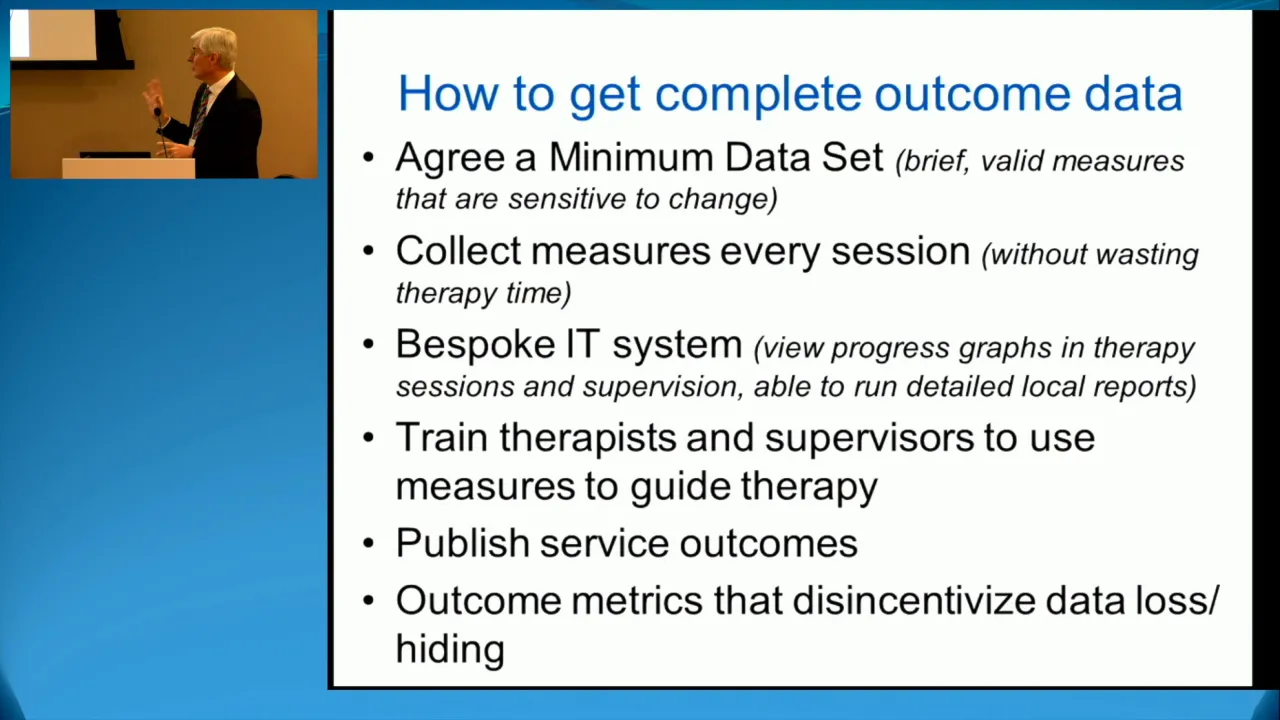
Measurement-based Care in Psychotherapy Workshop - Future of Psychotherapy Conference 2019
UofTPsych
243 views•2019-04-25

51:52
Psychology
Dr. Carol Tavris — Mistakes Were Made (But Not by Me)
skepticmagazine
14K views•2019-05-02
Trending

13:38
Law
WOW! Judge TURNS THE TABLES on Trump in His OWN $10B LAWSUIT!!!
MeidasTouch
197K views•2026-07-23

13:25
Business
Playstation NO DISC/NO BUY Fight Is Over...
DavidJaffeGames
4K views•2026-07-23

22:40
Business
Steam and Xbox Just Dropped The Hammer On PlayStation
OhNoItsAlexx
9K views•2026-07-23

16:52
Anthropology
Americans Confused in Australia for 17 Minutes Straight
IWrocker
17K views•2026-07-23