Distributed computing is a collection of autonomous processors communicating over a network (LAN/WAN) to share resources like data storage and processing power, working through a five-step process of request division, parallel processing, and result combination. Key motivations include resource sharing, high performance, scalability, reliability, cost-effectiveness, and support for geographically distributed users. Message passing is the primary communication method where processors exchange information by sending and receiving messages over networks without shared memory. Distributed computing differs from parallel computing in that it uses multiple independent computers connected via networks with message passing, while parallel computing uses multiple processors within a single computer with shared memory. Synchronous communication requires sender to wait for receiver response (blocking), while asynchronous communication does not (non-blocking). Advantages include faster execution, high availability, easy scalability, and better resource utilization, while disadvantages include complex system design, network delays, data consistency challenges, security concerns, and difficult debugging.
Mrs.N.abinaya (Distributed Computing)
Added:Hello everyone. I'm assistant professor cyber security JJ CET. Today we are going to see about the topic distributed computing. So what is distributed computing? We are going to see about introduction about the distributed computing.
So what is distributed computing? It is a collection of autonomous processor communicating over a communication network is called a distributed computing. So what is a communication network means it is a LAN and a WAN network.
So this computers communicate with each other by exchanging messages and the sharing the resources such as data storage and processing powers.
So how distributed computing works? Step one, user sends a request and step two, the use the request is divided into smaller task and the step three is different computers process different task simultaneously and the step four is results are combined. So step five is final result is sent back to the users.
So real life example is a Google search.
Google search is one of the best example for distributed computing.
When you search distributed computing in Google, your request goes to the Google server. Many computers process the request together. So different servers search different parts of the internet and it gives the result. So many computers give one result.
So another example is online shopping like Amazon and Flipkart. When you order your product, one server checks your login and another server checks your product availability and another server processes your payment and another server updates delivery details. So, all computers work together to complete your one order.
So, motivation for distributed computing is first main motivation is resource sharing. So, it is shares the hardware, software, files, and database among multiple users. For example, employees in your office sharing your multiple data, printers, uh so, computers and data. Next one, high performance. High performance means divided a large task into a smaller task and execute them simultaneously on multiple computers.
So, example, weather forecasting and scientific simulations.
So, third motivation is scalability. It easily add more computers as the number of task uh uh as number of users as number of workload increases. Example, expanding cloud service. So, next one is reliability and fault tolerant. If one computer fails, other computer continue the work and reducing the system downtime. So, example, online banking services are remaining available even if one server crashes.
So, next one is cost effective. A group of low-cost computers are grouped together performance to similar to all expensive supercomputers. So, example, small companies using clusters. Next one, uh support for geographically distributed users. Users in different location can access the same application and data.
For example, Google Docs. Google Docs, it allows the multiple users uh from different countries to edit the same data. Next, improved availability. So, 24/7, uh it uh have the services. So, like uh, Netflix and YouTube continue streaming even during heavy traffic.
So, next one is message passing. Message passing is the important topic in distributed computing. So, message passing is a communication method used in a distributed computing where two or more processor exchange information by sending and receiving messages over a network.
So, the processor do not share memory here. Uh, we don't have any memories.
So, we send or receive the messages by using the message passing.
So, how it works? A sender creates a message. So, a sender sends the message through the communication network. So, here the communication network is LAN and WAN. Uh, the receiver process receives message. So, then the receiver process the received data. So, A is a sender and process B is a receiver. Uh, so process A sends a message to process B. Process B then acknowledge a message to process A.
For example, ATM transaction. So, uh, suppose you withdraw rupees 5,000 from an ATM means ATM machine sends a request to the bank server and bank server checks your account balance. Then bank server sends a approval or rejection message back. So, ATM displays the result and withdraw your cash if uh, cash is approved.
So, example two is our normal WhatsApp messages. So, when you send hello to your friend, your phone sends the message to the WhatsApp server. The server forwards it to your friend's phone. Your friend's phone receives the messages.
So, next, distributed computing versus parallel computing. So what is distributed computing and what is parallel computing? So distributed computing, it uses multiple independent computers connected through a network.
But in parallel computing, it uses multiple processor or cores within a single computer. So second point is computers communicate by message passing over a network. But in parallel computing, the processors communicate through shared memory or high-speed interconnects. So in distributed computing, each computer has its own memory and operating system. But in parallel computing, all processors shares the same memory and operating system. So in distributed computing, connected using LAN, WAN, or the internet. In parallel computing, processors are connected inside the computers.
So next, communication is lower due to due to latency. So here in parallel computing, communication is very fast. And in distributed computing, more suitable for large-scale distributed applications. And parallel computing is more suitable for high-speed scientific and engineering computations. So in distributed computing, we can continue the work any if if any node is failed, we can continue our work with another one. But in parallel computing, if one node is failed, the total processors are failed.
So example of distributed computing is Google search, cloud computing, and distributed databases, our online shopping and online banking.
These are the examples for the distributed computing. And the parallel computing examples, weather forecasting, image processing, and matrix multiplications.
So in distributed computing, we are going to see about the topic in synchronous versus asynchronous communication. So, synchronous communication means sender waits for the receiver response in synchronous communication. But, in asynchronous communication, sender does not wait for the response. So, next point is communication happens at the same time.
So, in parallel, the communications are happen. But, in asynchronous communication, communication happens at different times.
So, in synchronous communication, it is a blocking communication. Then, asynchronous communication, it is a non-blocking communication. Then, in synchronous communication, it is a slower to compare than a asynchronous communication. Then, asynchronous communication is faster.
In synchronous communication, it requests both sender and receiver should be available. But, in asynchronous, sender and receiver not available simultaneously. So, next In synchronous communication, it is easier to coordinate. But, in asynchronous, it is a more flexible and scalable. So, example for synchronous communication is phone call, video conference. And, the example for the asynchronous is mail and the WhatsApp.
So, advantages of distributed computing is First one is faster execution through parallel processing. Then, second one is high availability and reliability. So, third one is easy scalability by adding more nodes. Then, cost-effective using clusters.
So, next last one is better resource utilization.
Then, the disadvantages is complex system design and software. So, next network communication is delayed. And, third one is data consistency and synchronization challenges. So, fourth one is security concern across multiple machines. So, next last one is debugging and monitoring are more difficult in the distributed company.
Thank you.
Related Videos

TOP 15 Data compression Interview Questions and Answers 2019 Part-2 | Data compression | Wisdom jobs
wisdomjobs
281 views•2019-06-28

CTS 158: 802.11w Management Frame Protection
ClearToSend
4K views•2019-02-04
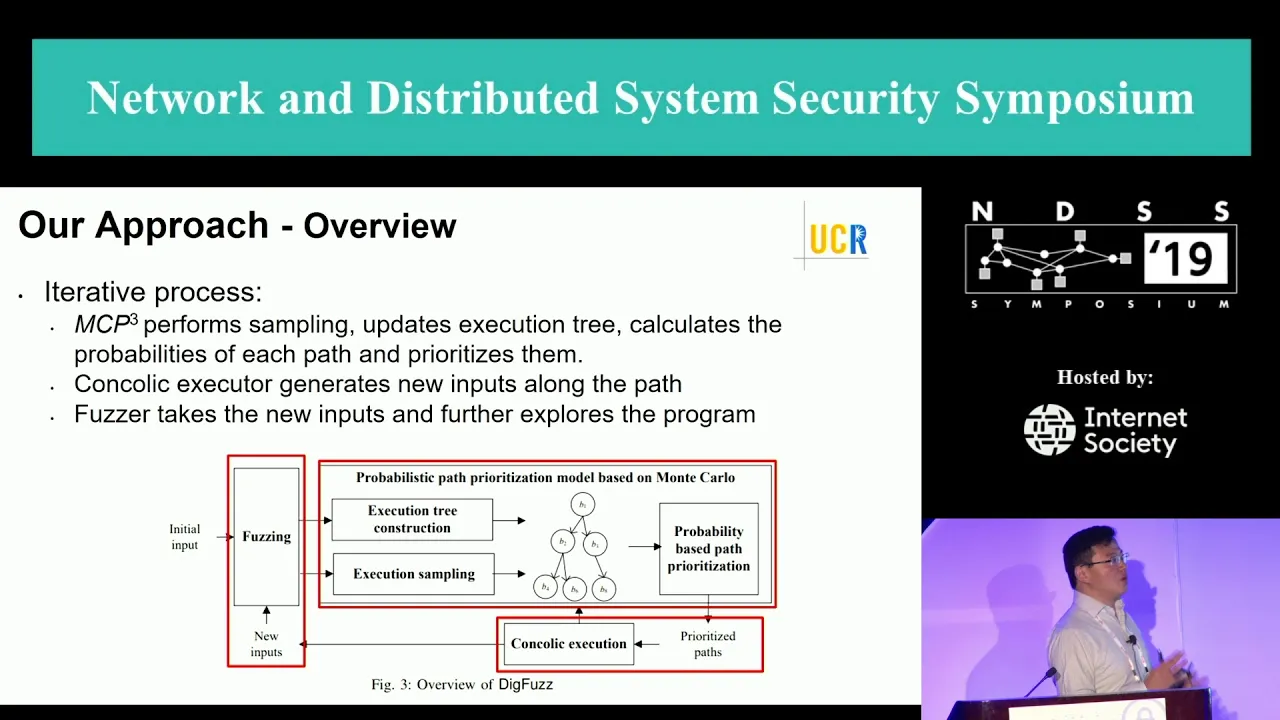
NDSS 2019 Send Hardest Problems My Way: Probabilistic Path Prioritization for Hybrid Fuzzing
NDSSSymposium
496 views•2019-04-02

How realistic is Cities: Skylines?
CityBeautiful
159K views•2019-02-14

GUIs & TUIs: Choosing a User Interface for Your Python Project | Real Python Podcast
realpython
2K views•2025-04-04

The OSI Model - Explained by Example
hnasr
225K views•2019-05-12

Cloud Computing - Introduction
elithecomputerguy
98K views•2019-10-07

From Traveler's Dilemma to Dynamic Routing | Demystifying Networking
IITBombayJuly
5K views•2019-08-04
Trending

This is DISGUSTING
theroyalrogue
25K views•2026-07-24

Nobody Respected The Penguin | The Batman (2004)
SerumLake
12K views•2026-07-24

And Now He Is Coming For More
TheFinePrintYT
12K views•2026-07-24

U.S. BANKS JUST SIGNALED *CLARITY ACT* IS COMING!? WHITE HOUSE AUGUST DEADLINE & XRP REPRICE!
GoodEveningCrypto
10K views•2026-07-24