Dr. Allen provides a masterclass in reading the body’s visible signals, turning the eye into a powerful diagnostic window for systemic health. It’s a concise, high-value reminder that our metabolic secrets are often hidden in plain sight.
Install our extension to search inside any video instantly.
Your Eyes Are Revealing Your Cholesterol Levels Right Now
Added:So, can your eyes reveal high cholesterol? Absolutely, yes. In fact, eye doctors may notice this before family doctors or even your cardiologist. So, today I'm going to share the top signs of fat and cholesterol on the eye as well as inside the eye. In fact, I'll even share one that I personally see all of the time and often sends people to the emergency room. Hi, I'm Dr. Joseph Allen. I'm a board certified doctor of optometry. And if you like learning cool facts about the eyes and seeing your best, then consider subscribing to the channel so that you miss any of our future videos.
But now, here's how fat and cholesterol can affect the eyes. Number one is that of corneal arcus, most commonly diagnosed as what is arcus senilis. This is a white-gray appearance that occurs on the colored part of the eye right along the outside edge or the limbus. In fact, this is a lipid or cholesterol ester and phospholipid deposit that occurs in the cornea of the eye in the corneal stroma. Now, if somebody's over the age of 60, this is actually quite common and considered somewhat normal as a normal aging process. However, if somebody's under the age of 40, then we call this corneal or arcus juvenilis.
And in this case, then we are concerned of either a hyper dislipidemia, a familial hypercholesterolemia, or perhaps some increased risk for cardiovascular disease. So, if you ever look in the mirror and you feel like you're seeing this gray-white ring appearance, or you see a family member and you're seeing that, that's likely what you're seeing. But medically speaking, we're only truly concerned about it if somebody has this and they are under the age of 40 because that could be a sign of high cholesterol or something going wrong with how the body digests and processes lipids. Now, for this next one, I want you to look into a mirror and look toward the medial part of your eyelids. If you see any yellowish plaque building up in that area, then it could be what we call xanthelasma. Xanthelasma is a soft yellowish cholesterol plaque that forms underneath the skin and usually forms in the eyelids, either top or bottom, but it's closer to the nose. Now, approximately about 50% of people who develop xanthelasma do have some form of dyslipidemia. However, here's the twist, is that about the other 50% of people have normal lipid panels, but they can still have some sort of lipid processing issue at the localized level of the tissues. Obviously, the big concern to healthcare professionals is that if we see this, it is a kind of a telltale biomarker that this person may have something wrong with their lipids or fat levels and that may increase the risk for cardiovascular disease. Now, in the case of xanthelasma, if somebody just doesn't like the appearance of them, then there are ways to remove it, either with laser or certain chemical peel options, but the bigger grand scheme of things is we need to address whatever could be going on systemically because even if you remove them once, if you don't address the underlying issue, they could return. Okay, so we've covered the two major things that affect the outside of the eye, right? Arcus senilis as well as xanthelasma, but I do want to talk about what happens inside the eye because this is where things can get really serious. This here is called a Hollenhorst plaque. A Hollenhorst plaque is usually a piece of cholesterol emboli that has been thrown from a cholesterol plaque building up in the carotid artery. And this plaque then travels along the blood vessels through the brain to the eye and then gets stuck in one of the artery bifurcations. Most of the time, this is thrown again from cholesterol building up in the carotid artery. There is a small chance could be calcium that's thrown from chambers of the heart, but this usually appears as this yellowish-white deposit right in one of the bifurcations, and most of the patients who come into my clinic where I diagnose this, they're completely asymptomatic. They do not know that it's there or that it's been occurring, and that still, no matter what, is a concerning sign. Why this is like a level five alarm to eye doctors is that seeing a Hollenhorst plaque is most likely direct evidence of atherosclerosis of the carotid artery, which is associated with an increased risk of a TIA or a transient ischemic attack or having a stroke within the next few days to weeks. So, when I have a patient where I detect or see any sign of a Hollenhorst plaque, they do not leave the clinic without a call directly to their family doctor, to the cardiologist, or at the very least a referral to either the ER or the closest stroke center so that they can get a full workup including a carotid ultrasound. An amazing thing about the eyes is it's the only place that we can look inside the body and watch the blood vessels in real time, which is one of the reasons why healthcare providers often refer to eye doctors so that we can evaluate things like not only glaucoma and macular degeneration like eye diseases, but so that we can check for things like diabetes, high blood pressure, and certainly even how cholesterol could be affecting the eyes, which are largely part of a larger grand scheme of metabolic disorders. From here, let me know in the comments if you have ever seen these in your own eyes or maybe somebody in your family, and if you have any other questions about fat, cholesterol, or anything else could be affecting the eyes. Because in fact, this video came from somebody asking a question specifically how fat and cholesterol affect the eyes, and so if you have a good question, uh maybe I'll make that into a video, as well.
Otherwise, from here, if you have not seen my previous video on how sugar affects the eyes, then you might be interested in that, and so I'll connect that down in the show notes, as well as up over here. Otherwise, let me just say thank you so much for being here. Keep an eye on it, and we'll see you in the next episode.
Related Videos

0:19
Medicine
How Strong Are Breast Implants? Watch This Demo at LPH
londonprivatehospital
967 views•2026-04-20
4:16
Medicine
What is an Office Hysteroscopy? | Fertility Testing Explained at DIRM
DelawareInfertility
17K views•2019-05-06
13:25
Medicine
Pharmacological Management of Stroke Antiplatelet-Acute and Secondary Prevention
Learningin10
8K views•2019-03-04

3:25
Medicine
PMG - Pediatric Pain Management
EASTtraumasurgery
3K views•2019-07-01
20:29
Medicine
Anemia Symptoms And Treatment for Chronic Kidney Disease (CKD) patients
DADVICETV
27K views•2019-08-07
12:30
Medicine
Prostate Cancers and Mimics - Diagnosis
Pathologyminitutorials
3K views•2019-11-20

11:55
Medicine
Vitamin A for Vaccines & Viruses (including Measles!)
DrDavidMD
691 views•2025-03-11
4:10
Medicine
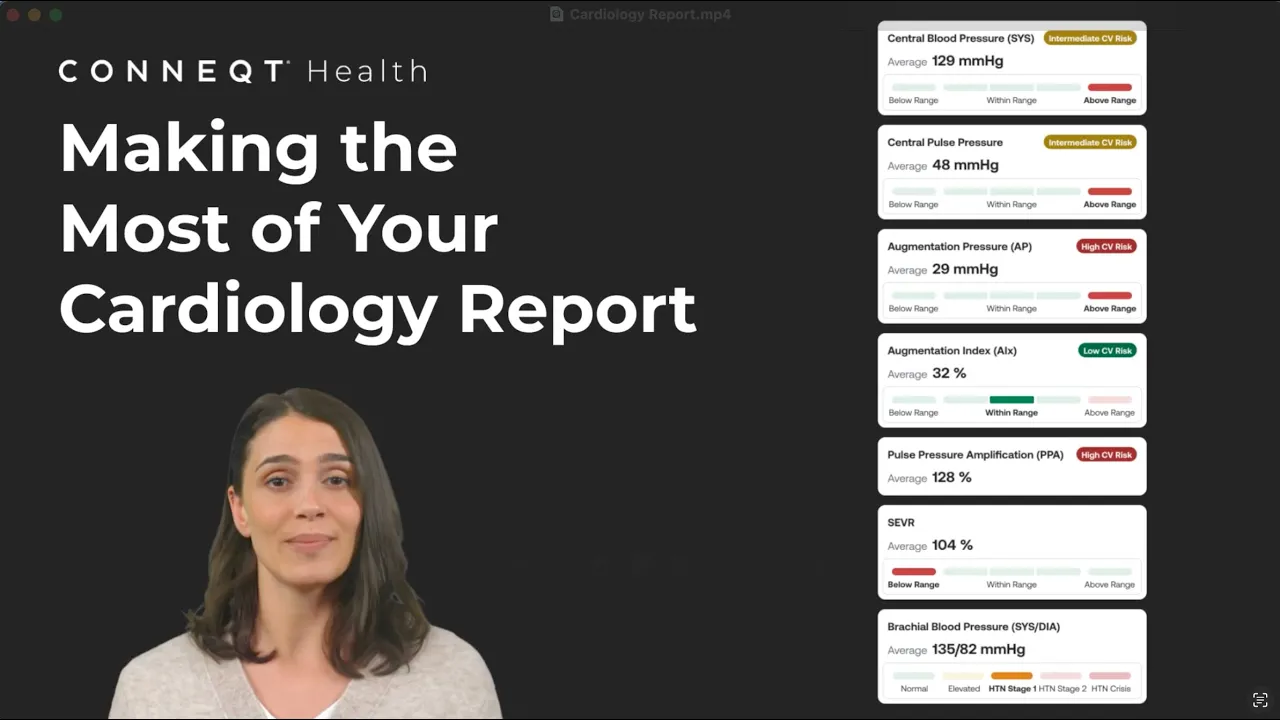
Making the Most of Your Cardiology Report | CONNEQT Cardiovascular Health Resources
conneqthealth
774 views•2025-03-04
Trending

5:07
Philosophy
One Must Imagine Sisyphus Happy
vlogbrothers
61K views•2026-07-21

25:15
Business
Future of Taylor Farms
maighstirtarot5385
11K views•2026-07-21

12:30
Business
The Downfall of OnePlus!
techwiser
65K views•2026-07-21

23:12
Engineering
My Friend Locked Up The Engine On His K-Swapped Bug...
boostedboiz
128K views•2026-07-21